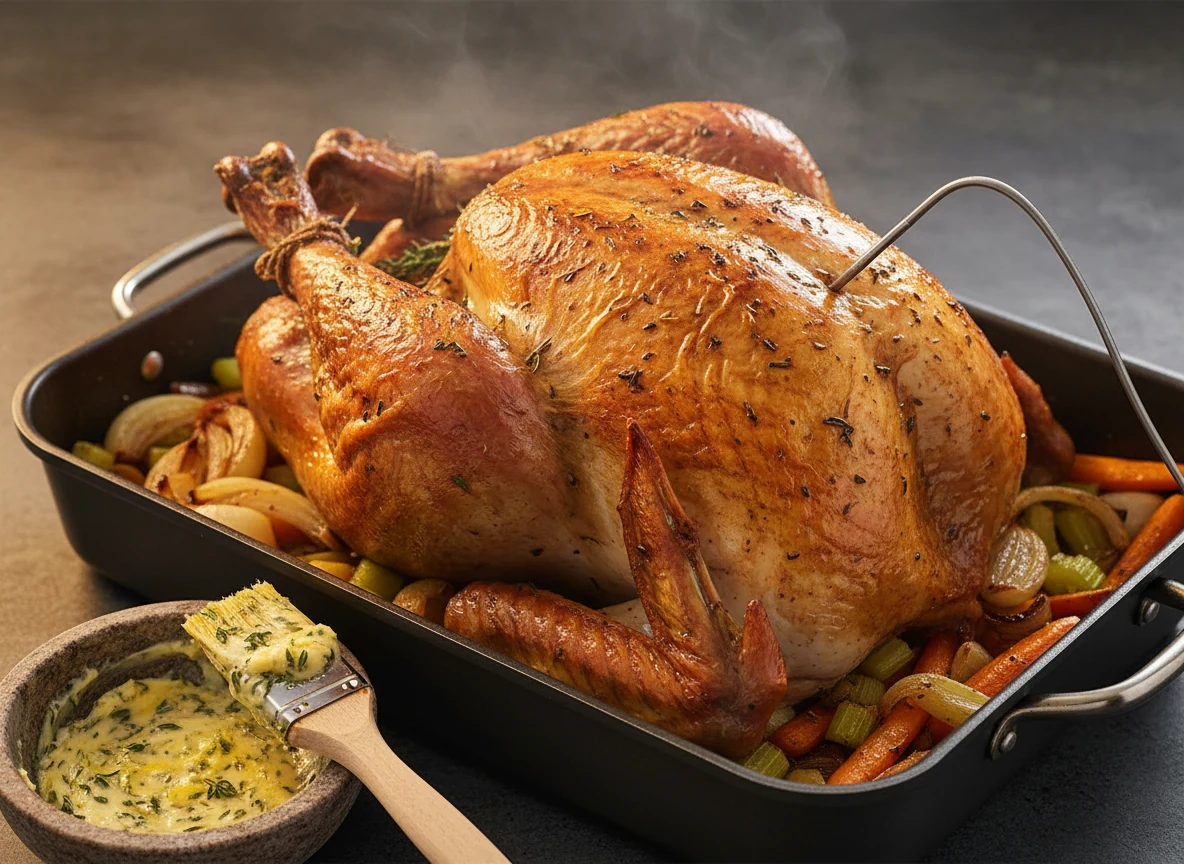
Turkey Recipes That Actually Wow—no Dry Birds Allowed
Foolproof method for juicy, crowd‑pleasing turkey every time—perfect for Thanksgiving or busy weeknights, with simple steps and pantry rubs.
If your last bird needed a glass of water, read this. The secret isn’t a fancy oven or a chef’s diploma—it’s a ruthless, step-by-step system built to lock in juice and build flavor. I’ll show you the exact brine, rub, and roast strategy that wins holidays and makes leftovers you’ll fight over. Short on time? I’ve got a spatchcock route that shaves hours and still delivers crisp skin. This is your new playbook—simple, scalable, and so good your in-laws will ask for the “restaurant” that catered.
Why This Recipe Works
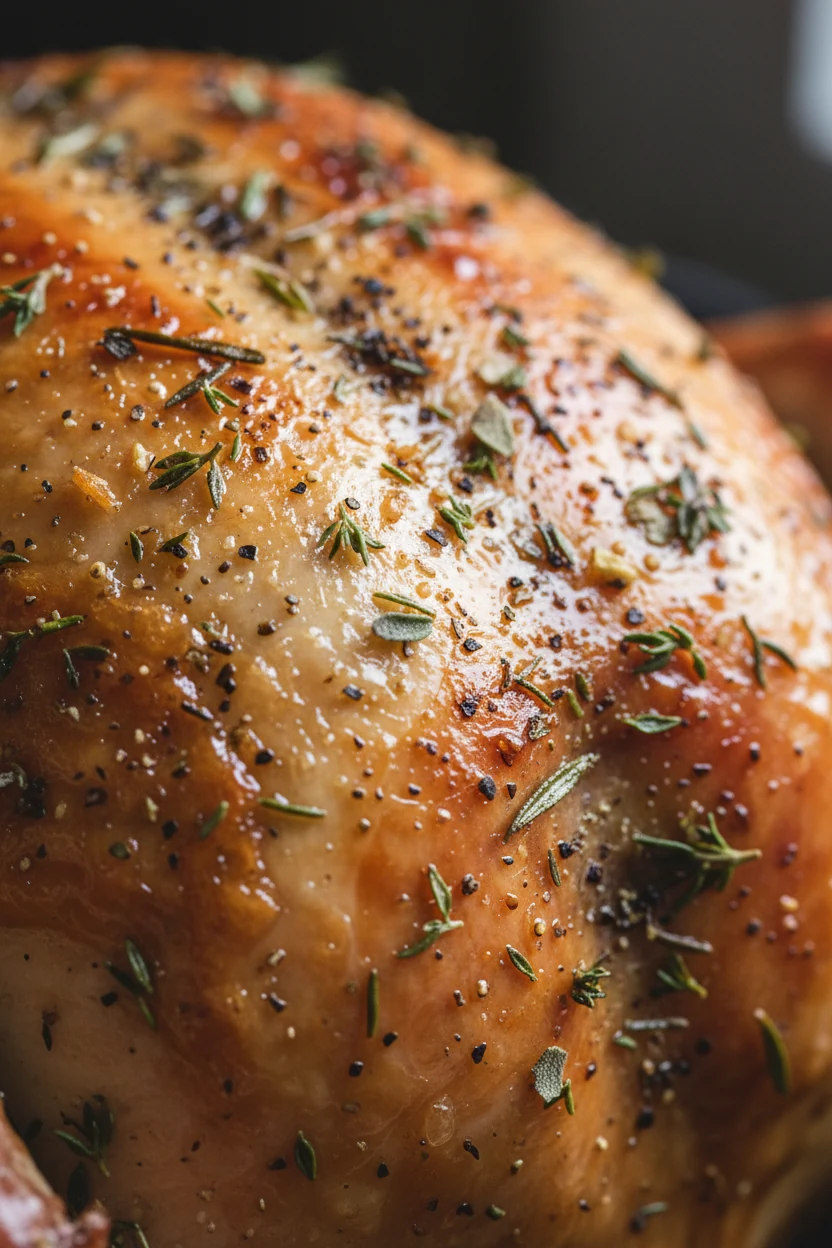
- Dry brine > wet brine: Salt goes straight into the meat, pulling in moisture and seasoning edge-to-edge without buckets of sloshy liquid.
- Baking powder for blistered skin: It raises pH, speeds browning, and gives you shatter-crisp skin. No magic—just chemistry that loves you back.
- Two-stage heat strategy: High heat kickstarts crisping; a lower cruise finishes the cook gently so the breast stays juicy and the legs render properly.
- Herb butter under the skin: Fat carries flavor and bastes the breast from within. It’s like giving your turkey a flavor IV.
- Thermometer, not vibes: You’ll pull at the right moment, avoid guesswork, and never apologize for dry slices again.
What Goes Into This Recipe – Ingredients
- 1 whole turkey (10–14 lb), thawed if frozen
- Diamond Crystal kosher salt (about 1.5 tbsp per 5 lb bird; see note)
- Baking powder (2 tsp for a 12–14 lb bird)
- Unsalted butter (8 tbsp), softened, or olive oil (1/3 cup) for dairy-free
- Fresh herbs: 2 tbsp finely chopped thyme, 1 tbsp rosemary, 1 tbsp sage
- Garlic: 4 cloves, grated or minced
- Fresh citrus: 1 lemon (zest for butter, halves for cavity); optional 1 orange, halved
- Black pepper: 2 tsp, freshly ground
- Smoked paprika: 1 tsp (optional but recommended)
- Brown sugar: 1 tsp (optional, for balanced browning)
- Onion: 2 medium, quartered
- Celery: 3 stalks, cut into big chunks
- Carrots: 2 large, cut into big chunks
- Bay leaves: 2
- Low-sodium turkey or chicken stock: 2–3 cups
- Dry white wine: 1/2 cup (optional, for the pan)
- Fresh parsley: small handful, for finishing
- Flour or cornstarch: for gravy thickening
Salt note: Use less if you only have Morton kosher (it’s denser). For Morton, use about 1 tbsp per 5 lb. If using table salt, reduce even more (not recommended).
Cooking Instructions
- Thaw and prep: Thaw the bird in the fridge (24 hours per 4–5 lb). Remove giblets and neck. Pat dry thoroughly—paper towels should squeak on the skin.
- Dry brine: Mix kosher salt and baking powder. Sprinkle evenly over skin (and lightly inside the cavity). Use 1.5 tbsp Diamond Crystal per 5 lb, plus 2 tsp baking powder total. Place on a rack over a sheet pan, uncovered, in the fridge for 24–48 hours. FYI: 12 hours still helps; 48 is elite.
- Make herb butter: Combine softened butter, garlic, lemon zest, chopped thyme, rosemary, sage, smoked paprika, brown sugar, and black pepper. If using oil, whisk until emulsified.
- Spatchcock option (faster): Use kitchen shears to remove the backbone. Flip, press firmly on the breastbone to flatten. This version cooks more evenly and quicker. If you keep it whole, proceed as normal.
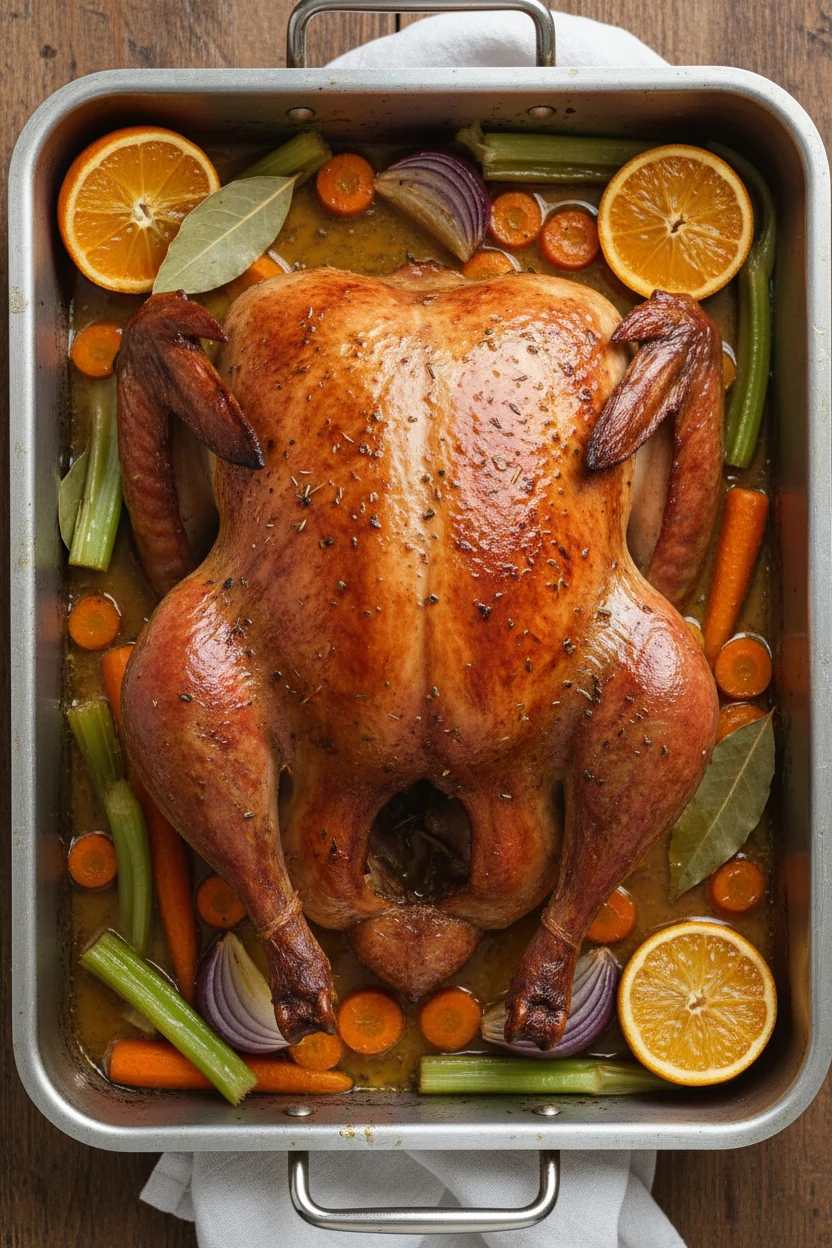
- Set the pan: Scatter onion, celery, carrots, and bay leaves in a roasting pan. Add 1 cup stock and optional wine. This bed flavors drippings and acts like a veggie roasting rack.
- Butter and season: Take the turkey out 45 minutes before cooking. Gently separate skin from breast with your fingers. Spread half the herb butter under the skin; rub the rest all over. Tuck lemon halves and optional orange into the cavity.
- Heat strategy: Preheat to 450°F (232°C). Roast 20–30 minutes to jumpstart browning. Reduce to 325°F (163°C) and continue. For spatchcocked: roast at 425°F (218°C) the whole time.
- Roast times (guideline): Whole bird at 325°F runs ~13–15 min/lb. Spatchcocked runs ~8–10 min/lb. Start checking early—your oven isn’t a Swiss watch.
- Monitor temps: Insert a thermometer in the thickest breast and inner thigh (not touching bone). Aim to pull the bird when breast hits 158–160°F and thigh hits 170–175°F. Carryover heat finishes the job. USDA safe temp is 165°F—resting elevates the breast to this mark.
- Baste? Sparingly: If the skin looks pale near the end, baste once or twice with pan drippings. Constant basting drops oven temp and slows browning, so don’t hover.
- Rest like you mean it: Transfer to a board. Tent loosely with foil and rest 25–40 minutes. Juices redistribute; you get clean, juicy slices instead of a puddle on the board.
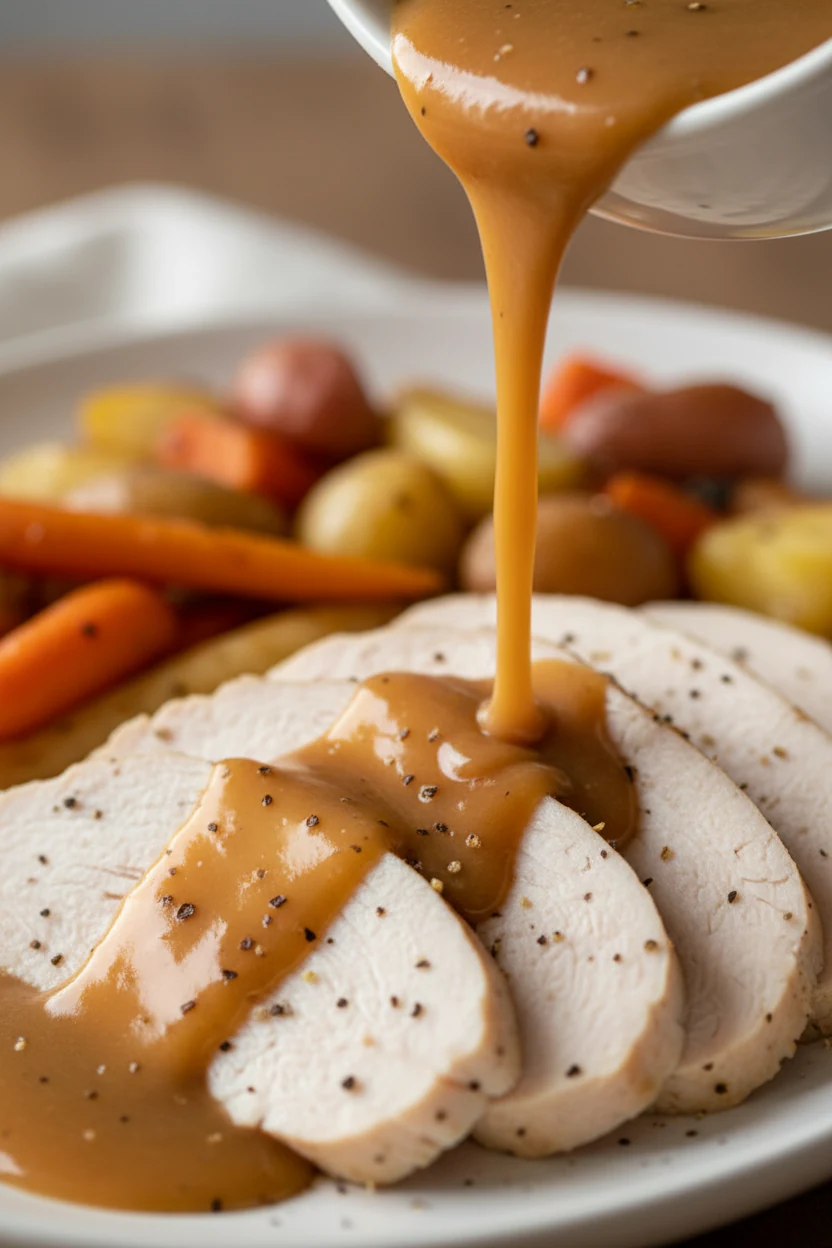
- Make gravy: Skim excess fat from the pan. Mash the roasted veg to release flavor. Whisk 3 tbsp flour into 3 tbsp reserved fat (or use cornstarch slurry). Whisk in 2 cups stock plus the pan juices. Simmer 5–8 minutes until glossy. Season with salt, pepper, and a squeeze of lemon.
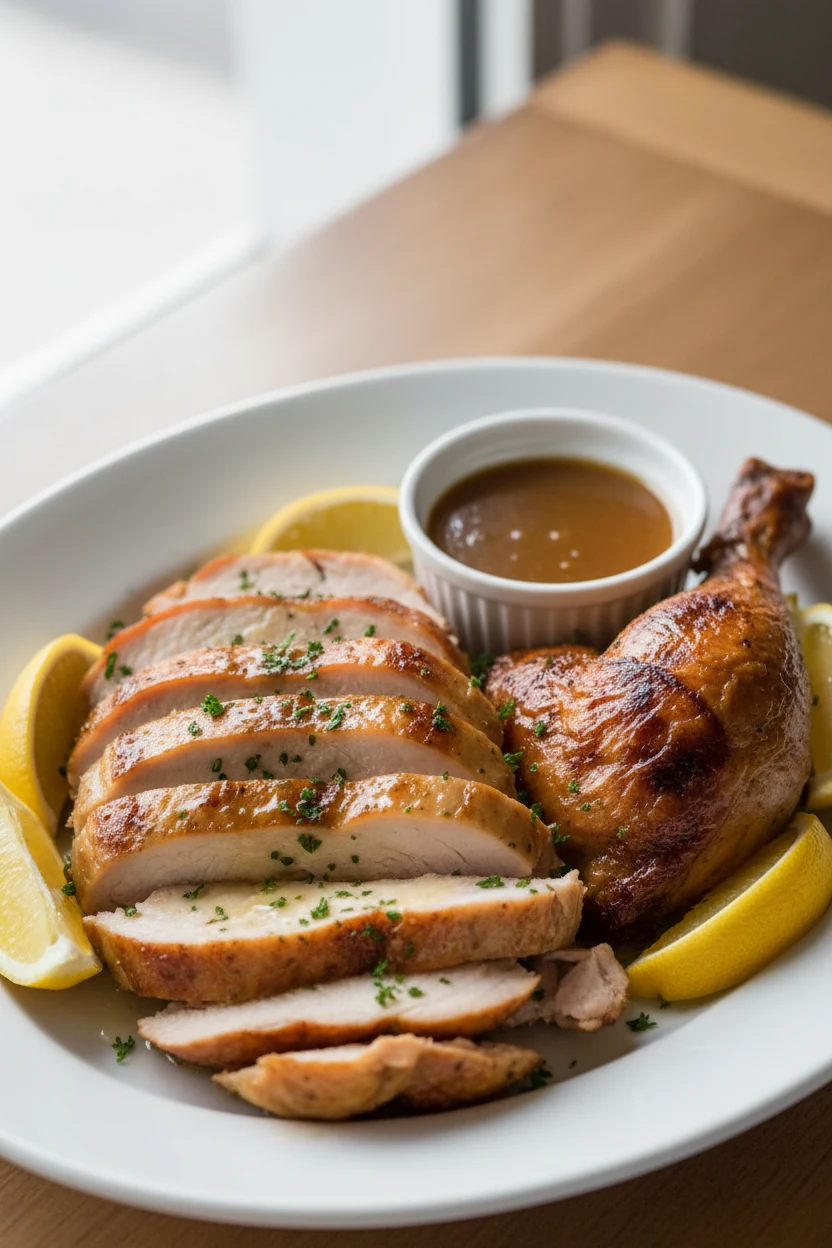
- Carve: Remove legs and thighs first, then breasts. Slice against the grain. Finish with chopped parsley and a small butter gloss if you feel fancy. Serve with gravy.
Storage Tips
- Fridge: Cool, then store meat in shallow airtight containers with a splash of stock. Keeps 3–4 days.
- Freezer: Portion and wrap tightly. Freeze up to 3 months. Defrost overnight in the fridge.
- Reheat: Moisten slices with stock, cover, and warm at 300°F until just hot. Or reheat gently on the stovetop. Don’t nuke on max like it wronged you.
- Gravy: Refrigerate up to 4 days or freeze up to 3 months. Thin with stock when reheating.
What’s Great About This
- Consistently juicy: The dry brine + temp targets solve the biggest holiday fear.
- Restaurant-level skin: Baking powder and that first blast of heat give you crisp without deep frying your kitchen.
- Flavor all the way through: Herb butter under the skin seasons the meat itself, not just the outside.
- Flexible timing: Spatchcock option gets dinner done faster; whole-bird method rewards the traditionalists.
- Leftovers that slap: Sandwiches, pot pie, ramen, salad—this turkey works on day two and three, not just the photo op at hour zero.
Pitfalls to Watch Out For
- Wrong salt: Swapping Diamond for Morton 1:1 makes your bird salty. Adjust as noted or, IMO, buy the right box.
- Skipping the rest: Carving right away dumps the juices on the board. Your patience equals tenderness.
- Guessing doneness: Use a thermometer. Turkeys don’t negotiate.
- Over-basting: Every oven door open nukes your heat. Baste once or twice near the end if you must.
- Starting cold: A fridge-cold bird cooks unevenly. Bring it out 45 minutes before roasting.
- Stuffing the cavity: It slows cooking and can trap steam, softening skin. Use aromatics only; bake stuffing separately.
Alternatives
- Wet brine: If you love tradition, brine in 1 gallon water + 1 cup kosher salt + aromatics for 12–18 hours. Pat very dry before roasting. Expect slightly plumper meat and softer skin compared to dry brine.
- Herb mayo rub: Swap butter for 3/4 cup mayonnaise with herbs and garlic. It browns like a dream and stays stable—great for high-heat roasts.
- Maple-chile glaze: Simmer 1/2 cup maple syrup + 1 tbsp soy + 1 tsp chili flakes + 1 tbsp apple cider vinegar. Brush during the last 20 minutes for a lacquered finish.
- Cajun spice route: Use a rub of paprika, garlic powder, onion powder, cayenne, oregano, thyme, and black pepper. Mix with oil for a paste; spread under and over the skin.
- Smoked turkey: Run at 275°F with apple or cherry wood until breast reads 160°F. Brush with melted butter to prevent dryness. Unreal flavor, minimal effort.
- Air fryer turkey breast: For small crowds, coat a 2–3 lb bone-in breast with the herb butter and roast at 360°F for 45–60 minutes, to 160°F internal. Fast and weeknight-friendly.
FAQ
How far in advance should I salt the turkey?
Dry brine it 24–48 hours ahead for best results. You’ll see a big upgrade even at 12 hours, but 48 hours gives you the deepest seasoning and best texture. Keep it uncovered in the fridge so the skin dries and crisps beautifully.
Can I use table salt if I don’t have kosher salt?
You can, but reduce the amount significantly because table salt is denser and saltier. Use about half the kosher amount and sprinkle very evenly. TBH, kosher salt is inexpensive and worth grabbing for accuracy and better control.
What size turkey should I buy?
Plan on 1 to 1.25 lb per person for a whole bird. If you love leftovers (of course you do), bump it to 1.5 lb per person. For large groups, consider two smaller birds—they cook more evenly than a giant 20+ pounder.
Should I use a roasting rack?
A bed of onions, celery, and carrots works like a charm and adds flavor to drippings. A metal rack is fine, but veggies keep the underside from steaming and taste great in the gravy. Choose either; just don’t roast flat on the pan.
Is basting necessary?
Nope. The herb butter and dry brine handle moisture and browning. Baste once near the end if the skin looks dry. Constant basting torpedoes your oven temp and stretches the timeline for no real gain.
Can I stuff the turkey with dressing?
It’s safer and tastier to bake dressing separately. Stuffing slows the cook, risks undercooked centers, and softens the skin. Use citrus and aromatics inside the cavity instead for fragrance without the hassle.
How do I get extra crispy skin?
Dry the bird thoroughly, dry brine uncovered, include a little baking powder, and start with a hot oven blast. Don’t tent it until after the rest. Airflow equals crispness, and moisture is the enemy.
What do I do with leftovers?
Make next-level sandwiches, pot pie, fried rice, quesadillas, or a quick turkey noodle soup. Save the carcass for stock: cover with water, add aromatics, and simmer 2–3 hours. That broth turns leftovers into a new meal with almost no effort.
Wrapping Up
Follow the brine-butter-thermometer trifecta and you’ll serve juicy slices with proud, crackly skin—every time. The method scales for holidays or Tuesday dinner, and the variations keep it fun without getting weird. You now own a proven system, not a one-hit wonder. Go win the table—and maybe the next day’s lunch, too.
Printable Recipe Card
Want just the essential recipe details without scrolling through the article? Get our printable recipe card with just the ingredients and instructions.