Tuna Steak Recipes Made Simple — Bold Flavor Without Fuss
Weeknight-friendly, chef-level sear with simple pantry sauces and rubs. Choose your heat, nail doneness, eat in under 15 minutes.
If you’ve ever paid restaurant prices for a perfectly pink tuna interior and a crust that snaps, you’ve been overcharged for a skill you can master tonight. Most people torch tuna like it’s a well-done burger, then wonder why it chews like gym rubber. Not you. You’re about to get a system: quick marinade or rub, vicious heat, accurate doneness, killer finish. It’s fast, it’s flexible, and it makes you look like you own a hibachi grill (you don’t, and that’s fine). FYI, the “secret” is simpler than you think.
The Secret Behind This Recipe
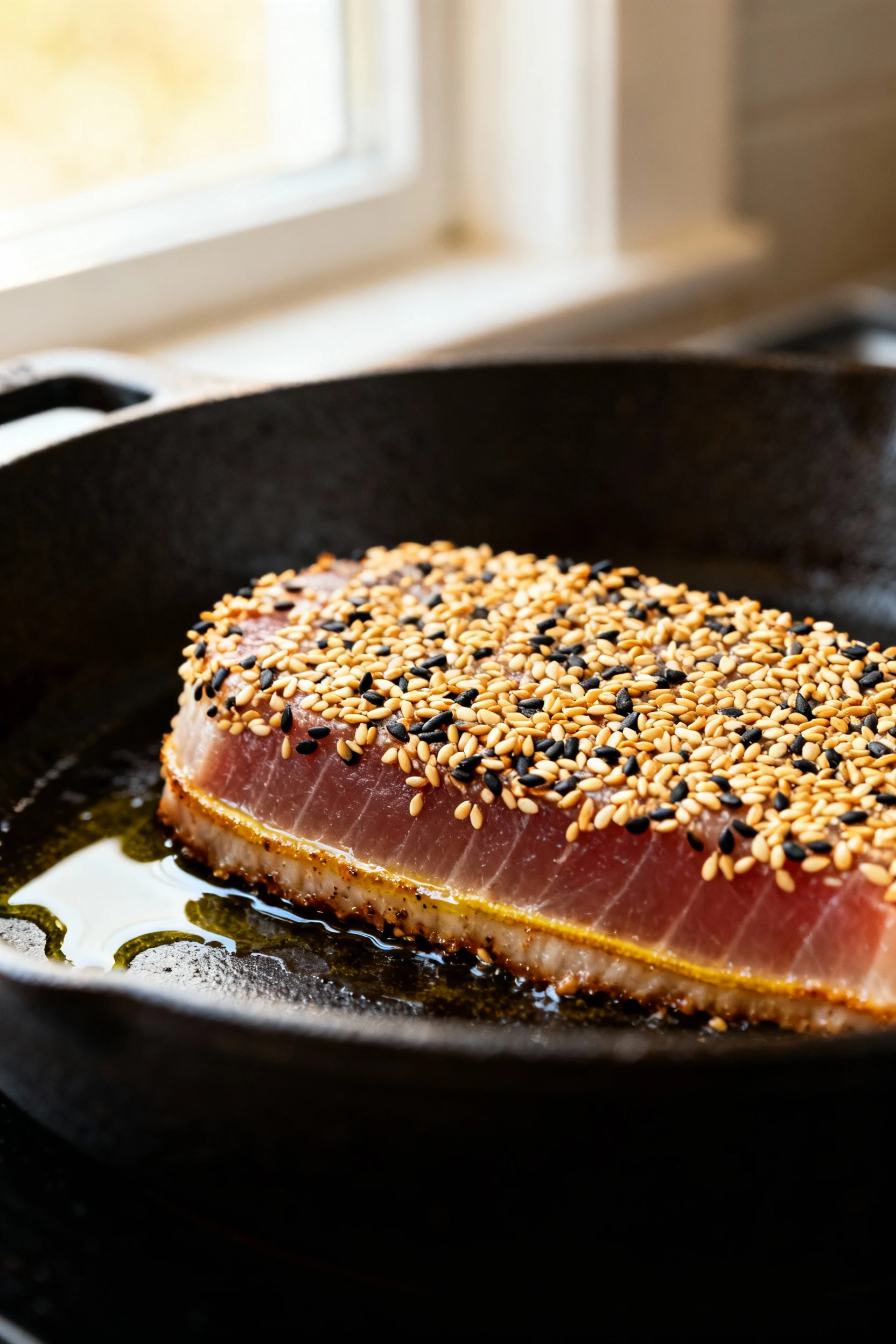
Great tuna is all about contrast: a hard, flavorful sear outside and a tender, ruby center inside. You get that by starting with dry fish, using high heat, and controlling time like a hawk. Tuna fibers seize when cooked too long, so you want seconds, not minutes, on the heat.
Moisture is the enemy of crust. Pat the steaks dry twice—once after thawing or unwrapping, and again right before they hit the pan. Season at the last minute. If you’re marinating, keep it short: 10–15 minutes max. Acid + salt + fish over time = ceviche vibes… not what we’re going for here.
Use a pan that gets blazing hot: cast iron or stainless steel with a thin sheen of high-smoke-point oil (avocado, grapeseed, or refined peanut). For 1-inch steaks, think 45–75 seconds per side for rare to medium-rare. Pull early and let carryover do its thing. Optional but smart: a digital thermometer. Aim to pull at 95–110°F for rare, 115–120°F for medium-rare.
Finish with bold flavors. A peppercorn crust, sesame seed jacket, or Cajun rub adds texture. A bright sauce—ponzu, chimichurri, or wasabi-lime mayo—makes the plate pop. You’ll feel like a pro with almost zero stress. Which, IMO, is the only way to cook on a Tuesday.
Ingredients
Core Ingredients (Serves 2)

- 2 tuna steaks (ahi/yellowfin), about 6–8 oz each, 1-inch thick
- 1–2 tbsp neutral oil with high smoke point (avocado, grapeseed)
- 1 tsp kosher salt, plus more to taste
- 1/2 tsp freshly ground black pepper
- 1 lemon or lime, cut into wedges, for serving
Quick Marinade Option (10–15 minutes)
- 2 tbsp low-sodium soy sauce or tamari
- 1 tbsp rice vinegar or lemon juice
- 1 tsp honey or maple syrup
- 1 small garlic clove, minced
- 1 tsp fresh ginger, grated
- 1 tsp toasted sesame oil (fragrant; small amount goes far)
Dry Rub Option (Pepper-Coriander)
- 1 tsp coarsely cracked black pepper
- 1 tsp coriander seeds, lightly crushed (or 1/2 tsp ground)
- 1/2 tsp smoked paprika
- 1/4 tsp garlic powder
- Pinch of cayenne or red pepper flakes (optional)
Sesame Crust Option
- 2–3 tbsp sesame seeds (mix of white and black for contrast)
- 1 tsp soy sauce or a light brush of mayo to help seeds adhere
Finishing Sauces (Pick One or Two)
- Quick ponzu: 2 tbsp soy sauce + 1 tbsp lemon or yuzu juice
- Wasabi-lime mayo: 2 tbsp mayo + 1 tsp wasabi + 1 tsp lime juice
- Simple chimichurri: chopped parsley, garlic, olive oil, red wine vinegar, chili flake
- Lemon-garlic butter: 1 tbsp melted butter + 1 tsp lemon + pinch garlic
Step-by-Step Instructions
- Prep the tuna. If frozen, thaw overnight in the fridge. Unwrap, blot dry thoroughly, and chill until 15 minutes before cooking.
- Mix your flavor path. Stir the marinade OR combine the dry rub. For sesame crust, place seeds on a plate.
- Optional quick marinade. Toss tuna with marinade in a shallow dish for 10–15 minutes. Turn once. Remove and pat dry lightly; discard marinade.
- Season to taste. If not marinating, season both sides with salt and pepper. Apply dry rub or brush lightly with soy/mayo and press into sesame seeds, if using.
- Preheat the pan. Heat cast iron or stainless over medium-high until it shimmers-hot. Add 1–2 tbsp oil and heat until just rippling.
- Sear hard and fast. Lay tuna in the pan away from you. Don’t touch it for 45–60 seconds. Flip with tongs and sear the second side 45–60 seconds.
- Check the edges. If the steaks are thick, quickly “kiss” the edges for 10–15 seconds each to set the sides, especially with a sesame or pepper crust.
- Gauge doneness. Use a thermometer or feel. Pull at 95–110°F for rare, 115–120°F for medium-rare. Visual cue: the cooked band should be about 1/8–1/4 inch.
- Rest briefly. Transfer to a plate and rest 2–3 minutes. This keeps juices where they belong.
- Finish and serve. Spoon on sauce, squeeze citrus, and shower with chopped herbs or scallions. Slice against the grain if serving over rice or salad.
- Grill alternative. Preheat a clean, oiled grill to high. Sear 1 minute per side (lid open), then edge-sear. Same temps apply. Easy.
- Air fryer alternative. Preheat to 450°F (or highest). Lightly oil steaks. Cook 3–4 minutes total, flipping halfway, to rare/medium-rare. Watch closely.
Storage Tips
Cooked tuna shines the day you make it. If you have leftovers, store them in an airtight container in the fridge for up to 2 days. Keep them slightly rare at cook-time so they don’t turn dry when chilled.
Reheat gently: room temp for 15 minutes, then a quick 15–20 second kiss in a hot pan, or enjoy cold on salads and bowls. Do not overheat; you’ll lose that silky texture in seconds.
Raw tuna steaks freeze well (up to 3 months). Wrap tightly, then bag. Thaw overnight in the fridge. Once thawed, cook within 24 hours for best flavor.
What’s Great About This
- Speed: From pan to plate in under 15 minutes, including sauce.
- Restaurant results at home: Crispy crust, tender center, clean flavors.
- Versatility: Multiple rubs, marinades, and sauces; pan, grill, or air fryer.
- Nutrition-forward: Lean protein, omega-3s, and low-carb friendly.
- Picky-eater proof: Keep it simple, or go bold with spice and tang.
- Minimal cleanup: One pan, one small bowl, zero drama.
Common Mistakes to Avoid
- Starting wet: Moisture kills sear. Pat dry… then pat dry again.
- Low heat: Warm pans steam fish. Get it ripping hot for a real crust.
- Over-marinating: 10–15 minutes max. Longer turns the exterior mushy.
- Wrong oil: Butter burns at searing temp. Use high-smoke-point oil and finish with butter later if desired.
- Overcooking: Rare to medium-rare is the sweet spot. Seconds matter here.
- Skipping rest: A quick rest locks in juices and evens temp.
- Overcrowding: Cook in batches to maintain heat and crust.
- Untested fish source: Buy quality tuna from a reputable fishmonger, especially if serving rare.
Different Ways to Make This
- Sesame-Crusted + Ponzu: Press into sesame seeds, sear 60 sec/side, drizzle ponzu and a few drops of sesame oil. Add scallions.
- Peppercorn-Coriander Crust: Coat heavily with cracked pepper and crushed coriander. Sear hard. Finish with lemon-garlic butter.
- Blackened Cajun: Rub with Cajun seasoning + smoked paprika. Sear in a touch of oil. Serve with lime and avocado crema.
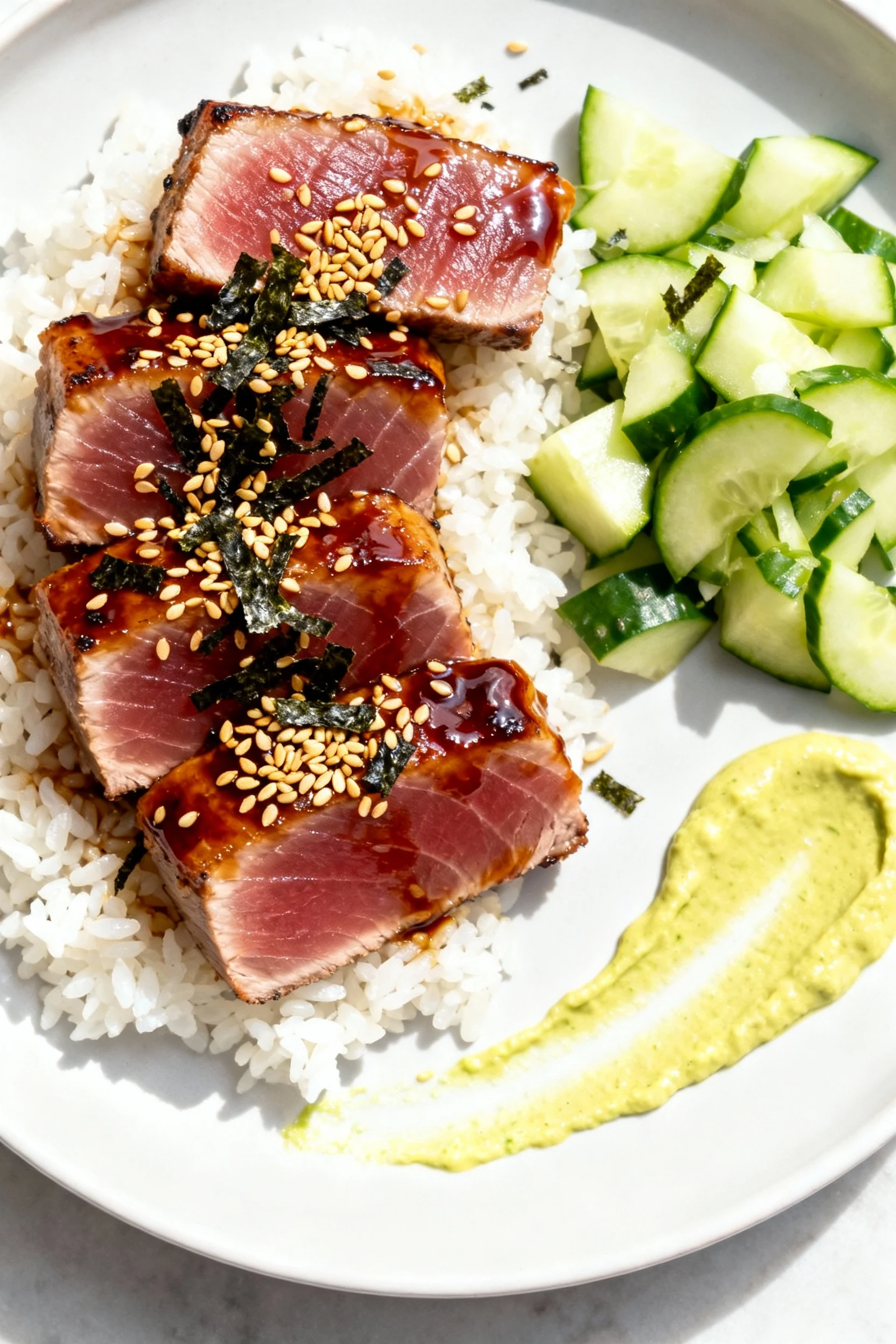
- Teriyaki-Glazed: Brush with teriyaki in the last 15 seconds of each side to lacquer. Sprinkle toasted sesame and nori flakes.
- Mediterranean: Salt, pepper, and oregano. Sear, then top with olive tapenade, tomatoes, and a squeeze of lemon.
- Citrus-Herb Grilled: Marinate briefly in lemon, olive oil, thyme. Char on a blazing grill, 1 min/side. Finish with fresh herbs.
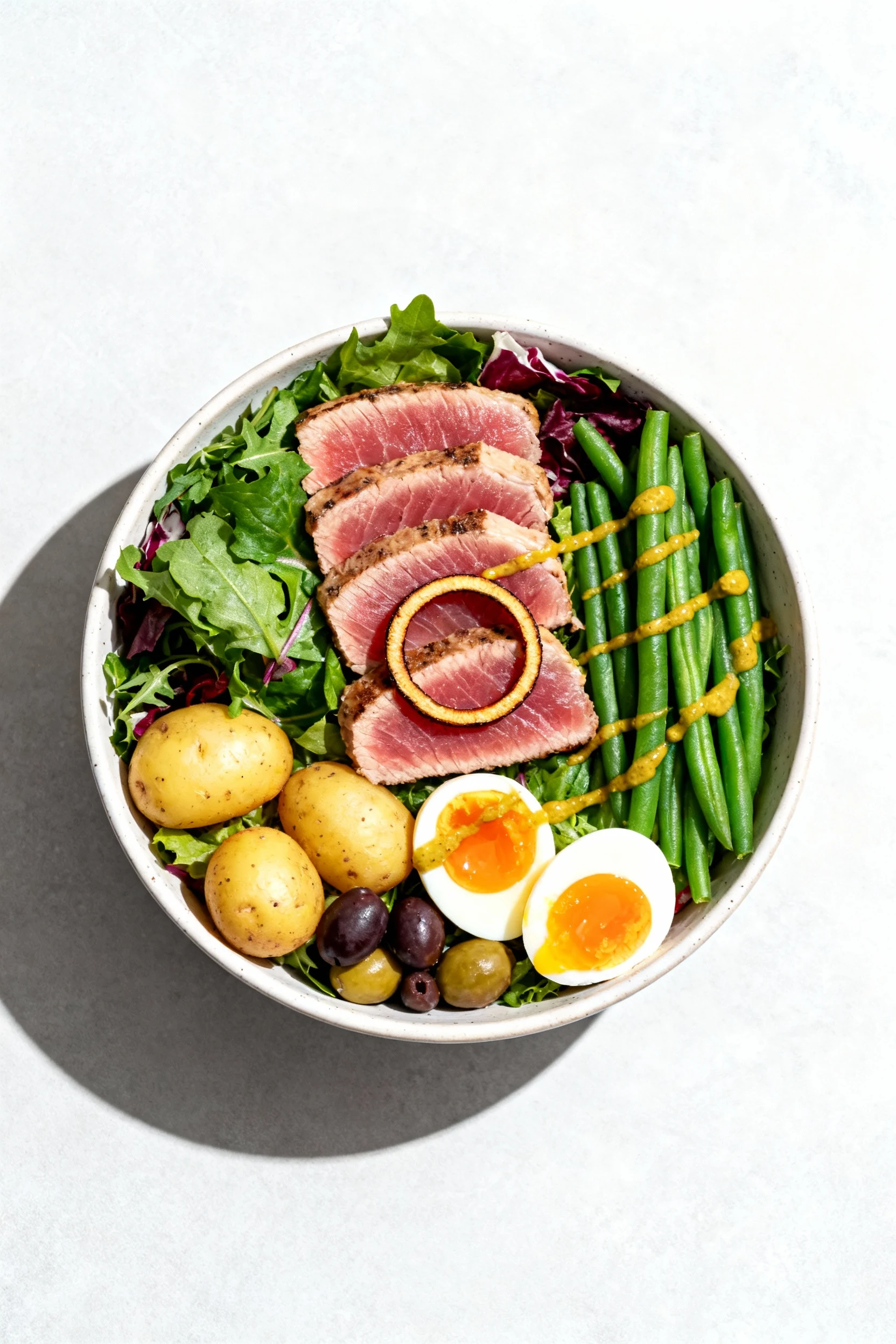
- Niçoise Bowl: Slice rare tuna over greens, green beans, potatoes, olives, and eggs. Mustard vinaigrette is the move.
- Spicy Furikake: Coat in furikake + chili flakes. Quick sear. Serve with rice and a swipe of wasabi-lime mayo.
FAQ
What internal temperature should I aim for?
For the classic texture, pull tuna at 95–110°F for rare or 115–120°F for medium-rare. Medium lands around 125°F, but expect a drier bite. The FDA recommends 145°F for fish; quality tuna served rare relies on a trusted source and proper handling. Choose what fits your comfort level.
Can I use frozen tuna steaks?
Absolutely. Thaw overnight in the fridge, then unwrap and blot extremely dry. Frozen tuna can be excellent if it’s high quality and handled well. Look for individually vacuum-sealed steaks with minimal ice crystals.
What’s the best pan for searing?
Cast iron or heavy stainless steel. They preheat evenly, resist temperature dips, and build crust like champs. Nonstick can work in a pinch, but avoid blazing heat, and don’t use metal tools on it.
How do I prevent smoke when searing?
Use a high-smoke-point oil, preheat thoroughly (so the fish cooks faster), and keep the sear short. Open a window, run the vent, and save butter for finishing. Also, don’t let oil pool—just a thin sheen.
How long should I marinate tuna?
Keep it to 10–15 minutes. Acid and salt work fast on tuna. Any longer and the texture suffers. If you want more flavor, finish with a punchy sauce instead of extending the marinade.
Can I grill tuna instead of pan-searing?
Yes, and it’s fantastic. Preheat the grill to high and oil the grates well. Sear 1 minute per side with the lid open, then quickly sear the edges. Same temp targets apply. A sesame or pepper crust holds up beautifully on the grill.
What should I serve with it?
Keep sides bright and fresh: sesame slaw, mango salsa, cucumber salad, garlicky greens, coconut rice, or roasted potatoes. Citrus wedges and a quick sauce (ponzu, chimichurri, or wasabi-lime mayo) turn the plate into a legit showpiece—no reservations needed.
Do I salt before or after marinating?
If you’re marinating, the soy/tamari handles salt. After patting dry, taste a sprinkle of the marinade and decide if you still need a pinch of kosher salt. If you’re not marinating, season with salt and pepper right before cooking to protect the crust.
The Bottom Line
You don’t need a culinary degree or a cast of obscure ingredients to nail tuna at home. Start with quality steaks, keep them dry, sear hot and fast, and finish with a bold sauce. Control time and temperature, and you’ll get restaurant texture with grocery-store effort. It’s fast, it’s flexible, and it’s the kind of “fancy” dinner you can pull off any night—no drama, all reward.
Printable Recipe Card
Want just the essential recipe details without scrolling through the article? Get our printable recipe card with just the ingredients and instructions.