Sourdough Discard Recipes That Turn Scraps Into Delicious Wins
Transform leftover starter into irresistible treats, save money, and reduce waste while satisfying your taste buds.
You know that jar of sourdough starter lurking in your fridge? The one you keep feeding like a needy pet but toss half of it every time? What if I told you that “throwaway” portion is basically culinary gold you’ve been binning? Wasting it is like saying no to free flavor, and honestly, why would you? That tangy, complex magic can turn basic baked goods into something people fight over at brunch. Still skeptical? Keep reading—your compost bin might have just lost its best customer.
Why This Recipe Works

Using sourdough discard is not just about thrift—it’s about flavor and texture. The discard brings a subtle tang, tender crumb, and natural depth without requiring extra fermentation. Plus, it’s already partially fermented, which means it mixes harmoniously into other batters or dough without overwhelming them. This approach also saves you time since you skip an extra rise, and let’s be honest, time saved is bread earned.
What Goes Into This Recipe – Ingredients
- 1 cup sourdough discard (unfed, room temperature)
- 1 cup all-purpose flour
- 1/2 teaspoon baking soda
- 1 teaspoon baking powder
- 1/2 teaspoon salt
- 2 tablespoons sugar
- 1 large egg
- 3/4 cup milk or plant-based alternative
- 2 tablespoons melted butter or oil
- Optional flavor boosters: chocolate chips, herbs, cinnamon
Instructions

- Preheat your oven to 350°F (175°C) or heat a skillet if making pancakes.
- In a large bowl, whisk together flour, baking soda, baking powder, salt, and sugar.
- In another bowl, mix the egg, milk, melted butter, and sourdough discard until combined—don’t overthink it, lumps are fine.
- Pour wet ingredients into the dry mix; stir gently until combined. Avoid overmixing unless dense bricks are your vibe.
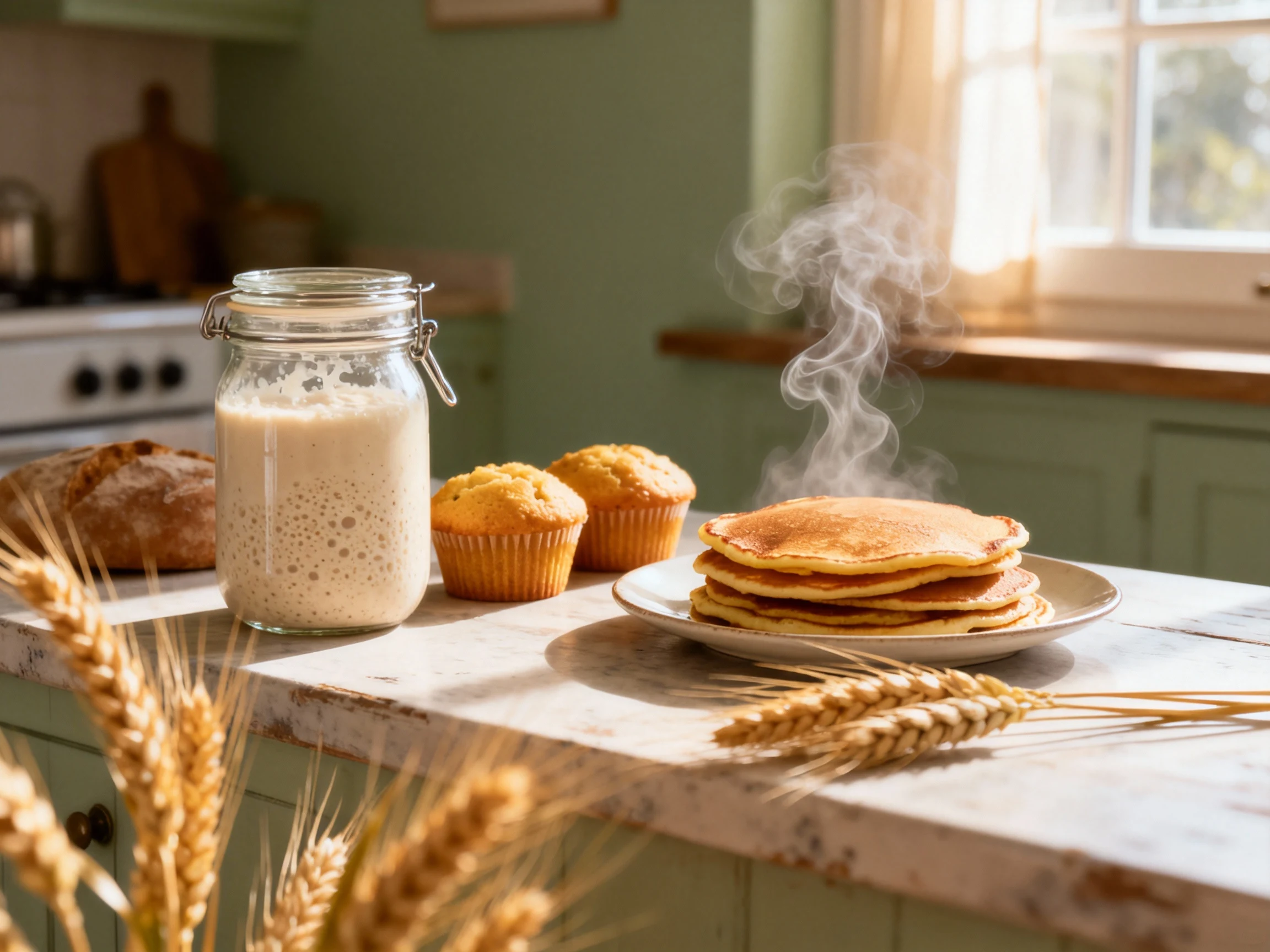
- For baking: Pour batter into greased muffin tins or loaf pans and bake for 20–30 minutes. For pancakes: Cook 2–3 minutes per side until golden.
- Cool slightly before eating—unless you enjoy molten lava burns on your tongue.
How to Store
Once cooled, keep your baked goods in an airtight container at room temp for up to 3 days. For longer storage, wrap tightly and freeze for up to 2 months. Reheat in the oven or toaster—microwave only if you enjoy rubber-textured nostalgia.

Health Benefits
Sourdough discard still carries beneficial bacteria and acids from fermentation, making it easier to digest for some folks. Lower gluten content, improved mineral absorption, and reduced glycemic impact? Yes, please. Plus, you’re minimizing food waste—a sneaky win for both your body and the environment.

What Not to Do
- Don’t use discard that smells off—tangy is fine, but rotten funk is a hard pass.
- Do not skip leavening agents unless you’re into flat, sad creations.
- Don’t overmix the batter—unless you’re writing a case study on gluten development gone wrong.
- Stop thinking you can “eyeball” measurements for baking—this isn’t soup, precision matters.
Variations You Can Try
- Sweet muffins: Add berries, nuts, or a cinnamon swirl.
- Savory biscuits: Mix in shredded cheese, chives, or jalapeños.
- Flatbreads: Brush with olive oil, sprinkle herbs, and bake hot.
- Waffles: Thinner batter, extra butter, and boom—breakfast royalty.
- Pizza crust: Use discard in the dough for faster rise and tangy kick.
FAQ
Can I use refrigerated sourdough discard?
Yes, just let it come to room temperature before mixing to avoid slowing down the reactions of baking soda and powder.
Is sourdough discard safe to eat?
Absolutely—if it’s been stored properly and smells/tastes pleasantly tangy. Any signs of mold or foul odor mean it’s bin time.
Can I replace all flour with sourdough discard?
Nope. Discard is a wet ingredient with partial fermentation; it needs fresh flour for structure and proper texture.
Does sourdough discard taste sour?
It carries a mild tang, which can add complexity, but it won’t make most recipes mouth-puckering unless you go overboard.
How often should I collect discard?
Every feeding cycle yields some; keep a jar in the fridge and use it within a week for best results—treat it like milk, not a fossil.
In Conclusion
Sourdough discard isn’t waste—it’s flavor potential just waiting for a spotlight. By integrating it into quick recipes, you boost taste, reduce waste, and get bonus bragging rights at the table. So next time you’re about to toss it, remember: it’s a ticket to better baking and a smarter kitchen game.
Printable Recipe Card
Want just the essential recipe details without scrolling through the article? Get our printable recipe card with just the ingredients and instructions.