Smoker Recipes to Crush Weekends Like a Backyard Pro
Turn Saturday cookouts into signature, slow-smoked wins with easy steps, budget cuts, and minimal babysitting for huge flavor.
You want the kind of backyard flex that makes neighbors “randomly” stroll by? This is how you build it: meat that shreds like butter, bark that crunches, and smoke that smells like victory. The best part—no need to mortgage your Saturday to your pit. With a smart setup and clear cues, you’ll hit elite results on a budget cut, every time. Give me one afternoon and a steady 225°F, and you’ll feed a crowd like a legend.
What Makes This Recipe Awesome
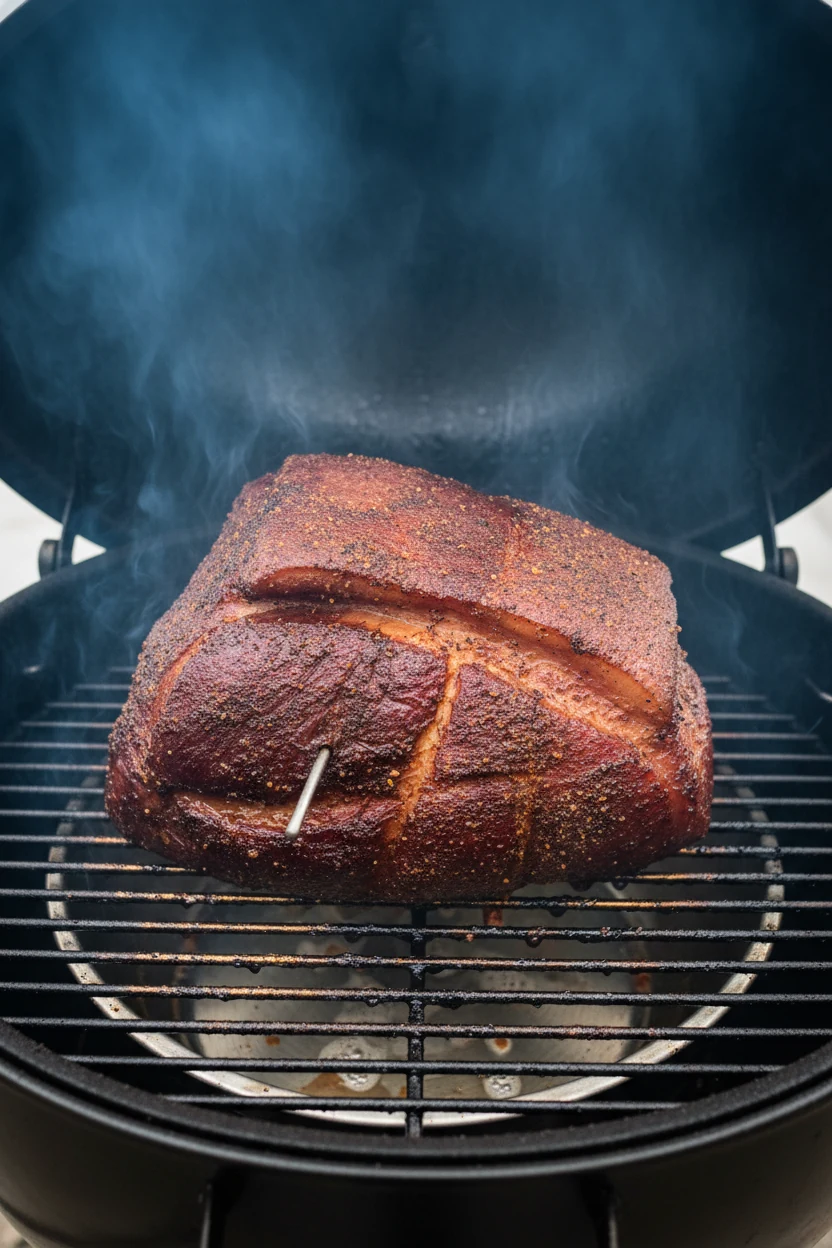
Think of this as your go-to play for weekends when you want guaranteed applause with minimal drama. Pork shoulder is forgiving, affordable, and practically designed for smoking. You’ll learn a simple rub, a repeatable game plan, and a few clutch moves to navigate the stall without panic.
- Low babysitting, big payoff: Set the temp, spritz occasionally, then let science do the heavy lifting.
- Bulletproof for beginners: Pork shoulder tolerates mistakes and still finishes juicy.
- Bark + tenderness: A sweet-savory rub builds crust while slow heat melts collagen into silk.
- Feeds a crowd: One roast turns into mountains of sandwiches, tacos, and leftovers.
- Works on any smoker: Pellet, electric, offset, kamado—you’re covered.
Ingredients
Pork & Binder
- 1 (8–10 lb) bone-in pork shoulder (Boston butt)
- 2–3 tablespoons yellow mustard (binder)
Dry Rub
- 1/3 cup dark brown sugar
- 2 tablespoons kosher salt
- 2 tablespoons coarse black pepper
- 2 tablespoons sweet paprika (or half hot, half sweet)
- 1 tablespoon garlic powder
- 1 tablespoon onion powder
- 1 teaspoon cayenne (optional, for heat)
- 1 teaspoon ground mustard
Spritz & Mop
- 1 cup apple cider vinegar
- 1 cup apple juice
- 1/2 cup water
- 2 tablespoons hot sauce (optional)
- 1 tablespoon honey (optional, for mop)
Wood & Setup
- Hickory and apple wood (chunks, chips, or pellets)
- Water pan (optional but helpful for humidity)
For Serving
- Soft buns or tortillas
- Coleslaw, pickles, sliced onions
- Your favorite BBQ sauce
Instructions
- Trim smart: Pat the pork dry. Remove loose flaps and excess hard fat, leaving about 1/4 inch to protect the meat. No need to sculpt it like marble—just tidy, not naked.
- Mix the rub: Stir brown sugar, salt, pepper, paprika, garlic, onion, cayenne, and ground mustard until evenly combined.
- Bind and coat: Rub a thin layer of mustard all over the shoulder. Shower it with the dry rub on every side, pressing to help it stick. If you can still see meat, add more rub.
- Preheat the smoker to 225°F: Stabilize at 225°F with clean-burning smoke. Add a water pan if your smoker runs dry; consistency beats heroics.
- Wood choices: Load hickory for backbone and apple for sweetness. Aim for thin, blue smoke—if it looks like a tire fire, fix your airflow.
- Place the pork: Put the shoulder fat cap up. Insert a thermometer probe into the thickest part, avoiding bone. Close the lid and relax—no, you don’t need to peek every five minutes.
- Spritz after the bark sets: At about 2–3 hours, when the surface looks dry and crusty, spritz with the vinegar/juice mix every 45–60 minutes. Don’t drown it; we’re moisturizing, not bathing.
- Navigate the stall: Around 160–170°F internal, the temp plateau hits. Wrap in heavy-duty foil or peach paper when the bark is set to push through faster (add a splash of spritz). FYI, patience also works if you want maximum bark.
- Finish temp: Cook until 200–205°F internal in multiple spots. Probe for tenderness—like butter. If it fights back, give it another 20–30 minutes.
- Rest like you mean it: Move the wrapped pork to a cooler or oven (off) and rest 1–2 hours. This balances juices and makes pulling a joy, not a wrestling match.
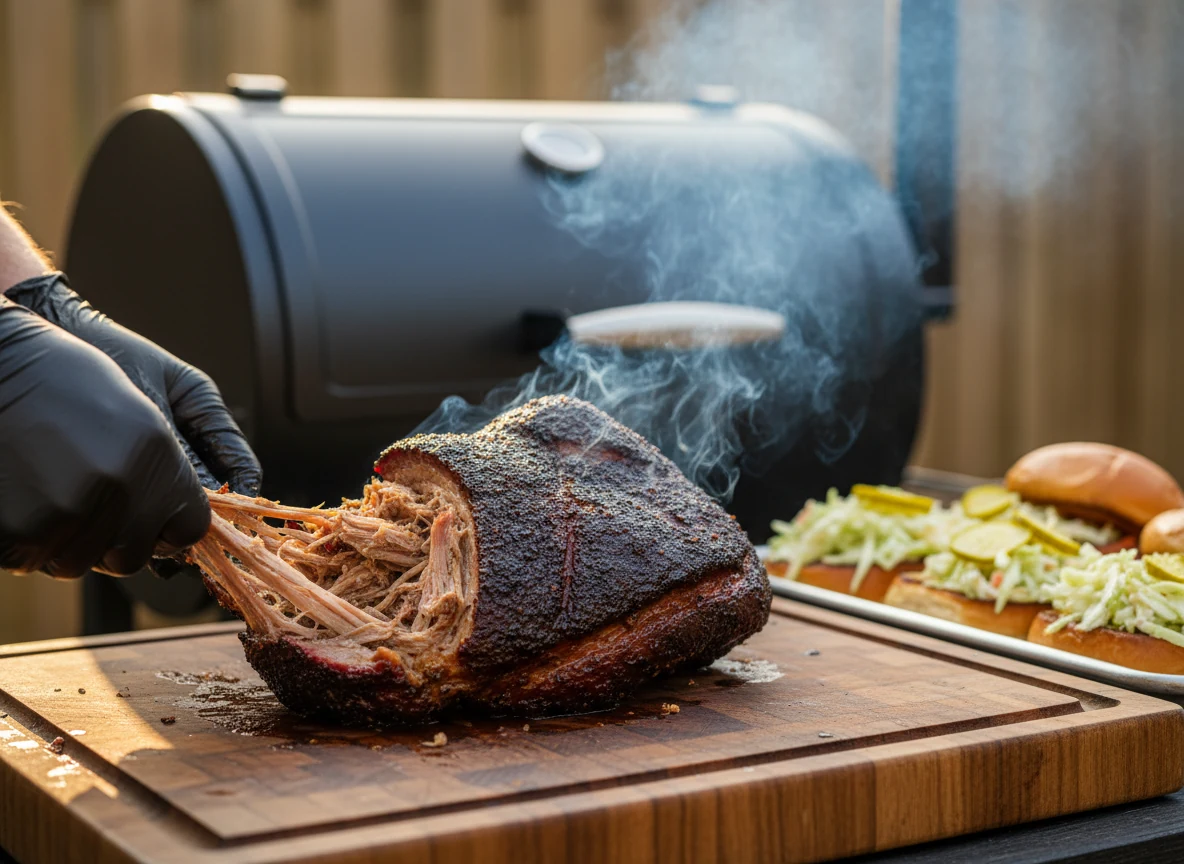
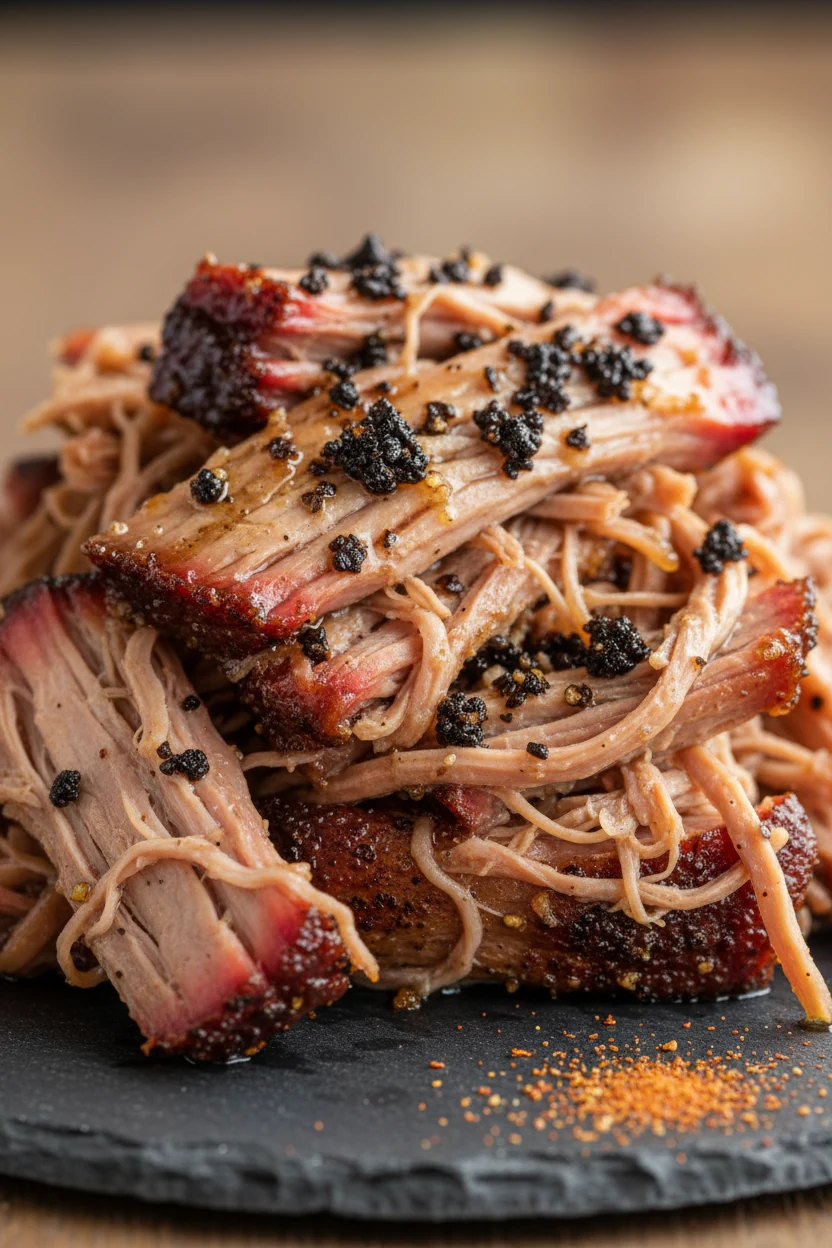
- Pull and season: Remove the bone (it should slide out) and shred with gloved hands or forks. Add a light mop of vinegar, a drizzle of honey, and a pinch of rub to taste. Salt-check—finish with a touch more if needed.
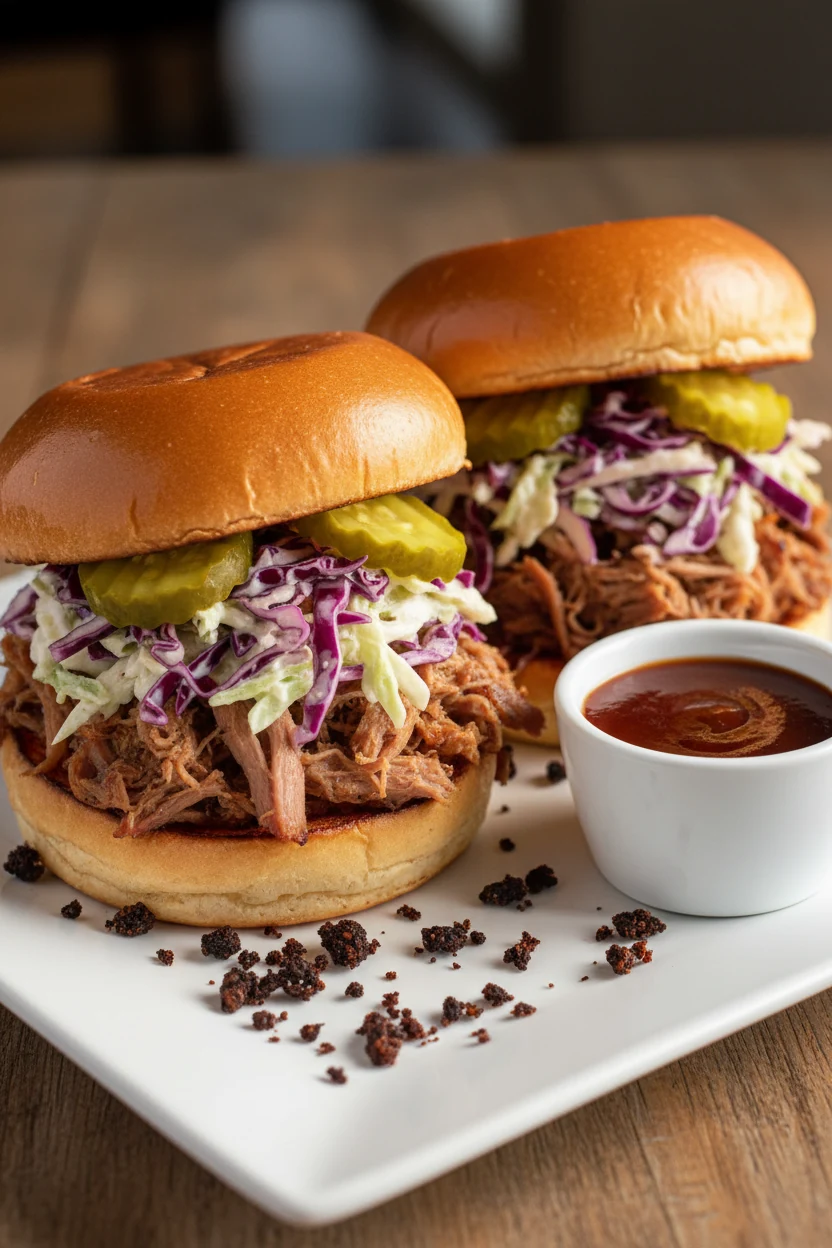
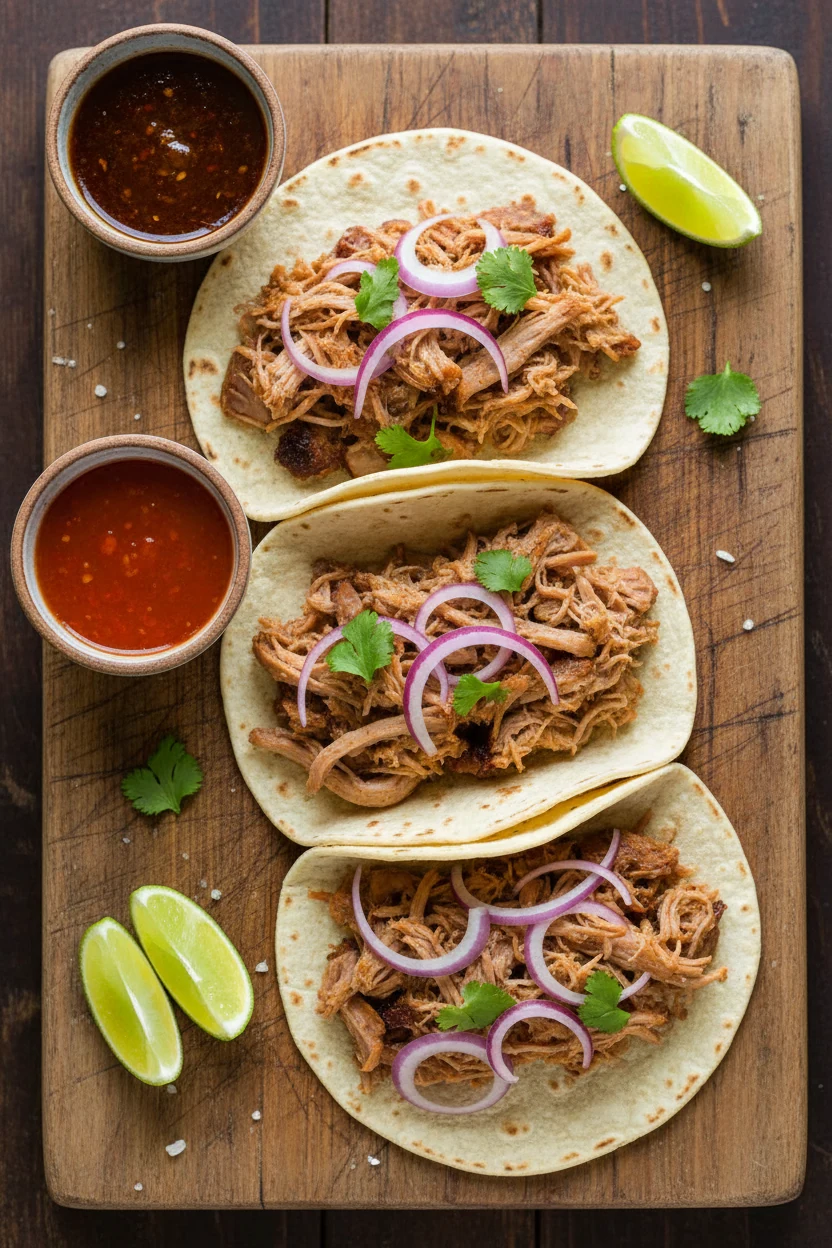
- Serve your win: Pile onto buns with slaw and pickles, or load tortillas with onions and cilantro. Offer sauce on the side, not on the meat—you built flavor, don’t cover it with a blanket.
- Optional crunch play: For extra bark bits, spread some pulled pork on a sheet pan and hit a hot oven for 5–8 minutes to crisp edges. Instant texture upgrade.
How to Store
Cool the pork slightly, then portion into freezer bags or airtight containers while still warm. Add a spoon of spritz or broth to keep it juicy. Label with date so next-month-you doesn’t play mystery meat.
- Fridge: 3–4 days.
- Freezer: Up to 3 months, ideally vacuum-sealed.
- Reheat (best): Sous vide at 165°F for 30–60 minutes, or oven at 300°F covered with a bit of liquid until hot.
- Skillet quick-fry: Medium heat with a splash of oil for crispy ends.
- Avoid: Microwave only if you’re rushed—it can dry edges. Add sauce or broth, cover, and use short bursts.
What’s Great About This
- Repeatable: Clear temps and cues mean you can run this play weekly without surprises.
- Budget friendly: Pork shoulder feeds a squad without wrecking your grocery bill. IMO, it’s the best value in barbecue.
- Flexible flavors: Swap woods or tweak rubs to match your vibe—sweet, spicy, smoky, or clean.
- Scale it: Two shoulders? Same process, just give your smoker elbow room.
- Leftover magic: Nachos, quesadillas, hash, fried rice—pulled pork makes weekday dinners stupid easy.
Don’t Make These Errors
- Chasing thick white smoke: That’s creosote, not flavor. You want thin, blue smoke for clean taste.
- Skipping the rest: Cutting too soon bleeds your hard-earned juices. Rest is non-negotiable.
- Over-spritzing: Too much moisture makes soggy bark and drops chamber temps. Be chill.
- Micromanaging temps: +/- 10°F won’t ruin your day. Stabilize, then trust your setup.
- Wrapping too early: If the bark isn’t set, you’ll get mush. Wait for a dry, crusty surface first.
- Ignoring salt: Salt is the flavor amplifier. Undershoot and you’ll wonder why it tastes flat.
- Opening the lid constantly: You’re not running a nightclub. Every peek dumps heat and humidity.
- Pulling at 195°F just because: Meat’s done when it’s tender, not when a number looks cute.
Mix It Up
- Texas-style brisket: Rub = salt + pepper. Smoke at 250°F, wrap when bark sets and fat jiggles. Finish 203°F, rest 2–4 hours. Wood: post oak.
- St. Louis ribs: Rub = sweet paprika, brown sugar, salt, pepper, garlic. Cook 225°F: 3 hours smoke, 2 hours wrapped, 1 hour sauce/set (the 3-2-1 method). Wood: apple + cherry.
- Chicken thighs: Rub = salt, pepper, paprika, garlic, thyme. Smoke at 275°F to crisp skin. Finish 175°F internal. Brush with hot honey for drama.
- Smoked salmon: Brine 4–6 hours (salt, brown sugar, water). Smoke low at 160–175°F until 120–125°F internal. Wood: alder or apple. Serve with dill yogurt.
- Veggie heavy hitters: Cauliflower “steaks” rubbed with curry and smoked at 250°F until tender; finish with lemon-tahini. Yes, your plants can get smoky too.
- Wood combos to try: Hickory + apple (balanced), cherry + maple (sweet), oak + pecan (nutty). Match wood to protein for signature flavor.
FAQ
What’s the best wood for pork shoulder?
Hickory delivers classic barbecue depth, and apple adds gentle sweetness. Mix them for balance. Cherry is great for color and a mild fruit note if you want a prettier bark.
How long will an 8–10 lb shoulder take?
Plan on 10–14 hours at 225°F, plus a 1–2 hour rest. Variables like stall length, wrap time, and smoker efficiency matter. Trust tenderness over the clock.
Pellet, electric, or charcoal—does it change the process?
The fundamentals stay the same: stable temp, clean smoke, and good airflow. Pellet and electric are easier to manage; charcoal and offset bring stronger smoke but need more babysitting. Pick your vibe.
Do I need a binder like mustard?
It’s optional. Mustard helps the rub stick and creates a thin crust. You won’t taste mustard when it’s done, so don’t overthink it. Oil or hot sauce works too.
What if my bark gets too dark?
Wrap earlier and reduce the spritz frequency. Also check your smoke quality—thick white smoke can soot the bark. If your lid looks like a fog machine, fix your fuel and vents.
Can I smoke in cold weather?
Yes—just use more fuel and shield the smoker from wind. Preheat longer, and keep the lid closed. A welding blanket or insulated cover helps hold heat like a champ.
Is the pink smoke ring safe?
Absolutely. The ring is a reaction between smoke gases and the meat’s surface. Safety comes from internal temperature and time, not color. Hit 200–205°F and rest properly.
Do I need a water pan?
It can help stabilize temps and humidity, especially on charcoal or offset smokers. Pellet smokers often run fine without one. Try both and see what your setup prefers—IMO, consistency wins.
Should I use sauce or keep it dry?
Serve sauce on the side. Let your guests choose. A light vinegar mop in the pull enhances tang without hiding the smoke and bark you worked for.
What’s the right internal temp for pulling?
Start testing at 200°F. You’re looking for probe tenderness—little to no resistance across multiple spots. Many shoulders finish happiest around 203°F, but the feel is the final verdict.
Final Thoughts
Weekends don’t need to be complicated to be epic. With a steady 225°F, a smart wrap, and a proper rest, you’ll turn a humble cut into crowd-pleasing gold. Use this as your base play, then customize woods and rubs until it feels like your signature. Big flavor, low stress—exactly the kind of win your backyard deserves.
Printable Recipe Card
Want just the essential recipe details without scrolling through the article? Get our printable recipe card with just the ingredients and instructions.