Sheet Cake Recipes for Big Wins With Zero Stress
Bake crowd-pleasing slabs for birthdays and potlucks with minimal fuss—big flavor, simple steps, and stress-free frosting.
You want dessert that scales. The kind that feeds a crowd without acting like a diva. This is the slab of happiness you can bake on a Tuesday and serve like a pro on Saturday. It’s high ROI baking: affordable pantry staples, huge flavor payoffs, and minimal cleanup. And yes, you’ll get the frosting-to-cake ratio everyone fights over.
The Secret Behind This Recipe
Great pan cakes come from a smart combo of fat and acid. Butter + oil gives both flavor and lasting moisture, so your slices stay tender even after chilling or transport. Then we use buttermilk, whose gentle acidity relaxes gluten and keeps the crumb soft and velvety.
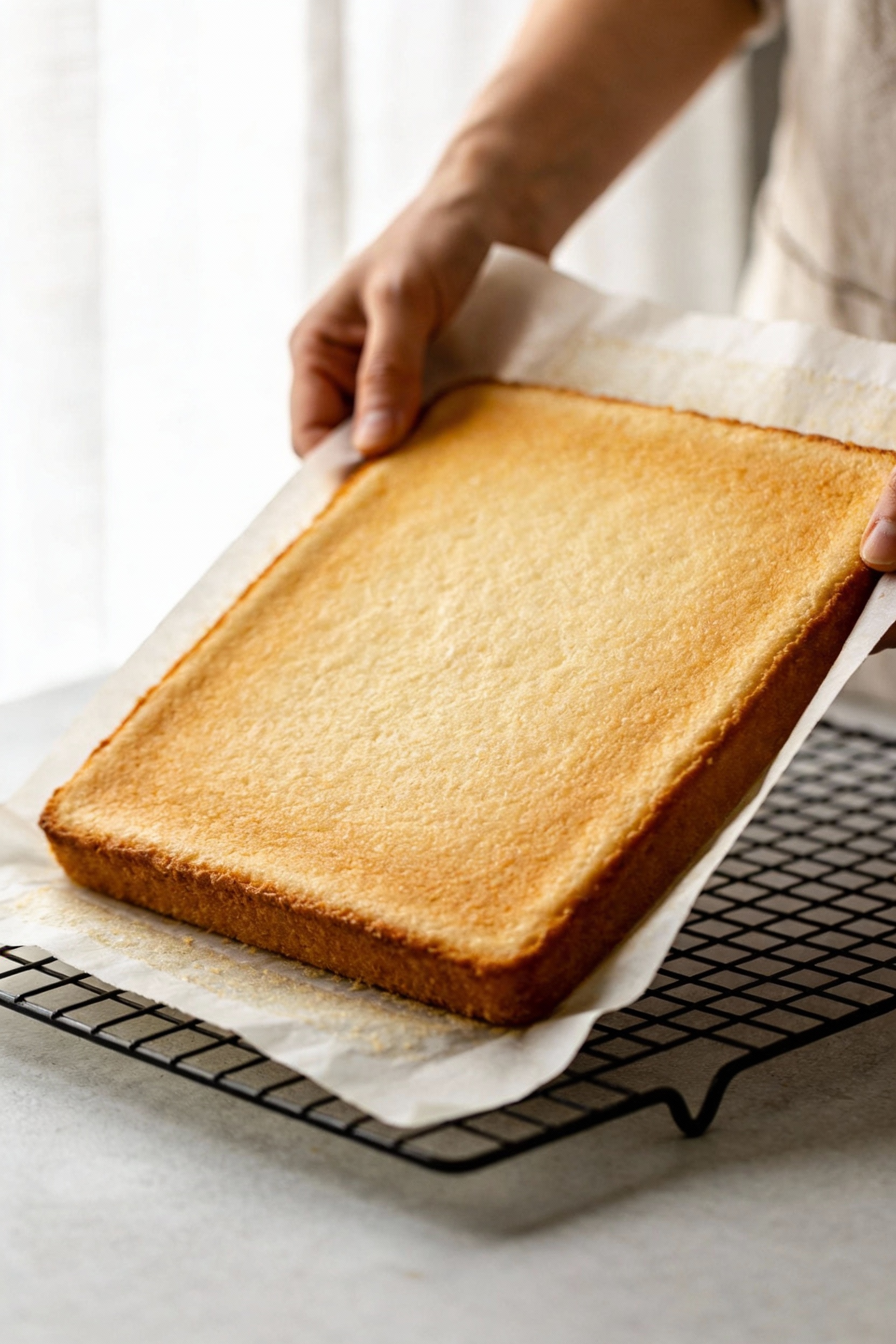
The mixing strategy matters just as much. Rather than whipping in tons of air, we focus on even hydration and minimal gluten development. Whisking dries first, then introducing wet ingredients in stages yields a batter that bakes level with no dramatic domes—perfect for a smooth frosting finish. FYI: that flat surface is your decorating canvas.
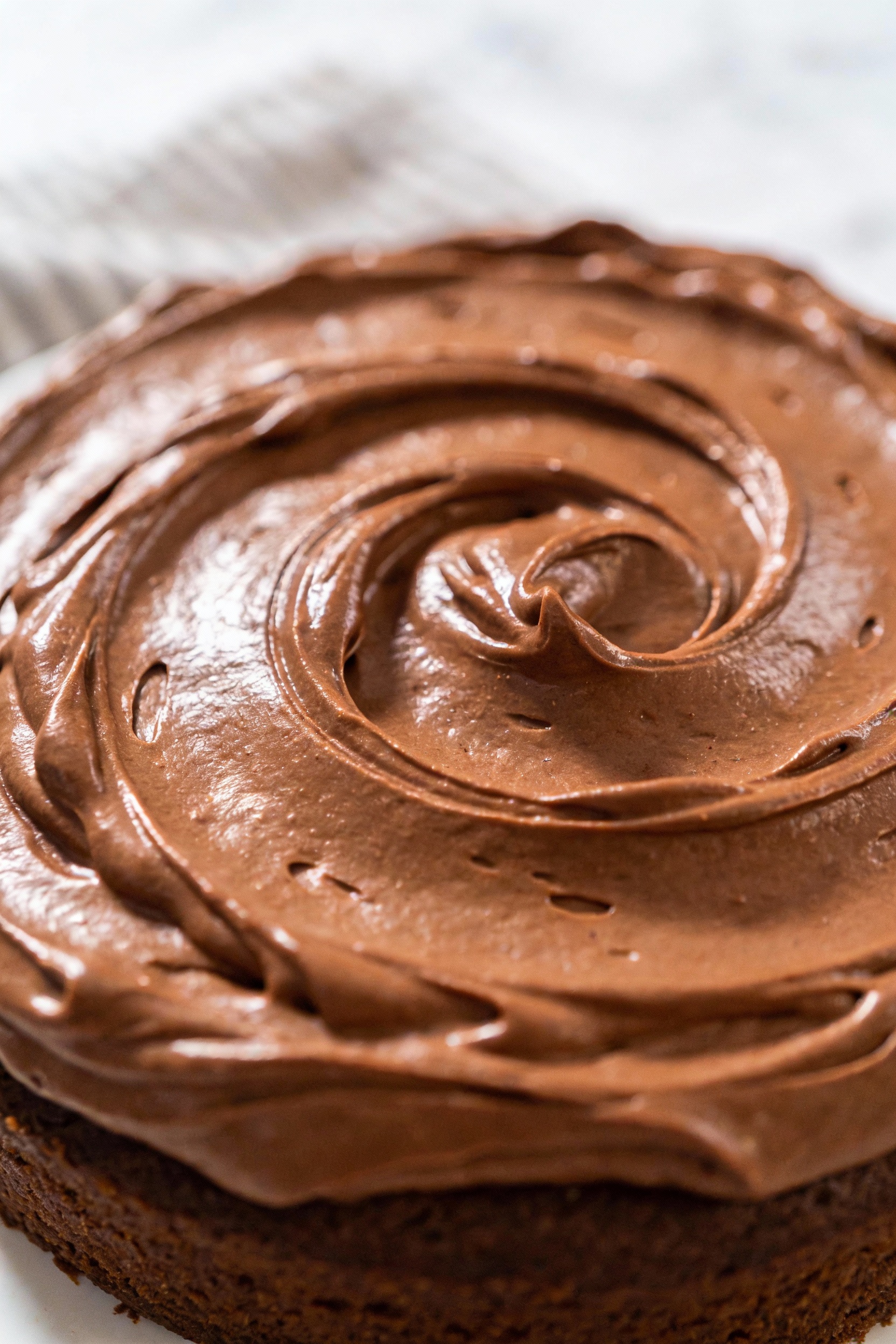
Finally, we target balanced sweetness with a chocolate fudge frosting that’s glossy, spreadable, and stable at room temp. It sets softly, slices clean, and never overwhelms the cake’s vanilla backbone. Crowd-friendly? Absolutely.
Shopping List – Ingredients
For the Cake
- All-purpose flour: 2 1/2 cups (315 g)
- Granulated sugar: 1 3/4 cups (350 g)
- Baking powder: 2 1/2 tsp
- Baking soda: 1/2 tsp
- Fine sea salt: 1 tsp
- Unsalted butter, melted and cooled: 1/2 cup (113 g)
- Neutral oil (canola or grapeseed): 1/2 cup (120 ml)
- Large eggs, room temperature: 3
- Egg yolk, room temperature: 1
- Buttermilk, room temperature: 1 1/2 cups (360 ml)
- Pure vanilla extract: 2 tsp
For the Chocolate Fudge Frosting
- Unsalted butter, softened: 1 cup (226 g)
- Powdered sugar: 3 1/2 cups (420 g), sifted
- Dutch-process cocoa powder: 3/4 cup (75 g), sifted
- Fine sea salt: 1/2 tsp
- Heavy cream: 1/3 to 1/2 cup (80–120 ml), as needed
- Pure vanilla extract: 1 tsp
- Espresso powder: 1 tsp (optional, enhances chocolate)
Optional Toppings
- Rainbow sprinkles or chocolate jimmies
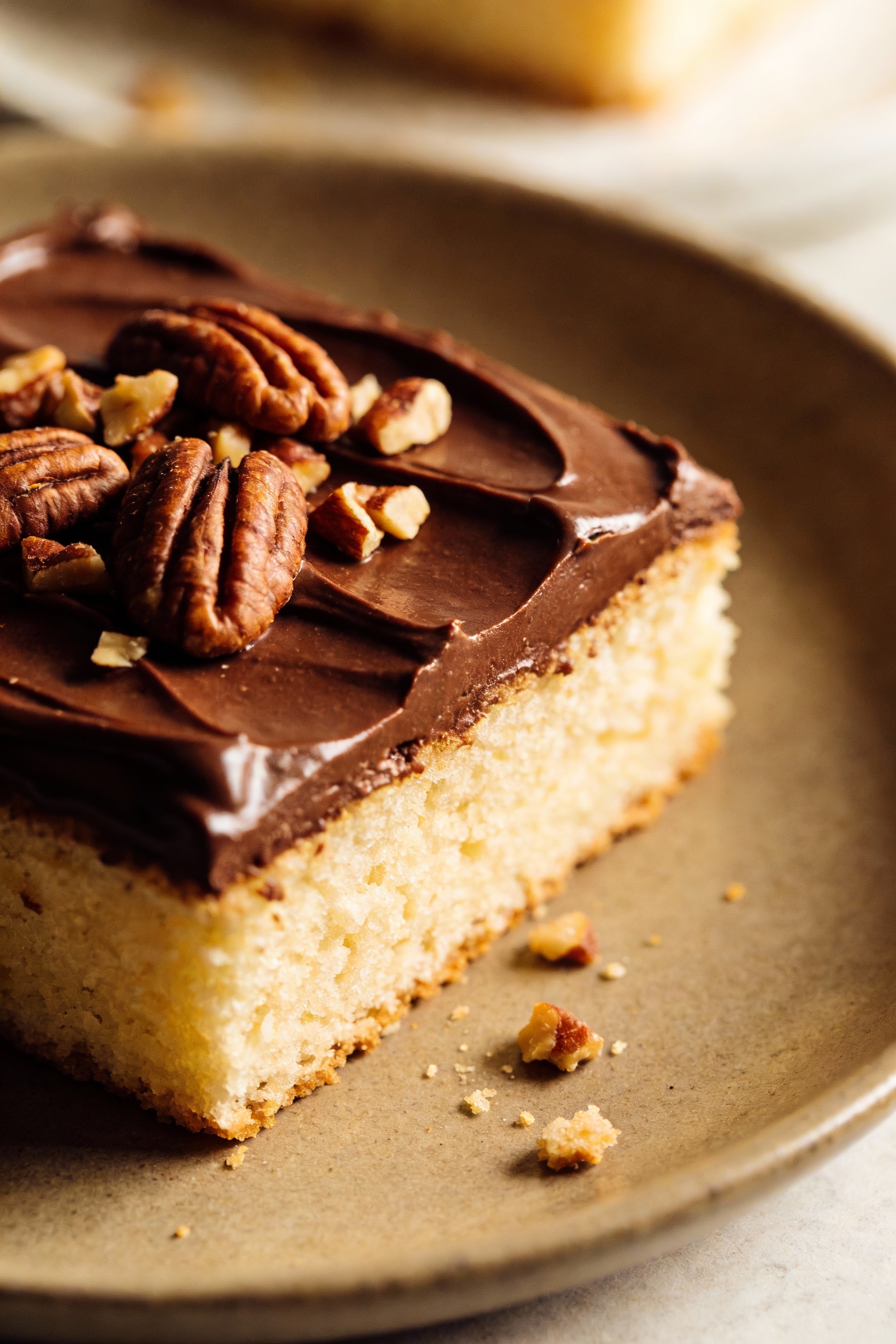
- Chopped toasted nuts (pecans, walnuts)
- Flaky sea salt
Let’s Get Cooking – Instructions
Read through once before you start so your batter and pan timing are on point. The steps are simple, but precision yields bakery-level results.
- Preheat your oven to 350°F (175°C). Grease a 13 x 9-inch pan and line with parchment, leaving an overhang for easy lifting. Lightly grease the parchment too.
- In a large bowl, whisk flour, sugar, baking powder, baking soda, and salt until thoroughly combined and lump-free.
- In a separate bowl or large measuring cup, whisk melted butter, oil, eggs, egg yolk, buttermilk, and vanilla until smooth.
- Pour the wet mixture into the dry ingredients. Whisk gently just until a smooth batter forms; avoid overmixing. The batter should be pourable and glossy.
- Scrape the batter into the prepared pan. Smooth the top with an offset spatula. Tap the pan twice on the counter to pop large air bubbles.
- Bake for 22–28 minutes, rotating the pan at the 15-minute mark. The cake is done when the center springs back and a toothpick comes out with a few moist crumbs.
- Cool the cake in the pan on a rack for 20 minutes. Use the parchment overhang to lift it out and let it cool completely before frosting.
- Make the frosting: In a stand mixer or with a handheld mixer, beat the softened butter on medium until creamy, 1–2 minutes.
- Add powdered sugar, cocoa, and salt. Mix on low to combine, then increase to medium. Add cream gradually until spreadable and fluffy, 2–3 minutes. Beat in vanilla and espresso powder (if using).
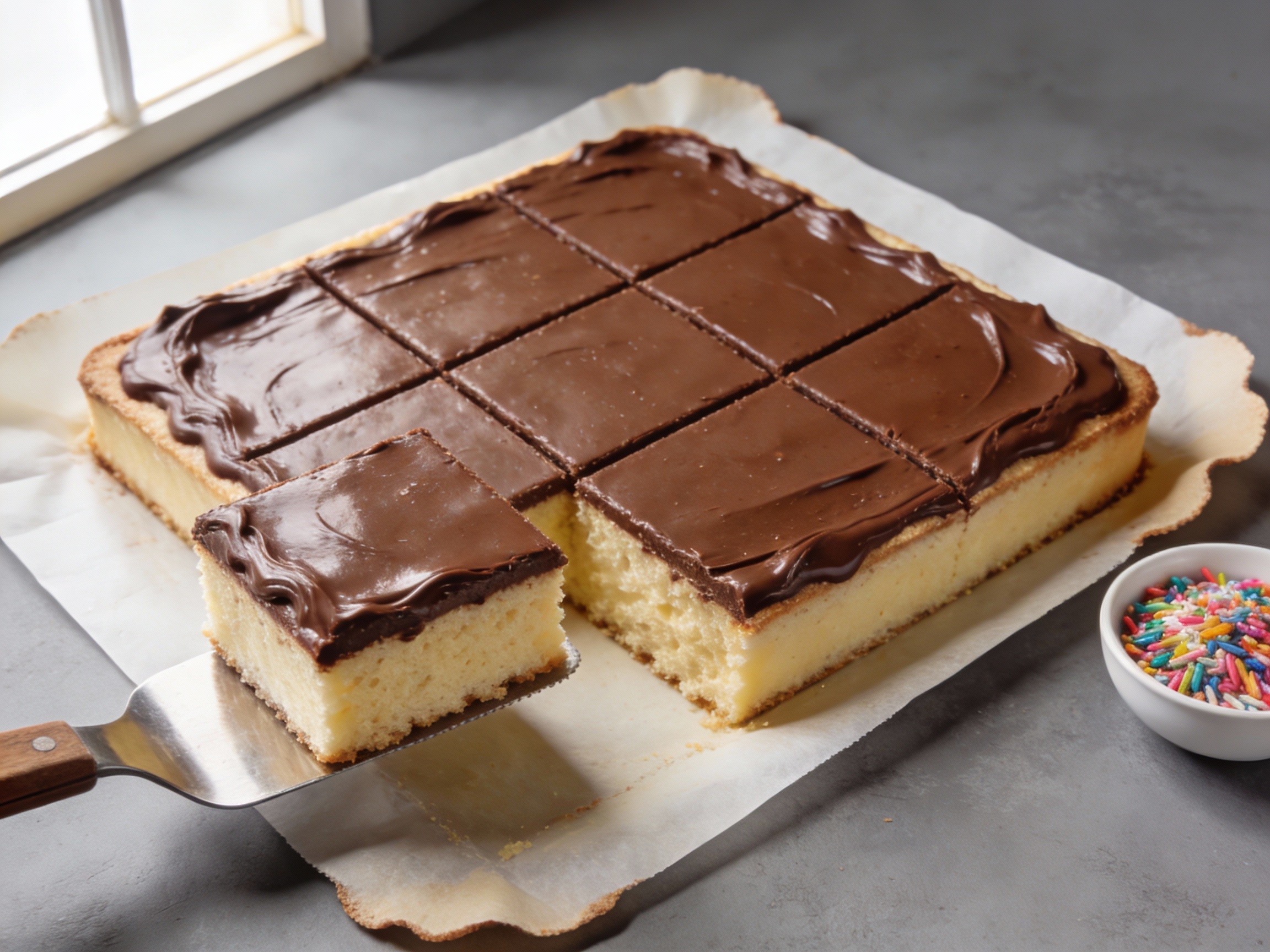
- Once the cake is fully cool, spread a generous, even layer of frosting over the top. Aim for about 1/4 inch thick; add more if your crowd loves frosting.
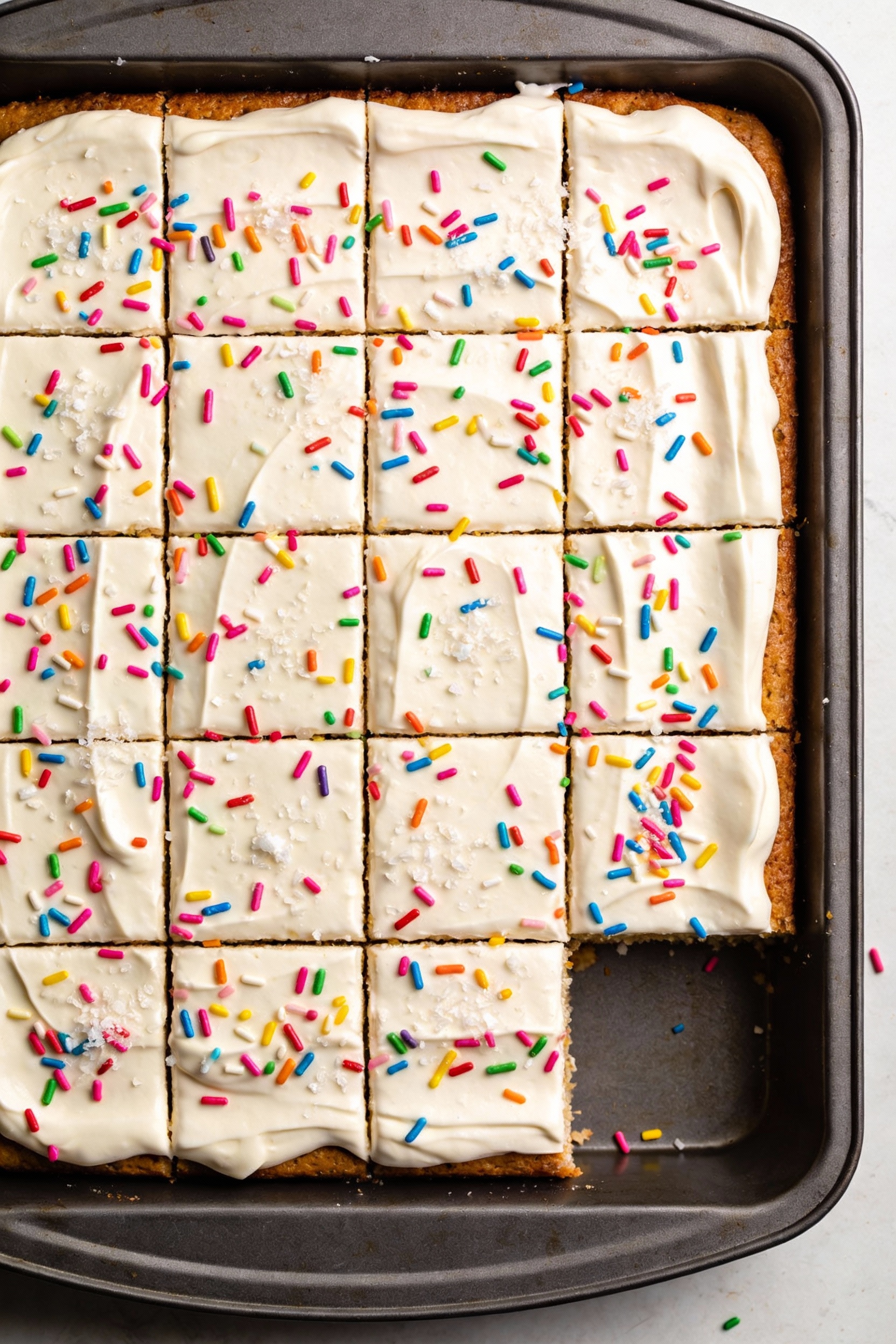
- Finish with sprinkles, chopped nuts, or a pinch of flaky salt. Slice into squares—12 big ones or up to 24 party-friendly pieces.
- Serve at room temperature for best texture. If transporting, refrigerate 30 minutes to lightly set the frosting before covering.
How to Store
At room temperature, this cake stays moist and happy for up to 2 days when covered tightly. If your kitchen is warm or you added dairy-heavy toppings, move it to the fridge.
Refrigerated, it keeps 4–5 days. Wrap the pan well or store slices in an airtight container to prevent drying. Bring slices to room temp for 20–30 minutes before serving to restore the crumb.
Freezing is a power move: wrap unfrosted slabs or individual frosted squares tightly, then freeze up to 2 months. Thaw in the fridge overnight, and re-whip or refresh frosting if needed.
Health Benefits
Let’s be honest: cake is celebration food. Still, there are thoughtful choices here. Cocoa offers polyphenols, and buttermilk adds protein and calcium in modest amounts.
Portion control is built in—sheet cakes slice cleanly, making it simple to serve reasonable pieces. A balanced fat mix (butter plus oil) avoids waxy mouthfeel while keeping moisture and satisfaction high.
Baking at home lets you control additives and reduce overly processed ingredients. And sharing dessert with friends? That’s good for the soul and arguably the most important “benefit.”
Pitfalls to Watch Out For
- Overbaking: Dry edges and a tight crumb happen fast. Check early and pull when crumbs cling to the tester.
- Warm Frosting + Warm Cake: Guaranteed sliding. Cool the cake fully and let the frosting set briefly before transporting.
- Wrong Pan Prep: Skipping parchment or greasing the sides unevenly causes sticking and ragged edges. Neat prep equals neat slices.
- Cold Ingredients: Room-temp eggs and buttermilk incorporate better. Cold dairy can stiffen batter and reduce lift.
- Overmixing: More stirring equals more gluten. Mix just to combine for a tender crumb, IMO.
- Inaccurate Measuring: Too much flour is the #1 dryness culprit. If possible, weigh ingredients; otherwise, fluff, spoon, and level.
- Altitude Ignored: Higher elevations need tweaks. Reduce leaveners slightly and watch bake times.
Variations You Can Try
- Funfetti Party: Fold 1/2 cup rainbow sprinkles into the batter and frost with vanilla buttercream.
- Lemon Glow: Add zest of 2 lemons and 2 tbsp juice to the batter; finish with a tangy lemon glaze instead of chocolate.
- Texas Classic: Make a thinner chocolate sheet in a rimmed half sheet pan and pour warm cocoa icing over the hot cake.
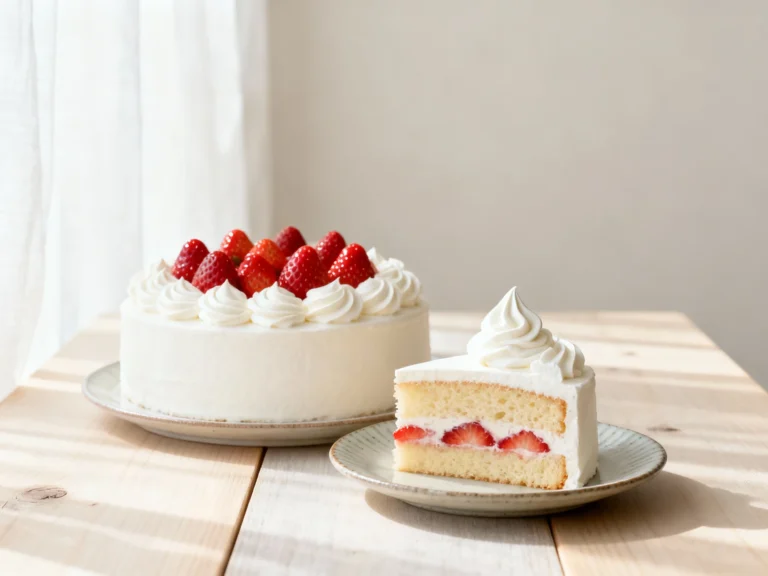
- Strawberry Shortcake: Bake vanilla, top with lightly sweetened whipped cream, and finish with macerated berries.
- Cinnamon Roll Swirl: Marble in a brown sugar–cinnamon swirl and frost with cream cheese icing.
- Coconut Dream: Substitute coconut milk for half the buttermilk; finish with toasted coconut on top.
- Peanut Butter Cup: Frost with peanut butter buttercream and drizzle melted chocolate over the top.
- Carrot Pan Cake: Fold in shredded carrot, crushed pineapple, and walnuts; bake slightly longer and frost with cream cheese.
- Mocha Night: Add 1 tbsp espresso powder to the batter and use the chocolate frosting as written.
FAQ
What pan sizes work besides 13 x 9 inches?
A 13 x 9 is the most forgiving, but you can use a 12 x 17 jelly roll pan for a thinner layer (reduce bake time) or two 8-inch square pans (bake slightly longer). Line and grease well, and watch for doneness cues rather than the clock.
Can I make this gluten-free or dairy-free?
Yes. Use a 1:1 gluten-free all-purpose blend with xanthan gum. For dairy-free, swap buttermilk with 1 1/2 cups oat milk plus 1 tbsp lemon juice or vinegar, and use dairy-free butter in both cake and frosting.
How do I keep the cake extra moist?
Measure flour accurately, use the butter–oil combo, and don’t overbake. A light simple syrup brush (equal parts sugar and water, cooled) on the cake’s surface before frosting also helps maintain moisture.
Do I need a stand mixer?
Nope. A whisk for the batter and a handheld mixer for the frosting is plenty. You can even make the frosting by hand—just be ready for a quick arm workout.
Can I bake this as cupcakes?
Yes. Fill liners two-thirds full and bake at 350°F (175°C) for 18–22 minutes. You’ll get about 24 cupcakes, depending on the liner and scoop size.
How far in advance can I make it?
Bake the cake up to 2 days ahead and store tightly covered. Frost the day of serving for the cleanest edges, or frost and refrigerate up to 24 hours, then bring to room temp.
How much frosting is ideal?
The recipe makes enough for a generous 13 x 9 layer. If you prefer a thinner coat, reduce powdered sugar by 1/2 cup and cream accordingly. For extra-tall frosting lovers, scale the frosting by 1.5x.
What’s the best way to transport to a potluck?
Chill the frosted cake for 30–45 minutes to firm the surface. Cover the pan tightly, keep it flat, and avoid stacking. A pizza box or a cake carrier makes the trip smoother.
How do I adjust for high altitude?
Reduce baking powder to 2 tsp and baking soda to 1/4 tsp, increase oven temp by 15°F (about 10°C), and check early. A splash more buttermilk (1–2 tbsp) can help counter quick drying.
Why did my cake sink in the middle?
Common culprits: underbaking, opening the oven early, or expired leaveners. Ensure your batter is well combined (but not overmixed), and bake until the center springs back and the tester shows moist crumbs.
The Bottom Line
Big flavor, low stress—that’s the whole point here. This pan bake delivers consistent slices, on-time serving, and frosting that behaves IRL. TBH, once you master the method, you’ll swap the fuss for applause. Bake it, slice it, own the moment—and let the crumbs prove you made the right call.
Printable Recipe Card
Want just the essential recipe details without scrolling through the article? Get our printable recipe card with just the ingredients and instructions.