Savory Roasted Root Vegetables: the Easiest Flavorful High Fiber Side Dish
Weeknight-friendly, budget-smart roasted roots with crispy edges and big herb flavor, plus gut-loving fiber—all done on one sheet pan.
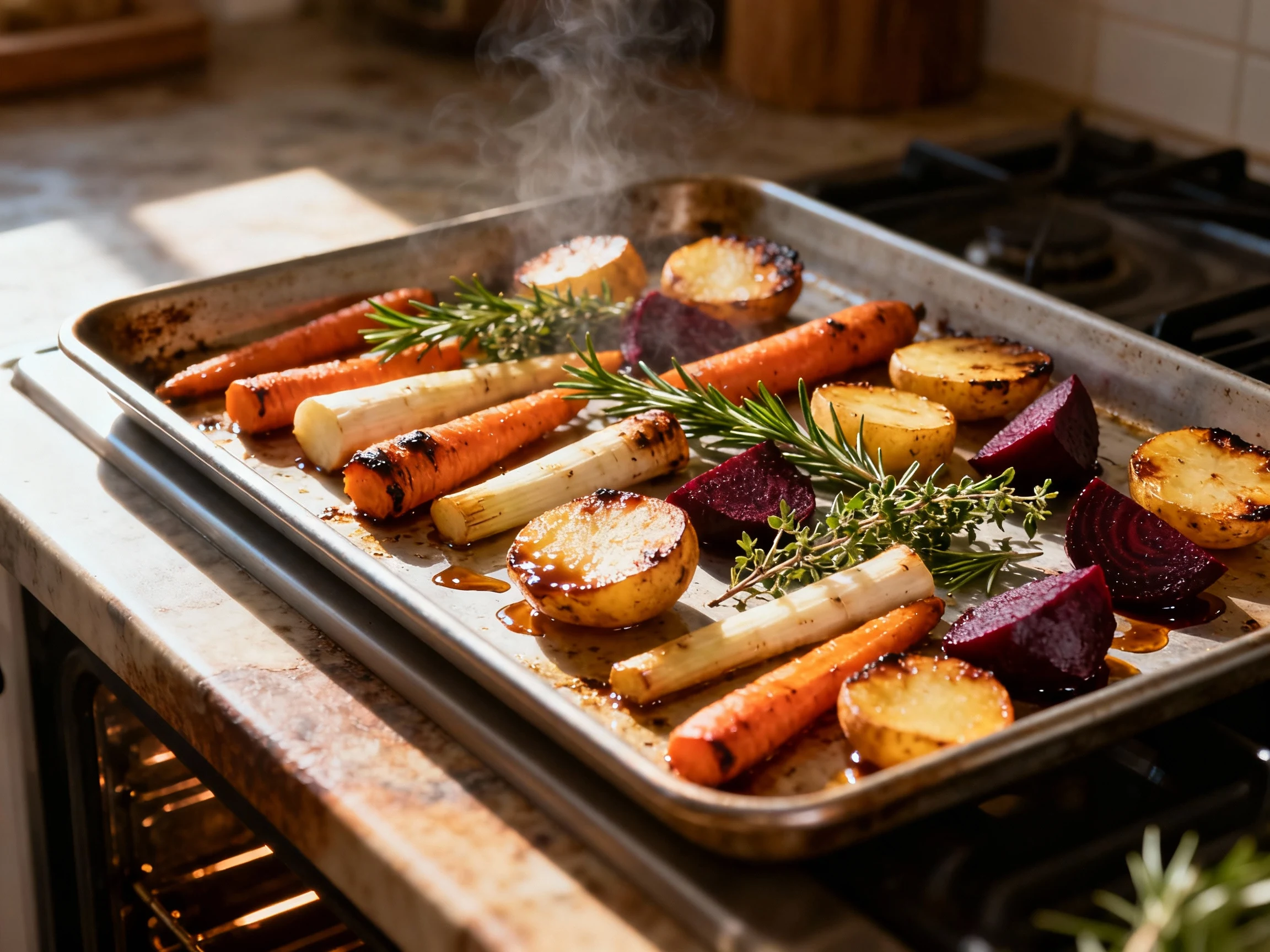
If you can chop, you can win dinner. That’s the whole game here: outrageous flavor, zero fuss, and a tray of caramelized vegetables that make any protein jealous. The secret isn’t exotic ingredients; it’s heat, spacing, and a couple of tiny tweaks that turn “meh” veggies into crunchy, golden greatness. You’ll get a high-fiber, nutrient-dense side that tastes like you tried way harder than you did. Your future self (and your digestive system) will send a thank-you note.
What Makes This Recipe So Good
- Big flavor, minimal effort: A hot oven, a smart spice combo, and fresh herbs do the heavy lifting. You just chop and toss.
- High fiber payoff: Root vegetables pack serious fiber, which helps keep you full and supports a healthy gut.
- Perfectly crispy edges: Preheating the sheet pan and not crowding the tray means browned, caramelized bites—not soggy sadness.
- Budget and pantry-friendly: Carrots, potatoes, beets, parsnips—use what’s cheap and in season. No specialty store flexing required.
- Flexible and forgiving: Mix-and-match roots, swap spices, add a drizzle of balsamic or maple if you like, and it still works.
- Meal-prep gold: Reheats like a champ in the oven or air fryer, so future lunches basically make themselves.
What Goes Into This Recipe – Ingredients
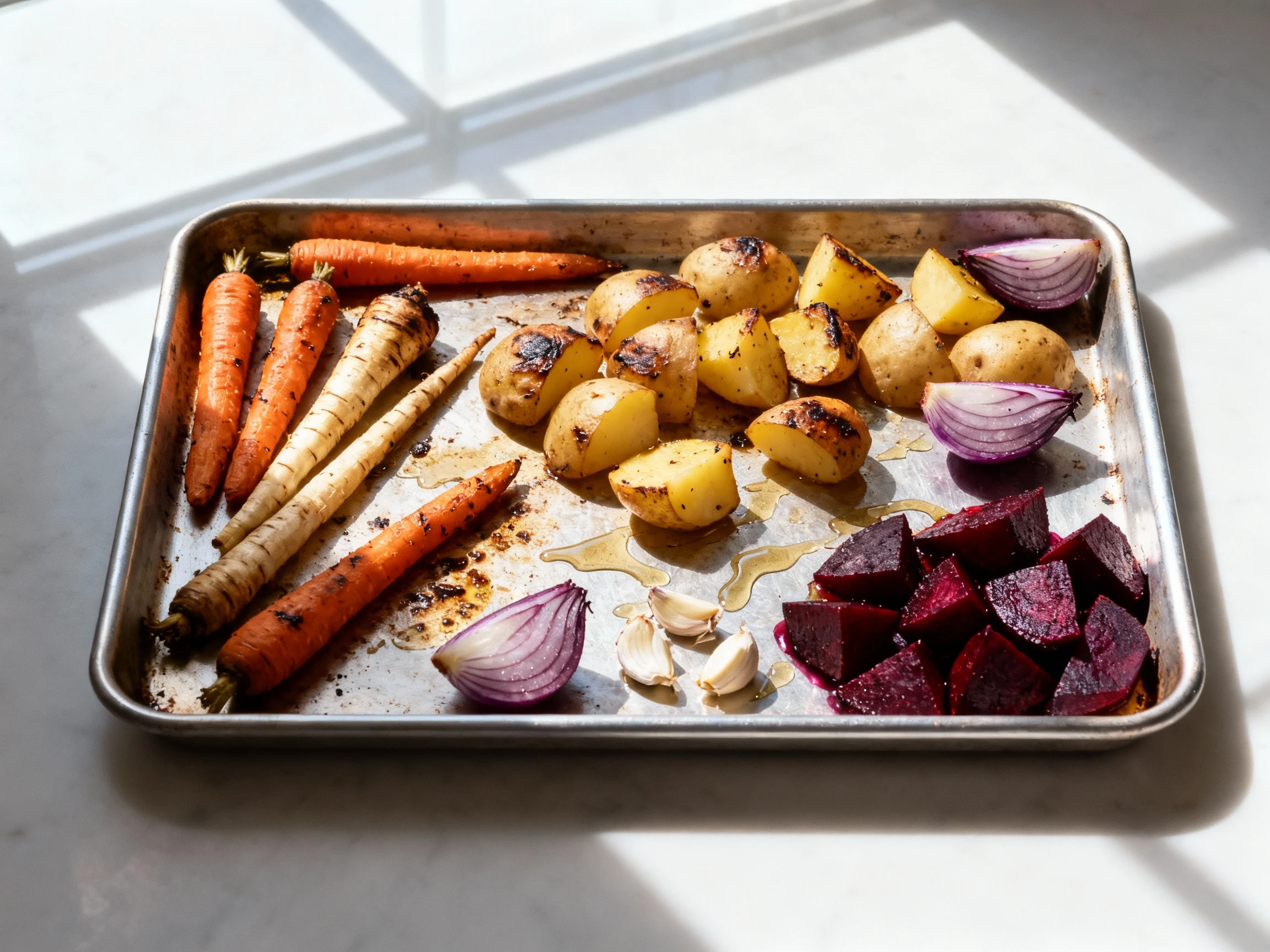
- Carrots: 3 medium (about 300 g), peeled if you like, cut into 1-inch chunks
- Parsnips: 2 large (about 250 g), peeled, 1-inch chunks
- Sweet potato or Yukon gold potato: 1 large (about 350–400 g), 1-inch chunks
- Beets: 2 medium (about 300 g), peeled, 3/4–1-inch wedges (roast separately if you don’t want color bleed)
- Red onion: 1 large, cut into thick wedges
- Garlic: 6 cloves, smashed (keep whole so they don’t burn)
- Olive oil or avocado oil: 3 tablespoons total
- Kosher salt: 1½ teaspoons, plus more to finish
- Freshly ground black pepper: 1 teaspoon
- Smoked paprika: 1 teaspoon (or sweet paprika if you prefer)
- Fresh herbs: 2 teaspoons chopped rosemary + 2 teaspoons chopped thyme (or 1 teaspoon dried each)
- Optional finishing: 1 tablespoon balsamic vinegar or maple syrup, 1 teaspoon lemon zest, chopped parsley
- Optional heat: Pinch of red pepper flakes
Cooking Instructions
- Preheat like you mean it: Heat oven to 425°F / 220°C. Place a large, sturdy sheet pan (or two) inside to preheat for at least 10 minutes. Hot pan = crispy edges.
- Cut for even cooking: Chop roots into uniform 1-inch pieces (beets slightly smaller if you like them extra tender). Keep onions in larger wedges so they don’t burn.
- Dry the veggies: Pat everything very dry with towels. Moisture is the enemy of browning, FYI.
- Season smart: In a big bowl, toss vegetables (except beets if you want to avoid staining) with 3 tbsp oil, 1½ tsp salt, 1 tsp pepper, 1 tsp smoked paprika, and rosemary + thyme. Toss beets separately with a little oil and salt.
- Don’t crowd: Carefully pull the hot sheet pan from the oven and spread vegetables in a single layer with space between pieces. Use two pans if needed. Overlap = steaming, not roasting.
- Roast, then rotate: Roast for 20 minutes. Flip with a spatula, rotate the pan(s), and roast another 15–20 minutes until deeply browned with tender centers.
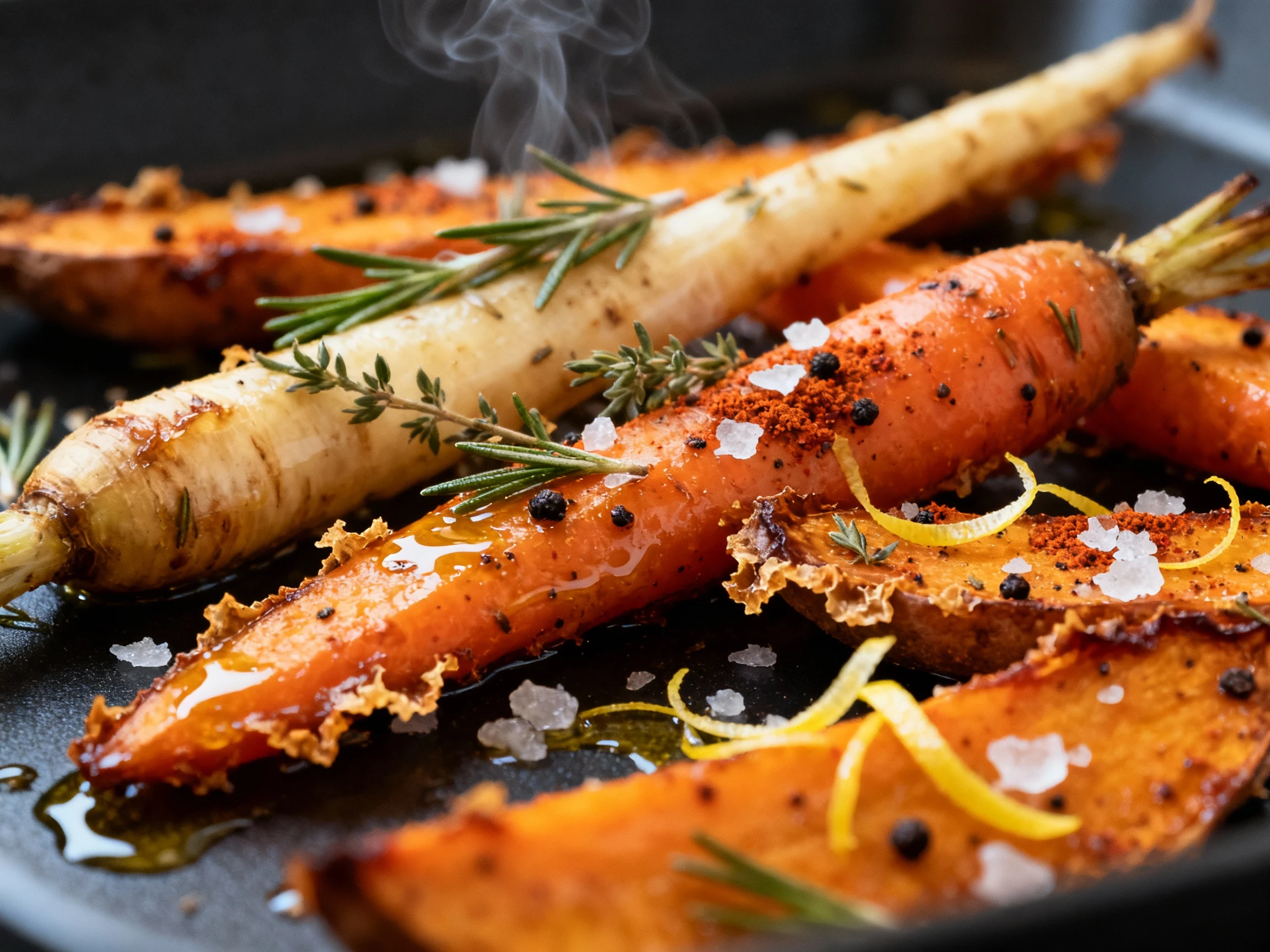
- Finish with flair: In the last 5 minutes, splash on balsamic or maple if using, and add the smashed garlic cloves. Remove from oven, toss with lemon zest and parsley, and finish with a pinch of flaky salt.
- Serve hot: Pair with roasted chicken, salmon, tofu, or grain bowls. Or just stand at the counter and “taste-test.” No judgment.
Storage Instructions
- Cool fast: Spread leftovers so they cool quickly before storing. This helps preserve texture.
- Refrigerate: Store in an airtight container for up to 4 days.
- Freeze: Spread on a tray to freeze, then transfer to bags for up to 2 months. Reheat from frozen at 450°F / 230°C until hot and crisp.
- Reheat best practices: Oven or air fryer at 425–450°F restores crispness. Microwave works, but expect softer edges (still tasty).
- Meal prep tip: Roast a big batch, then refresh with a quick 5-minute broil before serving to wake up the edges.
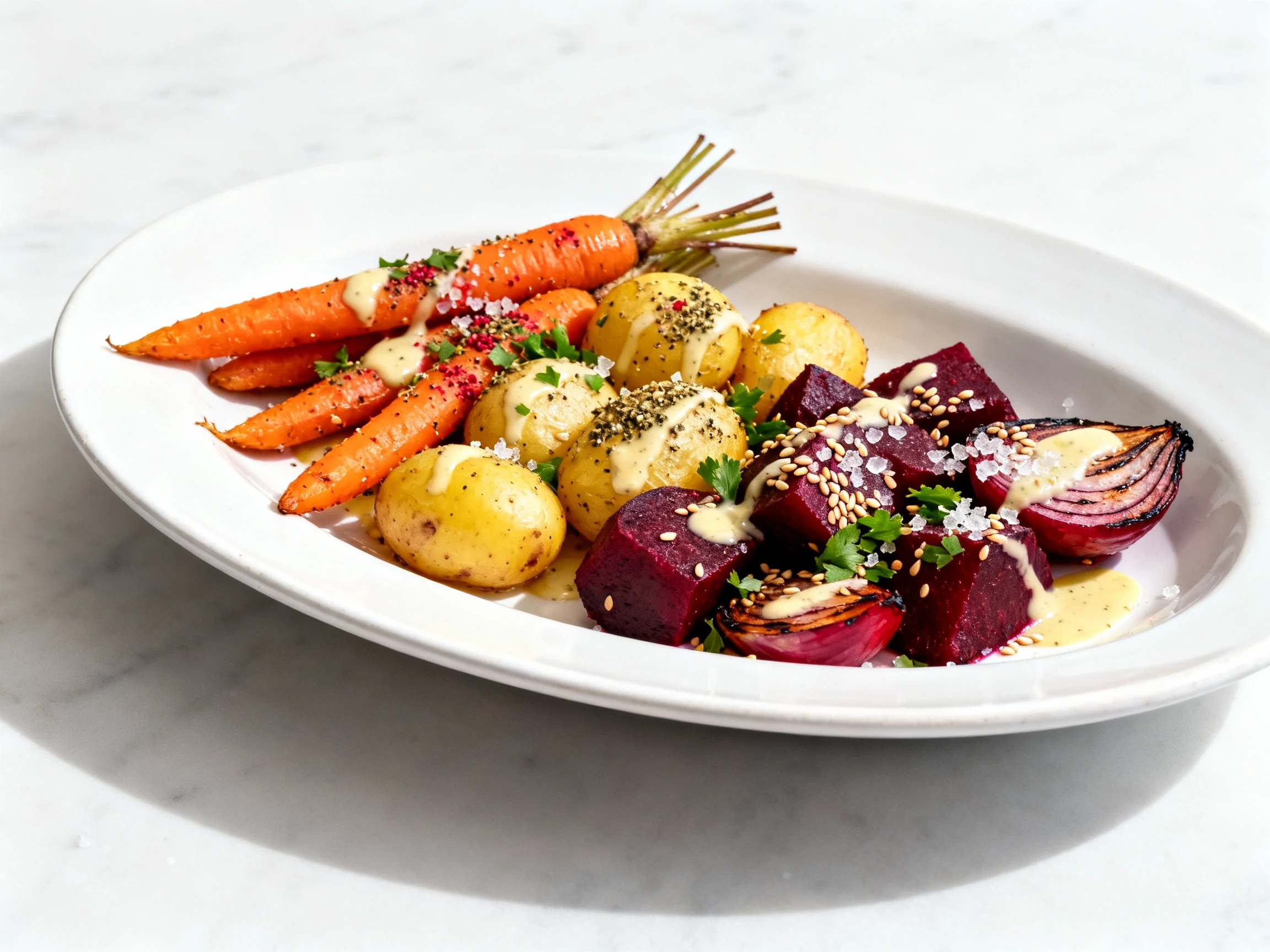
Why This is Good for You
Fiber bomb: Root vegetables like carrots, parsnips, beets, and sweet potatoes deliver roughly 8–12 g fiber per serving (varies by mix), which supports a healthy gut, steady energy, and better fullness. That’s a lot of nutrition for something that tastes like comfort food.
Micronutrient-rich: You’re getting a spectrum of vitamins and minerals: vitamin A (carrots, sweet potatoes), potassium (beets, potatoes), folate (beets), and polyphenols. Translation: antioxidant support without buying a single supplement.
Better-for-you fats: Using olive or avocado oil provides heart-healthy monounsaturated fats, and roasting enhances bioavailability of certain antioxidants. Science and crispy edges can be friends.
Naturally gluten-free and plant-based: Works for most dietary patterns. Add protein on the side and you’ve got a complete plate, IMO.
Don’t Make These Errors
- Crowding the pan: If the vegetables touch, they steam. Steamed root veg are fine; we’re after crispy. Use two pans.
- Skipping the preheat: A cold sheet pan = slow browning. Hot pan gives you that instant sizzle and faster caramelization.
- Uneven cutting: Tiny pieces burn before big ones cook through. Keep sizes consistent for even doneness.
- Too low heat: 350°F won’t cut it for the best browning. Aim for 425°F / 220°C.
- Wet veggies: Don’t rinse right before roasting unless you’re drying aggressively. Water kills crisp.
- Wrong pan: Glass dishes trap moisture. Use a lightly oiled metal sheet pan (rimmed). Parchment can reduce browning—go parchment-free if you can.
- Forgetting to flip: One flip halfway ensures both sides caramelize. Lazy flip = lukewarm browning.
- Beet bleed: Toss beets separately unless you want pink everything. Cute? Sure. Ideal? Not always.
- Oversweetening: A touch of maple or balsamic is plenty. Too much, and you’ll burn the sugars instead of caramelizing.
Variations You Can Try
- Curry-house vibes: 1 tsp curry powder + 1/2 tsp cumin + 1/4 tsp turmeric; finish with cilantro and lime.
- Za’atar + sumac: 2 tsp za’atar + 1/2 tsp sumac; finish with tahini-lemon drizzle and toasted sesame seeds.
- Harissa-maple: 1–2 tsp harissa paste + 1 tbsp maple; finish with mint and a dollop of yogurt.
- Miso-ginger: 1 tbsp white miso + 1 tsp grated ginger + 1 tsp rice vinegar; brush on for the last 10 minutes.
- Herbes de Provence: 2 tsp herbes de Provence; finish with lemon zest and flaky salt for a bistro feel.
- Cheesy finish: Toss hot veggies with 2–3 tbsp grated Parmesan and black pepper. Not vegan, very delicious.
- Add crunch: Toasted walnuts, pecans, or pumpkin seeds added after roasting for texture and extra nutrients.
- Protein upgrade: Add seasoned chickpeas to the pan for the last 20 minutes, or serve with roasted tofu/chicken on top.
- Low-oil method: Use 1 tbsp oil plus 2 tbsp vegetable broth to coat, roast on convection, and finish under broil. Still crisp, FYI.
FAQ
Do I need to peel the vegetables?
Nope. Peeling is optional for carrots, parsnips, and potatoes if you scrub them well. Beets and thick-skinned roots (like rutabaga) are nicer peeled for texture, but it’s your call.
What’s the best oven temperature for roasting root vegetables?
425°F / 220°C hits the sweet spot: fast caramelization without burning. Go up to 450°F if your pan isn’t crowded and you want extra browning.
How do I prevent soggy vegetables?
Dry them thoroughly, preheat the sheet pan, don’t crowd, and use enough oil to lightly coat. Flip halfway through and finish with a short broil if needed for extra crisp.
Which root vegetables roast best?
Carrots, parsnips, beets, potatoes, sweet potatoes, turnips, rutabaga, and celery root are all great. Mix starchy (potato) with sweet (carrot) and earthy (beet) for flavor balance.
Can I make these ahead of time?
Yes. Roast, cool, and refrigerate up to 4 days. Reheat on a hot sheet pan at 425–450°F for 8–12 minutes to restore crisp edges. A quick broil at the end is clutch.
Can I use an air fryer instead?
Absolutely. Set to 400°F, cook in batches for 15–20 minutes, shaking halfway. Smaller batches and stronger air circulation mean extra crisp in less time.
How do I keep beets from staining the other vegetables?
Toss and roast beets on a separate corner of the pan or on their own pan, then combine right before serving. Or embrace the pink and call it a design choice, IMO.
Are roasted root vegetables good for blood sugar?
They contain natural carbs, but the fiber slows absorption. Pairing with protein and healthy fats helps balance the meal. For specific health needs, check with a professional, FYI.
My Take
This is one of those recipes that quietly upgrades your weeknight game. It’s inexpensive, shockingly satisfying, and flexible enough to match whatever’s in the crisper. When you nail the basics—hot pan, dry veg, no crowding—you get restaurant-level caramelization at home. Add your favorite finish (balsamic, lemon zest, herbs), and suddenly vegetables are the star, not the afterthought. Simple, bold, and fiber-rich: exactly how I like my side dishes to behave.
Printable Recipe Card
Want just the essential recipe details without scrolling through the article? Get our printable recipe card with just the ingredients and instructions.