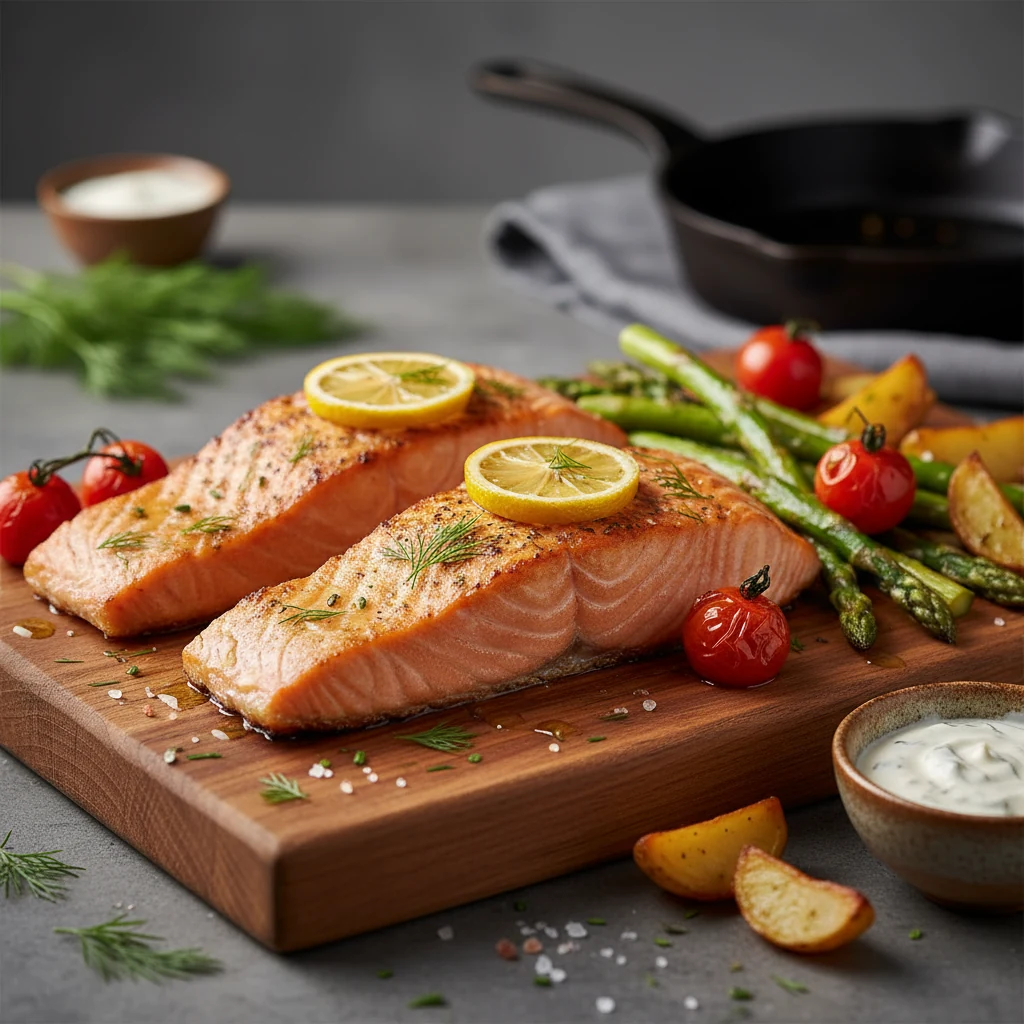
Salmon Recipes Baked Oven That Nail Weeknight Dinners
Crispy edges, tender centers, and big flavor in 20 minutes. Perfect for busy nights, meal prep, and impressing guests without stress.
You want dinner that hits like a cheat code: fast, forgiving, and shockingly good. This is that play. No frying mess. No 27-step marinade. Just high-heat roasting, a smart glaze, and a finish that tastes like you tried way harder than you did. Your smoke alarm? Off duty. Your taste buds? Very much employed.
Why This Recipe Works
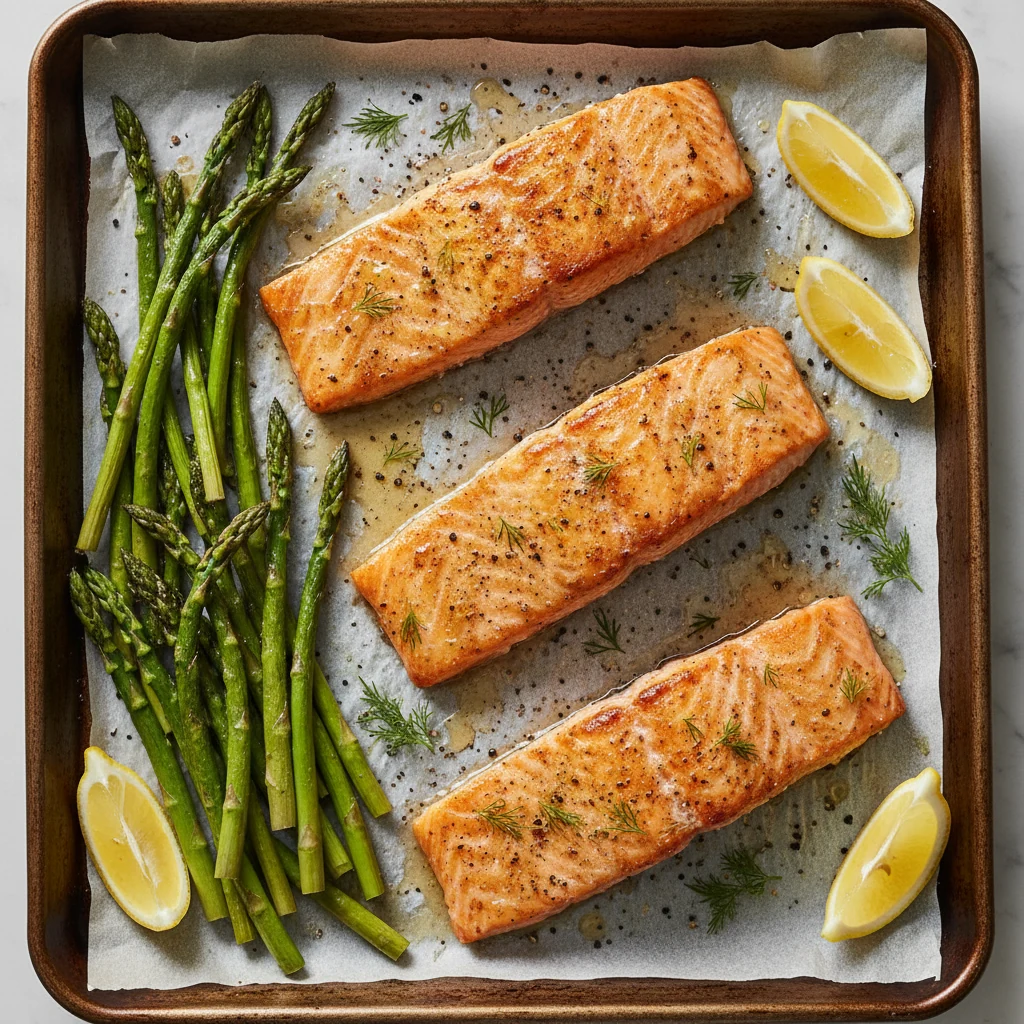
This method leans on high heat and a strategic glaze to deliver juicy salmon with a lightly caramelized top. The best part: you can memorize the formula and repeat it forever. Because predictable results taste better, IMO.
- High heat, short time: Roasting at 425°F (220°C) sets the exterior while keeping the center silky. No overcooked, chalky fish.
- Balanced glaze = flavor insurance: A 1–1–1 ratio of fat + acid + sweet (oil, lemon, honey) locks in moisture and adds shine.
- Skin-on, skin-down: The skin acts as a natural shield on the hot pan, preventing dry outs and sticking.
- Pan setup matters: Parchment or foil on a heavy sheet pan creates even heat and breezy cleanup.
- Carryover finish: Pull at 120–125°F for medium-rare or 130–135°F for medium; temp rises a couple degrees while resting.
- Scales up easily: The same technique works for two fillets or a whole side—no drama.
What You’ll Need (Ingredients)
- 4 salmon fillets (skin-on), 5–6 oz each, about 1-inch thick
- 2 tbsp olive oil (or melted unsalted butter)
- 3 garlic cloves, finely minced
- 1 tsp lemon zest + 2 tbsp lemon juice
- 1 tbsp Dijon mustard
- 1½ tbsp honey (or pure maple syrup)
- 1 tsp smoked paprika (or sweet paprika)
- 1¼ tsp kosher salt (reduce to 1 tsp if using table salt)
- ½ tsp black pepper
- ¼ tsp red pepper flakes (optional, for gentle heat)
- 2 tbsp chopped fresh dill or parsley
- Lemon wedges or thin slices, for serving
- Parchment paper or foil, for lining the pan
- (Optional) Quick-roast veggies: 1 lb asparagus or broccolini, tossed with 1 tbsp oil, ½ tsp salt
Let’s Get Cooking – Instructions
- Preheat the oven to 425°F (220°C). Place a rack in the middle position.
- Line a sturdy sheet pan with parchment or foil for easy cleanup. If using foil, lightly oil the surface.
- Pat the salmon dry with paper towels. Dry surfaces sear and glaze better—moisture is the enemy of caramelization.
- Whisk the glaze: In a bowl, combine 2 tbsp olive oil, 1 tbsp Dijon, 1½ tbsp honey, 2 tbsp lemon juice, 1 tsp lemon zest, 3 minced garlic cloves, 1 tsp smoked paprika, 1¼ tsp kosher salt, ½ tsp black pepper, and red pepper flakes if using. Reserve 1 tbsp of this mixture in a separate cup for finishing.
- (Optional) Prep veggies: Toss asparagus or broccolini with a little oil and salt. Spread on one side of the pan.
- Place salmon skin-side down on the pan. Leave a little space between fillets to promote even heat.
- Brush on the glaze generously. Coat the tops and sides; the thicker the layer, the better the shine.
- Bake for 8–12 minutes, depending on thickness and desired doneness. Aim for an internal temp of 120–125°F for medium-rare, 130–135°F for medium, or 140–145°F if you prefer well-done.
- Optional broil: For light caramelization, switch to broil for 1–2 minutes at the end. Watch closely—sugar can go from bronzed to burned fast.
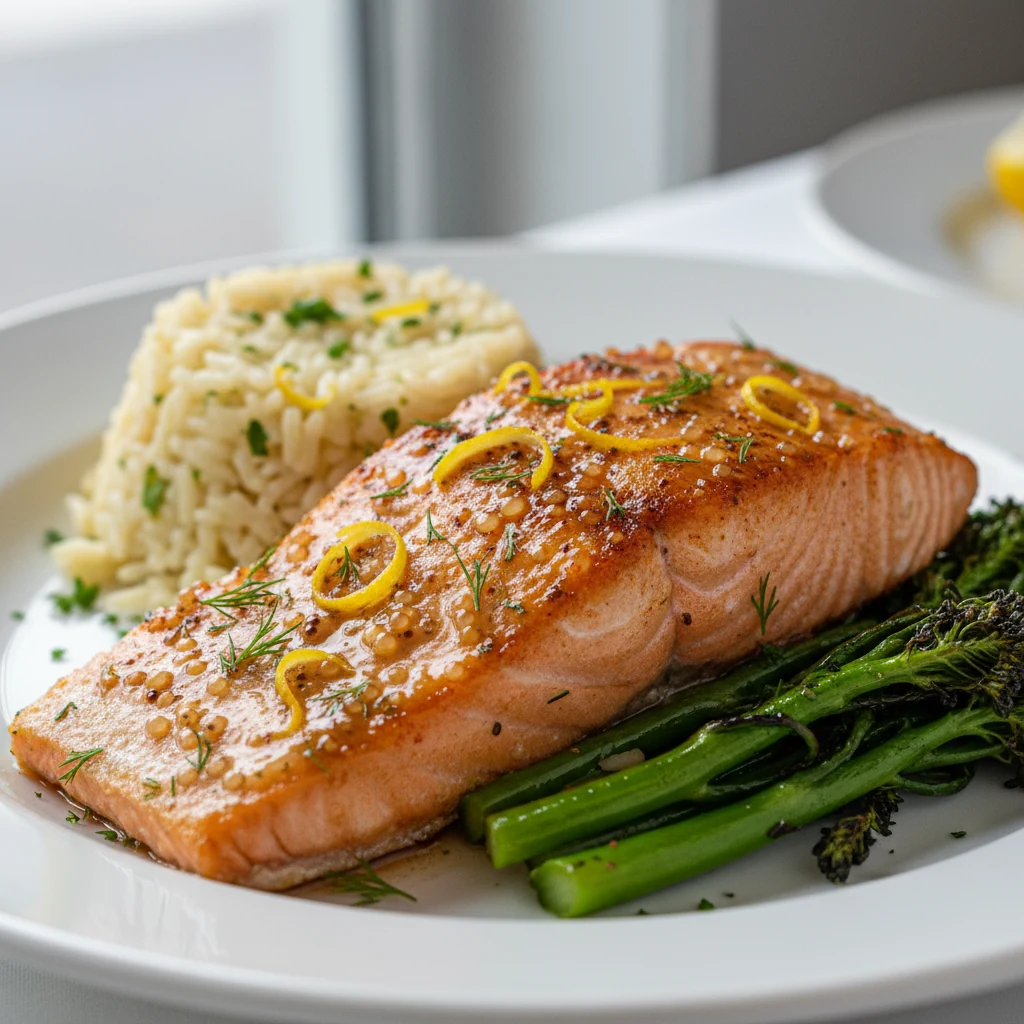
- Rest 3 minutes. Spoon the reserved glaze over the fish, shower with 2 tbsp chopped herbs, and finish with lemon wedges.
- Serve immediately with your favorite sides—roasted potatoes, rice, a crisp salad, or those sheet-pan veggies you smartly added.
Storage Tips
- Cool quickly: Transfer to containers within 1 hour of cooking.
- Refrigerate in an airtight container for up to 3–4 days.
- Reheat gently: Oven at 275°F for 10–12 minutes, or microwave at 50% power in 30–45 second bursts to avoid drying.
- Freeze (if needed): Wrap tightly and freeze up to 2–3 months. Thaw overnight in the fridge; reheat low and slow.
- Leftover glow-up: Flake cold salmon into salads, grain bowls, tacos, or a herby yogurt wrap. FYI, it’s fantastic in an omelet.
What’s Great About This
- Speed: 5-minute prep, 10-minute bake. Dinner in 20, tops.
- One-pan simplicity: Minimal dishes, maximum payoff.
- Memorable ratios: 1 fat + 1 acid + 1 sweet. You’ll never forget it.
- Flexible protein: Works with wild or farmed, fillets or a whole side.
- Meal-prep friendly: Tastes great hot or cold and holds for days.
- Restaurant vibes: Glossy glaze, fresh herbs, bright lemon—simple but “wow.”
Avoid These Mistakes
- Overcooking: Use a thermometer. Pull early; carryover heat finishes the job.
- Skipping the pat-dry: Wet fish = steamed fish. You want roasted, not soggy.
- Crowding the pan: Leave space so heat can circulate, or you’ll get pale, weepy fillets.
- Cold fish into a hot oven: Let fillets sit 10–15 minutes at room temp for even cooking.
- Too low a temp: 350°F can dull the texture. 425°F is the sweet spot for speed and juiciness.
- Putting lemon slices on raw fish: The pith can turn bitter; add slices in the last few minutes or at the end.
- Glaze mismanagement: Don’t drizzle used glaze after baking. Reserve clean glaze upfront for finishing.
Variations You Can Try
- Lemon-Dill Butter: Swap oil for 2 tbsp melted butter, add extra dill, skip paprika. Finish with flaky salt.
- Maple-Soy Ginger: Use 1½ tbsp maple + 1 tbsp low-sodium soy + 1 tsp grated ginger. Garnish with scallions and sesame.
- Cajun Lime: Replace paprika with 2 tsp Cajun seasoning; finish with lime zest and juice.
- Pesto Panko Crust: Spread 2 tbsp pesto on top; press on ¼ cup panko mixed with 1 tsp olive oil. Bake as directed.
- Miso-Sesame: Whisk in 1 tbsp white miso and 1 tsp sesame oil; top with toasted sesame seeds.
- Harissa Yogurt: Mix 2 tbsp Greek yogurt with 1 tbsp harissa and lemon; spread thinly on fillets before roasting.
- Tomato-Olive Mediterranean: Top with cherry tomatoes, Kalamata olives, and oregano; drizzle with oil, bake, then add a squeeze of lemon.
- Sheet-Pan Supper: Add asparagus or broccolini to the pan. Start petite potatoes first at 425°F for 15 minutes, then add salmon for the final 10.
FAQ
What temperature should I bake salmon, and for how long?
425°F (220°C) for 8–12 minutes is the sweet spot for 1-inch-thick fillets. Thinner pieces can be done in 7–9 minutes; thicker ones need 12–14. Aim for 120–125°F internal for medium-rare, 130–135°F for medium, or up to 145°F if you prefer well-done.
How do I tell when salmon is done without a thermometer?
Press the top gently; it should flake easily but still feel springy, not firm. The center should be slightly translucent and turn opaque as it rests. If white albumin (the white stuff) leaks out aggressively, you’re close to overdone—pull it.
Should I bake salmon with skin on or off?
Skin-on is best for baking. It helps prevent sticking, protects the flesh from heat, and keeps moisture in. After cooking, the fillet lifts off the skin easily with a spatula.
Can I use a whole side of salmon instead of fillets?
Absolutely. Roast a 2–2.5 lb side at 425°F for 12–16 minutes, depending on thickness. Check multiple spots for temperature and rest for 5 minutes. Slice into portions at the end for a clean presentation.
Is wild or farmed salmon better for this method?
Both work. Wild cooks a touch faster and can be leaner; start checking early. Farmed is usually richer and more forgiving. Choose the freshest you can find—smell should be clean and oceany, not fishy.
Can I bake salmon from frozen?
Yes, but adjust expectations. Bake at 400°F for 18–22 minutes, brushing on glaze halfway through once the surface thaws. Texture won’t be quite as silky as thawed, but it’s still solid on a busy night.
Do I need to rinse salmon before cooking?
Nope. Rinsing can spread bacteria and adds surface moisture. Just pat dry thoroughly with paper towels and season.
What sides pair best with oven-baked salmon?
Think contrast and crunch: roasted potatoes, lemony rice, garlicky green beans, a simple arugula salad, or charred asparagus. A creamy sauce like herby yogurt or a quick tartar also slaps, TBH.
How do I avoid that “fishy” smell?
Fresh salmon shouldn’t smell fishy. Buy from a high-turnover source, cook soon after purchase, and store cold. If you’re sensitive, a 10-minute milk soak before pat-drying can mellow stronger aromas.
Any rule of thumb for timing by thickness?
A good guide is 4–6 minutes per ½ inch of thickness at 425°F. But ovens vary, so use visual cues and, when possible, a thermometer for accuracy.
My Take
This is the kind of dinner that raises your household batting average. It’s fast, consistent, and customizable—everything a weeknight recipe should be. Once you memorize the glaze ratio, you’ll freestyle flavors without breaking a sweat.
Make it once as written, then start swapping: maple for honey, lime for lemon, Cajun for paprika. Keep the heat high, the timing tight, and the finish fresh. The result? A plate that looks fancy and cooks itself while you set the table—win-win.
Printable Recipe Card
Want just the essential recipe details without scrolling through the article? Get our printable recipe card with just the ingredients and instructions.