Roast Beef Recipes That Nail Dinner Every Single Time
Weeknight-easy method, holiday-worthy flavor: choose the right cut, master temps, and get juicy slices with a crisp crust.
You want juicy, blush-pink slices that taste like a steakhouse flex and carve like a dream. The problem? Most folks either torch the outside or dry the center—then blame the oven. Today, you’ll get a simple, repeatable system that turns a budget roast into VIP beef with zero culinary drama. We’ll pick the right cut, set the exact temps, and lock in the crust. FYI: your thermometer is the hero of this story.
Why You’ll Love This Recipe
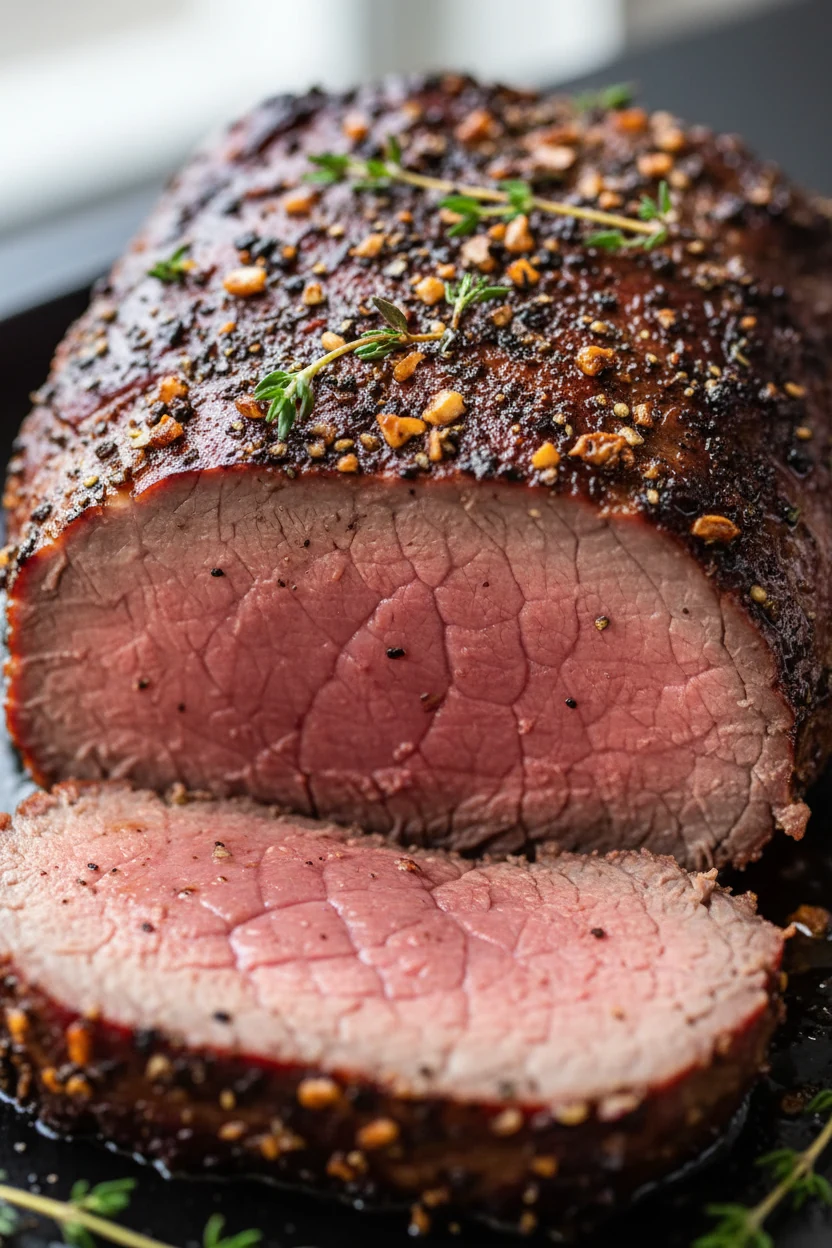
- Edge-to-edge pink perfection: Reverse-sear technique keeps the center juicy and the crust crackly.
- Works with affordable cuts: Eye of round, top sirloin, or chuck—no prime rib required (unless you want it).
- Minimal ingredients, max flavor: Salt, pepper, garlic, and herbs deliver a steakhouse-level result.
- Fail-proof temperatures: Clear targets for medium-rare, medium, and beyond—no guesswork.
- Scales for crowds: Double the roast, same method. Your oven won’t panic.
- Great for meal prep: Slices stay tender for sandwiches, bowls, and quick weeknight dinners.
- Pan jus included: A fast, savory sauce from the drippings that tastes like you tried way harder.
Ingredients
For the Roast
- 1 whole beef roast (3–4 lb) — top sirloin, eye of round, ribeye roast, or top round
- 2–2.5 tsp kosher salt (about 1/2 tsp per lb)
- 1–1.5 tsp freshly cracked black pepper
- 1.5 tsp garlic powder (or 3 cloves garlic, finely grated)
- 1 tsp onion powder
- 1 tsp dried thyme or rosemary, crushed
- 1–2 tbsp olive oil (for searing)
- Optional: 1 tsp smoked paprika for a subtle BBQ vibe
Quick Pan Jus
- 1 cup low-sodium beef broth
- 1/2 cup dry red wine (or more broth)
- 1 tsp Worcestershire sauce
- 1 tsp Dijon mustard
- 1 tbsp cold butter (to finish)
Optional Horseradish Cream
- 1/2 cup sour cream or Greek yogurt
- 1–2 tbsp prepared horseradish
- 1 tsp lemon juice, pinch of salt, and black pepper
Step-by-Step Instructions
- Dry-brine the roast. Pat the meat dry. Season all over with kosher salt (about 1/2 tsp per lb). Place on a rack over a tray, uncovered, in the fridge for 12–24 hours. This step boosts flavor and juiciness.
- Mix the rub. Combine pepper, garlic powder, onion powder, thyme, and paprika (if using). When ready to cook, rub the roast evenly with the mix.
- Bring to room temp. Take the roast out of the fridge for 45–60 minutes. This helps it cook evenly. No, it won’t “spoil”—calm the drama.
- Preheat low and set up. Heat oven to 250°F (120°C). Set the roast fat-cap up on a wire rack over a rimmed sheet. Insert a probe thermometer into the thickest part.
- Slow-roast to target. Roast until internal temp hits 120–125°F (49–52°C) for medium-rare, 130°F (54°C) for medium. Expect roughly 25–35 minutes per lb at 250°F, but trust the thermometer.
- Rest like a pro. Transfer roast to a board and tent loosely with foil for 20–30 minutes. Temperature will rise by 5–10°F, juices redistribute, and flavor levels up.
- Crank the heat. Increase oven to 500°F (260°C) or preheat a cast-iron skillet over high. You’re about to make that crust.
- Sear for the crust. Rub roast lightly with olive oil. Return to the hot oven for 8–12 minutes (or sear in skillet 1–2 minutes per side) until browned and crackly. Don’t walk away; you’re the boss here.
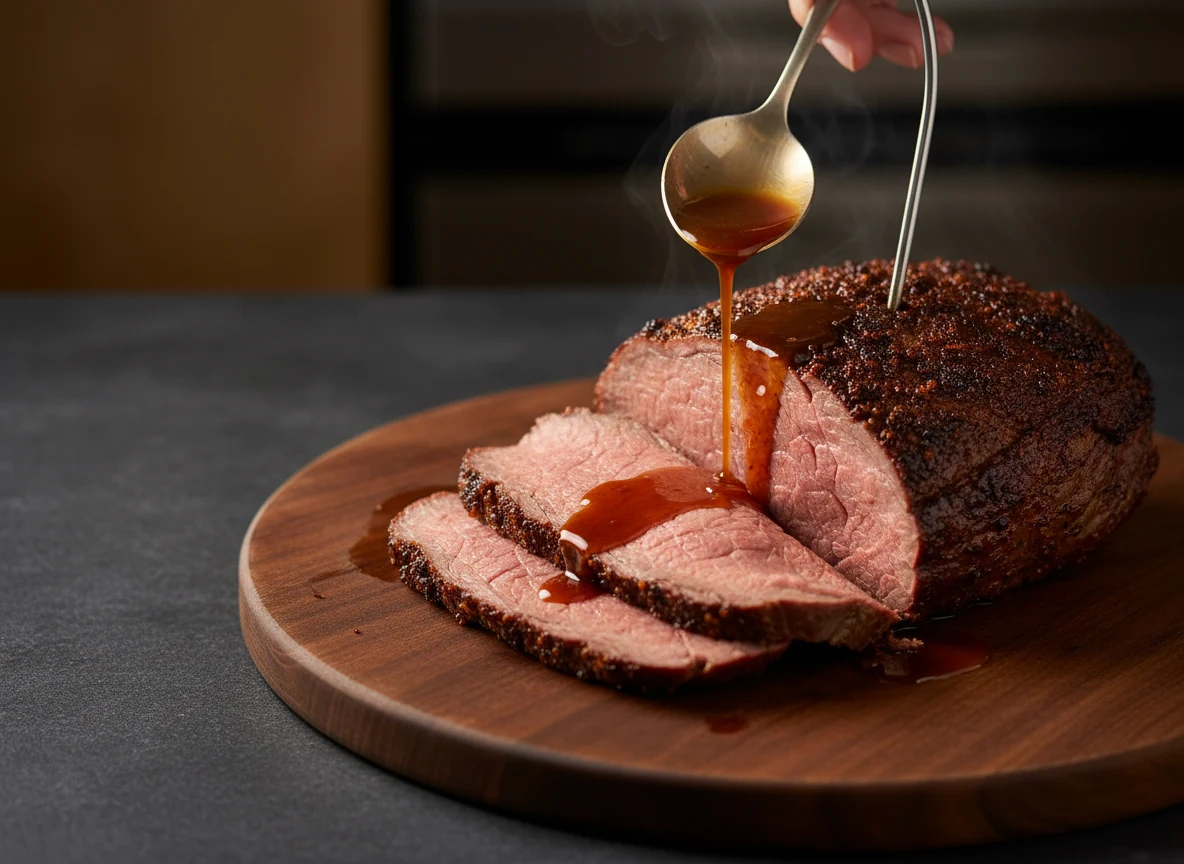
- Make the pan jus. Set the sheet pan over medium heat (or use a saucepan). Add wine and broth, scrape brown bits, simmer 4–6 minutes. Whisk in Worcestershire and Dijon. Kill the heat and swirl in butter. Season to taste.
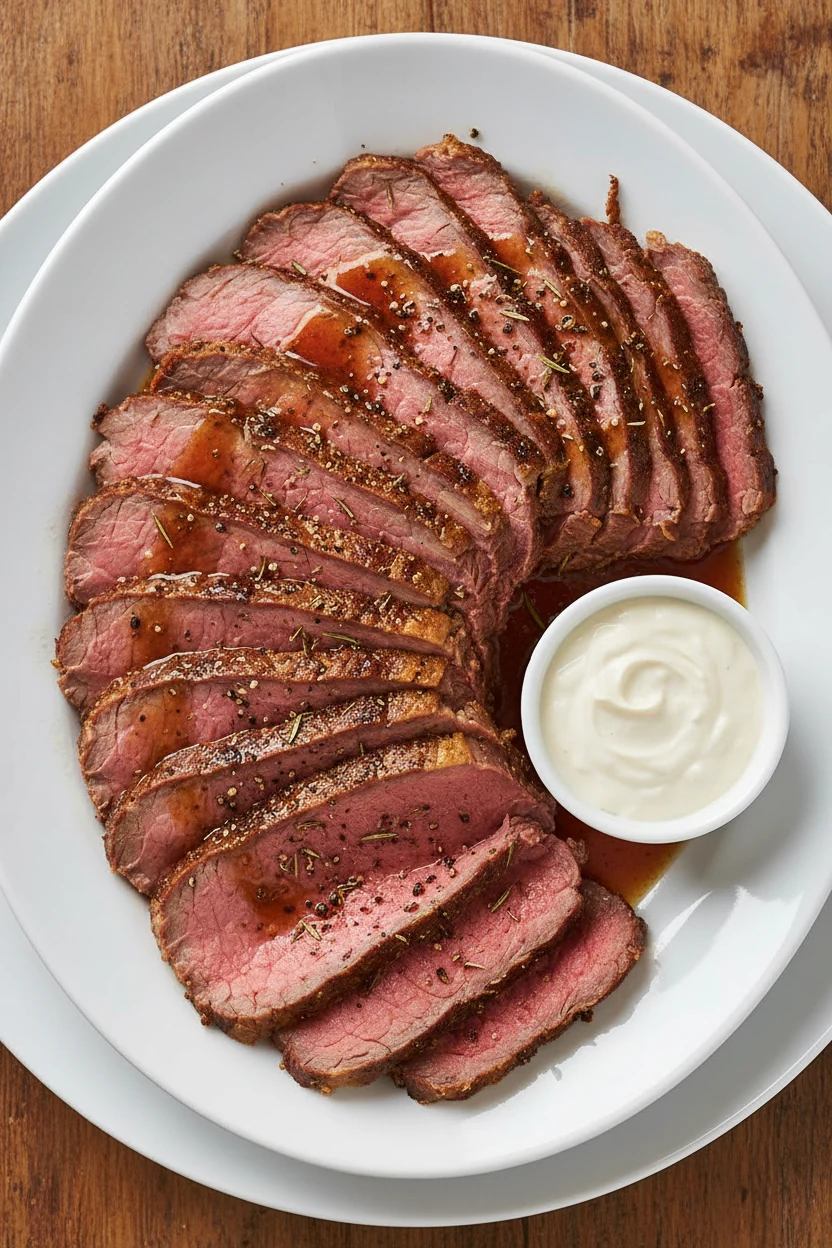
- Slice against the grain. Trim any twine. Find the grain direction and slice thin for sandwiches or 1/4–1/2 inch for plates. Spoon over jus and serve with horseradish cream.
Storage Tips
Cool leftovers, then store slices in an airtight container with a few spoonfuls of jus to keep things juicy. Refrigerate for up to 4 days; freeze for 2–3 months (wrap tightly in plastic, then foil, or vacuum-seal).
- Gentle reheat: Warm slices in simmering jus for 1–2 minutes or in a covered dish at 250°F until warmed through.
- Sous vide flex: Bag slices with a splash of jus and heat at 130°F (54°C) for 30–45 minutes for medium-rare.
- Don’t microwave naked: If you must microwave, cover with jus and use short bursts to avoid rubbery sadness.
Health Benefits
- High-quality protein: Supports muscle repair and satiety; aim for 25–35 g protein per meal, and this delivers.
- Iron and B12: Beef provides heme iron and vitamin B12 for energy and cognitive function.
- Zinc and selenium: Key minerals for immune support and antioxidant defenses—always welcome.
- Smart fats: Choose leaner cuts like top sirloin or top round to tame saturated fat, and trim visible fat.
- Flavor without sugar bombs: Herbs and spices bring big taste without loading on carbs or added sugar, IMO.
Avoid These Mistakes
- Skipping the thermometer: You wouldn’t fly blind; don’t cook blind. Internal temp is non-negotiable.
- No dry brine: Salting ahead boosts flavor and moisture. Last-minute salt won’t penetrate.
- Too hot, too early: Blasting from the start overcooks the exterior. Go low, then sear for the crust.
- Slicing with the grain: That’s how you build jaw workouts. Slice against the grain for tenderness.
- Wrong cut for the job: Eye of round needs thin slicing; ribeye roast tolerates thicker cuts. Know thy beef.
- Skipping the rest: Cut too soon and watch the juices run away like they owe you money.
- Underseasoning: Big roasts need bold seasoning. Don’t be shy with salt and pepper, TBH.
Variations You Can Try
- Garlic-Herb Crust: Add 2 tbsp minced fresh rosemary, 2 tbsp parsley, 1 tbsp thyme, and 4 cloves garlic to the rub. Same temps.
- Peppercorn Roast: Replace black pepper with 2 tbsp crushed mixed peppercorns. Finish jus with 2 tbsp cream for a steak au poivre vibe.
- Mustard Crusted: Brush roast with 2 tbsp Dijon + 1 tbsp olive oil, then coat with breadcrumbs and herbs before the low roast.
- Smoked Roast Beef: Smoke at 225°F with oak or hickory to 120–125°F, rest, then sear in a 500°F oven.
- Soy-Ginger: Mix 1.5 tbsp soy sauce, 1 tbsp brown sugar, 1 tsp grated ginger, 1 tsp sesame oil; brush on before sear. Finish with scallions.
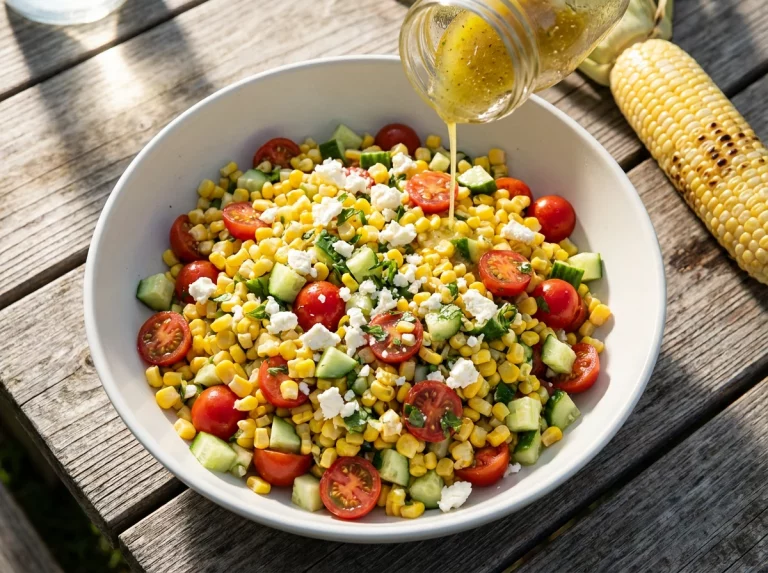
- Cajun Rub: 2 tsp Cajun seasoning, 1 tsp paprika, 1/2 tsp cayenne. Serve with remoulade and corn salad.
- Chicago-Style Italian Beef: Use top round, season with Italian herbs and garlic, slow-roast, chill, slice paper-thin, and reheat in spiced jus. Pile on giardiniera and rolls.
- Prime Rib Holiday: Use a bone-in rib roast, same low-temp method, then sear hot. Serve with au jus and Yorkshire pudding for full drama.
FAQ
What’s the best cut for tender, juicy sliced beef?
Top sirloin roast offers the best balance of tenderness, flavor, and price. Ribeye roast (aka prime rib) is the most luxurious and forgiving. For budget slicing, eye of round works well when cooked to medium-rare and sliced thin against the grain.
Should I sear before or after roasting?
Sear after. A low roast first cooks the interior evenly, then a hot sear creates a crisp crust without overcooking the edges. Pre-searing can push the outer layer too far before the center comes up to temp.
What internal temperature should I aim for?
For medium-rare, pull at 120–125°F (49–52°C) and rest to 125–130°F. For medium, pull at 130°F (54°C) and rest to 135–140°F. Always use a probe thermometer for accuracy.
Do I need to tie the roast with butcher’s twine?
If your roast looks uneven or flops around, tie it every 1.5–2 inches. Twine helps it cook evenly and slice cleanly. If it’s already uniform (like eye of round), you can skip it.
Should I cook the roast covered or uncovered?
Cook it uncovered on a rack. Air circulation gives you even heat and a drier surface for better browning during the sear. Covering traps steam and softens the exterior.
Can I make this in a slow cooker?
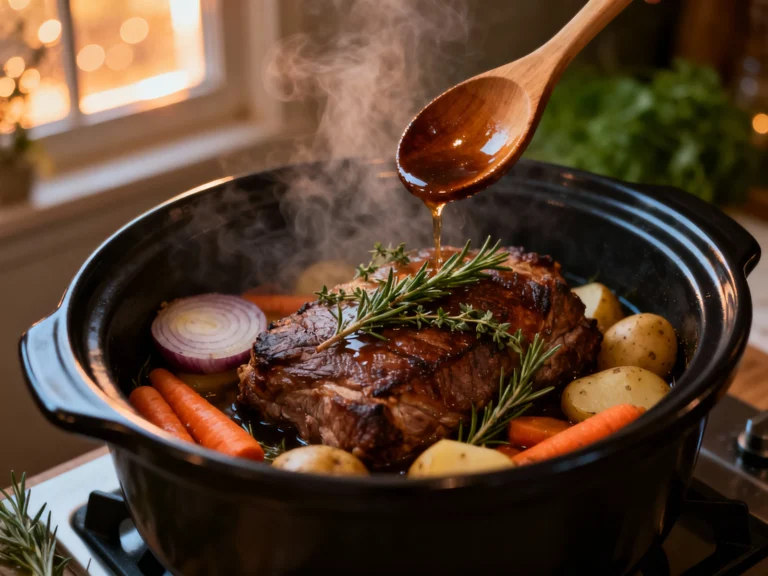
Yes, but you’ll get a braise, not classic rosy roast beef. For shredded or ultra-tender slices, cook with broth and aromatics on low for 8–10 hours, then crisp the exterior under a broiler. Different vibe, still delicious.
How much beef should I buy per person?
Plan on 1/2 pound (225 g) raw weight per adult for plated dinners, or 1/3 pound for sandwiches and buffets. Leftovers won’t go to waste, so rounding up rarely hurts.
How do I get a thick crust without overcooking?
Keep the initial roast at 250°F to your target internal temp, rest, then sear at 500°F for a short burst. Dry the surface, use a little oil, and don’t overcrowd the pan. Heat + dryness = crust.
Can I cook from frozen?
It’s possible but not ideal. Start at 250°F and expect longer times; seasonings won’t adhere as well. For best results, thaw in the fridge for 24–48 hours before cooking.
Is this gluten-free and dairy-free?
Yes—skip the butter in the jus for dairy-free and avoid any breadcrumb crusts for gluten-free. The core roast and pan jus (with broth, wine, and seasonings) fit easily into both.
How thin should I slice for sandwiches?
For deli-style sandwiches, go paper-thin—as thin as you can safely slice. Chill the roast for 1–2 hours to firm it, then use a sharp slicing knife or meat slicer for clean, even slices.
Wrapping Up
You don’t need a culinary degree to plate steakhouse-level roast beef—just the right cut, the right temps, and the right sequence. Low and slow builds that juicy interior; a quick sear delivers the craveable crust. Once you taste the difference, you’ll never go back to gray-ring roasts again. Grab a thermometer, season boldly, and claim the carving knife like you mean it.
Printable Recipe Card
Want just the essential recipe details without scrolling through the article? Get our printable recipe card with just the ingredients and instructions.