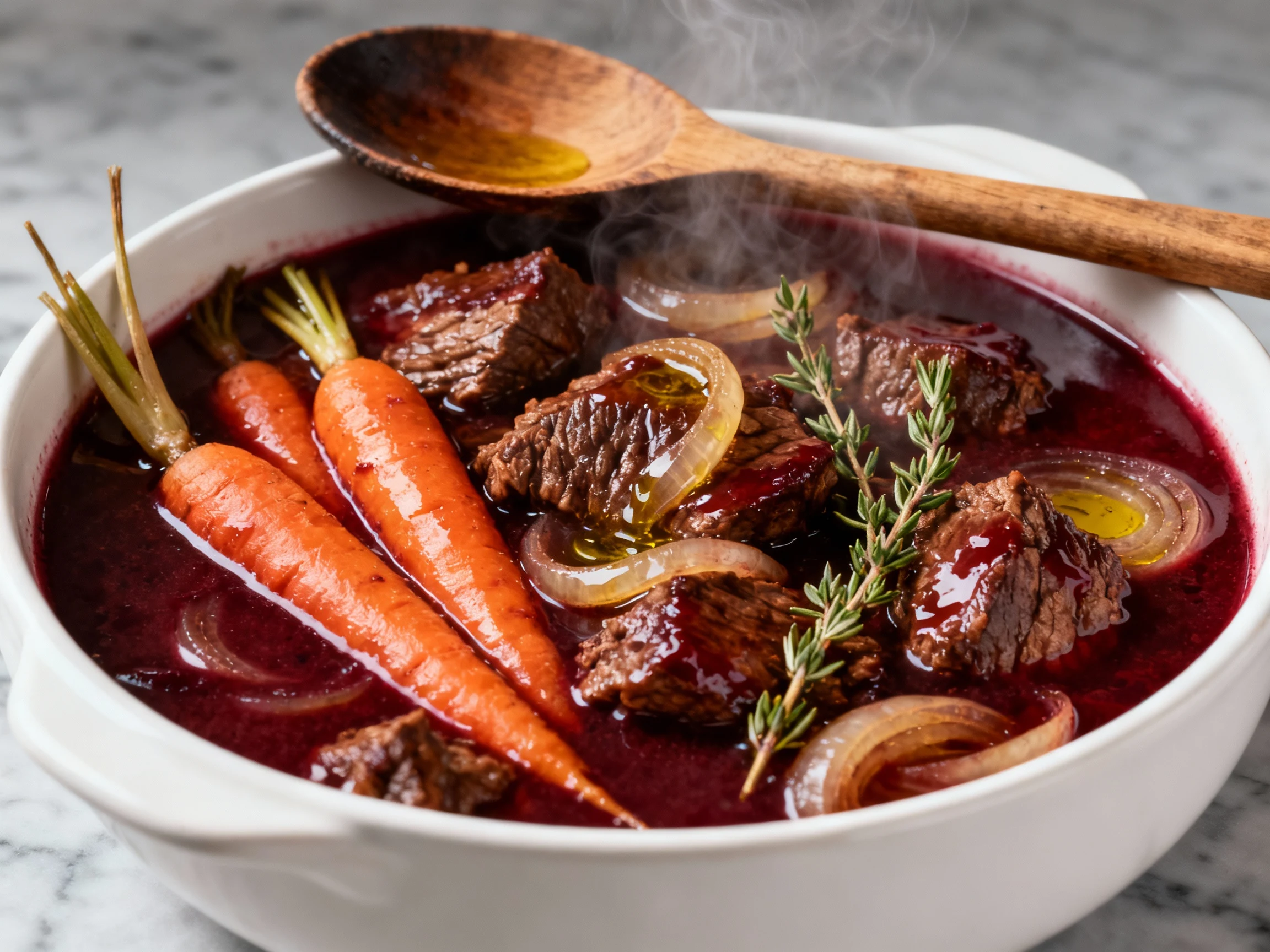
Red Wine Beef Stew — Bold Comfort for Busy Weeknights
Big flavor, minimal effort: a wine-braised beef dinner that simmers hands-off yet impresses guests and crushes chilly evenings.
You want a dinner that tastes like a chef cooked it, but you’ve got 20 minutes of energy left. Cool—we’ll use heat, time, and a smart splash of wine to turn humble chuck into velvet. This pot takes cheap ingredients and upgrades them into deep, luxe flavor your future self will brag about. Set it, sip something, and let the stew make you look like a wizard. Because when your house smells like a French bistro, no one asks how much it cost.
What Makes This Recipe So Good
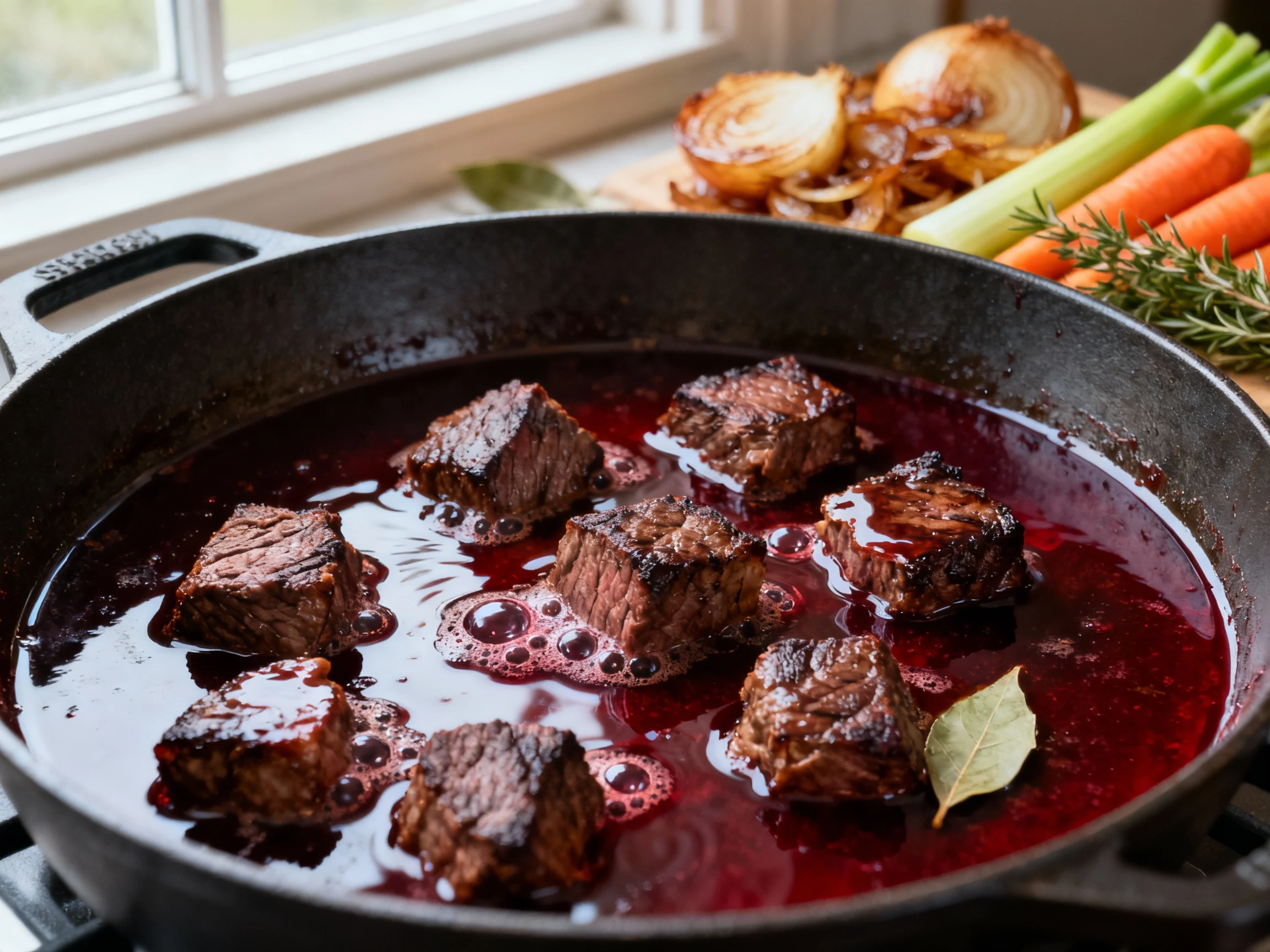
It’s all about stacking flavor. First, hard searing builds a crust on the beef that tastes like steak night in a bowl. Then the wine reduces and concentrates, carrying aromatics and umami through every bite.
Low-and-slow braising melts collagen into silky richness. Translation: tough cuts become spoon-tender without babysitting. Add mushrooms to echo the wine’s earthiness and potatoes to soak up the sauce, and you’ve got full-spectrum comfort.
It’s flexible, too. Use the dry red you’d happily drink and whatever veggies are in your crisper. Minimal chopping, one pot, big payoff—FYI, leftovers get even better as everything marries overnight.
Ingredients
- 3 pounds beef chuck, cut into 1.5-inch cubes
- Kosher salt and freshly ground black pepper
- 2 tablespoons olive oil and 2 tablespoons butter
- 1 large yellow onion, diced
- 2 carrots, peeled and diced
- 2 celery stalks, diced
- 4 garlic cloves, minced
- 2 tablespoons tomato paste
- 2 tablespoons all-purpose flour (or cornstarch for gluten-free)
- 2 cups dry red wine (Cabernet Sauvignon, Merlot, or Pinot Noir)
- 3 cups low-sodium beef stock
- 1 tablespoon Worcestershire sauce
- 1 bay leaf
- 4–5 fresh thyme sprigs (or 1 teaspoon dried)
- 1 small rosemary sprig (optional)
- 1 pound baby potatoes, halved (or 2 russets cut into chunks)
- 8 ounces cremini mushrooms, halved
- 1 cup pearl onions (optional, thawed if frozen)
- 1 teaspoon smoked paprika (optional, for subtle warmth)
- 1 teaspoon anchovy paste (optional, sneaky umami booster)
- 1 tablespoon balsamic vinegar or 1 teaspoon lemon zest (finishing brightness)
- Fresh parsley, chopped, for garnish
Pro tip: Use a dry, full-bodied red you like to drink; avoid sweet wines. Salt the beef generously to build flavor from the start.
Step-by-Step Instructions
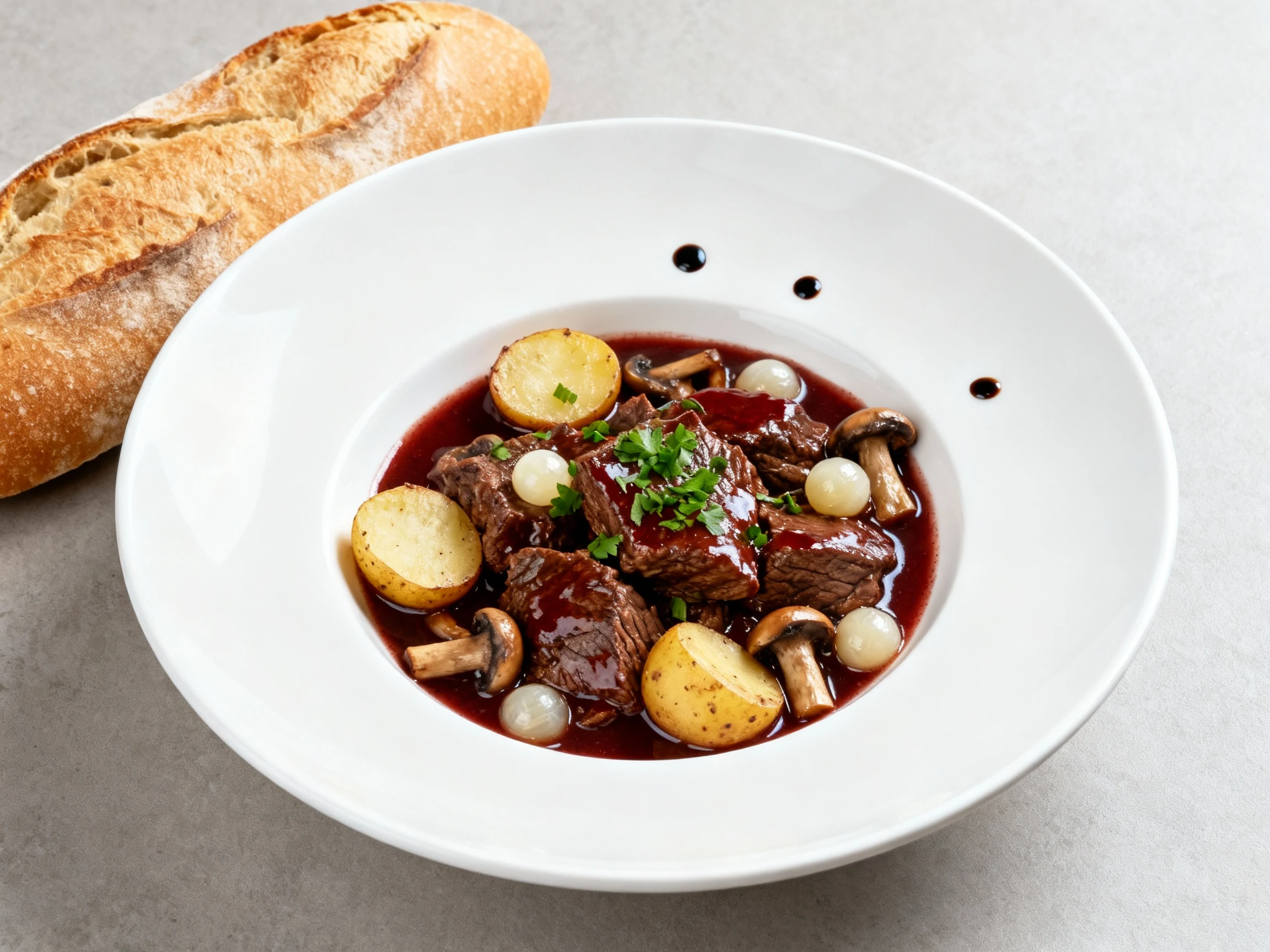
- Prep the beef: Pat cubes dry with paper towels and season all sides with kosher salt and black pepper. Dry meat browns like a champ; wet meat steams.
- Heat the pot: Warm olive oil and butter in a heavy Dutch oven over medium-high until shimmering. You want high heat for serious browning.
- Sear in batches: Add beef in a single layer; don’t crowd. Sear 3–4 minutes per side until deep brown. Transfer to a plate and repeat. Browning equals flavor—don’t rush it.
- Build the base: Lower to medium. Add onion, carrot, and celery with a pinch of salt. Cook 5–7 minutes, scraping up browned bits. Stir in garlic for 30 seconds.
- Tomato paste + flour: Stir in tomato paste and cook 2 minutes to caramelize. Sprinkle flour; cook 1 minute. FYI, this gentle roux thickens the sauce later.
- Deglaze with wine: Pour in the red wine, stirring and scraping the pot bottom to dissolve fond. Simmer 3–4 minutes until the wine reduces by about a third.
- Liquids & aromatics: Add beef stock, Worcestershire, bay leaf, thyme, and rosemary. Return seared beef and its juices. Bring to a gentle simmer.
- Braise: Partially cover and cook on low for 1 hour, maintaining a slow burble. Skim any foam. The goal is tenderizing, not a rolling boil.
- Veg time: Add potatoes, mushrooms, and pearl onions. Season with another pinch of salt and the smoked paprika if using. Simmer 40–60 minutes until beef and potatoes are tender.
- Taste and tweak: Remove herbs and bay leaf. Stir in anchovy paste if using (it melts and disappears, promise). Adjust salt and pepper. If you want thicker stew, mash a few potatoes against the pot side.
- Finish with brightness: Stir in balsamic or a little lemon zest. That tiny acid pop keeps richness in balance. TBH, it’s the difference between good and great.
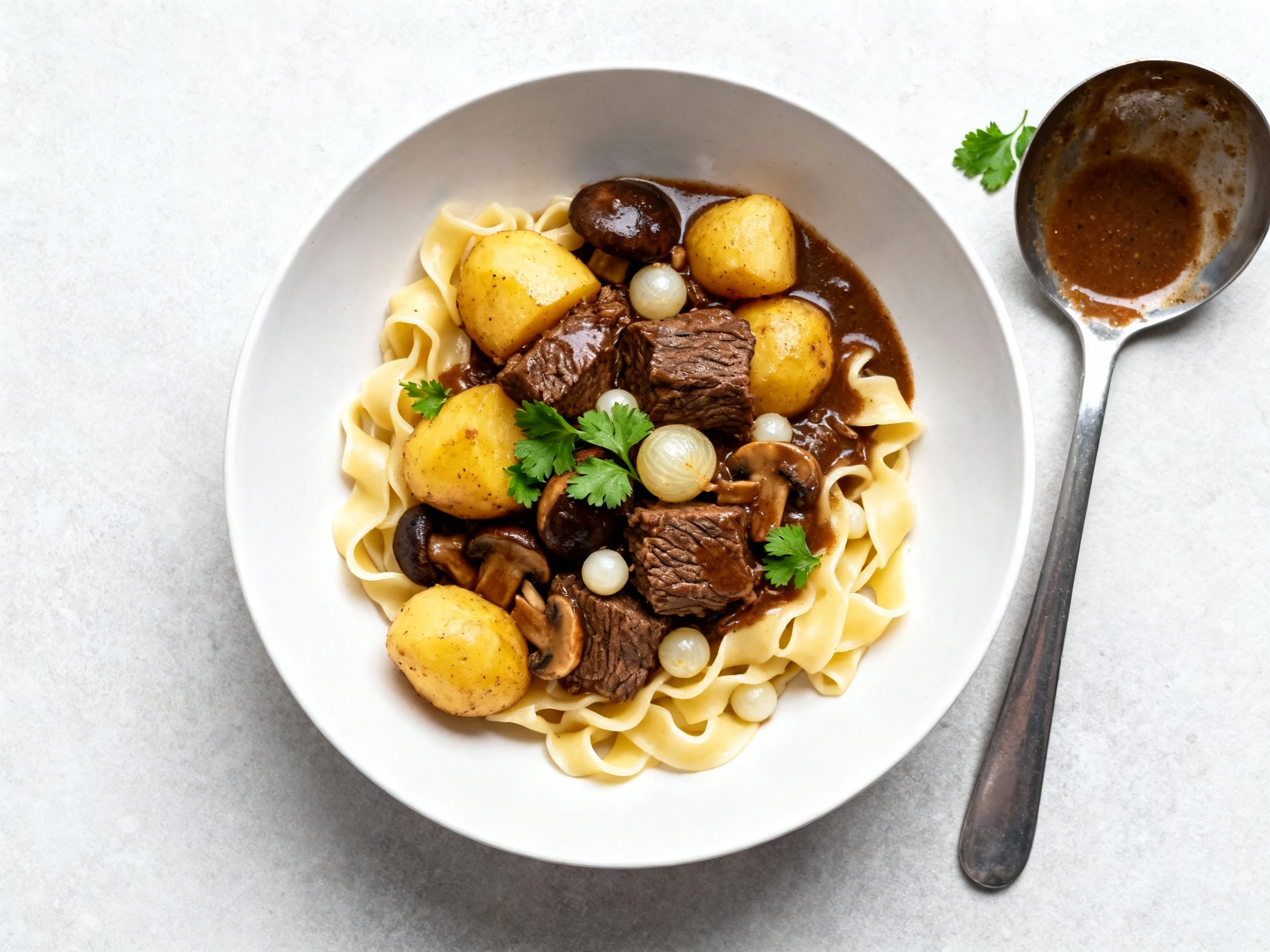
- Rest and serve: Let the pot sit off heat 10 minutes. Garnish with chopped parsley. Serve over buttered noodles or with crusty bread to catch every drop.
Instant Pot option: Sear on Sauté, deglaze with wine, add stock and herbs, pressure cook 35 minutes, quick release, add veggies, then pressure cook 5 more minutes.
How to Store
Cool completely, then portion into airtight containers. Refrigerate up to 4 days or freeze up to 3 months. Label the date because Future You will thank Present You.
Reheat gently on the stovetop over medium-low with a splash of water or stock. Avoid high heat; you’ll toughen the beef and risk splitting the sauce. For frozen portions, thaw overnight in the fridge for best texture.
- Fridge: 4 days, tightly sealed.
- Freezer: 3 months, leave a little headspace for expansion.
- Reheat: Low and slow; add liquid if it’s too thick.
What’s Great About This
- Restaurant-level flavor from budget ingredients.
- Hands-off cooking after a quick sear and sauté.
- Make-ahead friendly; tastes even better the next day.
- One-pot cleanup, which your sink will appreciate.
- Flexible wine choice—use what you like (dry, not sweet).
- Customizable veggies based on what’s in the crisper.
- Feeds a crowd without turning your kitchen into a circus.
- Freezer gold for busy nights or lazy Sundays.
Common Mistakes to Avoid
- Skipping the sear: Browning creates flavor. Gray beef equals sad stew.
- Crowding the pot: Overloading steams the meat. Sear in batches for a proper crust.
- Boiling the braise: A raging boil toughens beef. Keep it to a gentle simmer.
- Sweet wine choice: Sweet reds make the stew cloying. Use a dry, medium- to full-bodied bottle.
- Under-salting early: Season the beef and aromatics upfront. You can adjust later, but layers matter.
- Skipping acidity at the end: A splash of balsamic or lemon zest brightens and balances richness.
- Ignoring fond: Those brown bits are flavor diamonds. Scrape them up when you deglaze.
- Over-thickening: Flour or slurry works, but don’t make gravy cement. Aim for glossy, spoon-coating consistency.
Alternatives
- Wine swap: Try Pinot Noir for lighter finesse or Cabernet for bold depth. Avoid sweet reds.
- No alcohol: Use extra beef stock plus 2 tablespoons balsamic or red wine vinegar for tang and complexity.
- Protein twist: Lamb shoulder for a robust spin, or pork shoulder for milder sweetness. Adjust cook times to tenderness.
- Mushroom-heavy: Double the mushrooms and add umami boosters like soy sauce or miso (1 teaspoon) for a vegetarian-leaning vibe.
- Potato swap: Use parsnips or turnips for earthy sweetness, or leave potatoes out and serve over polenta.
- Gluten-free: Replace flour with cornstarch slurry (1 tablespoon cornstarch + 1 tablespoon water). Add at the end and simmer to thicken.
- Slow Cooker: Sear beef and sauté aromatics on the stovetop, transfer to slow cooker with liquids and herbs, cook on Low 7–8 hours; add potatoes and mushrooms for the final 2 hours.
- Instant Pot: As noted above: sear, deglaze, pressure cook 35 minutes, then 5 minutes more after adding veggies.
- Herb profile: Switch thyme/rosemary for bay and marjoram, or toss in a strip of orange peel for a subtle citrus note.
- Finishers: A spoon of Dijon or a pat of butter at the end for gloss and roundness. IMO, butter wins.
FAQ
What cut of beef works best?
Beef chuck wins for flavor and tenderness after braising. You can use brisket or bottom round, but chuck has the right fat and collagen balance for fork-tender results.
Can I use boxed stock and inexpensive wine?
Yes. Choose low-sodium beef stock and a dry, drinkable red in the $10–$15 range. Your stew will taste better than the price tag suggests, promise.
How do I fix a stew that’s too thin?
Mash some potatoes into the liquid or simmer uncovered to reduce. Or add a cornstarch slurry (1 tablespoon cornstarch mixed with 1 tablespoon water) and cook 2–3 minutes until glossy.
What if the meat isn’t tender yet?
Keep simmering. Toughness means the collagen hasn’t melted. Another 20–30 minutes usually does it; just maintain a gentle simmer, not a boil.
Can I make it ahead for company?
Absolutely. This stew loves a nap. Cook it a day in advance, chill, and reheat gently. The flavors deepen and the texture improves after resting.
Which sides pair best?
Crusty bread, buttered egg noodles, creamy mashed potatoes, or polenta. A crisp green salad with vinaigrette cuts through the richness like a pro.
Is Pinot Noir okay, or is Cabernet better?
Both work. Pinot Noir gives a lighter, silkier profile; Cabernet brings bolder tannins and depth. Pick what you enjoy drinking; flavor will follow.
Can I add bacon?
Yes, and it’s fantastic. Render 4–6 slices first, use the fat to sauté aromatics, and add the crisp bacon back at the end for smoky pops.
In Conclusion
This stew turns time and simple ingredients into big-league comfort. You sear, you simmer, and the pot does the heavy lifting while you claim the credit. Serve it to friends, save some for later, and let the leftovers flex even harder tomorrow. When your kitchen smells this good, you’ve already won dinner.
Printable Recipe Card
Want just the essential recipe details without scrolling through the article? Get our printable recipe card with just the ingredients and instructions.