Pork Roast Recipes That Win Weekends—tender Crispy Simple
Budget-friendly roasts with crackling skin, juicy centers, and clear timing cues so dinner hits hero status with minimal fuss.
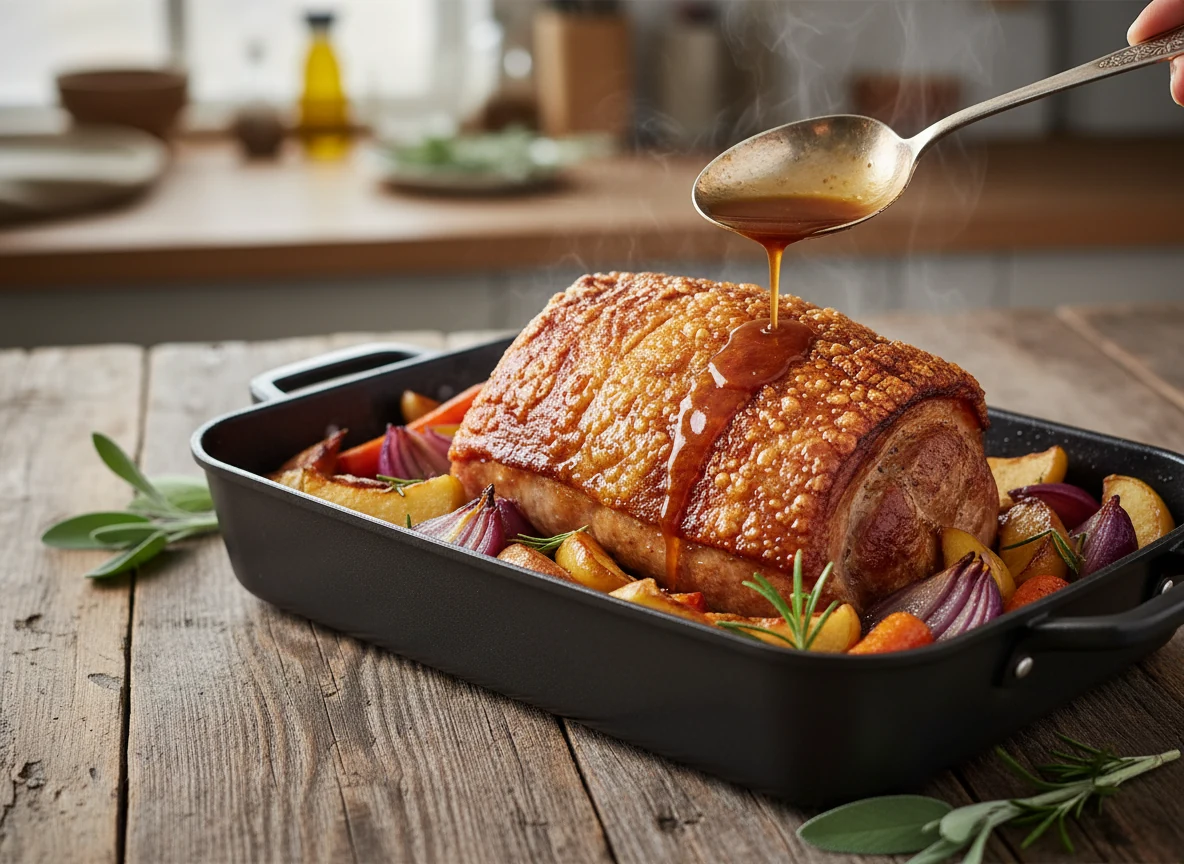
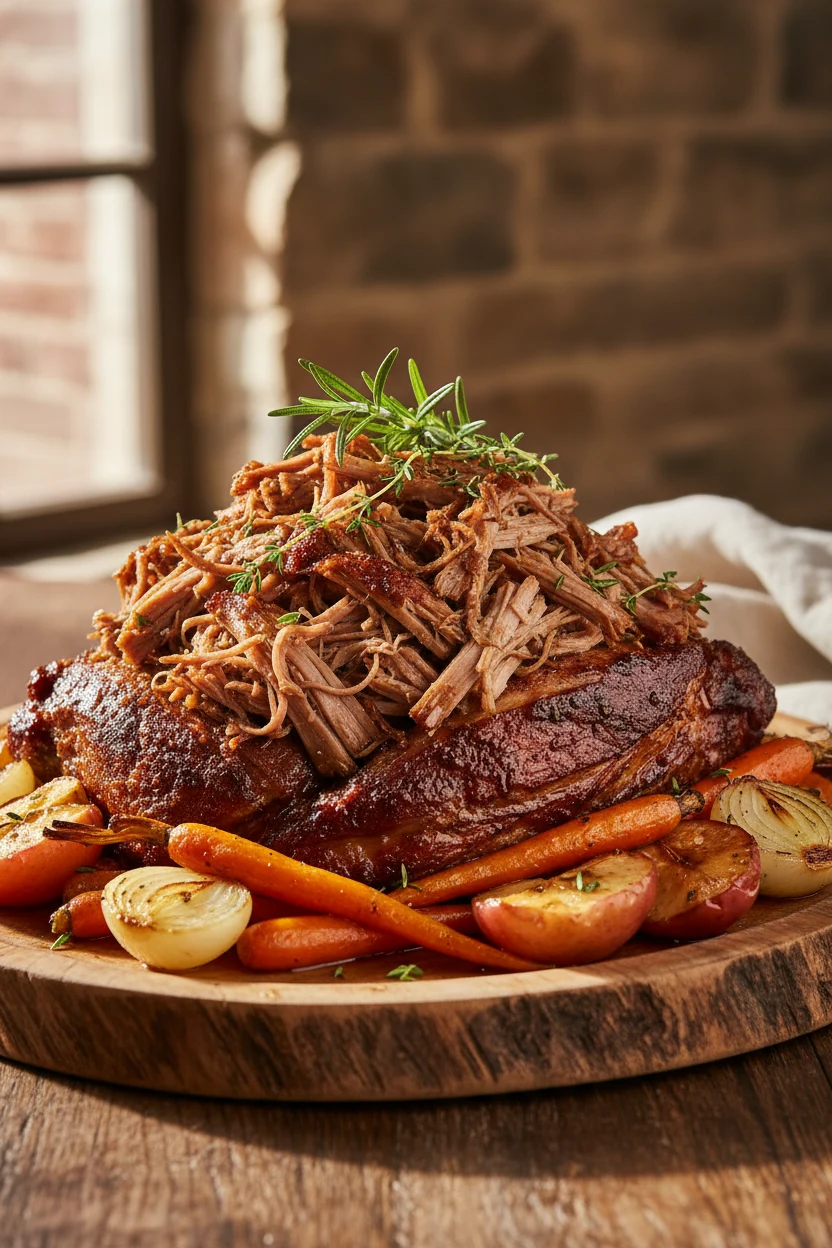
Most dinners try to impress; a well-made pork roast doesn’t try—it just wins. We’re talking shatteringly crisp crust, juicy slices, and pan drippings that turn into sauce you’ll want to put on everything. If you’ve ever been intimidated by roasting, that stops here. I’ll show you a system that nails texture and timing, whether you’ve got a shoulder for shredding or a lean loin for slicing. You’ll get predictable results, real flavor, and a game plan that makes weekend cooking feel like cheating—in a good way.
Why This Recipe Works
- Dry brine for deep seasoning: Salt early so it penetrates the meat, boosts juiciness, and gives the exterior that crave-worthy crust. FYI, 12–24 hours in the fridge is the sweet spot.
- Two-stage roasting: Start low to cook evenly and melt collagen, then blast high heat at the end to crisp the exterior. It’s the roast equivalent of a victory lap.
- Aromatics as an edible roasting rack: Onions, carrots, and apples keep the meat elevated, flavor the drippings, and become the foundation of a killer pan sauce.
- Smart internal temps: Shoulder shines at 195–205°F for pull-apart tenderness; loin is perfect at 140–145°F for juicy slices.
- Flavor-forward rub: A garlicky, herby, slightly sweet rub helps browning and builds complexity without masking the pork.
- Resting and slicing: A 15–20 minute rest redistributes juices and makes carving clean. You earn the patience, and the roast pays you back.
What You’ll Need (Ingredients)
- Pork shoulder (Boston butt), bone-in or boneless: 4–5 lb (1.8–2.3 kg). Optional: skin-on for extra crackling.
- OR Pork loin roast: 2.5–3 lb (1.1–1.4 kg), tied for even cooking.
- Kosher salt: 2–2.5 tbsp (adjust to roast size).
- Freshly ground black pepper: 2 tsp.
- Garlic: 6–8 cloves, minced.
- Fresh rosemary: 2 tbsp, chopped.
- Fresh thyme: 2 tbsp, chopped.
- Fennel seeds: 2 tsp, lightly crushed.
- Smoked paprika: 2 tsp.
- Brown sugar or maple syrup: 1 tbsp (helps browning; optional).
- Dijon mustard: 1 tbsp.
- Olive oil: 2–3 tbsp.
- Apple cider vinegar: 1 tbsp (brightens the pan sauce).
- Onions: 2 large, quartered.
- Carrots: 3–4, large chunks.
- Apples: 2 firm varieties (Honeycrisp or Granny Smith), quartered.
- Chicken stock: 1–2 cups, for the roasting pan and sauce.
- Optional add-ins: Bay leaves, star anise (for a subtle warmth), orange zest.
Step-by-Step Instructions
- Dry brine: Pat the roast dry. Rub it all over with kosher salt. Place uncovered on a rack in the fridge for 12–24 hours.
- Prep the rub: Mix black pepper, garlic, rosemary, thyme, fennel seeds, smoked paprika, brown sugar or maple, Dijon, and olive oil into a paste.
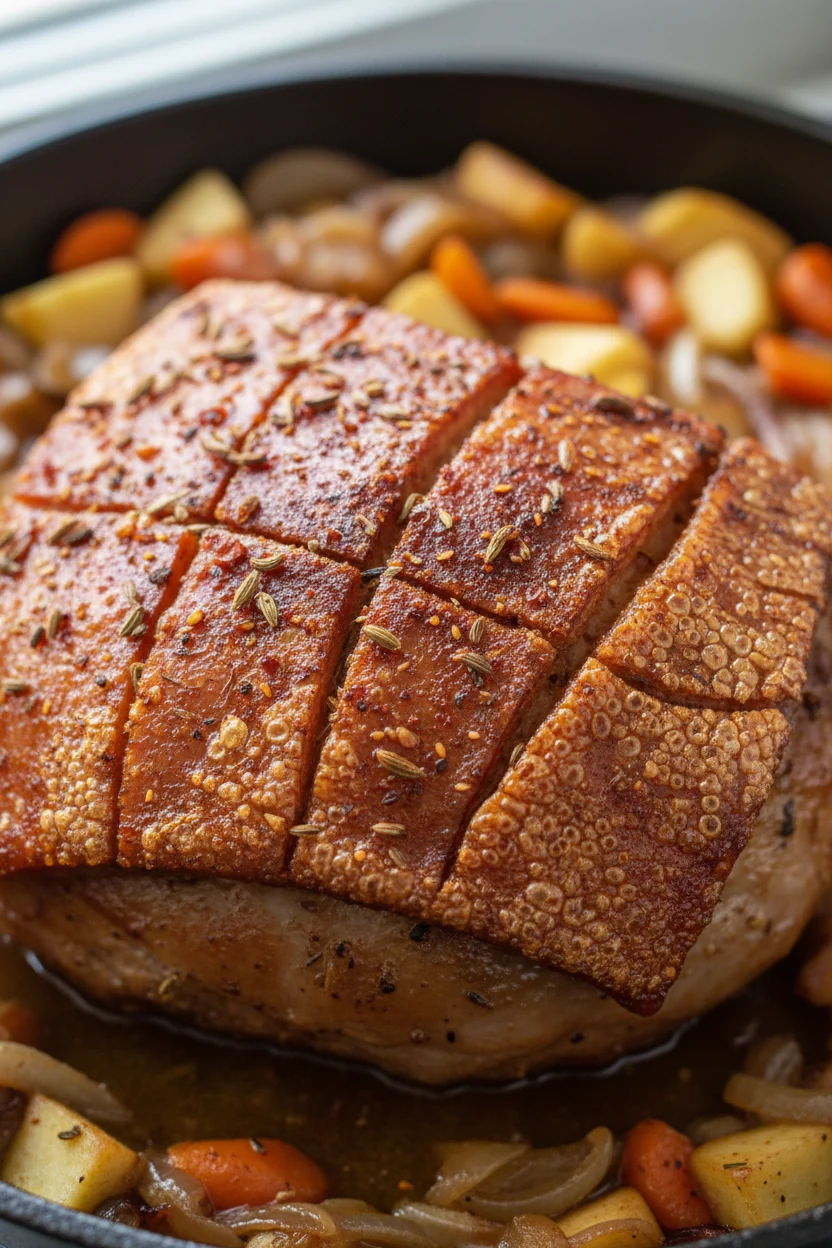
- Score if skin-on: If your shoulder has skin, score shallow crosshatches to help the fat render and the skin crisp. Don’t cut into the meat.
- Rub it down: Remove roast from fridge. Blot off excess moisture. Slather the herb-garlic paste on all sides. Let it sit at room temp for 30–45 minutes while you preheat.
- Set the stage: Preheat oven to 275°F (135°C). Scatter onions, carrots, and apples into a roasting pan to create a bed. Add 1 cup chicken stock.
- Roast low and slow: Place the pork fat cap up on the aromatics. Roast at 275°F until the internal temp hits 160–165°F for shoulder (or 120°F for loin). This can take 2–3 hours for shoulder; 60–75 minutes for loin.
- Deglaze mid-cook (optional): If the pan looks dry, splash in another ½–1 cup stock. Keep some movement in those drippings.
- Crank the heat: Raise oven to 450°F (230°C). Roast another 15–30 minutes to crisp the crust. Aim for 195–205°F internal on shoulder for shreddable tenderness; 140–145°F on loin for juicy slices.
- Rest: Transfer the roast to a board and tent loosely with foil for 15–20 minutes.
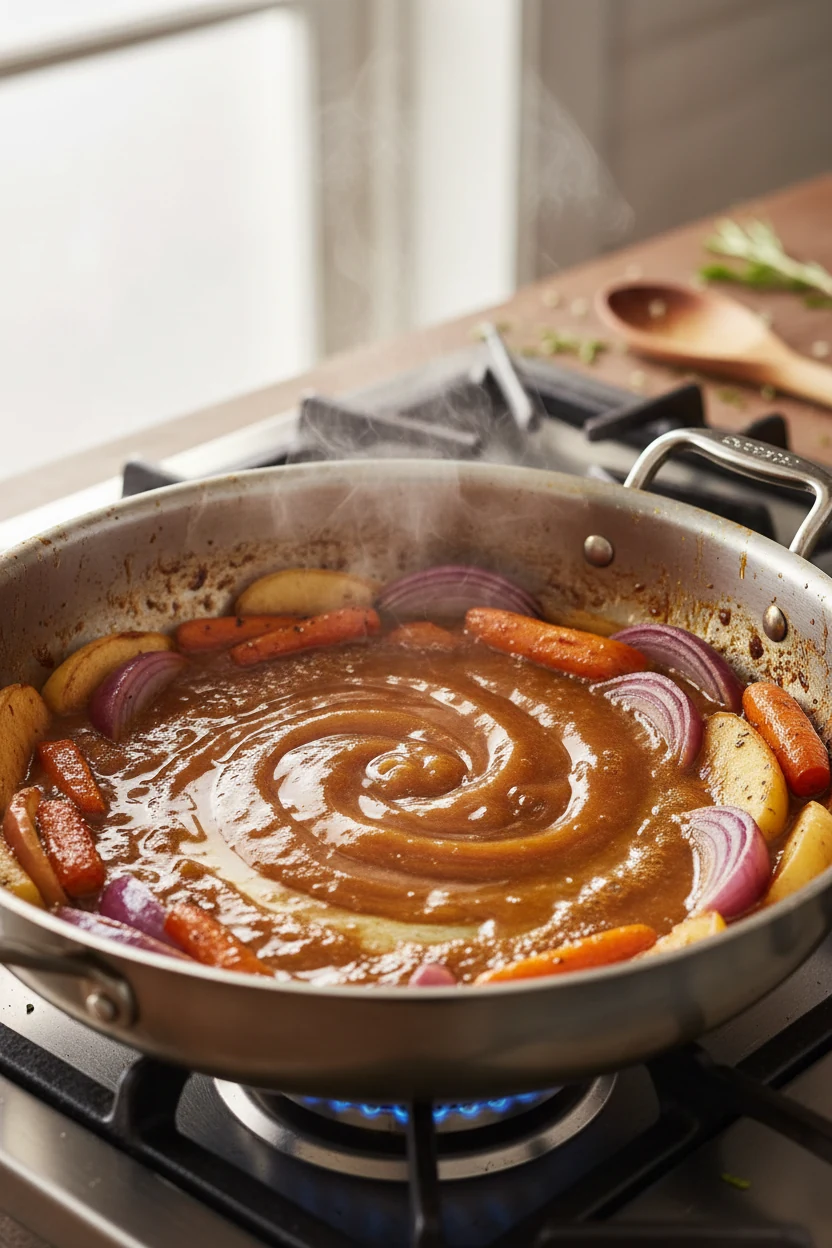
- Make the pan sauce: Set the roasting pan on medium heat. Add a splash of apple cider vinegar to the drippings. Stir and scrape the browned bits. Add stock as needed to thin. Reduce to glossy and season to taste.
- Carve and serve: For shoulder, shred into chunks and spoon sauce over. For loin, slice against the grain into ½-inch slices. Serve with roasted aromatics and extra sauce.
- Optional crisp hack: If the crust isn’t quite there, give the exterior a quick broil, watching like a hawk. Two minutes can be magic—or mayhem—so don’t walk away.
Storage Instructions
- Refrigerate: Cool roast completely. Store sliced or shredded pork with pan sauce in airtight containers for 4 days.
- Freeze: Portion into freezer bags with a bit of sauce to prevent drying. Freeze up to 3 months. Label and date like a pro.
- Reheat: Gently warm in a covered skillet with a splash of stock until hot. For crispy bits, finish under a broiler or in a hot skillet for 1–2 minutes.
- Leftover magic: Toss into ramen, tacos, breakfast hash, or grain bowls. You’re not “using leftovers”—you’re curating greatness.

Nutritional Perks
- High-quality protein: Builds and repairs muscle, keeps you full, and supports satiety better than a bread basket ever will.
- Micronutrient-rich: Pork brings B vitamins (especially thiamin and B6) plus zinc and selenium for energy and immune support.
- Collagen and gelatin: Shoulder cooked to 195–205°F melts connective tissue, yielding a silky mouthfeel and joint-friendly gelatin in the drippings.
- Smart fat choices: Trim excess visible fat post-roast and balance plates with roast veggies and greens for a dialed-in macro mix.
- Sodium control: Dry brine intensifies flavor, so you need less salt in the sauce. Taste before salting—your palate will thank you.
Pitfalls to Watch Out For
- Under-seasoning early: Skipping the dry brine equals bland. Salt takes time to work—give it the overnight.
- Rushing the roast: Shoulder needs low-and-slow to transform. Impatience turns tender dreams into chewy reality. TBH, don’t be that guy.
- Wrong target temps: Loin at 160°F will dry out; shoulder at 165°F won’t shred. Use a thermometer and play by the right rules.
- Soggy crust: Crowded pans and too much liquid steam the roast. Keep the aromatics present but not floating in stock.
- No rest period: Cutting right away dumps the juices. Give it 15–20 minutes—it’s not optional, it’s strategy.
- Skipping the sauce: Those pan drippings are liquid gold. A 5-minute deglaze upgrades the whole plate.
Recipe Variations
- Maple-Mustard Crunch: Swap brown sugar for maple syrup and bump Dijon to 2 tbsp. Add 1 tsp chili flakes for a sweet heat finish.
- Cuban Mojo: Rub with garlic, oregano, cumin, orange zest, lime juice, and olive oil. Add sliced onions and citrus to the pan. Bright, punchy, unforgettable.
- Tuscan Fennel-Garlic: Use rosemary, thyme, crushed fennel, garlic, and lemon zest. Finish sauce with a pat of butter and a splash of white wine.
- Korean Gochujang Glaze: Mix gochujang, soy sauce, garlic, ginger, honey, and sesame oil. Brush on during the high-heat finish for sticky, spicy edges.
- Apple Cider Braise Hybrid: Roast at 300°F with 1–2 cups apple cider and chicken stock, covered for 2 hours, then uncover and crisp at 450°F.
- Smoky BBQ Roast: Rub with paprika, brown sugar, garlic, onion powder, and chili powder. Finish with a light glaze of your favorite BBQ sauce and a quick broil.
- Herbes de Provence & Honey: Lavender-forward blend plus honey makes a floral, savory-sweet crust that pairs insanely well with roasted figs.
FAQ
Should I choose pork shoulder or pork loin for this?
Pick shoulder for pull-apart tenderness and rich flavor; choose loin for neat, juicy slices with a leaner profile. Shoulder shines at 195–205°F and benefits from longer cook times. Loin rocks at 140–145°F and cooks faster. Both can be epic—just match your cut to your goal.
How do I get perfectly crispy crackling?
Score skin, dry brine overnight, and end with a high-heat blast at 450°F. Keep the roast elevated so air circulates and prevents steaming. If needed, finish with a tight broil for 1–2 minutes while watching closely. Fat renders, skin crisps, applause follows.
Can I make this in a slow cooker?
Yes, but you’ll sacrifice the crust unless you finish in a hot oven or broiler. Slow cook shoulder on low for 8–10 hours until tender, then transfer to a sheet pan and broil to crisp. The sauce will be different but still delicious. It’s a valid path when the oven is busy.
What if I don’t have fresh herbs?
Use dried: 1 tsp dried rosemary + 1 tsp dried thyme equals roughly 2 tbsp fresh. Add extra garlic, fennel seed, and smoked paprika to keep the flavor bold. Dried herbs bloom nicely in the rub when mixed with oil and salt.
How much salt should I use for the dry brine?
For a 4–5 lb shoulder, 2–2.5 tbsp kosher salt is a solid range. For a 3 lb loin, 1.5–2 tbsp works. Adjust for brand (Diamond Crystal is lighter; Morton is denser). Aim for even coverage, not a salt beach party.
Do I need to tie the roast?
Tie a pork loin for even thickness and prettier slices. Shoulder doesn’t need tying unless it’s butterflied; it’s a rugged cut that roasts well as-is. Kitchen twine is cheap insurance for presentation and uniform cooking.
What sides pair best?
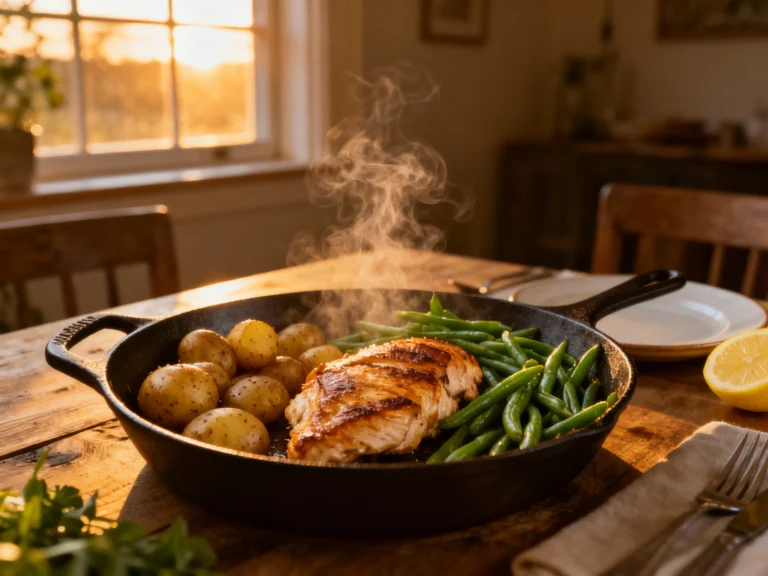
Roasted potatoes, garlicky green beans, braised greens, or a crunchy slaw all play well. A bright salad with citrus helps cut richness. If you love carbs, buttered polenta or crusty bread to mop sauce is very on brand.
Can I meal-prep this?
Absolutely. Roast on Sunday, portion with sauce, and reheat gently all week. Loin stays sliceable; shoulder stays juicy even after reheating. IMO it beats most takeout in price and taste.
My Take
I love a roast that performs under pressure, and this one shows up. The low-and-slow plus high-heat combo is reliable, the flavors hit hard, and the sauce writes its own fan mail. Whether you’re feeding a crowd or banking leftovers, this approach turns a humble cut into a headliner. Simple moves, big payoff—that’s the kind of kitchen math I’ll back every time.
Printable Recipe Card
Want just the essential recipe details without scrolling through the article? Get our printable recipe card with just the ingredients and instructions.