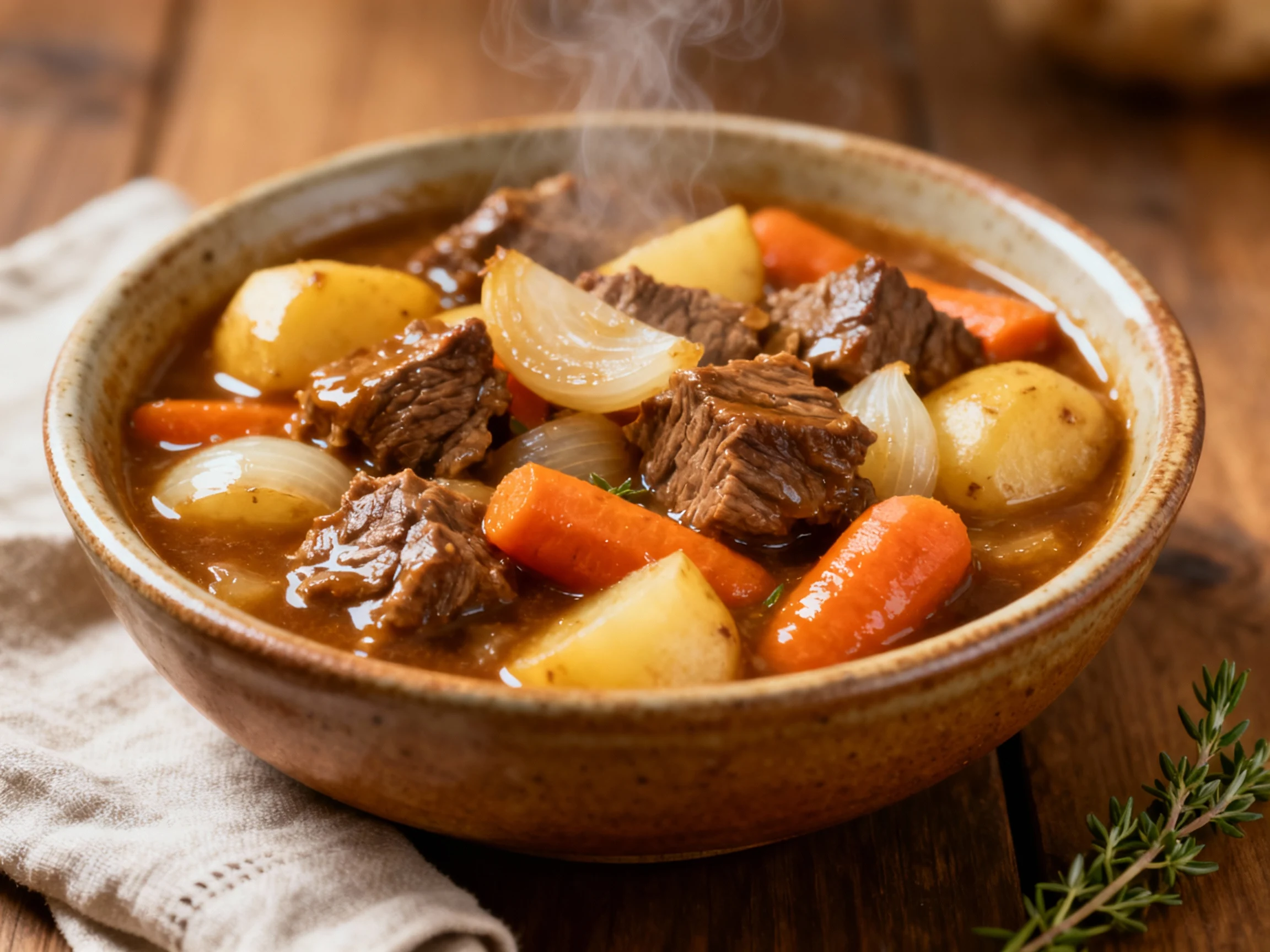
Oven Beef Stew — Big Flavor Low Effort Comfort
A cozy weekend crowd-pleaser with deep flavor and minimal prep: set it, forget it, and let the oven do the work.
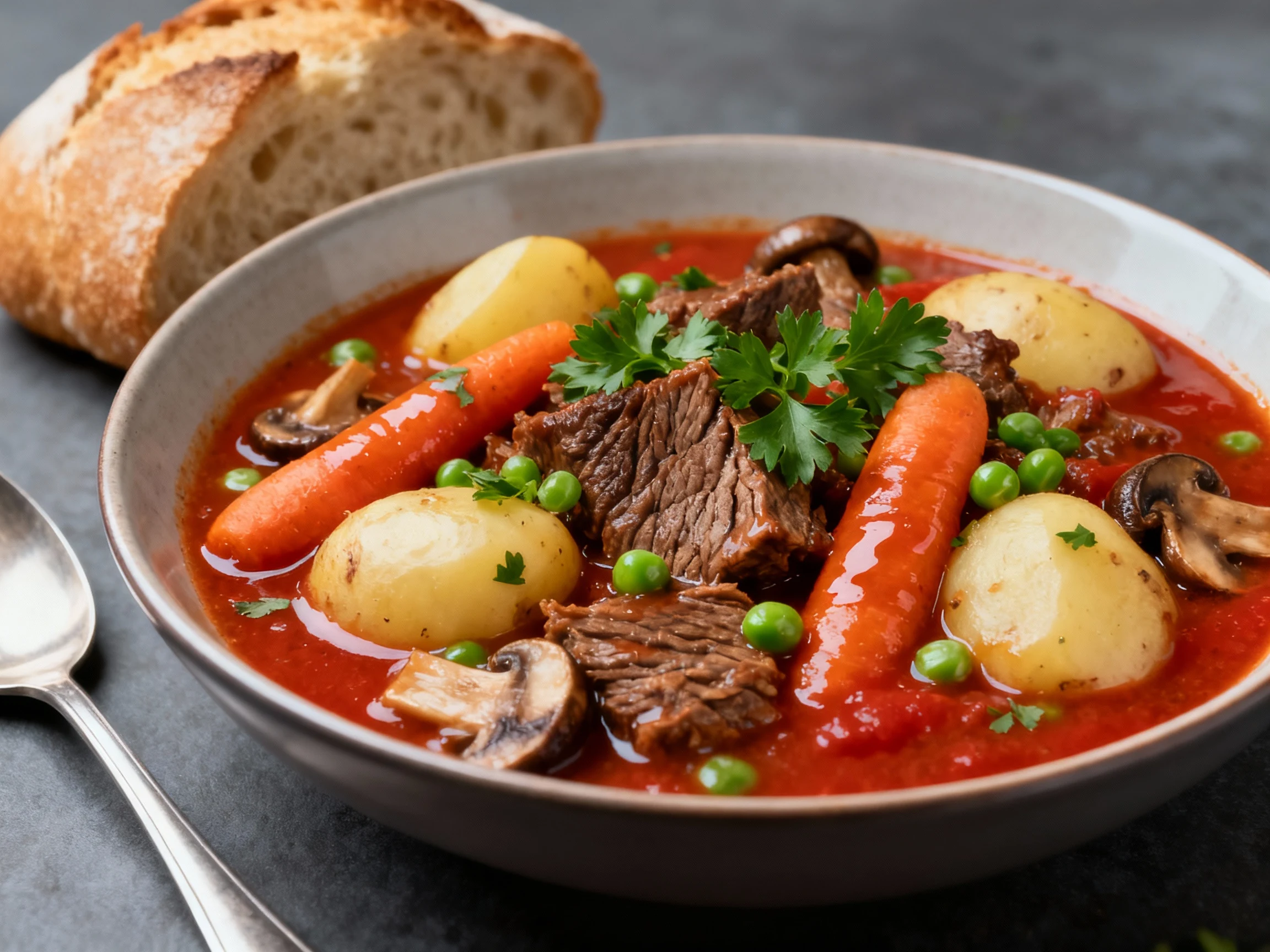
You want comfort that doesn’t babysit you, right? This stew hits like a weighted blanket with a business plan: big flavor, low effort, high ROI. Toss it in the oven and watch your house smell like you hired a chef. No fancy equipment, no culinary gymnastics. Just juicy beef, silky gravy, and vegetables that didn’t die from boiling abuse.
Here’s the kicker: the oven does the hard work, you take the credit. The meat melts, the sauce glosses, and dinner practically writes itself. Friends will ask for “the recipe,” and you’ll shrug like it wasn’t the easiest win of the week.
The Secret Behind This Recipe
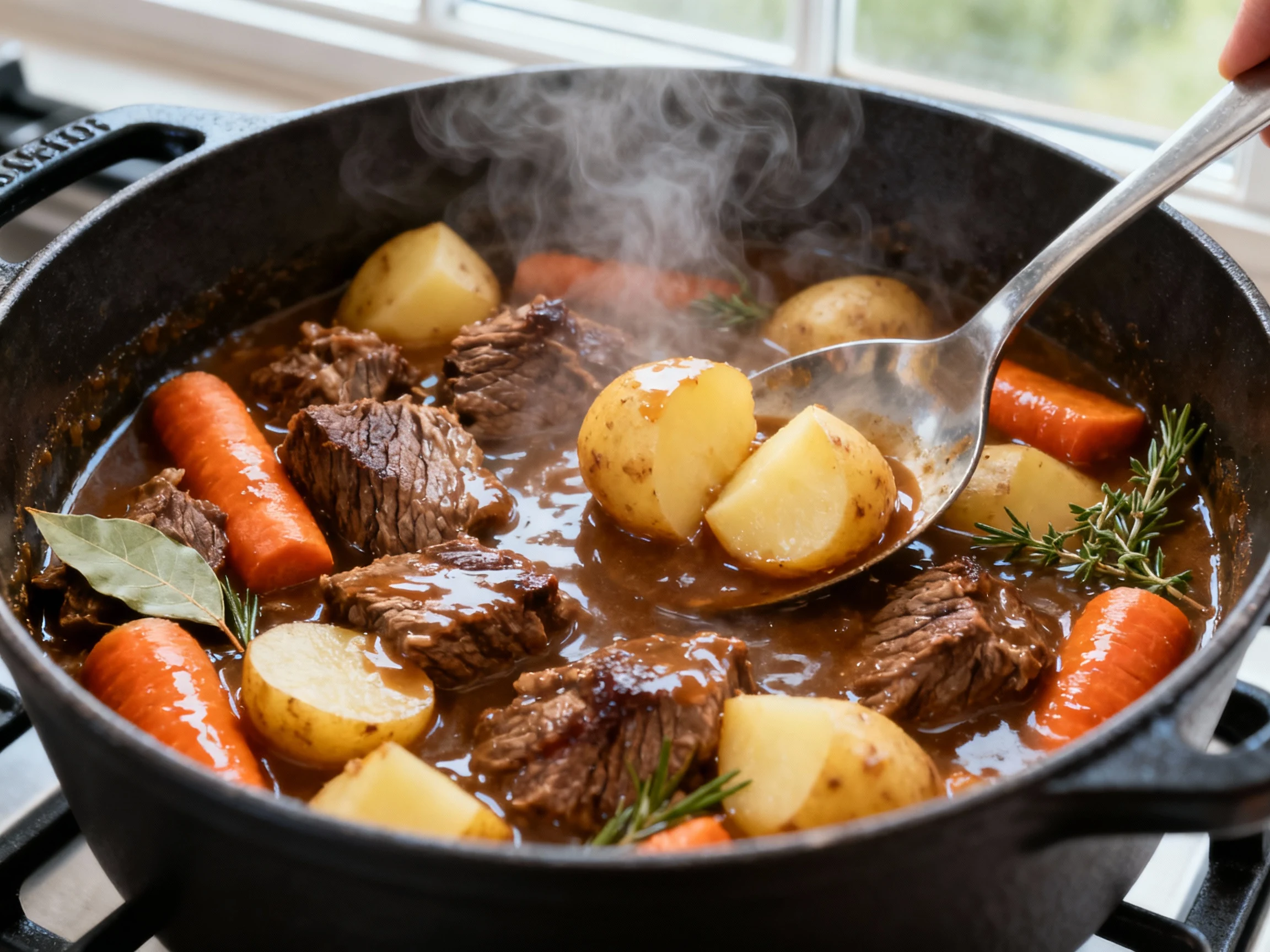
This stew wins because the oven brings steady, all-around heat that coaxes beef into tenderness without constant stirring. You sear to build a caramelized base, then let the covered pot simmer gently in the oven for 2 to 2.5 hours at 325°F (165°C). That’s the sweet spot for collagen breakdown and rich gravy development.
We stack flavor like pros: tomato paste for umami, Worcestershire for depth, and a splash of red wine or balsamic for brightness. Vegetables go in at the right times so they stay intact (potatoes and carrots won’t faceplant into mush). FYI, a Dutch oven is ideal because it locks moisture in, but any oven-safe pot with a tight lid works.
Want that glossy, spoon-coating finish? We thicken naturally by reducing, not drowning things in flour. If you need extra body, use a small slurry or mash a few potatoes into the broth. Small tweaks, big payoff. Simple math: sear + low oven + patience = wow.
Ingredients
- 2.5 lb (1.1 kg) beef chuck, cut into 1.5-inch cubes
- 2 tsp kosher salt, plus more to taste
- 1 tsp black pepper, freshly ground
- 2 tbsp all-purpose flour (optional, for light dredging)
- 2 tbsp olive oil or neutral oil
- 2 medium yellow onions, sliced or chopped
- 4 carrots, peeled and cut into 1-inch chunks
- 3 celery stalks, cut into 1-inch pieces
- 4 garlic cloves, minced
- 2 tbsp tomato paste
- 1 cup dry red wine (optional; sub beef broth if avoiding alcohol)
- 3 cups beef broth (low-sodium preferred)
- 2 tbsp Worcestershire sauce
- 2 bay leaves
- 1 tsp dried thyme or 3 fresh sprigs
- 1 small rosemary sprig (optional)
- 1.5 lb (680 g) waxy potatoes (Yukon Gold), cut into 1.5-inch chunks
- 8 oz (225 g) mushrooms, halved (optional)
- 1 tbsp balsamic vinegar (optional finish)
- 1 cup frozen peas (optional, added at the end)
- Fresh parsley, chopped, for garnish
Cooking Instructions
- Preheat your oven to 325°F (165°C). Place a rack in the center.
- Pat the beef dry with paper towels. Season with salt and pepper. Lightly toss with flour if you like a slightly thicker stew base.
- Sear the beef in a Dutch oven over medium-high heat with oil. Work in batches so you don’t steam the meat. Brown all sides (about 6–8 minutes per batch); transfer to a plate.
- Add onions, carrots, and celery to the pot. Sauté until onions start to brown, 5–6 minutes. Add mushrooms now if using.
- Stir in garlic and tomato paste. Cook 1–2 minutes until the paste darkens and smells sweet (that’s flavor, not smoke).
- Deglaze with red wine (or 1 cup broth). Scrape up the brown bits like they owe you money. Simmer 2 minutes.
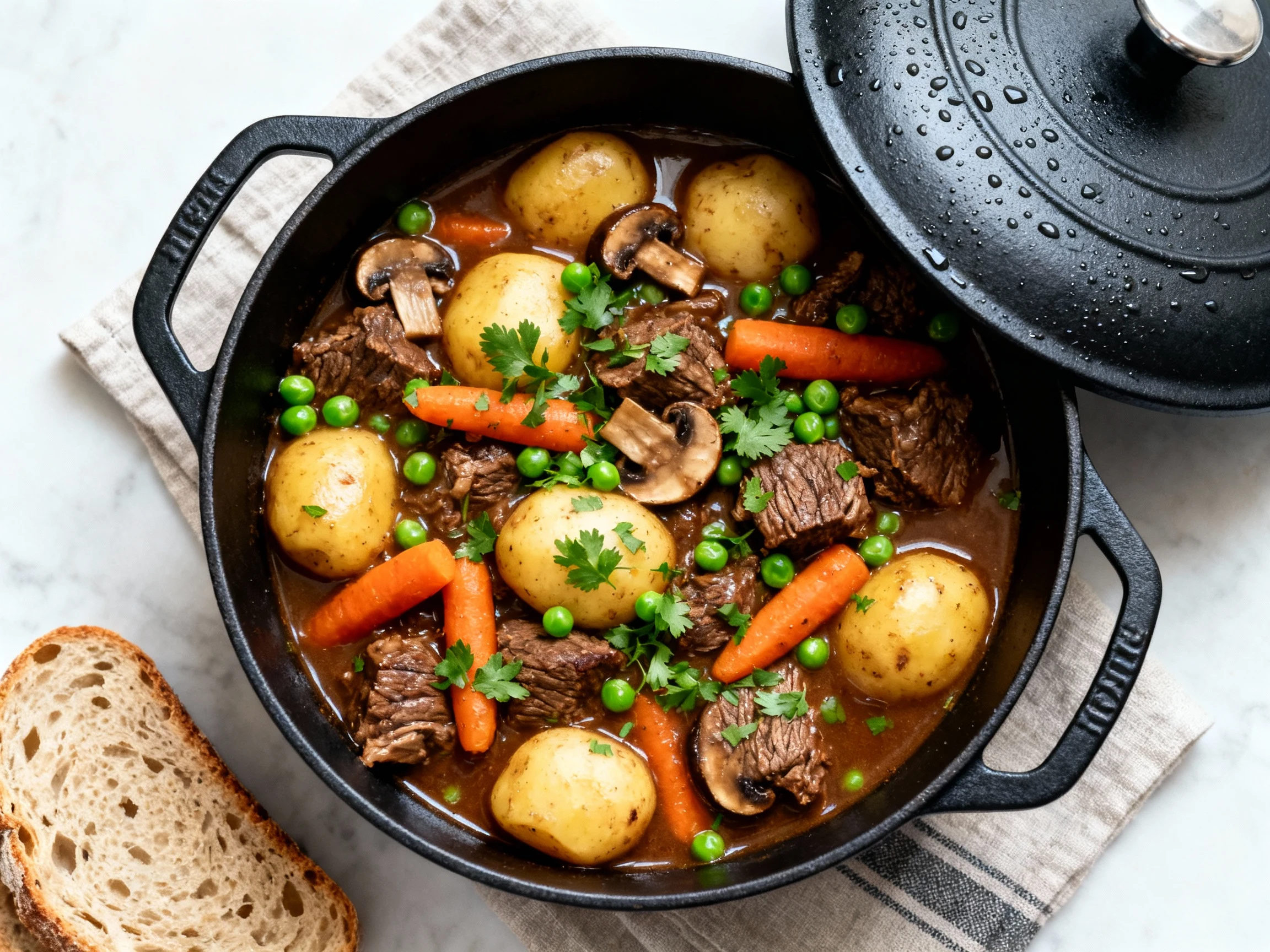
- Return beef and juices to the pot. Add remaining broth, Worcestershire, bay leaves, thyme, and rosemary. Bring to a gentle simmer.
- Cover tightly and move the pot to the oven. Cook for 90 minutes, undisturbed. FYI: opening the lid is just stealing flavor time.
- After 90 minutes, stir in potatoes. Re-cover and cook another 45–60 minutes, until beef is fork-tender and potatoes are soft.
- Remove herbs and bay leaves. Taste and season with more salt and pepper if needed. Add balsamic for brightness, if using.
- If you want it thicker, mash a few potato pieces into the broth or whisk 1 tbsp cornstarch with 1 tbsp water and stir in. Simmer 3–5 minutes.
- Stir in peas and let them warm through for 2 minutes. Finish with chopped parsley. Serve hot with bread you definitely “forgot” to make.
How to Store
Cool the stew to room temperature within 1–2 hours, then refrigerate in shallow containers. It keeps for up to 4 days. Reheat gently on the stovetop over medium-low heat or in a 300°F (150°C) oven.
For longer storage, freeze in airtight containers for up to 3 months. If you’re picky about texture, freeze the stew without potatoes and add fresh ones when reheating; potatoes can go mealy after thawing.
When reheating, add a splash of broth or water to loosen the sauce. Stir occasionally so nothing sticks. Flavor improves overnight, so next-day bowls taste suspiciously restaurant-level.
Nutritional Perks
- High-quality protein: Beef chuck delivers protein that supports muscle repair and satiety.
- Collagen and gelatin: Slow oven braising breaks down connective tissue, resulting in a silkier sauce and better mouthfeel.
- Vegetable fiber: Carrots, celery, and potatoes add fiber for digestive health and steady energy.
- Micronutrients: Iron and B12 from beef; potassium and vitamin C from potatoes and parsley.
- Lower sodium control: Use low-sodium broth and season to taste so you control the salt profile.
- Balanced carbs: Potatoes deliver complex carbs; swap in turnips for a lower-carb route.
- Healthy fats (optional): Olive oil keeps calories reasonable without sacrificing flavor.
What Not to Do
- Don’t use lean cuts. Eye of round sounds fit, but it dries out. Choose chuck for tenderness.
- Don’t crowd the pan. Searing in one mountain pile makes gray meat and sad flavor.
- Don’t skip deglazing. Those brown bits are pure gold. Wine or broth makes them yours.
- Don’t boil hard. A raging boil toughens beef. Low simmer in the oven wins.
- Don’t add potatoes too early. They’ll dissolve and ghost on you. Add after 90 minutes.
- Don’t forget aromatics. Bay, thyme, and Worcestershire turn good into great. They’re the cheat codes.
- Don’t rely on raw flour late. It tastes pasty. Use a cornstarch slurry or reduction.
- Don’t under-season. Taste and adjust at the end. Your palate is the final boss.
- Don’t use a loose lid. You want trapped moisture and heat, not a steam escape room.
Alternatives
- Alcohol-free: Replace wine with extra broth plus 1 tsp soy sauce or balsamic for complexity.
- Gluten-free: Skip the flour; thicken with cornstarch or potato mash. Easy win.
- Low-carb: Swap potatoes for turnips or rutabaga; go heavy on mushrooms and celery.
- Different proteins: Try lamb shoulder, pork shoulder, or bison. Adjust cook time to tenderness.
- Spice twist: Add smoked paprika and cumin, or curry powder and ginger for a global spin.
- Vegetable boost: Add parsnips or leeks; they bring sweetness without extra sugar.
- Slow cooker: Sear on the stovetop, then cook on low 7–8 hours. The oven still wins IMO.
- Pressure cooker: After searing, cook under pressure for 35–40 minutes, quick-release, then add potatoes and cook 5–7 minutes more.
FAQ
What’s the best cut of beef for this stew?
Beef chuck is your MVP—well-marbled, forgiving, and built for long, slow cooking. It turns tender and juicy while building a rich, silky sauce.
Can I make it without wine?
Absolutely. Use extra beef broth and a splash of Worcestershire or balsamic to replace wine’s acidity and depth. You won’t miss a thing.
What oven temperature works best?
325°F (165°C) is the sweet spot. It’s hot enough to keep things moving but gentle enough to tenderize beef without drying it out.
How long should I cook it?
Plan for 2 to 2.5 hours. Start checking around the 2-hour mark—beef should be fork-tender, and potatoes should be soft but intact.
How do I thicken the stew?
Reduce uncovered on the stovetop for a few minutes, mash some potatoes into the sauce, or use a small cornstarch slurry (1 tbsp cornstarch + 1 tbsp water). Keep it glossy, not gluey.
My stew is too salty—how do I fix it?
Add more unsalted broth or water and a few chunks of potato to absorb salt. A small splash of balsamic can balance saltiness with acidity.
Can I make this ahead?
Yes, and it actually tastes better the next day. Cool, refrigerate, and reheat gently. Add a splash of broth when reheating to loosen the sauce.
Do I need a Dutch oven?
No, but it helps. Any oven-safe pot with a tight lid or a heavy casserole covered tightly with foil will do. Just keep moisture locked in.
Should I trim all the fat?
Trim large, hard pieces, but leave some marbling. That fat melts and makes the sauce luxurious. Flavor doesn’t come from fear.
Can I add dumplings?
Sure. Add them in the last 20–25 minutes in the oven or on the stovetop, covered, so they steam and cook through without drying out.
The Bottom Line
This oven-braised beef stew delivers maximum comfort with minimal effort and zero culinary drama. You sear, set, and let the oven turn humble ingredients into something you’ll brag about. It’s reliable, scalable, and ridiculously good—exactly the kind of dinner that makes you look like you meant to do it all along.
Printable Recipe Card
Want just the essential recipe details without scrolling through the article? Get our printable recipe card with just the ingredients and instructions.