Old Recipes That Still Slap—grandmas Secrets Modern Wins
From Sunday supper to weeknight wins, these vintage classics pack bold flavor, budget staples, and low-effort techniques that work.
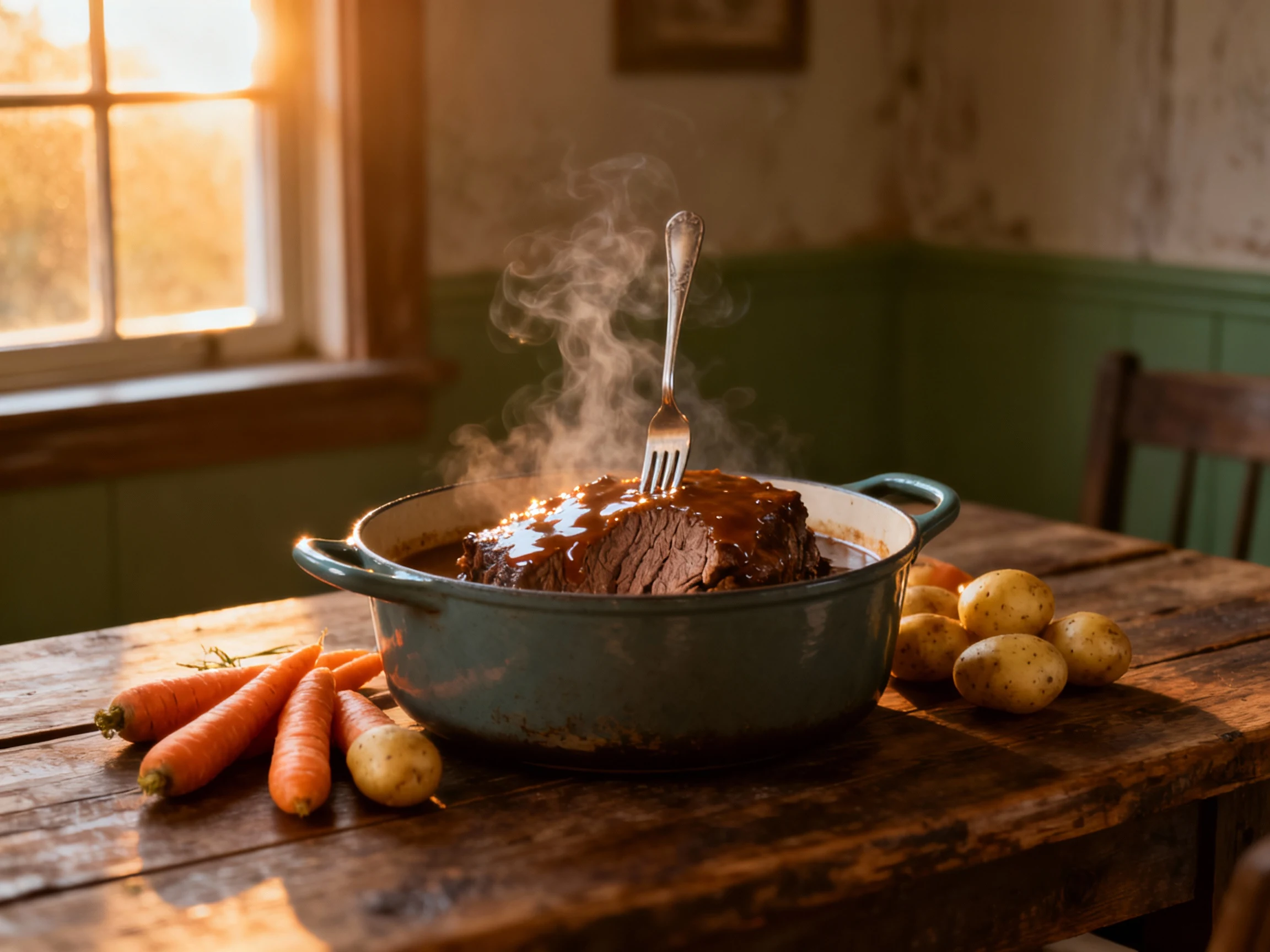
You know that dish people can smell from the driveway? The one that makes everyone instantly nicer and 30% more helpful with the dishes? That’s the power of a real-deal heritage recipe. Today we’re talking old-school pot roast: the kind grandma mastered, the kind chefs still copy, the kind you can nail without fancy gadgets. Minimal steps, maximum payoff, and yes—fork-tender meat with a gravy so glossy it should have its own Instagram.
Why You’ll Love This Recipe
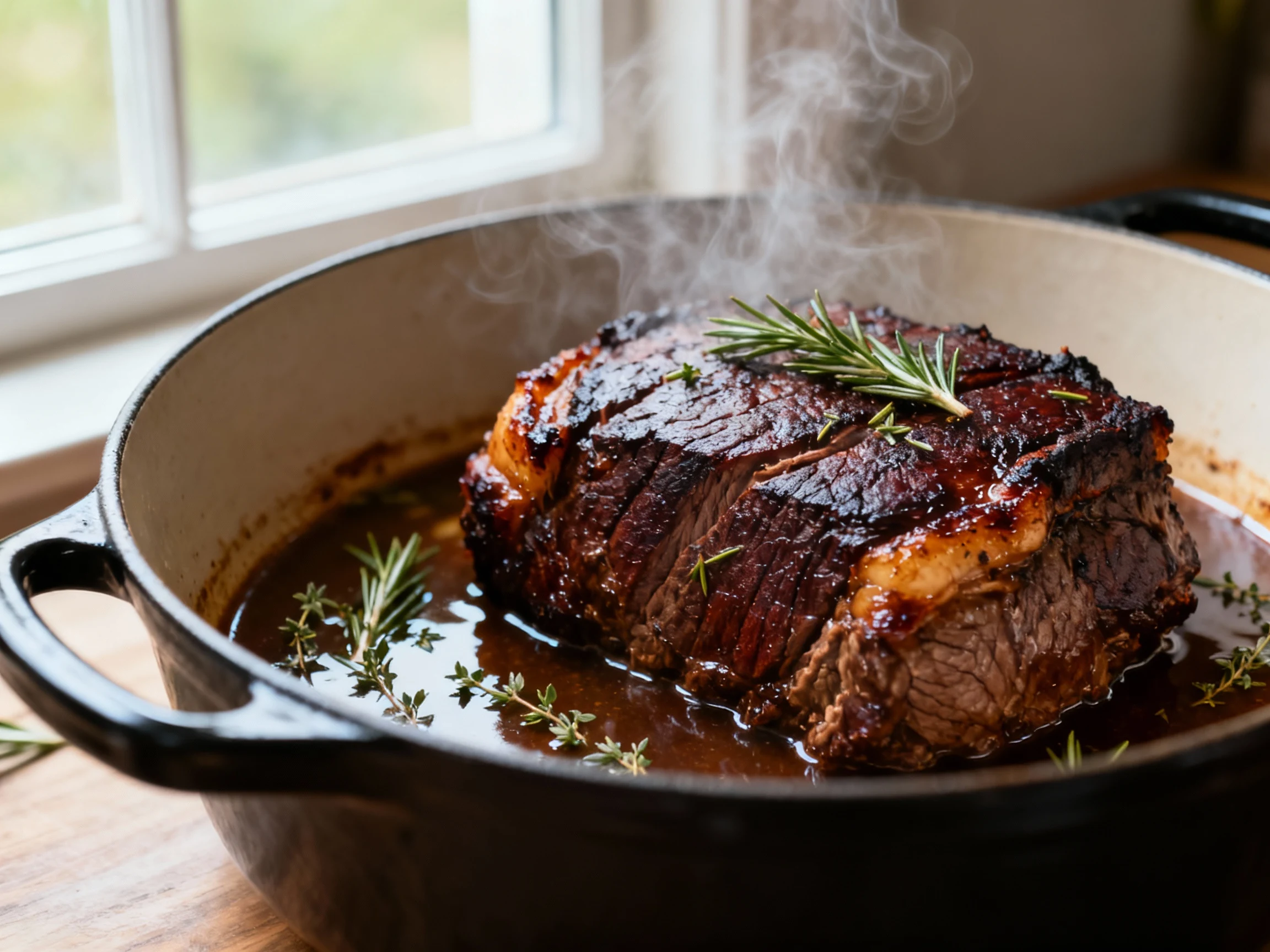
- Ridiculously tender: Slow braising breaks down tough fibers for meat that practically falls apart when nudged.
- One-pot convenience: Sear, simmer, serve—your Dutch oven does the heavy lifting while you get the compliments.
- Budget-friendly greatness: Uses affordable chuck roast, supermarket veggies, and pantry staples to deliver big flavor.
- Meal-prep gold: Tastes even better on day two, and the leftovers make elite sandwiches and bowls.
- Timeless technique: Old-school sear + braise combo that never goes out of style. Because science, not trends.
Ingredients
- 3–4 lb (1.4–1.8 kg) beef chuck roast, patted dry
- 2 tsp kosher salt, plus more to taste
- 1 tsp black pepper, freshly ground
- 2 tbsp neutral oil (canola or avocado)
- 1 large onion, sliced into thick wedges
- 4 cloves garlic, smashed
- 2 ribs celery, chopped
- 3 large carrots, cut into big chunks
- 1 lb (450 g) baby potatoes or chunked Yukon Golds
- 2 tbsp tomato paste
- 1 cup dry red wine (optional but recommended)
- 3 cups beef broth (low sodium)
- 2 tsp Worcestershire sauce
- 2 sprigs fresh rosemary or 1 tsp dried
- 4 sprigs fresh thyme or 1 tsp dried
- 1 bay leaf
- 1 tbsp cornstarch + 1 tbsp water (optional, for a thicker gravy)
- Fresh parsley, chopped, for garnish
The Method – Instructions
- Preheat and prep: Set your oven to 325°F (163°C). Pat the roast dry and season all sides with salt and pepper. Dry meat equals better browning—science and grandma agree.
- Get a deep sear: Heat neutral oil in a large Dutch oven over medium-high. Sear the roast 3–4 minutes per side until a deep, caramelized crust forms. Don’t crowd or fidget; let it brown like it means it.
- Sauté aromatics: Remove the roast. Add onion, celery, and garlic. Cook 3–4 minutes until fragrant and slightly golden. Stir in tomato paste and cook 1 minute to toast it. This is where flavor goes pro.
- Deglaze: Pour in red wine (if using) and scrape up browned bits. Simmer 2 minutes to reduce slightly. Add beef broth and Worcestershire. Taste and adjust salt now, not later.
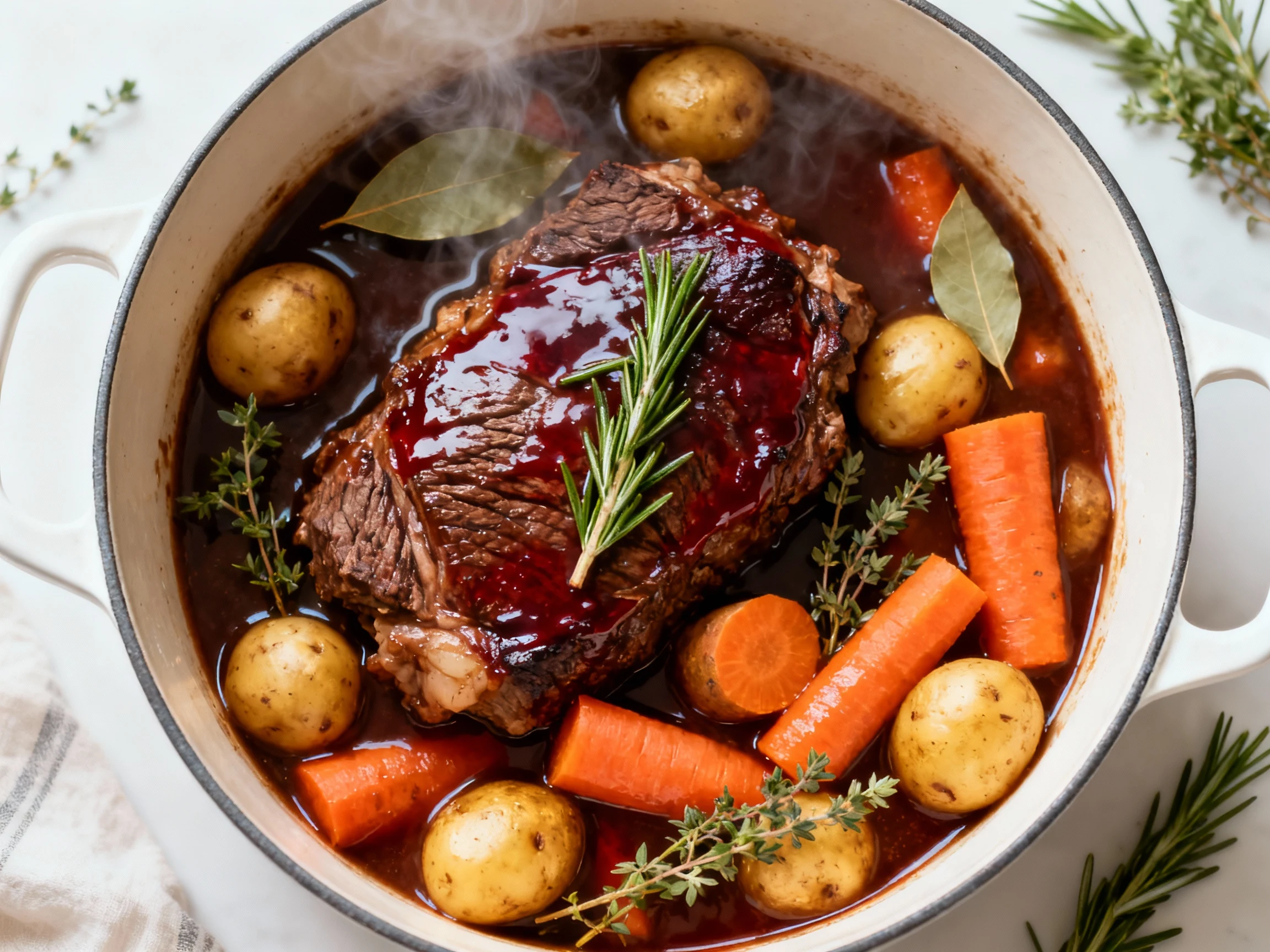
- Load the herbs and braise: Return the roast to the pot. Add rosemary, thyme, and bay leaf. Cover and braise in the oven for 2 hours. This is the transformation phase—go live your life.
- Add the veggies: After 2 hours, add carrots and potatoes around the roast. Cover and continue braising 45–60 minutes more, until the meat is fork-tender and veggies are silky-soft.
- Finish the gravy: Transfer the roast and veggies to a serving platter. Skim extra fat from the braising liquid. For a thicker gravy, whisk the cornstarch slurry into the liquid and simmer on the stove 3–5 minutes.
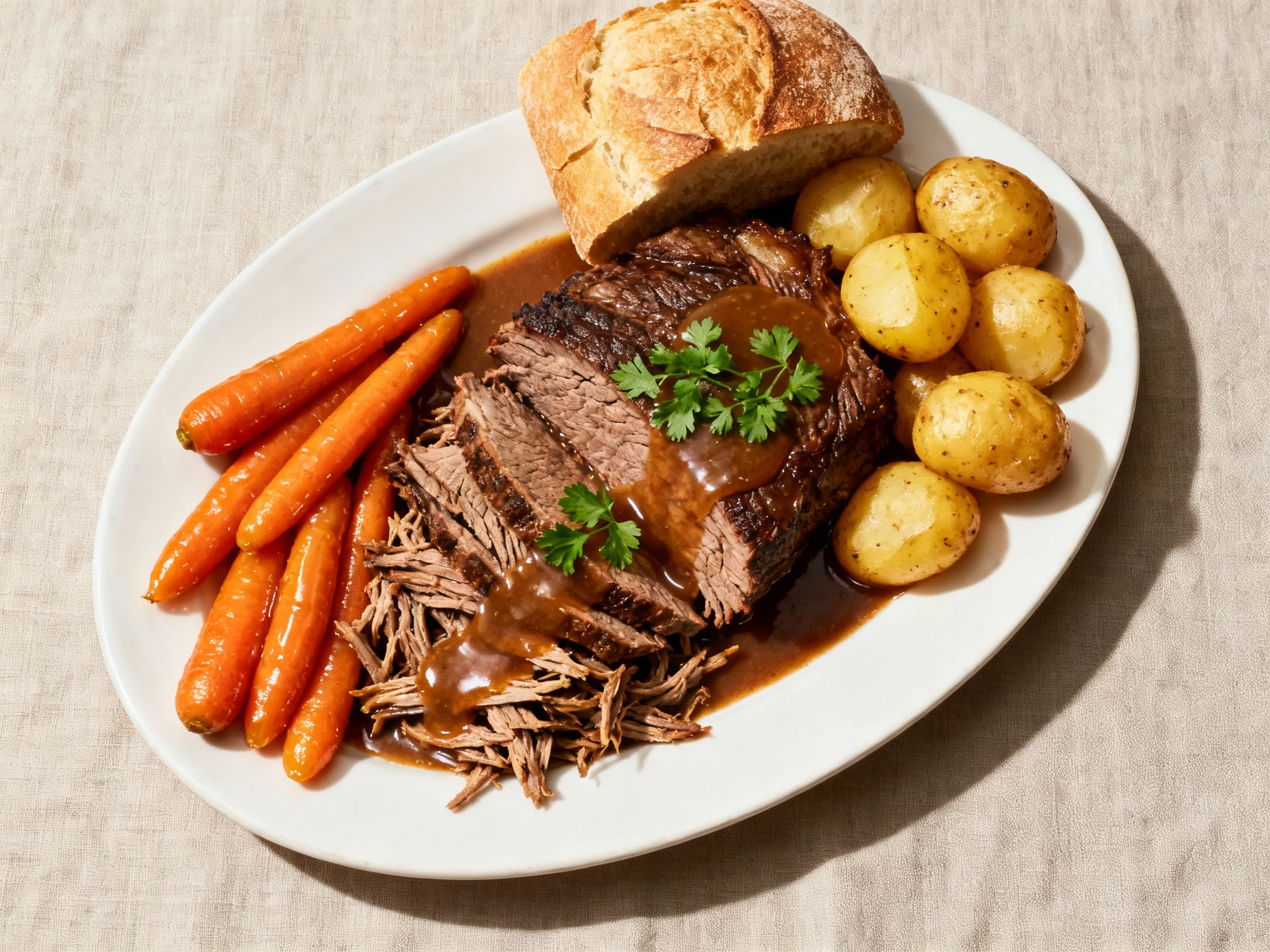
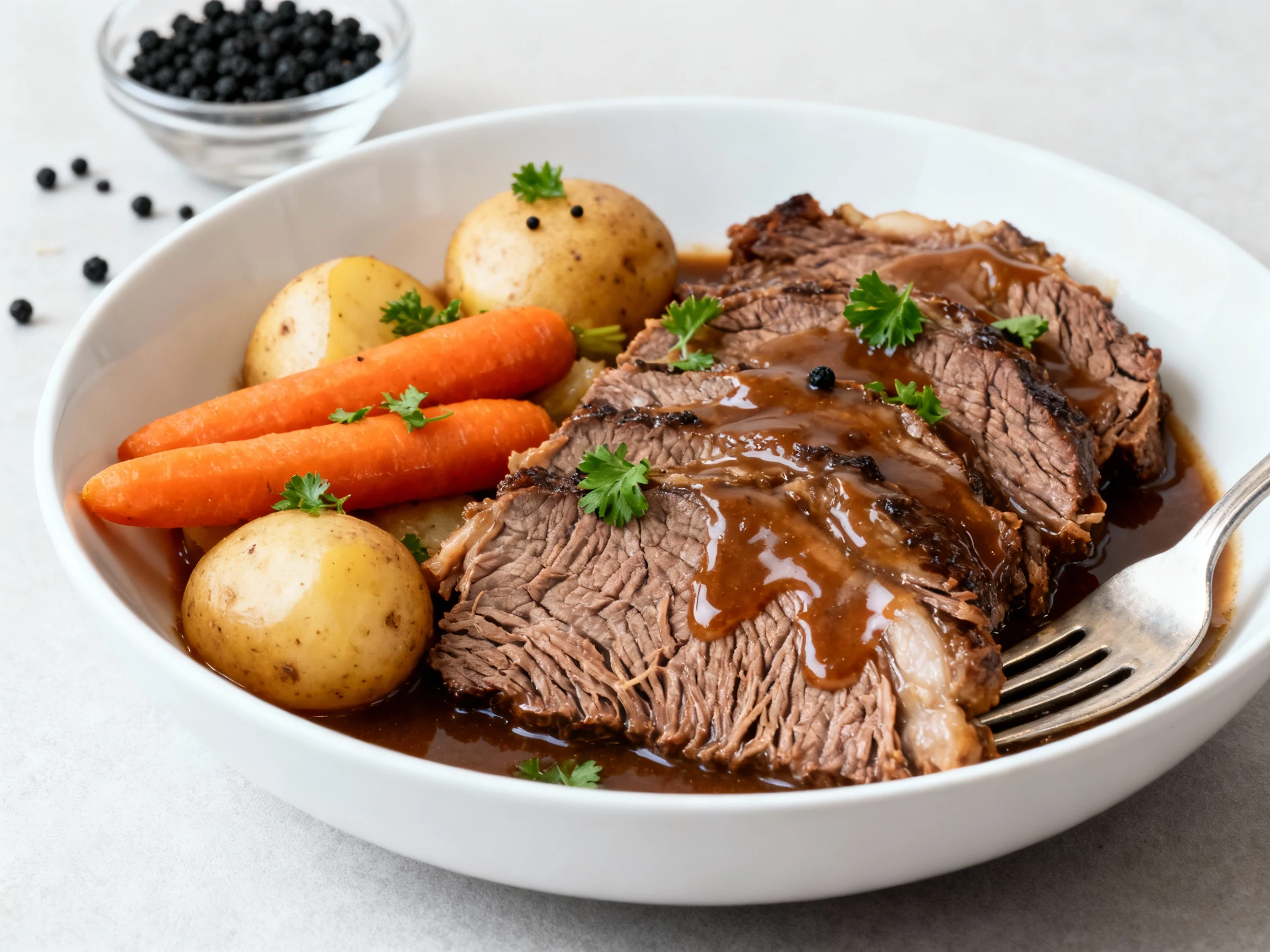
- Serve like you mean it: Slice or pull the roast, spoon over that glossy gravy, and sprinkle with parsley. Pro move: serve with crusty bread to mop up the sauce. Your future self will thank you.
Storage Instructions
- Fridge: Store in an airtight container with gravy for up to 4 days. The sauce protects the meat, like a flavor bodyguard.
- Freezer: Cool completely, portion with gravy, and freeze for up to 3 months. Thaw overnight in the fridge for best texture.
- Reheat: Warm gently on the stovetop over low with a splash of broth or water. Microwave? Sure, but use short bursts and stir so it stays tender, not tragic.
Health Benefits
- Protein-rich: Chuck roast delivers high-quality protein to support muscle repair and satiety.
- Micronutrient boost: Carrots, potatoes, and celery add fiber, vitamin A, potassium, and antioxidants—because delicious can also be functional.
- Lower sodium control: Using low-sodium broth helps manage salt intake while keeping flavors bold.
- Balanced meal: Protein + starch + veggies = a satisfying plate. Add a side salad for extra crunch and micronutrients, IMO.
Pitfalls to Watch Out For
- Skipping the sear: That crust isn’t cosmetic—it’s flavor. Without it, the braise tastes flat. So yes, heat the pan properly.
- Boiling instead of braising: If the liquid is aggressively bubbling, lower the heat. Gentle braising keeps meat tender, not stringy.
- Adding veggies too early: Carrots and potatoes added at the start turn mushy. Add them in the last hour for ideal texture.
- Over-salting late: The sauce concentrates as it cooks. Season your braising liquid lightly at the start, then adjust at the end.
- Lid off, moisture gone: Braises need a covered environment. No lid? No moisture. No moisture? No tenderness. You get the idea.
Alternatives
- Slow cooker: Sear in a pan, then transfer to a slow cooker with liquid and herbs. Cook on LOW 8–9 hours or HIGH 4–5 hours. Same vibe, less oversight.
- Pressure cooker: Sear on sauté mode, add liquids, and cook at pressure for 60–70 minutes. Natural release. FYI: veggies can be added for the last 10 minutes so they don’t turn to mash.
- Chicken version: Swap chuck roast for bone-in chicken thighs. Braise 60–75 minutes. You’ll get luscious meat and a lighter gravy.
- Plant-based: Try meaty mushrooms and white beans. Use vegetable broth, add soy sauce for umami, and reduce braise time to 45 minutes.
- Flavor twists: Add paprika and smoked salt for BBQ vibes, or a splash of balsamic for tangy-sweet complexity. Grandma would approve—she loved options.
FAQ
What cut of beef works best for pot roast?
Chuck roast is the MVP thanks to its fat and connective tissue, which melt into tenderness during a long braise. Brisket and bottom round can work too, but may need extra time and careful slicing.
Can I make this without wine?
Absolutely. Use extra beef broth and a tablespoon of balsamic vinegar or a splash of apple cider vinegar for brightness. You’ll still get deep flavor without the wine.
How do I know the roast is done?
It’s ready when a fork slides in easily and the meat gently pulls apart. Time is a guideline; tenderness is the truth. If it fights back, give it another 20–30 minutes.
My gravy is thin—how do I fix it?
Simmer the braising liquid to reduce, or whisk in the cornstarch slurry and cook for 3–5 minutes until glossy. Taste and adjust salt after thickening for best balance.
Can I add mushrooms?
Yes, and it’s a great move. Brown 8 oz (225 g) mushrooms after searing the beef, then proceed as written. They bring extra umami and soak up the sauce like flavor sponges.
Is this freezer-friendly?
Very. Cool, portion with gravy, and freeze for up to 3 months. Reheat gently; add a splash of broth to revive the sauce. Make two roasts if future-you appreciates easy wins (spoiler: it does).
What if I don’t have a Dutch oven?
Use a heavy oven-safe pot with a tight lid, or sear in a skillet and transfer to a deep roasting pan tightly covered with foil. Keep liquid levels consistent to avoid drying out.
Can I use dried herbs?
Yes. Use about 1 tsp dried rosemary and 1 tsp dried thyme. Dried herbs are potent, so don’t overdo it. Add fresh parsley at the end for brightness, FYI.
Wrapping Up
Call it comfort food, call it culinary nostalgia—either way, this old-school pot roast earns its spot in your rotation. It’s simple, it’s reliable, and it turns humble ingredients into “I need seconds” energy. Stick to the sear-braise blueprint, add veggies late, and finish with a proper gravy. Then bask in the compliments like you didn’t just follow eight steps and a timer.
Whether it’s Sunday dinner or a busy Tuesday, this classic delivers high flavor and low stress. Make it once and you’ll memorize it; make it twice and it becomes tradition. That’s the magic of the tried-and-true: give it time, and it gives you everything back—tender meat, rich sauce, and a table full of happy people.
Printable Recipe Card
Want just the essential recipe details without scrolling through the article? Get our printable recipe card with just the ingredients and instructions.