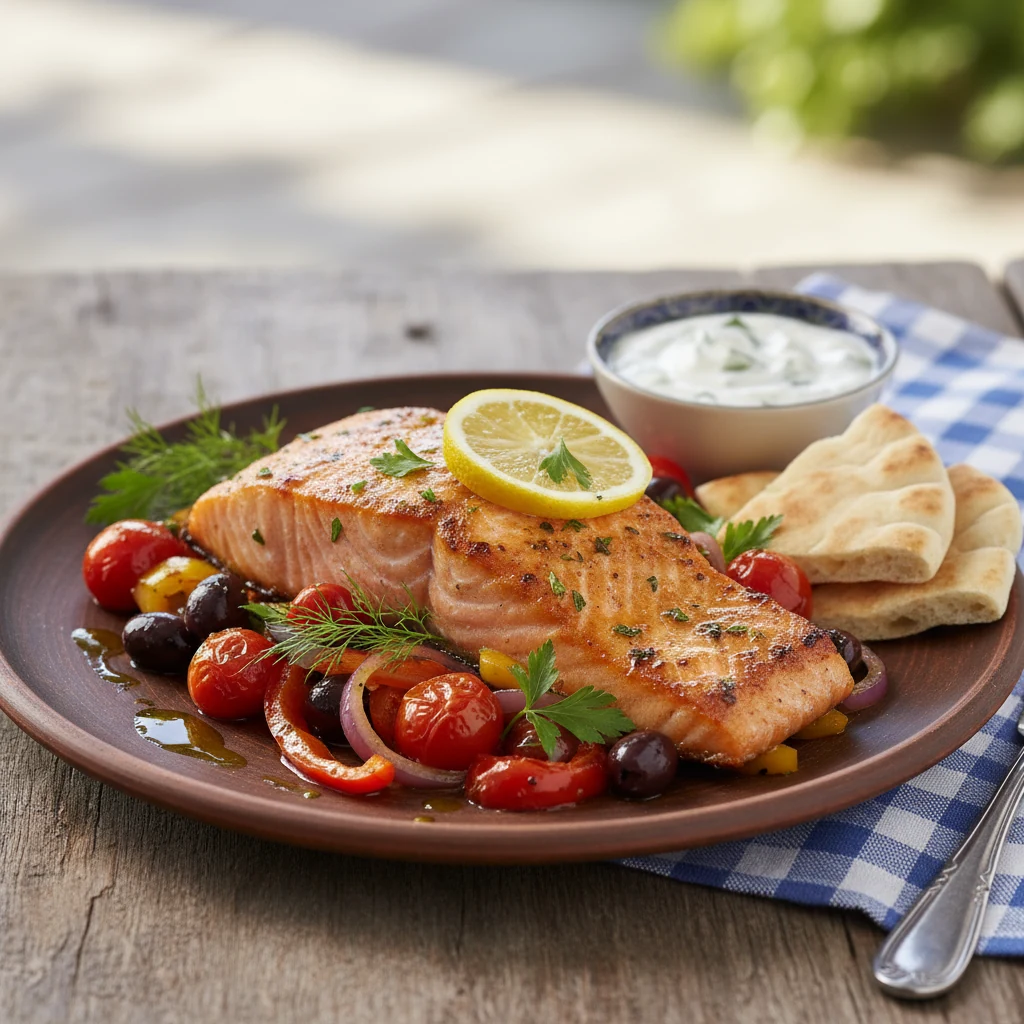
Mediterranean Salmon Recipes for Bright Weeknight Flavor
Weeknight-friendly meals with zesty herbs, pantry staples, and 30-minute steps—fresh, heart-smart salmon dinners with minimal cleanup.
If you want dinners that taste like vacation but cook like Tuesday, this is your new move. Big flavors, simple methods, and zero fancy-chef energy required. We’re talking juicy salmon, lemony herb magic, briny pops of olives and capers, and just enough feta to make you text a friend: “This slaps.” Bonus: it’s one pan, so your sink doesn’t look like a science fair. Ready to upgrade boring fish to “whoa, that’s good” status?
What Makes This Special
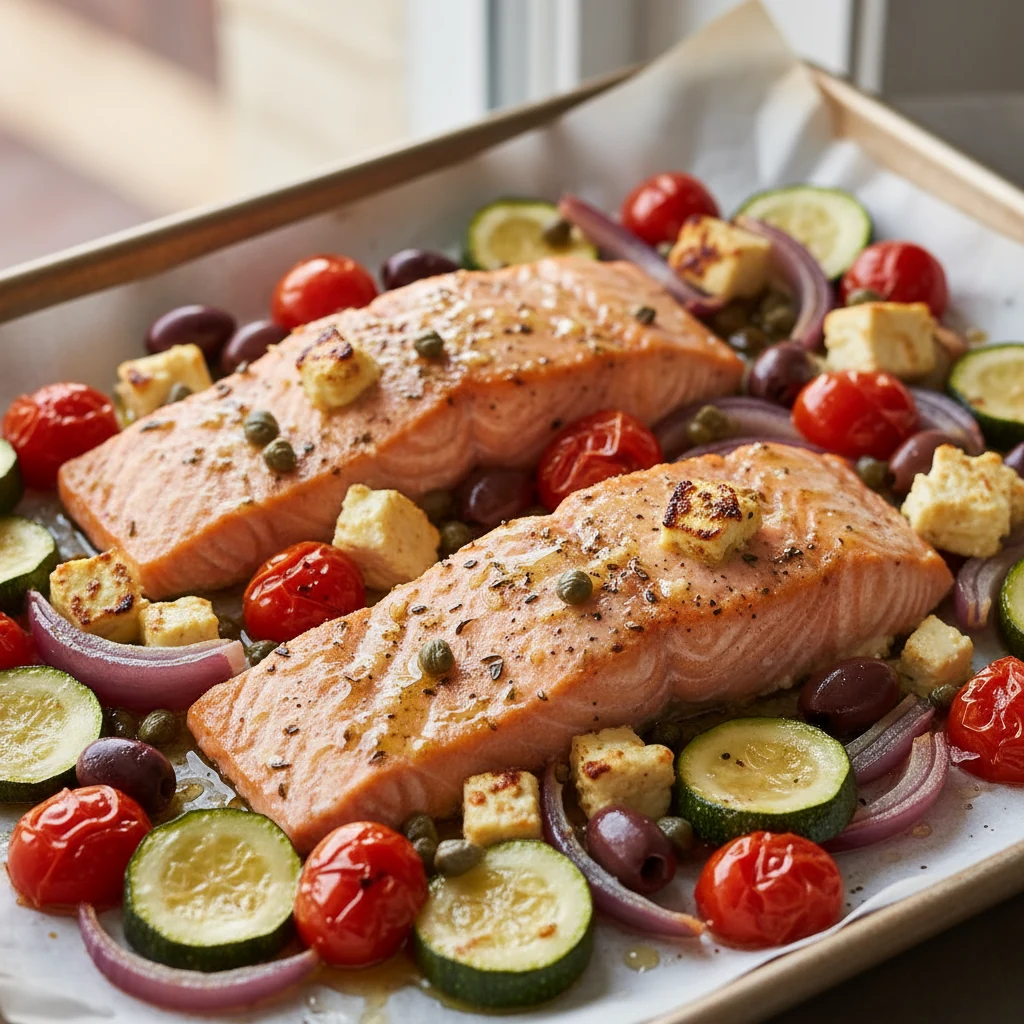
This isn’t a single, rigid recipe—it’s a flexible blueprint that delivers Old World flavor with new-school convenience. You get speed, depth, and an easy cleanup plan that actually respects your schedule.
- Bold, balanced flavor: Bright lemon, garlic, and herbs meet salty olives and creamy feta for contrast that just works.
- One-pan simplicity: Roast veggies first, add salmon, finish under the broiler. That’s the system.
- Fast and forgiving: Done in about 30 minutes with a wide window before things go sideways.
- Heart-smart fats: Salmon + extra-virgin olive oil = the kind of fat your cardiologist actually smiles about.
- Restaurant vibes, grocery budget: Everything is pantry-friendly and easy to source.
Ingredients Breakdown
Here’s the core list for a sheet-pan, lemon-herb Mediterranean-style salmon with blistered veggies and feta. Scale up or down as needed.
- Salmon: 4 skin-on fillets (about 6 oz each) or 1.5 lb center-cut salmon
- Kosher salt + black pepper: to season generously
- Extra-virgin olive oil: 3 tbsp
- Lemon: 1 lemon (zest + 2 tbsp juice), plus extra wedges for serving
- Garlic: 3 cloves, finely minced
- Dried oregano: 1 tsp
- Smoked paprika: 1 tsp (regular paprika works too)
- Ground cumin: 1/2 tsp
- Crushed red pepper flakes:
- Fresh herbs: 2 tbsp chopped dill or parsley, plus more for garnish
- Cherry tomatoes: 2 cups
- Red onion: 1 small, cut into thin wedges
- Zucchini: 1 medium, cut into half-moons
- Kalamata olives: 1/2 cup, pitted and halved
- Capers: 1 tbsp, drained (optional but excellent)
- Feta cheese: 1/2 cup, crumbled
- Optional add-ins: sliced red bell pepper, artichoke hearts, baby spinach (toss in at the end)
Yield: Serves 4 • Total Time: ~30 minutes • Skill: Beginner-friendly, IMO.
Cooking Instructions
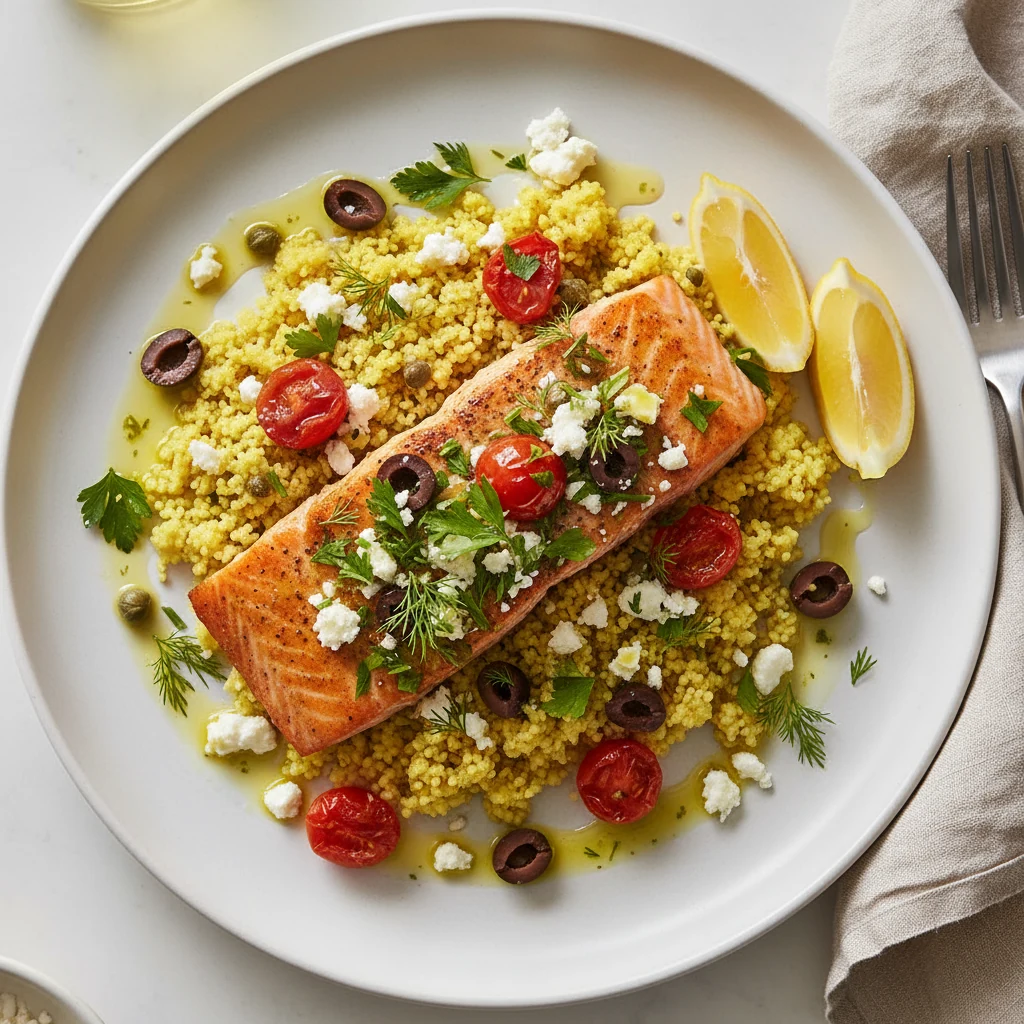
- Preheat and prep: Heat the oven to 425°F (220°C). Line a large sheet pan with parchment for easy cleanup. Pat the salmon dry so seasoning actually sticks.
- Make the lemon-herb mix: In a bowl, whisk 3 tbsp olive oil, lemon zest + 2 tbsp juice, garlic, oregano, paprika, cumin, a pinch of red pepper flakes (optional), and 1 tsp salt + 1/2 tsp black pepper. Stir in 1 tbsp chopped dill or parsley.
- Toss the veggies: On the sheet pan, toss tomatoes, red onion, zucchini, and olives with about half of the lemon-herb mixture. Spread in a single layer (crowding = soggy).
- Roast the veggies first: Slide the pan into the oven for 8 minutes. This gives them a head start so everything finishes together.
- Season the salmon: While veggies roast, season salmon on both sides with salt and pepper. Brush the remaining lemon-herb mixture over the tops.
- Add the salmon to the party: Remove the pan, scoot veggies aside, then place salmon skin-side down. Return to the oven and roast 8–12 minutes, depending on thickness, until the fish flakes easily.
- Know your doneness: For succulent results, aim for 125–130°F (52–54°C) in the thickest part (an instant-read thermometer is your best friend). FYI, it will continue to cook slightly as it rests.
- Finish with flair: Sprinkle feta and capers over everything. Switch to broil for 1–2 minutes to lightly blister tomatoes and warm the feta. Watch closely—broilers are spicy.
- Rest and garnish: Let salmon rest 3 minutes. Shower with more chopped herbs and a squeeze of fresh lemon. Serve with couscous, orzo, or a tumble of arugula.
- Optional sauce move: Stir a quick drizzle: 2 tbsp olive oil + 1 tbsp lemon juice + pinch of salt + dash of oregano. Spoon over each fillet for extra shine.
How to Store
- Fridge: Store cooked salmon and veggies in airtight containers up to 3 days. Keep them separate if you can—nobody asked for tomato-onion perfume on everything.
- Reheat: Low and slow. Oven at 275°F (135°C) for 10–12 minutes or microwaved at 50% power in short bursts. A tiny splash of water or olive oil helps retain moisture.
- Freeze: Salmon freezes well for up to 2 months. Skip freezing the tomatoes/onions (texture suffers). Wrap salmon tightly before freezing; thaw overnight in the fridge.
- Meal prep tip: Roast extra veggies and cook an extra cup of couscous. Tomorrow’s lunch basically made itself.
What’s Great About This
- One pan, many wins: Less mess, less stress, more dinner.
- Weeknight-speed: 30 minutes from “we should eat” to “we’re eating.”
- Flexible core: Swap herbs, add peppers, change the grain—flavor stays huge.
- Nutrition that delivers: Protein, omega-3s, and fiber-rich veggies without feeling “health food.”
- Company-worthy: Looks fancy. Requires zero chef tattoos.
Avoid These Mistakes
- Overcooking the salmon: The #1 sin. Pull at 125–130°F and let carryover heat do a little extra.
- Skipping the pat-dry: Wet fish = steamed fish. Moisture prevents browning and keeps seasoning from sticking.
- Overcrowding the pan: Use a big sheet pan so veggies blister instead of stew.
- Cold salmon straight from the fridge: Give it 10–15 minutes at room temp for even cooking.
- Too much lemon too early: Long marinating in acid can “cook” the fish. Brush it on just before roasting.
- Cheap oil, flat flavor: Use good extra-virgin olive oil. It’s the backbone, not a cameo.
- Ignoring salt: Season the fish and the veggies. Under-salting makes everything taste shy.
Variations You Can Try
- Chermoula Twist: Swap oregano/paprika for a chermoula vibe: cilantro, parsley, garlic, cumin, paprika, lemon, and olive oil.
- Harissa + Orange: Whisk 1–2 tsp harissa paste with orange zest/juice and olive oil. Add carrots and chickpeas to the pan.
- Pistachio-Crusted: Mix crushed pistachios with lemon zest and olive oil; press onto salmon before roasting. Skip broil.
- Greek Pesto: Toss salmon with basil pesto, artichoke hearts, and cherry tomatoes; finish with feta and a squeeze of lemon.
- Sumac + Yogurt Drizzle: Finish with a sauce of Greek yogurt, lemon, sumac, and a pinch of salt. Bright and cooling.
- Foil Packets: Wrap salmon + veggies in foil with the lemon-herb mix; grill 10–12 minutes. Camping hero status unlocked.
- Air Fryer: 400°F for 7–10 minutes for 6-oz fillets. Add tomatoes/olives to the basket for the last 5 minutes.
- Pan-Seared + Pan Sauce: Sear salmon in olive oil; remove. Sauté onions/tomatoes, deglaze with white wine, swirl in lemon and herbs. Fast skillet dinner.
FAQ
Can I use frozen salmon?
Yes. Thaw overnight in the fridge or run sealed fillets under cold water until pliable. Pat very dry before seasoning. Frozen is often frozen-at-sea and can be excellent quality, so don’t stress the “fresh” aisle theatrics.
Skin on or off?
Skin-on helps insulate the fish and keeps it tender. Roast skin-side down; it will release easily when done. If you prefer skinless, reduce cook time by a minute or two.
How do I know when salmon is done?
Use an instant-read thermometer: 125–130°F in the thickest part for moist, medium results. No thermometer? Look for opaque edges, a slightly translucent center, and easy flaking when nudged with a fork.
What sides go well with this?
Couscous, lemony orzo, herbed quinoa, crusty bread, or a simple green salad. If you want extra veg, roast asparagus or broccoli on a second pan. Bread is non-negotiable if you’re chasing all those pan juices, IMO.
Can I meal prep this?
Absolutely. Roast extra veggies and cook a big pot of couscous. Portion with salmon into containers. Reheat gently and add fresh herbs and a squeeze of lemon right before eating to wake things up.
Is farmed or wild salmon better here?
Use what you like and what fits the budget. Wild runs leaner and cooks faster; farmed is richer and a bit more forgiving. Adjust time and keep an eye on internal temp either way.
Can I cook this without turning on the oven?
Yes—use a large skillet. Sear salmon 3–4 minutes per side over medium-high. In a second pan, blister tomatoes/onions in olive oil, then toss with olives, herbs, lemon, and feta. Same flavors, stove-only method.
How do I keep the salmon tender for leftovers?
Don’t overcook on day one, store it promptly, and reheat low and slow with a splash of liquid. Or eat it cold flaked over greens with a quick lemon-olive oil dressing—honestly fantastic.
Can I make this dairy-free?
Sure. Skip the feta and finish with a tahini-lemon drizzle or toasted pine nuts for richness. You won’t miss a beat.
What if I don’t have olives or capers?
Use what you have. Try chopped sun-dried tomatoes, marinated artichokes, or even a few anchovy fillets melted into the pan sauce. The goal is a little briny punch to balance the lemon and herbs.
The Bottom Line
Big flavor doesn’t need big effort. With lemon, garlic, herbs, and a smart sheet-pan sequence, you get salmon that’s juicy, veggies that are lively, and a dinner that feels sunny any day of the week. Keep the internal temp in check, don’t crowd the pan, and finish with fresh herbs and acidity. That’s the playbook. Make it once and it’ll slide into your permanent rotation—no complicated chef tricks, just reliable, weeknight-friendly greatness.
Printable Recipe Card
Want just the essential recipe details without scrolling through the article? Get our printable recipe card with just the ingredients and instructions.