Instapot Ham and Bean Soup Recipes for Cozy Weeknights
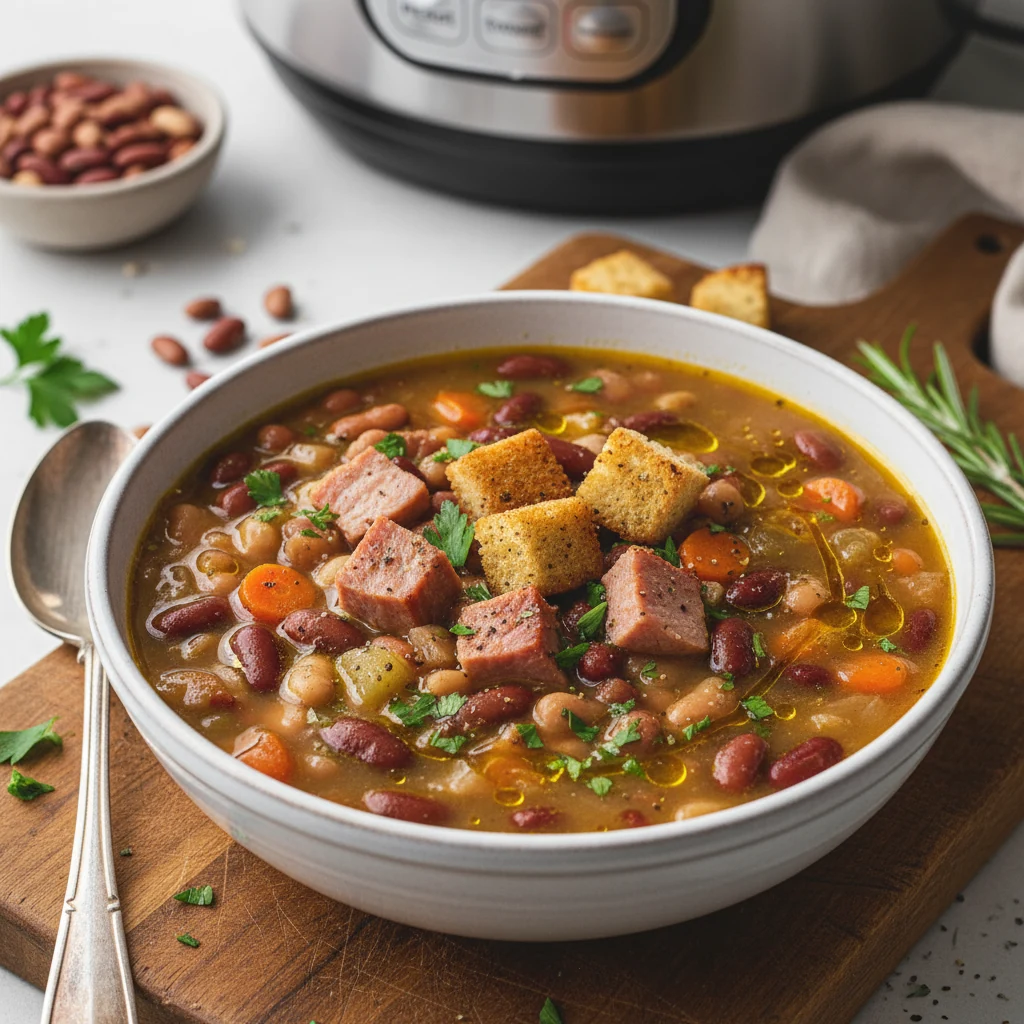
Fast, hearty, and budget-friendly, this pressure-cooker classic turns leftover ham and pantry beans into a cozy bowl in under an hour.
Got a leftover ham bone and an hour on the clock? Good. You’re five ingredients away from a wallet-friendly win that feeds a crowd and clears space in the fridge. This soup uses cheap beans, high-flavor leverage, and pressure to build a broth that tastes like it simmered all Sunday. It’s weeknight-fast, lunch-friendly, and sturdy enough to freeze. Bonus: the smell alone will make your neighbors question their life choices.
Why This Recipe Works
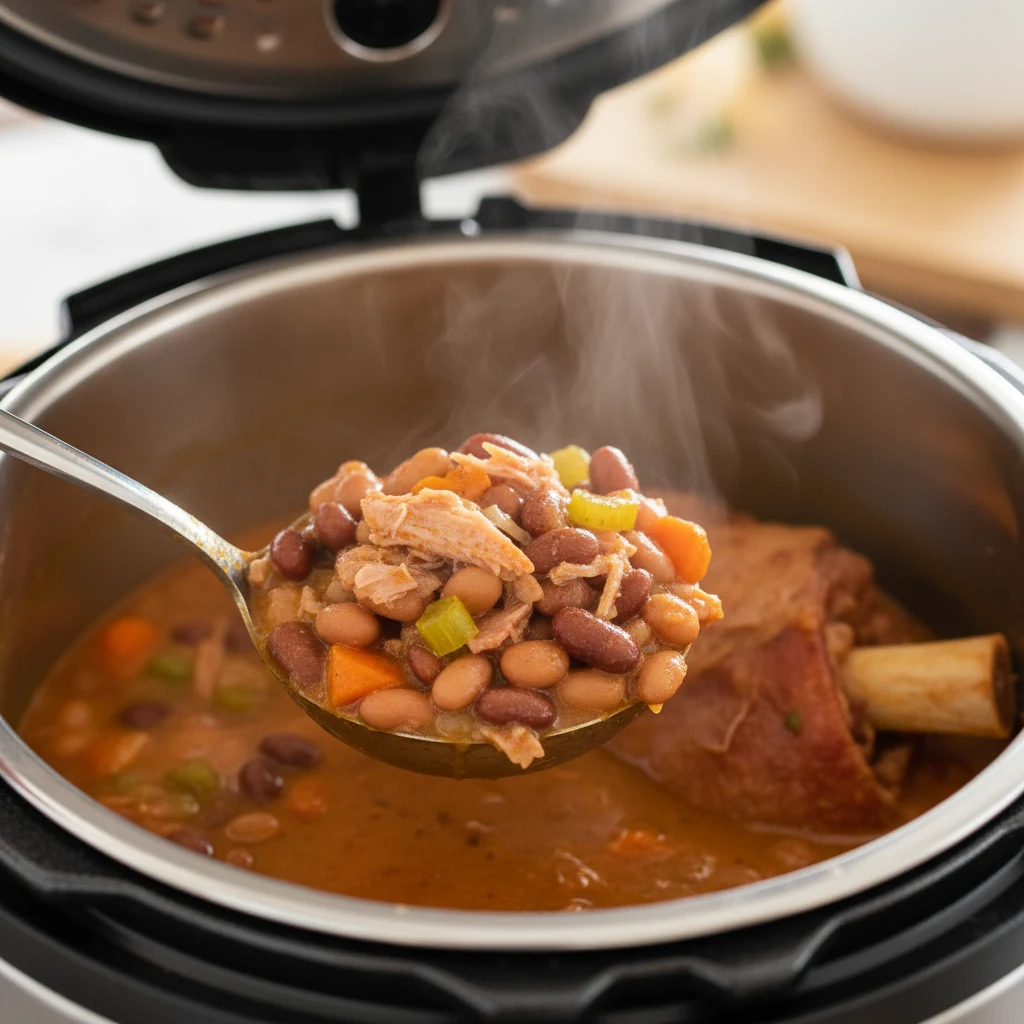
Pressure cooks are flavor amplifiers. Under high pressure, beans soften faster and release starch, thickening the soup naturally while the ham bone (or hock) gives up collagen for that glossy, restaurant-worthy mouthfeel. No cream, no cornstarch—just smart chemistry.
We build flavor in layers: a quick sauté of onions, carrots, and celery lays the foundation, garlic and tomato paste bring savory depth, and a splash of vinegar at the end brightens everything like a spotlight. The result is a balanced bowl that’s smoky, savory, and cozy without being heavy.
This method is also flexible. Whether you’ve got a meaty holiday bone, a couple of hocks, or just diced ham, it adapts. Beans on hand? Use navy, Great Northern, or a 15-bean blend—it all works. And the timing is forgiving, which means fewer “uh-oh” moments and more “wow, that’s good.”
What You’ll Need (Ingredients)
- 1 lb dried beans (navy, Great Northern, or 15-bean mix), rinsed and picked over
- 1 meaty ham bone or 1–2 ham hocks; plus 2 cups diced cooked ham (optional but great)
- 1 tbsp olive oil
- 1 large yellow onion, diced
- 3 carrots, peeled and diced
- 3 celery stalks, diced
- 4 garlic cloves, minced
- 1–2 tbsp tomato paste (adds umami and color)
- 6 cups low-sodium chicken broth + 2 cups water (or all broth)
- 1 bay leaf
- 1 tsp dried thyme (or 2 tsp fresh)
- 1 tsp smoked paprika (more if you like it smoky)
- 1/2 tsp black pepper, plus more to taste
- 1 tbsp apple cider vinegar or lemon juice (for brightness at the end)
- Salt to taste (add cautiously; ham and broth can be salty)
- Optional add-ins: 1 cup chopped kale or spinach, 1 can (14.5 oz) diced tomatoes, 1 tsp Worcestershire, hot sauce, fresh parsley for garnish
Cooking Instructions
- Prep the beans. Rinse and pick through the dried beans to remove any debris. No soaking needed. If you did soak overnight, great—your cook time will be shorter.
- Sauté the aromatics. Set your pressure cooker to Sauté (Normal). Add olive oil, then onion, carrots, and celery. Cook, stirring, for 4–5 minutes until lightly softened. Add garlic; cook 30 seconds until fragrant.
- Boost the base. Stir in tomato paste and cook for 1 minute to caramelize slightly. This adds body and color. If you’re using diced tomatoes, hold them for later or add now for a more stew-like vibe.
- Deglaze like a pro. Splash in 1/2 cup broth and scrape up any browned bits from the bottom to avoid a burn warning. Then add the remaining broth and water.
- Load it up. Add beans, ham bone or hocks, diced ham (if using), bay leaf, thyme, smoked paprika, and black pepper. Stir well and make sure beans are submerged. Avoid overfilling; keep below the max line.
- Pressure cook. Seal the lid and set to High Pressure:
- Unsoaked beans: 35–40 minutes
- Soaked beans (8–12 hours): 20–25 minutes
If your ham bone is extra meaty or you’re using larger beans, lean toward the higher end.
- Let it relax. Allow a 15-minute natural release, then quick-release any remaining pressure. This helps the beans finish gently and keeps skins intact.
- Finish and finesse. Remove the bone/hocks and bay leaf. Shred any meat from the bone and stir it back in. Add vinegar or lemon juice, taste, and adjust salt and pepper. For extra body, mash a ladleful of beans against the pot and stir.
- Greens and garnish. If adding kale or spinach, stir in now and use Sauté for 2–3 minutes until wilted. Add Worcestershire or hot sauce if you like. Rest the soup for 5–10 minutes to thicken slightly.
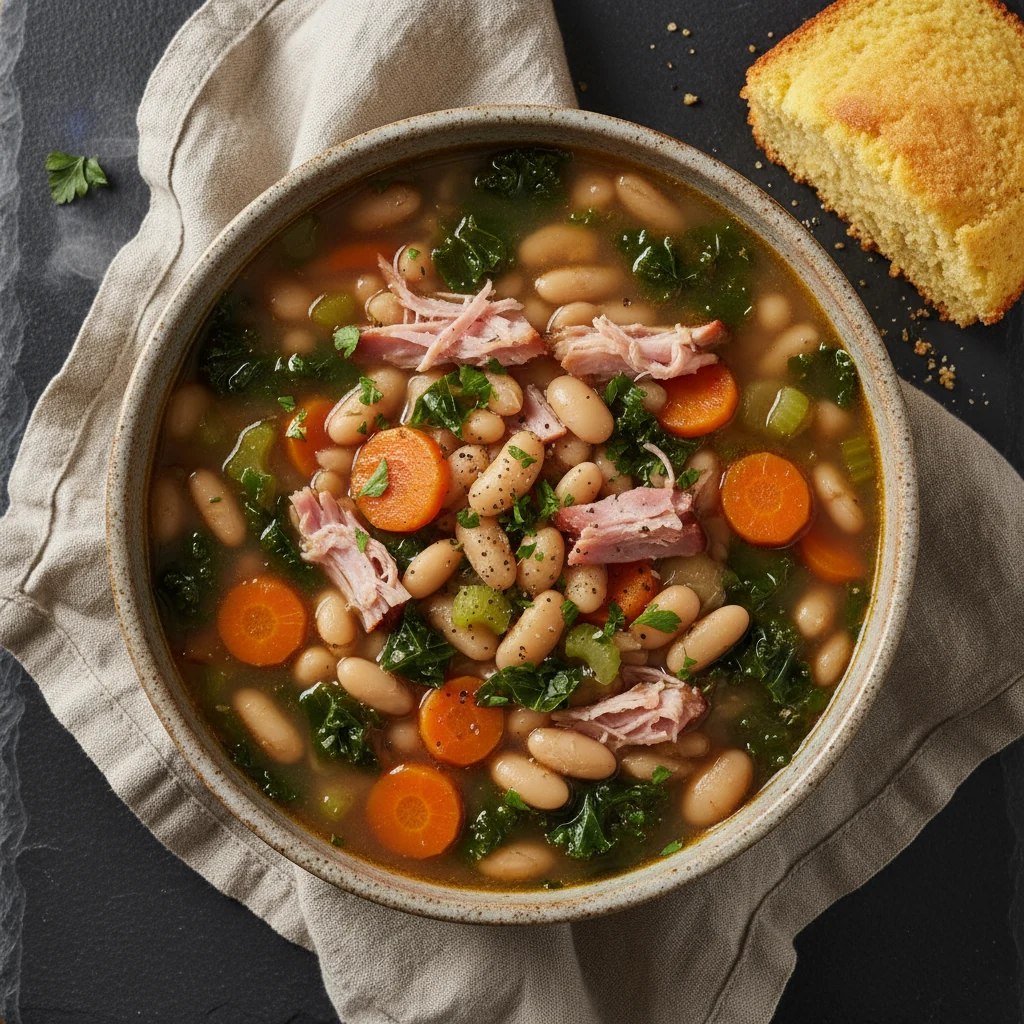
- Serve. Ladle into bowls, top with parsley, and serve with crusty bread or cornbread. Prepare for compliments you didn’t ask for.
Keeping It Fresh
Cool leftovers quickly and store in airtight containers in the fridge for up to 4 days. The flavors deepen on day two—because science and patience are friends.
For longer storage, portion into freezer-safe containers and freeze for up to 3 months. Leave a little headspace for expansion. FYI, beans thicken as they chill; when reheating, add a splash of water or broth to loosen.
Reheat gently on the stovetop over medium-low heat or in the microwave in 60–90 second bursts, stirring between intervals. If you froze it, thaw overnight in the fridge or defrost on low power and then reheat.
Nutritional Perks
This soup earns its keep nutritionally. Beans bring plant-based protein and serious fiber, which help with fullness and steady energy. Ham adds additional protein and a savory kick that makes the bowl feel indulgent without being over the top.
On the micronutrient side, you get iron, potassium, folate, and B vitamins. If you cook with a ham bone or hocks, you’ll also get a bit of collagen/gelatin, contributing to that silky texture. TBH, it’s comfort food with benefits.
One hearty serving (about 1.5 cups) clocks roughly 300–380 calories, 20–30g protein, 35–45g carbs, and 6–10g fiber, depending on your add-ins. Sodium can creep up with ham and broth—use low-sodium broth and add salt at the end to keep it in check.
Common Mistakes to Avoid
- Skipping the deglaze. Those browned bits are flavor—but also potential “Burn” alerts. Deglaze thoroughly.
- Salting too early. Ham and broth are salty. Season lightly upfront, then finish to taste after cooking.
- Overfilling the pot. Beans expand. Keep below the max fill line to prevent safety issues and uneven cooking.
- Forgetting natural release. A quick release right away can burst bean skins. Give it 15 minutes.
- Acid at the wrong time. Add vinegar/lemon at the end. Acid can toughen beans if added early.
- Old beans. They take longer and may never fully soften. If your bag looks vintage, grab a fresh one.
- Adding dairy before pressure. Cream or milk can curdle under pressure. Stir in after cooking if you insist on creaminess.
- Neglecting balance. Smoke and salt need brightness. Don’t skip that final splash of acid.
Mix It Up
- Cajun Kick: Add 1 tsp Cajun seasoning, 1/2 tsp cayenne, and swap smoked paprika for extra heat. Stir in sliced andouille with the ham.
- Tuscan Twist: Use cannellini beans, add 1 rosemary sprig and a Parmesan rind before pressure; finish with kale and a drizzle of olive oil.
- Southwest Style: Add 1 tsp cumin, 1 tsp chili powder, a can of green chiles, and finish with lime and cilantro.
- Smoky Maple: Stir in 1–2 tsp chipotle in adobo and a 1 tbsp maple syrup after cooking for sweet heat.
- Curry Comfort: Add 1–2 tbsp mild curry powder and finish with 1/2 cup coconut milk post-pressure for a creamy, spiced bowl.
- Vegetarian Vibes: Skip the ham; use vegetable broth, 1–2 tsp smoked paprika, a splash of soy sauce, and 1 tsp white miso after cooking for savory depth. IMO, adding mushrooms is a power move.
- Kid-Friendly Smooth: Blend a cup of the soup and stir it back in for a thicker, creamier texture without extra fat.
FAQ
Do I need to soak the beans?
Nope. Unsoaked beans cook in about 35–40 minutes at high pressure plus natural release. If you soak 8–12 hours, shave the cook time down to 20–25 minutes. Both methods taste great.
Can I use canned beans instead of dried?
Yes, but reduce the pressure time to 10 minutes and use 4–5 cans (drained and rinsed). The texture will be softer and the broth a bit less starchy, but it’s still solid.
What if I don’t have a ham bone or hocks?
Use 2–3 cups diced ham and bump up smoked paprika to 1.5 tsp. A splash of soy sauce or a Parmesan rind adds extra savory oomph. Liquid smoke (1/4–1/2 tsp) can mimic smoke—go easy.
How do I avoid the Burn warning?
Fully deglaze after sautéing, ensure there’s at least 8 cups of liquid for 1 lb beans, and don’t add thick ingredients (like dairy) before pressure cooking. Stir well so no bean clumps sit on the bottom.
Which beans are best?
Navy and Great Northern beans are classic and creamy. A 15-bean mix adds variety and texture. Pinto works in a pinch. Larger beans may need a few extra minutes.
How do I thicken the soup without cream?
Mash a ladleful of beans against the side of the pot and stir. Repeat until you like the consistency. You can also simmer on Sauté for 5–10 minutes to reduce slightly.
The soup is too salty—help!
Add water or unsalted broth to dilute and balance with 1–2 tsp vinegar or lemon juice. A handful of diced potatoes cooked in the soup can also absorb some salt.
Can I make it in a slow cooker?
Yes. Sauté aromatics first (stovetop), then cook on Low 7–8 hours or High 4–5 hours until beans are tender. Add acid at the end.
Can I double the recipe?
As long as your pot’s capacity allows and you stay under the max fill line, yes. Keep the liquid-to-bean ratio consistent; pressure time stays the same, but it may take longer to come to pressure.
What’s the best way to add greens?
Stir in chopped kale or spinach after pressure cooking and use Sauté for 2–3 minutes until tender. This keeps color bright and flavor fresh.
Is it okay to add potatoes?
Sure—cut them into larger chunks and add before pressure cooking if you want them to soften. For firmer potatoes, add after and simmer on Sauté until tender.
In Conclusion
This is the rare weeknight move that’s cheap, fast, and incredibly satisfying. It wrings flavor from leftovers, treats beans like royalty, and gives you multiple meals with minimal effort. Make a pot today, freeze a few portions, and congratulate yourself tomorrow when dinner is already solved. Your future self says thanks—loudly.
Printable Recipe Card
Want just the essential recipe details without scrolling through the article? Get our printable recipe card with just the ingredients and instructions.