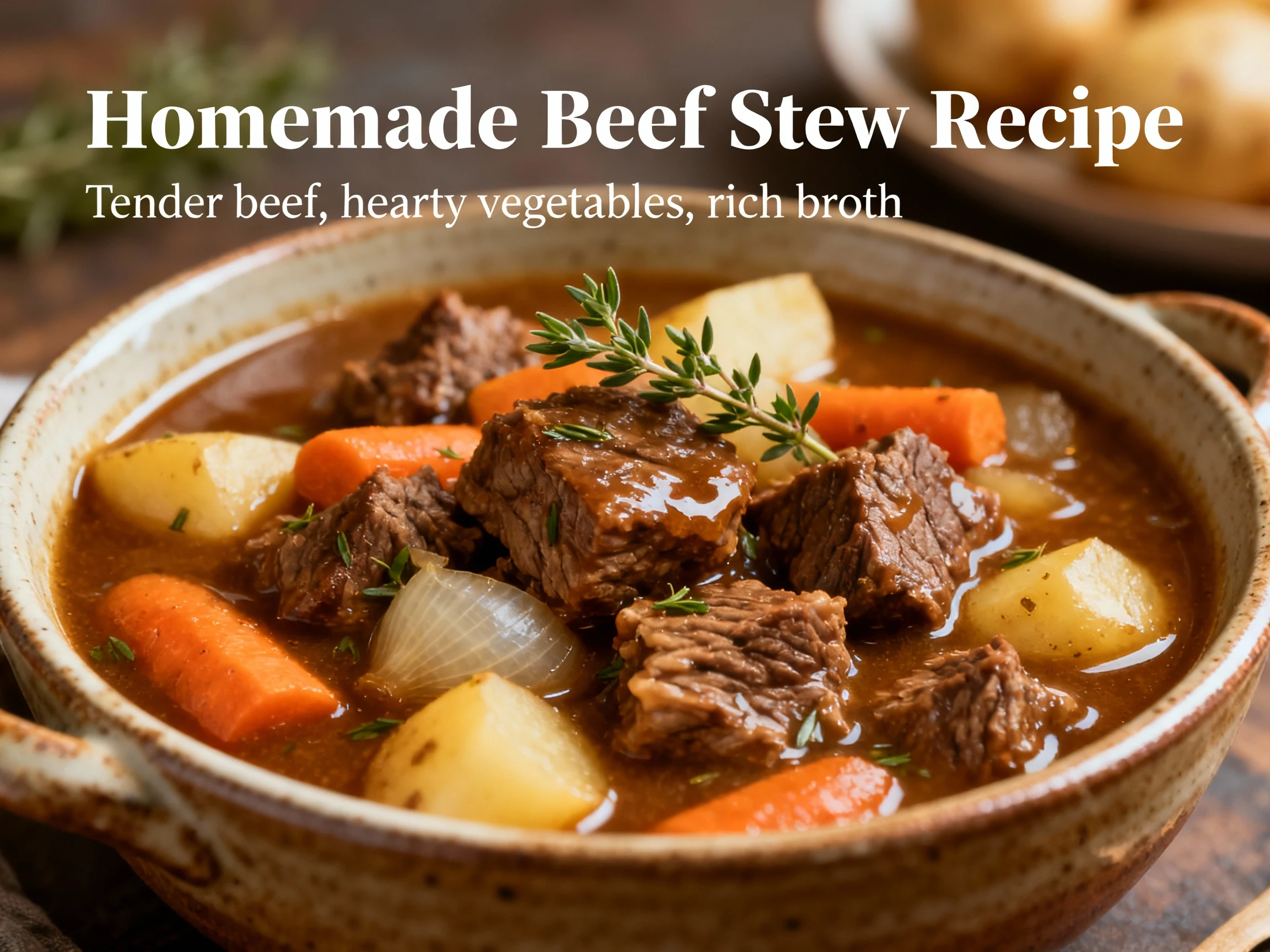
Homemade Beef Stew Recipes That Nail Cozy Hearty Dinners
Comfort-food wins for busy nights: tender beef, rich gravy, and veggie-loaded bowls that feel slow-simmered without the all-day wait.
You want a bowl that shuts up the cold, feeds a crowd, and doesn’t hijack your entire Saturday. This stew does the job—big flavor, low effort, and the kind of leftovers that taste even better tomorrow. The secret isn’t fancy gear; it’s smart steps that stack flavor fast and keep the beef melt-in-your-mouth. Your kitchen will smell like you hired a chef, but your wallet will know you didn’t.
The best part? You’ll master a few simple techniques—then repeat them forever. Imagine rich gravy, tender bites, and vegetables that don’t disappear into mush. That’s the promise. And yes, you can make it on a weeknight without feeling like you ran a marathon.
Why This Recipe Works
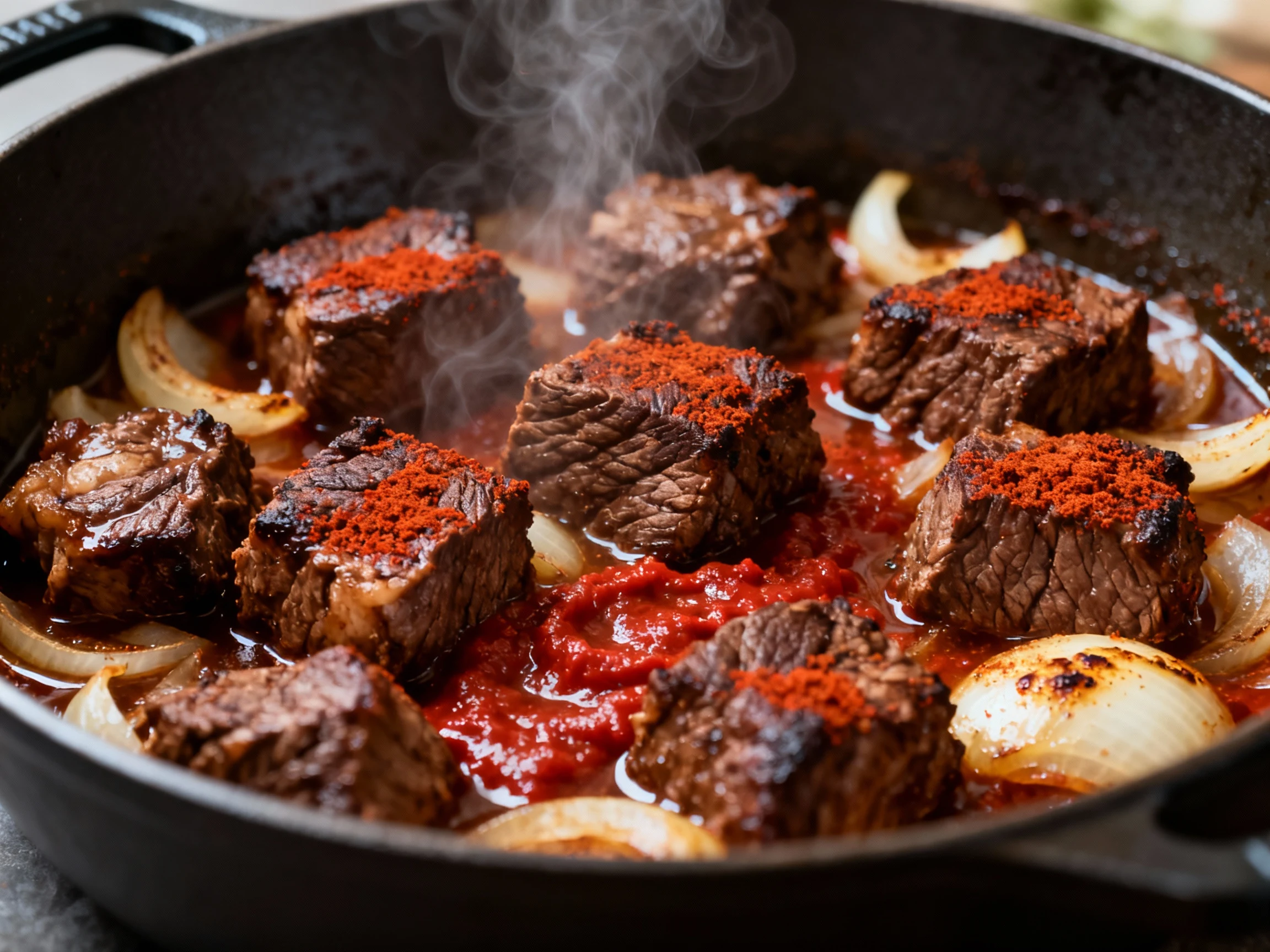
Hard sear = flavor gold. Browning the beef builds a caramelized crust and leaves a fond (those browned bits) that becomes liquid magic when you deglaze. Skip this and you get soup, not stew.
Layered umami, not salt bombs. Tomato paste, Worcestershire, and a splash of soy create depth without nuking your palate. FYI, these are flavor boosters, not shortcuts.
Low-and-slow tenderizing. Chuck roast has collagen that melts into gelatin, turning broth into silky gravy. A gentle simmer keeps beef tender and prevents the dreaded chew-toy texture.
Smart veggie timing. Potatoes and carrots hop in later so they stay intact. Onions go early to dissolve into the sauce and add body. Simple timing, zero mush.
Ingredients Breakdown
For the Stew (Serves 6)
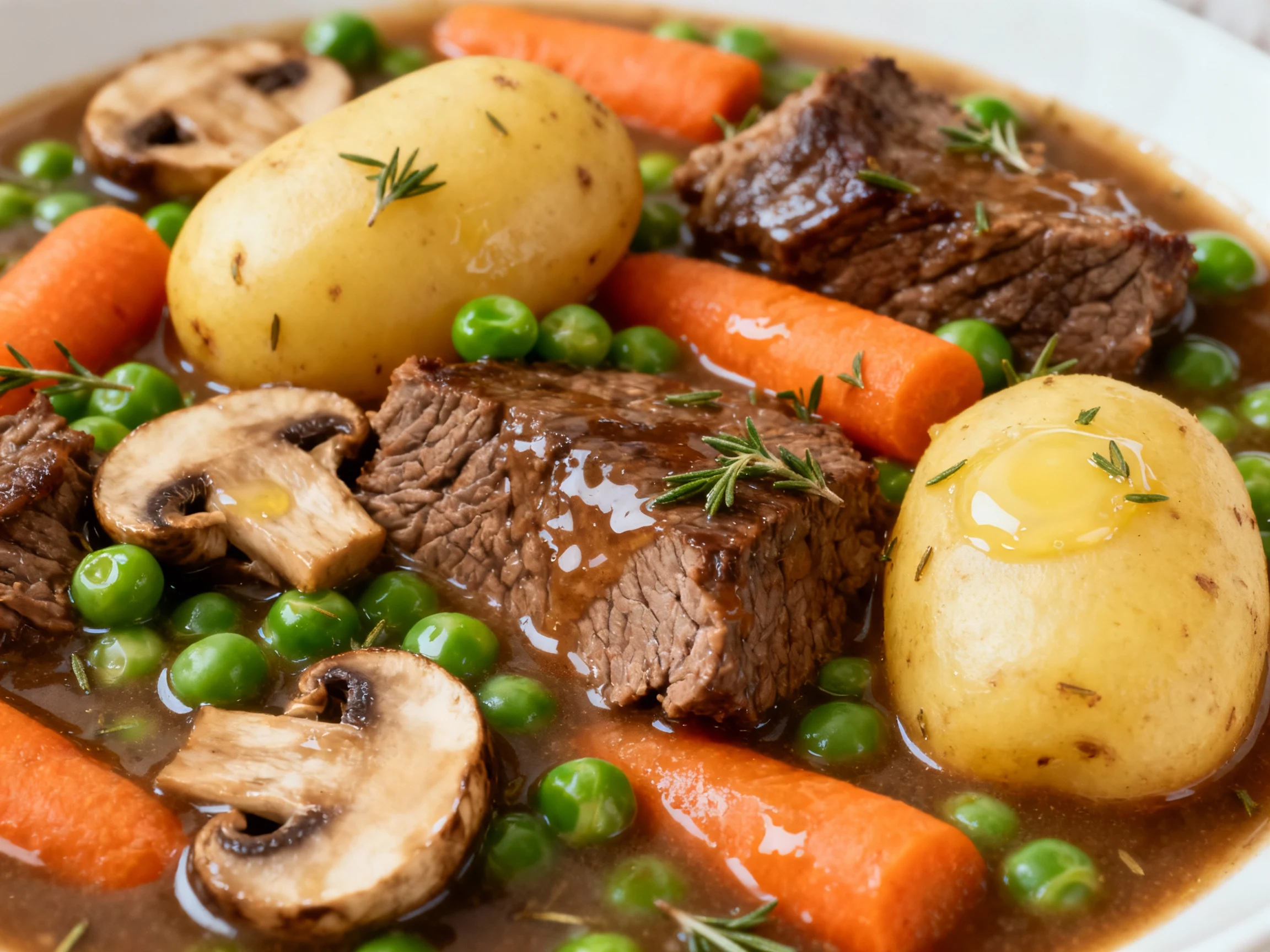
- 2 lb beef chuck roast, trimmed and cut into 1.5-inch cubes (marbling matters)
- 2 tsp kosher salt (plus more to finish)
- 1 tsp freshly ground black pepper
- 2 tbsp neutral oil (canola or avocado)
- 2 medium yellow onions, chopped
- 3 ribs celery, chopped
- 4 large carrots, peeled and cut into 1-inch chunks
- 4 cloves garlic, minced
- 2 tbsp tomato paste
- 3 tbsp all-purpose flour (or 2 tbsp cornstarch for gluten-free)
- 1 cup dry red wine (optional, sub beef broth if you prefer)
- 4 cups low-sodium beef broth
- 1.5 lb Yukon Gold potatoes, cut into 1-inch chunks
- 2 bay leaves
- 4 sprigs fresh thyme (or 1 tsp dried thyme)
- 2 tsp Worcestershire sauce
- 1 tsp soy sauce (optional but excellent)
- 8 oz cremini mushrooms, quartered (optional)
- 1 cup frozen peas
- 1 tbsp unsalted butter (for a glossy finish)
- 1 tsp balsamic vinegar or lemon juice (brightens at the end)
- 1/4 cup chopped fresh parsley (garnish)
Instructions
- Prep and season. Pat the beef dry with paper towels. Toss with salt and pepper. Dry beef sears; wet beef steams—choose wisely.
- Sear in batches. Heat oil in a heavy pot (Dutch oven) over medium-high. Brown beef on two sides, 3–4 minutes per side. Work in batches and don’t crowd.
- Sweat aromatics. Reduce heat to medium. Add onions and celery; cook until soft and lightly golden, 6–8 minutes. Add garlic; stir 30 seconds.
- Tomato paste + flour. Stir in tomato paste; cook 1–2 minutes until brick red. Sprinkle flour; cook 1 minute to lose raw taste. This builds body.
- Deglaze the pot. Pour in red wine (or broth). Scrape up fond with a wooden spoon. Let it simmer 2–3 minutes to reduce slightly.
- Build the stew. Return beef to the pot. Add beef broth, bay leaves, thyme, Worcestershire, and soy. Bring to a gentle simmer.
- Low and slow. Cover partially and simmer on low for 60 minutes, stirring occasionally. Keep it barely bubbling; rolling boils toughen meat.
- Add hearty veg. Stir in carrots, potatoes, and mushrooms. Simmer 30–40 minutes more until beef is tender and veggies are just cooked.
- Finish and brighten. Fish out bay leaves and thyme stems. Stir in peas, butter, and balsamic. Simmer 3 minutes; taste and adjust salt.
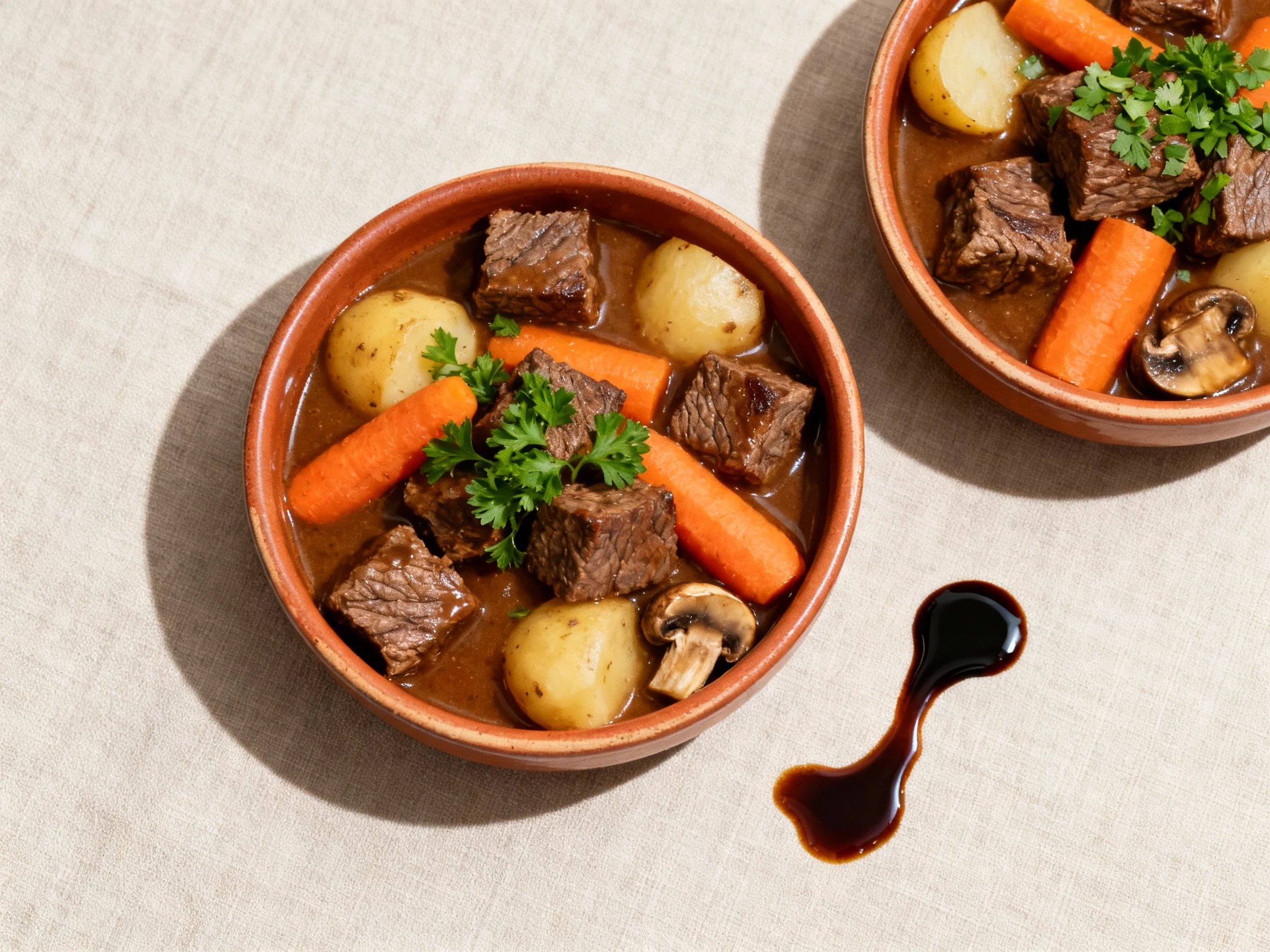
- Rest and serve. Let the stew sit 10 minutes so the gravy settles. Ladle into warm bowls and finish with parsley.
- Optional thickening. If you want thicker gravy, whisk 1 tbsp cornstarch with 1 tbsp water and stir into simmering stew; cook 2 minutes.
- Pro move. Make it ahead and reheat. Next-day stew tastes like you bribed someone’s grandma for the recipe.
Storage Tips
- Cool fast. Spread hot stew in shallow containers to cool within 2 hours. Safety matters more than bragging rights.
- Fridge window. Store in airtight containers for up to 4 days. The flavor deepens, the beef relaxes, and you win dinner again.
- Freeze smart. Freeze up to 3 months. For best texture, freeze without potatoes and add fresh ones when reheating.
- Reheat gently. Warm on the stove over medium-low, adding a splash of broth or water if the sauce tightened up.
- Microwave method. Cover loosely and heat in 60–90 second bursts, stirring between cycles to keep texture even.
- Avoid overcooking peas. Stir in peas near the end of reheating to keep them bright and snappy.
Nutritional Perks
Protein that actually satisfies. Beef chuck delivers complete protein to keep you full and steady. Pair it with potatoes and carrots for a balanced plate that doesn’t need a side hustle.
Minerals and fiber, built in. Iron and zinc from beef support energy and immunity, while the veggie load adds fiber, potassium, and antioxidants. Your taste buds win, your body appreciates it.
Sodium control, your way. Using low-sodium broth plus smart umami means flavor without salt overload. Rough estimate per serving: ~480 calories, ~35g protein, ~22g fat, ~30g carbs (varies by portion and swaps).
What Not to Do
- Don’t skip the sear. That crust is the foundation. No sear, no stew personality.
- Don’t crowd the pot. Overloading drops heat and steams the beef. Batch sear, then relax.
- Don’t boil hard. Aggressive bubbling tightens fibers. Gentle simmer equals tenderness.
- Don’t add potatoes too early. They’ll dissolve and make sludge. Late addition = intact bites.
- Don’t forget acidity. A small splash of balsamic or lemon at the end wakes up the gravy. Flat flavors? You need brightness.
- Don’t rely on salt alone. Use tomato paste, Worcestershire, and soy for depth. Salty isn’t the same as savory.
- Don’t guess on seasoning. Taste and adjust before serving. Your spoon is the coach.
- Don’t panic about fat. A little marbling equals tenderness. Skim excess after chilling if needed.
Mix It Up
- Stout-beef classic. Swap wine with Guinness, add a spoon of brown sugar, and use parsnips. TBH, it’s pub food without the line.
- Mushroom umami bomb. Add dried porcini (soaked) and a splash of mushroom broth. Earthy, intense, ridiculously good.
- Smoky Southwest. Stir in chipotle in adobo and cumin; finish with cilantro. Try sweet potatoes instead of Yukon Gold.
- Mediterranean vibe. Use rosemary, olives, and a strip of orange zest. Serve over polenta or orzo for a non-negotiable upgrade.
- Low-carb route. Swap potatoes for turnips or rutabaga. Same cozy feel, fewer carbs—no flavor tax.
- Gluten-free tweak. Use cornstarch for thickening and verify your broth and Worcestershire are GF. Easy win.
FAQ
What’s the best cut of beef for stew?
Chuck roast is the MVP: it’s well-marbled and loaded with collagen that melts into silky gravy. Lean cuts stay tough and dry, so skip them unless you enjoy chewing practice.
Can I make this in a slow cooker or Instant Pot?
Yes. For slow cooker, sear beef first, then cook on low 7–8 hours (add potatoes halfway). For Instant Pot, sear on sauté, pressure cook 35 minutes with natural release, then add potatoes and simmer on sauté until tender.
Do I have to use wine?
Nope. Use extra beef broth plus a splash of balsamic or a teaspoon of soy for depth. Wine adds complexity, but you can build great flavor without it—IMO it’s optional.
How do I thicken the stew without flour?
Use cornstarch slurry (1 tbsp cornstarch + 1 tbsp water per cup of liquid) or reduce the stew uncovered to concentrate. Potato starch or arrowroot also work well and stay glossy.
When should I add the vegetables?
Add onions and celery early so they melt into the sauce. Add carrots, potatoes, and mushrooms in the last 30–40 minutes so they cook through but keep their shape.
Can I use pre-cut “stew beef” from the store?
You can, but results vary. Those packs mix cuts that cook at different rates, so some pieces turn tough. If you can, buy a whole chuck roast and cube it yourself for consistent tenderness.
How do I avoid greasy stew?
Trim excess exterior fat from the beef, use low-sodium broth, and skim the surface at the end. For ultra-clean results, chill overnight and remove the solidified fat before reheating.
Final Thoughts
This stew wins because it respects the fundamentals: bold browning, gentle simmering, smart seasoning, and timing that protects your veggies. It’s the kind of recipe that makes your house smell dangerous—like neighbors might “drop by” around dinner.
Use it for weeknights, big family meals, or that one Sunday when you want leftovers that actually excite you. Nail it once, and you’ll start customizing like a pro. Cozy, hearty, repeat-worthy—that’s the move.
Printable Recipe Card
Want just the essential recipe details without scrolling through the article? Get our printable recipe card with just the ingredients and instructions.