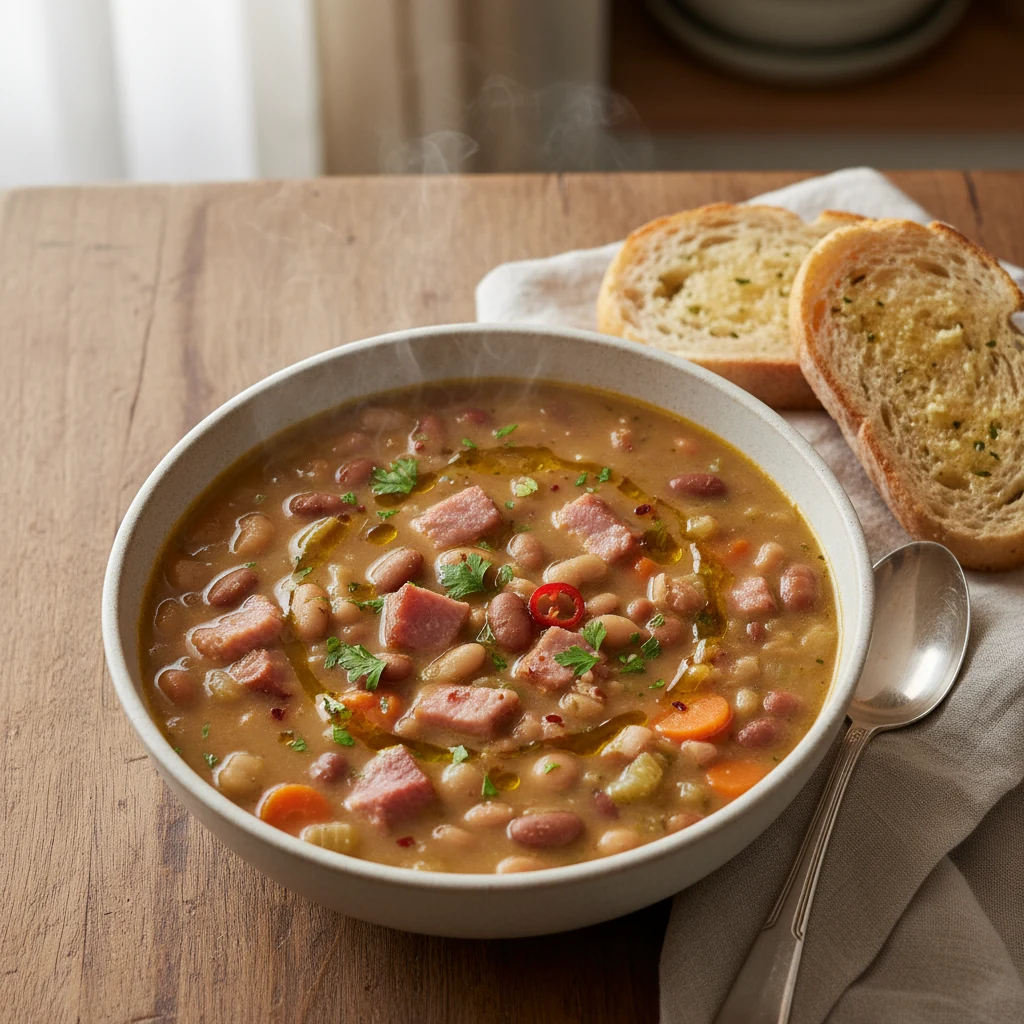
Ham and Navy Bean Soup Recipes for Busy Weeknights
One-pot comfort that stretches a budget, feeds a crowd, and tastes better tomorrow—smoky ham, creamy beans, and simple pantry staples.
You brought home a leftover ham and a fridge full of guilt. Good news: a humble bag of beans turns that “what now?” into the best pot of comfort all week. We’re talking smoky depth, silky broth, and hearty bites that play nice with crusty bread. This is the kind of meal that handles lunch, dinner, and a bonus freezer stash like a pro. Spoiler: it also tastes better on Day Two, because flavor compounds actually marry while you sleep.
What Makes This Recipe Awesome

- Budget-friendly: A pound of dried navy beans and a ham bone can feed 6–8 for the price of two lattes.
- Deep, smoky flavor: Ham hock, shank, or leftover bone infuses the broth without overpowering it.
- Thick, creamy texture—no cream: Beans naturally release starch as they simmer; a quick mash thickens everything.
- Low effort, high payoff: Minimal chopping, one pot, and it reheats like a dream.
- Flexible: Use what you have—swap broth for water, add veggies, or finish with lemon and herbs.
- Meal prep gold: Stores and freezes beautifully, so future-you gets dinner on autopilot.
Ingredients
- 1 pound (about 2 cups) dried navy beans, picked over and rinsed
- 1 meaty smoked ham hock or shank (or leftover ham bone), plus 2 cups chopped cooked ham (optional but excellent)
- 1 large yellow onion, diced
- 2 medium carrots, diced
- 2 ribs celery, diced
- 3–4 cloves garlic, minced
- 2 bay leaves
- 1 teaspoon dried thyme (or 2 teaspoons fresh)
- 1 teaspoon smoked paprika (optional, but adds great depth)
- 1/2 teaspoon black pepper, plus more to taste
- 8 cups low-sodium chicken broth or water (or a mix)
- 1–2 tablespoons apple cider vinegar or lemon juice (added at the end to brighten)
- 1–2 tablespoons olive oil or butter (for sautéing)
- Kosher salt, to taste (season when beans are tender)
- Fresh parsley, chopped, for garnish
- Optional adds: 1 potato, diced; 1 cup chopped greens (kale or spinach); pinch red pepper flakes for heat
Cooking Instructions
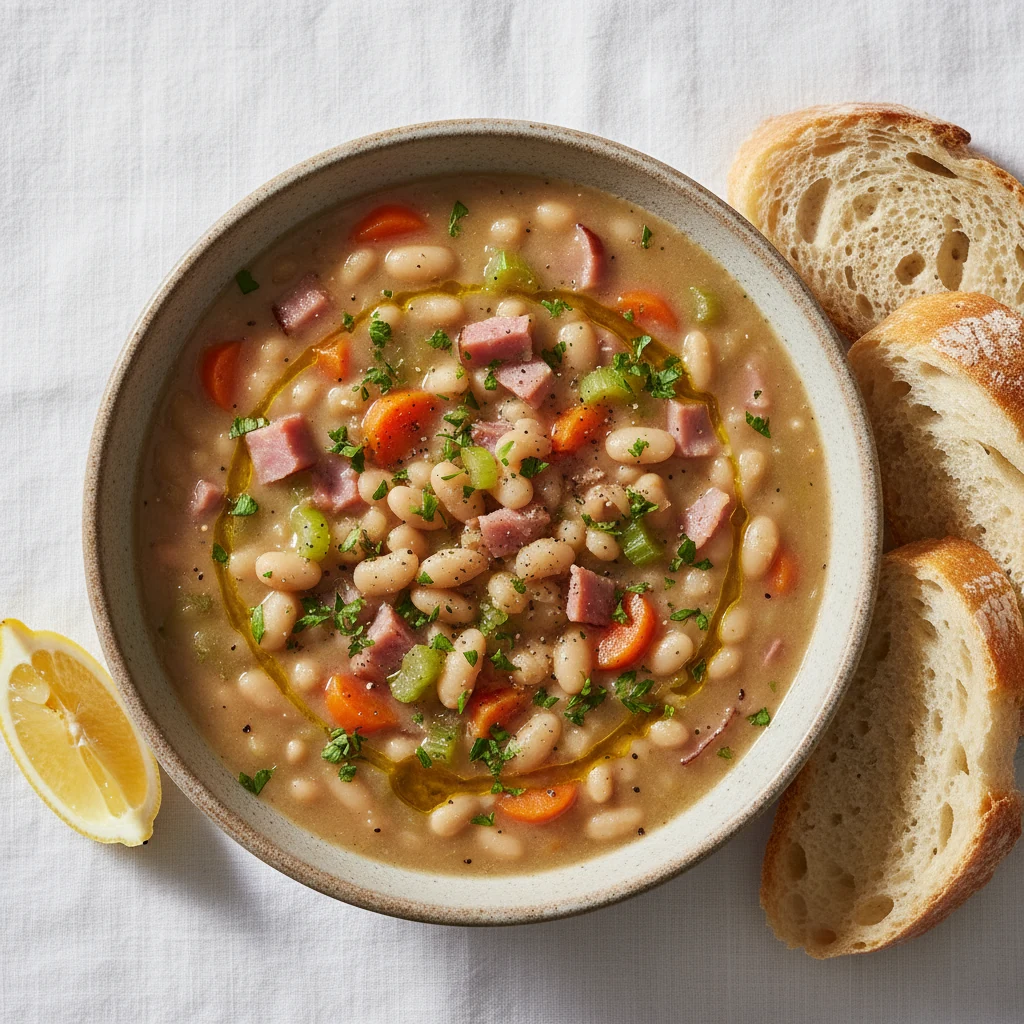
Stovetop (classic and foolproof)
- Prep the beans. Rinse and sort. For quicker cooking, soak 8–12 hours in salted water (2 teaspoons salt). Drain before cooking. No time? Skip soaking and add 20–30 minutes to simmer time.
- Sweat the aromatics. In a large pot or Dutch oven, heat oil or butter over medium. Add onion, carrots, and celery; cook 5–7 minutes until softened. Stir in garlic, thyme, smoked paprika, and pepper; cook 30–60 seconds until fragrant.
- Build the pot. Add beans, ham hock or shank, bay leaves, and broth (or water) to cover by about an inch. Bring to a gentle boil, then immediately reduce to a steady simmer.
- Simmer low and slow. Partially cover and simmer until beans are tender, 60–75 minutes soaked or 80–110 minutes unsoaked. Stir occasionally and add hot water if liquid dips below beans.
- Finish the meat. Remove ham hock/shank. Shred or chop meat; discard skin and bones. Return meat to the pot along with any chopped cooked ham.
- Thicken and balance. Lightly mash a couple ladlefuls of beans against the pot or use an immersion blender for 10–15 seconds to thicken. Stir in vinegar or lemon juice. Taste and add salt as needed (ham and broth vary in saltiness).
- Serve and garnish. Fish out bay leaves. Ladle into bowls and top with parsley and extra pepper. Add a drizzle of olive oil if you’re feeling fancy.
Instant Pot (weeknight accelerator)
- Use the Sauté function with oil to soften onion, carrots, and celery for 5 minutes. Stir in garlic and spices for 30 seconds.
- Add beans (soaked or unsoaked), ham hock/shank, bay leaves, and 7 cups broth (IP needs less liquid). Lock lid; set to High Pressure: 35 minutes soaked or 45 minutes unsoaked.
- Natural release for 20 minutes, then quick release. Shred meat, return to pot, mash some beans, and stir in vinegar/lemon and salt to taste.
Slow Cooker (set it and forget it)
- Sauté onion, carrots, and celery on the stovetop (optional but recommended). Transfer to slow cooker.
- Add beans, ham hock/shank, bay leaves, spices, and 8 cups liquid. Cook LOW 7–9 hours or HIGH 4–5 hours until beans are very tender.
- Shred meat, return to cooker, mash a few beans, brighten with vinegar/lemon, and season with salt.
Keeping It Fresh
- Fridge: Store in airtight containers up to 4 days. It thickens as it cools—just add a splash of water when reheating.
- Freezer: Cool completely. Portion into quart containers or freezer bags and freeze up to 3 months. Label it. Future-you will applaud.
- Reheat: Warm gently on the stovetop, adding water or broth as needed. Avoid a hard boil; it can make beans split or turn mushy.
- Leftover upgrades: Stir in chopped greens, a squeeze of lemon, or a spoon of pesto to wake it up. Croutons or garlicky breadcrumbs? Yes, chef.
What’s Great About This
- Ridiculously forgiving: No perfect knife skills required, and it still tastes like you tried.
- Protein and fiber powerhouse: Stick-to-your-ribs satisfying without feeling heavy.
- Scales up easily: Double it for a crowd; the pot won’t complain.
- Works with leftovers: Holiday ham gets a second life. Zero waste, maximum flavor. IMO, that’s winning.
Common Mistakes to Avoid
- Salting too early: Salt slows down bean softening. Season aggressively only after beans turn tender.
- Adding acidic ingredients upfront: Tomatoes, vinegar, or citrus early on can keep beans tough. Add at the end.
- Boiling instead of simmering: A rolling boil breaks skins and muddies texture. Gentle simmer = creamy broth, intact beans.
- Skipping the soak with very old beans: Older beans can be stubborn. If they’re pushing a year, a soak helps a lot.
- Not enough liquid: Beans drink. Keep an extra kettle of hot water nearby to top off.
- Leaving the hock in forever: Once the meat is tender, pull it, shred it, and return the meat. The skin and bone already did their job.
- Under-seasoning at the end: Taste, then salt. A final squeeze of lemon and cracked pepper unlocks everything, FYI.
Variations You Can Try
- Cajun twist: Add 1 teaspoon Cajun seasoning, a pinch of cayenne, and sliced andouille. Finish with green onions.
- Tuscan-ish: Swap thyme for rosemary; add a rind of Parmesan to simmer. Stir in chopped kale and a drizzle of olive oil to serve.
- Southwestern: Add 1 teaspoon cumin, 1 teaspoon chili powder, and a can of mild green chiles. Finish with cilantro and lime.
- Vegetarian: Skip ham. Use smoked paprika, a splash of soy sauce or miso, and a piece of kombu for umami. Stir in roasted mushrooms at the end.
- Extra creamy: Blend 2 cups of the soup and return to the pot. It thickens without losing the rustic feel.
- Potato lover’s: Add a diced russet in the last 30 minutes. It breaks down slightly and makes the broth velvety.
FAQ
Do I have to soak the beans?
No, but soaking trims overall cook time and promotes even texture. If you skip it, plan for an extra 20–30 minutes of simmering and keep liquid topped up. For older beans, soaking helps them behave.
Can I use canned beans instead of dried?
Yes, with caveats. Use 3–4 cans drained and rinsed; simmer the aromatics and ham hock in broth for 30–45 minutes first to develop flavor, then add canned beans for the last 15–20 minutes so they don’t turn mushy. Season to taste at the end.
What kind of ham works best?
A smoked ham hock or shank delivers deep flavor and tender meat. Leftover spiral ham is great too—just trim off sweet glaze if it’s heavy. Avoid deli ham; it won’t give the same richness.
My beans won’t soften. What happened?
Likely culprits: very old beans, hard water with lots of minerals, or acid/salt too early. Next time, soak if beans are older, use filtered water, and wait to salt and acidify until after beans are tender. FYI, a pinch of baking soda (1/8 teaspoon) can help tough beans in a pinch.
How do I thicken the soup without cream?
Mash some beans against the pot or blend a small portion and stir it back in. Beans are natural thickeners; you’ll get a silky, hearty broth with zero dairy.
Is this soup gluten-free?
Yes, naturally. Just confirm your broth and any seasoning blends are certified gluten-free. Serve with GF bread or a baked potato if you want a hearty side.
How do I keep it from getting too salty?
Use low-sodium broth or water, and add salt only after tasting at the end. Ham can be salty on its own; balance with water and finish with lemon or vinegar to lift flavors without more salt.
Can I make it in advance?
Absolutely. It’s even better the next day as flavors meld. Reheat gently with a splash of water, and finish with fresh parsley and a squeeze of citrus to brighten. That little refresh works wonders, IMO.
Wrapping Up
Simple ingredients, one pot, big payoff—this is comfort food that respects your time and your budget. Whether you choose stovetop, slow cooker, or pressure cooker, you’ll land on a bowl with smoky depth and creamy body. Keep the method, swap the accents, and you’ve got a cold-weather staple that never gets old. Grab a spoon, get it simmering, and let tomorrow’s lunch take care of itself.
Printable Recipe Card
Want just the essential recipe details without scrolling through the article? Get our printable recipe card with just the ingredients and instructions.