Galouti Kebab Recipes for Melt-in-mouth Magic—home Edition
Unlock silky, spice-kissed patties perfected for weeknight feasts, special guests, and zero tandoor—just a stovetop and pantry.
If your kebab doesn’t disappear in three chews, you’re leaving flavor (and bragging rights) on the table. The legendary Awadhi galouti was built for royalty who wanted zero effort while eating, and yes, we’re bringing that energy home. No tandoor, no chef’s hat—just smart tenderizing, patient seasoning, and a low flame that turns meat to velvet. You’ll serve these, and someone will ask for the recipe before they finish their first bite. That’s the point.
What Makes This Recipe So Good
- Melt-away texture: Smart tenderizing (raw papaya or a precise alternative) and gentle kneading break down fibers for that signature softness.
- Deep, layered flavor: Mace, nutmeg, black cardamom, and cloves create a regal spice profile without overwhelming heat.
- Uses a stovetop: No grill, no tandoor—just a heavy pan, a low flame, and a little ghee for golden edges and buttery interiors.
- Foolproof binding: A touch of besan or bread crumbs stabilizes the mince while staying tender, not cakey.
- Make-ahead friendly: Form the patties and chill; they cook in minutes when guests arrive. Your future self will thank you.
- Flexible protein options: Lamb or mutton for classic results, but chicken, beef, and veg swaps work beautifully with slight tweaks.
What Goes Into This Recipe – Ingredients
Base Protein
- 500 g minced lamb or mutton, ideally 20% fat and very fine grind (double-minced)
- Optional: 500 g minced chicken or beef for variations (see below)
Tenderizer
- 2 tablespoons raw papaya paste (traditional, best texture)
- OR 1 teaspoon meat tenderizer powder (unflavored), if papaya isn’t available
Aromatics and Binders
- 2 tablespoons fried onion paste (birista, blended)
- 1 tablespoon ginger paste
- 1 tablespoon garlic paste
- 1–2 tablespoons roasted gram flour (besan), or 2 tablespoons fine bread crumbs
- 1 tablespoon hung curd (optional, extra creaminess)
Spices
- 1½ teaspoons salt (adjust to taste)
- 1 teaspoon Kashmiri red chili powder (color, mild heat)
- ½ teaspoon freshly ground black pepper
- 1 teaspoon garam masala
- ½ teaspoon roasted cumin powder
- ¼ teaspoon clove powder
- ¼ teaspoon black cardamom powder
- ¼ teaspoon cinnamon powder
- ⅛ teaspoon nutmeg powder
- ⅛ teaspoon mace powder
Liquid and Fat
- 1 teaspoon kewra water or rose water
- 1 teaspoon lemon juice
- 2 tablespoons ghee (mixed into the mince)
- 4–6 tablespoons ghee (for pan-frying)
Optional Finishers
- Pinch of saffron soaked in 1 tablespoon warm milk (luxury touch)
- Small piece of charcoal + ½ teaspoon ghee, for dhungar (smoke finish)
- Finely chopped green chilies or coriander (sparingly, so texture stays smooth)
The Method – Instructions
- Chill and prep the mince: Keep the minced meat cold. If it’s coarse, pulse in a processor until fine but not mushy. Cold meat handles better and holds shape.
- Tenderize smartly: In a bowl, mix raw papaya paste (or tenderizer powder) with the mince. Rest 30 minutes if using powder, 60–90 minutes for papaya. Don’t exceed 2 hours, or the texture may go past soft into pasty.
- Build the flavor base: Add fried onion paste, ginger, garlic, salt, chili, pepper, garam masala, cumin, clove, black cardamom, cinnamon, nutmeg, mace, kewra/rose water, lemon juice, and 2 tablespoons ghee. Optional: saffron milk and hung curd.
- Knead like dough: Mix and knead the mince for 3–4 minutes until tacky. This develops a slight bind naturally and evenly disperses spices.
- Add binder: Sprinkle in besan (start with 1 tablespoon) and mix. You want a soft, pliable mixture that holds a patty shape. Add up to 2 tablespoons total, only if needed.
- Chill to set: Cover and refrigerate for 30–45 minutes. This helps the flavors meld and the mixture firm slightly.
- Shape gently: With wet hands, form small patties (about 45–55 g each, 2½ inches wide, ½ inch thick). Smooth edges for even cooking and that classic look.
- Optional smoke (dhungar): Place patties on a plate. Set a small metal bowl in the center with hot charcoal, drizzle ghee, cover 2–3 minutes. Remove charcoal. FYI, a little smoke goes a long way.
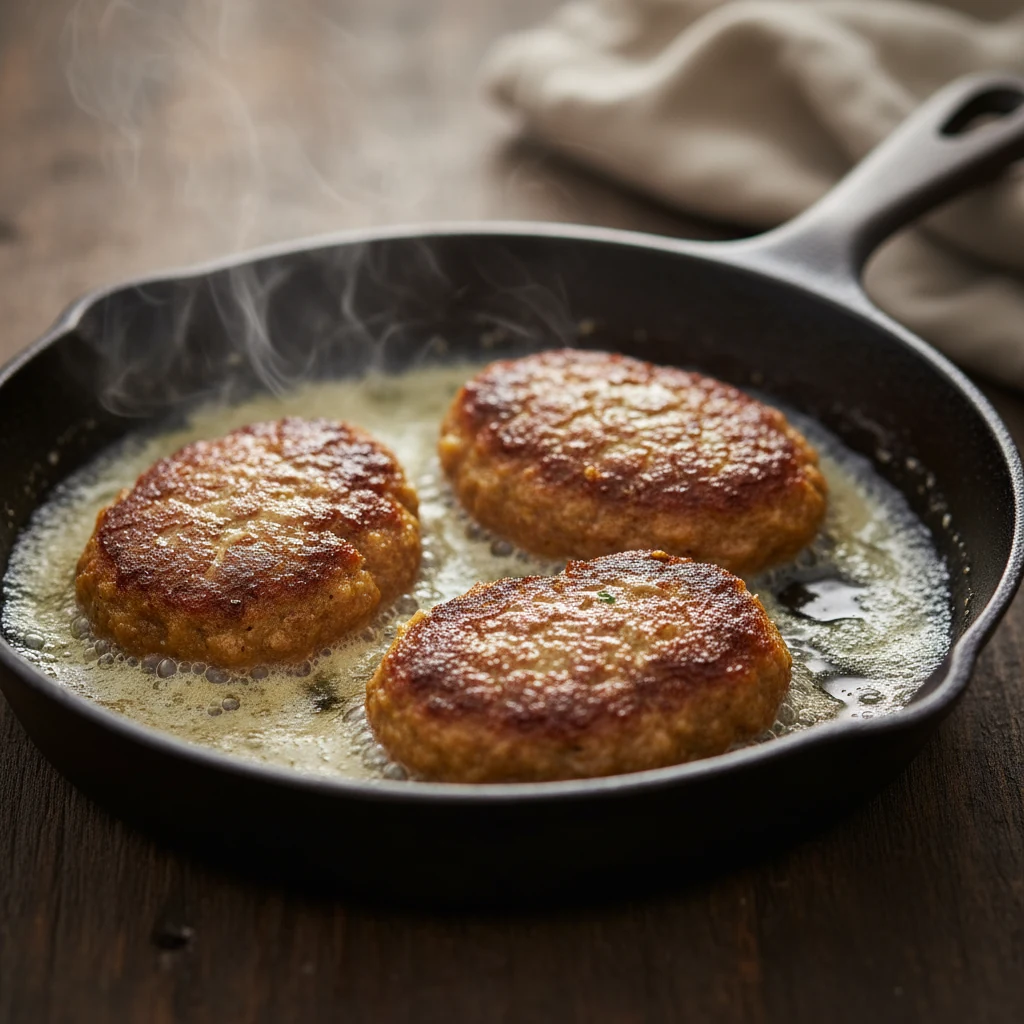
- Pan-fry low and slow: Heat 2–3 tablespoons ghee in a heavy skillet on medium-low. Add patties without crowding. Cook 3–4 minutes per side until deep golden. Aim for gentle sizzle, not aggressive searing.
- Baste for gloss: Spoon hot ghee over patties as they cook for a lustrous finish and extra moisture.
- Rest briefly: Transfer to a warm plate and rest 2 minutes. This prevents steam shock and keeps them tender.
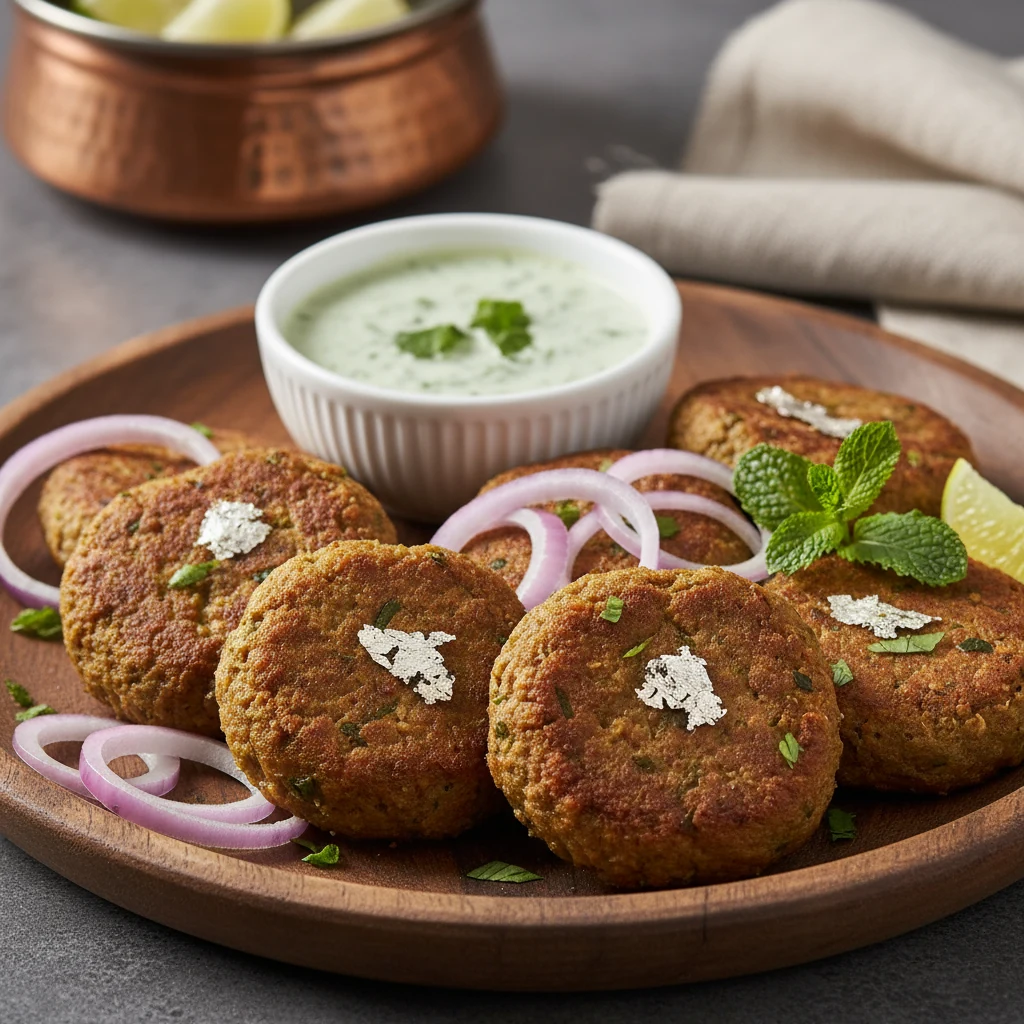
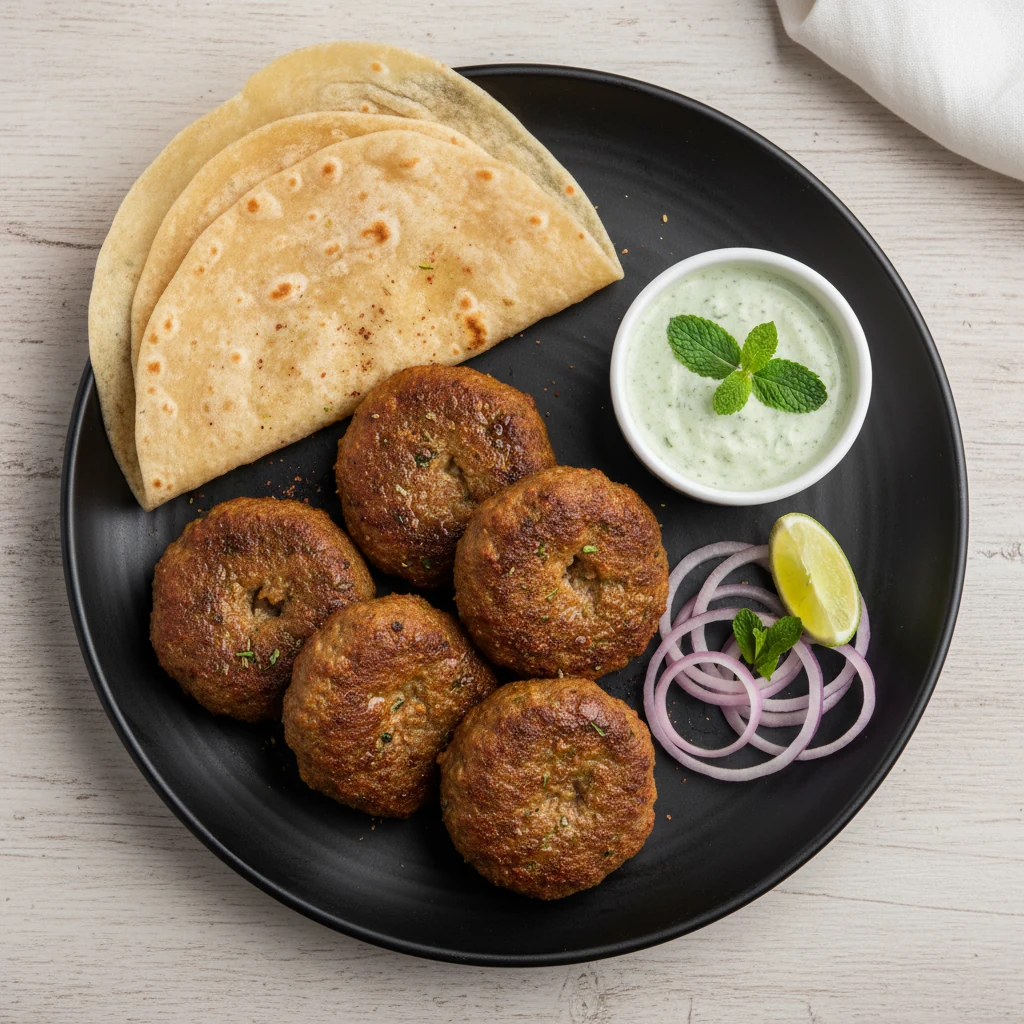
- Serve: Pair with room-temp rumali roti or paratha, onion laccha, and a mint-yogurt dip. Sprinkle a whisper of chaat masala if you like.
Keeping It Fresh
Refrigerate cooked patties in an airtight container for up to 3 days. Reheat on a low flame with a little ghee, covered, to revive moisture without toughness. Freeze raw patties between parchment and cook straight from frozen on low heat, adding 1–2 extra minutes per side. Avoid microwaving—your texture will protest.
Why This is Good for You
Quality protein, a controlled fat profile, and anti-inflammatory spices make this more than indulgence. Ginger, garlic, cumin, and cloves support digestion while maximizing flavor at lower salt. Choose lamb with decent fat for texture or go chicken for a leaner macro split. Use ghee mindfully—small amounts deliver big flavor, so you stay satisfied with less.
Pitfalls to Watch Out For
- Over-tenderizing: Too much papaya or too long a rest turns meat gummy. Time your marinade and measure.
- Too much binder: If patties taste bready, you went heavy on besan or crumbs. Keep it minimal for softness.
- High heat: Searing hard will toughen the surface and dry the center. Medium-low heat is the money zone.
- Lean mince only: Ultra-lean meat won’t melt in your mouth. Add a little fat (or ghee) to balance.
- Skipping chill time: A short rest sets the mix and prevents breakage during frying. Patience pays here.
- Perfume overload: Kewra and rose water are potent. A teaspoon is elegant; a tablespoon is, well, soap.
Different Ways to Make This
- Classic mutton/lamb: Best texture and flavor. Keep fat around 20% and grind fine.
- Chicken version: Use thigh mince. Add 1 extra tablespoon ghee and ½ tablespoon more besan to compensate for leaner meat.
- Beef variant: Choose fatty mince (80/20). Balance spices with an extra pinch of black pepper for warmth.
- Vegetarian: Use finely minced mushrooms + soaked chana dal paste or mashed jackfruit. Increase binder slightly and cook gently.
- Gluten-free: Stick to besan for binding and avoid bread crumbs entirely.
- Air-fryer: Brush patties with ghee and air-fry at 180°C (356°F) for 8–10 minutes, flipping once. Finish in a hot pan with a teaspoon of ghee for proper gloss.
- Smoky party version: Dhungar the patties just before frying for a dramatic reveal. A little showmanship never hurt anyone.
FAQ
Do I need raw papaya, or will tenderizer powder work?
Raw papaya delivers the most authentic texture because it has natural enzymes that gently break down meat fibers. Powder works too, but use sparingly and reduce rest time. If neither is available, knead longer and add a little extra ghee—texture improves, though it won’t be quite as silky.
Can I make these ahead for a party?
Absolutely. Shape patties and chill for up to 24 hours. For best results, fry fresh on low heat as guests arrive. If you must pre-cook, under-fry slightly and reheat gently in ghee, covered, to keep them soft.
Why did my patties break during frying?
Common reasons include insufficient kneading, not enough rest, or too little binder. Add 1 teaspoon more besan, chill the mixture, and keep heat at medium-low. Also, avoid flipping too early—let a golden crust form before turning.
What’s the ideal size for these kebabs?
Smaller patties (45–55 g) cook evenly and stay tender. Thin and wide isn’t ideal; aim for ½ inch thickness so the center stays moist. Uniform shape helps prevent overcooking at the edges.
Can I bake instead of pan-frying?
Yes, but you’ll miss some flavor from ghee. Bake at 190°C (375°F) for 10–12 minutes, flipping once, then finish in a hot pan with a teaspoon of ghee per batch for the classic sheen and mouthfeel.
How spicy should these be?
Traditionally, the heat is mild, and the fragrance does the heavy lifting. Use Kashmiri chili for color and add black pepper to taste. If your crowd loves heat, toss in green chilies—just don’t let them hijack the texture.
What do I serve with them?
Rumali roti or soft paratha, onion laccha with lime, and a cool mint-yogurt dip are perfect. A sprinkle of chaat masala and a squeeze of lemon add brightness. Keep sides light; the kebabs are the headline act.
Can I skip kewra or rose water?
Yes. They add aromatic lift, but you can omit or replace with a few drops of good-quality rose water. IMO, less is more—use just enough to suggest luxury without dominating.
My Take
Galouti isn’t about flexing with fire; it’s about restraint, precision, and that smug smile when your guests realize how soft a kebab can be. The trick is balance—just enough tenderizer, gentle heat, and a whisper of perfume. Do that, and you’ll earn the most honest compliment in food: quiet plates and second helpings. TBH, once you master this, “soft” becomes your new standard for every kebab you make.
Printable Recipe Card
Want just the essential recipe details without scrolling through the article? Get our printable recipe card with just the ingredients and instructions.