Fresh Salad Recipes That Wow in Minutes No Wilted Greens
Weeknight salads with crisp textures, bold dressings, and minimal prep so you eat better without spending your evening chopping.
Salads aren’t a side gig—they’re a speed-run to flavor, crunch, and energy when you don’t want takeout regret. The trick isn’t more ingredients; it’s smarter ones that hit salt, fat, acid, crunch, and something fresh. You’ll learn a plug‑and‑play framework that makes any bowl taste chef-y in 10 minutes. No sad lettuce, no watery dressing, and definitely no rabbit food vibes.
The Secret Behind This Recipe

Great salads aren’t random—they’re engineered. The backbone is texture contrast plus a dressing that slaps. Think of every bowl as a grid: crisp greens + juicy elements + creamy or fatty components + salty crunch + bright acid + fresh herbs. Hit those, and even Tuesday lunch tastes like a flex.
Use a simple ratio for vinaigrette that never fails: 1 part acid (lemon, lime, or vinegar) to 2–3 parts oil (olive, avocado), plus 1 teaspoon emulsifier (mustard, tahini, or mayo) and 1–2 teaspoons sweetener (honey, maple). Season with salt and pepper until it pops. Then, build heat and savor with a pinch of chili flakes, a garlic microplane, or a splash of soy. TBH, most “blah” salads are just under-seasoned and under-dressed.
One last power move: dry your greens. Wash, spin like you mean it, then blot. Dry leaves let dressing cling instead of puddle. FYI, room-temperature dressings and lightly warmed proteins make flavors bloom, so don’t toss ice-cold ingredients unless you like muted taste.
Ingredients
- Greens (6–8 cups): romaine, little gem, arugula, baby kale, spinach, or a mix.
- Crisp veggies (3–4 cups total): cucumber, bell pepper, radish, snap peas, shredded carrots.
- Juicy elements (1–2 cups): cherry tomatoes, orange segments, strawberries, grapes, or melon.
- Creamy/fatty add-ins (1–1.5 cups): avocado, feta, fresh mozzarella, goat cheese, olives.
- Crunch (1 cup): toasted nuts (almonds, walnuts, pistachios), seeds (pumpkin, sunflower), crunchy chickpeas, pita chips.
- Herbs (1 cup, loosely packed): basil, cilantro, dill, mint, chives, or parsley, chopped.
- Protein (2–3 cups): rotisserie chicken, canned tuna, seared steak, tofu, shrimp, chickpeas, or boiled eggs.
- Hearty base (optional, 2–3 cups): cooked and cooled quinoa, farro, couscous, or lentils.
- Quick-pickle kit: red onion, rice vinegar or apple cider vinegar, pinch of salt and sugar.
- Classic vinaigrette (makes ~3/4 cup): 3 tbsp lemon juice or vinegar + 6–9 tbsp olive oil + 1 tsp Dijon + 1–2 tsp honey + 1 small garlic clove, grated + salt and pepper.
- Creamy tahini dressing (makes ~3/4 cup): 1/4 cup tahini + 3 tbsp lemon juice + 1 tbsp olive oil + 1 tsp maple + 1/4–1/3 cup warm water + salt + pinch cumin.
- Other boosters: chili flakes, smoked paprika, sumac, soy sauce, sesame oil, capers, zest of citrus.
Cooking Instructions

- Wash and dry greens like a pro: Rinse, spin completely dry, and chill on paper towels. Dry leaves make clingy, glossy salads.
- Quick-pickle the onions: Thinly slice red onion. Toss with 2 tbsp vinegar, a pinch of salt, and a pinch of sugar. Set aside 10 minutes.
- Toast your crunch: Nuts or seeds go into a dry pan over medium heat for 3–5 minutes until fragrant. Cool so they stay crisp.
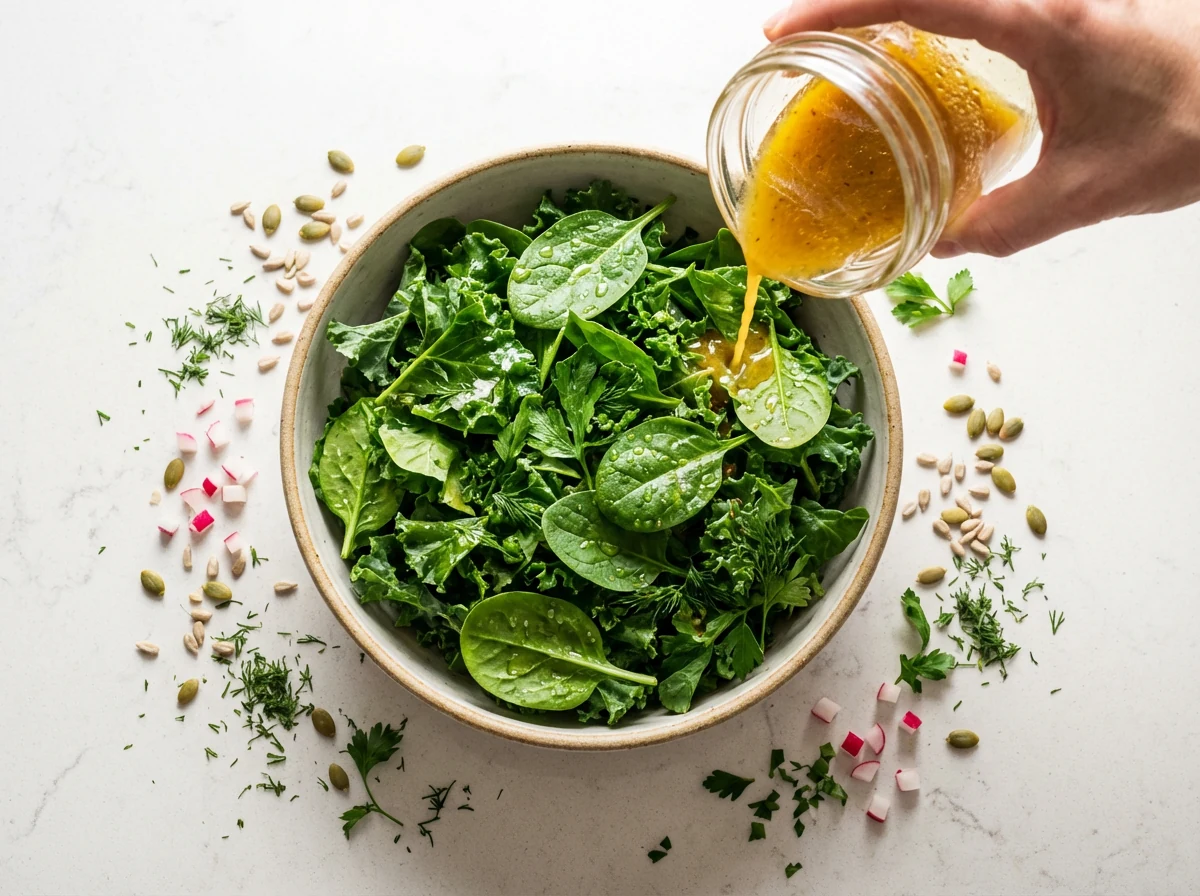
- Build the dressing: In a jar, whisk or shake acid + oil + emulsifier + sweetener + minced garlic. Season until it tastes bright and balanced. If harsh, add 1–2 tsp water to soften.
- Season your produce: Sprinkle a pinch of salt over chopped tomatoes, cucumbers, or citrus segments. It draws out flavor (in a good way).
- Toss base ingredients first: Add greens and hearty veg to a large bowl. Drizzle 2–3 tbsp dressing around the bowl walls and toss to coat lightly.
- Layer the heavies: Fold in proteins, grains, and creamy elements. Add more dressing only if needed—salads should be shiny, not soggy.
- Finish with crunch and herbs: Top with nuts/seeds and a shower of chopped herbs. Herbs aren’t garnish; they’re flavor.
- Adjust on the fly: Taste. Need brightness? Add a squeeze of lemon. Need richness? A splash of oil. Bland? More salt and pepper. Flat? Acid + herbs.
- Serve immediately: Pile into bowls, finish with a final grind of pepper and flaky salt. If holding, keep crunch separate until plating.
Preservation Guide
- Store components separately: Greens, chopped veg, proteins, and crunch in separate airtight containers. Combine just before eating.
- Keep dressing in a jar: It lasts 5–7 days. Shake before each use; add a splash of water if it thickens in the fridge.
- Greens stay crisp 3–4 days: Line containers with paper towels to absorb moisture. Swap towels daily for max crunch.
- Batch-cook proteins: Roast chicken or chickpeas on Sunday. Cool fully, store 3–4 days, and add to bowls as needed.
- Avoid pre-tossing: Dressed salads wilt fast. If transporting, layer dressing at the bottom of a jar and stack sturdier items first.
- Revive leftovers: Add fresh herbs, extra acid, and a handful of new greens. Crunch can be re-toasted for 1 minute to re-crisp.

Benefits of This Recipe
- Fast results, big flavor: 10–15 minutes to assemble, with restaurant-level textures.
- Flexible framework: Use what’s in the fridge and still nail balance and punch.
- Nutritious and satisfying: Protein + fiber + healthy fats = full and energized, not sluggish.
- Budget-friendly: Pantry dressing + seasonal produce beats pricey cafe bowls.
- Low mess, low stress: One bowl, one jar for dressing, done.
- Scales easily: Great for solo lunches or feeding a crowd without fuss.

Pitfalls to Watch Out For
- Wet greens = watery dressing and limp textures. Dry them thoroughly.
- Under-seasoning kills flavor. Salt the dressing and the ingredients lightly.
- Too much dressing turns salads into soup. Start small; add only if needed.
- All soft components (avocado, cheese, tomato) without crunch feels mushy. Add nuts, seeds, or crisp veg.
- Fridge-cold ingredients mute flavor. Let things sit 5–10 minutes at room temp before tossing.
- Skipping acid makes salads taste flat. Lemon, lime, or vinegar is non-negotiable.
Different Ways to Make This
Mediterranean Crunch Bowl
- Greens: Little gem + arugula.
- Add-ins: Cucumber, cherry tomatoes, red onion (quick-pickled), kalamata olives, chickpeas, feta, toasted pita chips.
- Dressing: Lemon + olive oil + Dijon + oregano + honey + garlic.
- Bonus: Add grilled chicken or tuna. Finish with sumac and fresh dill.
Citrus Avocado Glow
- Greens: Baby kale + spinach.
- Add-ins: Orange segments, grapefruit, avocado, shaved fennel, pistachios, mint.
- Dressing: Orange juice + lemon + olive oil + maple + pinch of salt and pepper.
- Bonus: A tiny drizzle of good olive oil at the end makes it luxurious.
Sesame Ginger Power Salad
- Greens: Shredded cabbage + romaine.
- Add-ins: Carrots, snap peas, edamame, scallions, cucumber, toasted sesame seeds.
- Dressing: Rice vinegar + soy + sesame oil + grated ginger + honey + optional chili crisp.
- Bonus: Top with seared tofu or shrimp. Sprinkle with cilantro.
Grains & Greens Super Bowl
- Base: Half greens, half cooled quinoa or farro.
- Add-ins: Roasted sweet potato, cucumber, cherry tomatoes, pumpkin seeds, goat cheese.
- Dressing: Lemon-tahini with cumin and warm water to thin.
- Bonus: A pinch of smoked paprika adds depth without heat.
Spicy Southwest Crunch
- Greens: Romaine + cilantro.
- Add-ins: Black beans, corn, red pepper, avocado, pickled onions, crushed tortilla strips.
- Dressing: Lime + olive oil + chipotle in adobo + honey + garlic + salt.
- Bonus: Add grilled steak or chicken; finish with cotija.
Caprese Herby Situation
- Greens: Arugula.
- Add-ins: Fresh mozzarella, cherry tomatoes, basil, olive oil, balsamic, pine nuts.
- Dressing: Simple balsamic vinaigrette shaken in a jar.
- Bonus: A crack of black pepper and flaky salt = chef’s kiss.
Protein-Loaded Lunch Prep
- Greens: Mixed (sturdier greens hold better).
- Add-ins: Rotisserie chicken, boiled eggs, cucumber, tomato, olives, sunflower seeds.
- Dressing: Mustard vinaigrette with extra herbs.
- Bonus: Pack dressing and crunch separately for 3-day freshness, IMO.
FAQ
How do I keep my greens from wilting after dressing?
Dress right before serving and use just enough to coat—salads should be glossy, not drenched. If you need to hold the salad for 15–30 minutes, use sturdier greens like romaine or cabbage and keep crunchy toppings separate until plating.
What’s the best oil for salad dressing?
Extra-virgin olive oil is the classic: fruity, peppery, and versatile. For neutral flavors, use avocado oil; for nutty notes, try toasted sesame oil as an accent (not the base). Avoid strongly flavored seed oils that can taste harsh when uncooked.
Can I make a great salad without cheese or meat?
Absolutely. Combine creamy elements (avocado or tahini) with protein-rich beans or tofu, plus crunchy seeds for texture. A bold dressing and plenty of herbs make it satisfying without dairy or meat.
How much dressing should I use?
Start with 2–3 tablespoons for a large bowl (4–6 cups greens) and toss thoroughly. Add a bit more only if the leaves look matte; you want a light sheen, not a slick puddle at the bottom.
What’s the fastest way to level up store-bought dressing?
Stir in fresh lemon juice, a grated garlic clove, and a pinch of salt and chili flakes. A drizzle of honey can balance acidity, and chopped herbs instantly make it taste homemade.
Why does my salad taste flat even with dressing?
It’s likely missing salt, acid, or freshness. Add a pinch of salt to the produce, squeeze lemon at the end, and fold in a handful of chopped herbs. Temperature matters too—let ingredients warm slightly so flavors show up.
Can I prep salads for the entire week?
Yes, with strategy. Prep components (wash/dry greens, cook proteins, toast nuts) and store them separately. Assemble and dress just before eating to keep textures crisp; most components hold 3–4 days, some up to 5.
Any tips for better crunch without nuts?
Roasted chickpeas, toasted seeds, crushed pita, baked tortilla strips, or crispy shallots do the job. Even diced cucumbers and radishes bring the snap you want without nuts.
What’s the ideal acid-to-oil ratio for vinaigrette?
A reliable starting point is 1 part acid to 2–3 parts oil. Add an emulsifier (like Dijon or tahini) and adjust with a splash of water to mellow sharpness without muting flavor.
How do I avoid a watery salad when using juicy tomatoes or fruit?
Season juicy items with a pinch of salt and let them sit for 5 minutes to draw some moisture. Drain off excess liquid before tossing, and dress greens separately so the juice doesn’t dilute your vinaigrette.
In Conclusion
Salads win when you design for texture and balance, not just “health.” Think crisp + creamy + juicy + crunchy + herby, anchored by a punchy dressing you actually crave. Use the framework, then riff with what you’ve got, and you’ll turn fridge odds and ends into meals that taste intentional.
Keep a jar of dressing ready, toast some seeds, and stash fresh herbs. With those moves, a fast, satisfying salad isn’t the backup plan—it’s the main event. Now go build bowls that disappear in minutes, in the good way.
Printable Recipe Card
Want just the essential recipe details without scrolling through the article? Get our printable recipe card with just the ingredients and instructions.