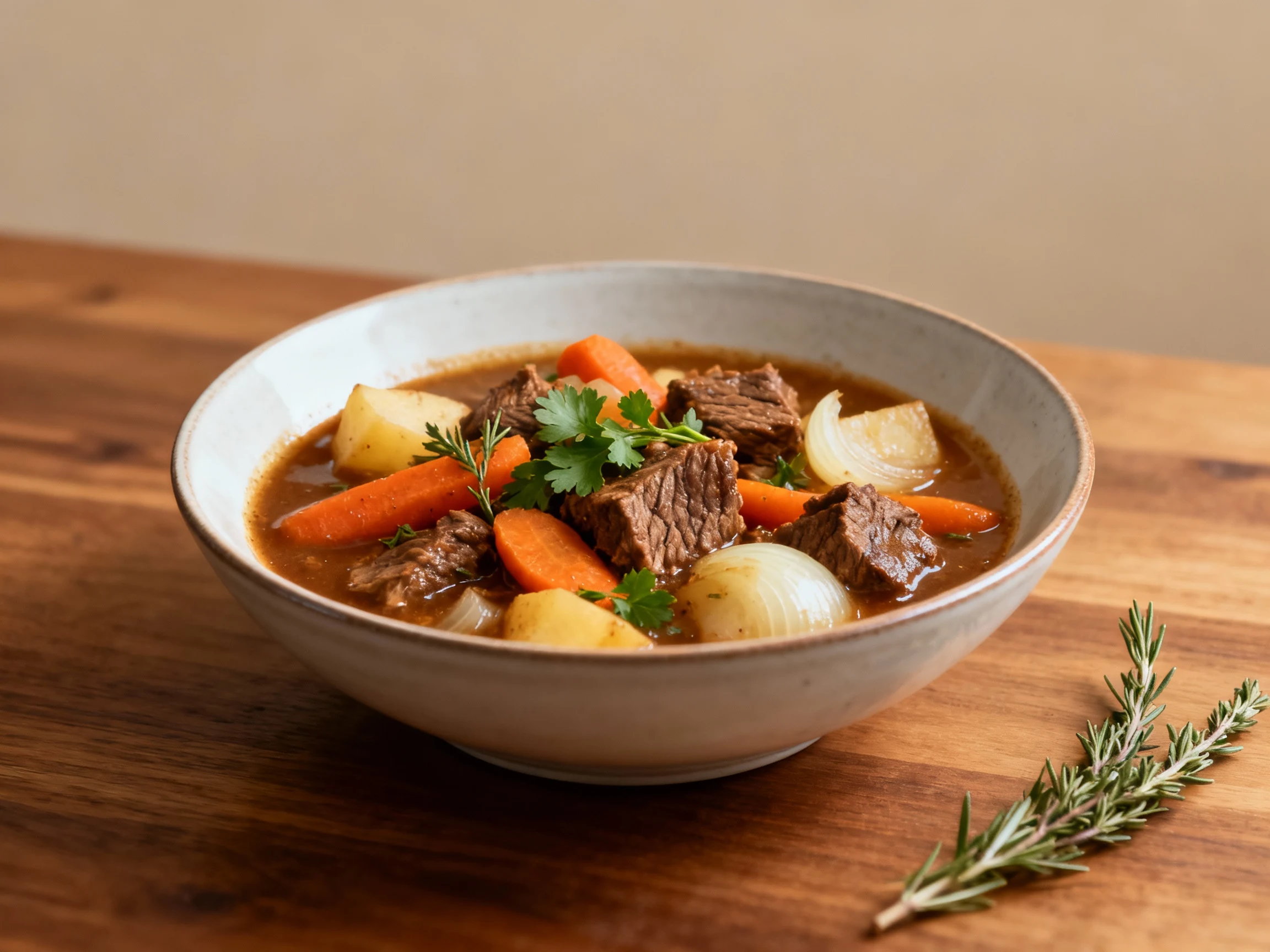
French Beef Stew That Wins Cold Nights and Busy Weeks
Cozy, weeknight-friendly comfort with deep bistro flavor, minimal prep, and leftovers that taste even better tomorrow.
You want maximum comfort with minimum fuss. This is the stew that turns cheap cuts into silk and makes your whole kitchen smell like a Paris bistro. It’s rich, bold, and ridiculously rewarding—without the culinary-school theatrics. Brown the meat right, pour in a decent wine, and let the oven do the heavy lifting. By the time you ladle it up, everyone thinks you did something heroic. Spoiler: you mainly waited.
What Makes This Recipe Awesome
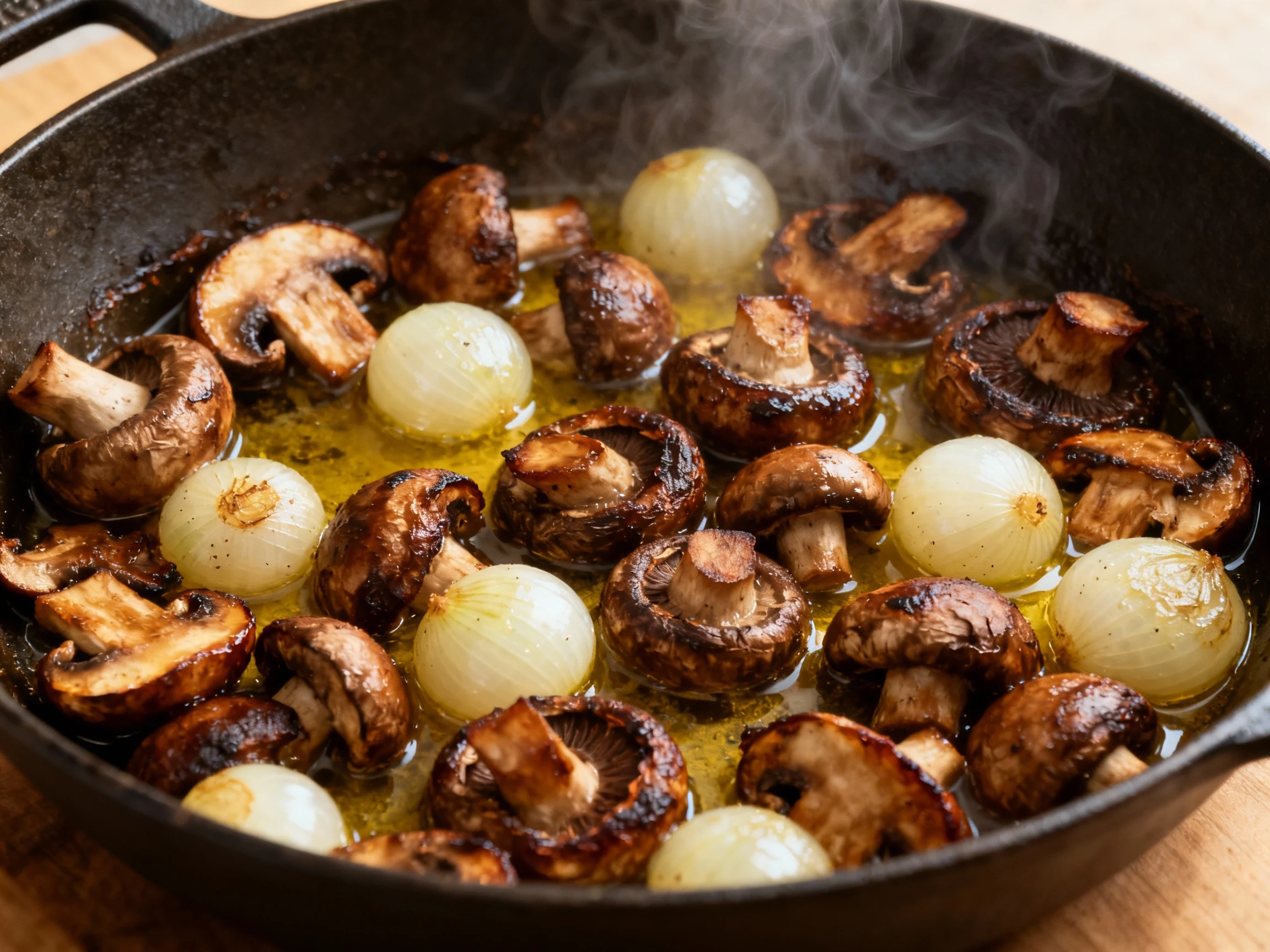
- Restaurant-level flavor, weeknight effort: Strategic browning + a splash of wine + low-and-slow heat create deep, layered taste in an easy rhythm.
- Budget cut, luxury payoff: Chuck roast turns meltingly tender and lush. Your wallet stays calm; your taste buds don’t.
- Make-ahead friendly: It tastes better the next day—flavors marry, edges mellow, sauce thickens. Plan ahead and claim the compliments later.
- Flexible method: Dutch oven, slow cooker, or Instant Pot—choose your adventure and get the same cozy result.
- Freezer gold: Doubles beautifully and freezes like a champ for month-end “I forgot to cook” emergencies.
What You’ll Need (Ingredients)
- 3 lb (1.4 kg) beef chuck roast, cut into 1.5–2 inch cubes, patted dry
- Kosher salt and freshly ground black pepper
- 4 oz (115 g) bacon lardons or thick-cut bacon, diced
- 2–3 tbsp olive oil, divided
- 1 large yellow onion, diced
- 2 medium carrots, cut into 1/2-inch pieces
- 2 celery stalks, diced (optional but nice)
- 4 garlic cloves, minced
- 2 tbsp tomato paste
- 2 tbsp all-purpose flour (use rice flour or cornstarch for GF)
- 2 cups (480 ml) dry red wine such as Burgundy or Pinot Noir
- 2 cups (480 ml) low-sodium beef stock (plus more as needed)
- 1–2 bay leaves
- 4 fresh thyme sprigs (or 1 tsp dried thyme)
- 1 tbsp brandy or cognac (optional but lovely)
- 12 oz (340 g) cremini mushrooms, halved or quartered if large
- 1 cup (150 g) pearl onions, fresh peeled or frozen thawed
- 1 tbsp unsalted butter (for sautéing mushrooms and onions)
- 1 tsp sugar (optional; helps onions brown)
- 1–2 tsp red wine vinegar or lemon juice, to finish
- 2 tbsp butter + 2 tbsp flour for beurre manié (optional thickener; use 2 tsp cornstarch for GF)
- Chopped fresh parsley, for garnish
Let’s Get Cooking – Instructions
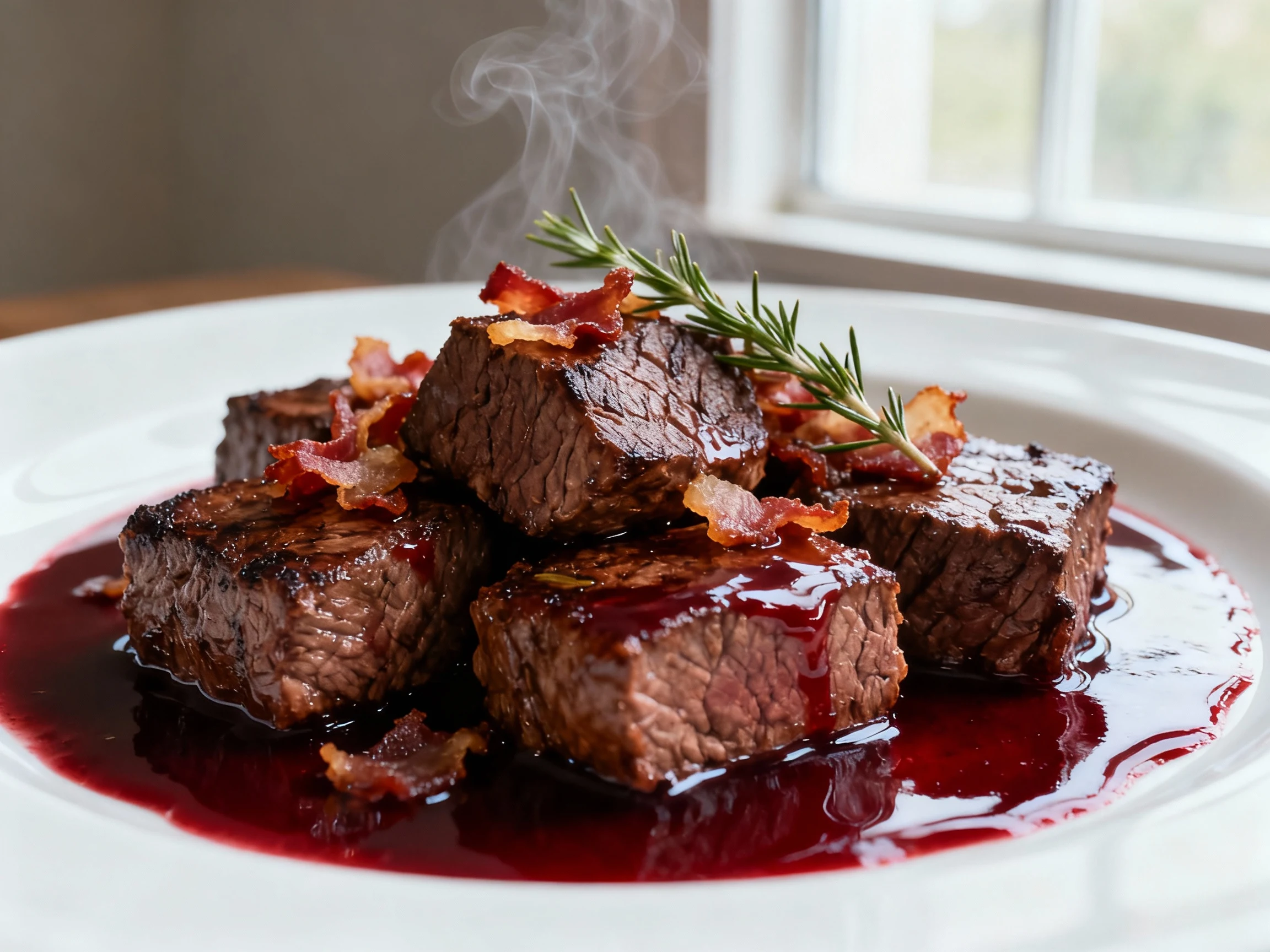
- Preheat and prep: Heat the oven to 325°F (160°C). Pat the beef very dry with paper towels, then season aggressively with salt and pepper. Dry meat sears better—steam is the enemy of browned flavor.
- Crisp the bacon: Place a large Dutch oven over medium heat. Add bacon and cook until crisp, 6–8 minutes. Transfer bacon to a plate, leaving fat in the pot.
- Sear the beef in batches: Raise heat to medium-high. Add a splash of olive oil if the pot looks dry. Sear beef in a single layer, 2–3 minutes per side, until well-browned. Work in 2–3 batches to avoid crowding. Move seared beef to the bacon plate.
- Sweat the aromatics: Lower heat to medium. Add onion, carrot, and celery with a pinch of salt. Cook, stirring, until softened and lightly golden, 5–7 minutes. Add garlic and cook 30 seconds until fragrant.
- Build the base: Stir in tomato paste; cook 1 minute until brick red. Sprinkle flour over vegetables; stir 1 minute to cook the raw taste. This gives your sauce body later.
- Deglaze and load flavor: Pour in the red wine and scrape up the browned bits. Simmer 2–3 minutes. Add beef stock, bay leaves, thyme, and brandy if using. Return beef and bacon (plus any juices) to the pot. The liquid should just barely cover the meat; add stock if needed.
- Braise low and slow: Bring to a gentle simmer. Cover and transfer to the oven for 2.5–3 hours, until the beef is fork-tender and the sauce looks glossy. Check once halfway; if it’s boiling hard, reduce the oven temp slightly. Skim excess fat if you like.
- Brown mushrooms and onions: While the stew braises, heat 1 tbsp butter and 1 tbsp olive oil in a skillet over medium-high heat. Add mushrooms and pearl onions. Season with salt, pepper, and sugar (if using). Cook, tossing, until deeply browned, 8–10 minutes. Set aside.
- Adjust thickness: When the beef is tender, you have options. If the sauce is thin, mash butter and flour together to make beurre manié; whisk in 1 tbsp at a time and simmer on the stovetop 5–10 minutes until silky. For GF, dissolve 2 tsp cornstarch in 2 tbsp cold water; stir into the simmering stew and cook 2–3 minutes. If the sauce is too thick, add a splash of stock.
- Finish and brighten: Stir in the browned mushrooms and onions. Taste and adjust salt and pepper. Add 1–2 tsp red wine vinegar or lemon juice to brighten. Let the stew rest off heat 10 minutes; it settles and improves.
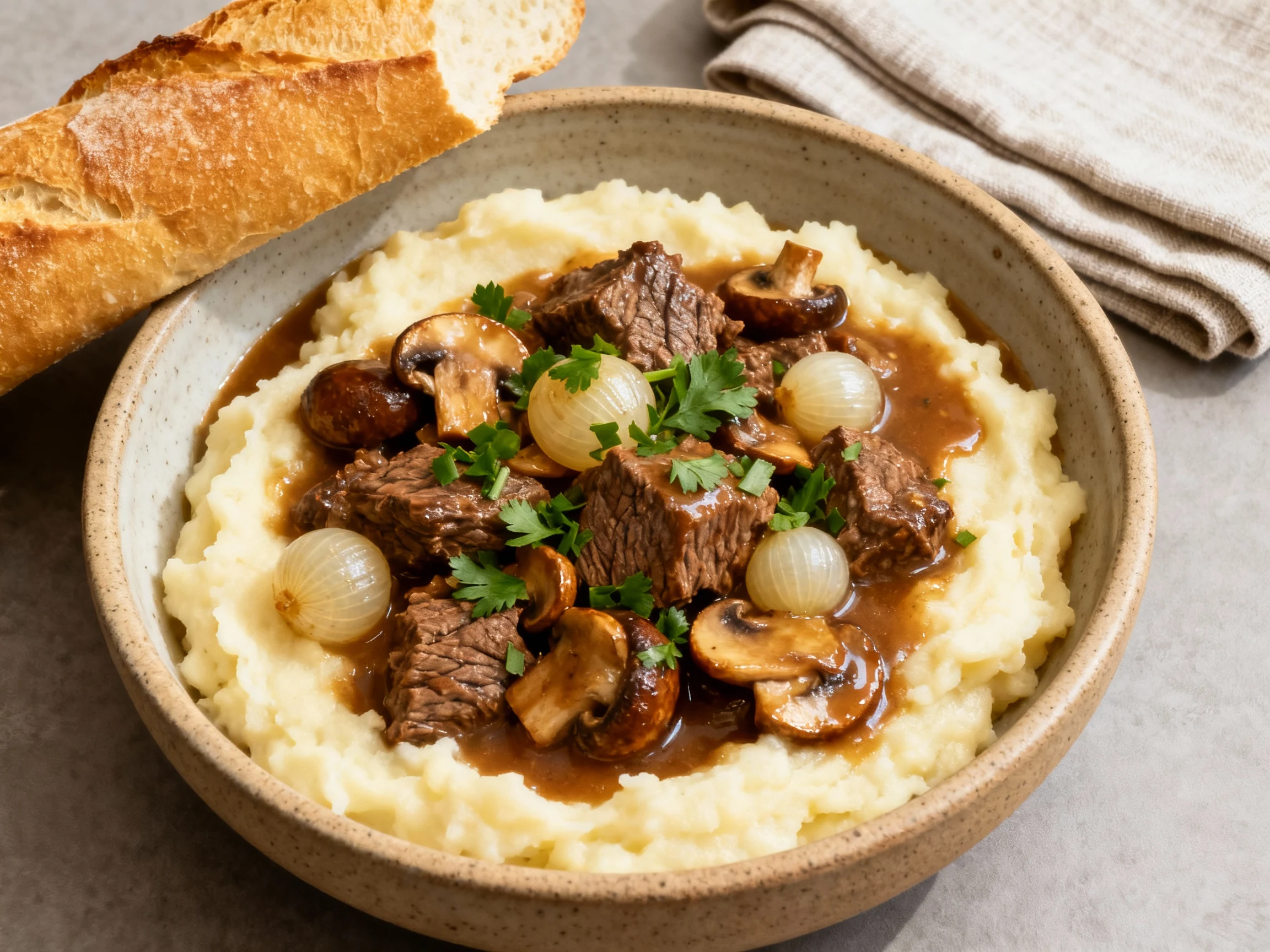
- Serve: Ladle into warm bowls. Garnish with parsley. Serve with mashed potatoes, buttered noodles, or a crusty baguette. A green salad doesn’t hurt either.
How to Store
- Cool fast: Portion into shallow containers, cool uncovered until steam subsides (within 30 minutes), then cover. Refrigerate within 2 hours.
- Fridge: Keeps well for 4 days. It will taste even better on day two as flavors meld.
- Freezer: Store airtight for up to 3 months. Leave a little headspace for expansion. Label dates—future you will forget.
- Reheat: Warm gently on the stovetop over medium-low, adding a splash of water or stock to loosen. Avoid a rolling boil; aggressive heat can make the meat shred and dry out. Skim or lift off the fat cap after chilling if you prefer a lighter bowl.
What’s Great About This
- Foolproof technique: Browning and braising do the heavy lifting. You don’t need fancy knives; you need patience and heat control.
- Scalable: Feeding four or fourteen? Double it. The method stays the same; use a wider pot or two smaller ones for better browning.
- Versatile servings: Pair with mashed potatoes, polenta, noodles, or cauliflower mash. It’s a flavor engine that powers any side.
- Balanced flavors: Smoky bacon, wine reduction, savory stock, and bright finish. Big flavor without weird tricks, FYI.
What Not to Do
- Don’t crowd the pot: Overlapping cubes steam instead of sear. Brown in batches for that coveted crust.
- Don’t skip drying the beef: Moisture kills browning. Paper towels are your friend.
- Don’t use lean cuts: Skip sirloin or round. Chuck or beef shin has the collagen that turns into velvet.
- Don’t “cook with” terrible wine: If you wouldn’t sip it, don’t pour it in. The stew concentrates flavors—good or bad.
- Don’t boil hard: A gentle simmer keeps meat tender. Violent bubbles = cottony texture. No thanks.
- Don’t dump raw mushrooms into the braise early: They’ll leach water and go spongy. Brown separately for meaty flavor.
- Don’t skip the acid at the end: A teaspoon of vinegar or lemon wakes up the entire pot. Magic trick, IMO.
- Don’t over-thicken too soon: Reduce first, then thicken. It’s easier to add body than to fix wallpaper paste.
Different Ways to Make This
- Slow cooker: Sear bacon and beef, sweat aromatics, and deglaze with wine in a skillet or Dutch oven. Transfer to slow cooker with stock, herbs, and meat. Cook on LOW 8–9 hours until tender. Add sautéed mushrooms and onions plus thickener in the last 30 minutes; finish with a splash of vinegar.
- Instant Pot: Use Sauté to brown bacon and beef in batches. Add aromatics, tomato paste, and flour; deglaze with wine. Add stock and herbs. Pressure cook 35–40 minutes; natural release 15 minutes. Reduce on Sauté to desired thickness, then stir in separately sautéed mushrooms and onions.
- Daube-inspired: Add orange zest, a handful of black olives, and a pinch of herbes de Provence. You can marinate the beef overnight in wine with aromatics for extra depth.
- No-wine version: Use 3 cups beef stock plus 1 tbsp balsamic vinegar and 1 tsp soy sauce or a pinch of mushroom powder. You’ll still get complexity without the bottle.
- Gluten-free: Dust beef lightly with rice flour or cornstarch before searing, and thicken at the end with a cornstarch slurry (2 tsp cornstarch + 2 tbsp cold water) stirred into a gentle simmer.
- Lighter riff: Skip the bacon and use olive oil. Add extra mushrooms and carrots. You’ll lose smokiness but keep big, earthy flavor.
- Date-night fancy: Deglaze the mushroom skillet with a splash of cognac and flame it carefully for drama. Add a pat of cold butter to finish the sauce for gloss.
FAQ
What cut of beef works best?
Beef chuck is the gold standard—well-marbled, collagen-rich, and built for long braises. Beef shin or short rib also shine, but avoid lean cuts like sirloin or round; they turn stringy and dry under slow heat.
Which red wine should I use?
Pick a dry, medium-bodied red you’d happily drink. Pinot Noir or Burgundy is classic, but Côtes du Rhône or Merlot works. Avoid oaky monsters; you want fruit and acidity, not lumberyard vibes.
Can I skip the wine entirely?
Yes. Use extra beef stock and add 1 tbsp balsamic plus a bit of soy sauce or mushroom powder for umami. Finish with a teaspoon of vinegar to brighten. Different, but still rich and satisfying.
How do I thicken the stew properly?
First reduce uncovered until the sauce lightly coats a spoon. If it needs more body, whisk in beurre manié (equal parts soft butter and flour) and simmer 5–10 minutes, or use a cornstarch slurry for a gluten-free finish. Thick but pourable is the goal.
My stew tastes a bit flat—how do I fix it?
Add salt in small pinches, then a splash of acid (red wine vinegar or lemon). If it still lacks oomph, a tiny knob of cold butter whisked in can round it out. Taste, tweak, repeat. Tiny changes, big payoff.
Can I make this ahead for guests?
Absolutely—and you should. Stew improves overnight. Reheat gently, add the mushrooms and onions if you held them back, and check seasoning just before serving. This is a chef’s secret weapon for stress-free hosting, FYI.
How do I prevent mushy vegetables?
Cook carrots and onions until just tender during the braise, and brown mushrooms and pearl onions separately to keep them firm and flavorful. Add the browned veg near the end so they keep their texture.
What should I serve with it?
Mashed potatoes are classic. Buttered egg noodles, creamy polenta, or crusty bread are all excellent. A simple green salad with a sharp vinaigrette balances the richness like a pro.
Can I use pre-cut “stew meat” from the store?
You can, but quality varies. If possible, buy a whole chuck roast and cube it yourself for consistent texture and better browning. Pre-cut mixes sometimes include lean bits that dry out.
How do I peel pearl onions without crying?
Trim the root ends, blanch in boiling water for 30 seconds, then shock in ice water. Squeeze from the stem end and the onions pop right out. It’s weirdly satisfying.
How do I scale this recipe?
Double everything, but sear in more batches or use two pots so you still get good browning. Keep the liquid just to the level of the meat; you’re braising, not boiling soup.
Is the alcohol cooked off?
Most of it, yes—long braising reduces alcohol significantly. If you’re avoiding alcohol entirely, use the no-wine variation. Flavor stays big without the booze.
Wrapping Up
This is the kind of stew that turns a cold, hectic day into a small victory. Brown with intention, simmer with patience, and finish with a bright splash. The result is tender beef, a velvety sauce, and a bowl people won’t forget. Make it once, and it becomes your reliable “wow” move—low effort, high reward, and always worth the wait.
Printable Recipe Card
Want just the essential recipe details without scrolling through the article? Get our printable recipe card with just the ingredients and instructions.