Fig Recipes That Turn Weeknights and Brunch Into Wow
Quick, seasonal ideas for sweet and savory cooks—one smart base method, endless toppings, and shortcuts that taste like Sunday.
Here’s the move: take a luxury fruit, add pantry staples, and make something that looks chef-y in 20 minutes. Figs are the cheat code—soft, jammy, and naturally sweet—so you don’t need pastry school or a trust fund to impress. Roast them hot, hit them with acid, and park them on creamy ricotta. The result? A snack-board superstar, a brunch headliner, or date-night insurance that never fails.
We’ll use one base technique you can spin sweet or savory without breaking a sweat. Minimal gear, maximal payoff. FYI, this is the kind of “how is this so good?” recipe that gets requested again and again.
Why This Recipe Works
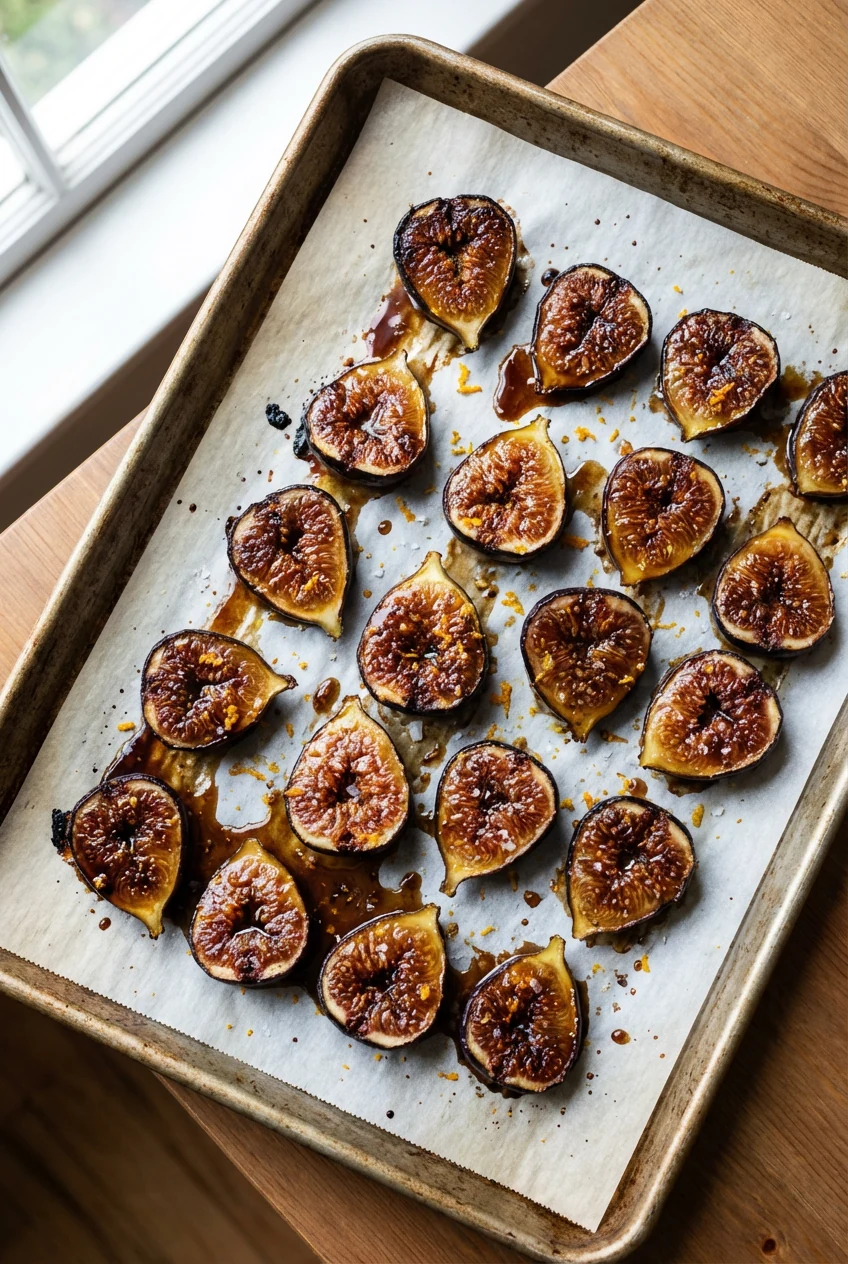
High-heat roast = jammy magic. A quick blast at 425°F concentrates the sugars, softens the flesh, and creates caramelized edges. That sticky, glossy finish is what makes a few figs feel like a feast.
Sweet + acid + salt = balance. Honey delivers round sweetness, balsamic adds tang, and a pinch of salt wakes everything up. Orange zest lifts the whole dish so it doesn’t eat “heavy.”
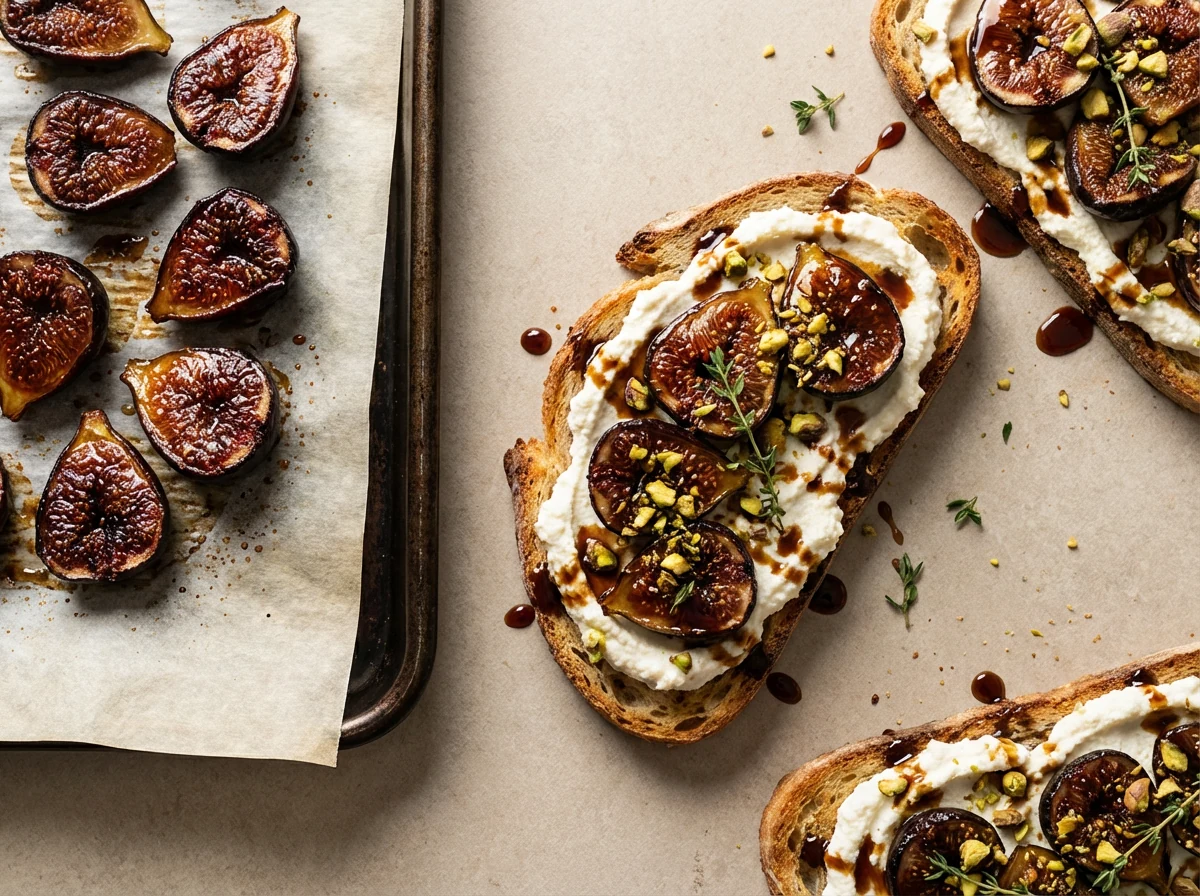
Texture is the secret flex. Creamy whipped ricotta against tender figs, with crunchy pistachios on top, keeps every bite interesting. If you want applause, give people contrast.
One-pan, no fuss. Toss on a sheet pan, roast, assemble. You get restaurant energy with home-kitchen effort. IMO, that’s the sweet spot.
What You’ll Need (Ingredients)
- Fresh ripe figs (12 medium; Black Mission or Brown Turkey work great)
- Honey (3 tablespoons; sub maple syrup if you prefer)
- Balsamic vinegar (1 tablespoon; plus more as a drizzle)
- Extra-virgin olive oil (2 tablespoons)
- Flaky sea salt (about 3/4 teaspoon)
- Freshly ground black pepper (1/2 teaspoon)
- Finely grated orange zest (1 teaspoon; or lemon zest)
- Vanilla extract (1/2 teaspoon; optional for a dessert lean)
- Fresh thyme leaves (1 teaspoon; or a pinch of rosemary)
- Whole-milk ricotta (1 cup; drain if watery)
- Mascarpone (2 tablespoons; optional, for extra richness)
- Pistachios, chopped (1/3 cup; sub walnuts or almonds)
- Crusty bread (8–12 slices baguette, sourdough, or crostini)
- Prosciutto (4 slices; optional for savory variation)
The Method – Instructions
- Heat the oven. Preheat to 425°F (220°C). Line a sheet pan with parchment for easy cleanup.
- Prep the figs. Rinse, pat dry, and remove the tough tip. Halve them lengthwise. If your figs are large, quarter them to keep roasting time short.
- Toss with goodness. In a bowl, combine honey, balsamic, olive oil, orange zest, salt, pepper, and vanilla (if using). Add figs and gently turn to coat without smashing.
- Arrange for success. Place figs cut-side up on the pan, spooning any extra glaze over them. Don’t crowd; air flow equals caramelization.
- Roast to jammy. Bake 12–15 minutes until edges are glossy and the centers slump slightly. For extra char, broil 1–2 minutes, watching closely because sugar burns fast.
- Whip the ricotta. While figs roast, whisk ricotta (and mascarpone, if using) with a pinch of salt and 1 teaspoon honey until smooth and airy. A quick electric whisk makes it ultra-creamy.
- Toast the bread. Lightly toast slices so they can hold toppings without going soggy. Rub with a cut clove of garlic if you’re feeling fancy.
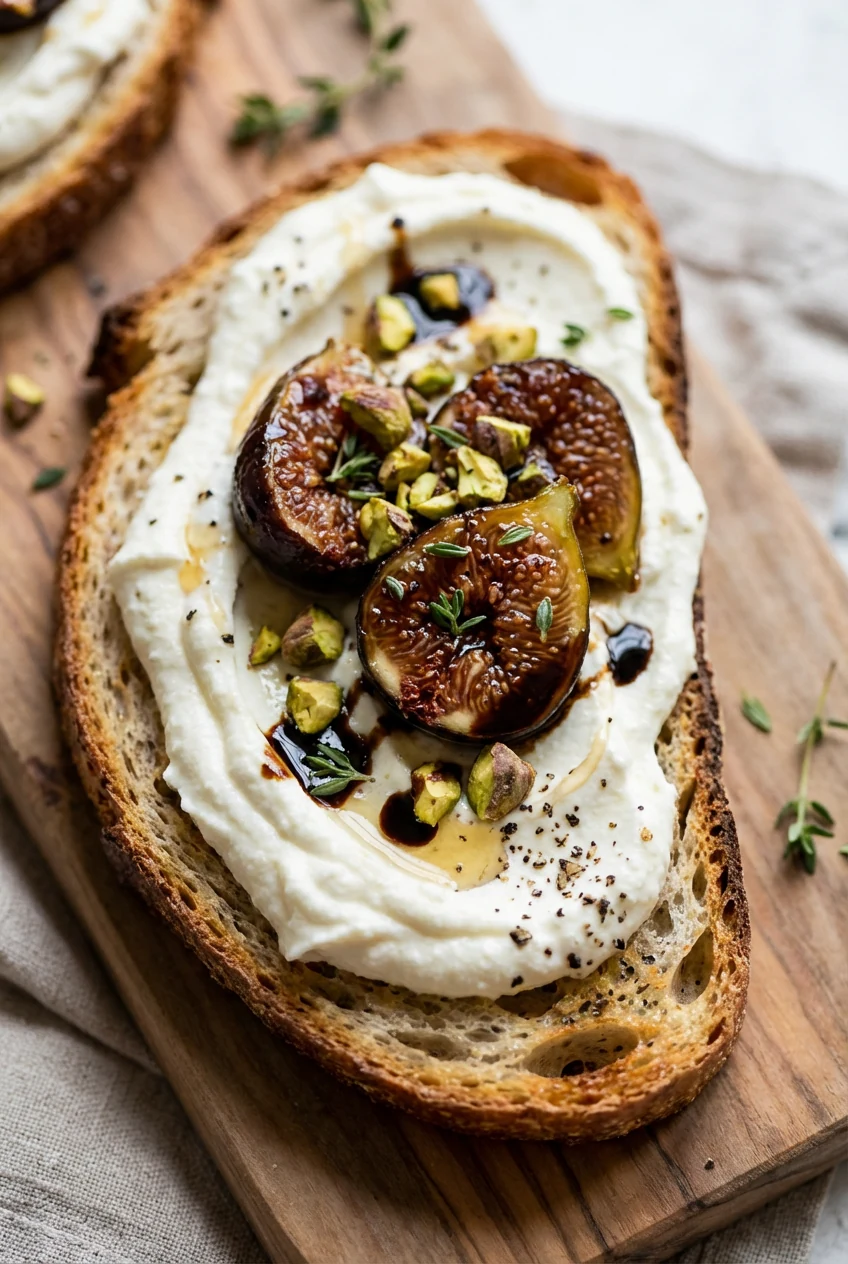
- Assemble. Spread a generous swoop of whipped ricotta on warm toast. Top with roasted figs, then scatter pistachios and thyme.
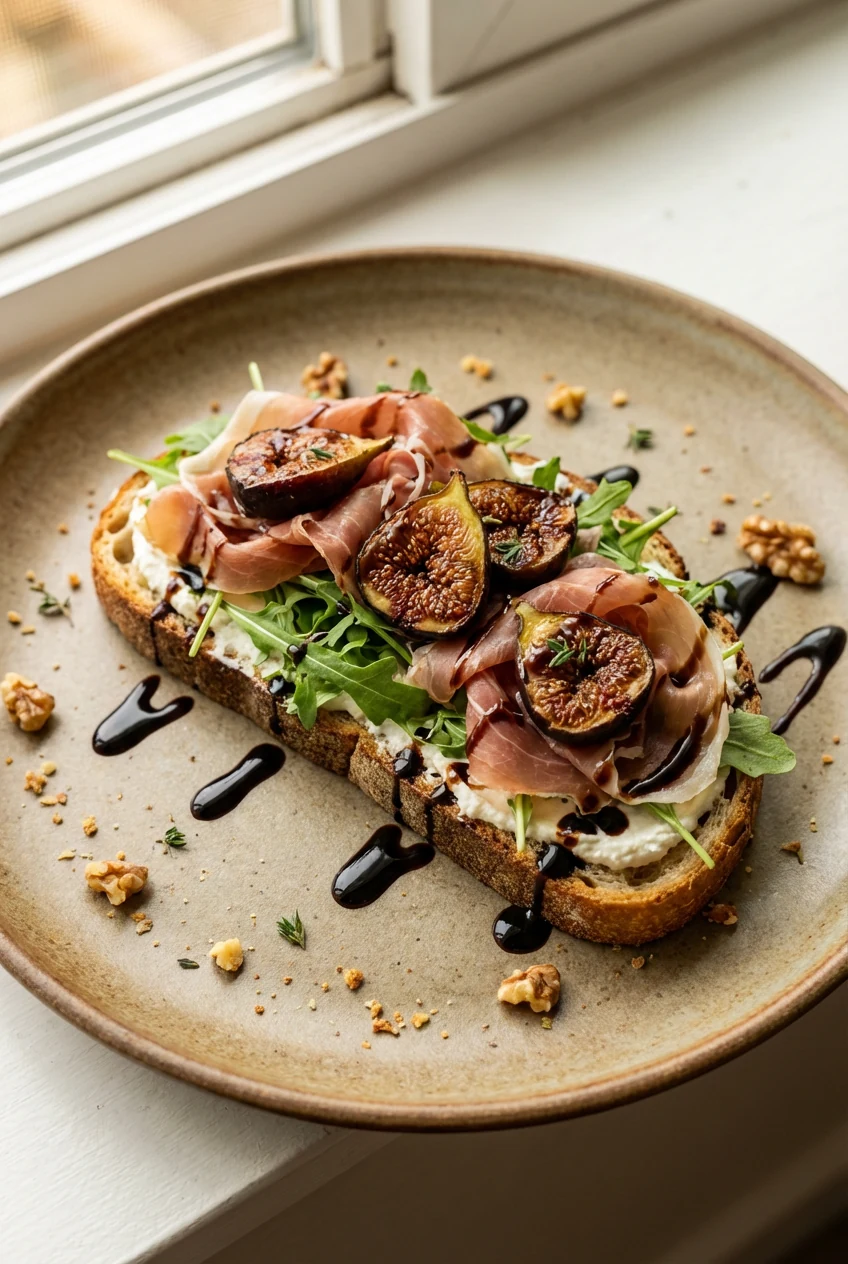
- Finish like a pro. Drizzle a few drops of balsamic (or balsamic glaze) and a thread of honey. Add a grind of pepper. If using prosciutto, drape over or tuck beneath the figs.
- Serve immediately. Best warm while the figs are plush and the bread still crisp. Prepare for “who made this?” questions.
How to Store
Roasted figs: Cool, then refrigerate in an airtight container up to 3 days. Rewarm gently in a skillet over low heat or at 300°F (150°C) for 5–7 minutes. They’ll be softer, but still delightful.
Whipped ricotta: Store covered up to 4 days. If it loosens, whisk briefly to revive. Don’t freeze—dairy gets grainy.
Bread/crostini: Keep toasted slices at room temp for a few hours. For longer, toast to order or keep pre-sliced bread sealed and toast just before serving.
Freezer note: Fresh figs don’t freeze beautifully for topping, but roasted figs can be frozen up to 2 months and repurposed into sauces, oatmeal, yogurt, or as a pork/chicken glaze.
Benefits of This Recipe
- Fast from start to plate: About 20 minutes with minimal prep.
- Flexible flavor map: Sweet or savory with easy swaps (see Alternatives).
- High perceived effort, low actual effort: Restaurant look, weeknight workload.
- Seasonally smart: Peak figs shine; off-season options still hit (hello, dried figs).
- Scales up or down: Make two toasts or a party platter—same method.
- Textural balance built in: Creamy, crunchy, tender in every bite.
- Budget-friendly luxury: A handful of figs turns pantry items into a showpiece.
- Entertaining-friendly: Components can be prepped ahead so assembly is a breeze.
Don’t Make These Errors
- Using unripe figs: Hard figs won’t soften properly and taste bland. Choose ones that feel heavy and give slightly.
- Crowding the pan: Overlapping prevents caramelization. Use two pans if needed.
- Over-roasting: Sugar burns fast; check at 10 minutes and again at 12. Dark edges are good; scorched is not.
- Watery ricotta: If it looks loose, drain it through a fine sieve or cheesecloth for 30 minutes. Soggy toast is a tragedy.
- Skipping acid: The balsamic (or lemon) keeps the dish from eating too sweet. Don’t lose the balance.
- Serving everything cold: Warm figs + room-temp ricotta taste richer. Fridge-cold cheese mutes flavor, TBH.
- Forgetting the salt: A pinch of flaky salt on top makes the sweetness pop.
- Flimsy bread: Use sturdy, toasted slices. You’re building a skyline, not a sandcastle.
Alternatives
Sweet Swaps
- Vanilla yogurt base: Swap ricotta for Greek yogurt, add cinnamon, and drizzle with maple.
- Chocolate-dipped vibes: Finish with shaved dark chocolate and hazelnuts; add a pinch of sea salt.
- Rosemary-honey: Warm honey with a sprig of rosemary; brush over figs after roasting.
- Citrus twist: Use lemon curd under the figs and top with toasted almonds.
Savory Twists
- Goat cheese + prosciutto: Swap ricotta for tangy chèvre, add prosciutto and arugula.
- Blue cheese + walnuts: Crumble gorgonzola, add toasted walnuts, finish with black pepper and a balsamic glaze.
- Herbed labneh: Spread thick labneh, scatter dill and mint, and add a squeeze of lemon.
- Flatbread mode: Use naan or pizza dough; top with ricotta, figs, prosciutto, and bake until bubbly.
Dietary Modifications
- Vegan: Use maple syrup, plant-based ricotta or whipped tofu-cashew cream, and skip prosciutto.
- Dairy-free: Coconut yogurt or almond ricotta works; choose olive-oil toast.
- Gluten-free: Serve on GF toast, seed crackers, or polenta rounds.
- Lower sugar: Reduce honey to 1 tablespoon and rely on ripe figs + extra balsamic for brightness.
Meal Formats
- Salad: Toss arugula with olive oil, lemon, shaved parmesan; add warm figs and pistachios.
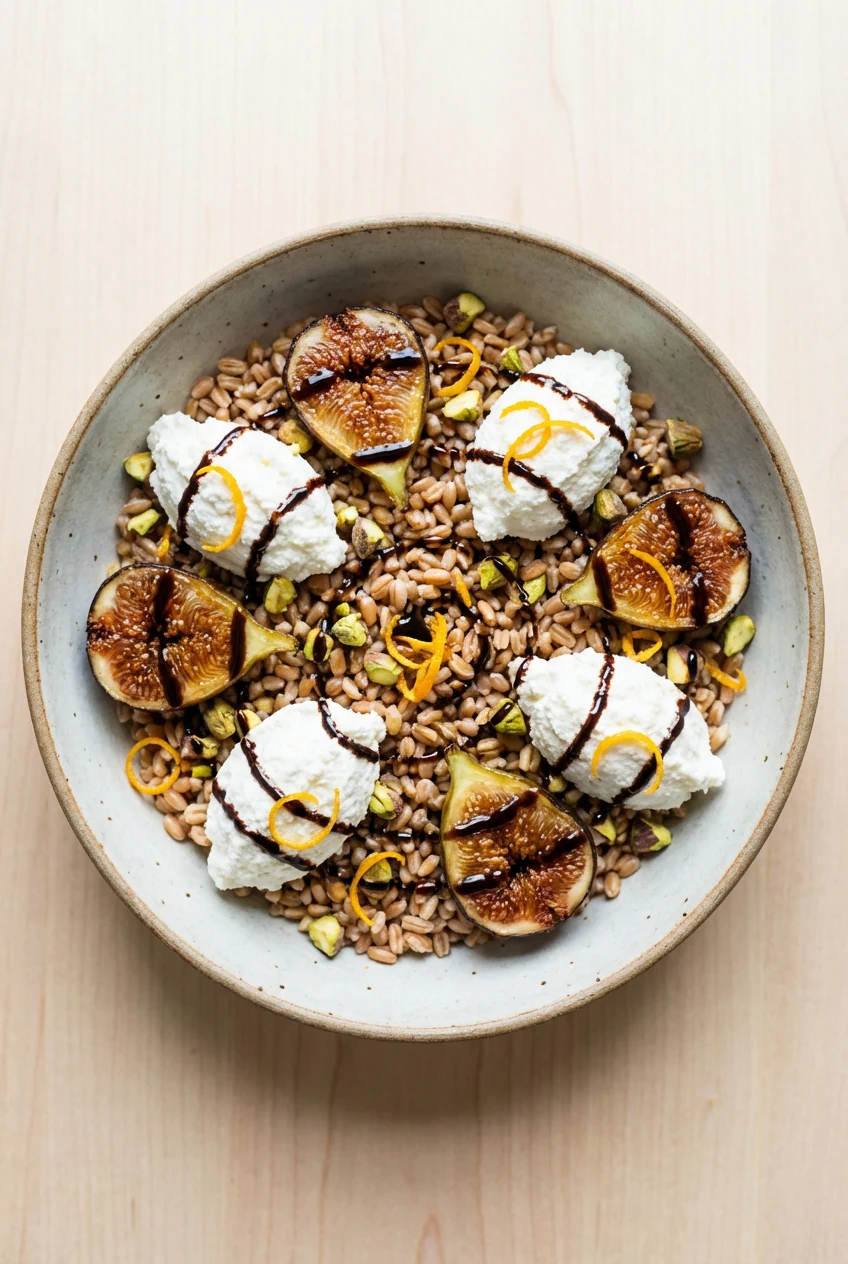
- Grain bowl: Farro or quinoa, whipped ricotta dollops, figs, and a balsamic drizzle.
- Entrée topper: Spoon roasted figs over pork chops or roast chicken to instant-upgrade dinner.
- Breakfast: Oats or yogurt bowl with figs, nuts, and a stripe of honey.
FAQ
How do I pick ripe figs?
Look for fruit that feels heavy for its size and gives slightly when pressed. The skin can be wrinkled and even split a bit—that’s okay. Avoid figs that are rock-hard, oozing, or smell fermented.
Can I use dried figs instead of fresh?
Yes. Halve them, soak in hot water or tea for 10 minutes, then roast with the glaze for 8–10 minutes. They’ll be chewier than fresh but still delicious and very caramelization-friendly.
What if figs are out of season?
Try plums, apricots, or pears with the same method. The sweet-acid-salt balance works across stone fruit and pears beautifully, so you keep the vibe even without peak-season figs.
How far ahead can I prep for a party?
Whip the ricotta and chop nuts up to 2 days ahead. Roast figs up to 4 hours ahead and rewarm briefly at 300°F (150°C). Toast bread right before serving so it stays crisp.
Can I grill the figs instead of roasting?
Absolutely. Brush with the honey-balsamic mix and grill cut-side down over medium heat 2–3 minutes until marks appear. Flip, cook 1–2 minutes more, and finish with salt and zest.
Which honey works best?
Use a mild, floral honey so it doesn’t overpower the figs. Orange blossom and wildflower are great. If you love bolder flavor, buckwheat honey brings molasses vibes.
What wine pairs well with this?
For sweet-leaning toppings, try a lightly chilled Lambrusco or a dry Riesling. For savory versions with blue cheese or prosciutto, go for Pinot Noir or a GSM blend. Sparkling rosé covers both lanes.
How do I scale this for a crowd?
Plan on 2–3 fig halves and 1 slice of toast per person. Roast on multiple sheet pans, swapping racks halfway for even browning. Keep assembly in stations so the bread stays crisp as you serve.
In Conclusion
With one simple technique, you unlock a dozen ways to let figs shine—sweet, savory, snack, or showstopper. High heat, a smart glaze, and creamy contrast do the heavy lifting. Keep good bread, ricotta, and honey on deck and you’re always 20 minutes from applause. Not bad for a fruit that fits in your palm, right?
Printable Recipe Card
Want just the essential recipe details without scrolling through the article? Get our printable recipe card with just the ingredients and instructions.