Easy Beef Stew Meat Recipes for Busy Weeknight Comfort
One-pot, budget-friendly comfort with minimal prep and big flavor. Perfect for weeknights and meal prep—no babysitting required.
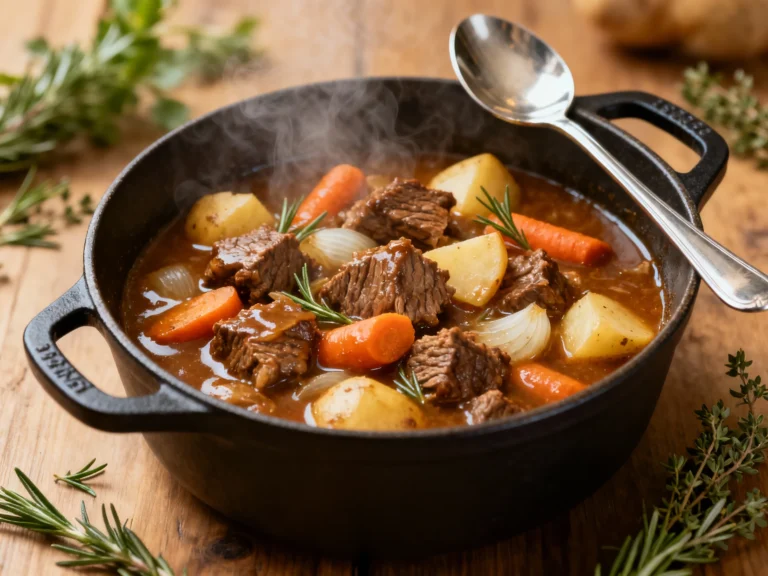
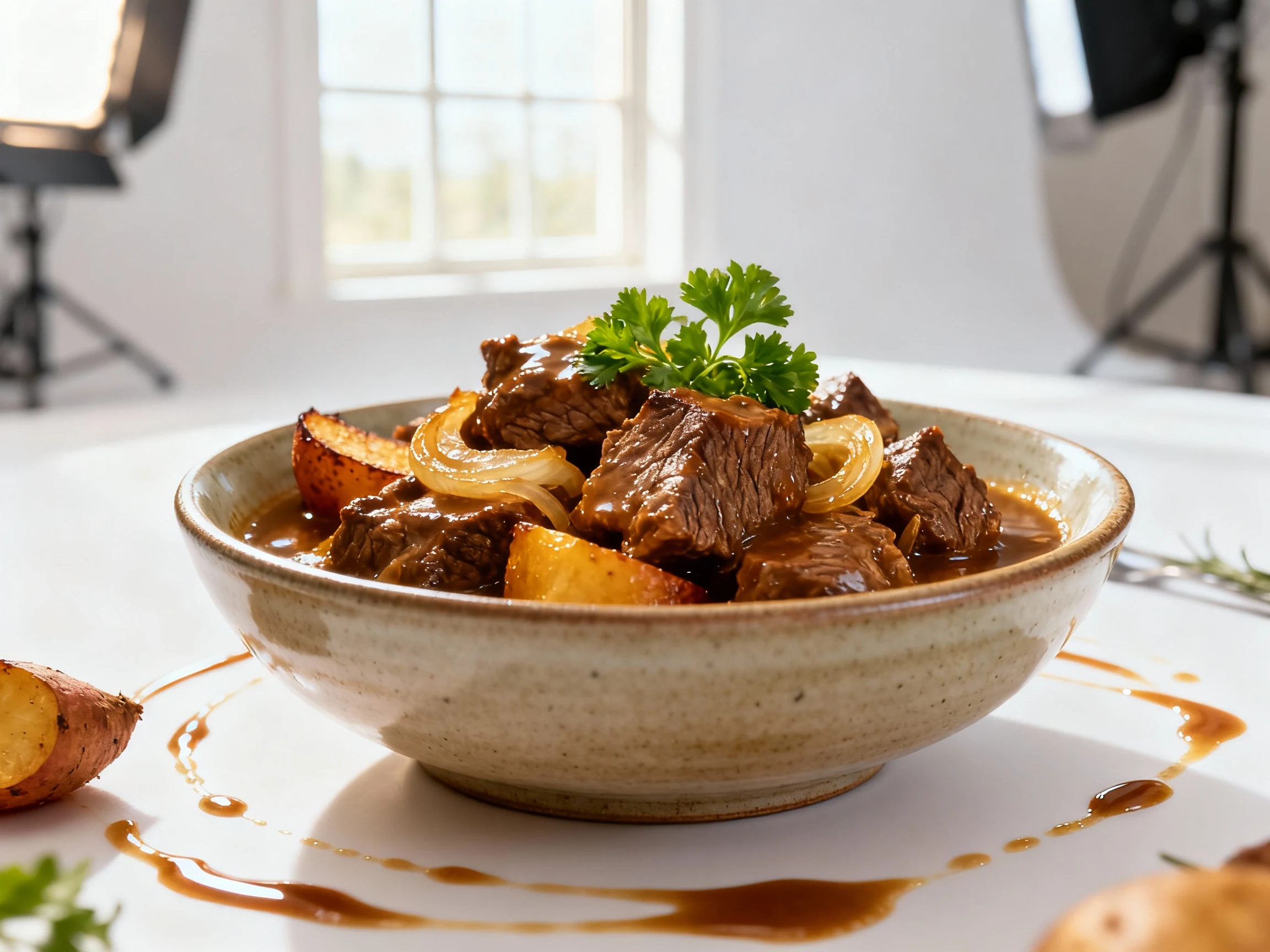
If you think “stew” means spending your whole day chained to a simmering pot, you’ve been lied to. This is the kind of hearty bowl that tastes like it took all Sunday, but it’s weeknight-friendly and won’t nuke your budget. The trick isn’t fancy gear; it’s a few high-leverage moves that turn humble stew meat into silky, spoon-tender bites. You’ll build deep flavor fast, park it to simmer, and let time do the heavy lifting. TBH, the leftovers might be even better—if there are any left. Ready to eat like you planned ahead, even if you didn’t?
What Makes This Recipe Awesome
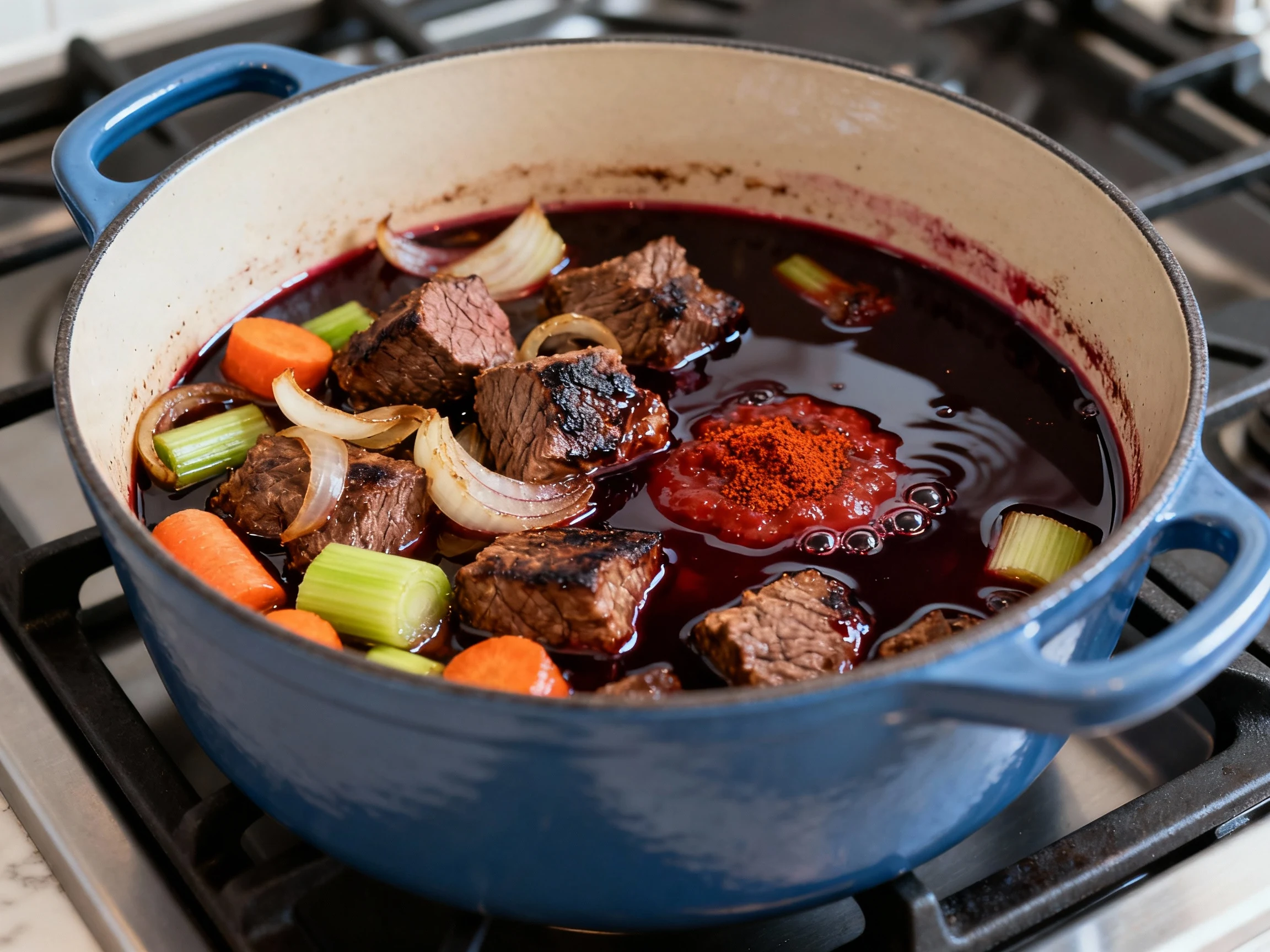
- Minimal prep, maximum payoff: A few smart steps stack flavor quickly, then the pot does the work.
- Budget hero: Tough, affordable cuts turn meltingly tender with low, slow heat—no steakhouse prices.
- One-pot efficiency: Fewer dishes, less cleanup, more time eating. Win-win-win.
- Flexible cooking methods: Stovetop, oven, slow cooker, or Instant Pot—use whatever you’ve got.
- Make-ahead gold: Better on day two, freezer-friendly, and perfect for meal prep.
- Customizable: Swap veggies, boost spices, or make it gluten-free without sacrificing flavor.
Shopping List – Ingredients
- 2 pounds beef stew meat (ideally chuck, cut into 1.5-inch cubes)
- 2 teaspoons kosher salt (plus more to taste)
- 1 teaspoon black pepper
- 2 tablespoons neutral oil (canola, avocado, or olive oil)
- 1 large yellow onion, diced
- 3 carrots, peeled and sliced into 1/2-inch rounds
- 2 celery stalks, chopped
- 4 garlic cloves, minced
- 2 tablespoons tomato paste
- 2 tablespoons all-purpose flour (use cornstarch or tapioca for gluten-free)
- 4 cups beef broth (low-sodium preferred)
- 1 cup dry red wine (optional; sub more broth if skipping)
- 1 tablespoon Worcestershire sauce
- 1 tablespoon soy sauce (or tamari for gluten-free)
- 1 teaspoon smoked or sweet paprika
- 2 bay leaves
- 1 teaspoon dried thyme (or 4 sprigs fresh)
- 1.5 pounds Yukon gold potatoes, cut into 1.5-inch chunks
- 1 cup frozen peas (optional)
- 1 teaspoon balsamic vinegar or red wine vinegar (finish)
- Fresh parsley, chopped (garnish)
- Optional: 1 teaspoon sugar to balance acidity, 1 teaspoon rosemary, 1 tablespoon cornstarch mixed with 1 tablespoon water for slurry
Step-by-Step Instructions
Stovetop Method (Classic One-Pot)
- Season and prep the beef: Pat the meat dry. Toss with 2 teaspoons salt and 1 teaspoon pepper. Let it sit while you chop the veggies—5 to 10 minutes makes a difference.
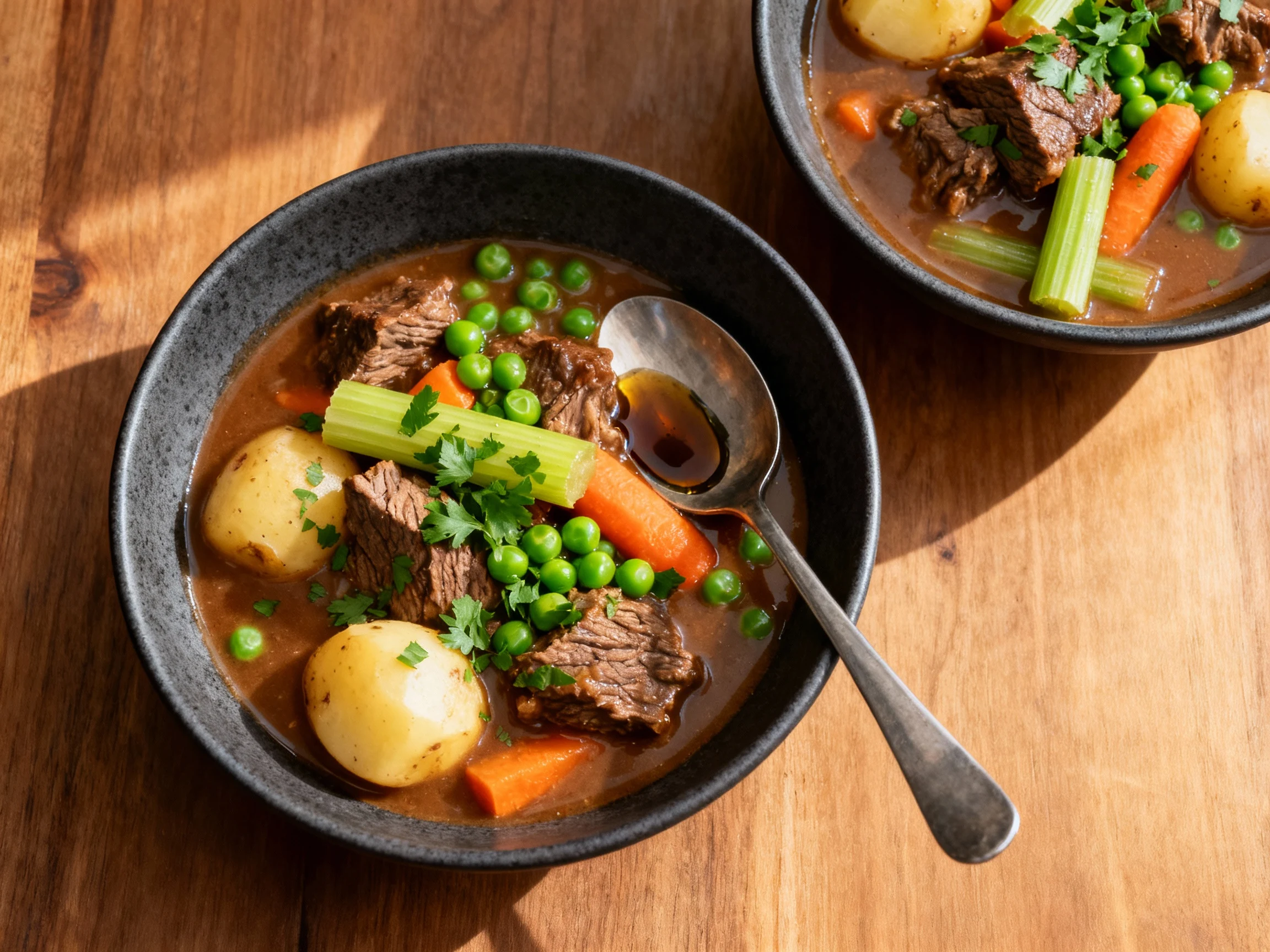
- Brown in batches: Heat a heavy pot (Dutch oven) over medium-high. Add 2 tablespoons oil. Sear beef in 2–3 batches, 3–4 minutes per side, until a dark crust forms. Don’t crowd the pan. Transfer to a plate, keeping the fond (the browned bits) in the pot.
- Sweat the aromatics: Drop heat to medium. Add onion, carrot, and celery with a pinch of salt. Cook 5–6 minutes until softened and lightly golden. Stir in garlic; cook 30 seconds.
- Tomato paste + spices: Add tomato paste and paprika. Cook, stirring, 2 minutes until the paste deepens in color and smells sweet-savory.
- Thicken: Sprinkle in flour. Stir and cook 1 minute to remove raw taste.
- Deglaze: Pour in red wine (if using), scraping up the fond. Let it simmer 2 minutes to reduce slightly. Add 4 cups broth, Worcestershire, soy sauce, bay leaves, and thyme.
- Simmer low and slow: Return beef and any juices. Bring to a gentle simmer, then cover and cook on low for 60 minutes, stirring occasionally. Keep it at a lazy bubble—boiling hard = tough meat.
- Add potatoes: Stir in potatoes. Continue simmering, partially covered, 30–45 minutes, until beef is fork-tender and potatoes are soft but not falling apart.
- Adjust thickness: If thin, simmer uncovered 10–15 minutes to reduce or stir in a 1:1 cornstarch slurry and cook 2 minutes. If too thick, splash in broth or water.
- Finish and serve: Stir in peas for the last 3 minutes. Off heat, add 1 teaspoon balsamic and taste. Adjust salt/pepper. Garnish with parsley. Rest 5–10 minutes so flavors settle.
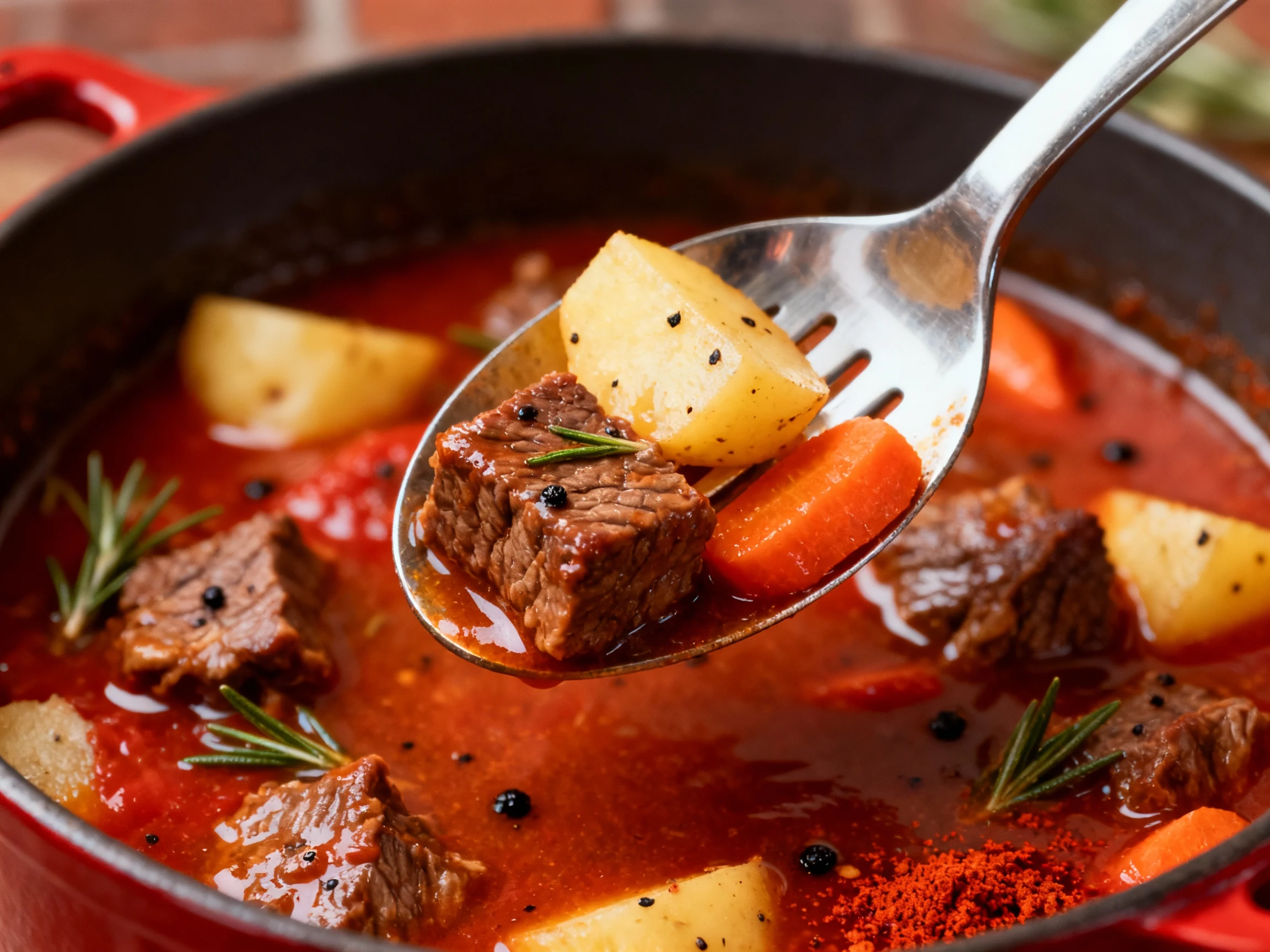
Oven Method (Set It and Forget It)
- Follow steps 1–6 in a Dutch oven.
- Cover and bake at 325°F (165°C) for 90 minutes. Stir in potatoes. Bake another 45 minutes until tender.
- Finish as above with peas and vinegar; adjust seasoning.
Slow Cooker Method (Hands-Off)
- Sear beef and sauté veggies on the stovetop (steps 1–4). Transfer to slow cooker.
- Add flour, liquid, and seasonings (steps 5–6). Cook on LOW 6–8 hours or HIGH 3–4 hours.
- Add potatoes for the last 2–3 hours (LOW) or 1–1.5 hours (HIGH) so they don’t turn mushy.
- Stir in peas, finish with vinegar, and season to taste.
Instant Pot Method (Fast-Track)
- Sear beef in batches on Sauté. Remove. Sauté veggies; add tomato paste/spices; stir in flour.
- Deglaze with wine/broth. Return beef and add remaining liquid and seasonings (hold potatoes for now).
- Pressure cook on High 35 minutes. Natural release 10 minutes, then quick release.
- Add potatoes. Pressure cook 5 minutes. Quick release. Stir in peas, finish with vinegar, season.
How to Store
- Fridge: Cool and refrigerate in airtight containers for up to 4 days. It thickens as it chills—totally normal.
- Freezer: Freeze for up to 3 months. Leave a little headspace for expansion.
- Thaw: Overnight in the fridge for best texture. In a pinch, thaw gently on low heat.
- Reheat: Stovetop over medium-low, adding a splash of broth or water as needed. Microwaves work, but stir every minute to heat evenly.
- FYI: Potatoes can softening further after freezing. If you’re planning to freeze, consider adding potatoes fresh when reheating.
Health Benefits
- High-quality protein: Around 30–35g per serving supports muscle repair and steady energy.
- Collagen to gelatin: Slow cooking breaks down connective tissue, yielding gelatin that’s satisfying and may support joint health.
- Veg-powered nutrients: Carrots, celery, peas, and potatoes bring fiber, vitamins A and C, and potassium.
- Iron and B12: Beef provides highly bioavailable iron and B12—key for oxygen transport and brain function.
- Balanced comfort: Low in added sugar, easy to manage sodium, and naturally portion-satisfying thanks to protein and fiber.
- Flexible for goals: Go gluten-free with cornstarch/tapioca, lower-carb by swapping potatoes for turnips or cauliflower, or trim visible fat for a lighter bowl.
Pitfalls to Watch Out For
- Overcrowding the pot: Piling in all the meat steams it. Brown in batches for that craveable crust.
- Boiling too hard: Aggressive heat tightens muscle fibers. Keep it to a gentle simmer for tenderness.
- Adding potatoes too early: They’ll disintegrate. Add in the last 30–45 minutes (or later in slow cooker/pressure cooker).
- Skipping the deglaze: Those browned bits are free flavor. Scrape them up with wine or broth.
- Underseasoning: Broth, Worcestershire, and soy add umami. Taste at the end and finish with vinegar to make flavors pop.
- Wrong cut of beef: Lean cuts dry out. Choose chuck or similar well-marbled, connective-tissue-rich cuts.
- Overthickening early: Stew thickens as it reduces and cools. Thicken late to avoid gluey texture.
Mix It Up
- Guinness + Bacon: Swap wine for stout, sauté diced bacon first, and add a touch of brown sugar. Big pub vibes.
- Mushroom Marsala: Add 12 oz cremini mushrooms and replace wine with Marsala. Finish with a knob of butter for sheen.
- Smoky Southwest: Stir in chipotles in adobo, cumin, and oregano. Sub some broth with crushed tomatoes; add corn at the end.
- Moroccan Twist: Add cumin, coriander, cinnamon, and a handful of apricots or raisins. Chickpeas instead of peas for protein + texture.
- Herb Gremolata Finish: Mix parsley, lemon zest, and minced garlic; sprinkle over bowls for bright contrast.
- Low-Carb Swap: Replace potatoes with turnips, rutabaga, or cauliflower florets added in the last 10–15 minutes.
- Gluten-Free: Thicken with cornstarch or tapioca. Use tamari instead of soy sauce.
- Budget Stretch: Add extra carrots and beans, and serve over rice or buttered noodles. IMO, it slaps either way.
FAQ
What’s the best cut of beef for stew?
Chuck roast is the gold standard—well-marbled with plenty of connective tissue that melts into tenderness. Bottom round can work but tends to be drier. If your store sells “stew meat,” check that it’s mostly chuck; mixed trimmings cook unevenly.
How do I make the meat tender without cooking all day?
Brown well, keep the simmer gentle, and give it enough time for collagen to break down—usually 90 minutes total on the stovetop after searing. Pressure cookers speed this up to about 35 minutes under pressure. Gentle heat and patience beat brute force every time.
Can I skip the wine?
Absolutely. Use extra beef broth and finish with a little vinegar or lemon juice to balance richness. The acidity lifts flavors and keeps the stew from tasting flat.
How do I thicken stew without flour?
Use a cornstarch or tapioca slurry (1 tablespoon starch mixed with 1 tablespoon cold water), then simmer for 2 minutes. Alternatively, reduce the lid off until it reaches your preferred thickness, or mash a few potato chunks into the broth to naturally thicken.
How long should I simmer the stew?
Plan for about 1 hour before adding potatoes, then another 30–45 minutes until both beef and potatoes are tender. If it’s not tender yet, keep simmering—time is the secret ingredient. Tough beef just needs more minutes, not more heat.
Can I use frozen beef?
Thawing is best for even browning and texture. In a pinch, you can start from frozen in the Instant Pot, but you’ll miss that seared flavor. If you must, add a splash of smoked paprika or a little more Worcestershire to compensate.
How do I avoid mushy potatoes?
Add them late and cut them into larger chunks (about 1.5 inches). Waxy or Yukon gold potatoes hold shape better than russets. In slow cookers, add potatoes during the last 2–3 hours on Low or 1–1.5 hours on High.
What if I don’t have a Dutch oven?
Use any heavy-bottomed pot with a lid. For the oven method, a covered casserole or even a deep skillet tightly covered with foil can get the job done. The key is even heat and a good lid to control evaporation.
Can I make it spicy?
Totally. Add red pepper flakes with the spices, toss in a diced jalapeño with the aromatics, or stir in a spoon of harissa or chipotle in adobo. Balance heat with a bit of acid and a pinch of sugar if needed.
The Bottom Line
Great stew isn’t about complicated steps or expensive cuts—it’s about doing a few things right and letting time make you look like a genius. Brown boldly, simmer gently, finish brightly, and don’t overthink it. You’ll get a pot of rich, velvety comfort that feeds a crowd and makes tomorrow’s lunch a slam dunk. One pot, big flavor, minimal stress—now that’s weeknight winning.
Printable Recipe Card
Want just the essential recipe details without scrolling through the article? Get our printable recipe card with just the ingredients and instructions.