Crustless Quiche Recipes for Busy Mornings That Still Wow
Whip up a protein-packed, low-carb brunch in under an hour—no dough, no drama. Meal prep friendly, budget-wise, and crowd-approved.
You want a breakfast that eats like a brunch, looks like you tried, and doesn’t demand a rolling pin? Say hello to the custardy power move that saves Tuesdays and turns Sundays into applause. Most people overcomplicate breakfast; you’ll nail it with eggs, cheese, and real flavor—no crust tax. This is brunch math that works: minimal prep, maximum payoff, and leftovers that actually get better. Ready to cook smarter, not harder?
Why This Recipe Works
Traditional quiche leans on crust for structure and texture. We skip the pastry and double down on custard science: the golden ratio is 1 egg to roughly 2 tablespoons dairy, which in practice means 8 large eggs + 1 cup milk/cream for a silky set. That’s your non-negotiable foundation.
Water is the enemy of creamy custard, so we pre-cook high-moisture add-ins. Sautéed mushrooms, wilted spinach, and softened onions won’t leak into your eggs and make them weep. A tiny stabilizer—1 tablespoon cornstarch—binds the custard, giving you cleaner slices and zero puddles. FYI: it stays invisible in the final texture.
Cheese is your flavor and structure booster. A base of 1 cup shredded Swiss, Gruyère, or sharp cheddar melts into a gentle “net” that holds fillings in place. Layering matters too: cheese first, then fillings, then custard. It’s simple engineering that pays off like a magic trick.
What Goes Into This Recipe – Ingredients
Base Custard
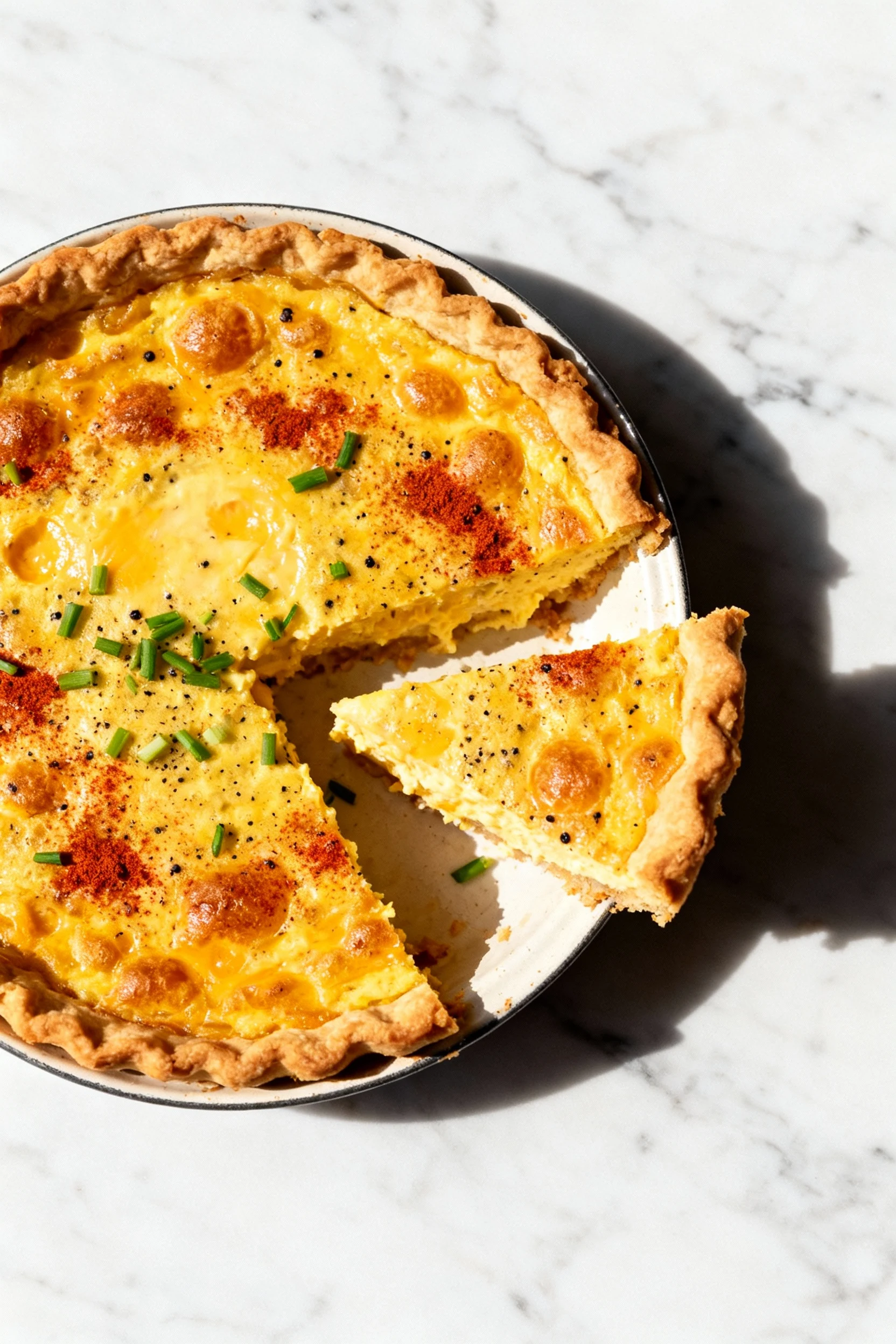
- 8 large eggs
- 1 cup dairy (whole milk for light, half-and-half or 1/2 cup milk + 1/2 cup heavy cream for richer)
- 1 tablespoon cornstarch (optional but recommended for clean slices)
- 1 teaspoon kosher salt (use 3/4 teaspoon if using very salty cheese)
- 1/2 teaspoon black pepper
- Pinch of ground nutmeg (classic with creamy custard)
Cheese
- 1 cup shredded cheese (Gruyère, Swiss, sharp cheddar, or a 50/50 blend)
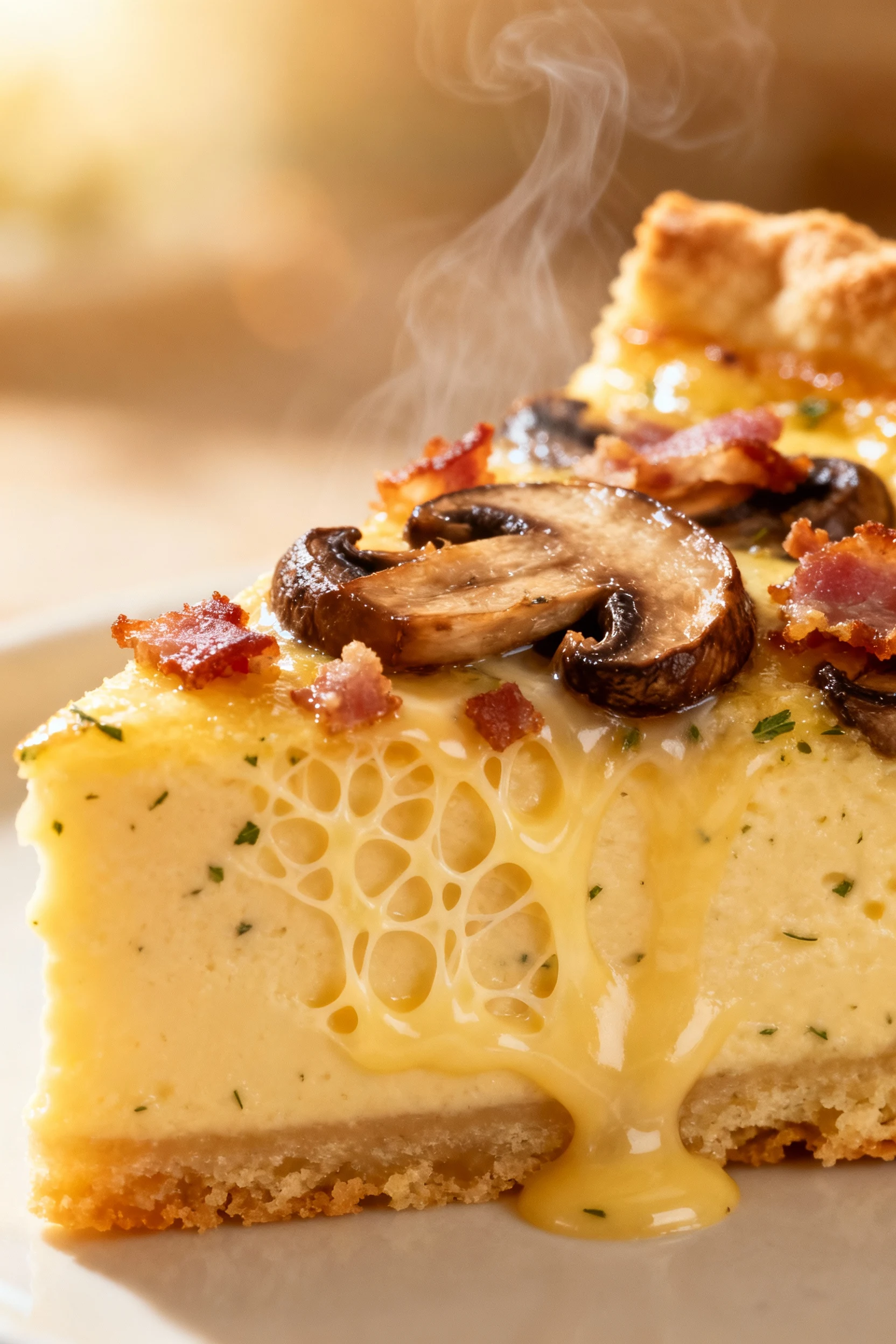
Vegetables and Proteins (choose ~1.5 to 2 cups total)
- 1 small yellow onion or 2 shallots, finely chopped
- 1 cup mushrooms, sliced and sautéed until browned
- 2 packed cups baby spinach, wilted and squeezed dry (yields about 3/4 cup)
- 1/2 cup cooked bacon, crumbled, or 3/4 cup diced ham
- 2 tablespoons chopped fresh herbs (chives, parsley, thyme, or dill)
- 1–2 tablespoons olive oil or butter for sautéing
Pan and Tools
- 9-inch deep-dish pie plate (or 9-inch round ceramic dish, or 9×9-inch baking pan)
- Nonstick spray or butter for greasing
- Whisk and large bowl
Let’s Get Cooking – Instructions
- Heat the oven to 350°F (175°C) and position a rack in the center. Lightly grease a 9-inch deep-dish pie plate with butter or nonstick spray.
- Prep your fillings. Warm 1–2 tablespoons oil or butter in a skillet over medium. Sauté onion until translucent, 3–4 minutes. Add mushrooms; cook until browned and moisture evaporates, 5–7 minutes. Wilt spinach last; squeeze it dry in a towel so it doesn’t water down the custard.
- Cook your protein. Crisp bacon or warm diced ham. Drain excess fat so the quiche isn’t greasy.
- Whisk the custard. In a large bowl, whisk eggs, cornstarch, salt, pepper, and nutmeg until smooth. Gradually whisk in the dairy until fully combined and streak-free.
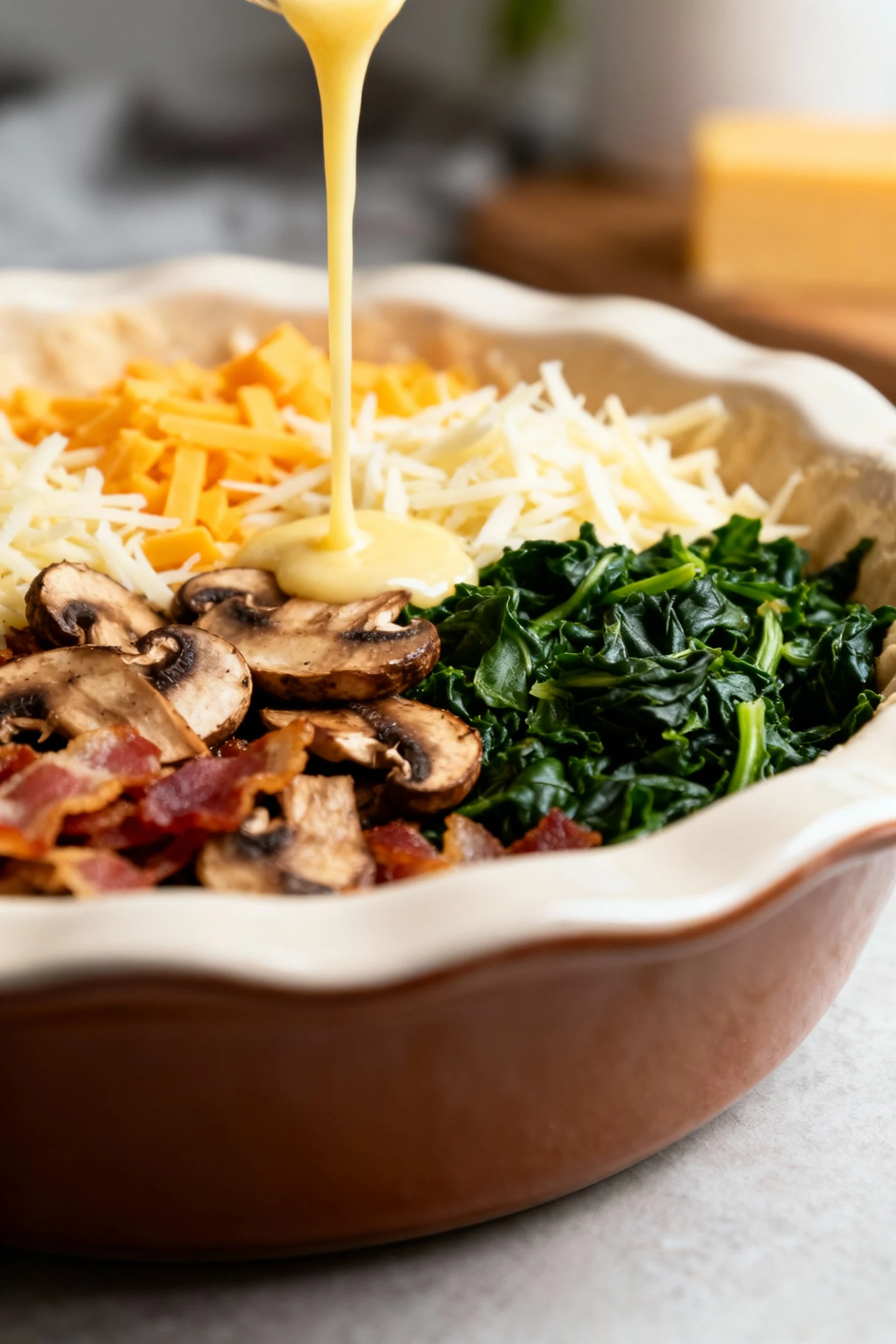
- Layer the pan. Sprinkle 1 cup shredded cheese evenly over the bottom of the greased dish. Top with the cooked vegetables and protein in an even layer. Scatter fresh herbs.
- Pour the custard slowly over the fillings. Use a spatula to gently nudge things so liquid settles evenly, but don’t stir aggressively.
- Bake 35–45 minutes until the edges are set and the center has a slight jiggle. If the top browns too fast, tent loosely with foil.
- Check doneness. A knife inserted 1 inch from the center should come out mostly clean. Internal temp near the center should read 170–175°F (77–79°C).
- Rest 10–15 minutes. This is crucial; the custard finishes setting and slices won’t collapse. Yes, patience is a cooking skill.
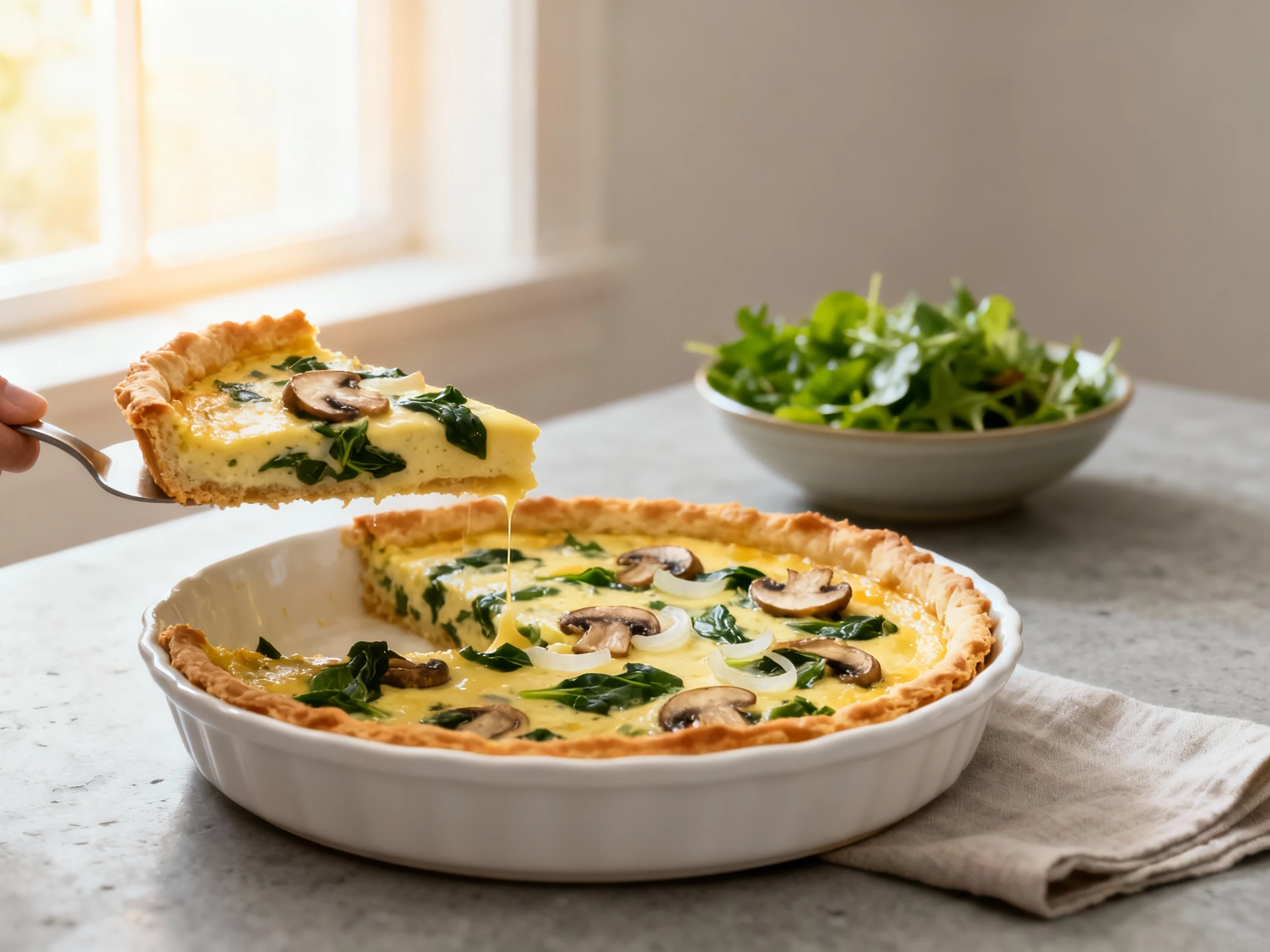
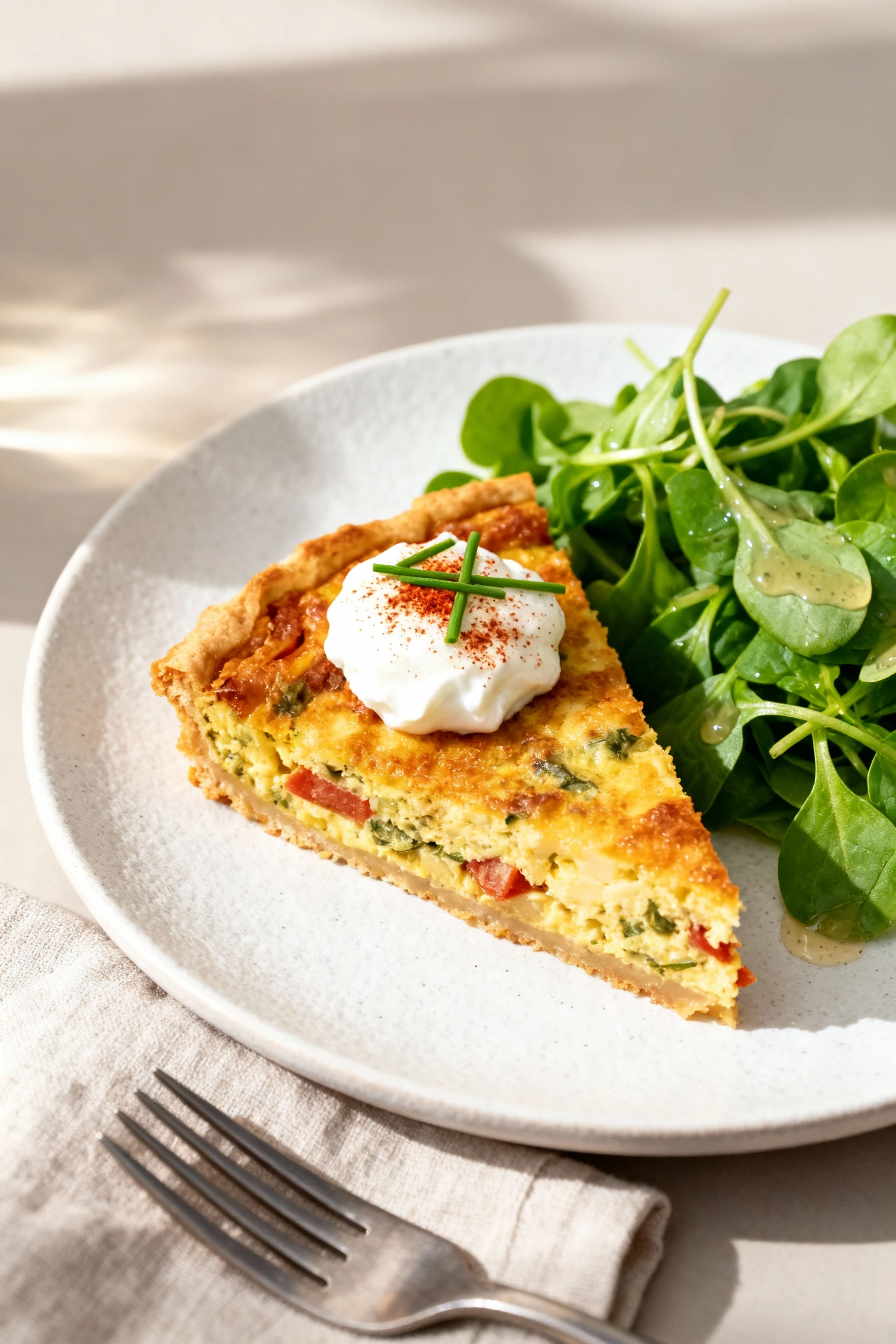
- Slice and serve. Cut into 6–8 wedges. Add a simple green salad, and boom—instant bistro moment.
- Optional topper. Finish with a dusting of paprika, extra chives, or a dollop of Greek yogurt for tang.
- Meal prep move. Cool fully, then cover and refrigerate. Reheat slices as needed (see Keeping It Fresh).
Keeping It Fresh
Store leftovers tightly covered in the refrigerator for up to 4 days. The flavors actually mingle and improve by day two, which is basically free taste equity.
Reheat slices in a 325°F (165°C) oven for 10–12 minutes, or air fryer at 300°F (150°C) for 5–7 minutes. Microwave works too: 50% power for 60–90 seconds so the eggs warm without turning rubbery. Nobody wants bouncy omelet vibes.
To freeze, chill completely, slice, and wrap pieces individually. Freeze up to 2 months. Reheat straight from frozen at 325°F (165°C) for 20–25 minutes, or thaw overnight for faster results.
Benefits of This Recipe
- Low-carb and gluten-free friendly (skip cornstarch if needed; it still sets beautifully).
- Meal prep gold: bake once, enjoy breakfast or lunch all week.
- Flexible pantry play: use up produce and that last nub of cheese like a pro.
- High protein with eggs and cheese for steady energy that won’t crash by 10 a.m.
- Budget-friendly: no crust, fewer ingredients, more flavor per dollar.
- Brunch-worthy presentation with minimal effort—IMO, the easiest “wow” you can plate.
- Kid and crowd adaptable: keep it mild or spice it up with jalapeños and pepper jack.
Pitfalls to Watch Out For
- Watery results from skipping the sauté. Cook moisture-heavy veggies and squeeze spinach dry.
- Overfilling the pan: cap fillings at 2 cups so the custard has room to set.
- Overbaking: pull when it’s just set with a slight wiggle. Dry eggs = sad brunch.
- Undersalting: season the custard and use flavorful cheese; bland eggs won’t save themselves.
- Wrong dairy: ultra-skim milk can make a thin, weepy texture. Aim for whole milk or richer.
- Skipping the rest: slicing too soon causes collapse and leaks. Rest 10–15 minutes.
- Sticking: a well-greased dish is non-negotiable, especially with ceramic or glass.
Different Ways to Make This
- Quiche Lorraine (no crust): bacon, Swiss or Gruyère, a pinch of nutmeg, chives.
- Broccoli Cheddar: small florets steamed until tender-crisp, sharp cheddar, green onions.
- Mushroom + Goat Cheese + Thyme: deeply browned mushrooms, creamy chèvre, fresh thyme.
- Caprese: cherry tomatoes (seeded), mozzarella pearls, basil; finish with a balsamic drizzle.
- Greek: spinach, feta, red onion, dill, and a few olives (blot dry).
- Southwest: roasted poblano, corn, pepper jack, cilantro; serve with salsa verde.
- Keto-Rich: use half-and-half or cream, extra cheese, and low-carb veggies like zucchini (salt and sweat first).
- Dairy-Free: blend 3/4 cup unsweetened almond milk + 1/4 cup cashew cream for body; add 1 extra egg for structure.
- High-Protein Boost: whisk in 1/2 cup cottage cheese (blend smooth) for extra protein and creaminess.
- Mini Muffin Quiches: bake in a greased muffin tin at 350°F (175°C) for 18–22 minutes; perfect for grab-and-go.
- Sheet-Pan Squares: 9×13-inch pan, 10 eggs + 1.25 cups dairy, bake 28–35 minutes; easy to portion.
FAQ
What’s the difference between crustless quiche and a frittata?
Quiche uses a milk/cream-based custard that bakes into a silky texture; a frittata is egg-forward with little to no dairy, yielding a firmer, more omelet-like bite. In short, quiche = custard, frittata = eggs. Both are great, just different personalities.
Can I make this dairy-free without losing the creamy texture?
Yes. Use unsweetened almond milk or oat milk plus a richer element like cashew cream or coconut cream to mimic dairy fat. Add an extra egg to help it set, and keep flavorful mix-ins and herbs to make up for the missing cheese.
Why did my crustless quiche turn out watery?
Excess moisture from veggies is the usual culprit. Sauté mushrooms until they stop steaming, wilt and squeeze spinach, and avoid juicy tomatoes unless seeded and patted dry. Baking to just-set and letting it rest also prevents weeping. FYI: a spoonful of cornstarch in the custard helps stabilize.
Can I assemble this the night before?
You can prep fillings and even mix the custard, but hold off on combining them until morning. Assembled too early, the eggs can absorb moisture and turn murky. Stir, pour, and bake fresh for the cleanest texture and best lift.
What cheeses work best here?
Gruyère and Swiss are classic for melt and mild nuttiness. Sharp cheddar brings punch, while feta or goat cheese add tang (use partly for texture contrast). Avoid super-wet fresh mozzarella unless you drain and pat it dry first.
How do I know when it’s done?
Look for set edges and a slight wobble in the center—think gentle jiggle, not slosh. A thermometer near the middle should read about 170–175°F (77–79°C). Pull on time and let it rest; carryover heat will finish the job.
Can I use only egg whites?
You can, but yolks give body and flavor. If using whites, add a touch more fat (a few tablespoons of olive oil or extra cheese) and consider cottage cheese blended in to compensate. Expect a slightly lighter, less custardy texture.
What if I don’t have a pie dish?
No problem. A 9×9-inch square pan or a 9-inch round cake pan works. For a 9×13-inch pan, scale to 10 eggs + 1.25 cups dairy and watch the bake time; it’s usually done a bit faster with a thinner layer.
Final Thoughts
Crustless quiche is the rare kitchen hack that’s actually delicious: fast to prep, forgiving to bake, and fancy enough to impress. Start with the solid base—8 eggs + 1 cup dairy—and let your fridge dictate the rest. With a hot oven, dry fillings, and a short rest, you’ll get clean slices and rich, custardy bites every time. Cook once, eat well for days, and pretend it took you hours. Your secret’s safe with me.
Printable Recipe Card
Want just the essential recipe details without scrolling through the article? Get our printable recipe card with just the ingredients and instructions.