Creamy Salmon Recipes — Weeknight Luxury Made Stupid Easy
Serve date-night flavor on a Tuesday in 25 minutes. No fancy gear—just pantry staples, one pan, and silky sauce every time.
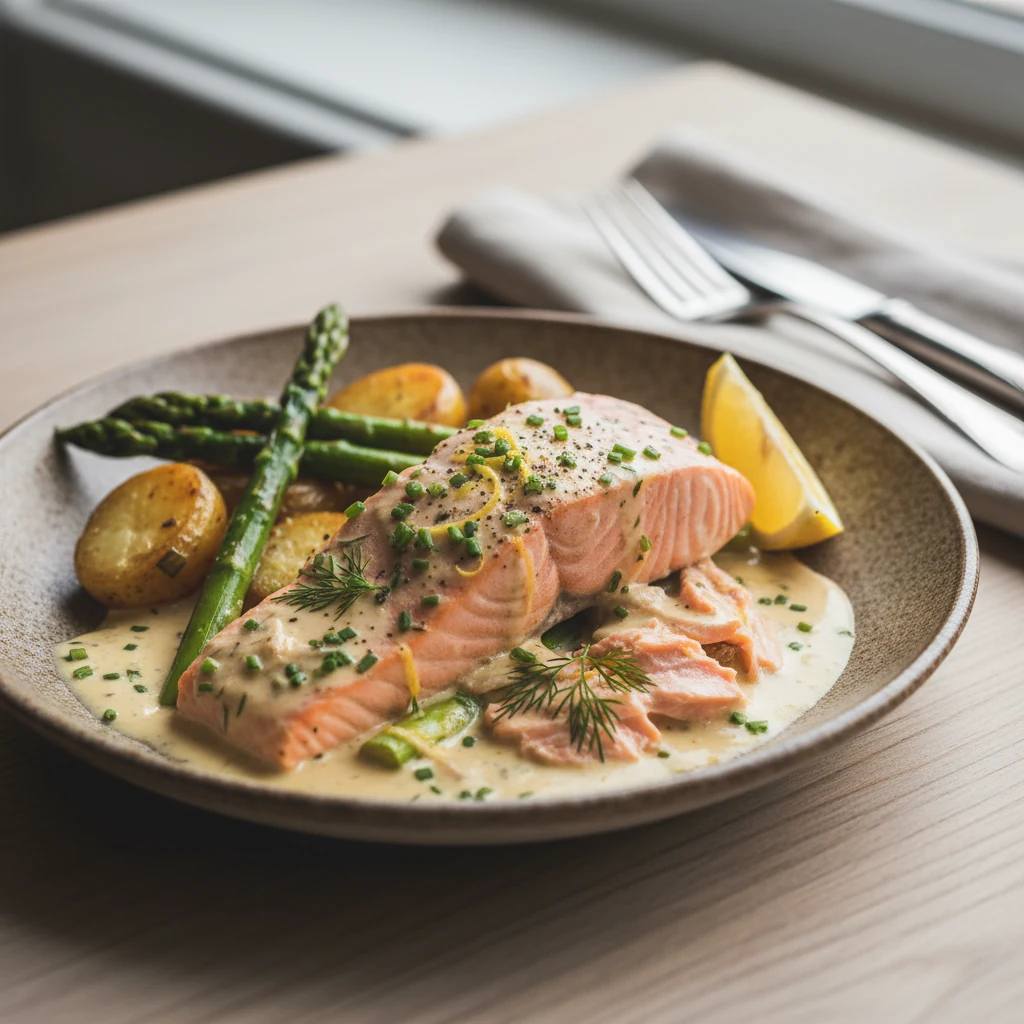
Let’s be honest: dinner gets judged in seconds. You either deliver “wow” or you serve regret with a fork. This creamy pan-seared salmon hits like a restaurant flex but costs less than takeout. You’ll build a sauce that hugs every bite—rich, bright, and unapologetically indulgent. No culinary school credits required and zero complicated techniques. Just a simple sequence that makes you look like you’ve been holding out on your guests.
Why This Recipe Works
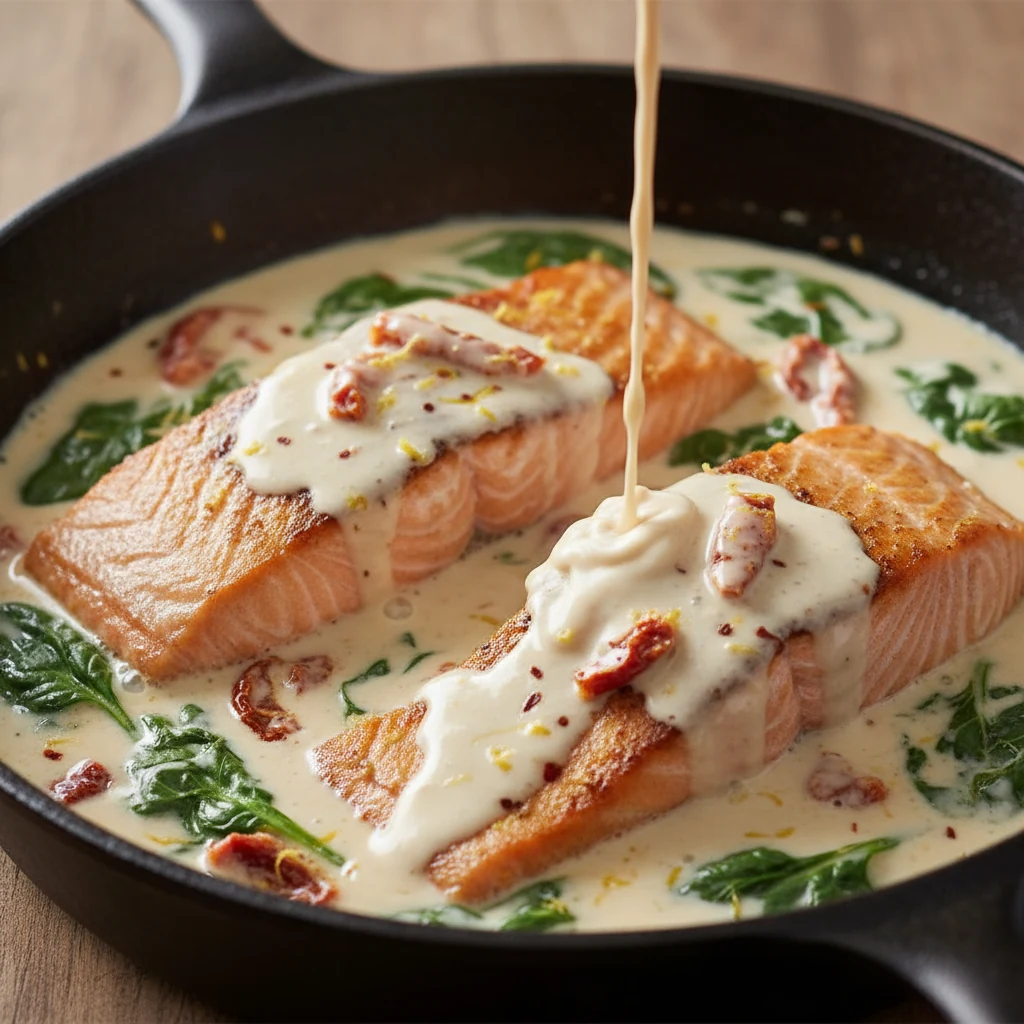
Great salmon needs three things: high-heat searing for crisp edges, smart acid to cut richness, and a stable cream base that doesn’t split. We sear the fish to lock in moisture, then use the golden bits (fond) to build a layered sauce with shallot, garlic, and a quick wine reduction. Heavy cream and a touch of Dijon emulsify everything into a velvety finish, while lemon and herbs keep it lively. FYI, the spinach and sun-dried tomatoes add color, texture, and that chef-y vibe without extra effort.
Shopping List – Ingredients
- 4 salmon fillets (6 oz each), skin-on
- 1 teaspoon kosher salt (plus more to taste)
- 1/2 teaspoon black pepper
- 1 tablespoon olive oil
- 1 tablespoon unsalted butter
- 2 shallots, minced (or 1 small onion, finely chopped)
- 3 cloves garlic, minced
- 1/2 cup dry white wine (or low-sodium chicken broth)
- 1 cup heavy cream
- 1/2 cup low-sodium chicken broth
- 1 teaspoon Dijon mustard
- 1 teaspoon lemon zest
- 2 tablespoons fresh lemon juice
- 1/2 teaspoon crushed red pepper flakes (optional, for heat)
- 1/3 cup sun-dried tomatoes, chopped
- 2 cups baby spinach
- 1/4 cup grated Parmesan (optional but excellent)
- 1 tablespoon capers, drained (optional)
- 2 tablespoons chopped fresh parsley or dill
- To serve: crusty bread, cooked pasta, or rice (optional)
Cooking Instructions

- Prep the salmon. Pat fillets dry with paper towels. Season both sides with 1 teaspoon kosher salt and 1/2 teaspoon black pepper. Dry fish browns better—moisture kills crust.
- Heat the pan. Place a large skillet (12-inch) over medium-high heat. Add 1 tablespoon olive oil and 1 tablespoon butter; swirl until the butter foams and smells nutty.
- Sear the salmon. Lay fillets skin-side down. Cook 4–5 minutes until the skin is crisp and the sides turn opaque halfway up. Flip and cook 1–2 minutes more. Transfer to a plate; tent loosely with foil.
- Build the flavor base. Lower heat to medium. Add minced shallots and cook 2 minutes, stirring, scraping up brown bits. Add garlic; cook 30 seconds until fragrant (no burning, please).
- Deglaze. Pour in 1/2 cup dry white wine (or broth). Simmer 2–3 minutes until reduced by about half. This concentrates flavor and keeps the sauce from tasting watery.
- Add the cream. Stir in 1 cup heavy cream and 1/2 cup broth. Add 1 teaspoon Dijon, red pepper flakes, and sun-dried tomatoes. Bring to a gentle simmer—tiny bubbles only—to avoid splitting.
- Thicken and season. Simmer 3–4 minutes, stirring. Add 1/4 cup Parmesan if using. Taste and adjust with salt and pepper. Cream sauces need seasoning; don’t be shy.
- Brighten. Stir in 1 teaspoon lemon zest and 2 tablespoons lemon juice. Add capers if you’re feeling fancy. Acid turns “heavy” into “wow.”
- Wilt the greens. Add 2 cups baby spinach. Cook 30–60 seconds just until glossy and soft.
- Return the salmon. Nestle fillets into the sauce, skin-side down. Spoon sauce over the tops. Simmer 1–2 minutes to warm through and finish cooking to medium (about 125–130°F internal).
- Rest and garnish. Kill the heat. Let it sit 2 minutes so juices relax. Sprinkle chopped parsley or dill.
- Serve. Spoon salmon and sauce over pasta, rice, or with crusty bread. If we’re being honest, that bread is basically a sauce shovel.
How to Store
Cool leftovers to room temp, then refrigerate in an airtight container for up to 3 days. Reheat gently in a skillet over low heat with a splash of broth or water until just warmed. Microwaving? Use 50% power in short intervals to avoid overcooking the fish and splitting the sauce. Freezing isn’t ideal—cream sauces can separate—but if you must, freeze the salmon separately and make fresh sauce later.
Benefits of This Recipe
- Fast: From pantry to plate in about 25 minutes.
- One-pan: Minimal cleanup; maximum flavor extraction.
- Balanced richness: Cream plus lemon means indulgent without feeling heavy.
- Protein and omega-3s: Salmon brings heart-healthy fats and satiety.
- Restaurant-level: Layered flavors, glossy sauce, and pro technique—without chef prices.
- Flexible: Swap herbs, adjust heat, add veggies; you’re in control.
- Scalable: Double the sauce for a brunch crowd or batch-cook for lunches.
- Budget-smart: Works with frozen fillets and basic staples, IMO a win.
What Not to Do
- Don’t boil the cream. Vigorous heat can split the sauce; keep it to a gentle simmer.
- Don’t overcook the salmon. Past medium, it turns dry and sad; pull at 125–130°F internal.
- Don’t skip the acid. Lemon or wine balances richness; without it, the sauce tastes flat.
- Don’t crowd the pan. Overloaded skillets steam, not sear; work in batches if needed.
- Don’t forget to season. Cream dulls flavors; taste and adjust salt at the end.
- Don’t toss the fond. Those browned bits are flavor gold—scrape them into the sauce.
- Don’t use light cream. Lower fat breaks easier; heavy cream keeps the sauce stable.
- Don’t stir aggressively. Gentle stirring maintains texture and keeps fish flakes intact.
- Don’t add spinach early. It wilts fast; finish with greens at the end for color and bite.
- Don’t reheat on high. Warm slowly to protect the sauce and salmon’s tenderness.
Different Ways to Make This
- Tuscan Style: Keep sun-dried tomatoes and spinach; add basil and extra Parmesan.
- Lemon-Dill: Skip tomatoes and red pepper; boost lemon and finish with fresh dill.
- Cajun Cream: Rub salmon with Cajun seasoning; add a pinch of smoked paprika to the sauce.
- Mushroom & Shallot: Sauté sliced cremini with shallots; richer, earthier profile.
- Miso-Ginger Cream: Whisk in white miso and grated ginger; finish with scallions and sesame.
- Dairy-Free: Use full-fat coconut milk instead of cream; adjust with lime and fish sauce for balance.
- Pesto Upgrade: Swirl in 2 tablespoons basil pesto; skip Dijon; add cherry tomatoes.
- Sheet-Pan Shortcut: Roast salmon at 425°F; make the cream sauce on the stove, then combine.
- Salmon Bites: Cube fillets, quick-sear, and toss in sauce for a crowd-pleasing appetizer.
- Greens Swap: Kale, arugula, or Swiss chard instead of spinach—adjust cook times accordingly.
FAQ
Can I use frozen salmon?
Yes, as long as you thaw it properly. Defrost overnight in the fridge or use a cold water bath for about 30 minutes. Pat very dry before searing to ensure a crisp crust. Frozen salmon is budget-friendly and works well here.
What if I don’t cook with wine?
Use low-sodium chicken broth instead—the method stays the same. You’ll still get a savory reduction that boosts flavor. For extra brightness, add a splash more lemon juice at the end. No wine, no problem.
How do I prevent the sauce from curdling?
Keep the heat at a gentle simmer, not a boil. Use heavy cream, not half-and-half. Add acid (lemon) after the cream has warmed through. Stir calmly and avoid sudden high heat spikes.
Skin-on or skinless salmon?
Skin-on gives you a crispy base and protects the flesh. Sear skin-side down first, then flip briefly to finish. If using skinless, reduce the initial sear time and be extra careful with sticking. A nonstick or well-seasoned skillet helps.
Can I make this ahead?
You can prep the sauce components (shallot, garlic, tomatoes) and measure everything in advance. Sear and finish the salmon just before serving for best texture. Reheating fish can overcook it, so make fresh for peak results. The sauce holds on low for a few minutes if you’re juggling sides.
Is there a lighter option?
Use evaporated milk or a mix of half-and-half with a teaspoon of cornstarch to stabilize. It’s not as luxurious, but still tasty. Balance with extra lemon and herbs so it doesn’t feel heavy. FYI, flavor > austerity most nights.
What sides pair best?
Pasta, rice, or mashed potatoes are classic. For freshness, add a simple arugula salad or roasted asparagus. Crusty bread is practically mandatory for scooping sauce. Pick one creamy + one crunchy for a balanced plate.
Can I use another fish?
Yes—cod, halibut, or trout work well with this sauce. Adjust sear time since thinner fillets cook faster. Keep the same sauce method and finish with herbs that match the fish. The technique is adaptable.
Final Thoughts
This is the kind of dinner that makes people think you’ve got a secret supplier named “Flavor Plug.” But really, it’s just smart technique and solid ingredients. Learn the sear, control the heat, respect the acid, and you’ll print silky sauce on demand. Do it once and you’ll want it on repeat—weeknight luxury, unlocked.
Printable Recipe Card
Want just the essential recipe details without scrolling through the article? Get our printable recipe card with just the ingredients and instructions.