Breakfast Recipes Indian: Masala Poha That Actually Wins
A 20-minute, flavor-packed morning staple with crispy peanuts, bright lemon, and zero fuss—perfect for busy weekdays and lazy Sundays.
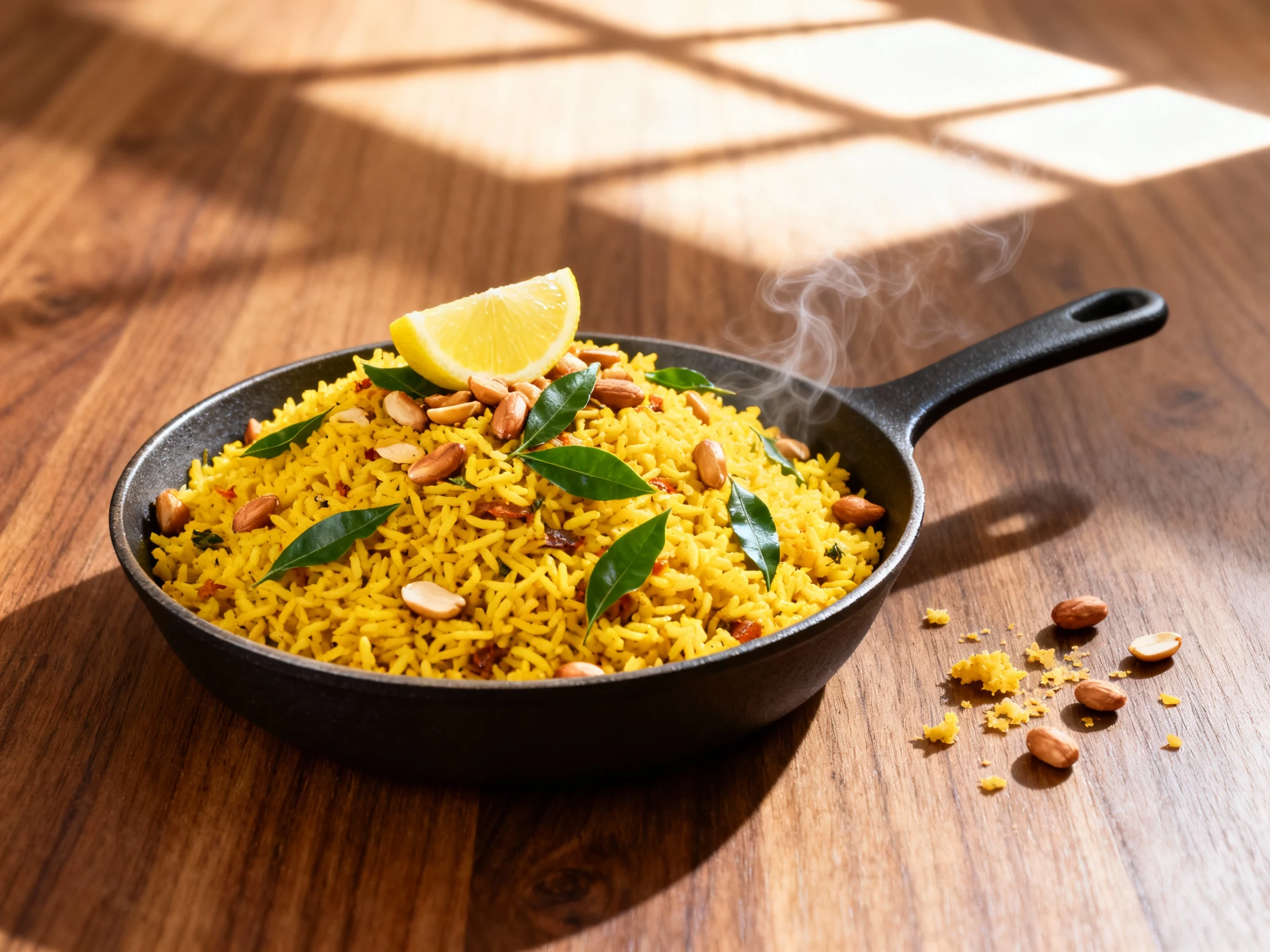
You want a breakfast that hits hard, cooks fast, and doesn’t taste like cardboard. Meet Masala Poha—the crunchy, tangy, soft-in-all-the-right-places legend that’s been fueling Indian mornings for ages. Minimal prep, maximum flavor, and no weird ingredients you’ll use once and forget. This is the kind of meal that makes you excited for your alarm (wild, I know). And when you nail the texture? Your kitchen will feel like a street-side stall in Mumbai—minus the honking.
Why You’ll Love This Recipe
- Lightning-fast: Ready in about 20 minutes, with basic pantry staples.
- Balanced and satisfying: Carbs, fiber, and plant protein from peanuts and peas—no 10 a.m. crash.
- Ultra-customizable: Go classic, spicy, nutty, or add veggies based on your vibe.
- Beginner-proof: Clear steps to nail the coveted fluffy-not-soggy poha texture.
- Weekday-friendly: Make-ahead components keep mornings stress-free, IMO.
Ingredients Breakdown
Serves: 3 generous portions • Total time: ~20 minutes • Difficulty: Easy
- 2 cups thick poha (flattened rice), rinsed
- 2 tablespoons neutral oil (such as sunflower or peanut)
- 1 teaspoon mustard seeds
- 1/2 teaspoon cumin seeds
- 1/3 cup raw peanuts
- 10–12 fresh curry leaves
- 2 green chilies, thinly sliced (adjust to heat tolerance)
- 1 medium onion, finely chopped
- 1 small potato, peeled and diced small (optional but excellent)
- 1/2 cup green peas (fresh or thawed frozen)
- 1/2 teaspoon turmeric powder
- 3/4–1 teaspoon salt, to taste
- 1/2 teaspoon sugar (optional, balances flavors like a pro)
- A pinch of asafoetida (hing), optional
- 2 tablespoons fresh lemon juice
- 1/4 cup cilantro, chopped
- 2 tablespoons grated fresh coconut (optional, for garnish)
- 1/4 cup sev or pomegranate arils (optional, for Indori-style finish)
Pro tip: Use thick poha for best results. Thin poha tends to go mushy faster than your Monday motivation.
Instructions
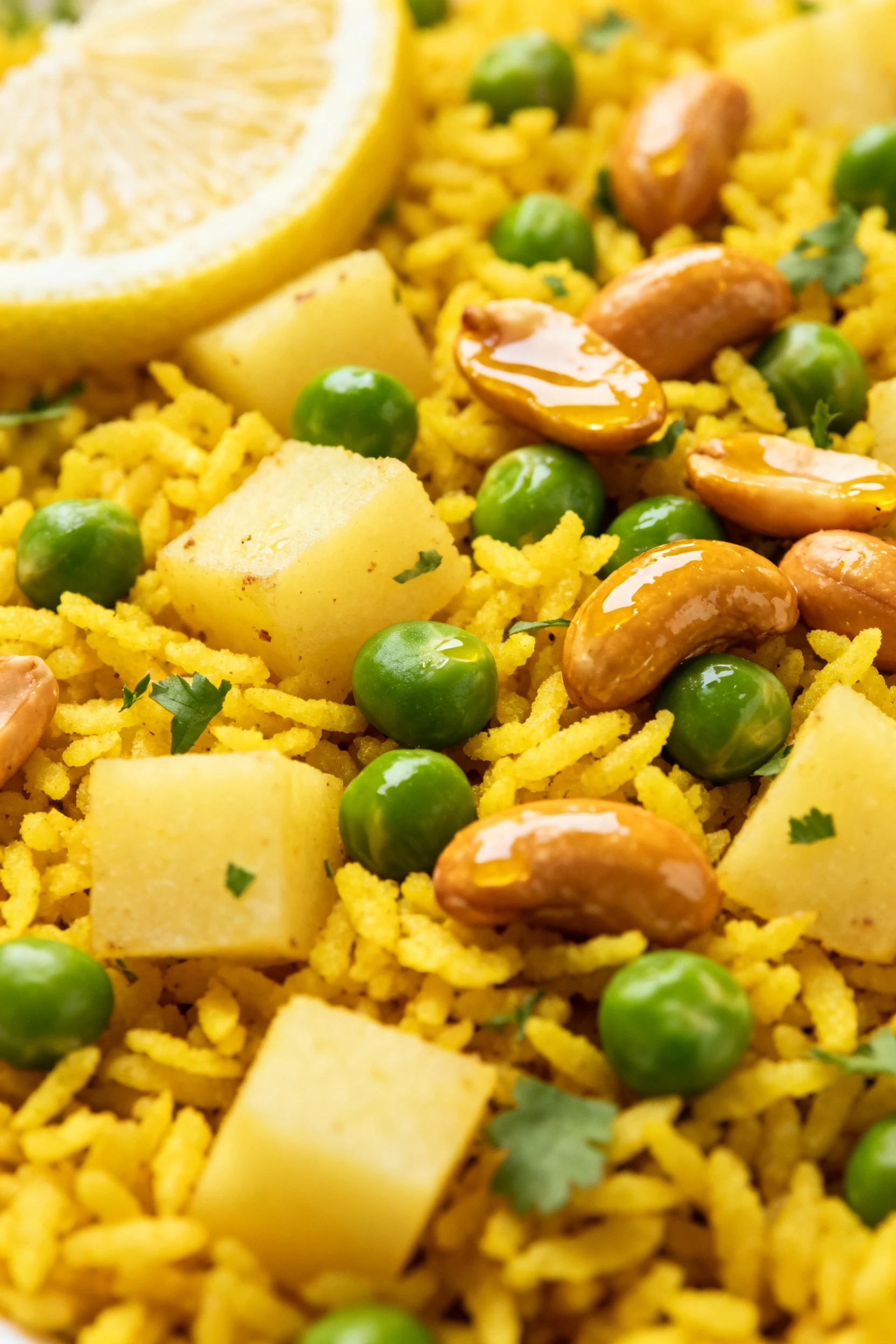
- Prep the poha: Place poha in a colander and rinse under cold water for 10–15 seconds. Shake off excess water and let it sit for 5 minutes to soften. Do not soak—we’re going for fluffy, not paste.
- Toast the peanuts: Heat 1 tablespoon oil in a wide pan over medium. Add peanuts and sauté 2–3 minutes until golden and fragrant. Remove to a bowl; set aside.
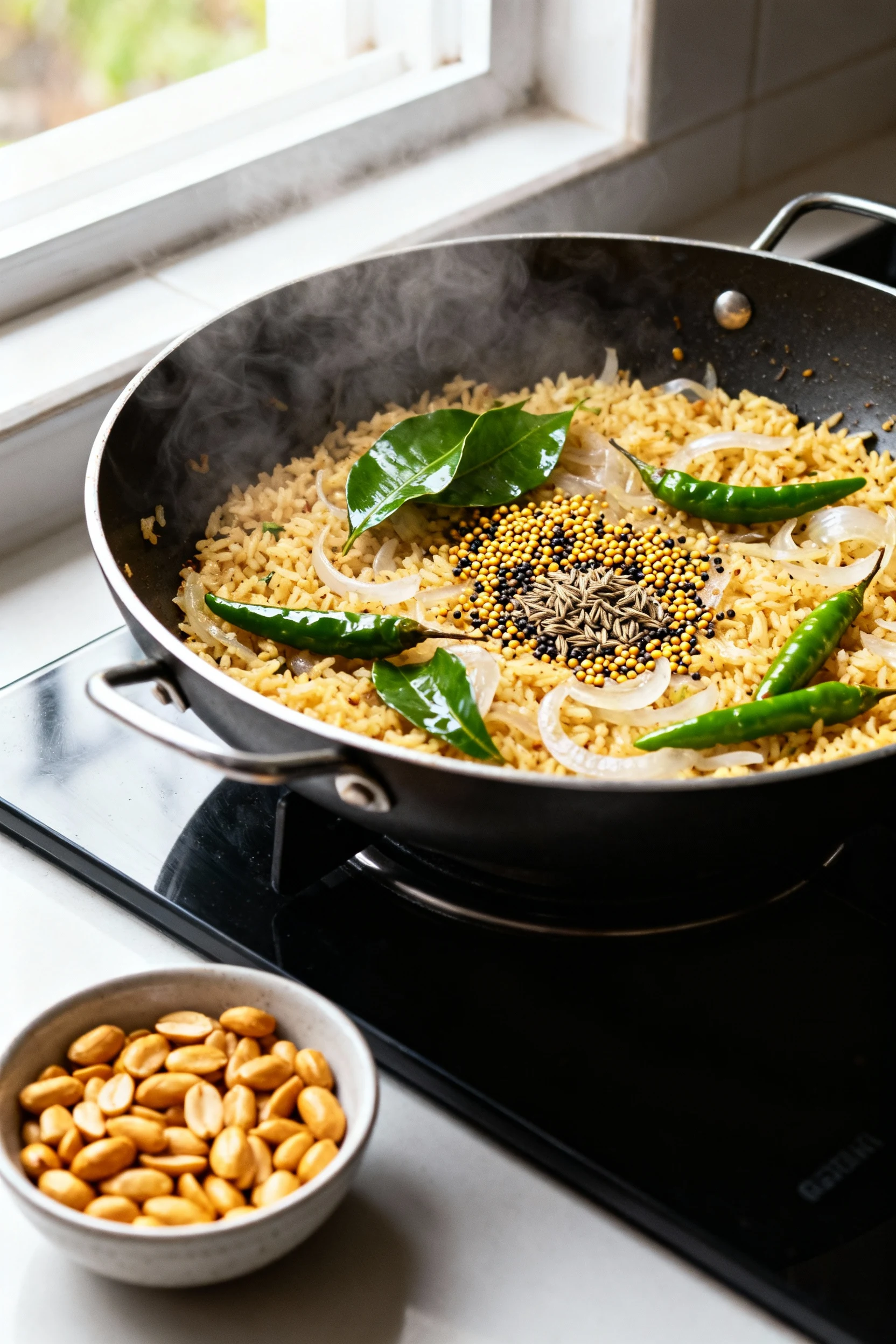
- Build the tempering: In the same pan, add the remaining oil. When hot, add mustard seeds; let them crackle. Add cumin seeds, curry leaves, and hing (if using). Cook for 20–30 seconds until aromatic.
- Add heat and aromatics: Toss in green chilies and onions. Sauté 2–3 minutes until onions turn translucent.
- Optional potato move: Add diced potato with a pinch of salt. Cook 4–6 minutes, stirring occasionally, until just tender. A splash of water and a lid helps it steam without burning.
- Peas + color: Add peas, turmeric, and the sugar (if using). Stir for 1 minute to coat everything evenly.
- Season the poha: Gently add the softened poha and salt. Toss with a light hand—lift and fold rather than mash—so the grains stay separate.
- Steam to perfection: Sprinkle 1–2 tablespoons water around the pan, cover, and let it steam on low for 2 minutes. This evens out texture without sogginess.
- Finish like you mean it: Turn off heat. Add lemon juice, toasted peanuts, and most of the cilantro. Toss once more. Taste and adjust salt or lemon.
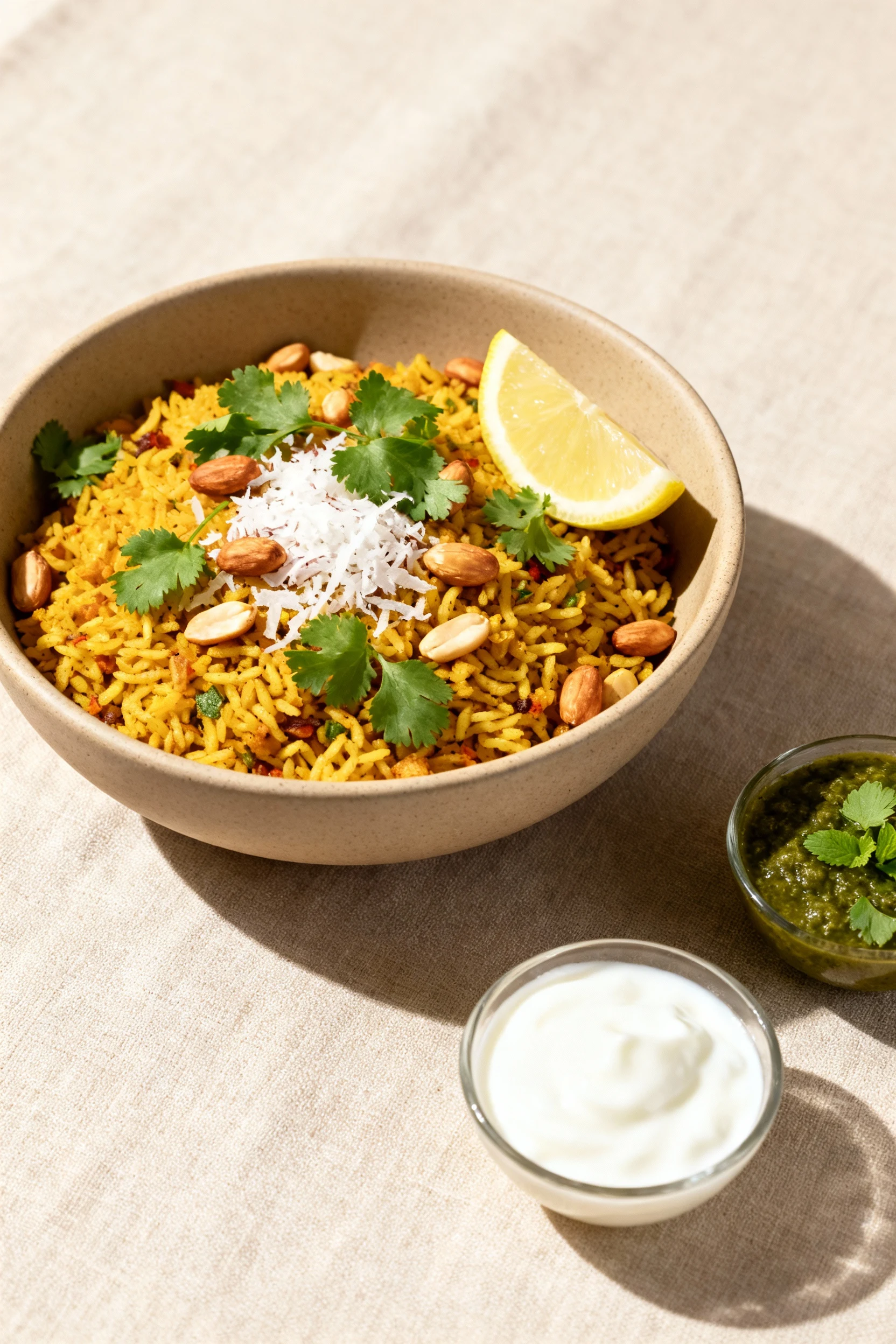
- Garnish and serve: Top with grated coconut, extra cilantro, and sev or pomegranate if you’re feeling fancy. Serve hot. FYI, this loves a side of yogurt or coriander chutney.
Texture checkpoint: Poha should be tender but distinct, with a light bite from peanuts and a bright lemony finish. If it’s mushy, you added too much water or over-soaked.
Storage Tips
- Short-term: Refrigerate leftovers in an airtight container for up to 2 days. Sprinkle a little water and reheat in a pan over low, or microwave in 30-second bursts.
- Freezing: Not ideal. Poha can turn grainy after thawing. If you must, freeze the sautéed potato-onion-pea base and add fresh poha later.
- Make-ahead components: Pre-chop onions, chilies, and potatoes; store separately. Toast peanuts and keep them in a jar for a week. Curry leaves can be frozen—yes, it works.
- Meal prep hack: Mix the tempering + veggies and refrigerate. In the morning, warm it, add poha and lemon, and finish in 5 minutes flat.
Nutritional Perks
This breakfast balances complex carbs (poha), fiber (peas, onion), and plant protein (peanuts). Turmeric and curry leaves bring antioxidants—your body says thanks. Lemon’s vitamin C helps with iron absorption from the grains and legumes. Bonus: it’s naturally vegan and gluten-free.
Keep oil modest for a lighter plate, or add more peanuts if your goals include extra satiety. TBH, it’s a smart upgrade from sugary cereals—more flavor, less crash, better mood.
What Not to Do
- Don’t soak poha. A quick rinse is plenty. Soaking equals mush—hard pass.
- Don’t skip the lemon. That bright acidity ties everything together and lifts the dish.
- Don’t crowd the pan. You’ll steam instead of sauté, and lose the texture game.
- Don’t add raw potatoes late. They need time. Parboil or dice tiny if you’re rushing.
- Don’t burn the tempering. Mustard and cumin should crackle, not char. Bitter oil = sad breakfast.
- Don’t forget salt balance. Peanuts and potatoes need it; taste as you go.
Recipe Variations
- Kanda Poha (Onion-Only): Skip potatoes and peas. Bump up onions, chilies, and lemon for a streamlined classic.
- Batata Poha (Potato-Forward): Double the potato, add a tad more oil, and finish with coconut. Comfort vibes guaranteed.
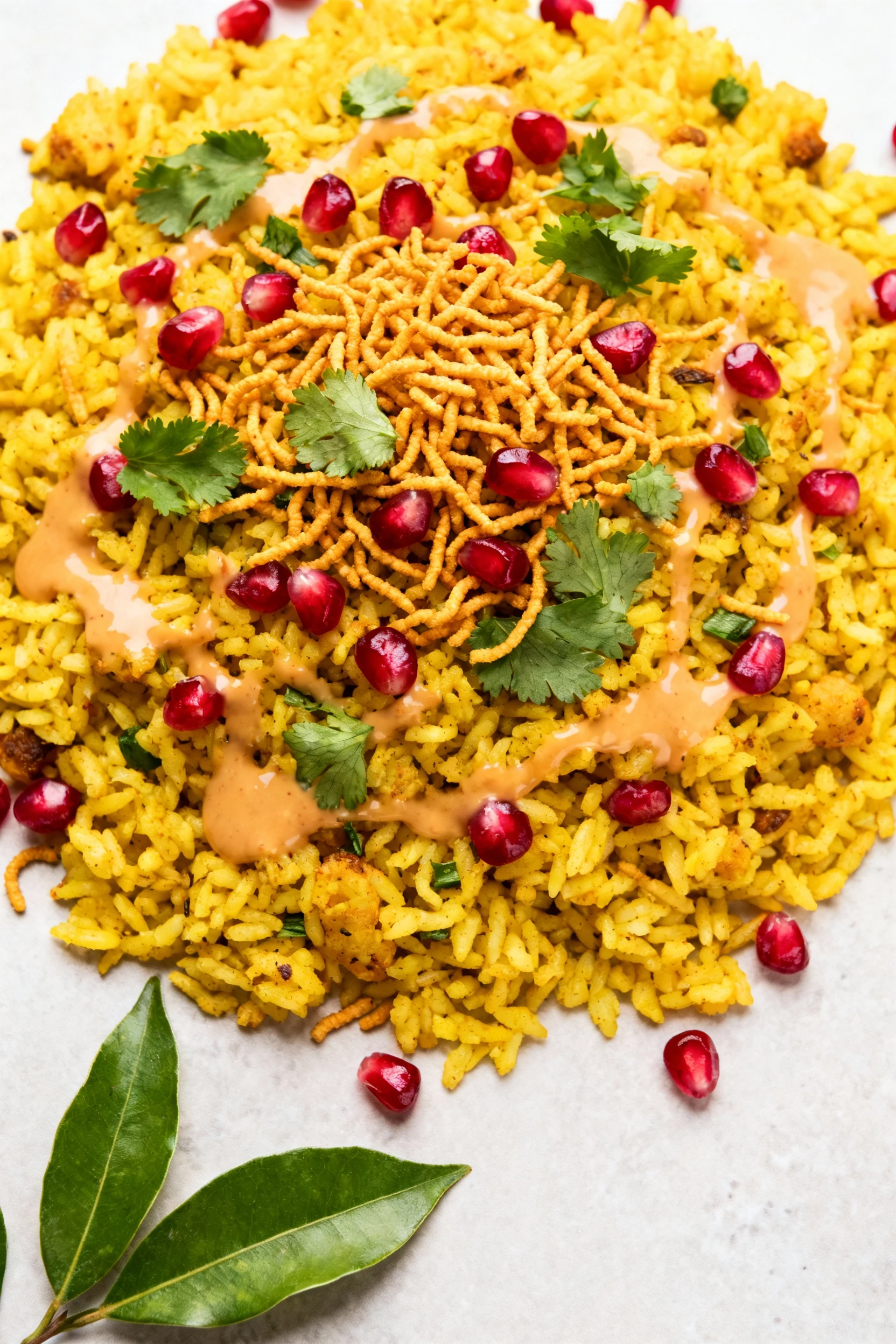
- Indori-Style: Add a pinch of fennel seeds with the tempering and garnish with sev, pomegranate, and a drizzle of sweet chutney.
- Jain-Friendly: Omit onion and potato. Use bell peppers and extra peas. Flavor stays strong with curry leaves and lemon.
- Protein Boost: Toss in sautéed tofu cubes or sprouted moong at the steaming step. More chew, more fuel.
- Nut-Free: Swap peanuts for roasted chana dal or pumpkin seeds. Keep the crunch, skip the allergens.
- Herb Upgrade: Add mint with cilantro for a cooling note. Surprisingly fresh with lemon.
- Heat Hacker: A spoon of green chili paste or a dash of red chili powder in the tempering for extra kick.
FAQ
Can I use thin poha instead of thick?
You can, but adjust technique. Rinse very briefly and skip the steaming step, or it’ll turn mushy. Thick poha is more forgiving and delivers superior texture, IMO.
What can I serve with Masala Poha?
It’s great solo, but yogurt, coriander-mint chutney, or a soft-boiled egg play well. For crunch, add sev on top. Tea or filter coffee on the side? Chef’s kiss.
Is this recipe vegan and gluten-free?
Yes, it’s naturally vegan and gluten-free. Just make sure your asafoetida (hing) is pure and not mixed with wheat flour, or skip it.
How do I make it spicier without wrecking flavor?
Use more green chilies, add a small spoon of chili paste in the tempering, or finish with crushed chili flakes. Keep lemon and sugar (optional) to balance the heat.
Can I skip peanuts?
Absolutely. Replace with roasted chana dal, cashews, or pumpkin seeds for crunch. Or go minimalist and let the peas and curry leaves carry the texture.
How do I scale this for a crowd?
Double or triple ingredients, but cook in batches to avoid crowding. Combine everything in a large bowl at the end, then finish with lemon and cilantro so flavors stay bright.
My poha turned sticky—what went wrong?
Likely over-soaking or too much water during steaming. Use thick poha, rinse briefly, and sprinkle water sparingly. Toss gently; don’t press or stir aggressively.
Can I add more veggies?
Yes—bell peppers, carrots (diced small), or corn work well. Sauté them after the onions so they soften and sweeten before adding poha.
Final Thoughts
Masala Poha is the breakfast that respects your time and rewards your taste buds. Nail the tempering, keep the poha fluffy, and finish with lemon—those three moves separate good from great. Once it enters your weekday rotation, you’ll wonder why you ever settled for boring bowls. Set the pan, crackle the seeds, and let your morning win itself.
Printable Recipe Card
Want just the essential recipe details without scrolling through the article? Get our printable recipe card with just the ingredients and instructions.