Beef Stew With Red Wine — Weeknight Comfort Big Flavor
Built for cozy nights and tight schedules, this stew delivers deep, velvety flavor fast with simple steps and no fancy gear required.
You want comfort, but you also want results—tonight, not next week. This is the kind of dish that makes your kitchen smell like you hired a private chef and still gets you to the couch on time. We’ll sear hard, reduce smart, and let science do most of the work while you flex your “I totally meant to do this” energy. It’s bold, it’s rich, and it turns budget beef into a luxury meal. And yes, there’s wine—but the trick is how you use it, not how much you drink while it simmers (no judgment).
The Secret Behind This Recipe
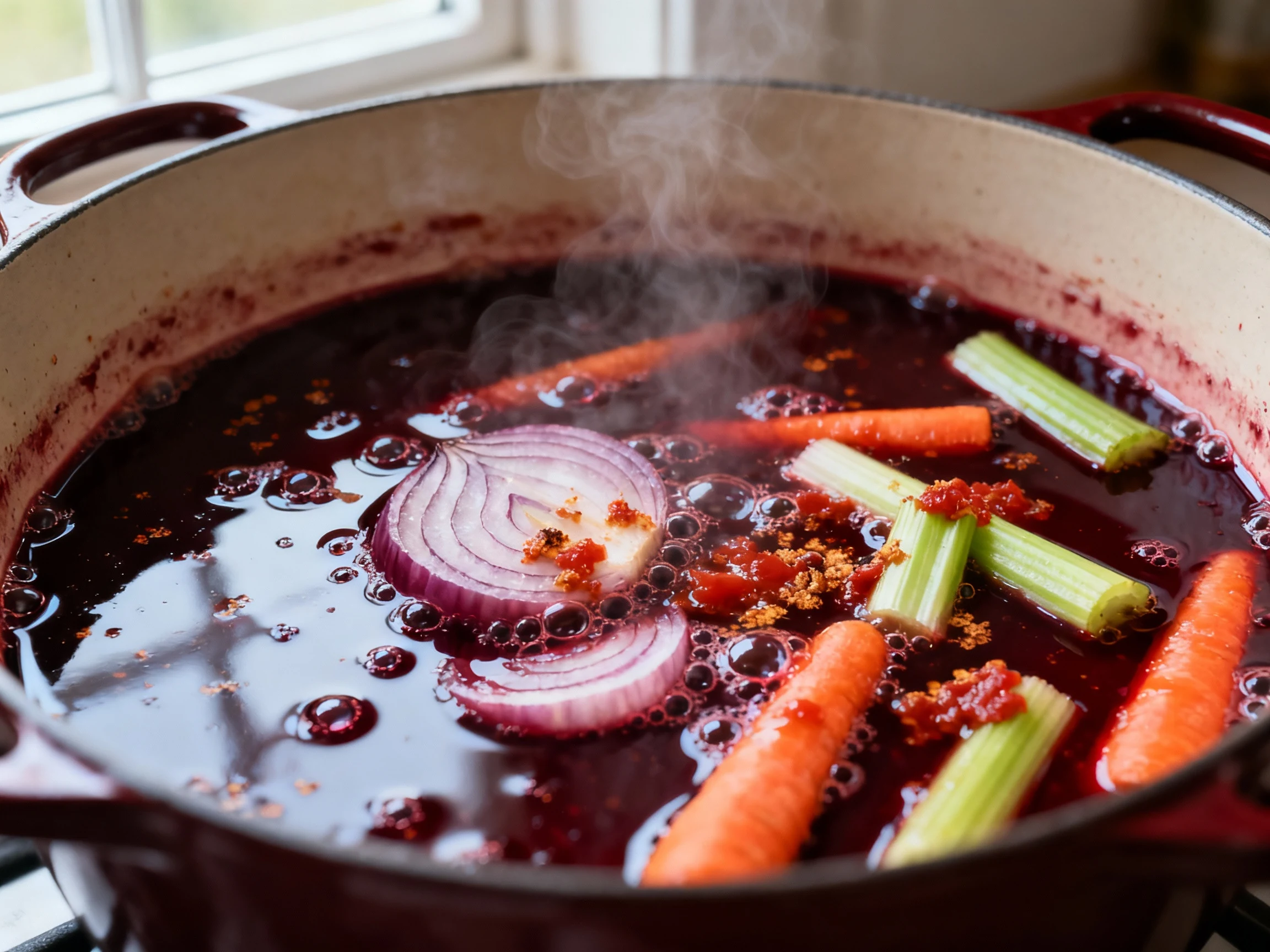
Most stews taste fine; this one tastes like you planned ahead. The two power moves are a deep sear and a proper wine reduction. Browning the beef builds crust and flavor. Reducing the wine to syrupy, glossy goodness makes everything bold without tasting boozy.
From there, you go low and slow. Gentle heat melts collagen into silky gelatin while veggies soften in stages, so nothing turns mushy. A little umami (Worcestershire, tomato paste, soy if you’re into it) gives the stew that “restaurant” finish. TBH, the process does the heavy lifting—you just steer the ship.
What You’ll Need (Ingredients)
- 2.5 lb (1.1 kg) beef chuck, cut into 1.5-inch cubes, patted dry
- 2 tsp kosher salt, plus more to taste
- 1 tsp freshly ground black pepper
- 2 tbsp neutral oil (canola or avocado)
- 1 large yellow onion, diced
- 2 medium carrots, cut into 1-inch chunks
- 2 celery ribs, sliced
- 4 garlic cloves, smashed
- 2 tbsp tomato paste
- 2 tbsp all-purpose flour (or 1.5 tbsp cornstarch for gluten-free)
- 2 cups dry red wine (Cabernet Sauvignon, Merlot, or Pinot Noir)
- 3 cups low-sodium beef stock
- 1 bay leaf
- 2 sprigs fresh thyme (or 1/2 tsp dried)
- 1 sprig rosemary (optional)
- 8 oz cremini mushrooms, halved (optional but excellent)
- 1 lb baby potatoes, halved (or 3 russets, peeled and chunked)
- 1 tbsp Worcestershire sauce
- 1 tsp soy sauce (optional, for umami; skip if gluten-free)
- 1 tsp sugar (optional, to balance)
- 1 tbsp butter (optional, for glossy finish)
- Fresh parsley, chopped, for garnish
Step-by-Step Instructions
- Season the beef. Pat the cubes very dry. Sprinkle with 2 tsp salt and 1 tsp pepper. Dry beef browns; wet beef steams—choose wisely.
- Sear in batches. Heat oil in a heavy pot (Dutch oven ideal) over medium-high until shimmering. Brown beef on at least two sides, 4–5 minutes per batch. Don’t crowd the pan; space builds crust.
- Sweat the aromatics. Reduce heat to medium. Add onion, carrot, and celery. Cook 5–6 minutes, scraping up fond. Toss in garlic and sauté 30 seconds until fragrant.
- Tomato paste + flour. Stir in tomato paste and flour. Cook 1 minute to toast. This step builds body; it’s the difference between stew and “beef soup.”
- Deglaze with wine. Pour in 2 cups red wine. Scrape the bottom aggressively to free the brown bits. Bring to a strong simmer.
- Reduce the wine. Let it bubble 5–8 minutes until it’s reduced by about half and smells mellow, not sharp. This reduction is the flavor lock.
- Add stock and herbs. Stir in beef stock, bay leaf, thyme, rosemary (if using), Worcestershire, soy (if using), and sugar (if using). Return the browned beef and any juices to the pot.
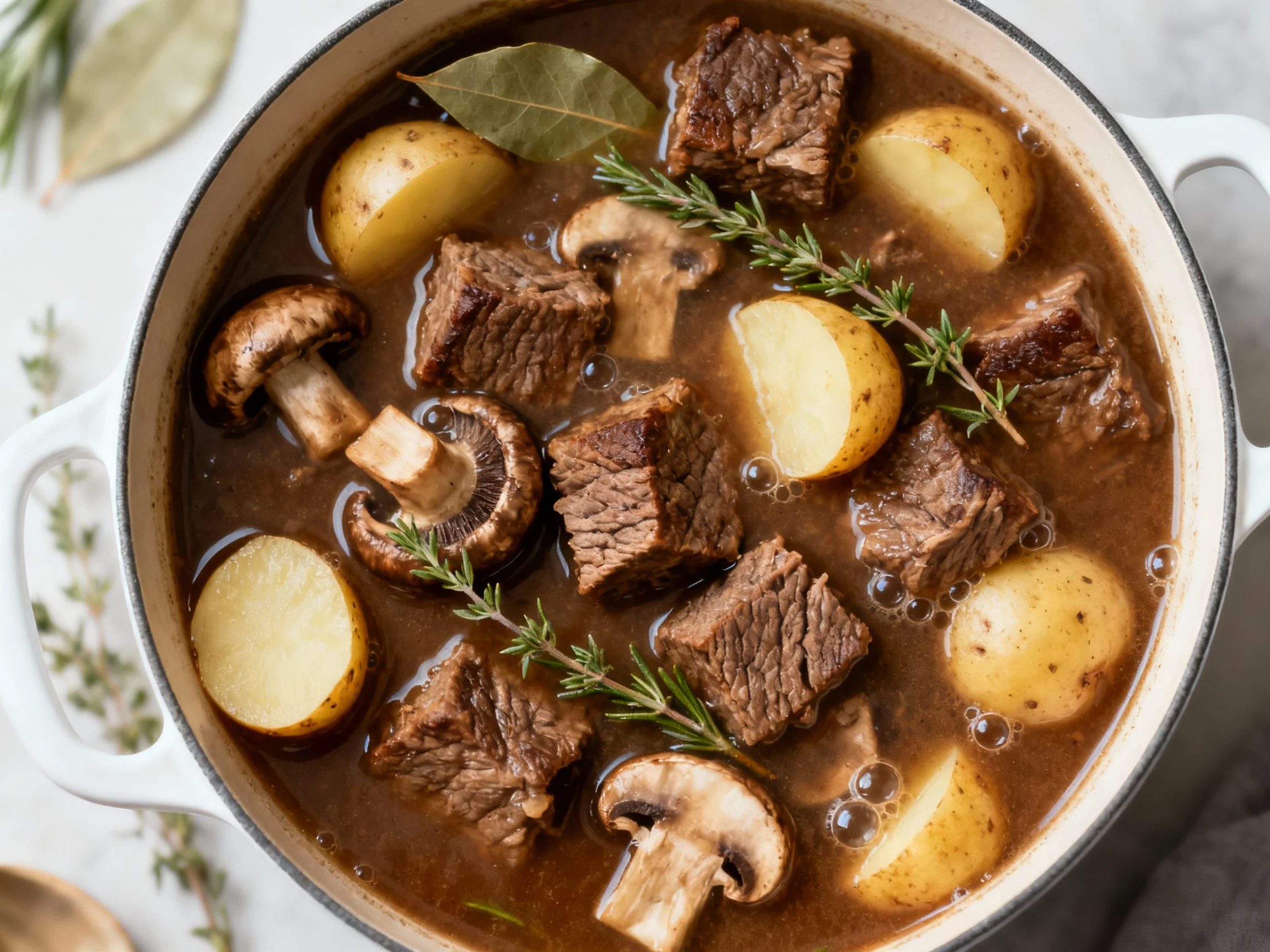
- Simmer low and steady. Bring to a gentle simmer. Skim foam if needed. Cover partially and cook 60 minutes, adjusting heat so it barely bubbles. Stew should whisper, not shout.
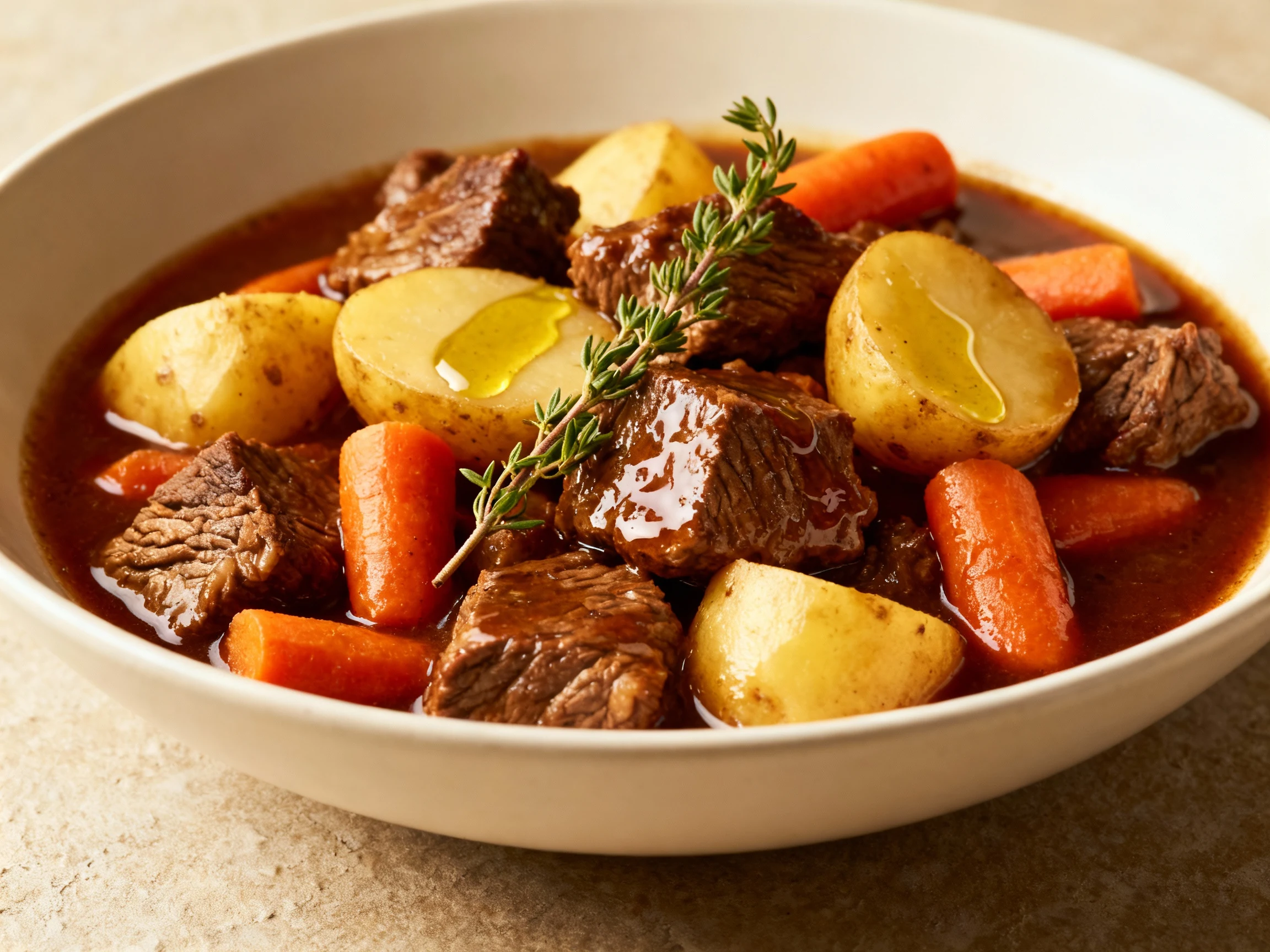
- Add potatoes and mushrooms. After 60 minutes, add the potatoes and mushrooms. Continue simmering 45–60 minutes until beef yields easily and potatoes are tender.
- Check thickness. If the stew feels thin, mash a few potato pieces into the liquid or stir in a quick cornstarch slurry (1 tbsp cornstarch + 1 tbsp cold water). Don’t over-thicken now—finish first.
- Finish and balance. Taste. Add more salt and pepper as needed. Stir in butter for sheen. Remove bay and herb stems. Sprinkle parsley for fresh contrast.
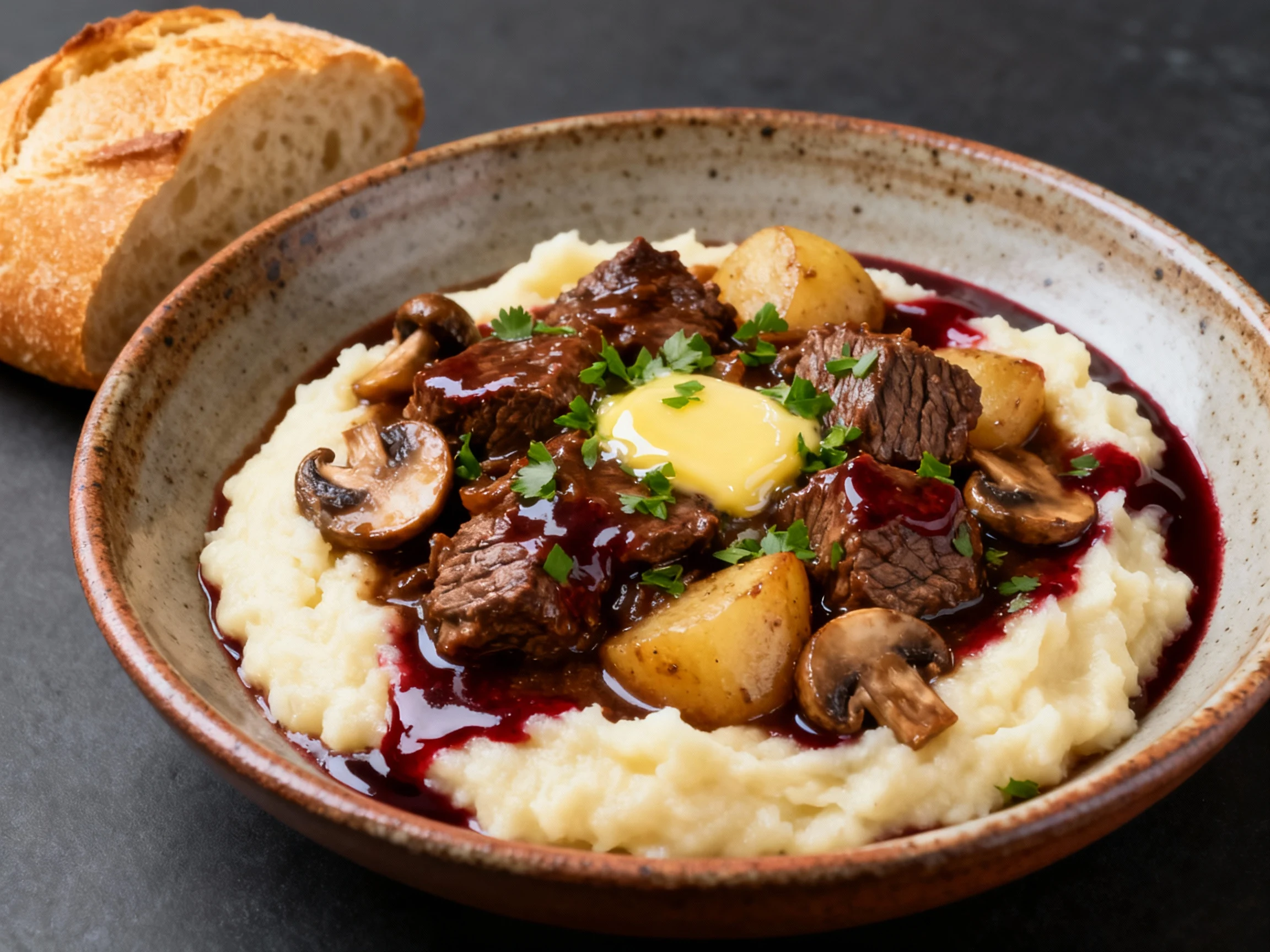
- Rest, then serve. Let the stew sit 10 minutes to settle. Serve with crusty bread or creamy mash. Your kitchen called—mission accomplished.
- Oven option (FYI). After Step 7, cover and move to a 325°F (165°C) oven for 2–2.5 hours. Add potatoes/mushrooms for the final 60 minutes. Oven heat braises more evenly.
Storage Instructions
- Cool fast: Spread the stew in a shallow pan for 15 minutes before refrigerating to keep texture on point.
- Fridge: Store airtight up to 4 days. Flavor improves overnight, so tomorrow’s bowl might steal the show.
- Freeze: Portion into containers and freeze up to 3 months. Leave a little headspace to avoid lid drama.
- Reheat: Warm gently over medium-low with a splash of water or stock. Avoid a hard boil; it can toughen meat and mute flavors.
- Make-ahead tip: Chill, then skim solid fat before reheating for a cleaner finish.
Why This is Good for You
- Protein + iron: Beef delivers high-quality protein and heme iron for energy and recovery.
- Gelatin goodness: Slow cooking turns collagen into gelatin, which supports joint and gut health.
- Polyphenols: Red wine adds plant compounds; you reduce and cook it, so flavor stays while alcohol mostly leaves.
- Veg power: Carrots, celery, mushrooms, and potatoes bring fiber, potassium, and texture variety—aka satisfaction.
- Smart control: Use low-sodium stock, skim fat, and adjust salt yourself. Homemade beats any can, IMO.
Don’t Make These Errors
- Skipping the sear: Pale beef equals pale flavor. Put in the 8 minutes. Your taste buds will notice.
- Boiling the stew: A rolling boil toughens meat. Keep it to a gentle simmer—think calm, not chaos.
- Not reducing the wine: Unreduced wine can taste harsh. Reduce until mellow and slightly syrupy.
- Overloading the pot: Crowded beef steams. Sear in batches and keep the heat honest.
- One-time veggie dump: Adding all veggies at once creates mush. Stagger potatoes and mushrooms later.
- Over-thickening early: Stew thickens as collagen melts. Wait until the end to adjust body.
- Using sweet wine: Dessert wines don’t belong here. Choose dry reds with structure, not sugar.
Variations You Can Try
- Instant Pot: Sear on Sauté, reduce wine, then pressure-cook 35 minutes with a natural release. Add potatoes/mushrooms and simmer 5–8 minutes to finish.
- Slow Cooker: Sear and reduce wine on the stove, then transfer to the slow cooker. Cook on Low 7–8 hours. Add potatoes/mushrooms for the last 2 hours.
- Mushroom-forward: Double mushrooms and add a splash of balsamic at the end. Earthy, luxurious, and very “I meant to do that.”
- Provençal vibes: Add olives, orange zest, and herbes de Provence. Swap parsley for fennel fronds if you’re feeling fancy.
- Gluten-free: Use cornstarch to thicken (or mashed potatoes). Skip soy or use tamari.
- Dairy-free: Skip the butter finish; add a drizzle of extra-virgin olive oil for sheen.
- Root veg remix: Replace potatoes with parsnips and turnips. Sweet, peppery, and perfect with red wine notes.
FAQ
What type of red wine works best for this stew?
Pick a dry, medium- to full-bodied wine with good acidity like Cabernet Sauvignon, Merlot, or Pinot Noir. You want structure, not sweetness. If you’d drink it, you can cook with it—no need to break the bank.
Will the alcohol cook off completely?
Most of it cooks off during the reduction and the long simmer, leaving behind flavor and complexity. If you’re sensitive, reduce the wine a bit longer and keep the lid slightly off to let steam escape.
Can I make this without wine?
Yes. Use 1 cup beef stock plus 1 cup unsweetened grape juice and 1 tbsp red wine vinegar. You’ll get a similar fruit and acid balance without the alcohol.
How do I thicken the stew without flour?
Use a cornstarch slurry (1 tbsp cornstarch + 1 tbsp cold water) at the end, or mash some potatoes directly into the liquid. Both methods add body without clouding flavor.
What cut of beef should I use?
Chuck roast is the MVP: enough fat and collagen to stay juicy. Brisket or short ribs also work. Lean cuts like round can dry out; save those for another project.
Why does my stew taste bitter?
Usually the wine didn’t reduce enough. Simmer longer until the sharpness softens. Balance with a pinch of sugar, a knob of butter, or a splash more stock. Don’t panic—this is fixable.
Can I cook it in the oven instead of the stovetop?
Absolutely. After adding wine and stock, cover and braise at 325°F (165°C) for 2–2.5 hours, adding potatoes and mushrooms for the final hour. Oven heat keeps things steady.
My Take
I love this stew because it turns simple ingredients into something you want to brag about. The wine reduction trick is the linchpin—once you own that step, you’ll never go back. It’s the kind of meal that makes a Tuesday feel like a celebration, and the leftovers somehow taste even better. If you want max payoff with minimal stress, this is it.
Printable Recipe Card
Want just the essential recipe details without scrolling through the article? Get our printable recipe card with just the ingredients and instructions.