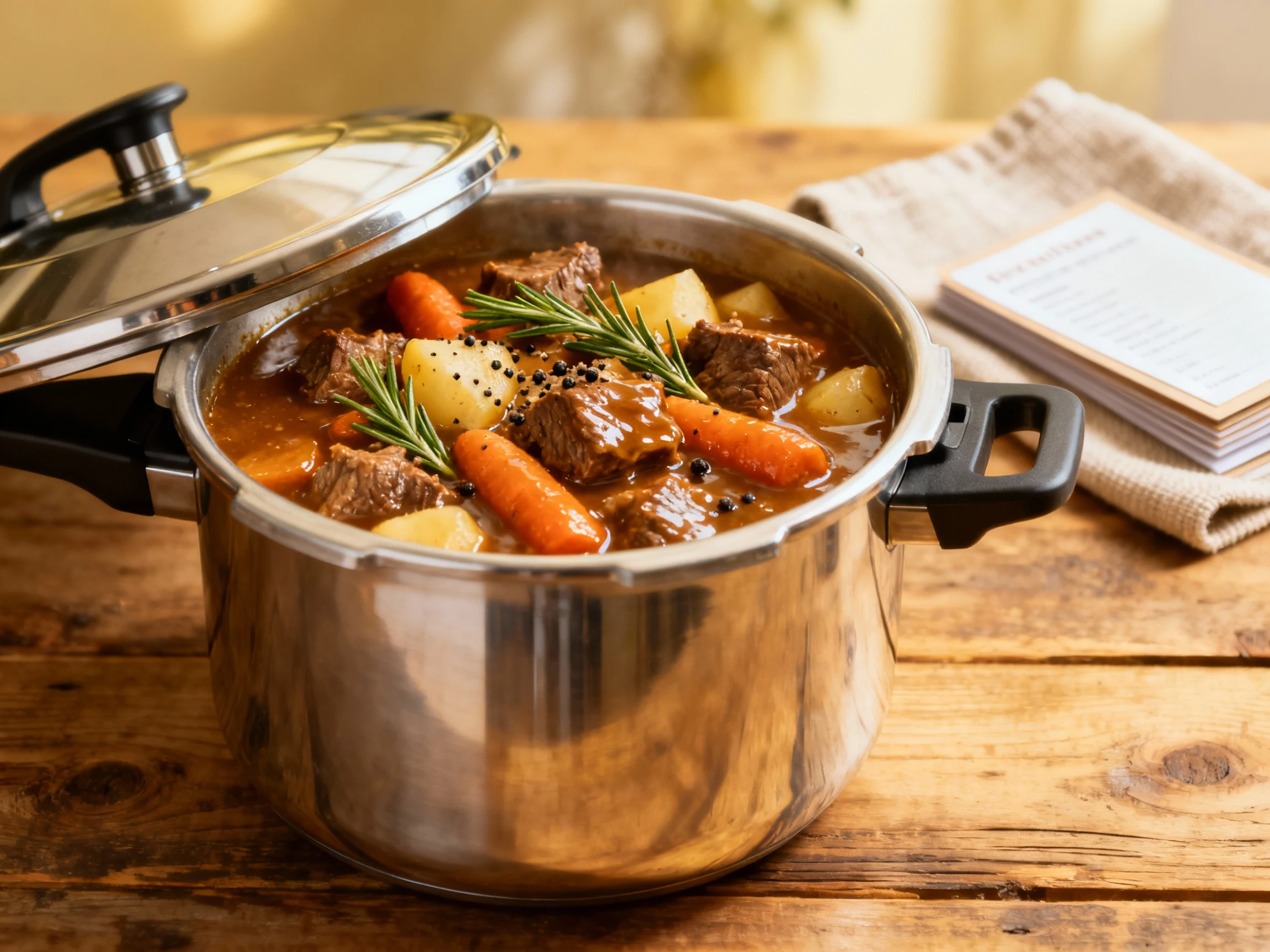
Beef Stew Pressure Cooker Recipes That Crush Weeknights
Rich, fall-apart beef, big flavor in under an hour, and minimal cleanup—your new go-to for cozy meals on busy nights.
Most people think “real” stew takes three hours and a Sunday afternoon. They’re wrong. You can get spoon-tender beef, silky gravy, and big cozy energy faster than your delivery app finds your address. The cheat code is pressure and proper browning—non-negotiable if you want flavor that tastes like it took all day. Stick to the plan below and dinner will flex on your busiest weeknight.
What Makes This Recipe So Good

- All-day flavor in a fraction of the time: Pressure does what patience usually does. Expect stew that tastes slow-simmered in ~60 minutes start to finish.
- Ultra-tender beef: Chuck roast + high pressure = buttery bites that don’t fight the fork.
- One-pot win: Sear, simmer, and thicken in the same pot. Fewer dishes, more couch time.
- Balanced, savory gravy: Tomato paste, Worcestershire, and a splash of wine (or broth) build a deep, glossy sauce that clings to everything.
- Vegetables that don’t turn to mush: Smart layering keeps potatoes and carrots intact yet tender.
- Weeknight-friendly flexibility: Skip the wine, swap the veg, make it gluten-free—no flavor compromises.
- Budget hero: Tough, cheap cuts become luxury with pressure. IMO, this is the best ROI in your kitchen.
- Meal-prep approved: Tastes even better the next day; freezer-friendly with a couple tweaks (see Preservation Guide).
Shopping List – Ingredients
- 2.5 lb beef chuck roast, trimmed and cut into 1.5-inch cubes
- 2 tsp kosher salt (divided), plus more to taste
- 1 tsp freshly ground black pepper
- 2 tbsp all-purpose flour for light dredging (or 2 tbsp cornstarch for gluten-free)
- 2 tbsp olive oil (or neutral oil)
- 1 tbsp unsalted butter (optional, for richer browning)
- 1 large yellow onion, diced
- 3 garlic cloves, minced
- 2 tbsp tomato paste
- 1 cup dry red wine (optional; sub with 1 cup beef broth if you prefer)
- 3 cups low-sodium beef broth
- 1 tbsp Worcestershire sauce
- 1 bay leaf
- 1 tsp dried thyme (or 2 tsp fresh, chopped)
- 1 tsp dried rosemary (or 2 tsp fresh, chopped)
- 2 large carrots, peeled and cut into 1-inch chunks
- 2 celery stalks, cut into 1-inch pieces
- 1 lb baby gold potatoes, halved (or 3 medium waxy potatoes, cubed)
- 1 cup frozen peas (stir in at the end)
- 1 tbsp cornstarch mixed with 1 tbsp cold water (slurry for thickening; or 1 tbsp flour + 1 tbsp soft butter as a beurre manié)
- 1 tsp sugar or 1 tbsp balsamic vinegar (to balance acidity, optional)
- Fresh parsley, chopped, for garnish
Cooking Instructions
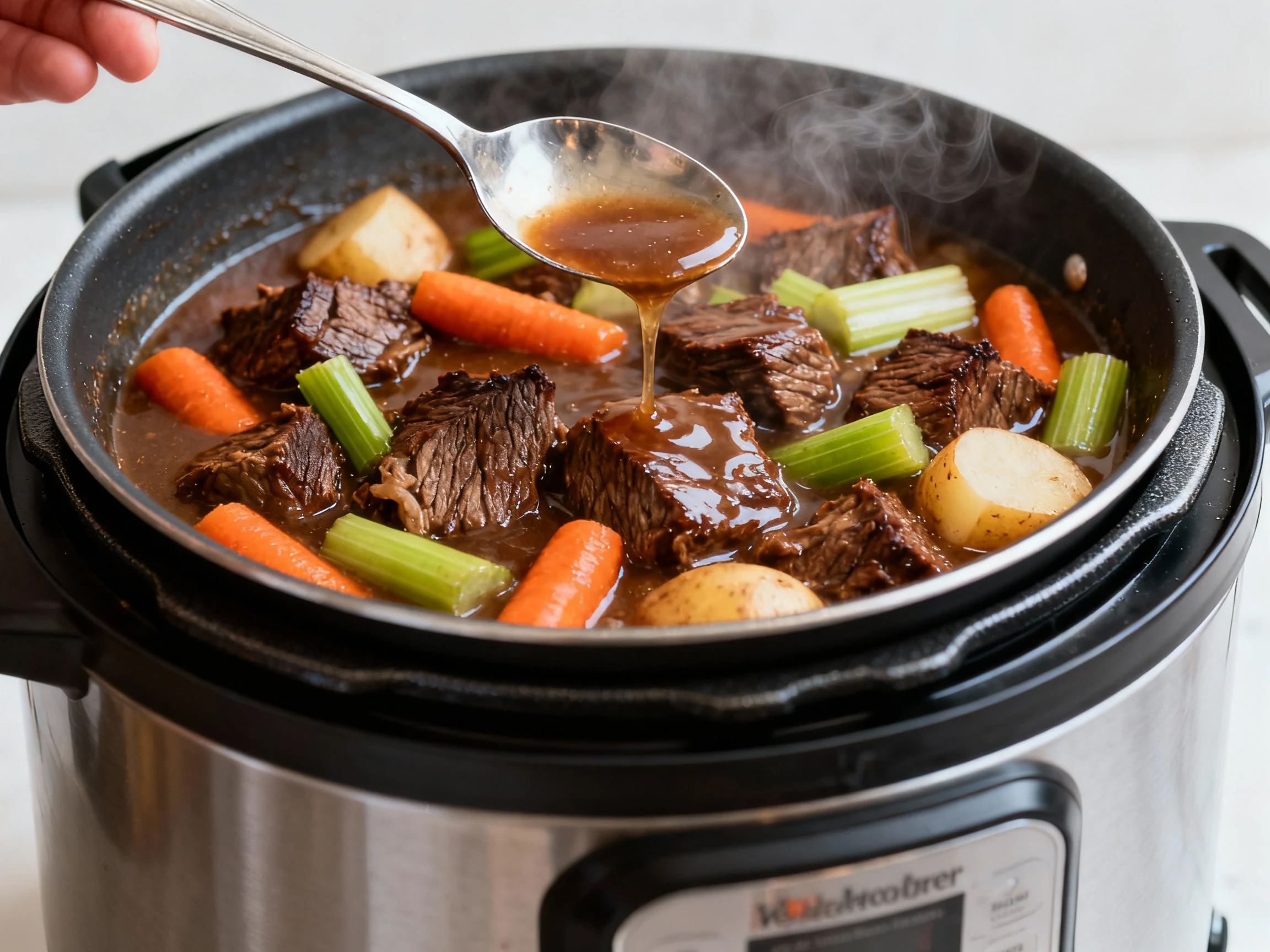
- Prep the beef: Pat the cubes very dry with paper towels. Season with 1.5 tsp kosher salt and 1 tsp pepper. Lightly dredge in 2 tbsp flour (or cornstarch for gluten-free). Shake off excess. Dry surfaces brown; wet surfaces steam—don’t skip this.
- Heat the pot: Set your pressure cooker to Sauté (High). Add 2 tbsp olive oil and the optional 1 tbsp butter. When shimmering, you’re ready.
- Sear in batches: Brown the beef in a single layer, 2–3 minutes per side. Don’t crowd (steam = sad crust). Transfer browned beef to a plate and repeat until all meat is seared.
- Sweat aromatics: Add the diced onion with a pinch of salt. Sauté 3–4 minutes until translucent, scraping up brown bits. Stir in garlic and cook 30 seconds. Add the tomato paste and cook 1–2 minutes until deep brick red—this unlocks big umami.
- Deglaze like a pro: Pour in 1 cup red wine (or broth). Scrape the bottom thoroughly with a wooden spoon to release every fond bit. No stuck bits = no burn warning, FYI.
- Build the base: Stir in 3 cups beef broth, 1 tbsp Worcestershire, 1 bay leaf, 1 tsp thyme, and 1 tsp rosemary. Return the seared beef and any juices to the pot.
- Layer the veg: Add carrots, celery, then potatoes on top. Don’t stir; keeping starchy veg elevated helps them cook evenly without disintegrating.
- Pressure cook: Seal the lid. Cook on High Pressure for 35 minutes. When time is up, let it naturally release for 10 minutes, then quick-release any remaining pressure. Smaller cubes (1-inch)? 25–30 minutes is enough. Very tough cuts? Go 40 minutes.
- Finish and thicken: Open the lid, remove the bay leaf. Stir in the cornstarch slurry. Switch to Sauté and simmer 3–5 minutes until the sauce lightly coats a spoon. Add the frozen peas and heat through 1–2 minutes.
- Balance and season: Taste. Add up to 1/2 tsp salt more as needed. If it tastes a little sharp, stir in 1 tsp sugar or 1 tbsp balsamic for balance. Finish with chopped parsley.
- Rest and serve: Let it sit 5 minutes so the juices settle. Serve with crusty bread, buttered noodles, or straight from a bowl like a champion.
Preservation Guide
- Cool quickly: Transfer leftovers to shallow containers and cool within 2 hours. Rapid cooling = better texture and food safety.
- Refrigerate: Keeps well for up to 4 days. Reheat gently on the stove over low heat with a splash of broth or water.
- Freeze: Best for up to 3 months. Tip: potatoes can get mealy after freezing. For best results, freeze the stew base without potatoes and add fresh-cooked potatoes after reheating. Or use waxy baby golds—they freeze better than russets.
- Reheat from frozen: Thaw overnight, then warm over medium-low, adding liquid as needed. Microwaving in bursts works too, but stir often.
- About canning: Home-canning mixed stews requires a lab-tested formula. Use only USDA/NCHFP-tested recipes if pressure canning; otherwise, stick to freezing.

What’s Great About This
- Speed without sacrifice: You get Sunday stew on a Tuesday, no apology tours needed.
- Forgiving method: Dredge or not, wine or broth, it still lands delicious.
- Clean, concentrated flavor: Browning + tomato paste + Worcestershire = depth for days.
- Feeds a crowd: Serves 6 generous bowls. Double it with a larger pot (see FAQ).
- Macro-friendly: High protein, high satisfaction. Add more veg to stretch volume without extra cost.
- Perfect for meal prep: Improves overnight as flavors marry. TBH, day-two stew is elite.
What Not to Do
- Don’t skip the sear: That crust equals flavor. Pale beef equals bland stew—hard pass.
- Don’t overcrowd: Sear in batches. Crowding steams the meat and sabotages browning.
- Don’t ignore the fond: Deglaze completely or your cooker might flash a burn warning, and your flavor will be meh.
- Don’t quick-release immediately: A 10-minute natural release keeps the meat tender and prevents a foamy geyser.
- Don’t add thickener before pressure: Cornstarch or flour can scorch and inhibit pressure. Thicken at the end.
- Don’t use lean cuts: Skip round or sirloin tips here. You want chuck or similar with marbling for tenderness.
- Don’t add peas early: They’ll gray out and go mushy. Add them after pressure cooking.
Alternatives
- No wine? Use extra beef broth plus 1 tbsp soy sauce or balsamic for depth.
- Gluten-free: Dredge in cornstarch and thicken with a cornstarch slurry. Check that your Worcestershire is GF.
- Low-carb: Swap potatoes with turnips or radishes. They mimic potato texture shockingly well.
- Veg upgrades: Add 8 oz mushrooms (sauté after onions), parsnips, or pearl onions for a classic vibe.
- Protein swaps: Try lamb shoulder (gamey, luxe) or pork shoulder (sweeter, tender). Adjust pressure time to 30–35 minutes.
- Liquid swaps: Use stout beer for a pub-style stew or a shot of espresso for deeper roast notes. Balance with a touch of sugar.
- Paleo/Whole30: Skip flour, use arrowroot slurry at the end. Replace Worcestershire with coconut aminos + splash of vinegar.
- Slow cooker method: Brown as directed, then cook on Low 8–9 hours or High 4–5 hours. Add peas at the end and thicken on the stovetop.
- Stovetop Dutch oven: Simmer covered for 2–2.5 hours, stirring occasionally. Add potatoes in the last hour.
FAQ
What cut of beef works best for pressure-cooked stew?
Chuck roast is the MVP: marbling, connective tissue, and flavor that transforms under pressure. Brisket point, blade roast, or boneless short rib also work. Avoid lean cuts like round—they turn stringy and dry.
How long should I cook it under pressure?
For 1.5-inch chuck cubes, go 35 minutes on High, then 10 minutes natural release. Smaller cubes (1 inch) do well at 25–30 minutes. If your beef is still a bit firm, reseal and cook another 5–10 minutes.
Can I skip searing the beef?
Technically yes; practically, don’t. Searing creates the Maillard magic that makes stew taste like stew. If you truly must skip, add an extra 1 tbsp tomato paste and a dash of soy sauce to boost umami—but it won’t be the same.
How do I prevent mushy vegetables?
Use waxy potatoes (baby golds) instead of russets, cut carrots and celery into larger chunks, and layer veggies on top of the beef without stirring. This keeps them away from the hottest zone. Add peas at the end only.
Can I cook the beef from frozen?
You can, but browning frozen beef is impossible and flavor takes a hit. If you must, pressure cook frozen cubes with the liquids for 40–45 minutes, then season and thicken at the end. For best results, thaw first so you can sear properly—worth it.
How do I thicken without cornstarch?
Use a beurre manié (equal parts soft butter and flour kneaded together) whisked in after pressure cooking. Simmer on Sauté until glossy. Alternatively, reduce uncovered for a few minutes to naturally concentrate the sauce.
Can I double the recipe?
Yes—if your pot can handle it. Don’t exceed the cooker’s Max Fill line (no more than two-thirds full for pressure cooking). Keep the same pressure time; it may just take longer to come to pressure. Stir in thickener at the end as usual.
Do I need to adjust for altitude?
At elevations above 3,000 ft, add 5%–10% to the pressure time. So 35 minutes becomes ~38–39 minutes. Everything else stays the same; always verify tenderness and cook a little longer if needed.
Why is my stew thin—or too thick?
If thin, simmer on Sauté 5–10 minutes or add another small slurry. If too thick, stir in hot broth a few tablespoons at a time. Aim for gravy that lightly coats the back of a spoon—clingy, not gloopy.
What can I use instead of Worcestershire sauce?
Mix 1 tsp soy sauce with 1/2 tsp balsamic or 1/4 tsp fish sauce for a similar savory-sweet depth. Coconut aminos also works if you’re soy-free, though you may need a pinch more salt.
In Conclusion
This is the weeknight power move: high-pressure tenderness, deep flavor, low effort. Brown hard, deglaze well, layer smart, and finish with a quick thicken. The result is big-bowl comfort that tastes like it stole hours from Sunday—without actually doing that. Ladle up, grab bread, and accept the compliments like you planned it this way all along.
Printable Recipe Card
Want just the essential recipe details without scrolling through the article? Get our printable recipe card with just the ingredients and instructions.