Beef Stew Meat Recipes Stovetop Quick — Your Weeknight Win
Fast, hearty stovetop beef stew with tender stew meat for busy weeknights—big comfort flavor in under an hour, no oven required.
You don’t need a Sunday to eat like it’s Sunday. You need one pot, a few pantry power-ups, and 50 minutes you were already going to spend scrolling. This stovetop beef stew hits the table fast, tastes slow-simmered, and won’t bully your calendar. We’ll hack tenderness, stack umami, and thicken like a pro—no fussy steps, no babysitting. Hungry family, cold night, zero patience? Good. You’re exactly who this recipe was built for.
What Makes This Recipe Awesome
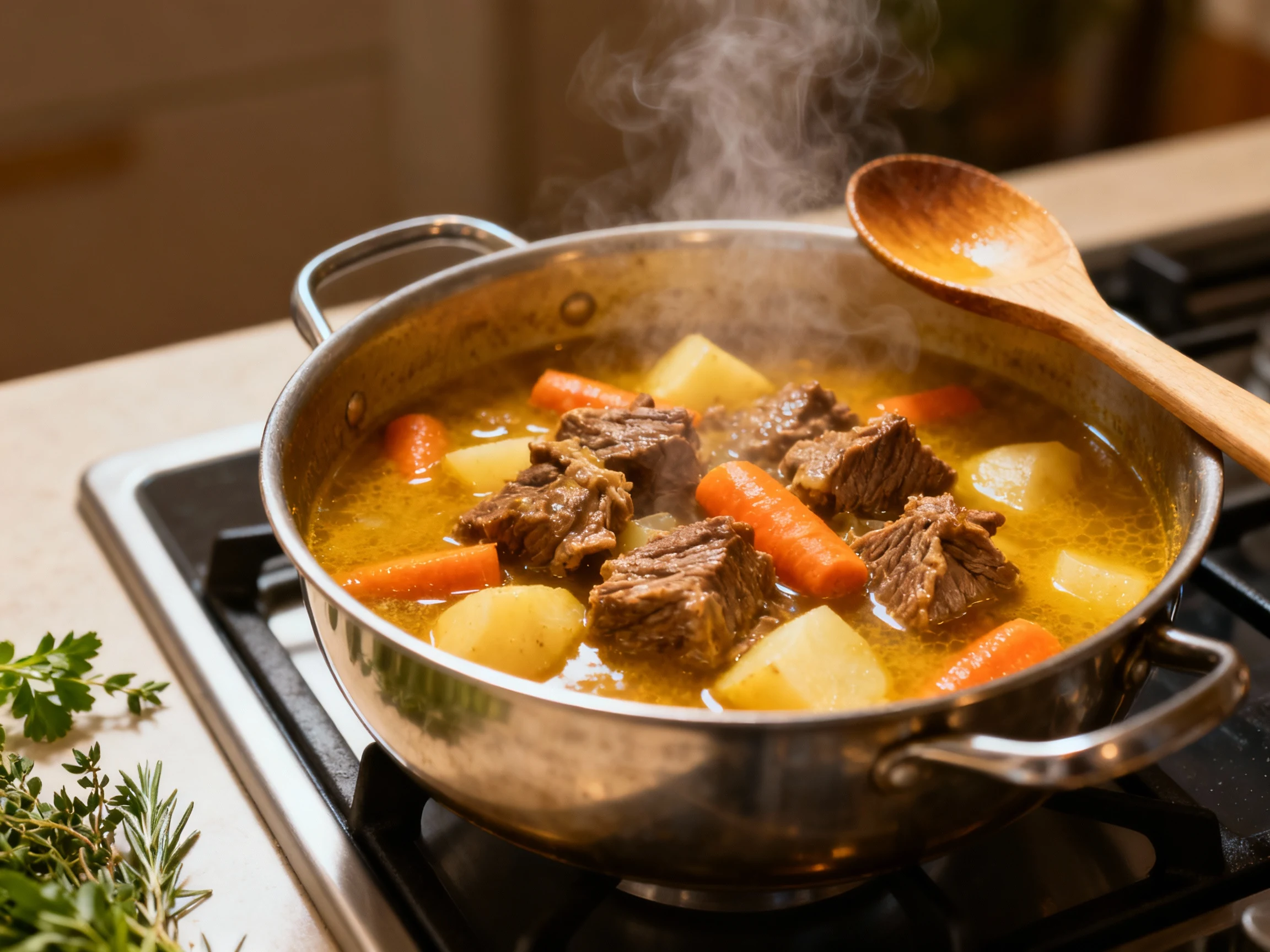
- Ready fast: Under 1 hour from first sizzle to last ladle, with beef that eats tender, not tough.
- One pot, big flavor: Browning, tomato paste “fond magic,” and umami boosters build depth without hours of simmering.
- Weeknight-proof: Straightforward steps, nothing fancy, and easy cleanup. Your future self says thanks.
- Budget-friendly: Uses affordable stew meat and everyday produce. You’ll taste like you splurged.
- Flexible: Swap wine for broth, use dried herbs, and choose cornstarch or flour—your kitchen, your rules.
- Balanced and cozy: Protein, veg, and just enough starch for that stick-to-your-ribs finish (without the food coma).
- Serves: 5–6 generous bowls. Total time: about 50 minutes. Hands-on: ~20 minutes.
Shopping List – Ingredients
- 1.75 to 2 pounds beef stew meat (chuck), cut into 3/4–1-inch cubes
- 1/2 teaspoon baking soda (quick tenderizer)
- 1 1/4 teaspoons kosher salt, divided (plus more to taste)
- 1 teaspoon freshly ground black pepper, divided
- 2 tablespoons neutral oil (canola, avocado, or light olive oil)
- 1 large yellow onion, diced
- 3 medium carrots, peeled and sliced 1/2-inch thick
- 1 pound baby gold potatoes, quartered (or 3 medium Yukon Golds, 1-inch chunks)
- 4 cloves garlic, minced
- 2 tablespoons tomato paste
- 1 teaspoon smoked paprika (or sweet paprika)
- 4 cups low-sodium beef broth (plus a splash extra as needed)
- 1/2 cup dry red wine (optional; sub broth for alcohol-free)
- 1 1/2 tablespoons Worcestershire sauce
- 1 tablespoon soy sauce (or tamari for gluten-free)
- 2 bay leaves
- 4 fresh thyme sprigs (or 1 teaspoon dried thyme)
- 1/2 teaspoon sugar (optional, balances acidity)
- 1 cup frozen peas
- 2 tablespoons cornstarch mixed with 2 tablespoons cold water (slurry for thickening; sub 3 tablespoons flour whisked into 1/2 cup cold broth)
- 2 tablespoons chopped fresh parsley (for finish)
- Optional boosters: 1 teaspoon Dijon, 1 teaspoon anchovy paste, or 1 tablespoon balsamic for extra depth
Let’s Get Cooking – Instructions
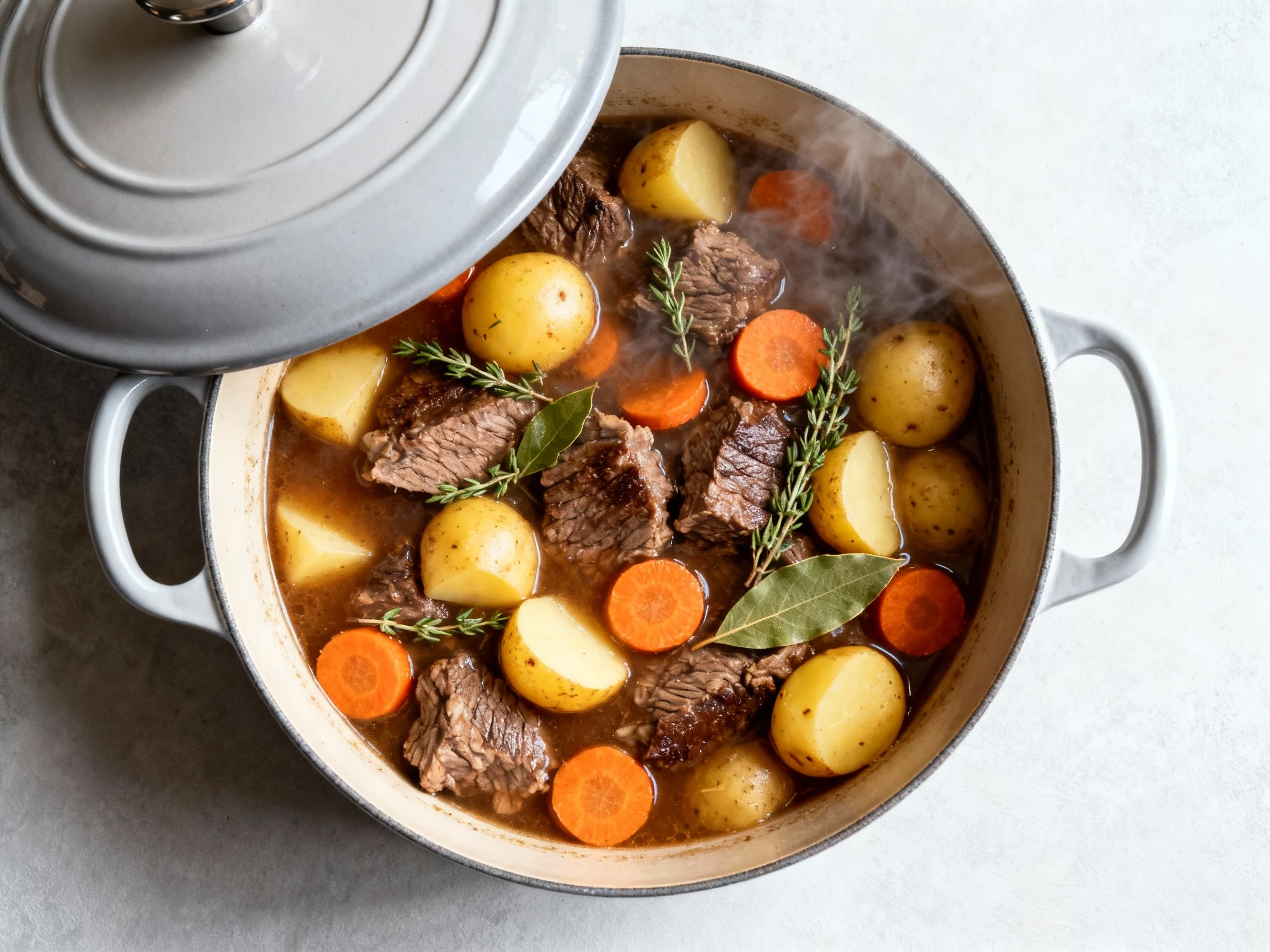
- Prep and quick-tender: Pat the beef dry. Toss with 1/2 teaspoon baking soda, 3/4 teaspoon salt, and 1/2 teaspoon pepper. Let it sit while you chop veg (about 10 minutes). This tiny wait makes a big tenderness difference, IMO.
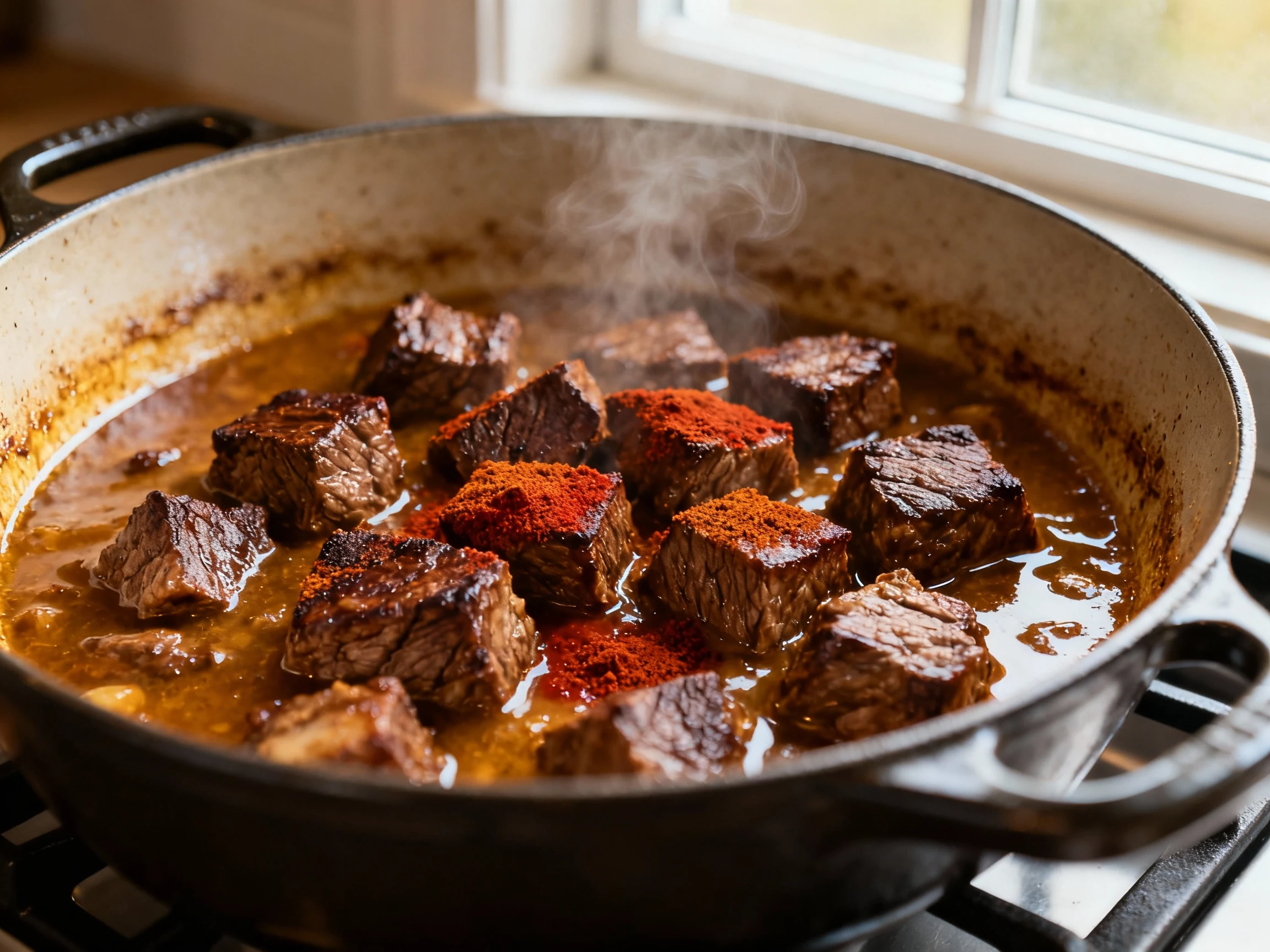
- Brown the beef like you mean it: Heat a 5–6 quart heavy pot over medium-high. Add 2 tablespoons oil. Sear beef in two batches, 3–5 minutes per side, until well browned. Don’t crowd the pot. Transfer browned beef to a bowl and keep the tasty juices.
- Sweat the aromatics: Drop heat to medium. Add onion and carrots with a pinch of salt. Cook 3–4 minutes, scraping brown bits. Stir in 2 tablespoons tomato paste and smoked paprika; cook 1–2 minutes until the paste turns mahogany. Add garlic; cook 30 seconds until fragrant.
- Deglaze and layer flavor: Pour in 1/2 cup red wine (or broth) and bubble for 1 minute, scraping the bottom. Add 4 cups broth, Worcestershire, soy sauce, bay leaves, thyme, and potatoes. Return beef and juices. Add optional boosters if using.
- Simmer smart, not forever: Bring to a boil, then reduce to a lively simmer. Cover partially (lid slightly ajar) and cook 25–30 minutes, stirring occasionally, until potatoes are tender and beef is chew-with-a-spoon soft. Adjust heat to keep it simmering, not raging.
- Finish and thicken: Stir in peas. Mix cornstarch slurry and pour in while stirring. Simmer 2–3 minutes until the stew coats a spoon. If you like it thicker, add a touch more slurry. Season with remaining salt and pepper, and a pinch of sugar if needed.
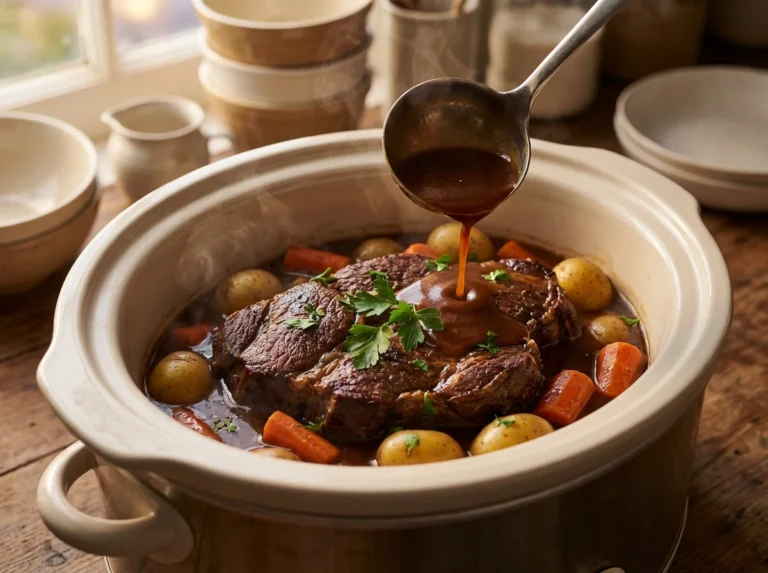
- Serve like a pro: Fish out bay leaves and thyme stems. Swirl in parsley and, if you’re feeling it, a knob of butter. Ladle into warm bowls and watch it vanish.
Pro Tips: Cut beef to 3/4-inch for quicker tenderness. If the stew reduces too much, add splashes of broth. If it’s thin before serving, simmer uncovered a few minutes after thickening.
How to Store
- Fridge: Cool completely, then store in airtight containers for up to 4 days. Flavor actually improves by day two—science and magic teamed up.
- Freezer: Up to 3 months. FYI, potatoes can go mealy when frozen. For best texture, freeze without potatoes and add freshly cooked ones when reheating.
- Reheat: Stovetop over medium with a splash of water or broth, 6–8 minutes, stirring occasionally. Microwave in 60–90 second bursts, stirring between. If it loosens, re-thicken with a teaspoon of slurry.
Nutritional Perks
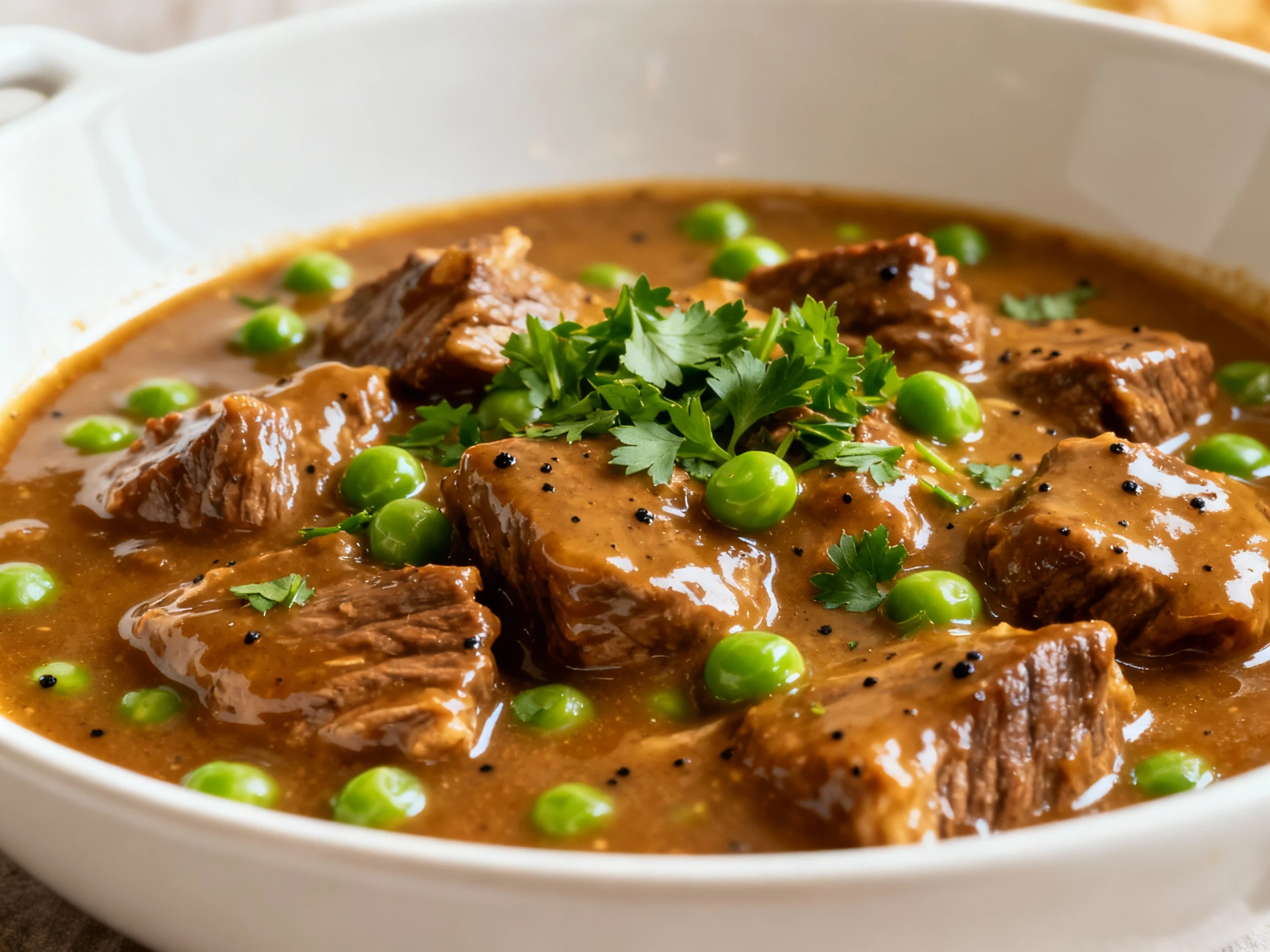
This bowl hits the sweet spot between comfort food and actual nourishment. Beef brings high-quality protein, iron, zinc, and B12 for energy and recovery. Carrots and peas add fiber, vitamin A, and vitamin C, while potatoes deliver potassium for muscle function. Keep sodium in check by using low-sodium broth and salting to taste at the end. Want it lighter? Skim any surface fat and keep portions of potato moderate—balance without the buzzkill.
Don’t Make These Errors
- Crowding the pan while browning: That steams the beef and steals your crust. Brown in batches for max flavor.
- Boiling the stew hard: A rolling boil tightens meat. Keep a lively simmer for tenderness in less time.
- Skipping the tomato paste “brown step”: Darkening the paste unlocks sweetness and umami. Two minutes here saves 40 later.
- Using the wrong potatoes: Russets go fluffy and can disintegrate. Waxy golds hold shape and reheat better.
- Adding peas too early: They’ll get khaki and sad. Stir them in at the end for bright color and pop.
- Huge meat cubes: Big chunks take longer to tenderize. Aim for 3/4–1-inch for weeknight timing.
- Heavy-handed salt up front: Broth reduces. Salt lightly early, adjust boldly at the finish.
- Forgetting a thickener: Without slurry or reduction, fast stew drinks like soup. Use the cornstarch move for that cozy body.
Variations You Can Try
- Guinness pub-style: Swap wine for stout, add 1 teaspoon Dijon and 1 teaspoon brown sugar, and finish with chopped chives.
- Smoky chipotle: Add 1–2 teaspoons minced chipotle in adobo and 1 teaspoon cumin. Sub cilantro for parsley. Spice with caution.
- Mediterranean: Add 1 teaspoon dried rosemary, 1/2 cup pitted olives, and finish with lemon zest. Sub red wine vinegar for Worcestershire.
- Mushroom umami bomb: Sauté 8 ounces sliced cremini after the beef, then proceed. Add 1 tablespoon soy and a splash of balsamic.
- Low-carb: Replace potatoes with 3 cups cauliflower florets added for the last 10 minutes. Still thickens like a dream.
- Gluten-free: Use tamari and cornstarch slurry. Everything else stays the same—zero FOMO.
- Tomato-forward: Add a 14-ounce can of fire-roasted diced tomatoes, reduce broth by 1 cup, and simmer as written.
FAQ
How do I make stew meat tender without hours of simmering?
Use small, even cubes, a quick baking soda toss, and a steady simmer. Browning the meat and caramelizing tomato paste front-load flavor so the stew tastes slow-cooked. Keep the simmer gentle—boiling turns beef tough, while a controlled simmer gets you tender in about 30 minutes.
Can I skip the wine?
Absolutely. Use extra beef broth and add a splash of balsamic or 1 teaspoon Dijon for brightness. You’ll still get depth from Worcestershire, soy, and the browned paste—no one will miss the wine.
What cut works best if I’m not buying pre-cut stew meat?
Chuck roast is the gold standard for flavor and quick tenderness. Trim, then cube into 3/4–1-inch pieces. Round can work, but it’s leaner and may need a few extra minutes to soften.
Do I need flour on the beef, or is cornstarch better?
For speed and control, cornstarch slurry at the end is your friend. It thickens fast and doesn’t risk scorching during sear. If you prefer flour, whisk it into cold broth, pour it in near the end, and simmer a few minutes to cook off any raw taste.
What pot should I use?
A 5–6 quart Dutch oven or heavy-bottomed pot spreads heat evenly and builds fond without hot spots. Thin pots can burn the base, which is not the smoky vibe you want, TBH.
How can I make this spicier?
Add a pinch of red pepper flakes with the paprika or swirl in 1 teaspoon hot sauce at the finish. Want depth plus heat? A minced chipotle in adobo adds both.
Can I make it ahead?
Yes—stew is a next-day superstar. Cool, store, and reheat gently with a splash of broth. Stir in a bit more slurry if it thins out; adjust salt just before serving for punchy flavor.
Will this recipe work without potatoes?
Totally. Add extra carrots or sub parsnips, turnips, or cauliflower. If you skip starchy veg, rely on the slurry to keep the stew body rich and spoon-coating.
Can I get it on the table in 30 minutes flat?
You can get close by cutting beef to 1/2–3/4-inch, microwaving carrots and potatoes for 4–5 minutes before adding, and simmering uncovered to reduce faster. But the sweet spot for tenderness is 40–50 minutes—worth the extra few, IMO.
The Bottom Line
Comfort food shouldn’t hijack your evening. This fast stovetop stew works real-world hours but tastes like it spent the day on the back burner. Sear hard, simmer smart, thicken at the end, and you’ll pull off a bowl that’s rich, hearty, and weeknight-friendly. Keep the formula, tweak the flavors, and watch this become your cold-weather “ace in the pot.”
Printable Recipe Card
Want just the essential recipe details without scrolling through the article? Get our printable recipe card with just the ingredients and instructions.