Baked Chicken Breast Recipes — Juicy Dinners in 30 Minutes
Weeknight-friendly, budget-smart, and big on flavor: learn the keys to tender, juicy chicken in under 30 minutes.
You bought chicken, now what? Most folks either drown it in sauce or bake it into rubber. Hard pass. With a few smart moves—high heat, bold seasoning, and a thermometer—you’ll go from “meh” to “whoa” in one pan. This is the kind of recipe that fixes dinner on autopilot, saves money, and still tastes like you tried. And yes, it stays juicy. Even on your busiest night.
Why You’ll Love This Recipe
Fast. From preheat to plate in about 30 minutes, including rest time. You’re welcome.
Consistently juicy. A simple technique and a quick temp check keep dryness out of your weeknight vocabulary.
Big flavor, zero fuss. A pantry spice rub and optional lemon-butter make it taste restaurant-level—without chef drama.
Meal-prep gold. Slices stay tender for days, and they play nice with salads, bowls, wraps, and pastas.
Healthy and budget-friendly. High protein, minimal fat, and way cheaper than takeout (IMO, way better too).
Ingredients
- 4 boneless, skinless chicken breasts (6–8 oz each, ideally pounded to even thickness)
- 2 tablespoons olive oil (or avocado oil)
- 1¼ teaspoons kosher salt (adjust if using table salt)
- 1 teaspoon black pepper
- 1 teaspoon garlic powder
- 1 teaspoon paprika (sweet or smoked)
- ½ teaspoon onion powder
- ½ teaspoon Italian seasoning (or dried thyme/oregano)
- 1 tablespoon unsalted butter (optional, for richer finish)
- 1 lemon, thinly sliced (optional, for brightness)
- ¼ cup low-sodium chicken broth (optional, for a quick pan sauce)
- Fresh herbs (parsley, chives, or thyme, optional)
- Optional quick brine: 2 cups water + 2 tablespoons kosher salt (20–30 minutes)
How to Make It – Instructions
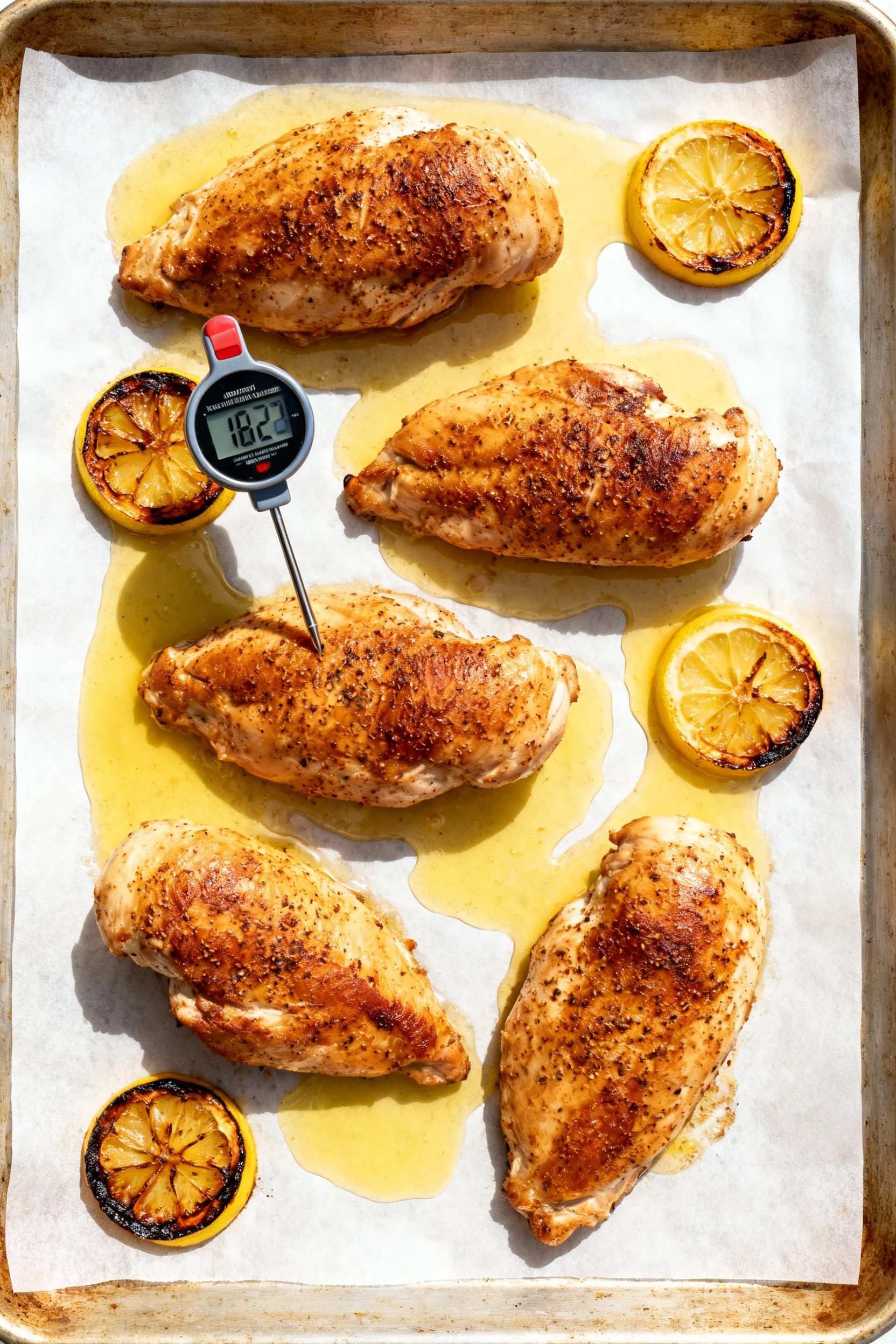
- Preheat the oven to 425°F (220°C) and set a rack in the middle. Line a sheet pan with parchment for easy cleanup.
- Pound chicken to even thickness. Place breasts between plastic wrap and gently pound to about ¾ inch. Even thickness = even cooking and juicier results.
- Pat dry—really dry. Moisture on the surface prevents browning. Grab paper towels and get them surface-dry.
- Optional quick brine (extra insurance). Stir salt into water, add chicken for 20–30 minutes, then drain and pat dry. Don’t rinse; just dry well.
- Mix the rub. In a small bowl combine salt, pepper, garlic powder, paprika, onion powder, and Italian seasoning.
- Season generously. Toss the chicken with olive oil, then coat on all sides with the spice mix. Seasoning should be visible—no shy pinches here.
- Pan setup. Arrange chicken on the sheet pan with a little space between pieces. Dot with butter and tuck in a few lemon slices if you want a bright finish.
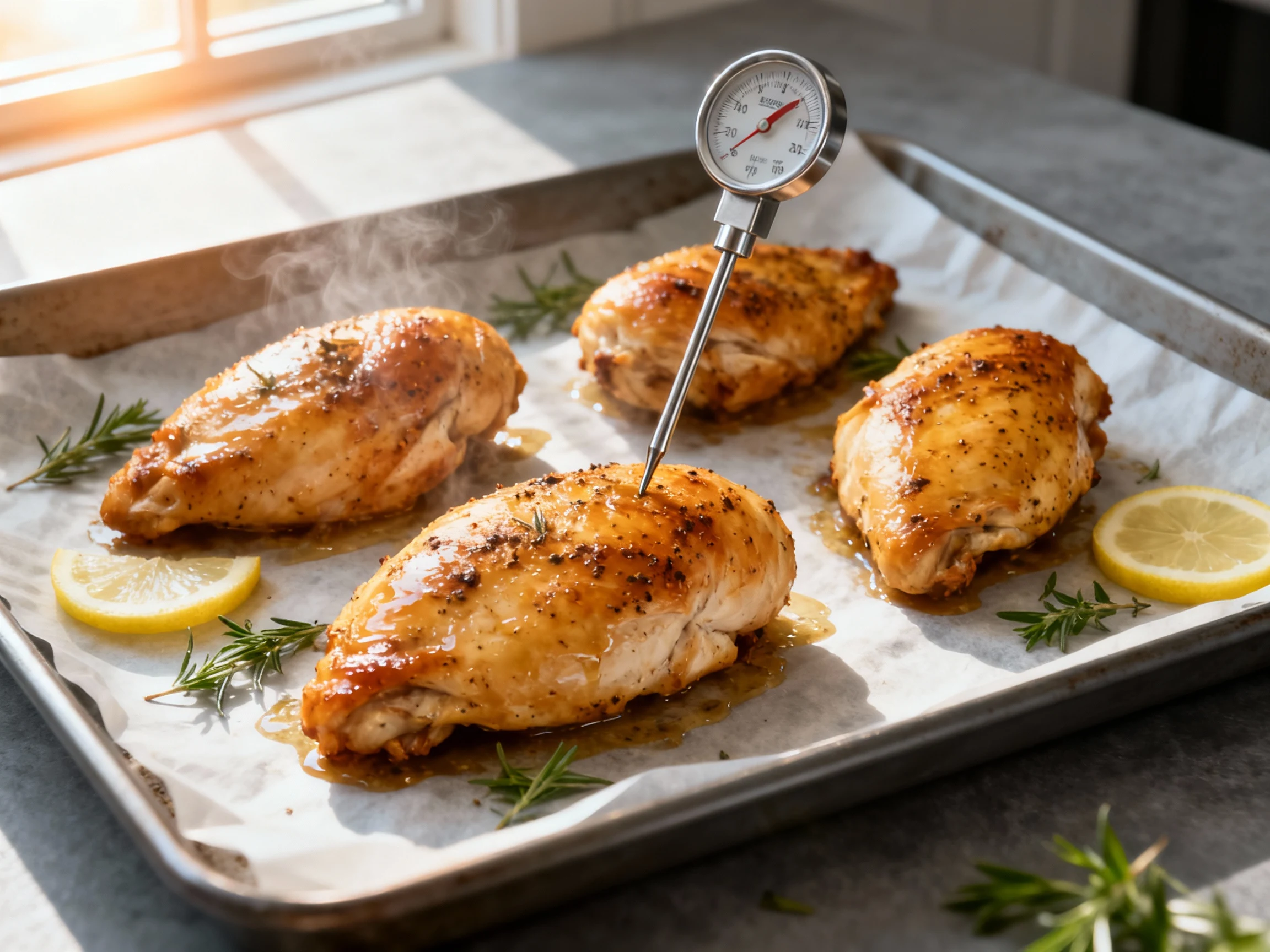
- Bake. Cook until the thickest part reaches 160–162°F. As a guide: small breasts (5–6 oz) take 12–15 minutes; larger (8–10 oz) take 16–20 minutes.
- Optional: Broil 1–2 minutes for deeper color. Watch closely—sugar in paprika browns fast and we’re not auditioning for “Burnt.”
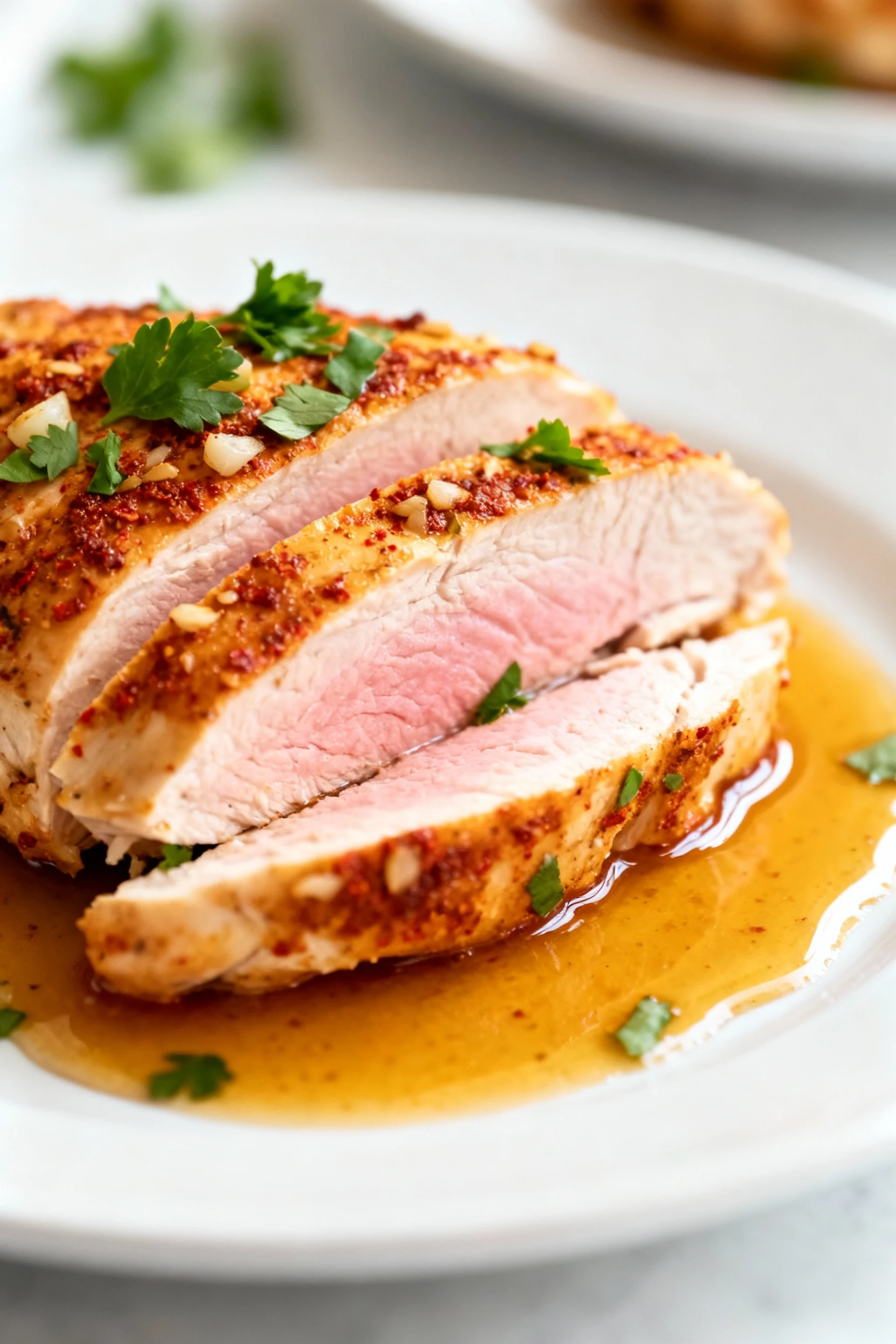
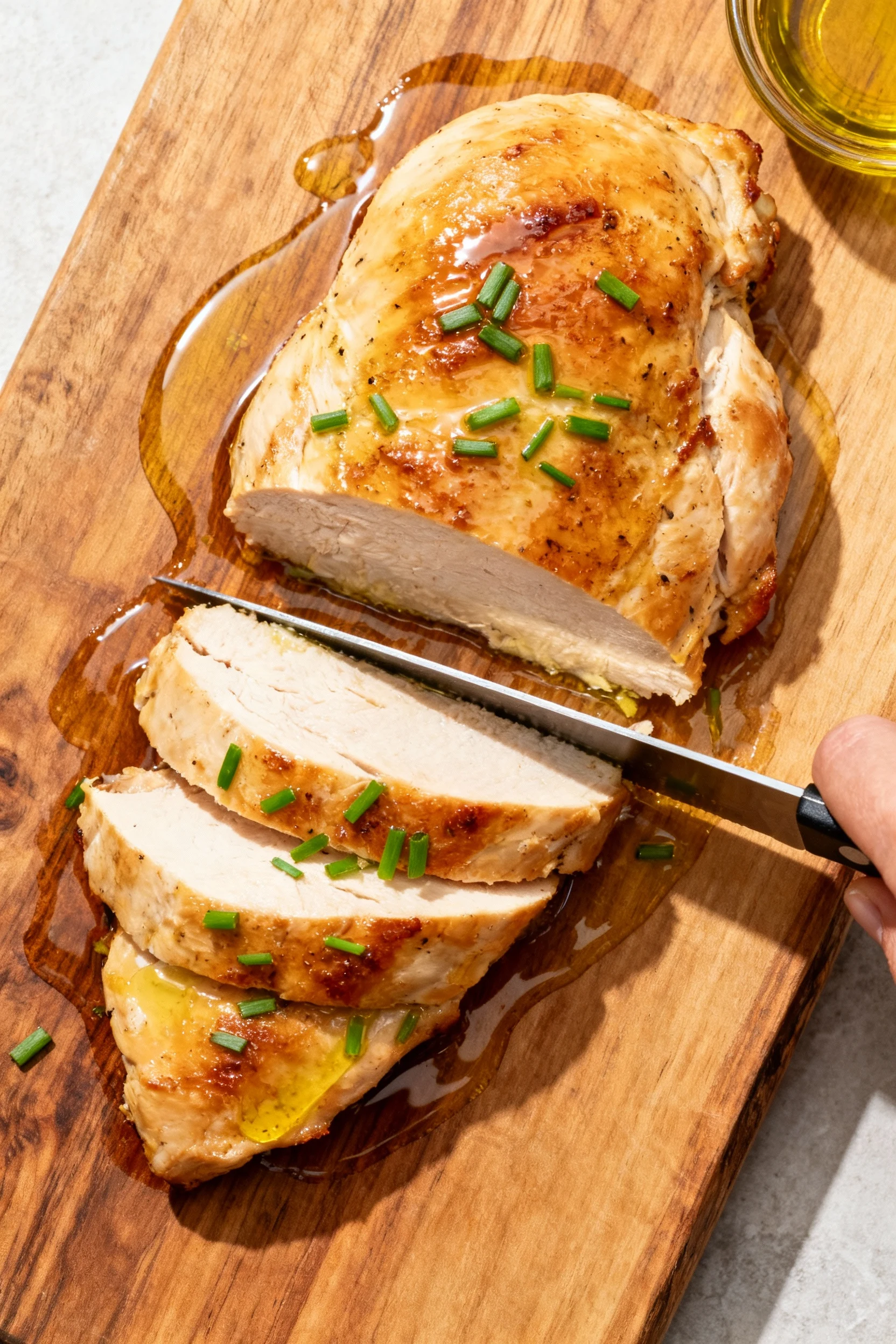
- Rest 5–10 minutes. Carryover cooking finishes the job to 165°F and redistributes juices. Slice too early and you’ll watch flavor leak out. Sad.
- Quick pan sauce (optional). Set the pan over medium heat, add broth, scrape brown bits, and swirl in any remaining butter. Spoon over sliced chicken.
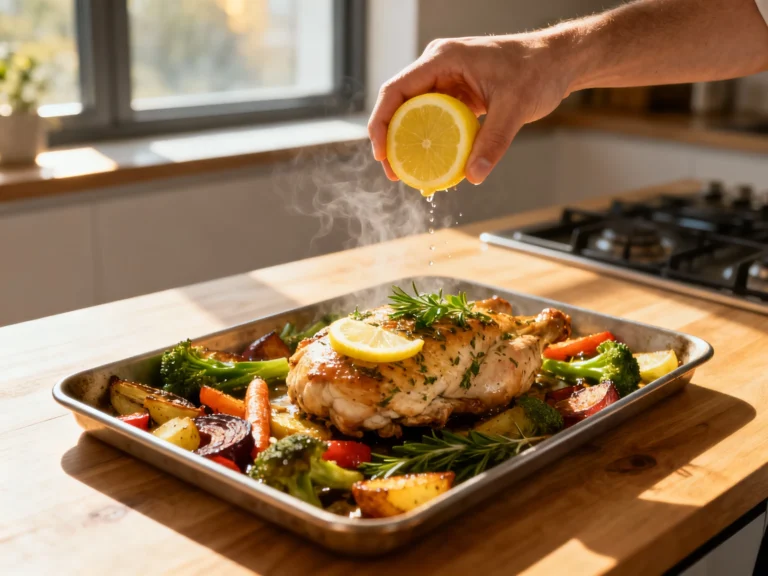
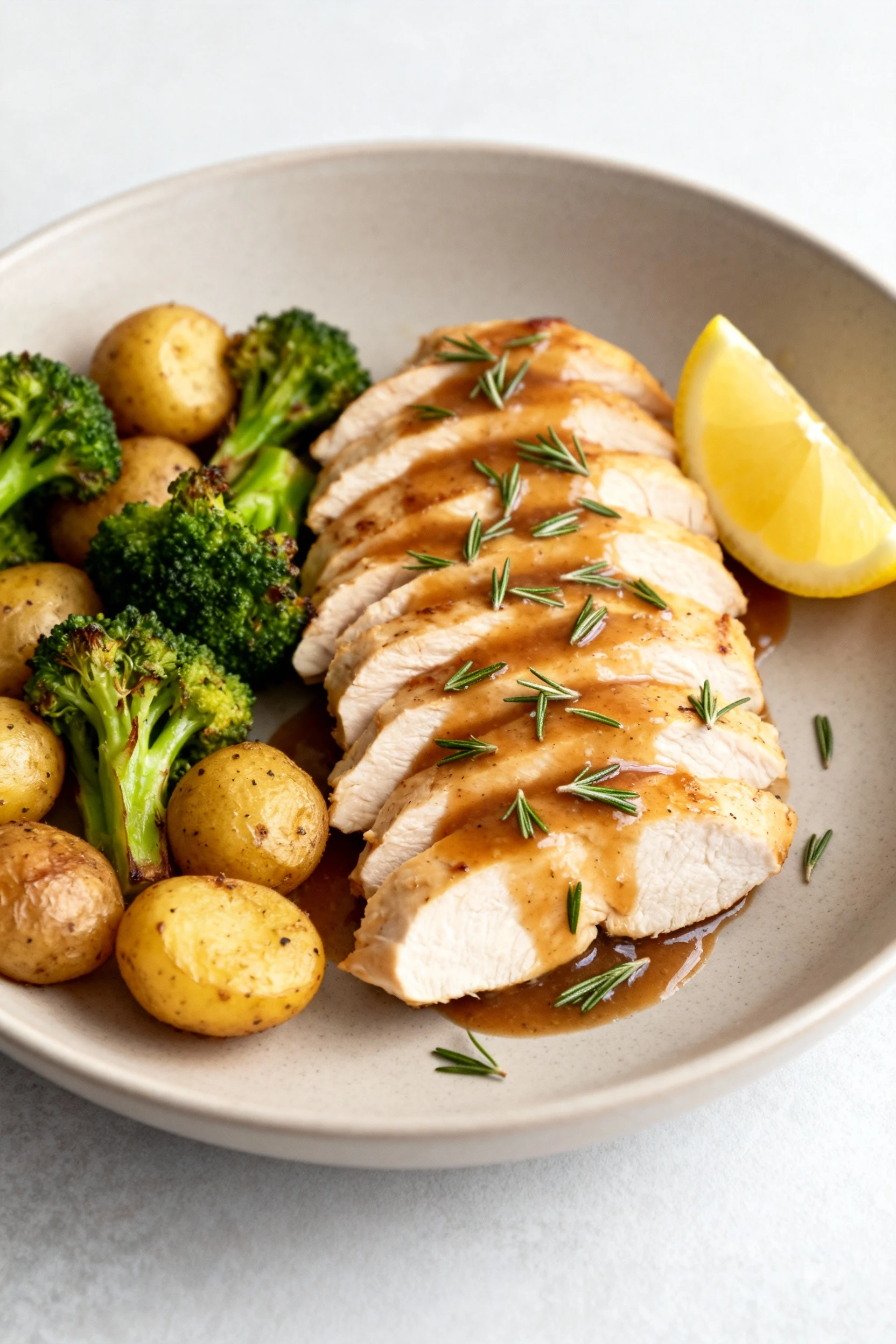
- Serve. Slice against the grain and finish with fresh herbs and lemon. Pair with roasted veggies, rice, or a crisp salad.
Storage Instructions
- Cool completely before storing. Warm chicken traps steam and turns the container into a sauna—bad idea.
- Refrigerate in airtight containers for 3–4 days. Slice first for faster, more even reheating.
- Freeze up to 2–3 months. Wrap tightly, then place in a freezer bag. Label it—your future self will thank you.
- Reheat gently: oven at 275°F for 10–12 minutes under foil; or stovetop in a covered skillet with a splash of broth; microwave at 50% power in short bursts. FYI, high heat = dry chicken.
- Refresh flavor with a squeeze of lemon, a drizzle of olive oil, or a spoon of pan sauce after reheating.
Benefits of This Recipe
- Time-smart: Minimal prep, quick bake, and zero fancy equipment.
- Macro-friendly: High protein, easy to fit into calorie goals.
- Flexible flavor: One base method; infinite rubs, marinades, and sauces.
- Budget-conscious: Chicken breasts go far; leftovers stretch even further.
- Kid-approved: Mild, familiar flavors—then add spice for the grown-ups.
- Low mess: Sheet-pan simplicity means easy cleanup.
- Works year-round: Quick dinners in summer, cozy plates in winter.
Common Mistakes to Avoid
- Skipping a thermometer. Guessing leads to dry meat. A quick probe saves dinner.
- Uneven thickness. Thick on one side, thin on the other = uneven cook. Pound it.
- Overcooking to 175°F+ “for safety.” Pull at 160–162°F; rest to 165°F. Safe and juicy.
- Low oven temp. Gentle heat sounds nice but dries meat when it overstays. High heat, short cook is the move.
- Under-seasoning. Chicken is mild. Be generous with salt and spices for big flavor.
- Crowding the pan. Packed pans steam, not brown. Give each piece some breathing room.
- Slicing immediately. Patience pays. Resting keeps juices in the meat, not on the cutting board.
- Too much sugar in rubs. Sweet spices burn fast at 425°F. If using honey or brown sugar, watch the broil closely.
Alternatives
- Seasoning swaps: Try lemon-pepper; Cajun; smoky chipotle; Tuscan herb; or curry + garlic for a global twist.
- Marinades: Honey-mustard (mustard, honey, vinegar), teriyaki (soy, mirin, ginger), or lemon-herb (lemon, olive oil, garlic, thyme). Marinate 30–120 minutes.
- Panko-Parmesan crust: Brush with mayo or olive oil, coat in seasoned panko + Parmesan, bake 18–20 minutes at 425°F.
- Stuffed chicken: Butterfly and stuff with spinach + feta or mozzarella + pesto; secure with toothpicks and bake 20–22 minutes.
- Sheet-pan dinner: Add broccoli, bell peppers, or small potatoes. Start potatoes 10 minutes earlier; add chicken and veg together for the final 18–20 minutes.
- Air fryer: 380°F for 12–16 minutes, flipping halfway. Great for 2–3 breasts at a time.
- Bone-in swap: Use bone-in thighs at 425°F for 25–35 minutes to 175°F. Crispy, forgiving, and super flavorful.
- Diet-friendly tweaks: Dairy-free? Skip butter, finish with olive oil. Gluten-free? Use gluten-free breadcrumbs or go rub-only.
FAQ
What temperature and time produce the juiciest results?
425°F is the sweet spot for fast, juicy chicken. Small breasts need 12–15 minutes; larger ones need 16–20 minutes. Pull at 160–162°F and rest to 165°F for perfect texture.
Should I cover chicken with foil while baking?
No. Bake uncovered for better browning and flavor. If you do cover, it traps steam and softens the surface—fine for poaching vibes, not great for a vibrant finish.
Do I need to brine?
It’s optional. A quick 20–30 minute brine adds moisture and seasoning insurance. If you’re short on time, skip it and rely on a solid rub and proper cooking.
Can I bake chicken from frozen?
Yes, but adjust expectations. Season liberally, bake at 425°F for about 30–40 minutes, and temp-check often. Texture will be slightly different, and you can’t pound to even thickness, so watch the thinner ends.
How do I keep chicken from drying out?
Pound to even thickness, use high heat, don’t overcook, and let it rest. A splash of butter or olive oil and a quick pan sauce also make dryness a non-issue (FYI, flavor helps).
What internal temperature is considered safe?
165°F in the thickest part is the food-safe target. Pull at 160–162°F and rest to 165°F to avoid overshooting and drying out.
Why does my chicken look pale?
It’s usually surface moisture or a timid oven. Dry the chicken thoroughly, preheat fully, don’t crowd the pan, and add a minute of broiling at the end for color.
Can I meal-prep this for the week?
Absolutely. Slice and store with a little broth or pan sauce. Reheat gently and refresh with lemon and herbs. It stays tender and plays well with grains, greens, and wraps.
My Take
I treat this as a master method: even thickness, bold seasoning, high heat, and a disciplined rest. Do that, and you’ll turn an everyday cut into a weekly win without thinking. The magic is in the tiny habits—the thermometer check, the dry surface, the rest—that stack up to restaurant-level results. Keep the base simple, then remix with sauces and rubs so it never feels repetitive. Your dinner routine just got a lot more reliable—and a lot more delicious.
Printable Recipe Card
Want just the essential recipe details without scrolling through the article? Get our printable recipe card with just the ingredients and instructions.