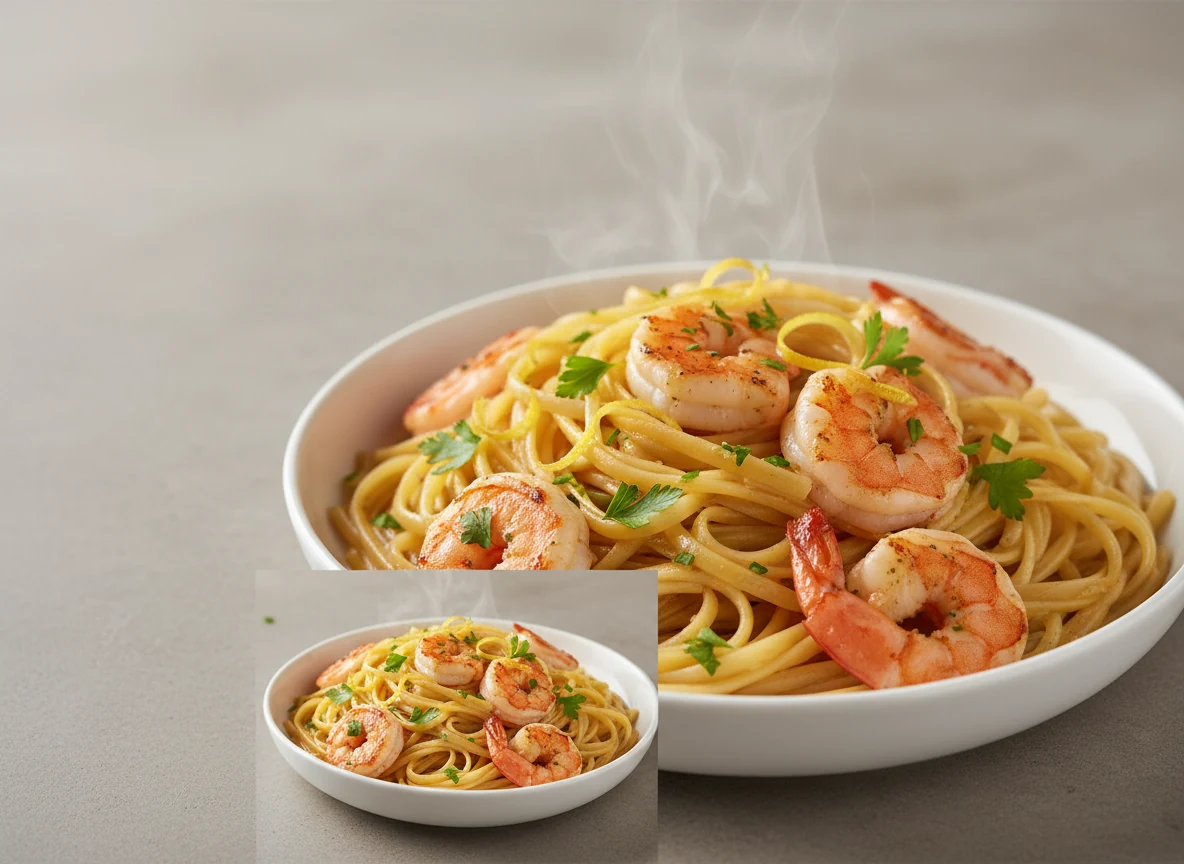
Shrimp Pasta Recipes That Wow in 30 Minutes or Less
Weeknight-friendly, chef-level flavor in under 30 minutes, with pantry swaps and tips so every bite tastes like a special occasion.
You want a dinner that looks fancy, eats fast, and doesn’t nuke your kitchen with dishes? This is it. Shrimp plus pasta is that cheat code meal that turns a regular Tuesday into “Wow, who cooked?” in under half an hour. It’s high protein, big flavor, and minimal fuss—because you’ve got better things to do than hover over a sauce all night. The playbook below gives you a base formula, smart swaps, and pro-level tricks so the sauce hugs every strand and the shrimp stay juicy, not rubbery.
Think of this as your go-to blueprint. Once you nail the core method, you can riff with Cajun heat, creamy Tuscan vibes, or bright lemon-caper energy without breaking a sweat. Hungry yet?
What Makes This Recipe Awesome
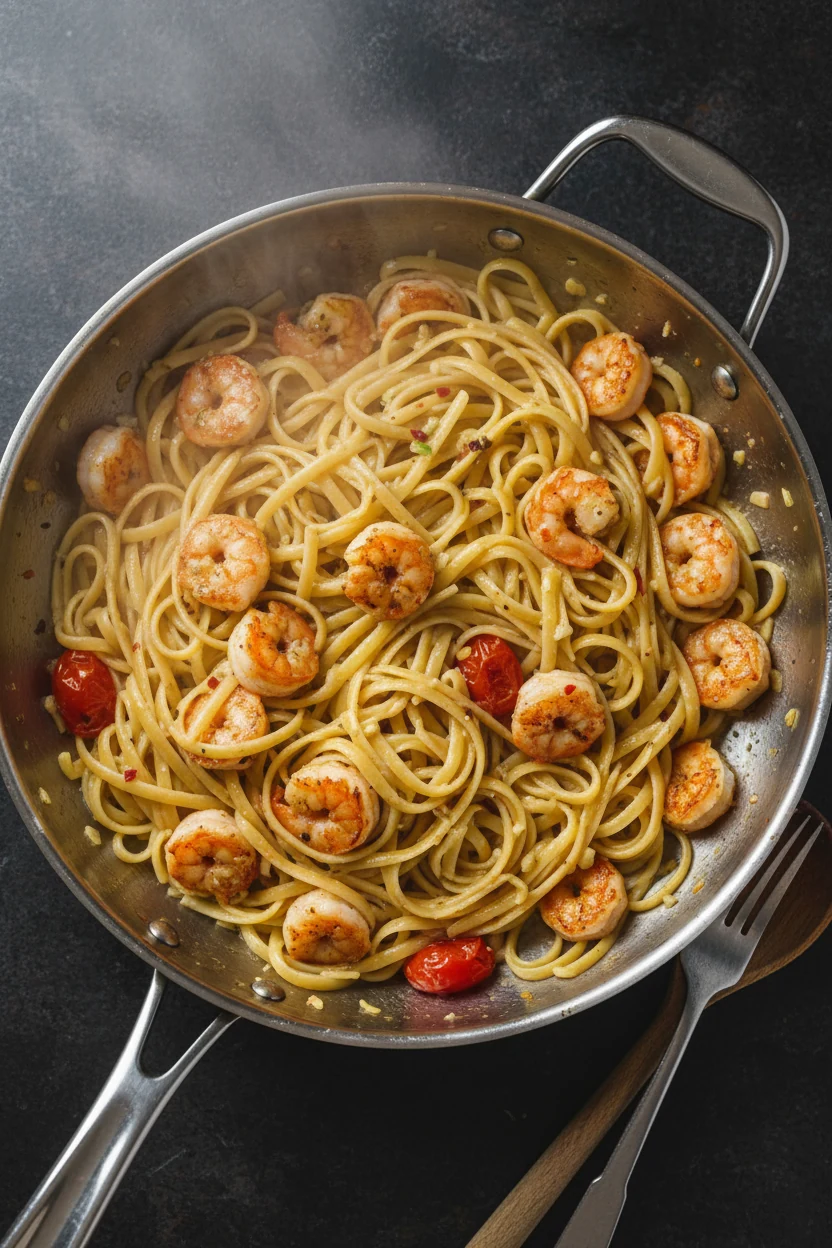
- Ready in 25 minutes: Boil pasta, sear shrimp, toss with sauce—done. Yes, really.
- Restaurant-level sauce: We use pasta water to emulsify butter, oil, and Parm into a glossy, clingy finish.
- One pan for the shrimp, one pot for pasta: Minimal cleanup, maximum flavor.
- Flexible and forgiving: Wine or stock, butter or olive oil, spaghetti or linguine—it all works.
- Balanced bite: Garlicky, lemony, a little heat, a touch of umami from cheese. Nothing flat, nothing fussy.
- Wallet-friendly: A pound of shrimp feeds four with carbs and herbs doing the heavy lifting.
Ingredients Breakdown
- Pasta: 12 oz (340 g) long pasta (linguine, spaghetti, or fettuccine).
- Shrimp: 1 lb (450 g) large shrimp, peeled and deveined. Tails on for flair, off for easy eating.
- Olive oil: 3 tbsp, divided, for searing and saucing.
- Butter: 2 tbsp, for richness and glossy sauce.
- Garlic: 4 cloves, minced. Non-negotiable flavor backbone.
- Red pepper flakes: 1/2 tsp (or to taste) for gentle heat.
- Lemon: Zest of 1 lemon + 2 tbsp juice for brightness.
- Dry white wine or low-sodium chicken broth: 1/2 cup to deglaze and build body.
- Reserved pasta water: 1/2 cup (save more just in case) to emulsify the sauce.
- Parmesan: 1/3 cup finely grated, plus more to serve. Pecorino works if you like it saltier.
- Parsley: 1/4 cup chopped for freshness.
- Cherry tomatoes (optional): 1 cup, halved, for sweet acidity and color.
- Heavy cream (optional): 1/4 cup for a creamy spin.
- Kosher salt and black pepper: To season pasta water, shrimp, and the final dish.
Let’s Get Cooking – Instructions
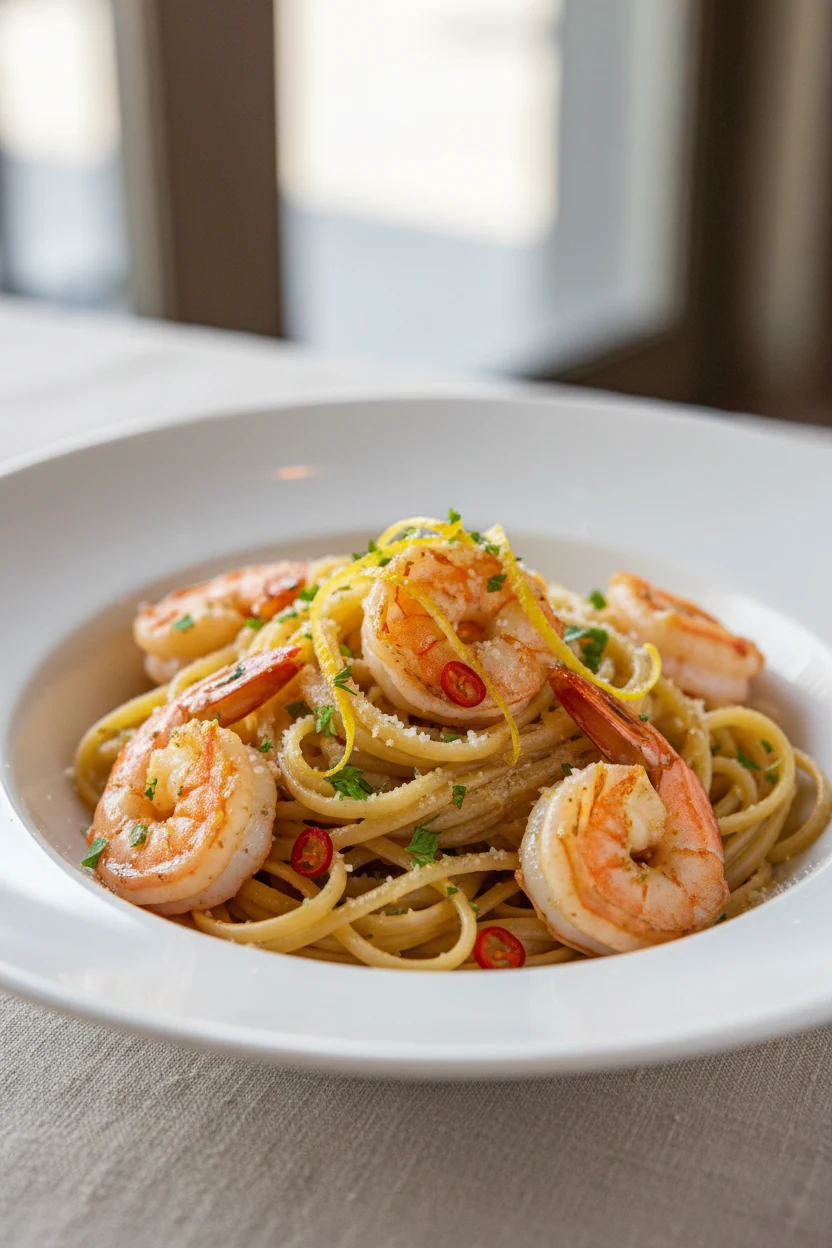
- Prep like a pro: Pat shrimp dry, then season with 1/2 tsp kosher salt and a few grinds of pepper. Zest and juice the lemon, mince the garlic, and chop the parsley. Bring a large pot of water to a boil.
- Salt the water like the sea: Add 2 tbsp kosher salt to the boiling water. This is your only chance to season the pasta itself. Drop in the pasta and cook until just shy of al dente (usually 1 minute less than package).
- Sear the shrimp: Heat 2 tbsp olive oil in a large skillet over medium-high. Add shrimp in a single layer and cook 1–2 minutes per side until just opaque. Don’t overcook. Transfer to a plate.
- Build the flavor base: Lower heat to medium. Add remaining 1 tbsp oil and the butter. Stir in garlic and red pepper flakes for 30 seconds until fragrant (not browned).
- Deglaze: Pour in the wine or broth. Scrape up any brown bits. Simmer 1–2 minutes to reduce slightly.
- Add tomatoes (optional): Toss in cherry tomatoes and cook 1–2 minutes until they just slump. Skip if you want a more classic lemon-garlic vibe.
- Reserve pasta water: Scoop out at least 1 cup before draining pasta. FYI, you’ll probably use about 1/2 cup.
- Emulsify the sauce: Add drained pasta to the skillet. Pour in 1/3–1/2 cup pasta water and toss vigorously. The starch helps the butter and oil form a silky sauce that coats every strand.
- Finish with lemon and cheese: Add lemon zest and juice, then sprinkle in Parmesan off the heat. Toss until melted and glossy. If it looks tight, add a splash more pasta water.
- Return the shrimp: Add shrimp (and any juices) back to the pan. Toss 30–60 seconds to warm through. Taste and adjust salt, pepper, and heat.
- Make it creamy (optional): For a luxe version, stir in 1/4 cup cream after the cheese. Simmer 30 seconds to thicken slightly. Add more pasta water if needed to keep it silky.
- Herb and serve: Fold in parsley. Plate, sprinkle with extra cheese, and finish with a drizzle of olive oil or a small pat of butter if you’re feeling extra.
- Timing tip: The shrimp cook in minutes, so have everything chopped before you start. IMO, that’s the difference between “nailed it” and “oops.”
Preservation Guide
Leftovers keep well for up to 3 days in an airtight container in the fridge. Reheat gently over low heat with a splash of water, stock, or cream to re-loosen the sauce. Microwaves are fine—just go in short bursts and stir.
Freezing is possible but not ideal; shrimp can turn mealy once thawed and reheated. If you want to prep ahead, cook pasta 2 minutes under al dente and store it separate from the sauce. Then reheat the sauce, add pasta, and finish with fresh lemon and parsley. TBH, the whole dish is so fast you’re better off cooking it fresh.
Food safety check: Shrimp should be reheated to steaming-hot throughout. If it smells off, it’s off. Trust your nose.
Why This is Good for You
Shrimp are a lean protein with roughly 20–24 grams per 3 oz, plus selenium, B12, and iodine. That’s a lot of nutrient density for not a lot of calories. Use extra-virgin olive oil for heart-healthy fats and anti-inflammatory benefits.
Lemon and parsley bring vitamin C and antioxidants; garlic supports flavor and, depending on who you ask, your immune flex. Choose whole-grain or legume pasta for more fiber and steadier energy. Control sodium by using low-sodium broth and salting thoughtfully rather than blindly.
In short: big flavor doesn’t require a cream bath or a salt overload. You’ll get satiety from protein, carbs, and fat in a balanced ratio—and yes, you’ll be happy about it.
Pitfalls to Watch Out For
- Overcooking shrimp: They go from perfect to rubber band fast. Pull at opaque with light pink and a gentle curl.
- Skipping pasta water: That starchy liquid is your magic. No pasta water = sad, greasy sauce.
- Cheese clumping: Add Parmesan off the heat and toss. Boiling sauce + cheese = stringy blobs.
- Unseasoned water: Under-salted pasta drags down the whole dish. Salt the water generously at the start.
- Too much heat with garlic: Burnt garlic tastes bitter. Keep it fragrant, not brown.
- Sweet wine mistake: Use dry white wine. Sweet wine makes a dessert pasta (hard pass).
- Wrong pan size: Crowding prevents browning and tossing. Use a large skillet so the sauce can emulsify properly.
Recipe Variations
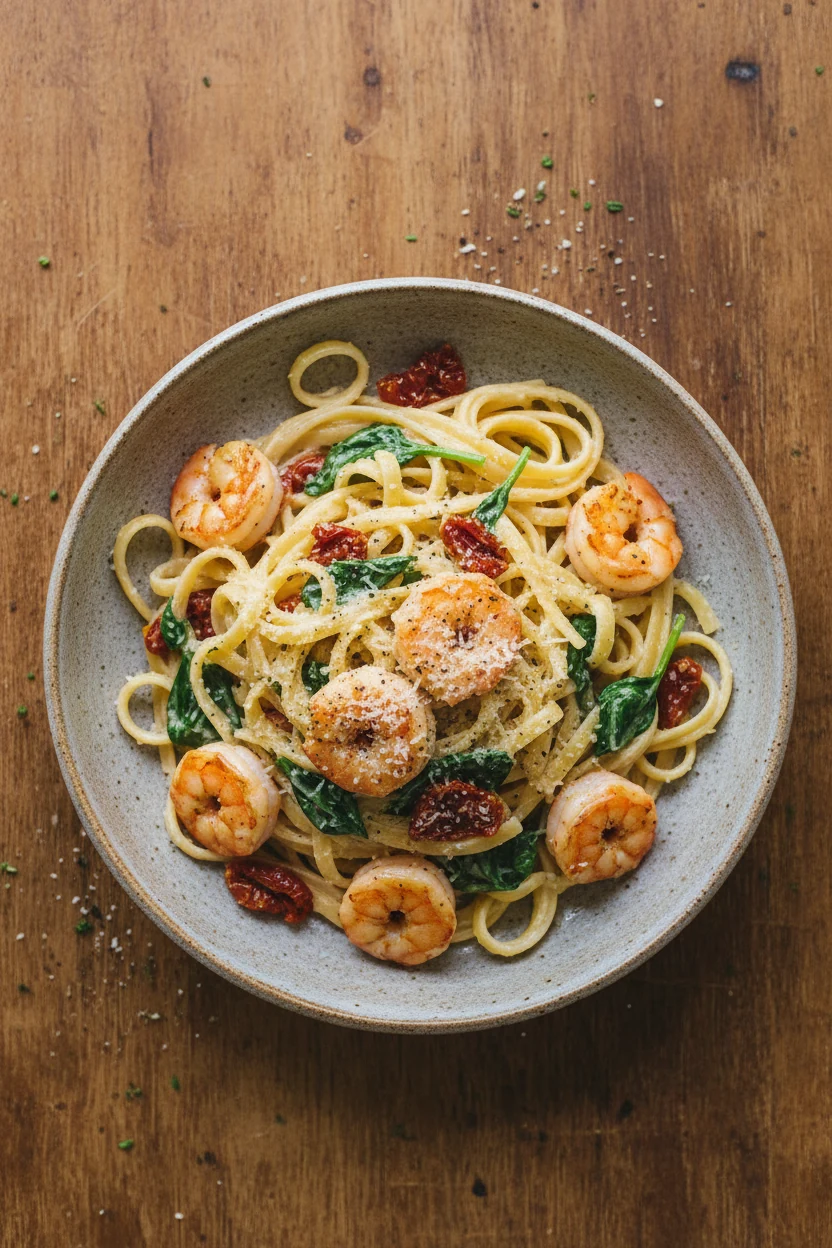
- Creamy Tuscan: Add 1/3 cup cream, a handful of baby spinach, and chopped sun-dried tomatoes. Finish with Parm.
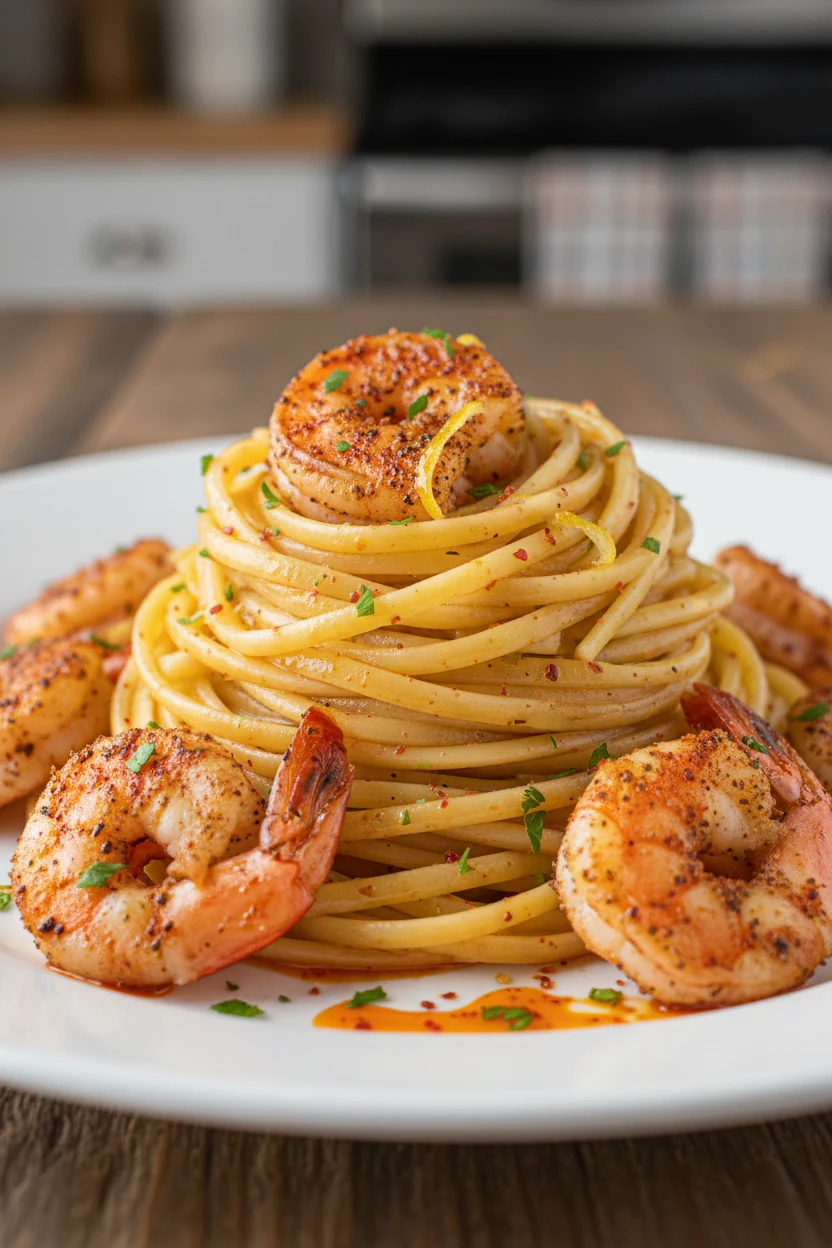
- Cajun Kick: Toss shrimp with 1–2 tsp Cajun seasoning before searing. Add a squeeze of lemon and a knob of butter to round it out.
- Lemon-Caper Scampi: Add 2 tbsp capers with the garlic, extra lemon zest, and a splash more wine. Parsley on top.
- Tomato-Basil: Skip cream. Use 1 cup crushed tomatoes instead of wine/broth and simmer 5 minutes. Finish with basil.
- Pesto Party: Swap lemon and Parm for 1/3 cup basil pesto off the heat. Thin with pasta water to gloss.
- Roasted Pepper & Feta: Blend roasted red peppers with a splash of cream for a silky sauce; top with crumbled feta and dill.
- Chili-Lime: Use lime instead of lemon and add a tsp of chili-garlic sauce. Cilantro to finish.
- Dairy-Free: Skip butter and cheese; use all olive oil and a spoon of miso or nutritional yeast for umami.
- Veg-Loaded: Sauté zucchini ribbons or asparagus with the garlic. The extra texture is clutch.
- Gluten-Free: Use GF pasta and watch the cook time closely. Reserve extra pasta water; GF starch varies.
FAQ
What pasta shape works best?
Long shapes like linguine and spaghetti are classics because they tangle with the sauce. Fettuccine is great for creamier versions. Short cuts (penne, rigatoni) work if you prefer more “scoopy” bites—just keep the sauce glossy so it doesn’t dry out.
Can I use frozen shrimp?
Absolutely. Thaw in the fridge overnight or under cold running water for 10 minutes. Pat very dry before searing for good color. FYI, pre-cooked shrimp will overcook quickly; add them in the final minute just to warm through.
Do I need wine for the sauce?
Nope. Low-sodium chicken broth or even vegetable broth works. The key is using something flavorful to deglaze and then relying on pasta water and fat to emulsify into that silky texture.
How do I make it spicier?
Increase red pepper flakes, add a minced fresh chili, or stir in Calabrian chili paste. Taste as you go—heat should complement, not steamroll, the lemon and garlic.
Why is my sauce thin?
Use more pasta water and toss over medium heat to encourage emulsification. Add cheese off the heat and toss until glossy. If you went too far, a small knob of butter can bring it back together. If it’s still watery, simmer 30–60 seconds more while tossing.
How do I scale for a crowd?
Use a wider pan or cook in batches so you can actually toss the pasta. For every extra 12 oz pasta, add about 3/4 lb shrimp and scale aromatics and liquids proportionally. Keep a big pot of pasta water handy; you’ll need more than you think.
Parmesan substitute ideas?
Pecorino Romano is sharper and saltier; start with a bit less. Grana Padano is a milder Parm swap. Dairy-free? Try nutritional yeast plus a dab of white miso for savory depth.
How do I devein shrimp fast?
Use a small paring knife to make a shallow slit along the back and pull out the vein, or use a dedicated deveiner tool. Rinse briefly and pat dry. It’s not hard—just a few minutes of prep for a cleaner bite.
Final Thoughts
This is the kind of meal that turns you into the “how did you make that?” friend. The method is simple, the results feel luxe, and the variations keep it fresh every week. Keep shrimp in the freezer, pasta in the pantry, and lemons on the counter and you’re always 25 minutes from something impressive.
Remember the non-negotiables: salty pasta water, hot pan for shrimp, and pasta water to emulsify. Nail those, and everything else is just your flavor personality showing off. Now go make dinner you’ll brag about (you earned it).
Printable Recipe Card
Want just the essential recipe details without scrolling through the article? Get our printable recipe card with just the ingredients and instructions.