Goulash Recipes That Deliver Rich Comfort Fast—no Fuss
Weeknight-friendly comfort with authentic paprika depth, budget ingredients, and flexible stovetop or slow-cooker methods for bowls tonight.
You want a pot of something honest, bold, and soul-warming that doesn’t hijack your entire evening. This is that move. Big flavor, low friction, and a cleanup situation that won’t make you rethink dinner plans. We’ll show you how to transform simple pantry staples into a stew that tastes like it simmered at grandma’s for hours—because, well, it kind of did, but smarter. Ready to build massive flavor with a few strategic steps?
The Secret Behind This Recipe
Great goulash is all about three levers: proper paprika, onion-to-beef ratio, and low, steady heat. Use fresh, sweet Hungarian paprika and treat it like a star ingredient. Old paprika tastes like red dust—please don’t do that to yourself.
Onions aren’t background noise here; they melt down and become the sauce. Aim for roughly 1:1 onions to beef by weight for that lush texture traditional cooks swear by. Finally, keep the simmer gentle. Boiling toughens the beef; a lazy bubble turns chuck into velvet. A pinch of caraway, a hint of vinegar, and a short rest before serving seal the deal. FYI: the pot tastes even better on day two.
Ingredients
- 2.5 lb (1.1 kg) beef chuck, cut into 1.5-inch cubes, patted dry
- 2 lb (900 g) yellow onions (about 3 large), sliced thin
- 3 tbsp sweet Hungarian paprika (fresh, vibrant red)
- 4 cloves garlic, minced
- 1 tsp caraway seeds, lightly crushed
- 1 tsp dried marjoram (or 1 tbsp fresh, chopped)
- 1 bay leaf
- 1 red bell pepper, diced (optional but classic)
- 2 medium waxy potatoes, peeled and cubed 3/4-inch (optional)
- 2 carrots, sliced into 1/2-inch rounds (optional)
- 1 tbsp tomato paste (optional for extra savor and color)
- 2 tbsp neutral oil (or lard, if you want the traditional vibe)
- 4 cups (1 L) low-sodium beef broth or water
- 1.5 tsp kosher salt, plus more to taste
- 1/2 tsp freshly ground black pepper
- 1 tsp red wine vinegar or a squeeze of lemon (to finish)
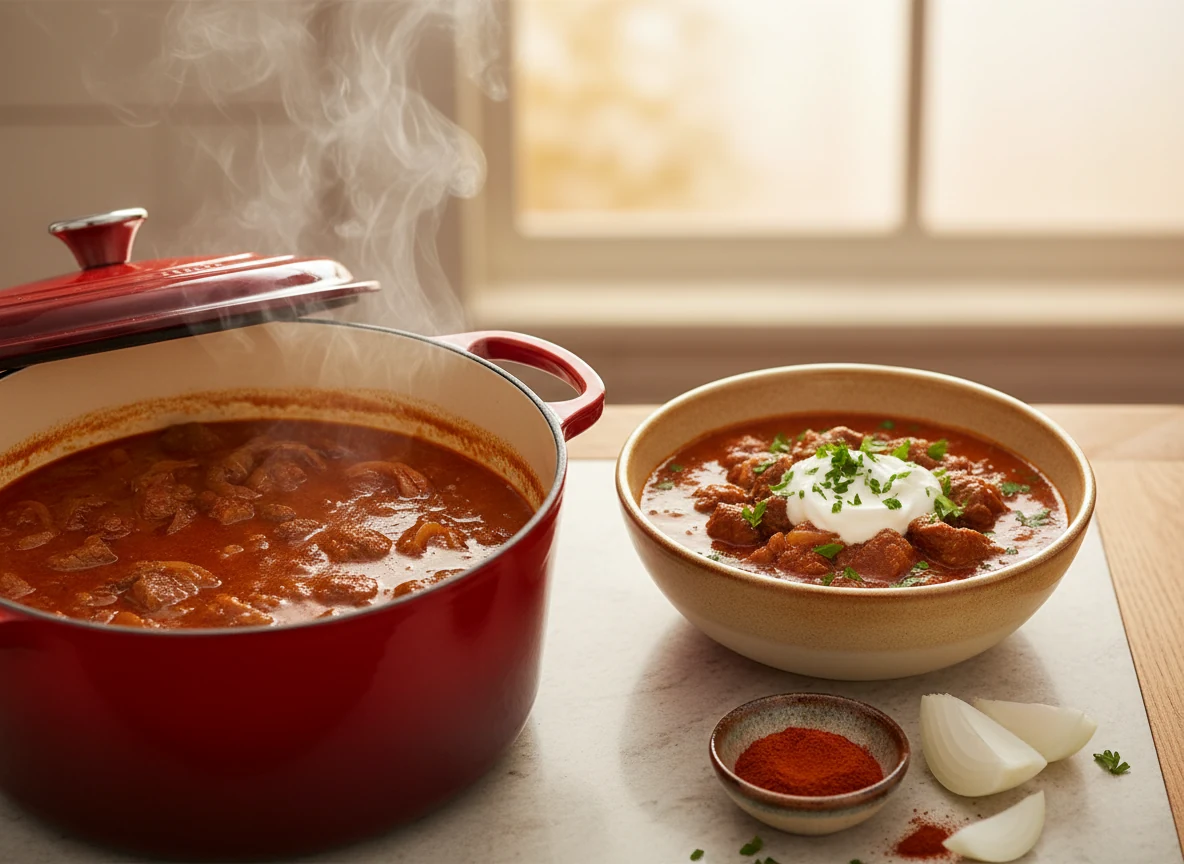
- Fresh parsley, chopped, for garnish
- Sour cream, for serving (optional)
Paprika note: If you only have smoked Spanish paprika, use no more than 1 tsp and make up the rest with sweet paprika to avoid overpowering smokiness.
Instructions
- Season and prep the beef. Toss the cubes with 1 tsp salt and black pepper. Pat dry again—surface moisture blocks searing.
- Brown in batches. Heat 1 tbsp oil in a heavy Dutch oven over medium-high. Sear the beef in 2–3 batches until browned on at least two sides, 3–4 minutes per batch. Don’t crowd. Transfer to a plate.
- Soften the onions. Lower heat to medium. Add remaining 1 tbsp oil and the onions with a pinch of salt. Cook, stirring often, until very soft and golden at the edges, 10–12 minutes. You want them collapsing, not crisping.
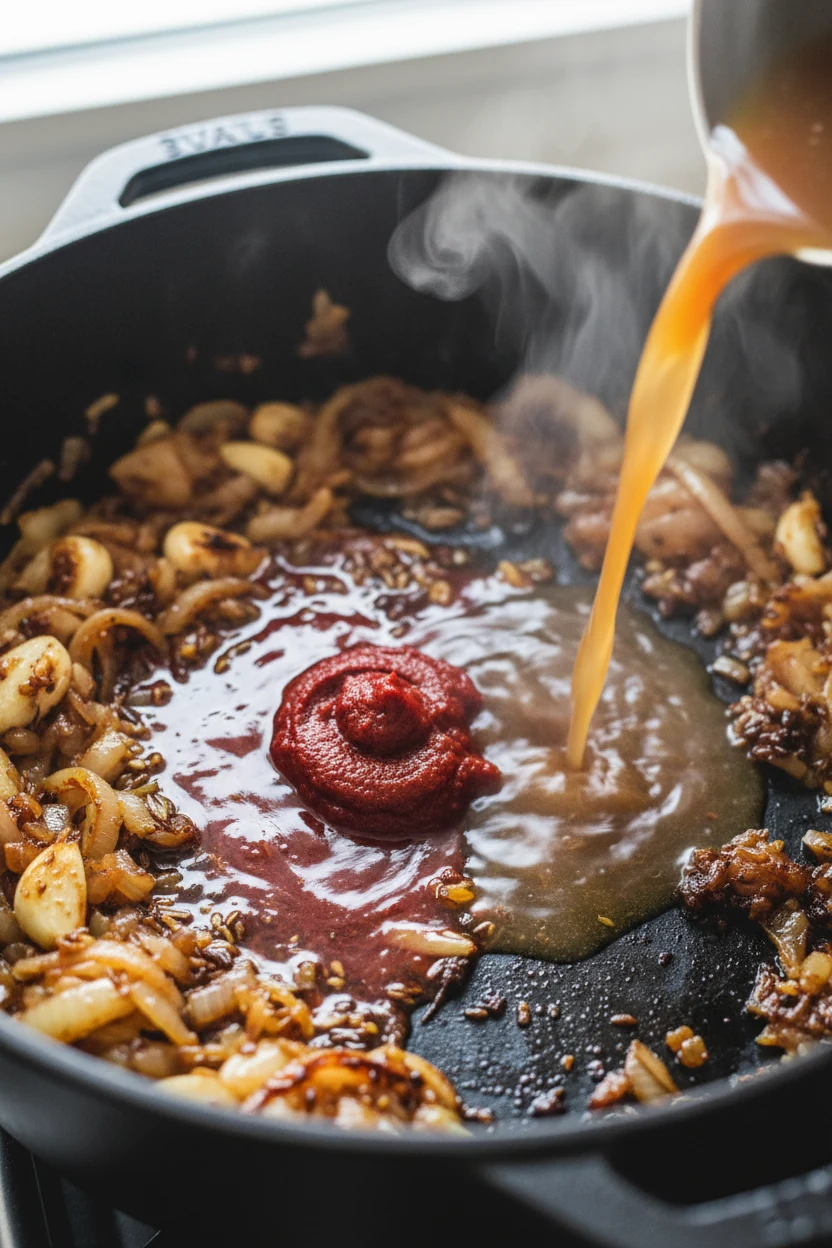
- Add aromatics. Stir in garlic, caraway, and marjoram. Cook 1 minute until fragrant. If using, add tomato paste and cook another 1–2 minutes to caramelize lightly.
- Bloom the paprika. Off the heat, sprinkle in the paprika and stir for 20–30 seconds. Blooming unlocks color and sweetness but can burn quickly—hence off heat. IMO this step makes the dish.
- Deglaze and return the beef. Pour in 1/2 cup broth, scraping up browned bits. Return seared beef and any juices to the pot. Add bell pepper and bay leaf.
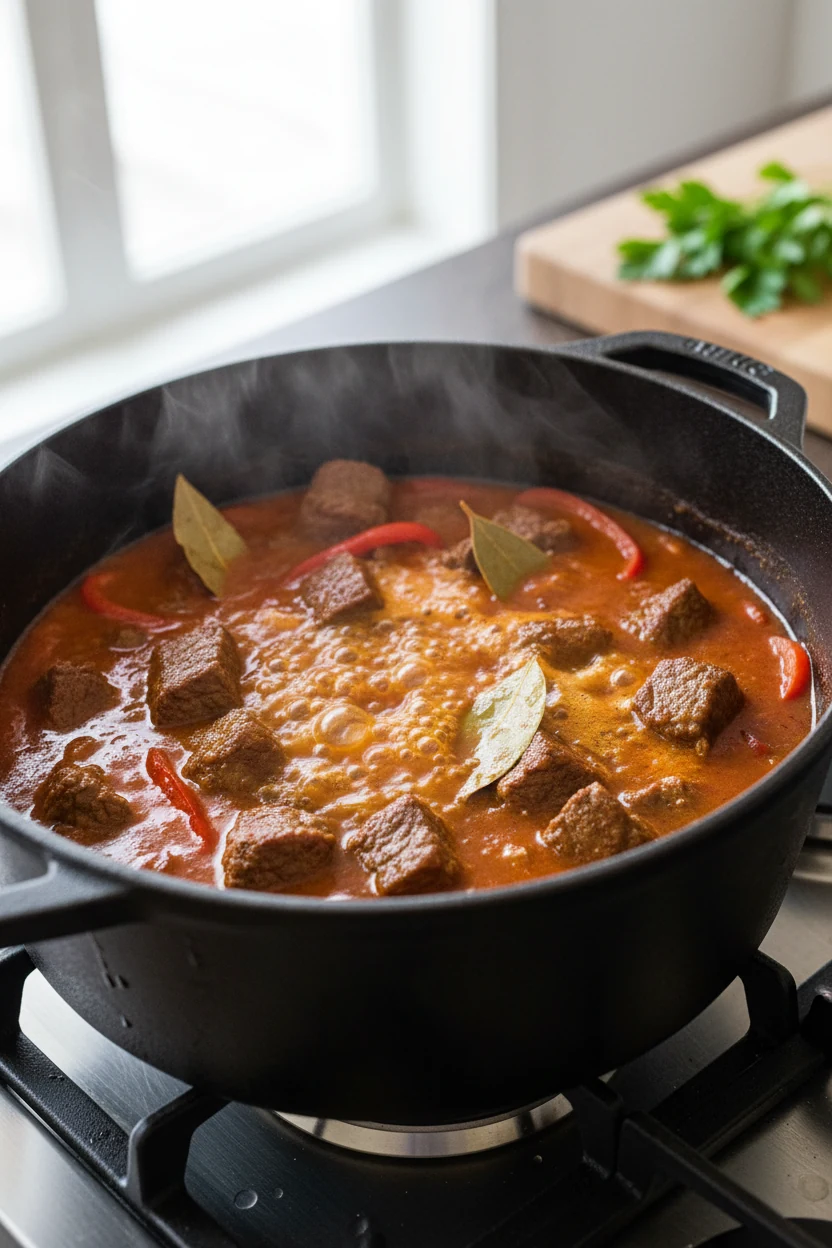
- Build the stew. Add remaining broth to just cover. Bring to a brief simmer, then reduce to low so you see a gentle burble—not a boil.
- Long simmer. Cover partially and cook 60 minutes, stirring occasionally. Keep the heat low and steady; adjust as needed.
- Potatoes and carrots. If using, add them now. Continue simmering 25–35 minutes, until the beef is fork-tender and veggies are just cooked.
- Final seasoning. Remove bay leaf. Stir in vinegar or lemon for brightness. Taste and adjust salt/pepper. If you want a thicker body, lightly mash a few potato pieces into the broth.
- Optional rest. Kill the heat and let the pot sit 10 minutes. The flavors settle and the sauce clings better—worth the patience.
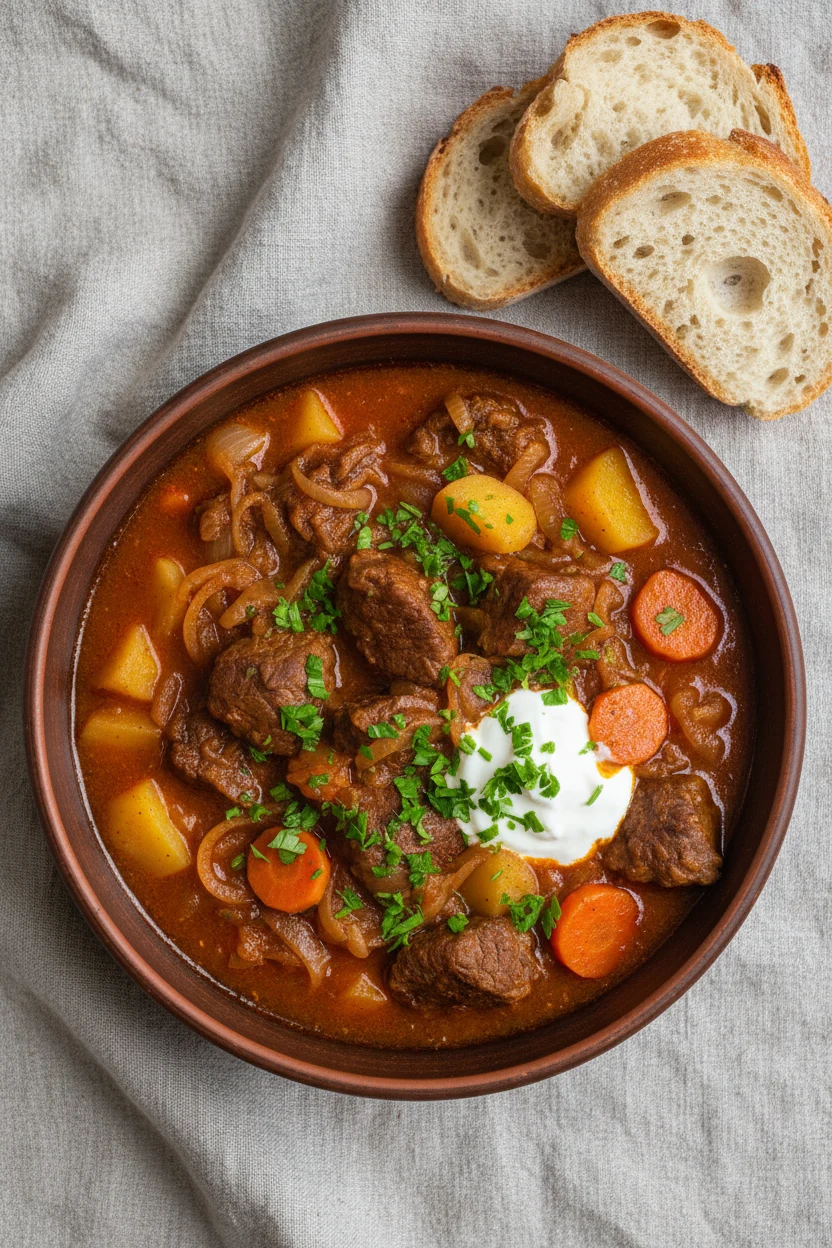
- Serve. Ladle into warm bowls. Garnish with parsley and a dollop of sour cream if you like that creamy edge.
- Pairings. Crusty bread, csipetke (pinched noodles), buttered egg noodles, or plain rice all play nicely.
Storage Tips
Cool leftovers quickly and store in airtight containers. Refrigerate for up to 4 days; the flavor actually deepens by day two. Reheat gently over medium-low, adding a splash of water or broth if it tightens up.
Freezing: Beef and sauce freeze well for 2–3 months. Potatoes get mealy in the freezer, so either skip them for make-ahead batches or freeze the stew without potatoes and add fresh ones when reheating. Label with dates—future you will thank you.
Health Benefits
This bowl hits a smart balance of protein, micronutrients, and slow-cooked satisfaction. Beef chuck delivers high-quality protein and iron; long simmering coaxes collagen into gelatin for a silky mouthfeel that’s surprisingly satiating. Paprika brings antioxidants like carotenoids, while onions and peppers add vitamin C and fiber.
Want to lighten it up? Use a leaner cut (top round), add extra carrots and peppers, and go easy on sour cream. Keep sodium in check by choosing low-sodium broth and salting in stages. Bonus: the base recipe is naturally gluten-free when served without noodles.
Don’t Make These Errors
- Burning the paprika. Adding it over high heat turns sweet spice into bitter chaos. Always bloom off heat.
- Skimping on onions. They’re not a garnish; they’re the sauce. Too few equals thin and flat stew.
- Boiling the beef. A rolling boil tightens fibers. Keep it at a lazy simmer for tender results.
- Overcrowding the pan when searing. Steam isn’t your friend. Brown in batches for that deep fond.
- Using old paprika. If it’s brownish and smells tired, it is. Fresh spice equals fresh flavor, full stop.
- Adding potatoes too early. They’ll disintegrate. Drop them in during the last 30 minutes.
- Skipping acid at the end. A splash of vinegar or lemon wakes everything up. No brightness, no balance.
- Over-thickening with flour. It muddies the texture. Mash a few potatoes instead for a clean, glossy body.
Variations You Can Try
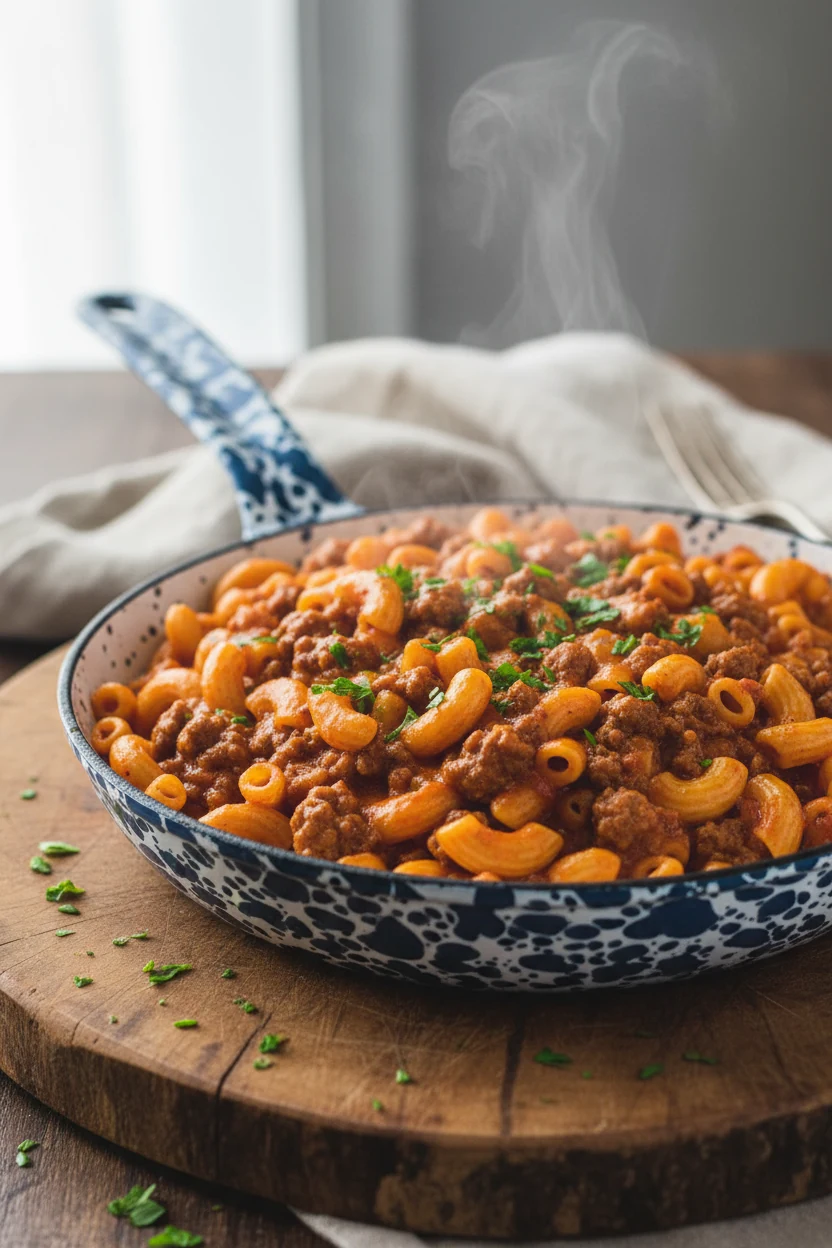
- Classic American style: Swap potatoes for 2 cups dried elbow macaroni. Add a 14.5-oz can of diced tomatoes and 1 cup extra broth. Simmer pasta in the pot until al dente. Comfort with a diner vibe—yes, please.
- Smoky-spicy: Use 2.5 tbsp sweet paprika + 0.5 tbsp hot paprika, and add a pinch of smoked paprika (no more than 1/2 tsp). Finish with chili flakes if you like heat.
- Chicken or pork: Use boneless skinless chicken thighs or pork shoulder. Reduce simmer time to 35–50 minutes, until tender. Lighter, faster, still cozy.
- Mushroom-forward (vegetarian): Brown 1.5 lb mixed mushrooms and sub vegetable broth. Add a splash of soy sauce for umami and a knob of butter at the end for richness.
- Instant Pot: Sauté to sear and soften onions as usual. Pressure cook on High for 30 minutes, natural release 15. Add potatoes and pressure cook another 2 minutes; quick release.
- Slow cooker: Sear beef and onions on the stove, then transfer. Cook on Low 7–8 hours (or High 4–5). Add potatoes for the last 2 hours.
- Low-carb: Skip potatoes and carrots. Add extra peppers and a handful of shredded cabbage in the last 15 minutes.
- Paprikash-adjacent: Stir 1/2 cup sour cream with a ladle of hot sauce to temper, then swirl back in off the heat for a creamy finish.
FAQ
What’s the difference between Hungarian and American versions?
Hungarian tradition leans on beef, onions, and paprika with potatoes or csipetke noodles—more stew-like, deeply spiced, and not heavy on tomatoes. The American cousin often includes elbow macaroni and canned tomatoes, leaning toward a tomato-beef pasta. Both are legit; they just scratch different comfort itches.
What cut of beef works best?
Go for beef chuck. It has the connective tissue and fat to turn tender and silky after a long simmer. Lean cuts like sirloin dry out; stew meat mixes can be hit-or-miss. Buy a whole chuck roast and cube it yourself for consistent results.
Do I need to use Hungarian paprika?
Short answer: yes, if you want that classic flavor. Sweet Hungarian paprika has a fruity depth that Spanish smoked paprika can’t replicate on its own. If you must sub, blend mostly sweet paprika with just a pinch of smoked to avoid overpowering the stew.
How can I thicken the sauce without flour?
Mash a few potato chunks into the pot or reduce uncovered for a few minutes. You can also purée a small scoop of onions and broth, then stir it back. These methods keep the flavor clean and the texture glossy.
Can I make this dairy-free and gluten-free?
Absolutely. Skip the sour cream garnish for dairy-free. The base stew contains no gluten, so you’re all set unless you serve it over noodles. Pair with rice or potatoes for a naturally gluten-free meal.
What should I serve alongside?
Crusty bread, rice, buttered egg noodles, or a simple cucumber salad with dill and vinegar. A crisp lager or a light red wine (Zweigelt, Pinot Noir) also plays nice. TBH, a spoon and a quiet corner work too.
How long will leftovers keep, and can I freeze them?
Leftovers keep in the fridge up to 4 days. Freeze for 2–3 months, ideally without potatoes to preserve texture. Reheat gently, add a splash of broth, and re-season to taste—flavors mellow a bit after freezing.
The Bottom Line
If you stock good paprika, respect the onions, and keep the simmer chill, you’ll get a pot of comfort that tastes like you spent a fortune in time and skill. You didn’t—you just followed the handful of moves that matter. Build your base, keep it low and slow, and finish with brightness. The result? A bowl you’ll brag about and a blueprint you can remix all year long, no stress, tons of flavor.
Printable Recipe Card
Want just the essential recipe details without scrolling through the article? Get our printable recipe card with just the ingredients and instructions.