Spaghetti Squash Recipes That Turn Weeknights Into Cravings
Quick, budget-friendly dinners that deliver cozy pasta vibes with fewer carbs. Learn the core method once, then spin it into weeknight wins.
You want the comfort of pasta, the speed of a 30-minute meal, and the macros that don’t punch your goals in the face. Here’s the move: one squash, one pan, and a simple sauce that tastes like you cheated. Make it once, and you’ll have a repeatable system you can remix all week without boredom or burnout. It’s high ROI cooking—cheap ingredients, big flavor, minimal dishes. Your Tuesday night just leveled up.
What Makes This Recipe So Good
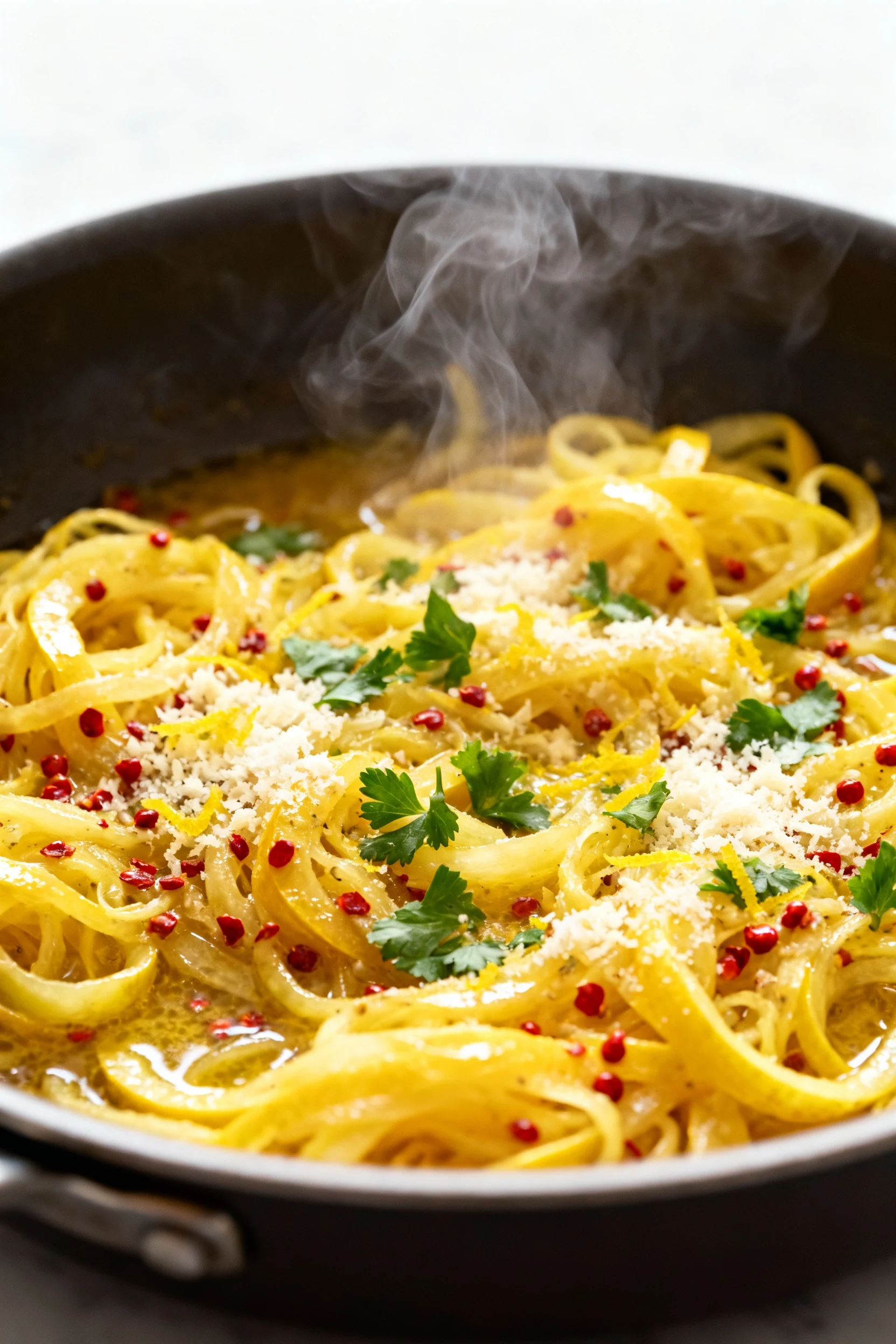
It eats like pasta, without the pasta crash. Roasting coaxes sweet, nutty strands that soak up sauce and deliver that twirl-with-a-fork satisfaction.
It’s a simple framework, not just one dish. Master the base garlic-herb method, then flip it into marinara, pesto, buffalo, or taco night with the same squash.
It’s weeknight-proof. The oven does the heavy lifting. No babysitting, zero drama, and it scales for meal prep like a champ.
It’s budget and waistline friendly. One squash feeds four for the price of a latte, and the carb count stays comfortably low. IMO, that’s a win-win.
Ingredients Breakdown
- 1 medium spaghetti squash (about 2.5–3 pounds) — gives 4 cups of strands.
- 2 tablespoons olive oil — for roasting; adds flavor and browning.
- 1 teaspoon kosher salt — divided; season the squash and the pan sauce.
- 1/2 teaspoon black pepper — fresh ground for best flavor.
- 2 tablespoons unsalted butter — for the finishing sauce; swap olive oil for dairy-free.
- 3 cloves garlic, minced — aromatic backbone.
- 1/4 teaspoon red pepper flakes — a touch of heat; optional.
- 1/2 cup finely grated Parmesan — savory, salty finish; use nutritional yeast for vegan.
- Zest of 1 lemon — brightness that makes everything pop.
- 2 tablespoons chopped fresh parsley — fresh, herby lift.
- Optional finishing extras: 1 cup shredded mozzarella for broiling, 1/2 cup marinara or 1/3 cup pesto for quick flavor flips.
- Optional protein/veg add-ins (choose your adventure, FYI): cooked chicken or turkey sausage, sautéed mushrooms, cherry tomatoes, spinach, chickpeas, or shrimp.
Cooking Instructions
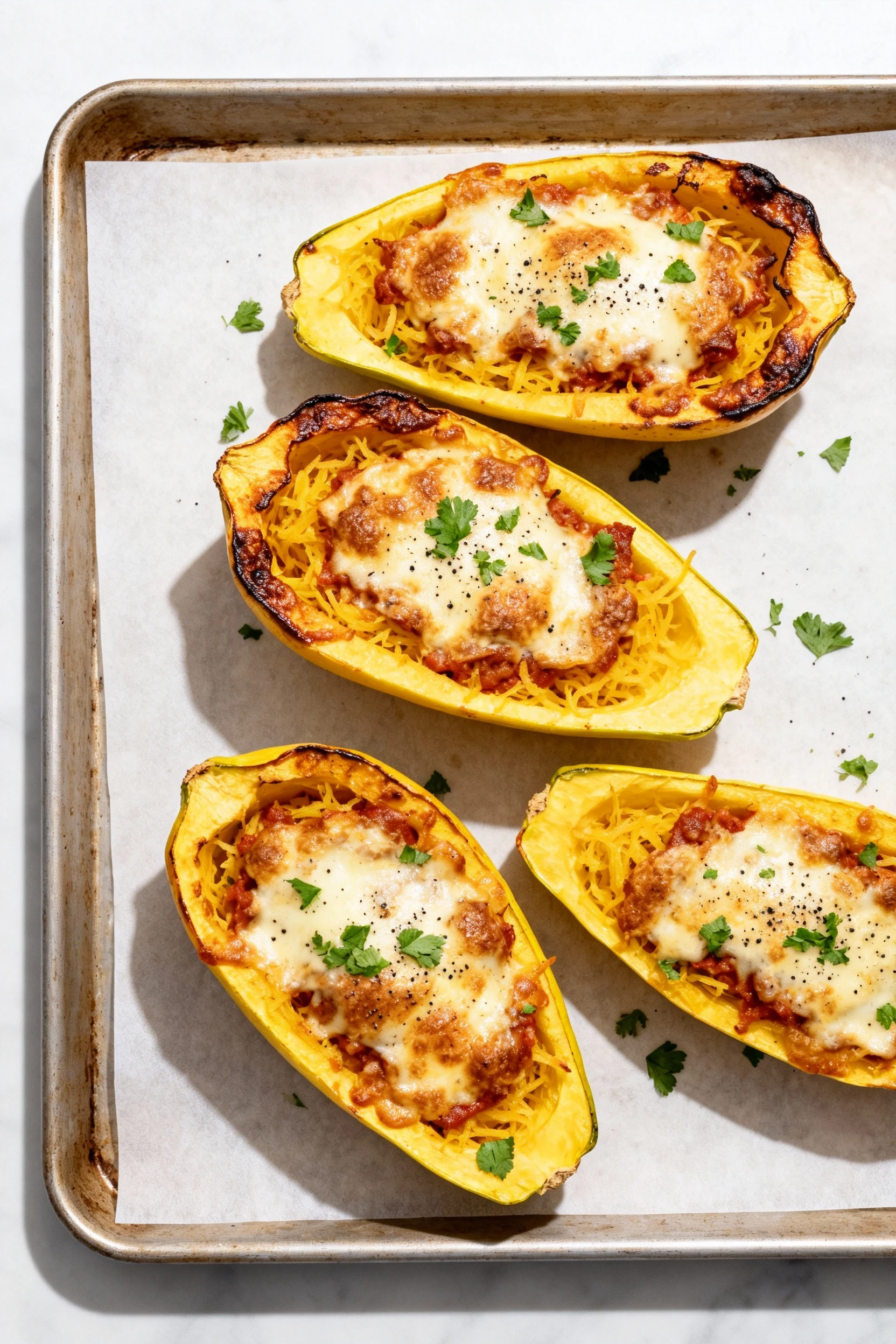
- Preheat and prep. Heat the oven to 425°F. Line a sheet pan with parchment for easy cleanup.
- Cut the squash safely. Trim the stem end. Stand the squash upright and carefully slice it lengthwise from top to bottom. Scoop out the seeds with a spoon.
- Season and rest briefly. Score the flesh with shallow crosshatch cuts. Sprinkle with 1/2 teaspoon salt and let sit 10 minutes to draw out excess moisture. Pat dry with a paper towel.
- Oil and roast. Rub the cut sides with olive oil and season with pepper. Place cut-side down on the sheet pan. Roast 30–45 minutes, depending on size, until the shells yield to pressure and a knife slides through easily. The edges should be a little caramelized.
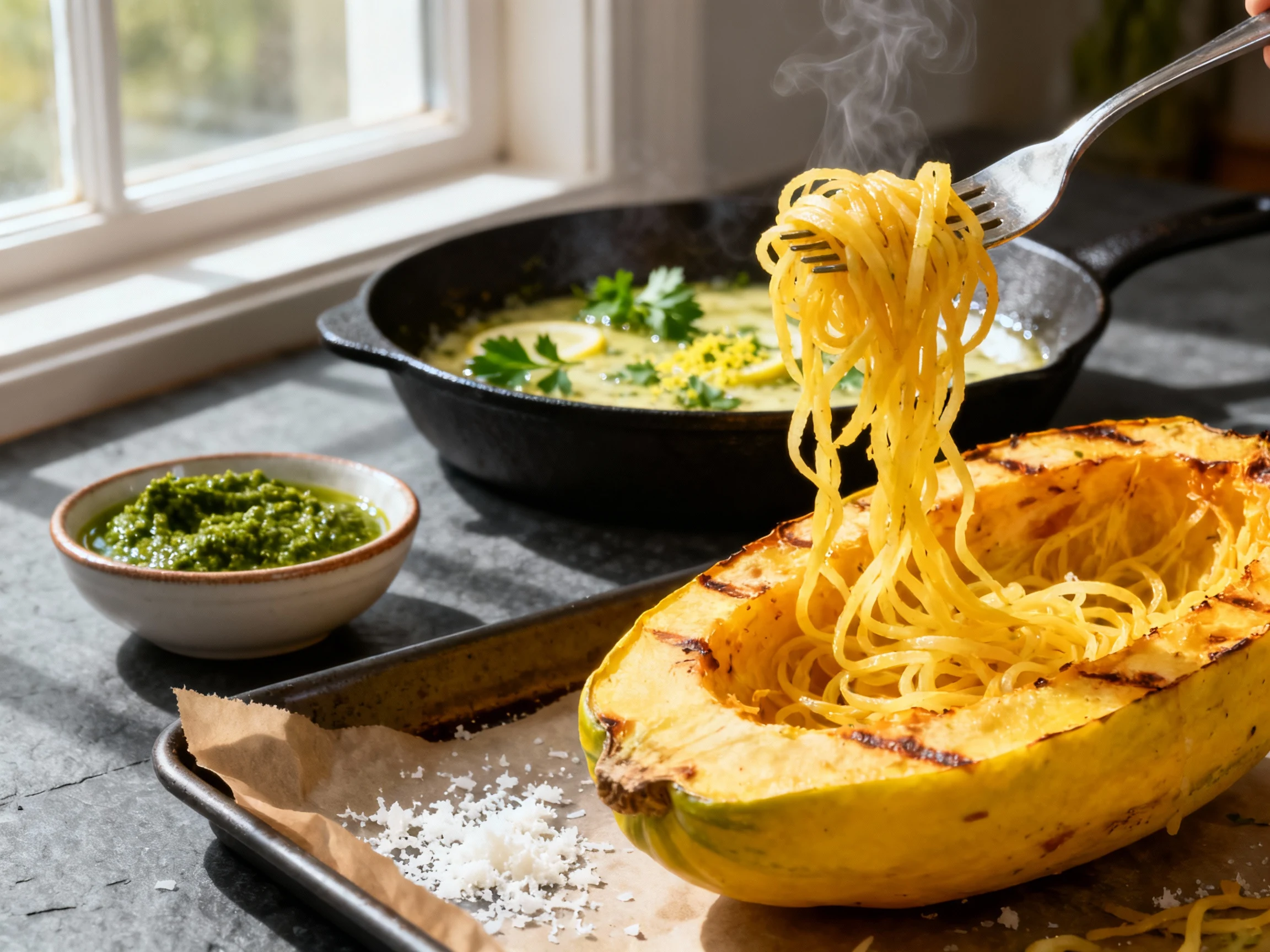
- Cool and shred. Flip the halves cut-side up and cool 5 minutes. Use a fork to pull the strands into “noodles.” Don’t mash—fluff with a light hand.
- Build the sauce. In a large skillet over medium heat, melt the butter. Add garlic and red pepper flakes; cook 60–90 seconds until fragrant, not brown.
- Toss the “noodles.” Add the squash strands to the skillet. Season with remaining 1/2 teaspoon salt and a few grinds of pepper. Toss 2–3 minutes to coat and steam off excess moisture.
- Finish with flavor. Turn off heat. Stir in Parmesan, lemon zest, and parsley. Taste and adjust seasoning. It should be savory, bright, and a little buttery.
- Optional cheesy broil. Return the squash to its shells, top with mozzarella, and broil 2–3 minutes until bubbly and browned.
- Serve or remix. Plate as-is, or top bowls with marinara or pesto. Add your favorite protein or veg for a full meal.
- Alternative microwave method. Short on time? Pierce the whole squash all over with a fork. Microwave 5 minutes, then split, seed, and microwave cut-side down another 5–10 minutes until tender. Proceed from Step 5.
- Alternative Instant Pot method. Add 1 cup water and a trivet. Place halved, seeded squash cut-side up on the trivet. Pressure cook 7 minutes on High, quick release, then shred and continue from Step 6.
Storage Instructions
- Fridge: Store cooked strands (sauce mixed in) in an airtight container up to 4 days. Keep add-ins like marinara, pesto, or proteins separate to keep textures sharp.
- Freezer: Cool completely. Press out extra moisture, then freeze in zip-top bags (flattened) up to 2–3 months. Label and date—future you will thank you.
- Reheating: Skillet over medium heat works best. Add a splash of water or broth and toss until hot. Microwave in 45-second bursts, stirring between, but expect slightly softer strands.
- Meal prep tip: Roast two squashes at once. Portion into single-serve containers for grab-and-go lunches you’ll actually eat.
Why This is Good for You
Lower-carb swap with real volume. A cup of strands delivers satisfying bulk for relatively few calories, which supports portion control without feeling deprived.
Fiber and micronutrients for the win. You get fiber, vitamin C, B6, and manganese from the squash, plus antioxidants from garlic, parsley, and lemon zest.
Better fats, better balance. Olive oil and a modest amount of butter produce satiety. Add lean protein—chicken, shrimp, or chickpeas—and you’ve got a balanced plate.
Gluten-free by default. No specialty products needed, just straightforward ingredients that work with many eating styles.
Don’t Make These Errors
- Cutting it the wrong way for your goal. For longer strands, cut the squash crosswise (through the “equator”). Lengthwise works great, but yields shorter noodles.
- Skipping the quick salt rest. That 10-minute sprinkle pulls out water. Blow it off and you risk a watery bowl later. Your sauce deserves better.
- Roasting cut-side up. Steam happens; sogginess follows. Roast cut-side down for caramelized edges and concentrated flavor.
- Overcooking into mush. Tender is the target. If the shell collapses and strands turn pasty, you went too far. Check early at 30 minutes.
- Under-seasoning. Squash is mild. Use enough salt, acid (lemon), and umami (Parmesan) to make it sing.
- Drowning it in sauce. Lightly coat first, then add more at the table. You can always add; you can’t un-sog.
- Forgetting the finish. A handful of fresh herbs and zest turns “good” into “wow.” Don’t skip the last 60 seconds of effort.
Variations You Can Try
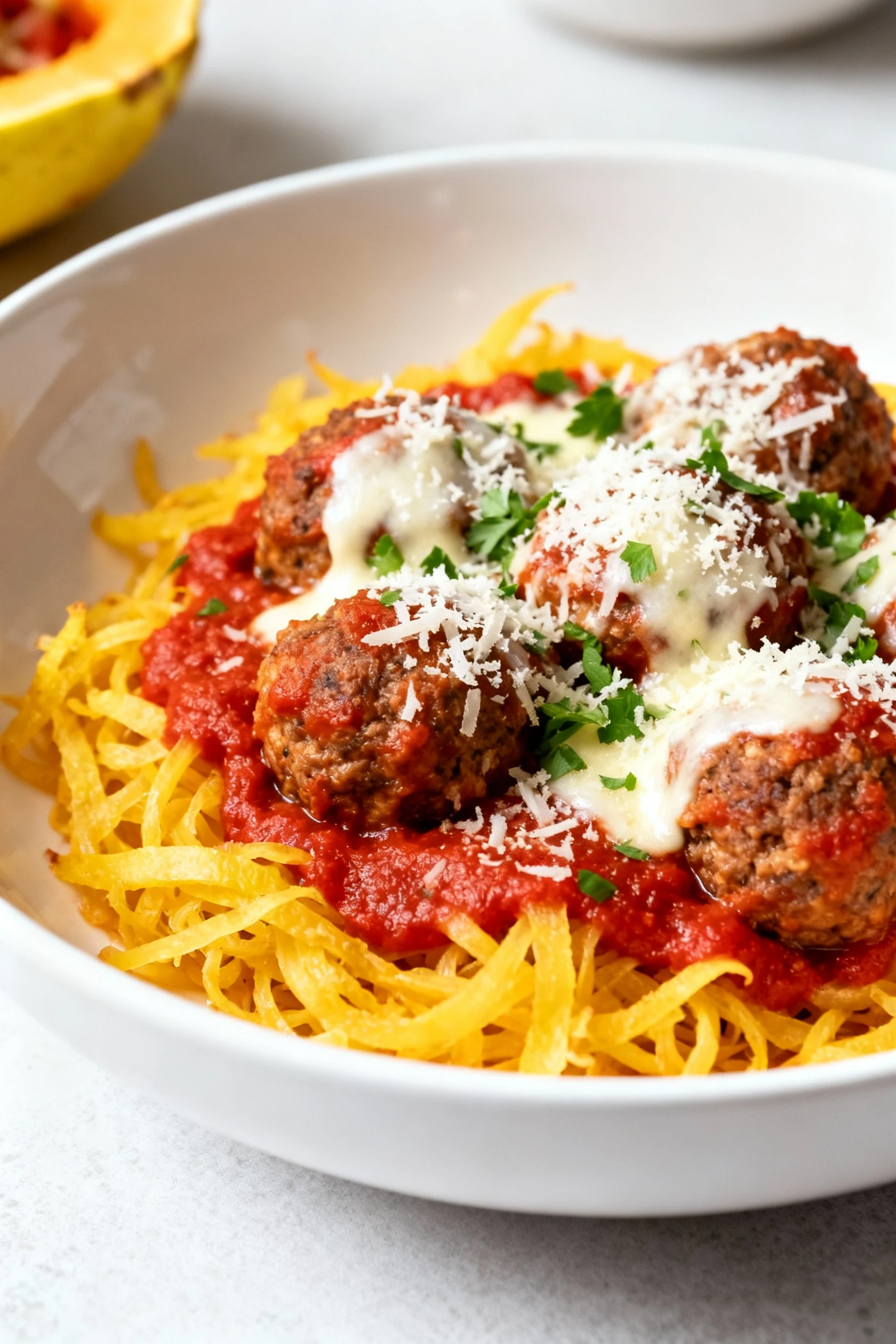
- Marinara Meatball Night: Toss strands with warmed marinara and top with turkey or beef meatballs. Finish with mozzarella and broil.
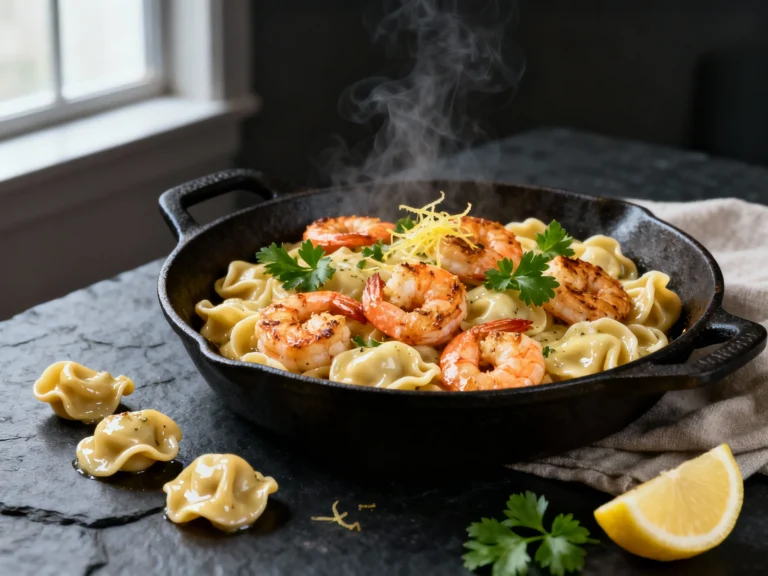
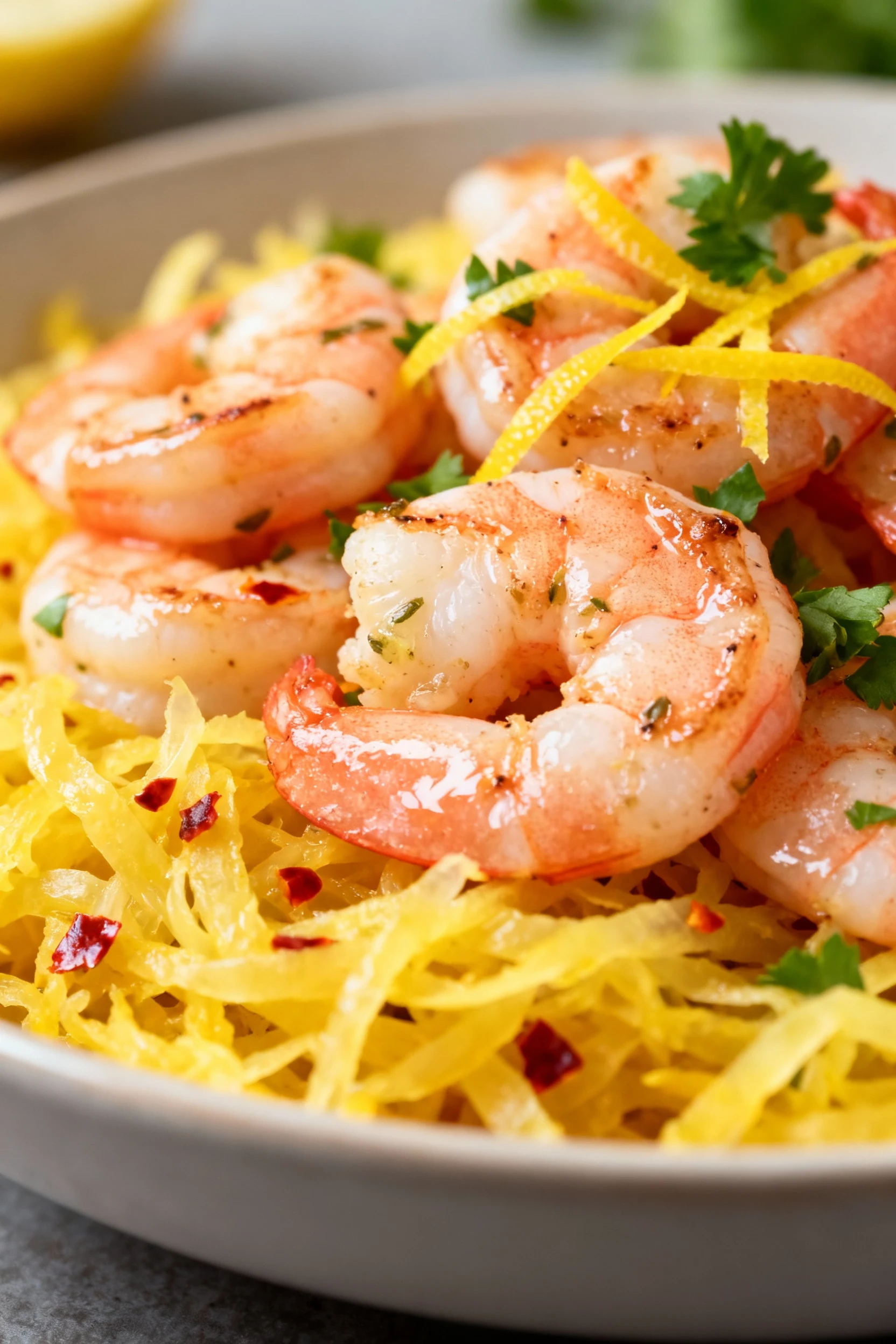
- Lemon-Garlic Shrimp: Sear shrimp in olive oil with extra garlic and lemon. Pile on the squash with parsley and a dusting of chili flakes.
- Pesto Caprese: Stir in basil pesto, cherry tomatoes, and torn mozzarella. Add balsamic drizzle if you’re feeling fancy.
- Buffalo Chicken Bowl: Mix shredded chicken with buffalo sauce. Spoon over squash, add blue cheese and celery for crunch.
- Mushroom Alfredo (Lightened): Sauté mushrooms and garlic; finish with a splash of cream or cashew cream and Parmesan. Silky and rich without going overboard.
- Mediterranean Veg: Fold in chickpeas, spinach, olives, and feta. Finish with oregano and lemon for a briny, bright bowl.
- Taco Tuesday: Season ground turkey with cumin, chili, and paprika. Top with salsa, avocado, and a squeeze of lime.
- Breakfast-for-Dinner: Crisp bacon, toss the squash in the rendered fat, and add a jammy egg. Black pepper and Parmesan on top—chef’s kiss.
FAQ
How do I pick a good spaghetti squash?
Look for one that feels heavy for its size with a firm, matte rind and no soft spots. The stem should be dry and intact. Pale yellow color is a good sign of ripeness.
What’s the best way to get longer strands?
Cut the squash crosswise (around the “equator”) instead of lengthwise. The fibers wrap around the center, so cutting across preserves length when you shred.
Can I cook it whole to make cutting easier?
Yes. Pierce the whole squash all over with a fork and microwave 5–6 minutes to soften. Let it cool slightly, then split safely, scoop seeds, and proceed with roasting or microwaving until tender.
Why is my squash watery, and how do I fix it?
Excess moisture comes from steam and overcooking. Salt the cut sides for 10 minutes, roast cut-side down, and finish strands in a skillet to evaporate liquid. If it’s still wet, sauté an extra minute and add more Parmesan to help bind.
Is this keto, paleo, or Whole30 friendly?
It’s naturally grain-free and low-carb compared to pasta. For strict keto or Whole30, skip the Parmesan and use olive oil only, then add compliant proteins and sauces. TBH, it fits most plans with tiny tweaks.
Can I make this in an air fryer?
Absolutely. Air fry halved, oiled, seasoned squash cut-side down at 375°F for 25–35 minutes, depending on size. Check for tenderness at 25 minutes and adjust as needed.
How long does it keep, and can I freeze it?
It keeps up to 4 days in the fridge. For freezing, drain well, spread to cool, then pack flat in bags for up to 3 months. Reheat in a skillet to restore texture.
Do I have to peel spaghetti squash?
Nope. The rind acts as a natural baking dish. Roast, shred, and either serve in the shell or transfer the strands to a pan or bowl.
What proteins pair best with it?
Grilled chicken, shrimp, turkey sausage, meatballs, or chickpeas all work great. Choose what matches your sauce—marinara loves meatballs, pesto loves chicken, buffalo loves shredded chicken.
My Take
This is the rare “healthy swap” that doesn’t feel like punishment. The strands actually crave sauce, and the lemon-parm finish turns a humble gourd into a weeknight habit. Keep the base method on autopilot, then rotate variations to match whatever’s in your fridge. One formula, endless meals—efficient, tasty, and easy to stick with.
Printable Recipe Card
Want just the essential recipe details without scrolling through the article? Get our printable recipe card with just the ingredients and instructions.