Ham Steak Recipes That Make Weeknights Wildly Delicious
Fast, juicy pan-seared ham with a sweet-savory glaze: 15-minute wins for busy nights, budget-friendly brunch, and zero guesswork.
You know that 6 p.m. panic when you need “wow” and only have fifteen minutes? This is the move. Big flavor, tiny effort, and a glossy glaze that looks like you tried way harder than you did.
FYI: ham cooks fast, so you’re not waiting around. A hot pan, a smart glaze, and a little basting—boom, dinner flex. TBH, this is the most satisfying low-lift meal you’ll make all week.
What Makes This Recipe Awesome
- Insanely fast: From fridge to plate in about 15 minutes, including the glaze.
- High-impact flavor: Brown sugar, mustard, and maple build a sweet-savory crust that begs for seconds.
- No special gear: A skillet, a spoon, and basic pantry staples get it done.
- Foolproof doneness: Pre-cooked ham just needs warming and caramelizing—no guesswork or dry meat.
- Flexible: Swap maple for honey, pineapple juice for orange, or add a smoky note with paprika.
- Budget-friendly: One steak feeds 2–3 with sides, and leftovers reheat like a champ.
- Company-worthy: Shiny glaze, big aroma, and that “restaurant sizzle” without the bill.
- Meal prep friendly: Make extra sauce; it doubles as a dip or sandwich spread.
Ingredients
- 1 ham steak (about 1 lb; 1/2–3/4 inch thick; bone-in or boneless)
- 2 tablespoons neutral oil (avocado or canola)
- 2 tablespoons unsalted butter
- 1/4 cup brown sugar (light or dark)
- 2 tablespoons maple syrup (or honey)
- 1 tablespoon Dijon mustard
- 2 tablespoons apple cider vinegar
- 1/4 cup pineapple juice (or orange juice)
- 2 cloves garlic, minced
- 1/2 teaspoon black pepper
- 1/4 teaspoon smoked paprika (optional but great)
- Pinch ground cloves or cinnamon (optional, for warmth)
- Fresh parsley or chives, chopped (for garnish)
Cooking Instructions
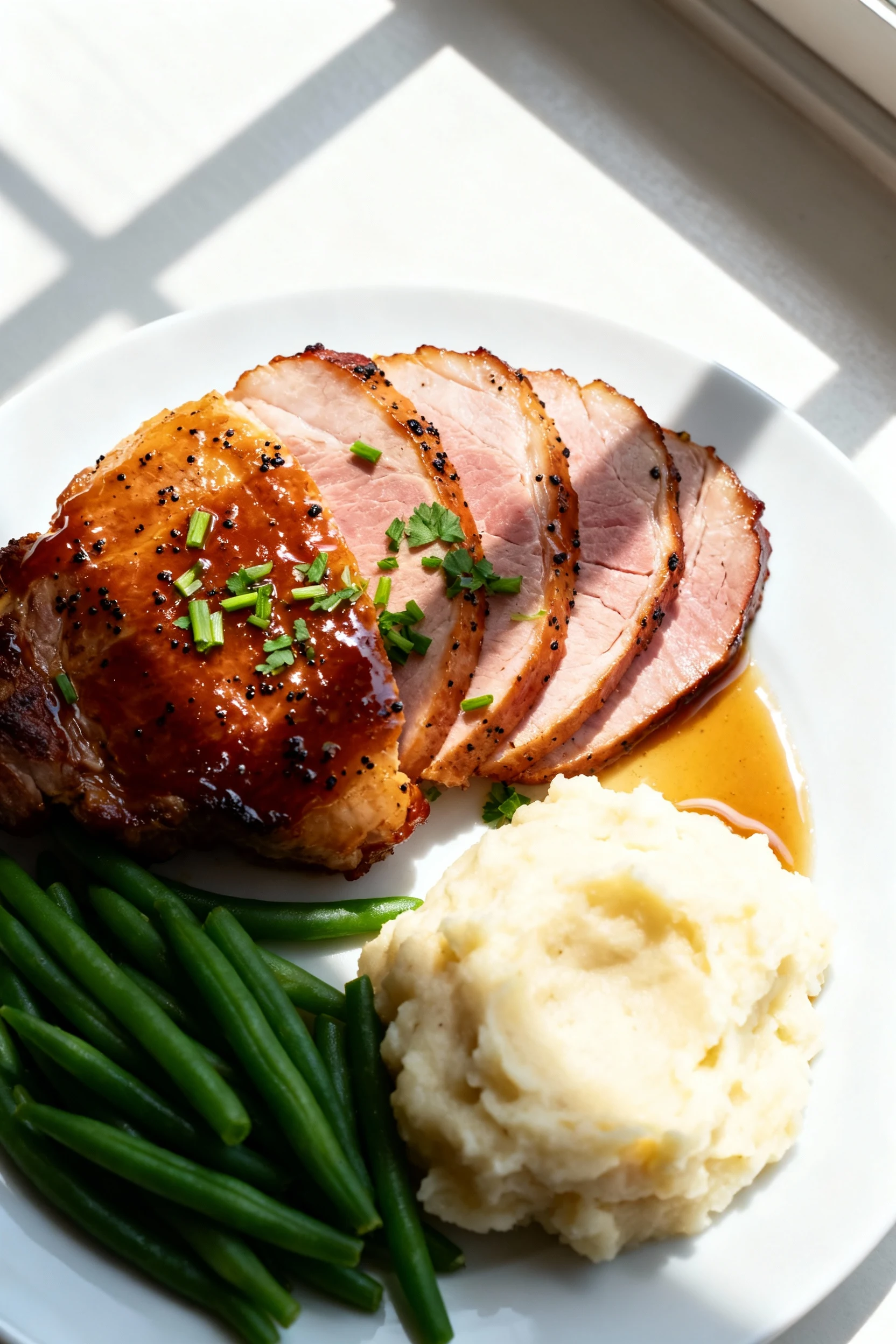
- Pat dry and prep: Blot the ham steak thoroughly with paper towels. If there’s a thick fat cap, lightly score it to help render. Season both sides with black pepper.
- Mix the glaze: In a small bowl, whisk brown sugar, maple, Dijon, vinegar, juice, garlic, paprika, and a pinch of cloves. Taste and tweak: add a splash more vinegar if you want extra tang.
- Heat the pan: Set a large skillet (cast iron preferred) over medium-high heat. Add oil; heat until shimmering.
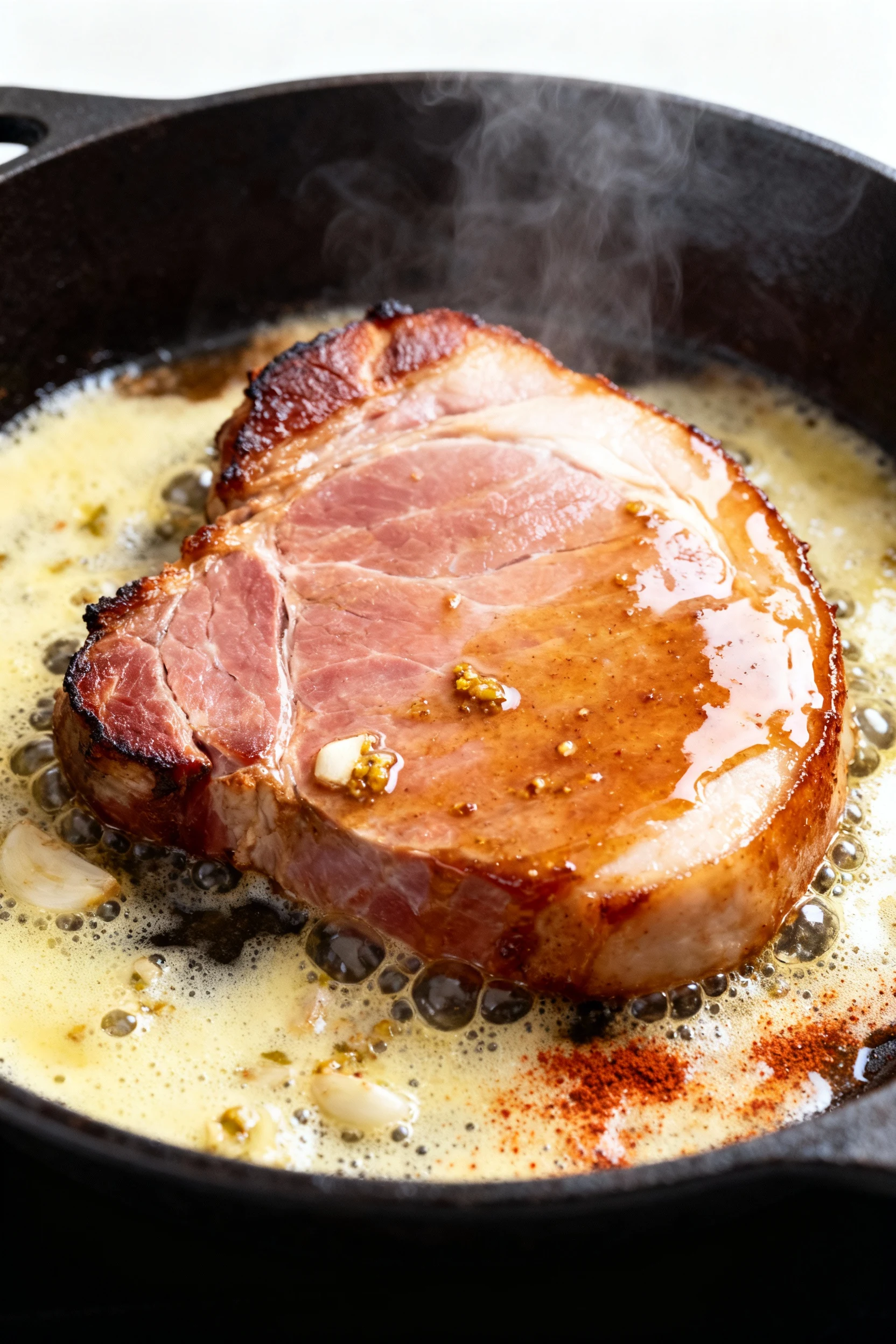
- Sear the ham: Lay the ham in the hot skillet. Sear for 2–3 minutes per side until lightly browned. If bone-in, press near the bone to ensure contact and color.
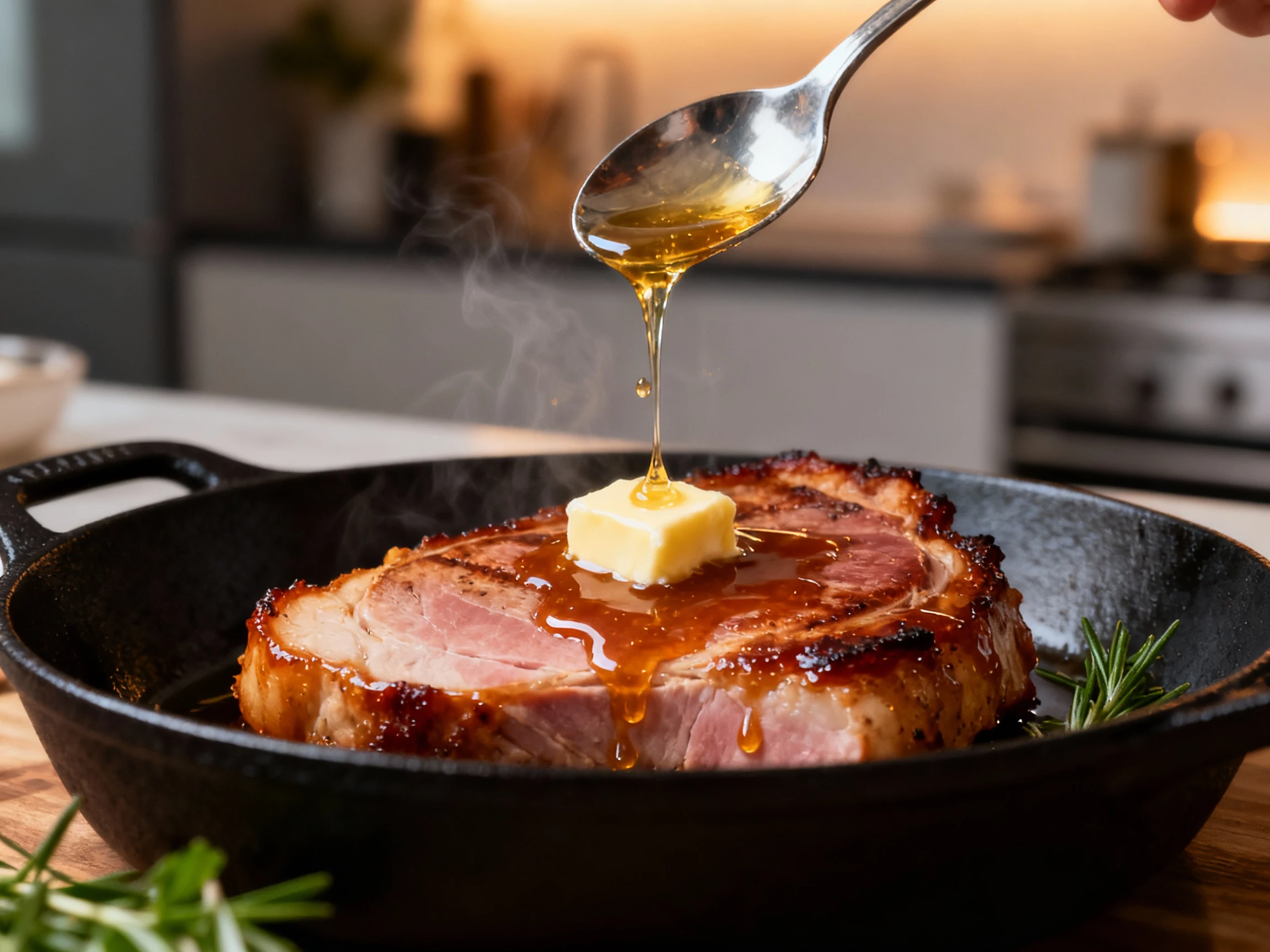
- Add butter and baste: Drop in butter. As it melts, tilt the pan and spoon the foamy butter over the ham for 30–60 seconds. This builds flavor and moisture.
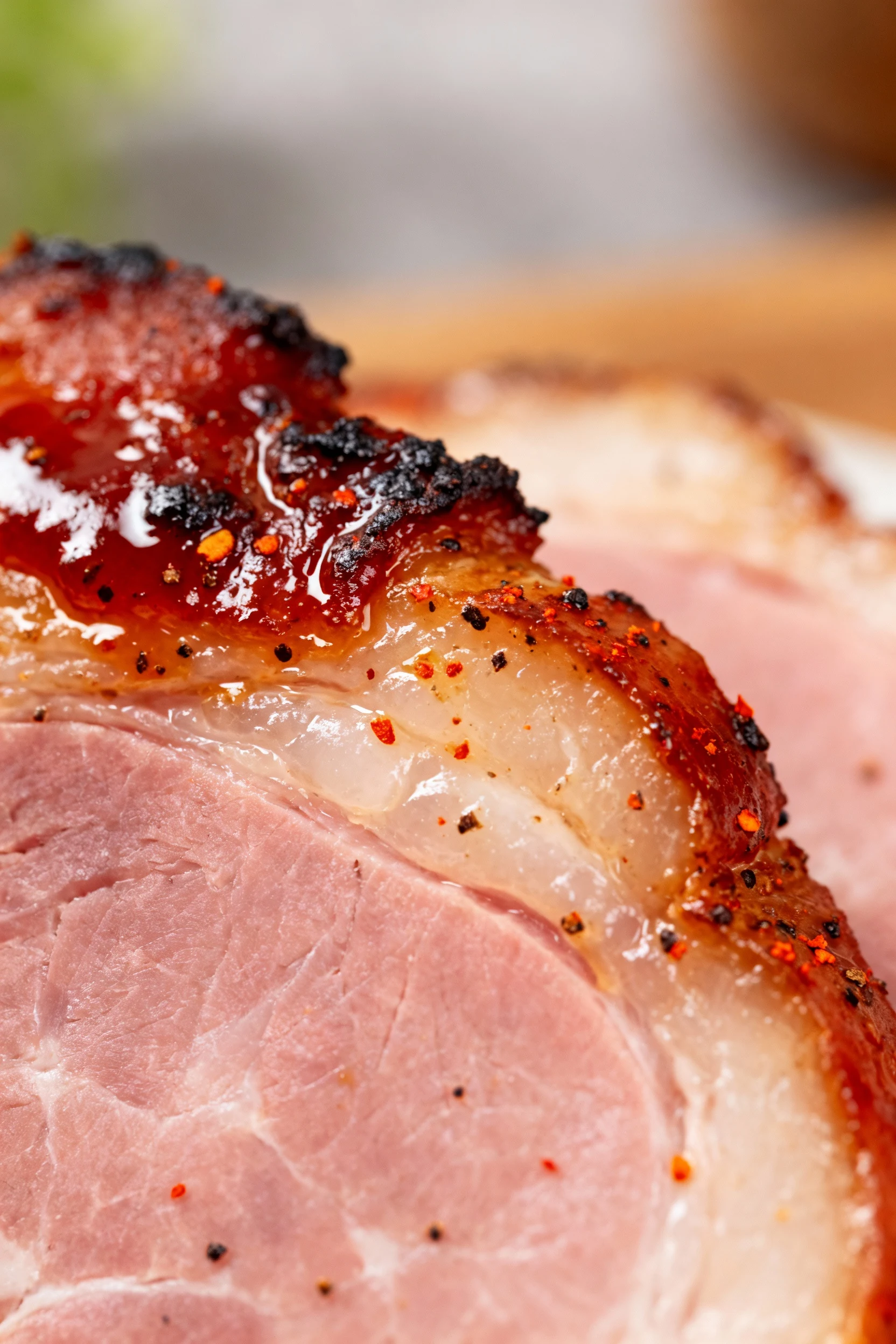
- Glaze and caramelize: Reduce heat to medium. Pour half the glaze into the pan. Cook 1–2 minutes, flipping once, until the sauce thickens and clings. Add the remaining glaze and repeat.
- Hit the right temp: You’re warming, not cooking raw meat. Aim for an internal temperature of 130–140°F, or pull when the glaze is glossy and the edges are slightly sticky.
- Rest briefly: Transfer to a plate and let it rest 3 minutes. The glaze will set; the juices relax. Don’t skip it.
- Optional pan sauce: If you want extra sauce, deglaze the skillet with 2–3 tablespoons water or stock, scrape the browned bits, and simmer 1 minute until syrupy. Spoon over the ham.
- Garnish and serve: Sprinkle chopped parsley or chives. Slice, plate, and enjoy with your favorite sides.
How to Store
- Refrigerate: Cool completely, then store sliced portions in an airtight container for up to 4 days.
- Freeze: Wrap tightly and freeze for up to 2 months. Thaw overnight in the fridge.
- Reheat: Warm in a skillet over medium heat with a splash of water or juice, 2–3 minutes per side, or microwave in short bursts to avoid drying.
- Sauce storage: Extra glaze keeps in the fridge for 1 week. Reheat gently until pourable.
Benefits of This Recipe
- Speed: A true 15-minute dinner that tastes like you spent an hour.
- Flavor control: Sweet, tangy, smoky—adjust the profile to match your mood.
- Low cleanup: One skillet, one whisk, zero drama.
- Protein-packed: Satisfying main that pairs with simple sides.
- Weeknight-friendly: No marinating required, no complex steps, no babysitting.
- Versatile: Works for brunch, dinner, or sandwiches; plays nice with eggs, rice, or greens.
Don’t Make These Errors
- Skipping the pat-dry step: Moisture prevents browning. Wet ham equals pale ham.
- Overcrowding the pan: If your steak is huge, use a bigger skillet or cook in batches to avoid steaming.
- Blasting heat with sugar: High heat plus sugar can burn. Sear first; glaze at medium heat.
- Adding all the glaze at once: Layer it. Two rounds create shine and better caramelization.
- Ignoring the rest: A short rest sets the glaze and keeps slices juicy.
- Not tasting the sauce: Balance matters. Add vinegar for tang or maple for sweetness as needed.
- Using a warped pan: No contact, no crust. A flat, heavy skillet is your friend.
- Overcooking: You’re reheating, not cooking raw pork. Pull at 130–140°F for best texture.
Alternatives
- Honey-Garlic: Swap maple for honey; add extra minced garlic. Finish with lemon zest.
- Pineapple Teriyaki: Use pineapple juice and a splash of soy. Garnish with green onions.
- Maple-Bourbon: Stir 1 tablespoon bourbon into the glaze; simmer to cook off alcohol.
- Smoky Chipotle: Add 1 teaspoon chipotle in adobo and a pinch of cumin for a warm kick.
- Sheet Pan Version: Broil on a foil-lined tray; glaze twice; flip once. Great for multiple steaks.
- Air Fryer: 400°F for 6–8 minutes, glaze halfway through, then again at the end.
- Grilled: Medium-high grill, 2–3 minutes per side; brush glaze during the last minute to avoid flare-ups.
- Creamy Mustard Pan Sauce: Whisk 2 tablespoons cream into the glaze at the end for a silky finish.
- Low-Sugar: Use sugar-free maple, skip brown sugar, and add extra Dijon and vinegar for balance.
FAQ
Is ham steak already cooked?
Most store-bought ham steaks are cured and fully cooked. You’re reheating and glazing, not taking raw meat to temp. That’s why it’s so fast and forgiving.
What thickness works best?
About 1/2–3/4 inch is ideal. Thinner steaks can dry out quickly; thicker ones need an extra minute or two to heat through and caramelize.
Do I need to rinse ham?
Nope. Rinsing adds water and kills your sear. Pat dry thoroughly instead to promote browning and a sticky glaze.
How do I keep it from drying out?
Use medium-high heat for the sear, then drop to medium for glazing. Baste with butter, layer the glaze, and pull at 130–140°F. Rest for 3 minutes before slicing.
Can I use leftover baked ham for this?
Absolutely. Slice into steak-size pieces and follow the same sear-and-glaze method. It’s a great way to revive leftovers into something special.
What sides pair best?
Think contrast: creamy mashed potatoes or polenta, bright green beans or asparagus, a crisp salad, or buttered rice. Pineapple, roasted carrots, and cornbread also slap, IMO.
Can I make it without mustard?
Yes. Swap Dijon for a touch more vinegar and a pinch of paprika. You’ll lose a bit of tang, but the glaze still sings.
Is this gluten-free?
It can be. Ensure your mustard, vinegar, and any add-ins are certified gluten-free, and avoid soy sauce unless using a GF brand.
How long does the glaze keep?
Stored in an airtight container, the glaze lasts up to 1 week in the fridge. Reheat gently; if it’s too thick, loosen with juice or water.
Can I reduce the sodium?
Choose a lower-sodium ham, skip any additional salt, and balance with acid (vinegar or citrus). Adding fresh sides—greens or fruit—also helps.
In Conclusion
This skillet ham with a glossy, sweet-savory glaze is the weeknight power move: big flavor, minimal effort, and zero stress. Sear, baste, glaze, rest—four steps, hero results. Make it once and you’ll keep the ingredients on standby, because this is reliable dinner magic. Ready to turn fifteen minutes into applause? Your pan is calling.
Printable Recipe Card
Want just the essential recipe details without scrolling through the article? Get our printable recipe card with just the ingredients and instructions.