Healthy Dinner Recipes for Two That Actually Feel Indulgent
Cook nourishing weeknight meals sized for two with big flavor, easy cleanup, and budget-friendly staples that make healthy eating enjoyable.
You want dinner that leaves you satisfied, not sleepy. Most couples think “healthy” means bland chicken and a pile of steamed sadness—no thanks. Here’s the smarter move: build flavor fast, keep portions tight, and use one pan so cleanup doesn’t become the after-dinner workout. This simple system turns everyday ingredients into a restaurant-level meal for two without the price tag—or the 9 p.m. regret.
We’re going big on taste and small on hassle. Think bright citrus, herbs, and a silky yogurt drizzle that makes vegetables disappear faster than your lunch break. If you’re juggling work, workouts, and a social life, you’ll love how this hits that sweet spot: high protein, balanced carbs, and the kind of bite that keeps you from raiding the pantry at 10. Ready to cook smarter? Let’s roll.
What Makes This Recipe Awesome
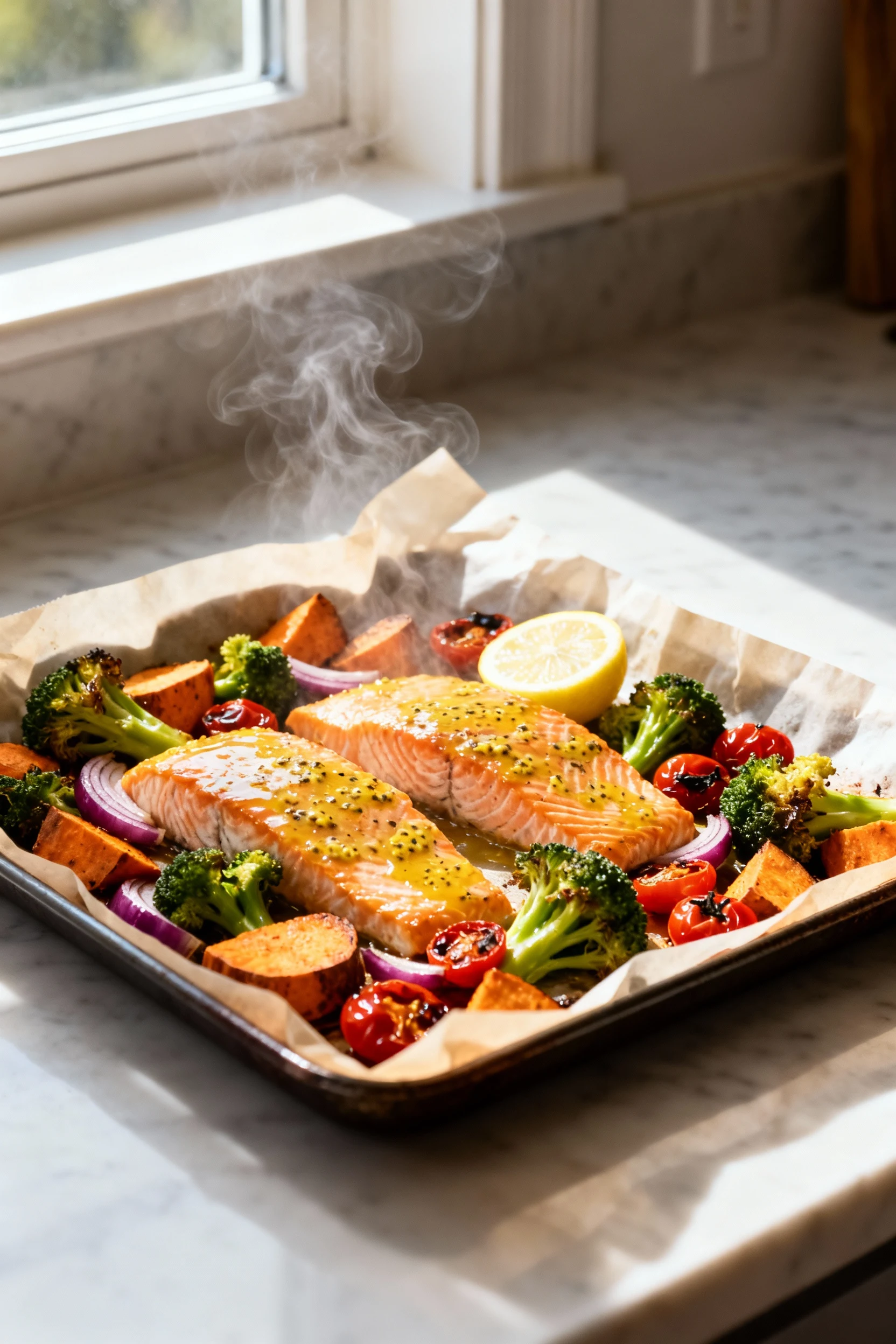
- One-pan efficiency: Veggies and protein roast together, so cleanup is basically a victory lap.
- Balanced macros: High-quality protein, fiber-rich veggies, and optional whole grains for steady energy.
- Fast: Start to finish in about 30 minutes. Weeknight-friendly and date-night approved.
- Big flavor, better nutrition: Lemon, garlic, and herbs mean you won’t miss heavy sauces.
- Customizable: Swap salmon for chicken, tofu, or shrimp with simple tweaks (see Variations).
- Designed for two: Portion sizes are calibrated to avoid leftovers—unless you want them.
Ingredients
- 2 salmon fillets (5–6 oz each), skin-on
- 2 cups broccoli florets
- 1 small sweet potato, ½-inch dice
- 1 cup cherry tomatoes
- 1 small red onion, thin wedges
- 1 lemon (zest + juice)
- 2 cloves garlic, minced
- 1 tablespoon Dijon mustard
- 2 tablespoons extra-virgin olive oil
- 1 teaspoon honey (optional, for balance)
- 1 teaspoon smoked paprika
- 1 teaspoon dried oregano (or Italian seasoning)
- ½ teaspoon crushed red pepper (optional)
- ¾ teaspoon kosher salt, plus more to taste
- ½ teaspoon black pepper
- 2 tablespoons fresh parsley, chopped (for garnish)
- Optional serving: 1 cup cooked quinoa or farro
Yogurt-Dill Drizzle
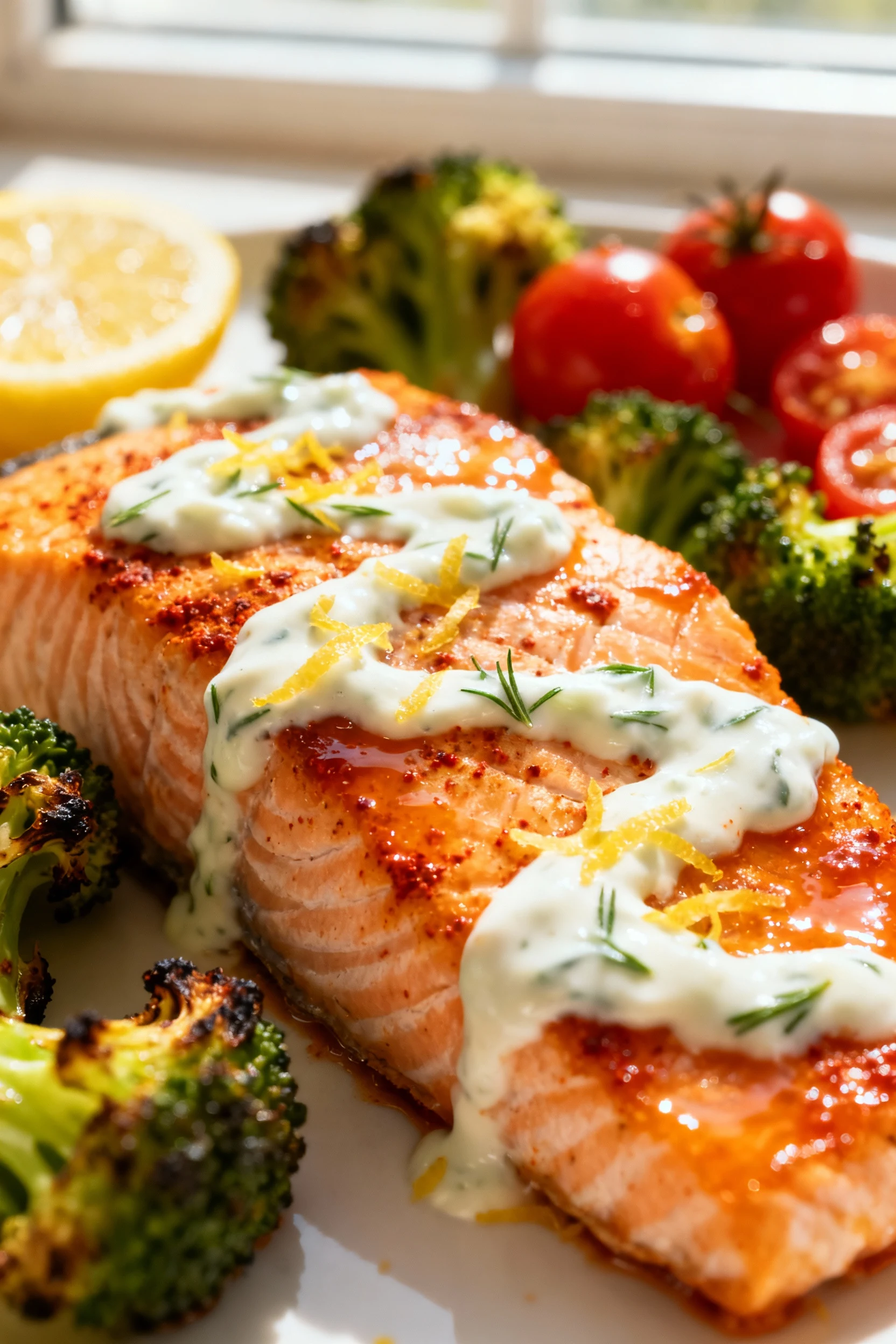
- ½ cup plain Greek yogurt
- 1 tablespoon fresh dill, finely chopped (or ½ tsp dried)
- 1 teaspoon lemon juice
- Pinch kosher salt
Let’s Get Cooking – Instructions
- Preheat your oven to 425°F (220°C). Line a large sheet pan with parchment for easy cleanup.
- Prep the veggies: Toss broccoli, sweet potato, cherry tomatoes, and red onion with 1 tablespoon olive oil, ½ teaspoon salt, ¼ teaspoon black pepper, and half the oregano/paprika. Spread in a single layer on the sheet pan.
- Roast the veggies for 10 minutes to give the potatoes a head start. You’re building texture—crispy edges, tender centers.
- Make the salmon glaze: In a small bowl, whisk lemon zest, lemon juice, garlic, Dijon, remaining 1 tablespoon olive oil, honey (if using), smoked paprika, oregano, crushed red pepper, and a pinch of salt.
- Remove the pan, nestle the salmon fillets among the veggies (skin-side down), and brush generously with the lemon-garlic glaze. Season the top of the salmon with a light sprinkle of salt and pepper.
- Return to the oven and roast for 8–12 minutes, depending on thickness. Aim for a center that’s slightly translucent and 125–130°F for tender, juicy salmon.
- While the pan finishes, stir together the Yogurt-Dill Drizzle. Taste and adjust salt and lemon to your liking.
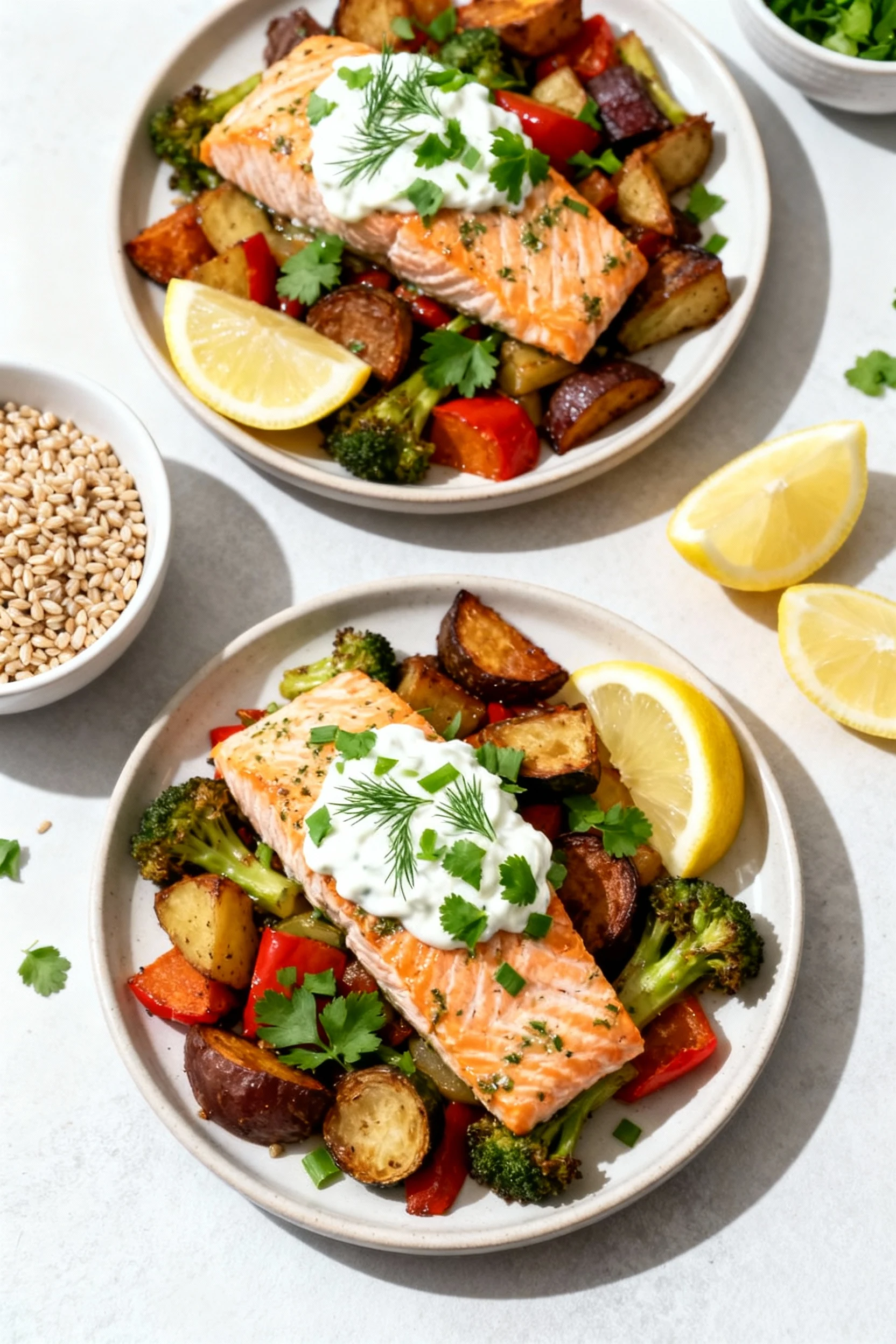
- Plate it up: Divide veggies and salmon between two plates. Spoon yogurt sauce over the salmon, shower with parsley, and serve with cooked quinoa or farro if you want more staying power.
Storage Instructions
Got leftovers? Store salmon and veggies in an airtight container for up to 2 days in the fridge. Keep the yogurt sauce separate so everything stays fresh and doesn’t turn watery.
Reheat gently in a 300°F oven for 8–10 minutes or in a skillet over medium with a splash of water and a lid. FYI: microwaving works, but go in short bursts to avoid overcooking the fish. The yogurt drizzle should be added after reheating.
What’s Great About This
- High-protein, heart-healthy: Salmon brings omega-3s, the veggies pack fiber, and the yogurt adds satisfying creaminess.
- Minimal dishes: Sheet pan + one bowl. Your sink will thank you.
- Restaurant flavor: Bright acidity, aromatics, and herbs deliver that “wow” without butter baths.
- Flexible portions: Feeding three? Add a fillet and bump veggies. Done.
- Budget-smart: Seasonal veggies and pantry staples keep costs predictable (and reasonable), IMO.
Pitfalls to Watch Out For
- Overcooking the salmon: Pull it when it hits 125–130°F. It’ll carryover-cook to perfect.
- Veggie overcrowding: Jammed pans steam, not roast. Use a second sheet if needed for crisp edges.
- Skipping the pre-roast: Sweet potatoes need that 10-minute head start or they’ll be underdone.
- Too much lemon juice: Balance acidity with a touch of honey or a pinch more salt—taste your glaze.
- Soggy yogurt sauce: Don’t add cucumber or watery herbs unless you drain them well. Keep the sauce thick and punchy.
- Unseasoned veggies: Salt is a flavor unlock. Go light but consistent; you can always add more at the table.
Recipe Variations
- Mediterranean Chicken for Two: Swap salmon for 2 small chicken breasts (or thighs). Slice into cutlets for faster cooking. Roast veggies 10 minutes, add chicken brushed with the same lemon-Dijon glaze, and bake 12–15 minutes until 160°F; rest to 165°F.
- Teriyaki Tofu & Veg: Use 12–14 oz firm tofu, pressed and cubed. Toss with 1 tablespoon cornstarch, 1 tablespoon soy sauce, and a little oil. Roast with veggies, then glaze with a quick teriyaki (soy, maple, garlic, ginger). Serve with brown rice.
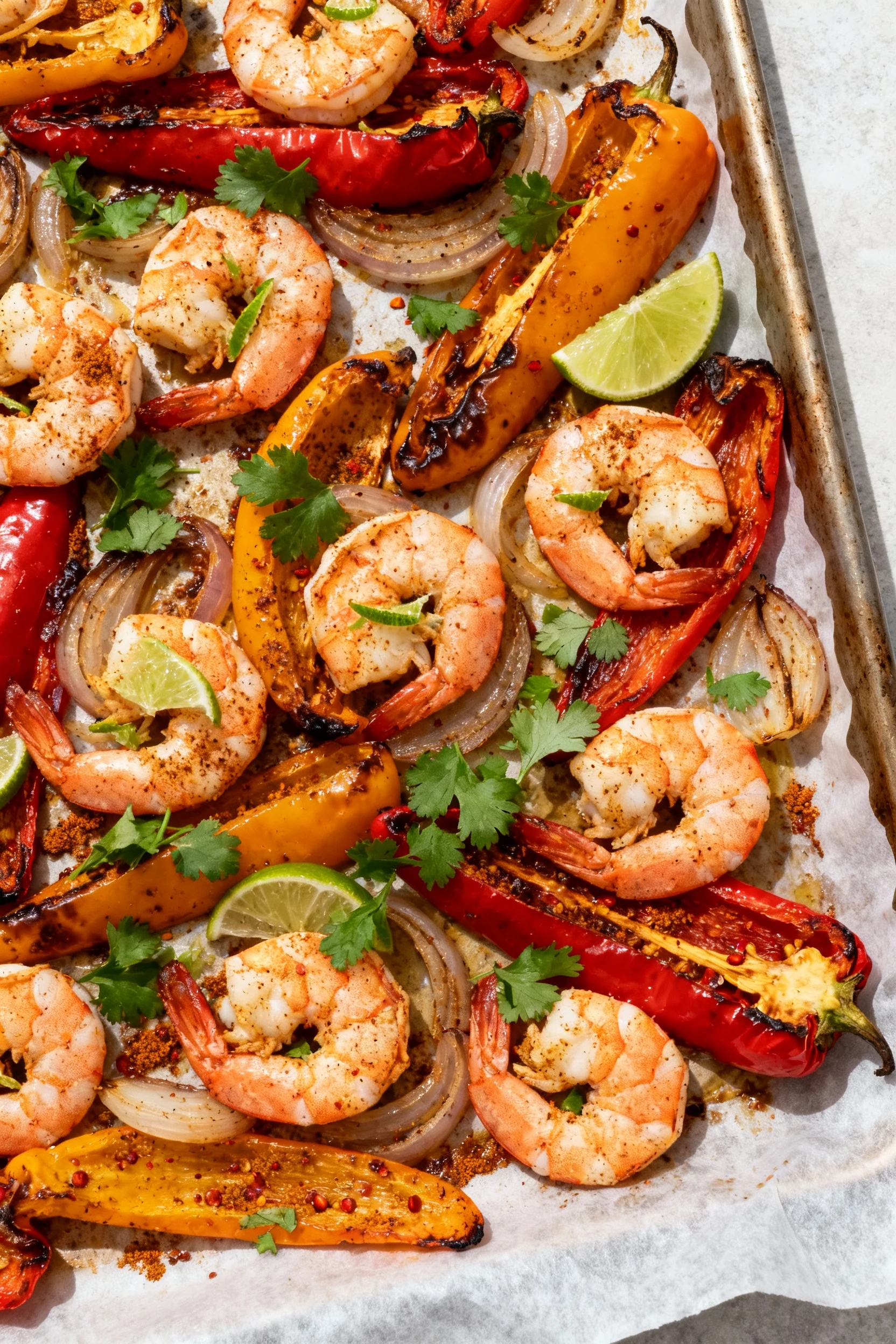
- Shrimp Fajita Sheet-Pan: Replace salmon with 10–12 oz large shrimp, peeled and deveined. Season peppers and onions with cumin, chili powder, and lime zest. Roast veggies, add shrimp, cook 6–8 minutes. Finish with lime and cilantro; serve in tortillas.
- Chimichurri Steak Bites: Swap in 10–12 oz sirloin, cut into 1-inch cubes. Roast potatoes and broccoli longer, then add steak for 6–8 minutes. Top with a quick chimichurri (parsley, garlic, vinegar, olive oil, red pepper).
- All-Veg Power Bowl: Skip protein and load the pan with Brussels sprouts, carrots, and cauliflower. Roast, then finish with tahini-lemon sauce, toasted seeds, and a scoop of quinoa. TBH, it’s wildly satisfying.
FAQ
Can I make this dairy-free?
Absolutely. Skip the yogurt drizzle and finish with a squeeze of lemon and a splash of olive oil. Or whisk tahini, lemon, garlic, and water until pourable for a creamy dairy-free alternative.
How do I know when salmon is perfectly done?
Look for a slightly translucent center and flakes that separate with gentle pressure. A quick-read thermometer should read 125–130°F. If you don’t have one, check at 8 minutes and go by texture.
What if I don’t have salmon on hand?
Any quick-cooking protein works. Chicken cutlets, shrimp, tofu, or cod will all shine with the same glaze. Just adjust cook times: shrimp is shortest, chicken is longest.
Is this recipe gluten-free?
Yes, as written it’s naturally gluten-free. If serving with grains, choose quinoa, rice, or certified GF farro alternatives. Always double-check mustard and spices for hidden gluten, just in case.
Can I use frozen vegetables?
You can, but don’t overcrowd and expect a bit more moisture. Roast frozen veggies straight from the freezer on a hot pan, then add the salmon later. Broccoli and cauliflower handle this best.
How do I scale this for meal prep?
Double the veggies and protein, and use two sheet pans for proper roasting. Store in portioned containers and keep sauces separate. Reheat gently; add fresh herbs after warming to keep flavor bright.
What sides pair well with this?
Light grains like quinoa or bulgur, a crisp salad, or roasted asparagus complement the lemony profile. If you want extra heft, add warm farro or a slice of good sourdough.
Can I swap the yogurt for something else?
Sure. Try mashed avocado with lemon and dill, or a quick pesto thinned with olive oil. Even a simple drizzle of extra-virgin olive oil plus lemon zest does the job.
In Conclusion
Healthy cooking for two doesn’t need to be complicated, bland, or time-consuming. With a smart glaze, a hot oven, and a sheet pan, you get big flavor and balanced nutrition in under 30 minutes. The best part? It’s flexible—swap proteins, change spices, and keep the method. Build this into your week, and “What’s for dinner?” becomes the easiest question you answer all day.
Printable Recipe Card
Want just the essential recipe details without scrolling through the article? Get our printable recipe card with just the ingredients and instructions.