Baked Ham Recipes That Make Holiday Heroes—no Stress
Master juicy ham with bold glazes, clear timing, and crispy edges—perfect for holidays, potlucks, and next-day sandwiches.
You want bragging rights without babysitting a roast. Good news: ham is the big, showy centerpiece that practically cooks itself—if you nail two numbers and one glaze. I’ll give you the time-per-pound formula, the exact internal temp, and three knockout glaze options, so you get crispy edges and tender slices every single time. No mystery meats, no dried spirals, no sad leftovers. Just a happy crowd asking for seconds and a fridge full of sandwiches tomorrow.
What Makes This Special
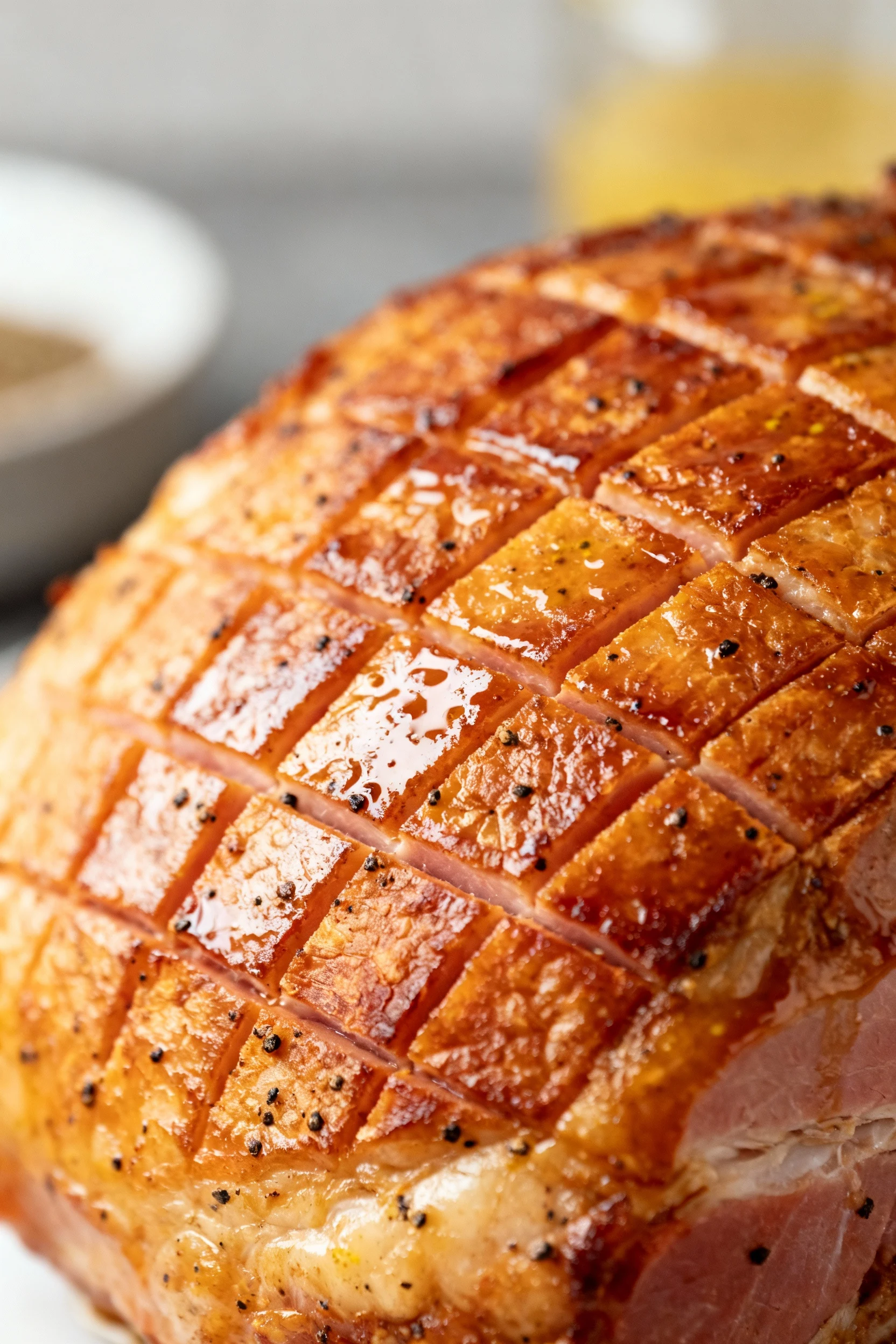
Most hams come fully cooked, yet people still overbake them into oblivion. This method keeps it juicy, adds a glossy, caramelized crust, and gets you out of the kitchen fast. Want options? You’ll get three proven glazes—each with its own flavor profile—so you can match the vibe of your party or your pantry.
- Fail-proof timing: Use 15–18 minutes per pound at a gentle 300°F, then glaze and blast for bark.
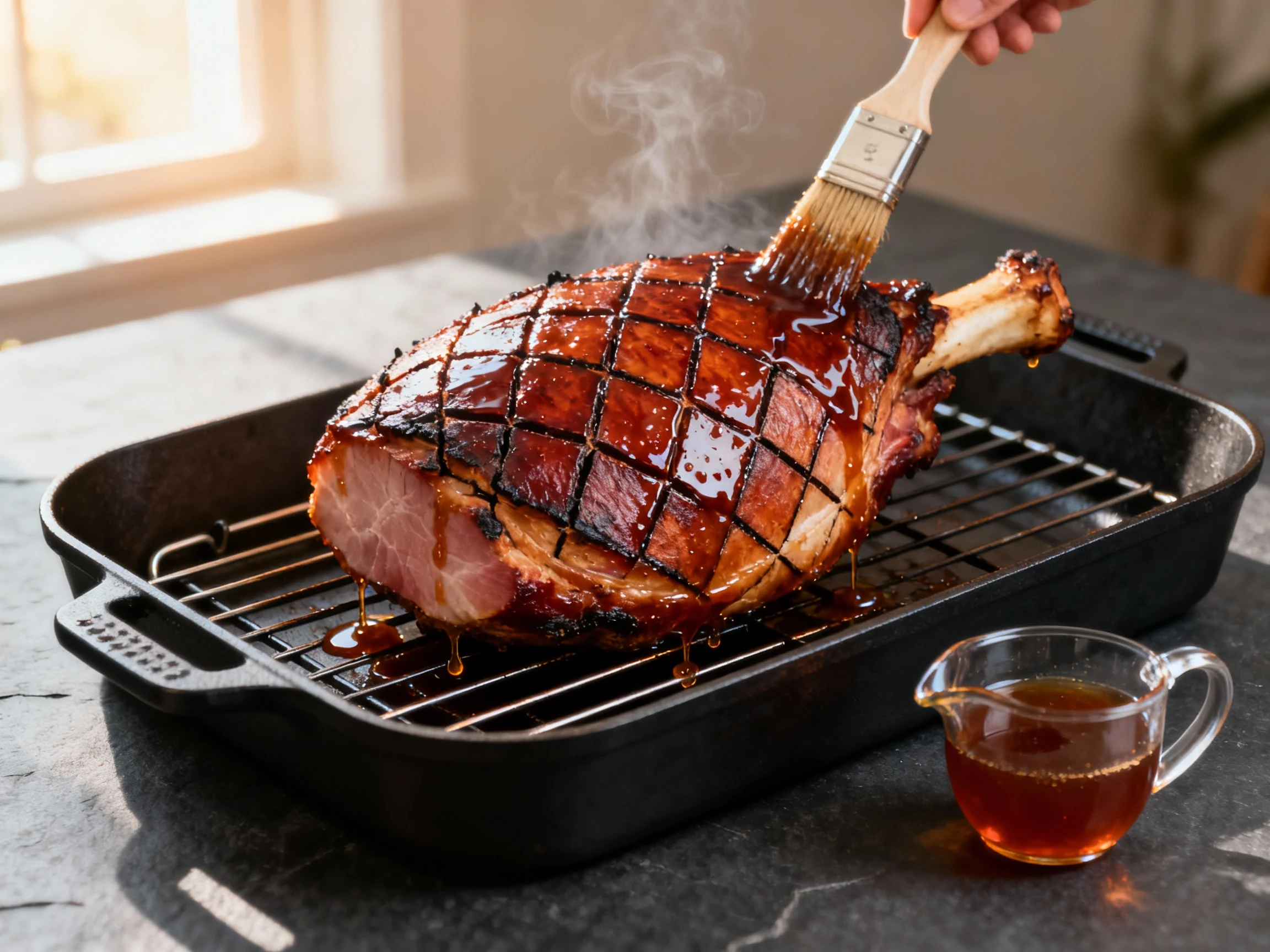
- Score + glaze technique: The diamond scoring lets the glaze cling and caramelize in all the right places.
- Pan juices → bonus sauce: Reduce the drippings for a glossy pitcher of liquid gold.
- Leftover plan baked in: We’ll set you up for sandwiches, fried rice, and soup. Why cook once for one meal?
Ingredients Breakdown
- Bone-in, fully cooked half ham (8–10 lb), spiral or shank/that classic football-shaped cut
- Water or low-sodium stock (1 cup) for the roasting pan
- Whole cloves (optional, 12–20) for studding and aroma
- Kosher salt (optional, up to 1/2 tsp) — only if your ham is low-sodium
- Black pepper (1 tsp)
- Garlic powder (1 tsp)
- Butter (3 tbsp)
Choose one glaze path (below):
- Maple-Dijon Glaze
- Maple syrup (1/3 cup)
- Dijon mustard (2 tbsp)
- Brown sugar (1/2 cup)
- Apple cider vinegar (2 tbsp)
- Butter (2 tbsp, additional to above)
- Black pepper (1/2 tsp)
- Pineapple-Brown Sugar Glaze
- Pineapple juice (1 cup)
- Brown sugar (3/4 cup)
- Orange zest (1 tsp)
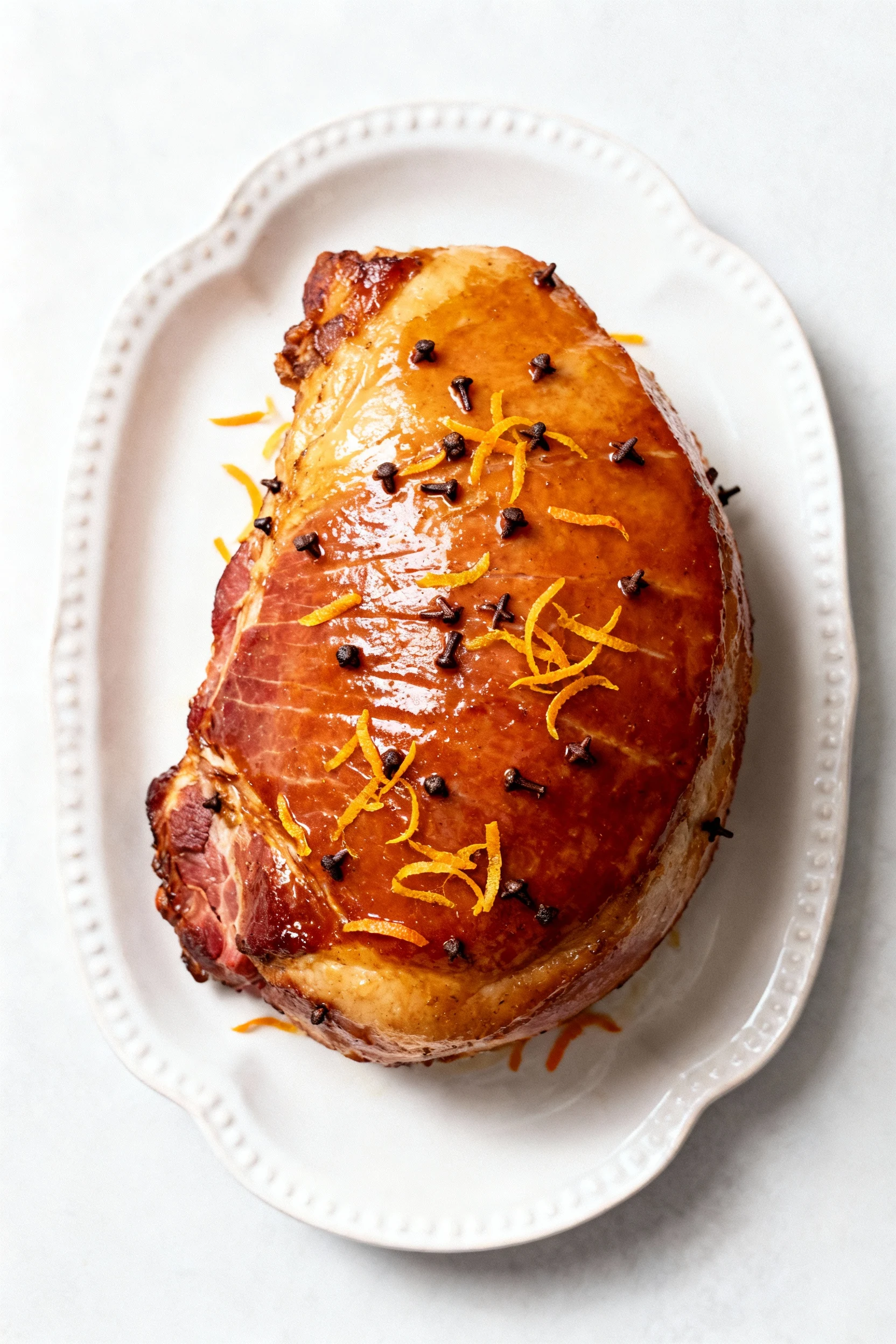
- Ground cloves (1/4 tsp) or stud with whole cloves
- Butter (2 tbsp, additional to above)
- Honey-Bourbon Glaze
- Honey (1/3 cup)
- Brown sugar (1/2 cup)
- Bourbon (2 tbsp, optional but awesome)
- Dijon mustard (1 tbsp)
- Butter (2 tbsp, additional to above)
- Black pepper (1/2 tsp)
Optional aromatics to layer under the ham: sliced oranges, onion wedges, or fresh rosemary sprigs. They perfume the drippings and look fancy. IMO, easy flex.
Let’s Get Cooking – Instructions
- Preheat the oven to 300°F. Low and slow keeps the ham juicy while warming it through without scorching the sugars.
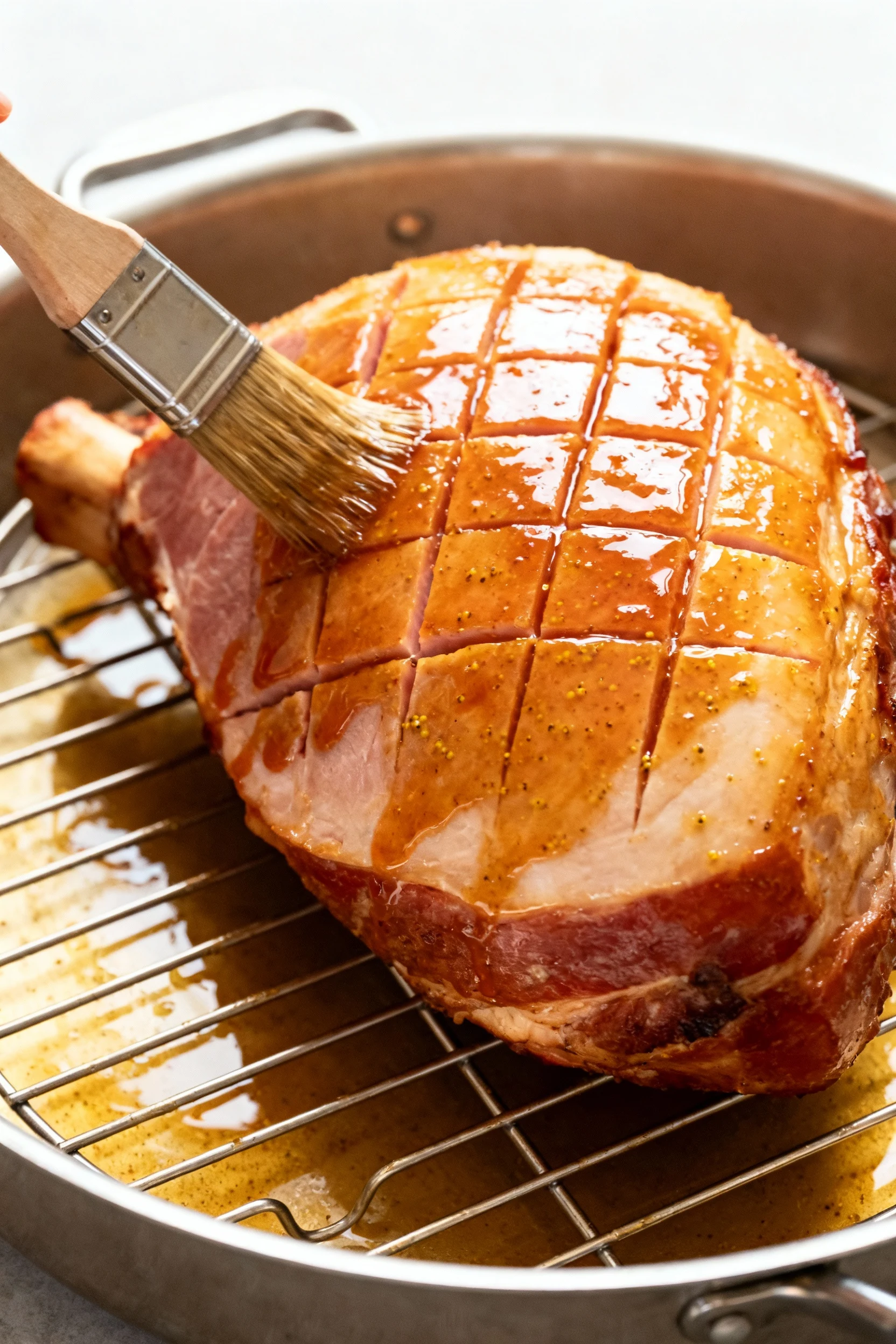
- Unwrap and prep the ham. Pat dry. Trim any thick rind. Score the surface in a shallow diamond pattern (1/2-inch deep). If you like, stud a few diamonds with whole cloves.
- Set up your pan. Place the ham cut-side down on a rack in a roasting pan. Add 1 cup water or stock to the pan. Tent loosely with foil.
- Warm it up. Bake at 300°F for 15–18 minutes per pound until the center reaches 120–125°F. Most hams are fully cooked; you’re reheating, not cooking from raw.
- Make your glaze. While the ham warms, combine your chosen glaze ingredients in a saucepan. Simmer 5–8 minutes until slightly thick, glossy, and spoon-coating.
- Glaze round one. Remove foil. Brush on a generous layer. Boost the oven to 375°F and bake 15–20 minutes, basting with more glaze every 10 minutes.
- Crust it up. For crackly edges, hit it with a final blast at 425°F for 8–10 minutes. Watch closely; sugar caramelizes fast.
- Check final temp. Pull the ham when the center hits 140°F. That’s the sweet spot for moist slices and safe serving.
- Rest like a pro. Tent with foil and let it rest 15–20 minutes. Juices redistribute. You slice; it stays juicy. Win-win.
- Make bonus sauce. Skim fat from pan drippings. Simmer with any leftover glaze until syrupy. Taste and adjust with vinegar or a splash of water.
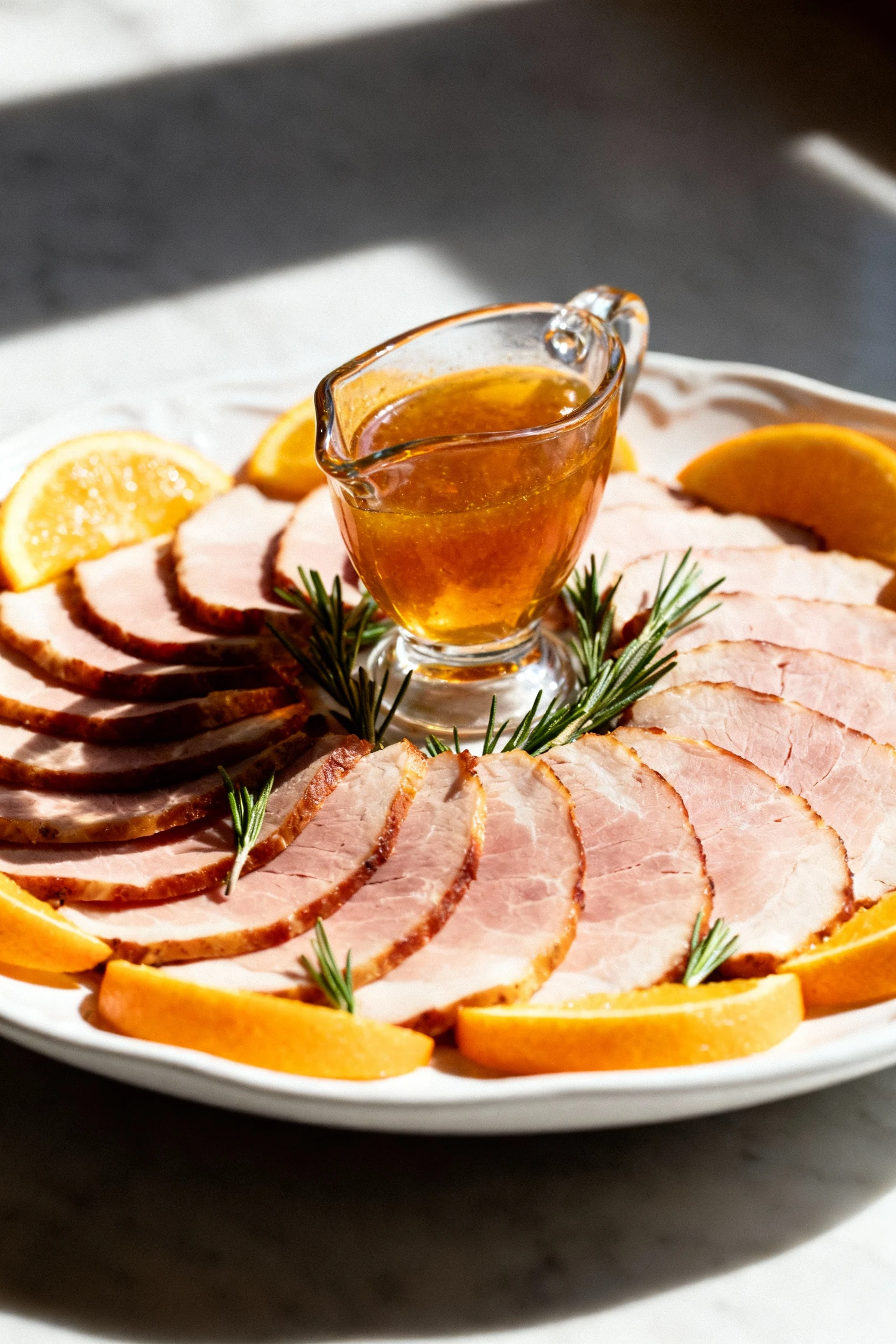
- Carve and serve. For bone-in, cut around the bone to free big chunks, then slice across the grain. Plate with extra glaze and herbs.
Storage Tips
- Cool quickly: Within 2 hours, transfer leftovers to shallow containers to chill fast.
- Refrigerate: Store sliced ham 3–4 days. Keep it tightly wrapped to block fridge funk.
- Freeze: Portion into meal-size packs and freeze up to 2–3 months. Thin slices thaw faster and stay tender.
- Reheat smart: Cover and reheat with a splash of stock or water at 300°F until warmed. Microwaving? Short bursts, covered, with a little liquid.
- Save the bone: Bag and freeze the ham bone for soup. It’s flavor gold you don’t throw away, ever.
Health Benefits
Ham is a solid protein source: roughly 18–20g per 3 oz serving, plus B vitamins like B1, B6, and B12 to support energy and metabolism. You’ll also get minerals like zinc and selenium, which help your immune system show up on game day. Want to keep it lighter? Trim external fat, slice moderately, and pair with veggie-heavy sides to balance the plate.
FYI, many hams are higher in sodium, and glazes can add sugar. Choose lower-sodium or “uncured” options when available, lean on fruit-based glazes, and go easy on the extra salt. You’ll keep the flavor while keeping the nutrition sensible.
Common Mistakes to Avoid
- Cranking the heat too early: High temps dry ham before the center warms. Start low, finish hot.
- Skipping the score: No cuts = glaze slides right off. Score shallow diamonds to anchor flavor.
- Glazing too soon: Sugar burns. Glaze for the last 30–45 minutes, then blast for crust.
- No thermometer: Guessing leads to dry slices. Target 140°F final internal temp, period.
- Uncovered marathon bake: Tent with foil early to lock moisture, then uncover for caramelization.
- Ignoring orientation: Place the ham cut-side down to protect the interior and baste naturally.
- Trashing the drippings: Reduce them into a sauce. That’s free flavor you already paid for.
- Slicing immediately: Rest 15–20 minutes or watch those juices run away like they owe you money.
Mix It Up
- Maple-Sriracha Crunch: Add 1–2 tbsp sriracha to the maple glaze + sprinkle flaky salt at the end.
- Orange-Rosemary Elegance: Simmer orange marmalade (1/3 cup) with cider vinegar (1 tbsp) and chopped rosemary.
- Smoky Chipotle: Stir 1–2 tsp chipotle paste into the honey glaze; finish with lime zest.
- Coffee-Molasses: Brewed coffee (1/4 cup) + molasses (2 tbsp) + brown sugar = deep, roasty vibes.
- Island Pineapple: Pineapple glaze plus a splash of dark rum and toasted coconut at plating. Vacation on a platter.
- Leftover playbook: Ham fried rice (day-old rice, peas, scallions), ham and bean soup (use the bone), cheesy ham sliders with pickles, breakfast hash with potatoes and eggs.
FAQ
Should I bake the ham covered or uncovered?
Start covered with foil to keep moisture in while the center warms. Uncover for the final 30–45 minutes to glaze and caramelize. That combo delivers tender slices and crispy edges without babysitting.
What internal temperature should I aim for?
Most store-bought hams are fully cooked, so aim for a final internal temp of 140°F. Warm to 120–125°F, glaze, then finish to 140°F. Pull, rest 15–20 minutes, and slice like a champ.
How long do I cook it per pound?
Plan on 15–18 minutes per pound at 300°F before glazing. Larger hams lean toward the higher end; smaller ones warm faster. Always verify with a thermometer because ovens and ham shapes vary.
Bone-in vs boneless—what’s better?
Bone-in wins on flavor and moisture, and it gives you a soup-worthy bone later. Boneless slices neatly and cooks slightly faster, but it can dry out if you rush it. If presentation matters, bone-in is your MVP.
My spiral ham always dries out. Help?
Spiral hams expose more surface area, which means faster drying. Fix it by tenting with foil, baking low and slow, basting with glaze, and pulling exactly at 140°F. A final hot blast for crust is great—just don’t overshoot.
Can I glaze the night before?
Prep the glaze ahead, yes. But don’t glaze the ham overnight; sugar plus salt can draw out moisture. Glaze in the last 30–45 minutes of baking for a shiny, caramelized finish without the stickiness nightmare.
What if I’ve got an uncooked fresh ham (not cured)?
Different game. A fresh ham needs to be cooked to 145°F and rests before slicing. It usually cooks longer, often 20–25 minutes per pound at 325°F. Season generously and use a thermometer; glazed rules still apply near the end.
Can I use convection or an air fryer?
Convection speeds things up, so check temp early and reduce time slightly. Air fryer works for slices or mini hams, not a 10-pounder (unless your air fryer is… heroic). Keep the same temp targets and glaze logic.
What pan should I use?
A sturdy roasting pan with a rack is ideal. The rack lifts the ham, lets heat circulate, and keeps it out of the liquid so you get bark instead of braise. Add aromatics under the rack for bonus flavor. FYI, a rimmed sheet pan also works in a pinch.
In Conclusion
You don’t need a culinary degree to serve a crowd-pleasing ham; you need smart timing, a sticky glaze, and a quick finish for crust. Hit 15–18 minutes per pound, glaze late, and pull at 140°F—then rest. Mix the glaze to match your mood, save the drippings for sauce, and turn leftovers into tomorrow’s win. Simple, repeatable, and delicious—exactly how a holiday centerpiece should be.
Printable Recipe Card
Want just the essential recipe details without scrolling through the article? Get our printable recipe card with just the ingredients and instructions.