Quick Red Snapper Veracruz (tomato Olive Caper Sauce)
A bright, briny, 30-minute fish dinner that feels coastal and classy—weeknight-easy, guest-worthy, and loaded with bold Mediterranean-Mex vibes.
You want restaurant-level flavor in less time than it takes to find parking. This is the play: silky fish, punchy tomatoes, briny olives, capers, and just enough heat to keep things interesting. It’s bold without being bossy and elegant without the stress tax. Cook it once, and you’ll wonder why you ever settled for bland fish and lemon.
Veracruz-style sauce is the cheat code: pantry staples that taste like sunshine and sea breeze. You build the sauce, slide in the fish, and boom—instant coastal vacation (minus TSA). The ROI is ridiculous: minimal prep, maximum payoff, and yes, it reheats like a dream. Ready for a win?
Why This Recipe Works

Balanced brine and acidity: The combo of tomatoes, green olives, capers, and a hit of lime delivers a savory, tangy backbone that makes mild fish taste vibrant, not flat.
Sear then simmer: A quick sear builds flavor and texture, while finishing the fish in the sauce keeps it moist and tender. No dry fillets on our watch.
Weeknight-simple technique: One pan, a handful of pantry ingredients, and a 10–12 minute cook time for the fish. It’s high-impact flavor with low effort, FYI.
Scalable and flexible: Works with snapper, cod, halibut, or even shrimp. Canned tomatoes? Great. Fresh? Even better. This recipe doesn’t make you chase unicorns.
Ingredients Breakdown
- 4 red snapper fillets (5–6 oz each), skin-on or off — any firm, mild white fish works (cod, halibut, mahi-mahi).
- 1 1/4 tsp kosher salt + 1/2 tsp black pepper — divided, to season fish and sauce.
- 2–3 tbsp extra-virgin olive oil — for searing and sautéing.
- 1 medium yellow onion, thinly sliced — sweetness balances the brine.
- 4 garlic cloves, thinly sliced — yes, four; flavor matters.
- 1 jalapeño or serrano, seeded and sliced — adjust heat to taste.
- 1 tsp dried oregano (Mexican preferred) — herbal depth and aroma.
- 1–2 bay leaves — classic Veracruz profile.
- 1/2 tsp ground cumin (optional) — adds warmth; not strictly traditional but great.
- 1 can (28 oz) diced tomatoes or 4 cups ripe tomatoes, chopped — both work beautifully.
- 1/2 cup pitted green olives, sliced — Manzanilla or Castelvetrano.
- 2–3 tbsp capers, drained — briny pop in every bite.
- 1/2 cup dry white wine — or fish stock/chicken stock; water works in a pinch.
- 1–2 tbsp pickled jalapeño brine (optional) — sneaky acidity and heat.
- 1–2 tbsp fresh lime juice — finish for brightness.
- 1 tsp sugar or honey (optional) — balances canned tomato acidity.
- 2 tbsp chopped cilantro or flat-leaf parsley — fresh finish.
- 1 tbsp butter (optional) — swirl to gloss the sauce at the end.
- Lime wedges — for serving, because you’re classy like that.
Step-by-Step Instructions

- Prep the fish: Pat the fillets dry. Season both sides with 1 tsp kosher salt and 1/4 tsp black pepper. Dry fish = better sear. No paper towels? Use a clean kitchen towel—just wash it after.
- Sear for flavor: Heat 2 tbsp olive oil in a large skillet over medium-high. When it shimmers, add fish (skin-side down if using). Sear 2–3 minutes until lightly golden. Flip, cook 1 minute, then transfer to a plate. The fish will finish in the sauce. Don’t fully cook it now.
- Sauté the aromatics: Reduce heat to medium. Add another 1 tbsp oil if the pan looks dry. Cook onion with a pinch of salt for 3–4 minutes until softened. Stir in garlic and jalapeño; cook 30–60 seconds until fragrant. No burning allowed—bitter = bad.
- Build the sauce: Add oregano, bay leaves, and cumin (if using). Stir, then pour in white wine. Scrape up any browned bits—that’s free flavor. Let it bubble 1–2 minutes to reduce slightly.
- Tomatoes + brine: Add the tomatoes, olives, capers, and 1 tbsp jalapeño brine (if using). Season with the remaining 1/4 tsp pepper and 1/4 tsp salt (taste as you go). If using canned tomatoes, add 1 tsp sugar to balance acidity.
- Simmer to marry flavors: Let the sauce cook at a brisk simmer for 6–8 minutes, stirring occasionally, until slightly thickened. You want saucy, not soupy. If it thickens too much, splash in a little water or stock.
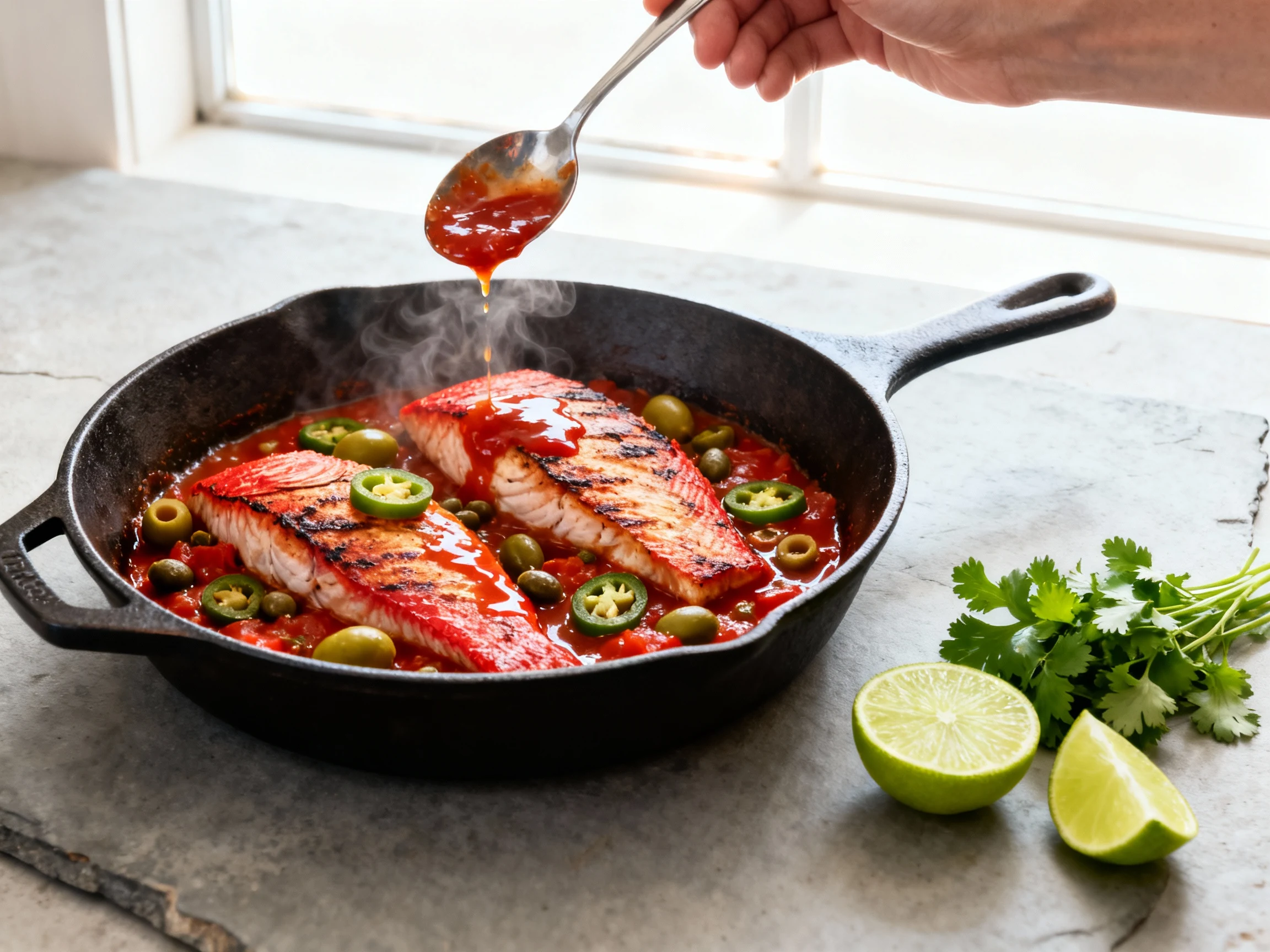
- Nestle and finish the fish: Return fillets to the pan, spooning sauce over the top. Reduce heat to medium-low and cook 4–6 minutes, until the fish flakes easily and reaches 130–135°F internal. Remove bay leaves.
- Brighten and gloss: Off heat, stir in lime juice, cilantro/parsley, and butter if using. Taste and adjust salt, pepper, and acidity. Want more zip? Add another 1 tsp lime or brine.
- Serve it right: Plate fish, ladle sauce generously, and add lime wedges. Great with rice, warm tortillas, crispy potatoes, or a simple salad. Snap a pic—you earned it.
How to Store
Refrigerate: Store leftovers in an airtight container for up to 3 days. The sauce keeps the fish juicy, which is rare and glorious.
Freeze: The sauce freezes well for up to 2 months; freeze it separately from the fish for best texture. Fish can become mealy if frozen after cooking, IMO.
Reheat: Warm the sauce in a skillet over low heat, add the fish, and gently heat until just warmed through. Avoid microwaving on high, unless rubbery fish is your thing (hard pass).

What’s Great About This
- Fast: About 30 minutes, start to finish.
- One-pan elegance: Minimal cleanup, maximum flavor.
- Pantry-friendly: Canned tomatoes, jarred olives, and capers do the heavy lifting.
- Healthy-ish: Lean protein, big flavor, no heavy cream required.
- Flexible heat: Keep it mild or bring the fire with serranos and extra brine.
- Scales beautifully: Double the sauce, add more fish, feed a crowd without stress.

Avoid These Mistakes
- Skipping the sear: That quick browning step adds flavor and texture you can’t fake later.
- Overcooking the fish: Pull at 130–135°F; it will carryover-cook slightly in the sauce.
- Thin, watery sauce: Reduce until it’s glossy and clings to a spoon. Watery sauce = sad plate.
- Under-salting: Olives and capers are salty, but tomatoes need seasoning. Taste at each step.
- Skipping acid at the end: Lime juice wakes up everything. You’ll miss it if you skip.
- Using dull olives: Choose flavorful green olives; bland olives flatten the dish.
Mix It Up
- Different fish: Use cod, halibut, tilapia, or mahi-mahi. Adjust cook time based on thickness.
- Shrimp Veracruz: Swap in large shrimp; simmer the sauce first, then cook shrimp 3–4 minutes.
- Grilled fish + sauce: Grill the snapper and spoon the Veracruz sauce over to keep the skin crispy.
- Chipotle twist: Add 1 tsp minced chipotle in adobo for smoky heat.
- Raisin + almond classic: Stir in 2 tbsp golden raisins and 2 tbsp toasted slivered almonds for a sweet-savory nod.
- Vegetarian version: Simmer cauliflower florets or chickpeas in the sauce; finish with feta (if you eat dairy).
- No wine? Use stock plus an extra 1 tsp lime juice or 1 tsp white wine vinegar.
FAQ
Can I use canned tomatoes instead of fresh?
Absolutely. High-quality diced or crushed canned tomatoes work great and keep the sauce consistent year-round. If they taste a bit sharp, add 1 tsp sugar or honey to balance.
What fish can replace snapper?
Any firm, mild white fish: cod, halibut, haddock, grouper, or mahi-mahi. Thicker fillets may need an extra minute or two to finish in the sauce.
How spicy is this dish?
It’s as spicy as you make it. Use jalapeño for mild-to-medium heat, serrano for more kick, or skip the fresh chile and rely on brine for minimal heat. You’re the boss.
Do I need to keep the skin on the fish?
No. Skin-on sears nicely and adds structure, but skinless works perfectly. If the skin is on, start searing skin-side down to crisp it.
Can I make the sauce ahead?
Yes—make the sauce up to 2 days ahead and refrigerate. Reheat gently, then add and cook the fish right before serving for best texture and freshness.
Is white wine mandatory?
Not at all. Use fish or chicken stock, or even water, and finish with a bit more lime juice for brightness. A splash of vinegar (white wine or sherry) also helps.
How do I know when the fish is done?
It should flake easily and read 130–135°F at the thickest part. No thermometer? Gently press with a fork—the flakes should separate without resistance.
What should I serve with it?
Steamed rice, cilantro-lime rice, roasted potatoes, or warm tortillas are excellent. A simple green salad or grilled vegetables rounds out the plate.
Is it gluten-free and dairy-free?
Yes, as written it’s gluten-free and dairy-free if you skip the optional butter. Always check your capers and olives for any odd additives, but most are naturally GF.
Can I cook the fish entirely in the sauce without searing?
You can, but searing adds savory depth and better texture. If you skip the sear, simmer the sauce first, then add the fish and cook gently until done.
Final Thoughts
This dish proves that “fast” and “forgettable” don’t have to be friends. With a smart sear, a briny-tomato backbone, and a squeeze of lime, you get big, layered flavor in one pan. Keep the pantry stocked with olives, capers, and tomatoes, and you’re always 30 minutes from coastal-level dinner. Weeknights just got an upgrade—no reservations required.
Printable Recipe Card
Want just the essential recipe details without scrolling through the article? Get our printable recipe card with just the ingredients and instructions.