Bbq Recipes That Turn Backyard Nights Into Legend
Turn weeknight grilling into a crowd-pleasing feast with one rub, one sauce, and a foolproof plan that works on gas or charcoal.
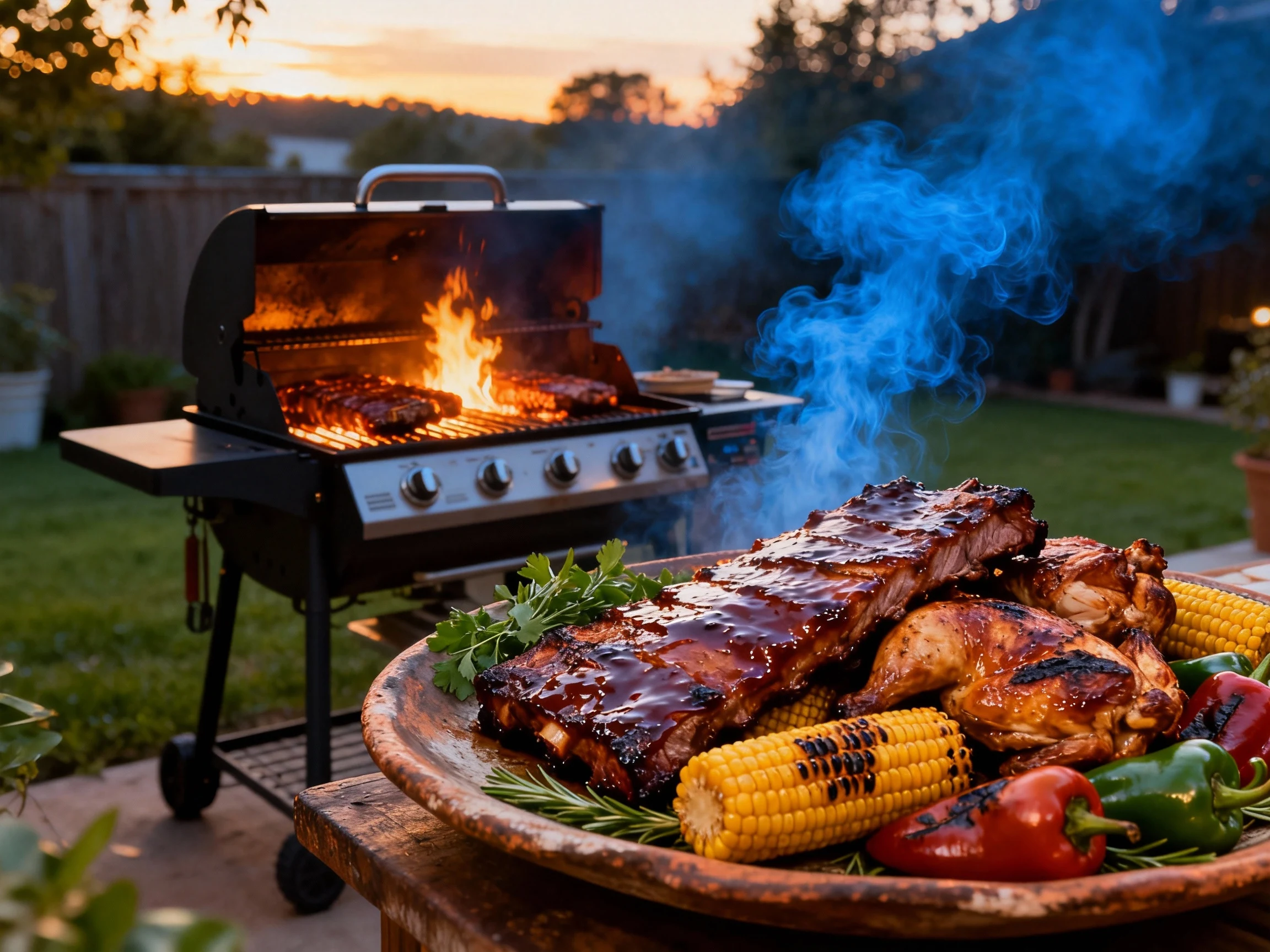
You don’t need a $1,500 smoker or a pitmaster tattoo to serve jaw-dropping barbecue at home. You need a smart plan, a killer all-purpose rub, and a sauce that makes people go quiet for a second. This is the blueprint: simple moves, big flavors, and results that feel like you hired a caterer. If you can manage two heat zones and a timer, you’re in. Let’s build a spread that turns your backyard into the place everyone “just happened to be nearby.”
What Makes This Recipe So Good
- One rub, one sauce, many wins: A versatile dry rub and a glossy glaze pull double duty on pork, chicken, and veggies.
- Two-zone heat, zero stress: Set your grill for a hot side and a cooler side. You’ll sear, then cruise to perfect doneness like a pro.
- Smoky without the drama: A handful of wood chips or chunks adds legit smoke on gas or charcoal. No complicated rigs required.
- Weeknight-friendly timeline: Ribs get a head start; everything else falls in line. Dinner lands on time, and you look like a genius.
- Scales up for crowds: The rub and sauce multiply easily, and the cookflow stays the same whether you’re feeding 4 or 14.
- Budget-smart: Chicken thighs, a rack of ribs, and seasonal veg deliver premium flavor without premium prices.
What Goes Into This Recipe – Ingredients
For the Dry Rub
- 1/4 cup brown sugar
- 1 tablespoon kosher salt (use 2 teaspoons if using fine salt)
- 2 teaspoons black pepper
- 1 tablespoon smoked paprika
- 2 teaspoons garlic powder
- 1 teaspoon onion powder
- 1 teaspoon ground mustard
- 1/2 teaspoon cayenne (optional for heat)
For the Glaze/BBQ Sauce
- 1 cup ketchup
- 1/3 cup apple cider vinegar
- 2 tablespoons brown sugar
- 1 tablespoon Worcestershire sauce
- 1 tablespoon Dijon mustard
- 1 tablespoon molasses (optional but recommended)
- 1–2 teaspoons hot sauce (to taste)
- 2 tablespoons unsalted butter
- 1/2 cup apple juice (for spritzing/mopping)
Proteins & Veg
- 1 rack baby back ribs (about 2–2.5 pounds)
- 2 pounds bone-in, skin-on chicken thighs (6–8 pieces)
- 4 ears sweet corn, husks removed
- 2 bell peppers, seeded and halved
- 1 large red onion, peeled and cut into thick rounds
Binders & Extras
- 2 tablespoons yellow mustard (for ribs; helps the rub stick)
- 2 tablespoons olive oil (for chicken and veggies)
- Wood chips or chunks (hickory for bold, apple/cherry for sweet)
- Buns, pickles, jalapeños, lemon wedges, fresh herbs for serving (optional)
Instructions
- Make the rub: Stir brown sugar, salt, pepper, smoked paprika, garlic powder, onion powder, ground mustard, and cayenne in a bowl until evenly mixed.
- Make the sauce: In a small saucepan, combine ketchup, cider vinegar, brown sugar, Worcestershire, Dijon, molasses, hot sauce, and butter. Simmer over low heat for 10–12 minutes until glossy. Reserve 1/2 cup for glazing; keep the rest for serving.
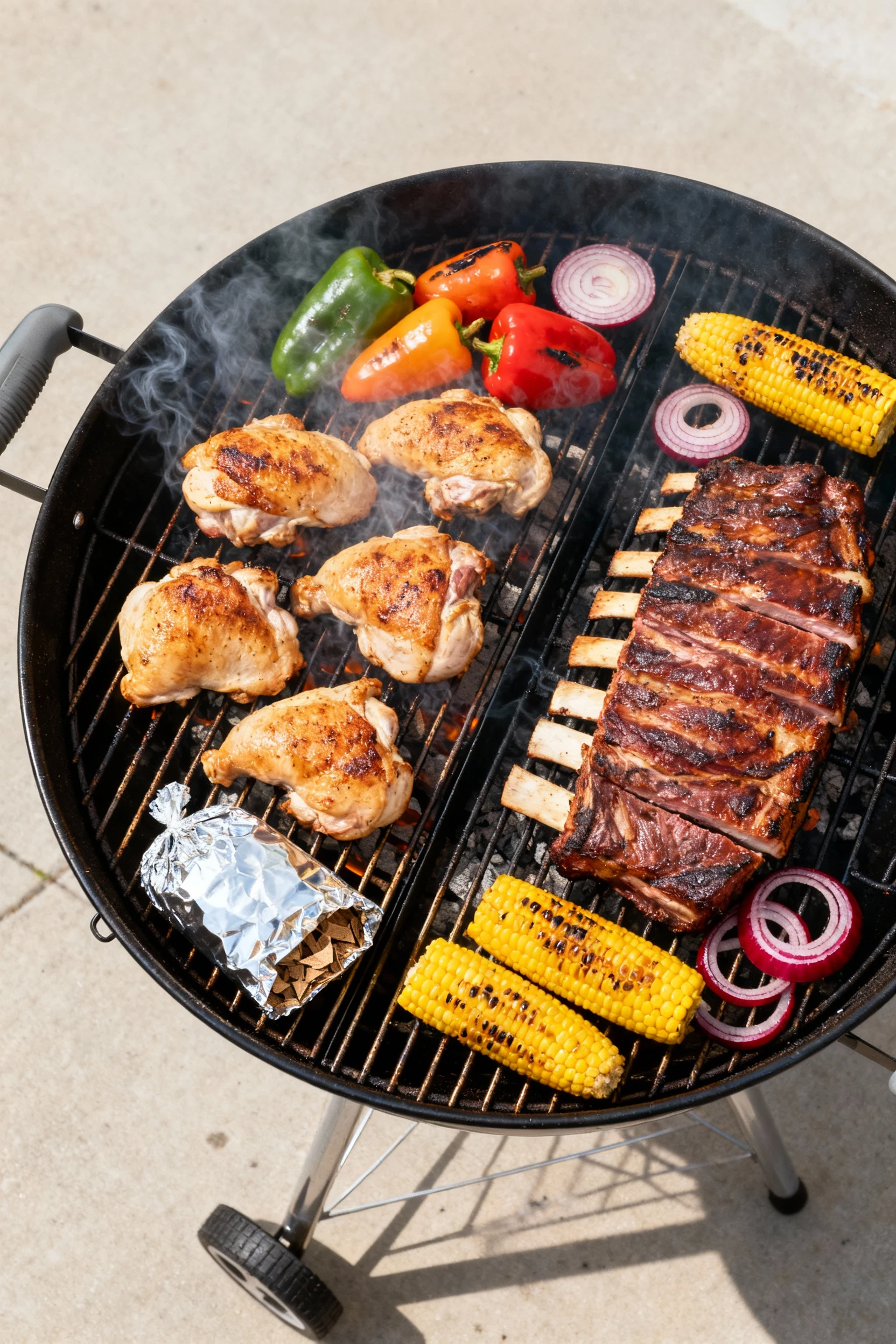
- Prep the grill for two zones: Set one side to medium-high heat (425–450°F) and the other to low/indirect (250–300°F). Add a handful of wood chips (wrapped in foil with holes on gas, or directly on coals for charcoal).
- Trim the ribs: Remove the membrane from the bone side (slide a butter knife under, grip with a paper towel, and pull). Pat dry.
- Season the ribs: Rub a thin layer of yellow mustard over both sides, then coat generously with the dry rub. Let sit 15–20 minutes to hydrate the spices.
- Start the ribs, indirect: Place ribs bone-side down on the cool side (indirect zone). Close the lid and cook at 250–275°F for 90 minutes, spritzing with apple juice every 30 minutes to keep the surface moist.
- Prep the chicken and vegetables: Pat chicken thighs dry. Toss with olive oil and 2–3 tablespoons of rub. Drizzle peppers, onion, and corn with olive oil and a light sprinkle of rub.
- Wrap the ribs (Texas crutch): After 90 minutes, place the ribs on heavy-duty foil, spritz, and wrap tightly. Return to the indirect zone for 45–60 minutes until meat is tender and a toothpick slides in with little resistance.
- Sear the chicken, then finish indirect: Place chicken skin-side down over the hot zone for 3–4 minutes to crisp, then move to the indirect side skin-up. Cook until the thickest part hits 175°F (juicy thigh magic), about 25–35 minutes.
- Grill the veg: While chicken finishes, grill corn, peppers, and onion over medium-high, turning to char all sides. Corn takes 8–10 minutes, peppers and onions 6–8 minutes. Move to indirect if flare-ups happen.
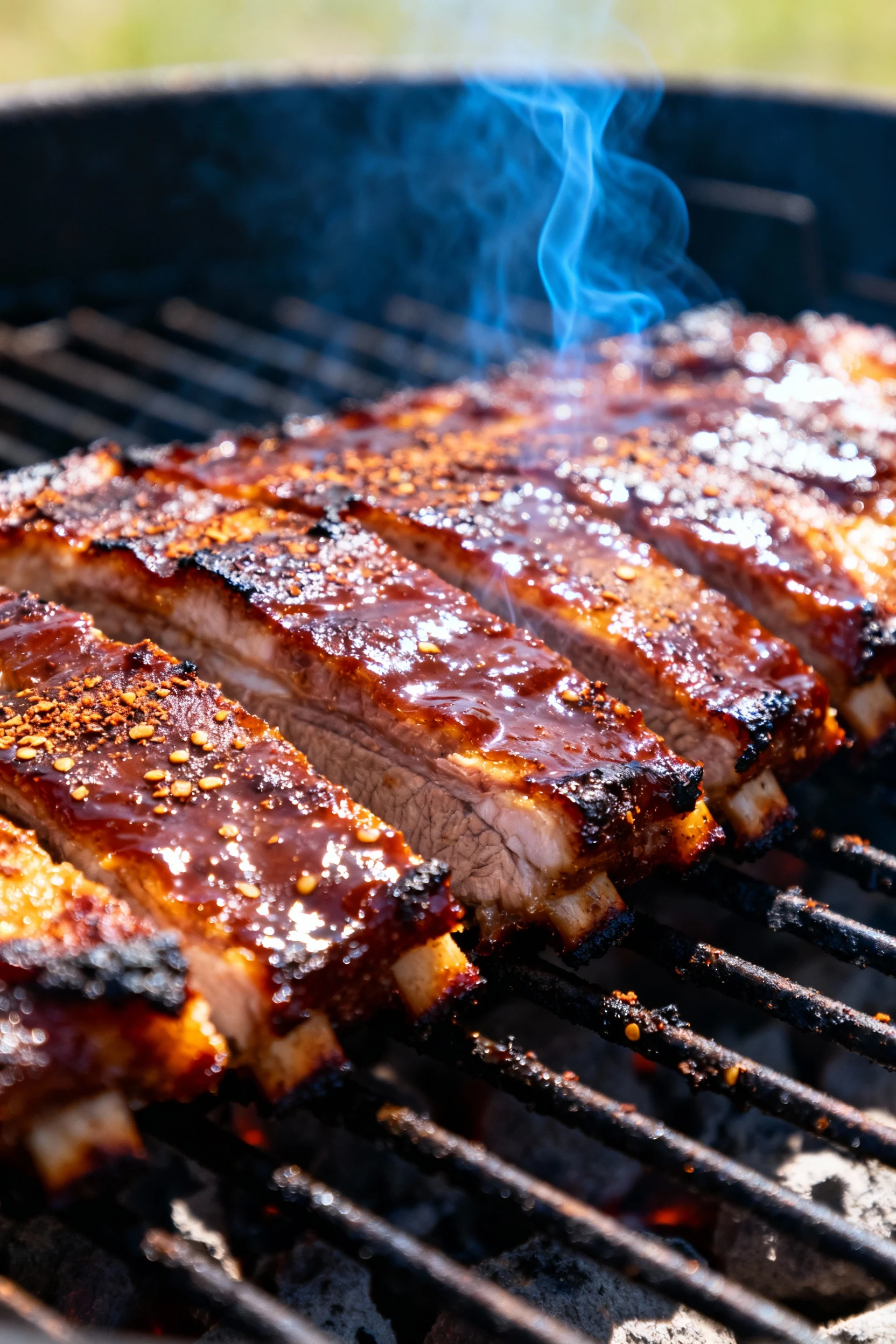
- Glaze and set: Unwrap the ribs and move them bone-side up to the hot side. Brush with sauce, flip, and brush the top. Let the glaze set for 3–5 minutes per side (watch sugars). Brush chicken with a thin coat during the last 5 minutes to create a tacky shine without burning.
- Rest and slice: Rest ribs and chicken 10 minutes. Slice ribs between bones. Keep chicken whole or slice against the grain for sandwiches.
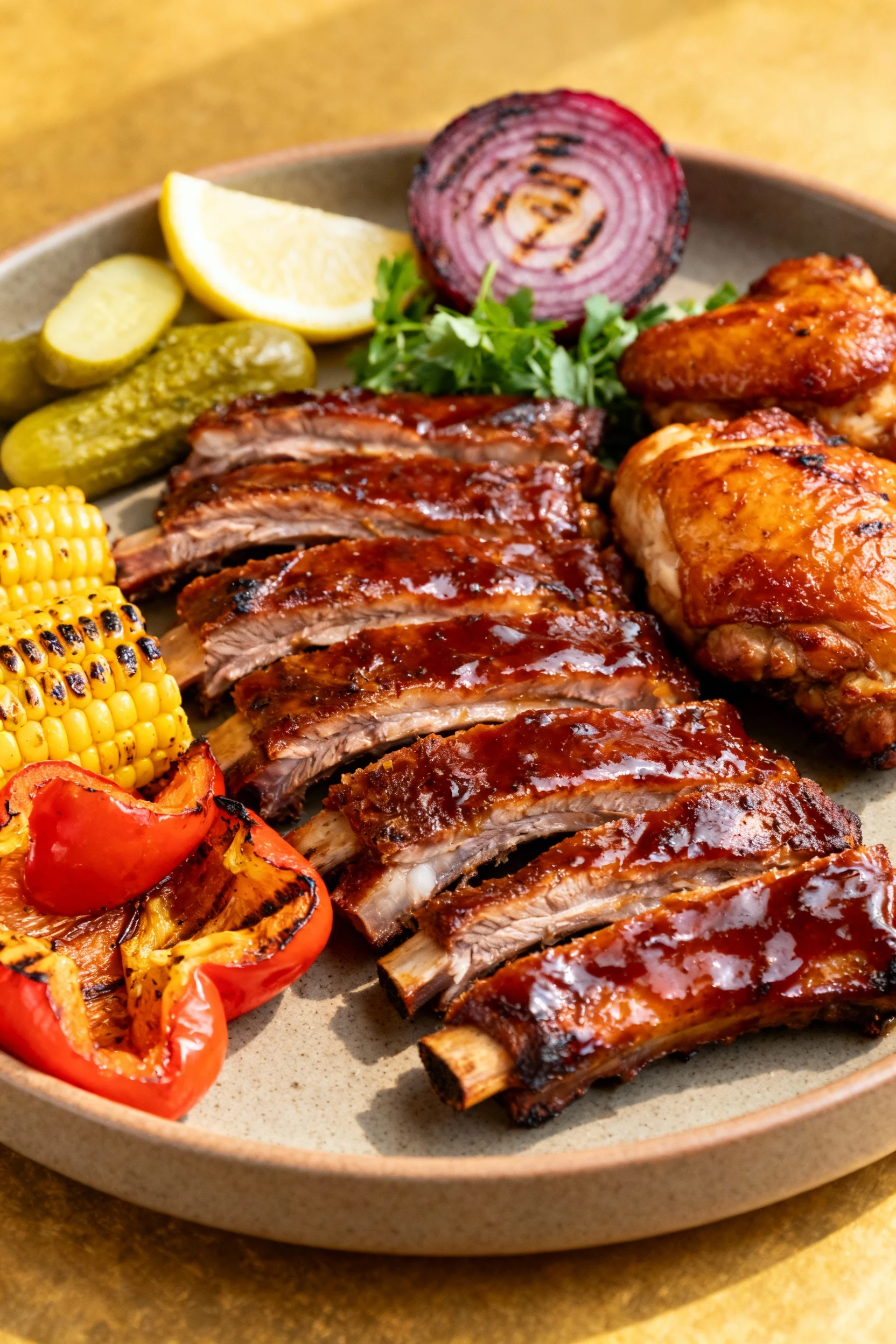
- Serve: Pile onto a platter with charred corn, peppers, and onions. Add pickles, lemon wedges, and fresh herbs. Pass extra sauce proudly.
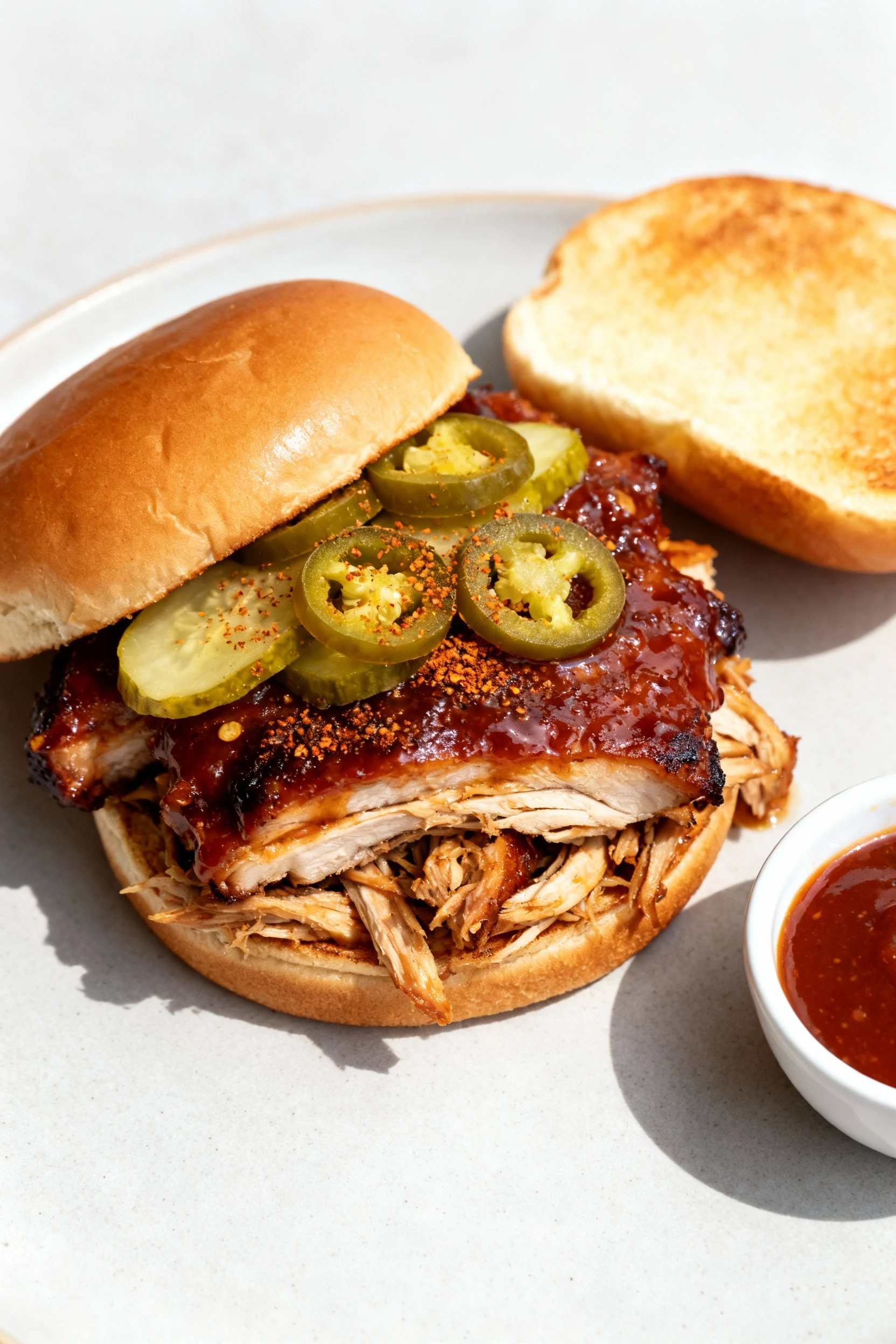
- Optional flex: Toast buns on the hot zone for 30–60 seconds and make saucy pulled-rib or sliced-chicken sandwiches. No one complains, ever.
Keeping It Fresh
Leftovers taste heroic the next day if you treat them right. Store ribs and chicken in airtight containers with a splash of apple juice or sauce to keep them moist. Veg can go in a separate container, wrapped in paper towels to avoid sogginess.
- Fridge: Up to 4 days for cooked meats and veg; sauce keeps for 2 weeks.
- Freezer: Ribs and chicken freeze well for 2–3 months. Wrap tightly in foil, then a freezer bag. Thaw overnight in the fridge.
- Reheat ribs: Wrap in foil with a spoon of sauce and warm at 300°F for 15–20 minutes. Unwrap and glaze 3–5 minutes to reset the shine.
- Reheat chicken: Bake covered at 325°F until 165°F internal, then hit a hot skillet skin-side down for 60–90 seconds to re-crisp.
- Reheat veg: Quick toss in a hot skillet or a few minutes on the grill to revive char and snap.
Benefits of This Recipe
- Zero guesswork: Time, temps, and steps built for consistent wins on any grill.
- Multi-protein meal: One cook yields ribs, chicken, and a stack of vegetables. That’s value.
- Balanced flavor profile: Sweet, smoky, tangy, and a touch of heat so every bite pops.
- Flexible fuel: Gas or charcoal both deliver excellent results; wood chips add depth.
- Meal prep friendly: Rub and sauce can be made days ahead, and leftovers reheat beautifully.
- Beginner to advanced: The core method is easy; the optional moves let you nerd out if you want.
Avoid These Mistakes
- Skipping two-zone heat: Without a cool zone, you’ll burn sugar and chase flare-ups like it’s cardio.
- Saucing too early: Glaze in the last 5–10 minutes so sugars set instead of scorch.
- Under-seasoning: Be generous with the rub. A timid shake equals timid flavor.
- Dry chicken: Thighs shine at 175°F; don’t pull them at 160°F like breasts. Different muscles, different rules.
- No rest time: Meat needs a 10-minute breather to redistribute juices. Patience pays.
- Cranking the smoke: A little goes a long way. Thin blue smoke = flavor; thick white clouds = creosote. FYI, that’s the bitter stuff.
Variations You Can Try
- Texas-style simple: Skip sugar in the rub; use equal parts kosher salt and coarse black pepper. Serve with a vinegar-forward sauce.
- Korean-inspired glaze: Whisk gochujang, soy sauce, honey, rice vinegar, and sesame oil. Brush during the last 5 minutes; sprinkle toasted sesame seeds.
- Carolina tang: Swap ketchup base for a mustard sauce: yellow mustard, cider vinegar, brown sugar, and a pinch of cayenne. Amazing on pork.
- Smoky maple: Replace molasses with maple syrup and add a pinch of chipotle powder for sweet heat.
- Veg-forward feast: Add portobello caps, halved zucchini, and thick cauliflower steaks. Brush with olive oil and rub; grill to tender-charred.
- Lean swap: Use bone-in chicken breasts; cook to 160°F and rest to 165°F. Glaze lightly to avoid sugar burn.
- Sugar-conscious: Cut rub sugar in half and use a no-sugar-added ketchup for the sauce. Still big flavor, lighter on carbs.
FAQ
Can I use a gas grill and still get smoky flavor?
Absolutely. Wrap a handful of soaked wood chips in foil, poke holes, and place the packet over a burner on the hot side. Keep the lid closed to trap smoke, and aim for that thin, blue stream—subtle is better than campfire-level haze.
What if I don’t have time for ribs?
Go all-in on chicken thighs and veg. Double the rub, skip the rib timeline, and you’ll still have a killer spread in under an hour. TBH, crispy glazed thighs alone can carry a party.
How do I know when the ribs are done?
Look for tender, not mushy. A toothpick should slide into the meat with slight resistance, and the rack will bend easily when lifted from the center with tongs. Internal temp around 195–203°F is a solid target for juicy, bite-through ribs.
Can I make the rub and sauce ahead?
Yes. Store rub in an airtight jar for up to 3 months. Refrigerate sauce for 2 weeks. Making them ahead streamlines your cook day and keeps your focus where it belongs—on the grill.
Do I need to brine the chicken?
Not required for thighs. They’re naturally juicy and forgiving. If you want extra insurance, a quick 2–3 hour brine (1/4 cup salt per 4 cups water) works, but the rub and two-zone method already deliver great results.
Can I use this method in the oven?
Yes, with adjustments. Bake ribs at 275°F covered until tender, then uncover and glaze under the broiler for color. Chicken can roast at 400°F until 175°F, then broil briefly to crisp the skin. You’ll miss the smoke, but the flavors still slap.
What internal temps should I hit?
Chicken thighs: 175°F. Ribs: probe-tender, typically 195–203°F. Vegetables: tender-crisp with char. A reliable instant-read thermometer is not optional—IMO it’s the cheapest upgrade to your cooking.
How do I scale this for a crowd?
Multiply rub and sauce as needed. Run multiple racks of ribs on the indirect side, wrapped in staggered batches. Hold cooked ribs and chicken wrapped in foil in a low oven (180–200°F) for up to an hour, then glaze and set right before serving.
In Conclusion
This is the backyard playbook: a flexible rub, a glossy sauce, and a two-zone setup that turns out tender ribs, juicy chicken, and charred veg every time. You’ll keep the timeline under control, feed a crew, and collect compliments like it’s your hobby. Fire up the grill, cue the wood smoke, and watch your “just dinner” become an event worth remembering. Your only problem now? Figuring out who to invite next weekend.
Printable Recipe Card
Want just the essential recipe details without scrolling through the article? Get our printable recipe card with just the ingredients and instructions.