Farro Recipes That Fix Busy Weeknights—big Flavor Fast
Quick, nourishing dinners with chewy grains, bright herbs, and roasted veggies—minimal prep, big flavor, ideal for busy weeknights.
You want dinner that hits all four: tasty, filling, fast, and healthy. Most grains tap out at two. Farro checks all four, then flexes with texture and leftovers that actually taste better. Think bistro-level bowls in 30–35 minutes without babysitting a pot. FYI, once you learn the sauce-to-grain ratio and the roast timing, you’ll pull off restaurant results on autopilot.
The Secret Behind This Recipe
The “secret” isn’t a single trick—it’s a stack. First, farro’s chewy bite makes it feel like you cooked for hours. When you toast the grain in a little olive oil before boiling, you get nutty aroma and better texture. It’s tiny, it’s simple, and it changes everything.
Next up: cook the grain like pasta. Use salted, simmering broth + water so flavor soaks in from the start. Don’t rely on a last-second dressing to save bland grains. Salt early, then taste late.
Finally, layer contrast. You want roasty caramelized vegetables, fresh herbs, a bright lemony dressing, and at least one crunchy element. Hot meets cool, creamy meets crisp. That’s why this bowl lands with “wow” even when you’re just using pantry staples.
Bonus: a little acid and fat after cooking unlocks farro’s best texture. Toss warm farro with lemon juice + good olive oil and watch it go from good to addictive. You’ll wonder why you ever ate plain grains.
Shopping List – Ingredients
- 1 cup uncooked farro (pearled or semi-pearled)
- 2 cups low-sodium vegetable or chicken broth
- 1–2 cups water (enough to keep farro submerged while simmering)
- 1 tsp kosher salt (plus more to taste)
- 2–3 tbsp extra-virgin olive oil
- 1 lemon (zest + 3 tbsp juice)
- 2 cloves garlic, minced
- 1 pint cherry tomatoes, halved
- 1 medium zucchini, chopped
- 1 small red onion, sliced
- 1 cup canned chickpeas, drained and rinsed
- 1 tsp dried oregano or Italian seasoning
- 1/2 tsp red pepper flakes (optional)
- 1 cup arugula or baby spinach
- 1/2 cup chopped fresh parsley (plus mint if you have it)
- 1/3 cup crumbled feta (optional)
- 1/4 cup toasted pistachios or almonds, chopped
- Freshly ground black pepper
The Method – Instructions
- Preheat to 425°F. Line a sheet pan with parchment for easy cleanup.
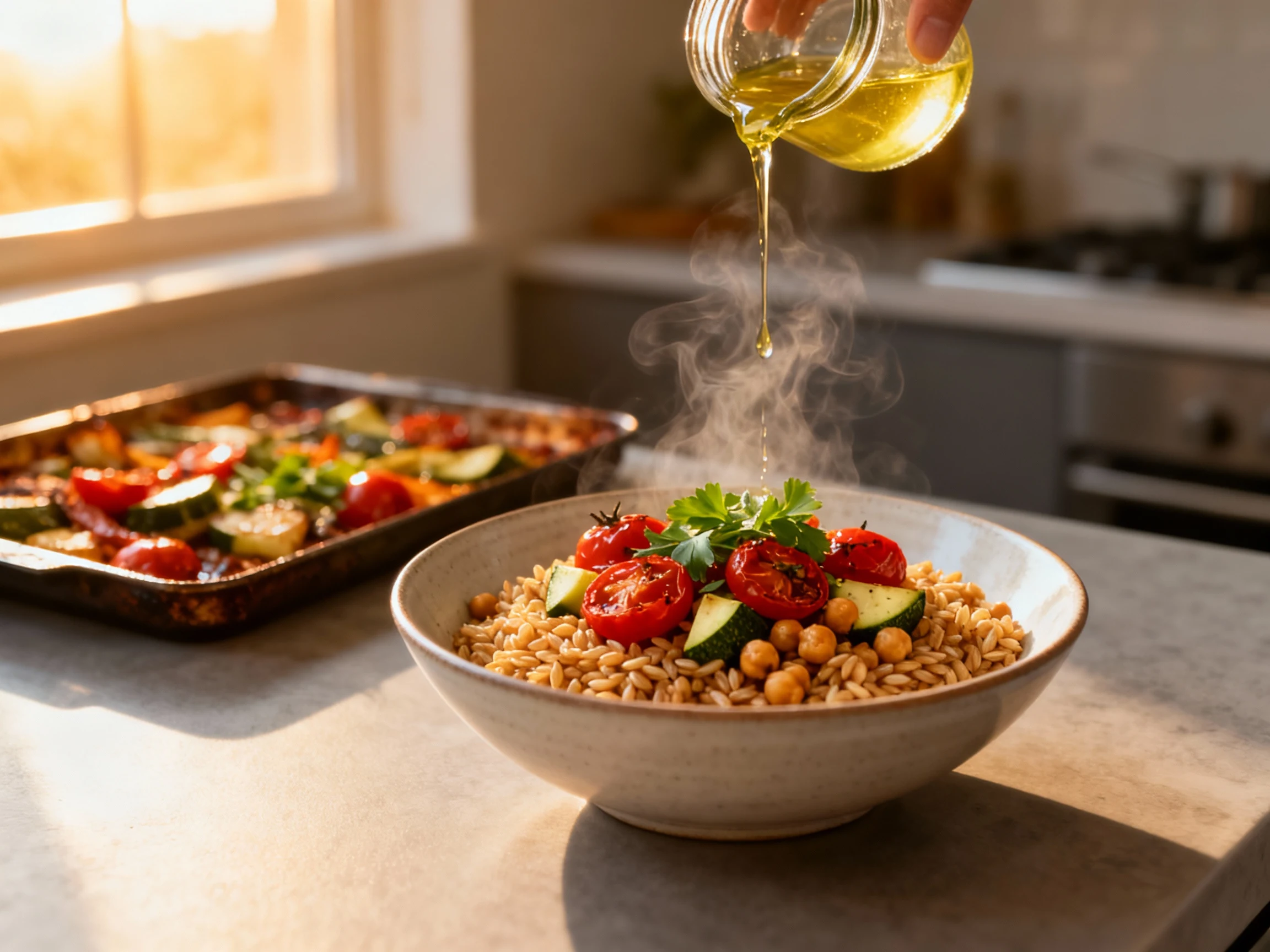
- Prep veggies: Toss cherry tomatoes, zucchini, red onion, and chickpeas with 1–2 tbsp olive oil, 1/2 tsp salt, oregano, and red pepper flakes. Spread in a single layer.
- Roast for 18–22 minutes until tomatoes burst and edges caramelize. Stir once halfway so everything browns evenly.
- Toast the farro: In a medium pot, warm 1 tbsp olive oil over medium heat. Add farro and stir for 2–3 minutes until it smells nutty.
- Add liquid: Pour in broth + enough water to cover the grain by 1–2 inches. Stir in 1 tsp salt. Bring to a boil, then simmer.
- Cook 15–25 minutes (pearled cooks faster, whole takes longer) until chewy-tender. Taste a few grains; you want bounce, not mush.
- Drain any excess liquid like pasta. Return farro to the warm pot and let steam off for 1–2 minutes.
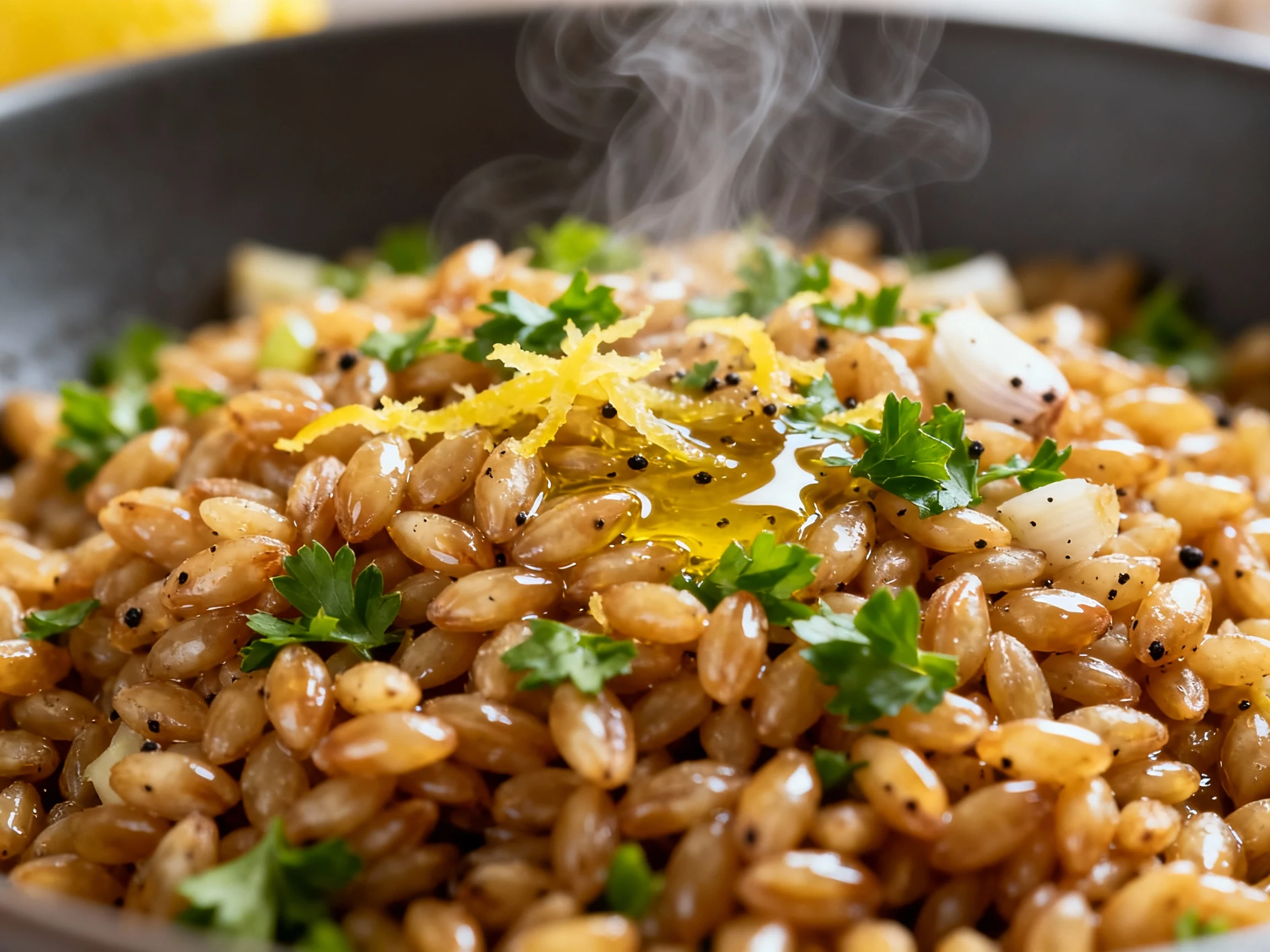
- Make the lemon dressing: In a small bowl, combine lemon zest, lemon juice, minced garlic, 1–2 tbsp olive oil, and black pepper. Whisk until glossy.
- Toss warm farro with half the dressing and half the parsley. Taste. Add a pinch more salt if needed.
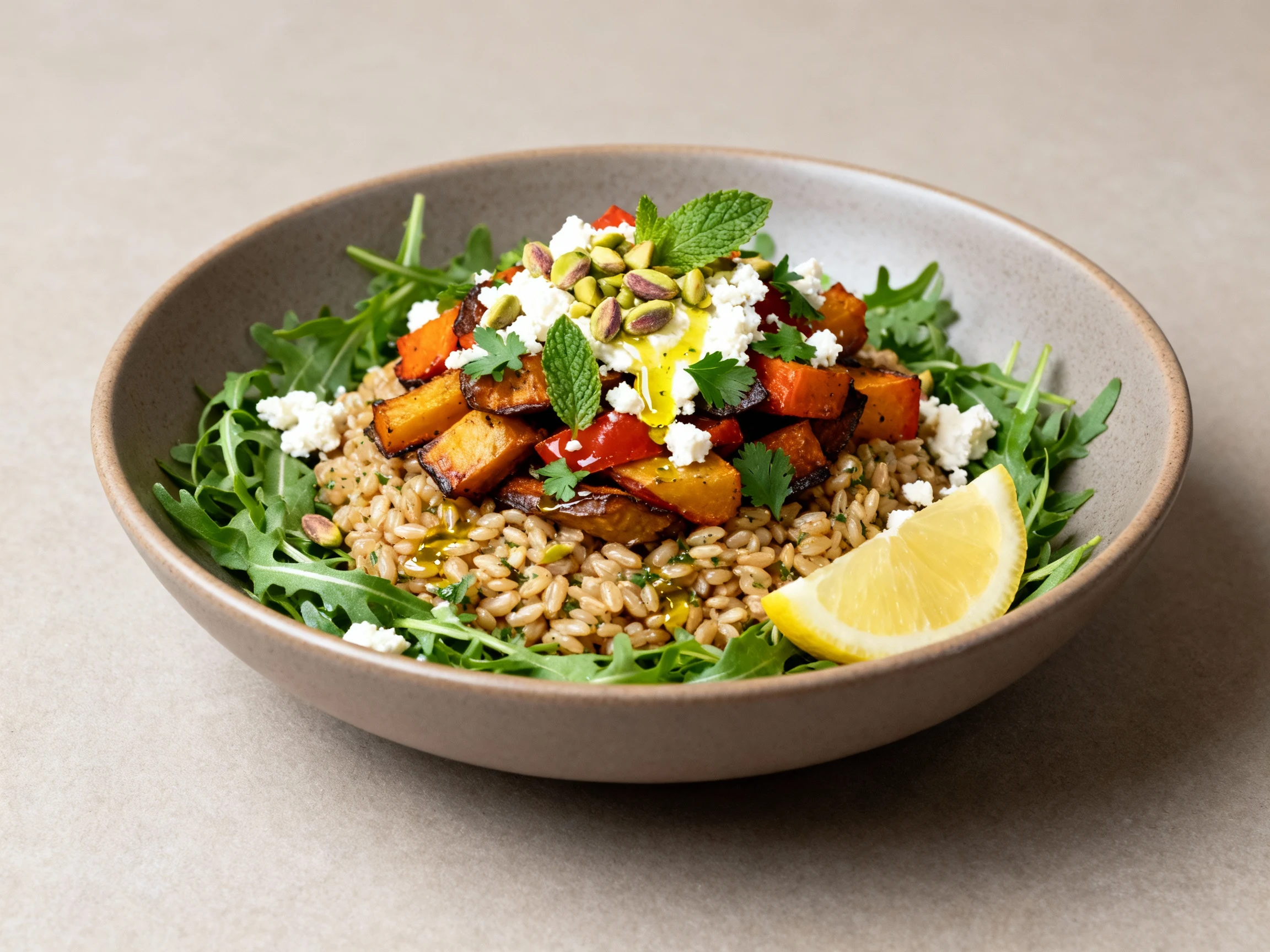
- Assemble bowls: Add a handful of arugula, scoop in dressed farro, top with roasted vegetables, then finish with remaining dressing.
- Load the finishers: Sprinkle feta, chopped pistachios, and remaining herbs. Hit it with extra pepper and a squeeze of lemon if you’re extra.
- Serve hot or warm. For a chilled version, let farro cool 10 minutes before dressing and add the greens right before serving.
How to Store
Keep farro and roasted veggies in an airtight container for 4–5 days in the fridge. Store the greens and nuts separately so they stay crisp. Dressing can hang out in a jar for a week—shake before using.
For longer storage, freeze the cooked farro and roasted veggies in portions for up to 2 months. Thaw overnight in the fridge. Reheat gently on the stovetop with a splash of water or in the microwave, then add fresh greens and herbs.
If you’re meal-prepping, build bowls without the greens and dressing. Add those right before eating so everything stays bright and snappy.
Nutritional Perks
- Protein + fiber: Farro packs both, which means better satiety and smoother energy. Roughly 6–7g protein and 5g fiber per cooked cup.
- Micronutrients: You’ll get B vitamins, magnesium, and iron—useful for energy production and muscle function.
- Complex carbs: Slow-digesting carbs keep you full without the crash. Great for post-workout refuels and busy days.
- Heart-healthy fats: Olive oil, nuts, and feta (if using) add flavor and help absorb fat-soluble nutrients from the veggies.
- Plant diversity: Chickpeas, greens, tomatoes, and herbs check the “eat the rainbow” box, which your gut microbes love. Science and flavor holding hands—cute, right?
Don’t Make These Errors
- Skipping the toast: Toasting the grain for 2–3 minutes adds huge aroma. It’s the easiest upgrade.
- Under-salting the cooking liquid: If the broth tastes bland, the farro will too. Salt early; adjust late.
- Overcooking to mush: Taste for chew. Pearled farro can go from perfect to soggy fast.
- Ignoring acid: Lemon or vinegar wakes up grains. No acid = flat flavor. Don’t accept boring.
- Mixing greens too early: Hot grains wilt delicate leaves. Add greens at the end or serve alongside.
- One-note textures: Always add crunch—nuts, seeds, or crispy chickpeas. Contrast makes bowls memorable.
- Wrong farro type confusion: Pearled cooks fastest, whole takes longest. Adjust timing, don’t blame the grain.
Different Ways to Make This
- Mediterranean Power Bowl: Keep the roasted tomatoes and chickpeas; add cucumbers, olives, and a tahini-lemon drizzle.
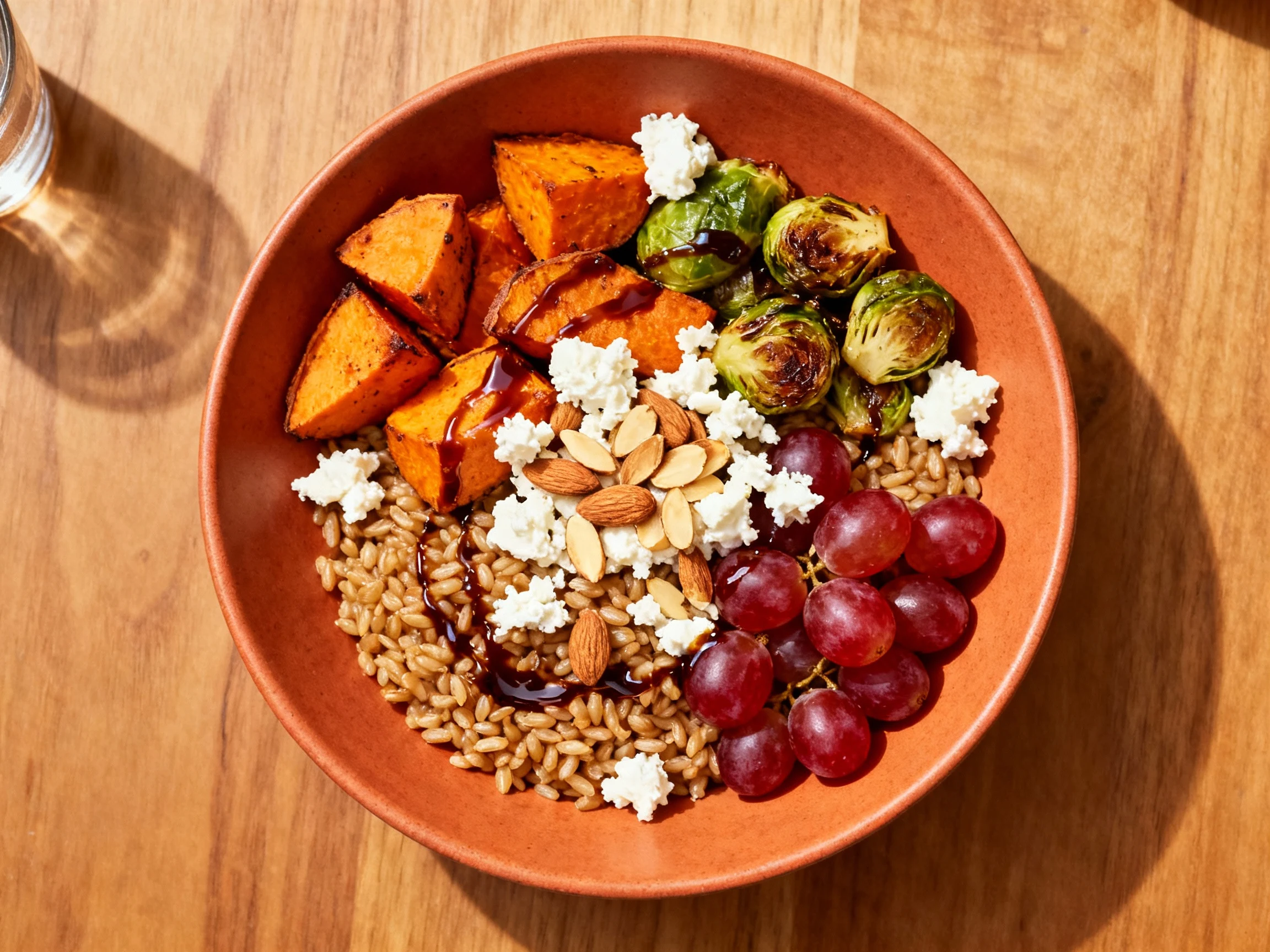
- Autumn Harvest: Roast cubed sweet potatoes, Brussels sprouts, and red grapes. Finish with goat cheese and balsamic.
- Spicy Harissa: Stir harissa into the lemon dressing. Add roasted cauliflower and a dollop of Greek yogurt for cooling contrast.
- Tuscan Soup: Simmer farro in broth with kale, cannellini beans, tomatoes, and garlic. Finish with Parmesan rind magic.
- Breakfast Bowl: Warm farro with cinnamon and a splash of milk. Top with sautéed apples, walnuts, and a drizzle of honey.
- One-Pan Skillet: Sauté mushrooms, leeks, and thyme; add cooked farro and a splash of white wine. Finish with butter and parsley.
- Instant Pot Shortcut: 1 cup pearled farro + 2 cups broth, 6 minutes high pressure, quick release, then dress.
- BBQ Picnic Salad: Char corn, toss with farro, cherry tomatoes, scallions, and a smoky paprika-lime vinaigrette.
FAQ
What is farro, exactly?
Farro is an ancient wheat grain known for its chewy texture and nutty flavor. It’s typically sold as whole, semi-pearled, or pearled, which affects cook time and nutrition. It plays well in salads, bowls, soups, and even breakfast.
Is farro gluten-free?
No—farro is a wheat product and contains gluten. If you need a gluten-free option, swap it for brown rice, quinoa, or buckwheat and follow similar steps for dressing and layering.
What’s the difference between pearled, semi-pearled, and whole farro?
Pearled has most of the bran removed, so it cooks faster and absorbs flavors quickly. Semi-pearled keeps some bran and nutrition with a moderate cook time. Whole farro retains the full bran layer and usually needs soaking and a longer simmer.
Do I need to soak farro?
Pearled and semi-pearled don’t require soaking, though a quick rinse helps. Whole farro benefits from a overnight soak and can still take 30–40 minutes to reach chewy-tender. If you’re in a rush, stick with pearled.
How long does farro take to cook?
Expect 15–25 minutes for pearled, 20–30 minutes for semi-pearled, and 30–40 minutes for whole (soaked). Always taste—brands vary, and your stove isn’t a stopwatch.
Can I meal-prep farro?
Absolutely. Cook a big batch and store it plain or lightly dressed with lemon and olive oil. It reheats well and anchors a week’s worth of bowls, soups, and sides. IMO, it’s one of the most reliable grains for leftovers.
What can I substitute if I can’t find farro?
Try barley for a similar chew, or go with brown rice or quinoa for a gluten-free alternative. Adjust cook times and season the grains early so they don’t taste like afterthoughts.
Should I serve it warm or cold?
Both work. Warm farro is cozy and great with roasted veggies, while chilled farro makes excellent salads. If serving cold, dress the grains while still slightly warm to help flavors stick, then chill and add greens later.
How do I keep the grains from clumping?
Toss cooked farro with a splash of olive oil or dressing while it’s warm, then fluff with a fork. If you made a huge batch, break it up with a little water when reheating to restore silkiness.
In Conclusion
When you learn the simple stack—toast, salt, simmer, dress, and layer—you unlock grain bowls that taste like you had help in the kitchen. Farro’s chew, roasted veg, and lemony finish deliver big satisfaction on weeknights. Keep a bag in the pantry, and you’ve always got a plan B that eats like plan A. Now go make dinner that your future self will thank you for—leftovers included.
Printable Recipe Card
Want just the essential recipe details without scrolling through the article? Get our printable recipe card with just the ingredients and instructions.