Oven Baked Fish Recipes That Win Busy Weeknights
Make crispy, juicy fillets in under 30 minutes—minimal prep, zero splatter, perfect for weeknights and impressive enough for guests.
You want dinner that punches above its weight: fast, clean, and legit delicious. One pan, big flavor, no babysitting—sound fair? Most people overcomplicate fish, then wonder why it’s dry; we’ll fix that today. The strategy: high heat, smart seasoning, and a few pro moves that make flaky, restaurant-level fillets a Tuesday reality.
Your stovetop demands attention; the oven sets it and forgets it (while you reclaim your evening). Give me 25–30 minutes and I’ll give you crispy edges, tender centers, and a mess-free kitchen. Bonus: it scales. Cooking for two or feeding six? Same playbook, same win.
What Makes This Special
Speed: From fridge to fork in about 30 minutes, including prep. No long marinades or fussy steps—just solid technique that delivers.
Consistency: The oven heats evenly, so your fillets cook through without hot spots. Translation: flaky, moist fish every time, not a culinary guessing game.
One-pan simplicity: Line a sheet pan, season well, and bake. Cleanup takes minutes, not a TED Talk. Your future self says thanks.
Flexibility: Works with salmon, cod, halibut, haddock, trout, or tilapia. Choose your flavor path (lemon-herb, miso-ginger, Cajun, pesto), and you’ve got a new hit weekly.
Ingredients
- Fish: 1.5 lb (680 g) boneless fillets (salmon, cod, halibut, haddock, trout, or tilapia), skin-on or off
- Olive oil: 2–3 tbsp, divided
- Lemon: 1, zested and juiced
- Garlic: 2–3 cloves, minced
- Kosher salt: 1 to 1.5 tsp, to taste
- Black pepper: 1 tsp, freshly ground
- Paprika or smoked paprika: 1 tsp
- Fresh herbs: 2 tbsp chopped parsley, dill, or chives
- Optional crunch: 1/2 cup panko breadcrumbs + 1 tbsp olive oil + pinch of salt
- Optional butter finish: 2 tbsp unsalted butter, melted (for extra richness)
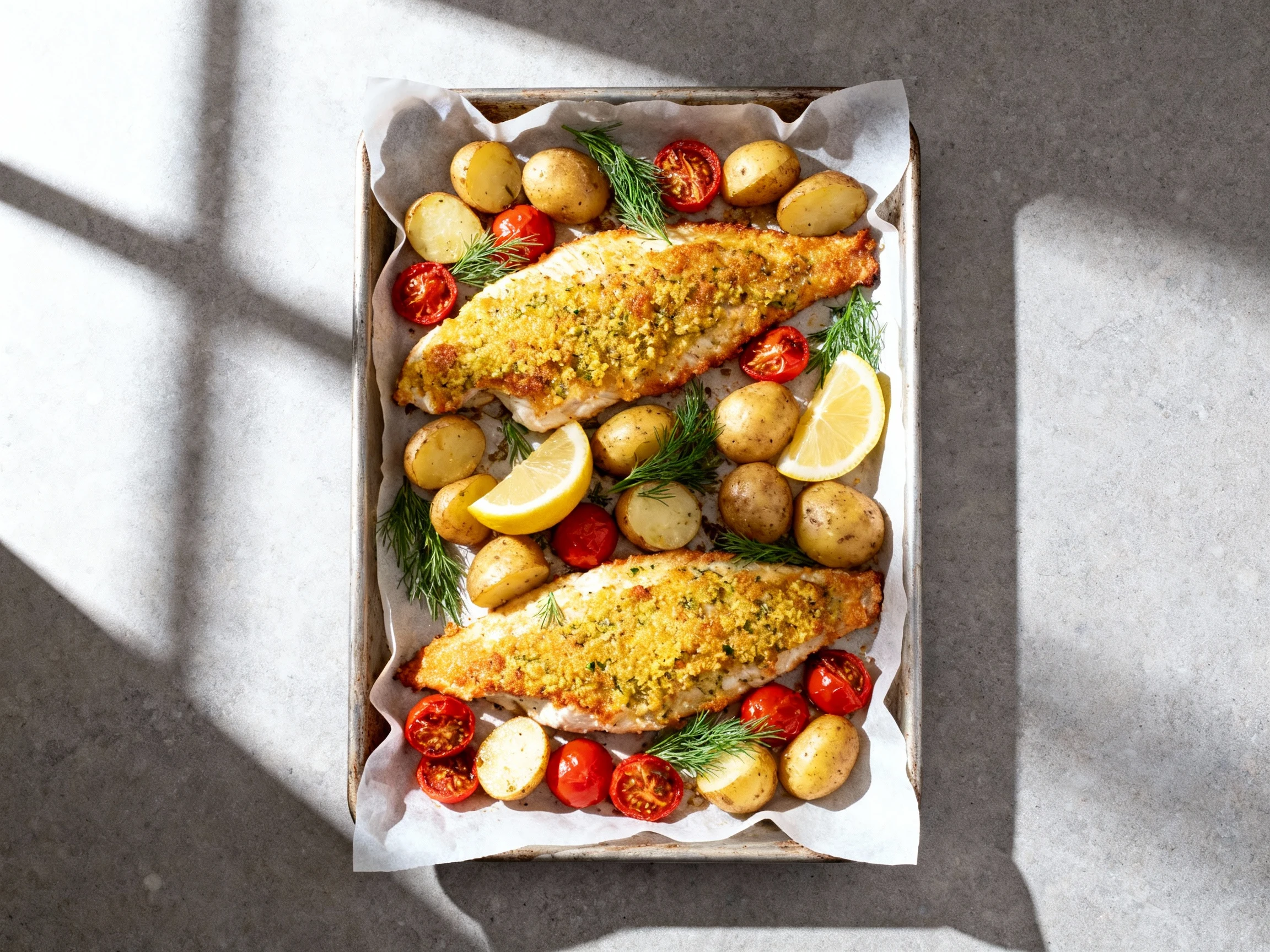
- Sheet pan add-ins (optional): 1 lb small potatoes (halved), 1 cup cherry tomatoes, 1 red onion (sliced), 1 cup green beans
Flavor Boosters (choose one, optional):
- Lemon-Herb: 1 tbsp Dijon mustard + 1 tsp honey + 1 tbsp chopped dill
- Garlic-Parmesan: 1/3 cup grated Parmesan + 1 tsp Italian seasoning + 1 tbsp butter
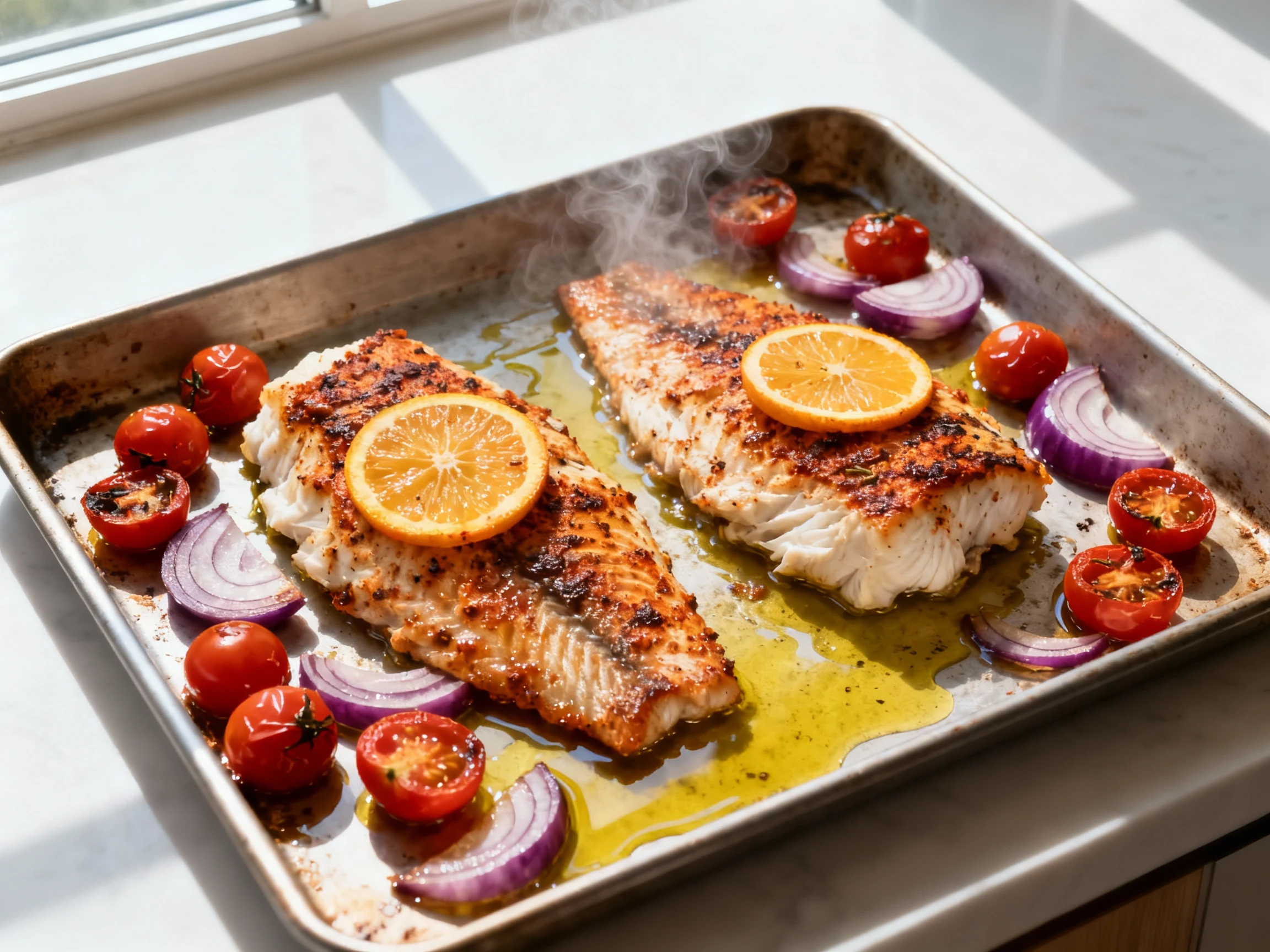
- Cajun: 1 tbsp Cajun seasoning + 1/2 tsp brown sugar
- Miso-Ginger: 1 tbsp white miso + 1 tsp grated ginger + 1 tsp soy sauce
- Pesto: 2 tbsp pesto + 1 tbsp lemon juice
Instructions
- Preheat the oven to 425°F (220°C). Line a sheet pan with parchment or foil for easy cleanup.
- Prep the fish: Pat fillets dry with paper towels. Dry fish = browning and crisp edges. Place on the pan, leaving space between pieces.
- Season: Drizzle fillets with 2 tbsp olive oil. Sprinkle with salt, pepper, paprika, lemon zest, and minced garlic. Add fresh herbs. If using a flavor booster, spread it over the top now.
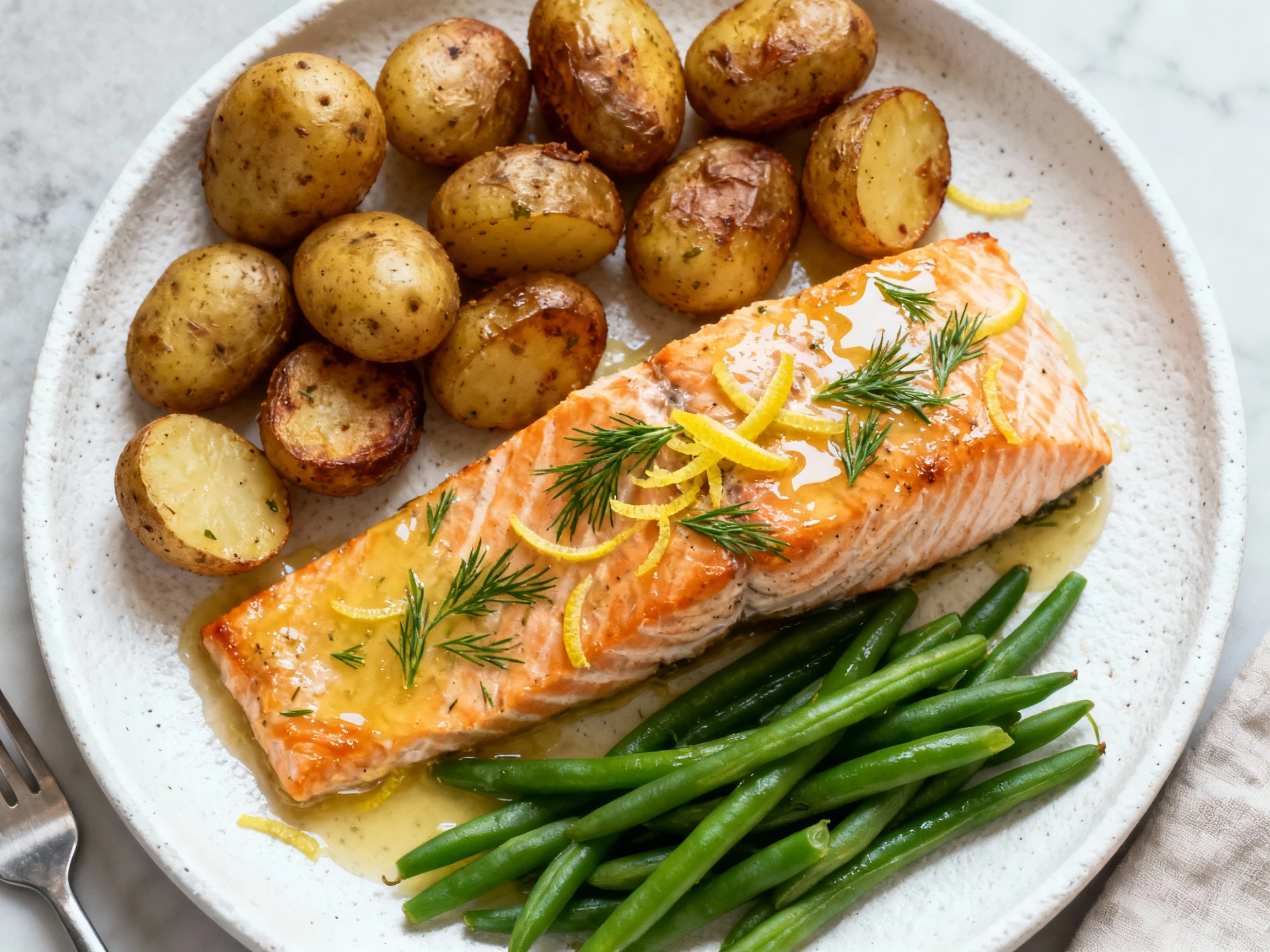
- Add optional veg: Toss potatoes with 1 tbsp olive oil and a pinch of salt; start them first for 10–12 minutes. Then add tomatoes, onion, or green beans around the fish for a full sheet-pan dinner.
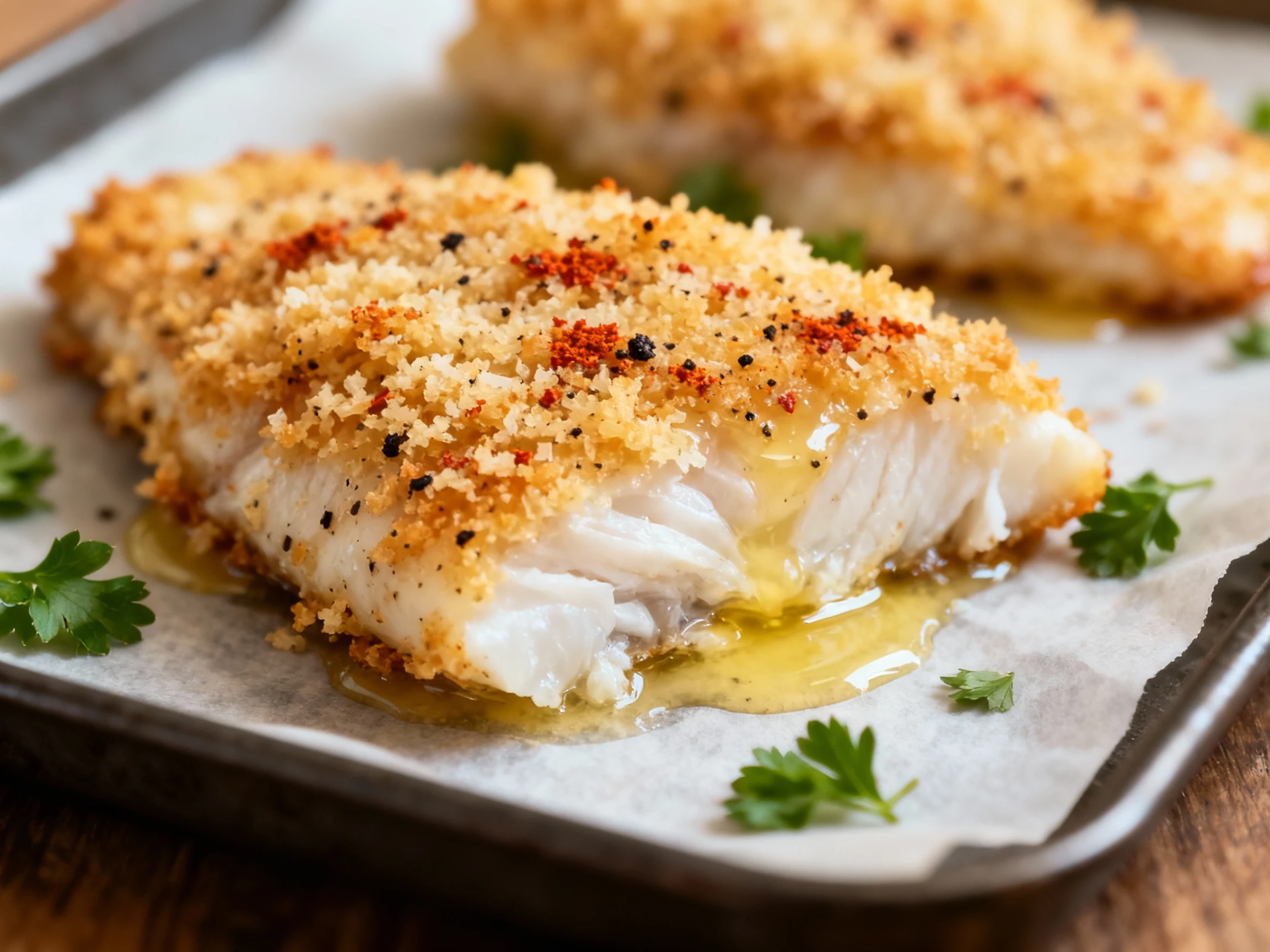
- Optional crunch: Mix panko with 1 tbsp olive oil and a pinch of salt. Press lightly onto the top of fillets for a golden crust.
- Bake: Roast fish at 425°F for 8–12 minutes for thin fillets (tilapia, trout), and 12–15 minutes for thicker fillets (salmon, cod, halibut). General rule: about 10 minutes per inch of thickness.
- Check doneness: The fish should flake easily and look opaque. Aim for an internal temp of 125–130°F for salmon (medium) and 140–145°F for white fish. Don’t overthink—pull it as soon as it’s flaky.
- Finish: Squeeze lemon juice over the hot fillets. For extra richness, brush with melted butter. Rest 2 minutes so juices redistribute.
- Serve: Plate with roasted veg, rice, or a crunchy salad. Garnish with more herbs because you’re fancy like that.
Storage Tips
Cool quickly: Let leftovers cool 15–20 minutes, then move to airtight containers. Don’t leave fish at room temp for hours unless “meh” is your flavor goal.
Refrigerate up to 3 days. Reheat low and slow: 275°F oven for 8–10 minutes or in a covered skillet on low with a splash of water. Microwaves can work, but they tend to bully fish—use short bursts.
Freeze up to 2 months. Wrap tightly to avoid freezer burn. Thaw overnight in the fridge and reheat gently. FYI, delicate white fish handles freezing better than fatty salmon.
Repurpose: Flake into tacos, rice bowls, fish cakes, or a lemony pasta. Your leftovers just leveled up.
Health Benefits
Lean protein: A 4–6 oz serving packs 20–30 g protein with minimal saturated fat, so you stay full without feeling sluggish.
Omega-3s: Salmon, trout, and sardines deliver DHA/EPA for heart, brain, and joint health. Your future self appreciates today’s fillet.
Micronutrients: Fish offers vitamin D, B12, selenium, iodine—nutrients many people miss. Baking avoids extra oil, so it’s cleaner calorie-wise.
Smart swaps: Use olive oil, fresh herbs, citrus, and spices. You get big flavor without heavy sauces. IMO, that’s how you win dinner and your bloodwork.
Avoid These Mistakes
- Skipping the pat-dry step: Moisture blocks browning and equals soggy. Paper towels are your best friend.
- Overbaking: Fish keeps cooking off heat. Pull it when it flakes and looks opaque—don’t wait for “hockey puck” firmness.
- Low oven temps: 425°F builds crust and keeps centers juicy. Too low, and you steam your fish into blandness.
- Underseasoning: Salt early and evenly. Layer flavors with zest, garlic, herbs, and a finishing squeeze of lemon.
- Crowding the pan: Give fillets room. If you stack them like a subway at rush hour, they’ll steam instead of roast.
- Guessing thickness: Use the 10-min-per-inch rule. Thin tilapia needs less time than a thick halibut steak.
Mix It Up
Sheet-Pan Mediterranean: Toss cherry tomatoes, olives, red onion, and potatoes with olive oil and oregano. Top fish with lemon slices and bake. Finish with parsley.
Garlic-Parmesan Crunch: Mix 1/2 cup panko, 1/3 cup Parmesan, 1 tbsp butter, and Italian seasoning. Press on salmon or cod, bake until golden.
Miso-Ginger Glaze: Combine 1 tbsp miso, 1 tsp soy sauce, 1 tsp honey, 1 tsp grated ginger. Brush on trout or halibut, bake, then garnish with scallions.
Cajun + Citrus: Rub Cajun seasoning and brown sugar on tilapia. Bake and finish with orange or lemon juice for sweet heat.
Pesto Lemon: Spread pesto on cod, drizzle lemon juice, add halved tomatoes to the pan. Roasty, herby, bright—chef vibes unlocked.
Lemon-Dill Classic: Dijon, honey, lemon zest, and dill over salmon. It’s timeless for a reason.
FAQ
Which fish works best for baking?
Salmon, cod, halibut, haddock, trout, and tilapia all perform well. Thicker cuts like salmon and cod stay extra juicy, while thin fillets like tilapia cook fast and soak up seasoning. Choose what’s fresh and sustainable in your area.
What oven temperature should I use?
425°F (220°C) is the sweet spot for crust and moisture. It roasts instead of steams, so you get crispy edges and tender centers. Lower temps can work, but you’ll sacrifice texture.
How long do I bake fish?
Use 10 minutes per inch of thickness as a guide. Thin fillets (tilapia, trout) take 8–12 minutes; thick fillets (salmon, cod, halibut) need 12–15 minutes. Start checking early—fish can go from perfect to overdone fast.
Can I bake fish from frozen?
Yes, but expect extra time. Rinse off ice crystals, pat dry, and bake at 425°F. Season halfway through once surface moisture evaporates. Fresh or thawed fillets give better browning, but frozen works in a pinch.
Do I need to flip the fish?
No flipping required. The oven roasts evenly, and flipping risks breaking delicate fillets. Keep it simple and let the heat do its job.
Skin on or skin off?
Skin-on adds protection and flavor, especially for salmon. Season the flesh side, and bake skin-side down. If you prefer skin off, line the pan to prevent sticking.
How do I know when fish is done?
It should flake easily with a fork and look opaque. A thermometer helps: 125–130°F for salmon (medium) and 140–145°F for white fish. When in doubt, pull it slightly early and let carryover heat finish.
Should I use foil or parchment?
Parchment prevents sticking and keeps crust crisp. Foil is fine and easier to shape for packets, but it can trap steam. Use what you have; just avoid bare metal unless your pan is well-oiled.
Can I add vegetables on the same pan?
Absolutely. Start firm veg like potatoes 10–12 minutes ahead, then add fish and quick-cooking veg (tomatoes, green beans). One pan, full meal, zero clutter—chef’s kiss.
Wrapping Up
Baking fish should feel like a cheat code: fast, reliable, and way tastier than “healthy” usually sounds. With high heat, smart seasoning, and a few finishing touches, you’ll get flaky fillets that win any weeknight. Try the lemon-herb classic first, then rotate Cajun, miso, and pesto so it never feels repetitive. And if someone asks how you pulled off dinner so fast, just smile—let the oven take the credit, TBH.
Printable Recipe Card
Want just the essential recipe details without scrolling through the article? Get our printable recipe card with just the ingredients and instructions.