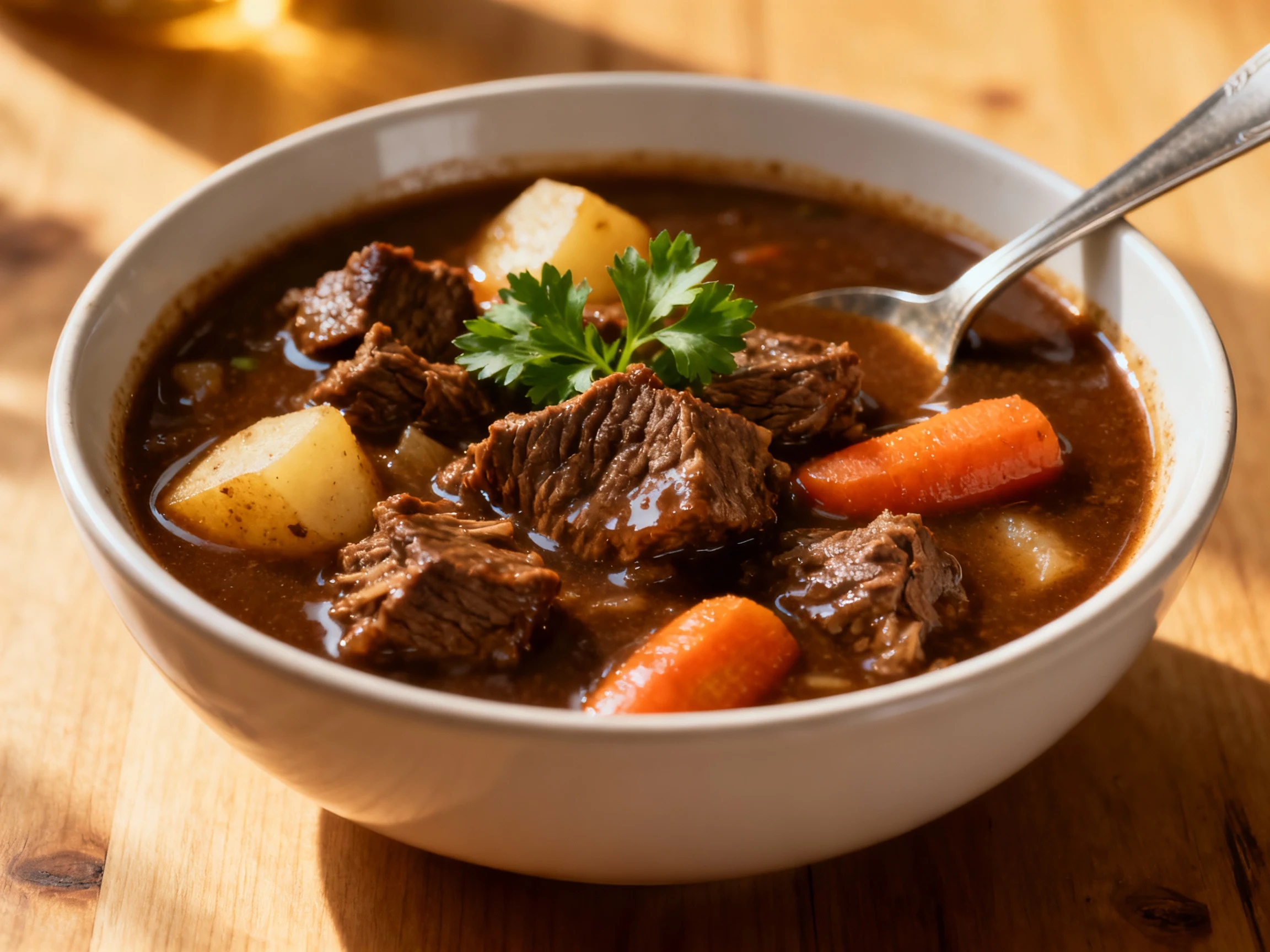
Beef and Guinness Stew for Cozy Nights—rich and Foolproof
This slow-simmered classic delivers tender beef, deep stout gravy, and weeknight-friendly steps—big pub flavor without babysitting.
Pay 20 minutes up front and you’ll bank two hours of compound flavor. That’s the ROI of a pot that practically cooks itself while your house starts smelling like an Irish pub at golden hour. The gravy? Glossy, beefy, slightly malty, and so satisfying it could sell itself by the ladle. You don’t need chef training—just a heavy pot, patience, and a can of stout. Want ridiculous tenderness and a sauce that clings to mashed potatoes like they’re soulmates? Good, you’re in the right kitchen.
Why This Recipe Works
- Chuck is king: Well-marbled beef chuck breaks down into ultra-tender bites as connective tissue melts, enriching the sauce with collagen for body.
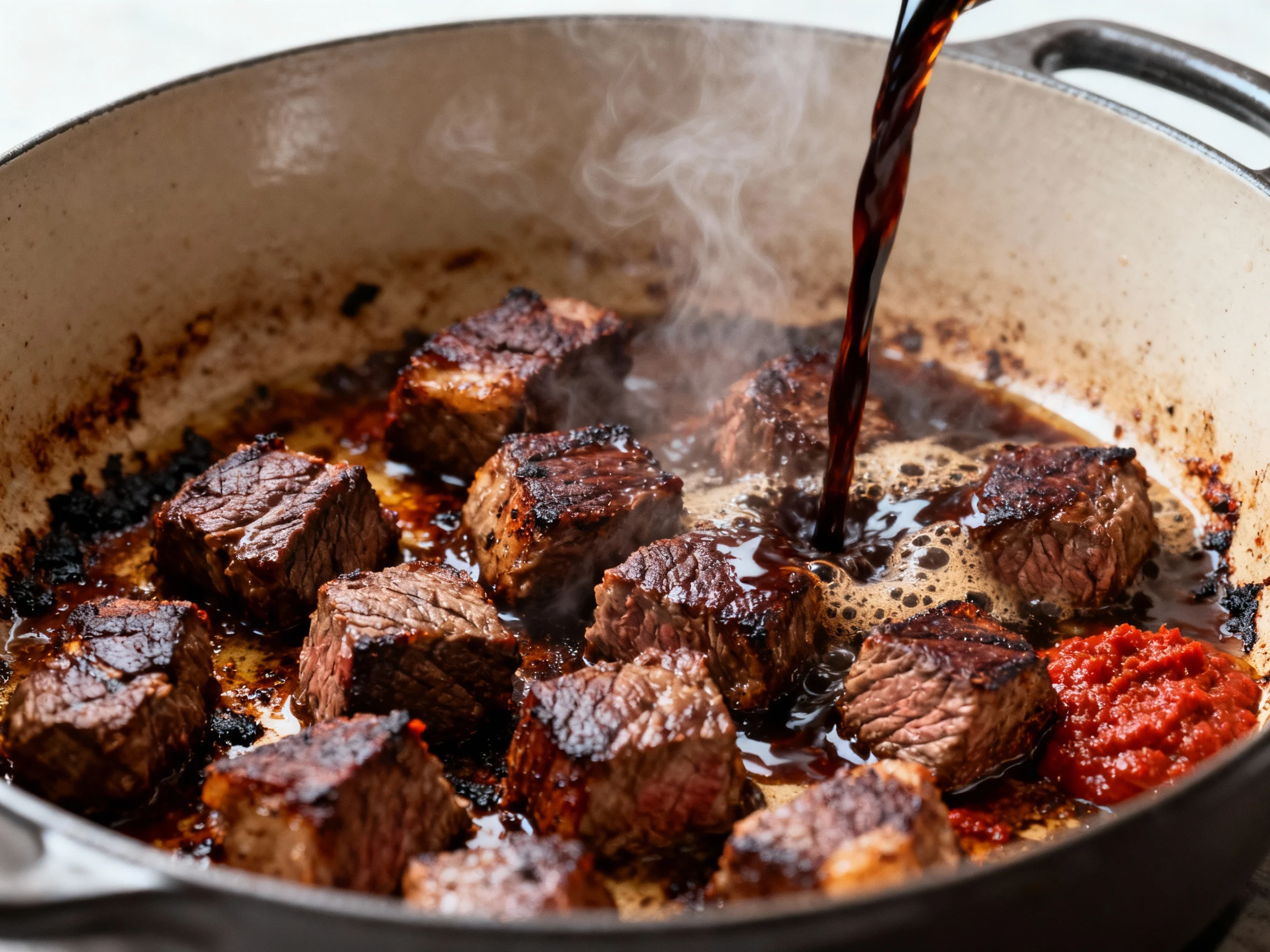
- Hard sear = deep flavor: Browning creates a fond (those tasty browned bits) that, when deglazed with stout, builds a rich, layered gravy.
- Guinness without the bite: Tomato paste, onions, and a touch of Worcestershire balance stout’s gentle bitterness into a rounded, savory profile.
- Flour coating means silky sauce: Dusting beef lightly with flour pre-sear thickens the stew naturally as it simmers—no gloopy slurries needed.
- Low and slow control: A gentle simmer or a covered oven braise keeps meat juicy and prevents toughness. Boiling? Hard pass.
- Finishers matter: A splash of vinegar or mustard at the end brightens the gravy so every bite tastes alive, not muddy.
What Goes Into This Recipe – Ingredients
- 2.5 to 3 lb beef chuck, cut into 1.5-inch cubes, trimmed of large hard fat
- 2 tsp kosher salt, plus more to taste
- 1 tsp freshly ground black pepper
- 3 tbsp all-purpose flour (use rice flour for gluten-free)
- 2 tbsp neutral oil (canola, avocado, or light olive oil)
- 2 large yellow onions, sliced
- 3 medium carrots, cut into 1-inch chunks
- 2 ribs celery, sliced
- 4 cloves garlic, minced
- 2 tbsp tomato paste
- 1 tbsp Worcestershire sauce
- 1 can (14.9 oz) Guinness Draught stout (about 1.5 cups; non-alcoholic stout works too)
- 2 cups beef stock (low sodium)
- 3–4 fresh thyme sprigs or 1 tsp dried thyme
- 2 bay leaves
- 1 lb waxy potatoes (Yukon Gold or red), cut into 1.5-inch chunks
- 8 oz mushrooms, halved (optional but excellent)
- 1–2 tsp brown sugar (optional, to soften stout’s edge)
- 1 tbsp whole-grain mustard or 1 tsp apple cider vinegar (for finishing)
- 2 tbsp chopped fresh parsley, for garnish
- Optional upgrades: 4 oz diced bacon, 1 tbsp butter for finishing, 1 tsp cocoa powder for extra depth, 1 tsp instant coffee for oomph
Cooking Instructions
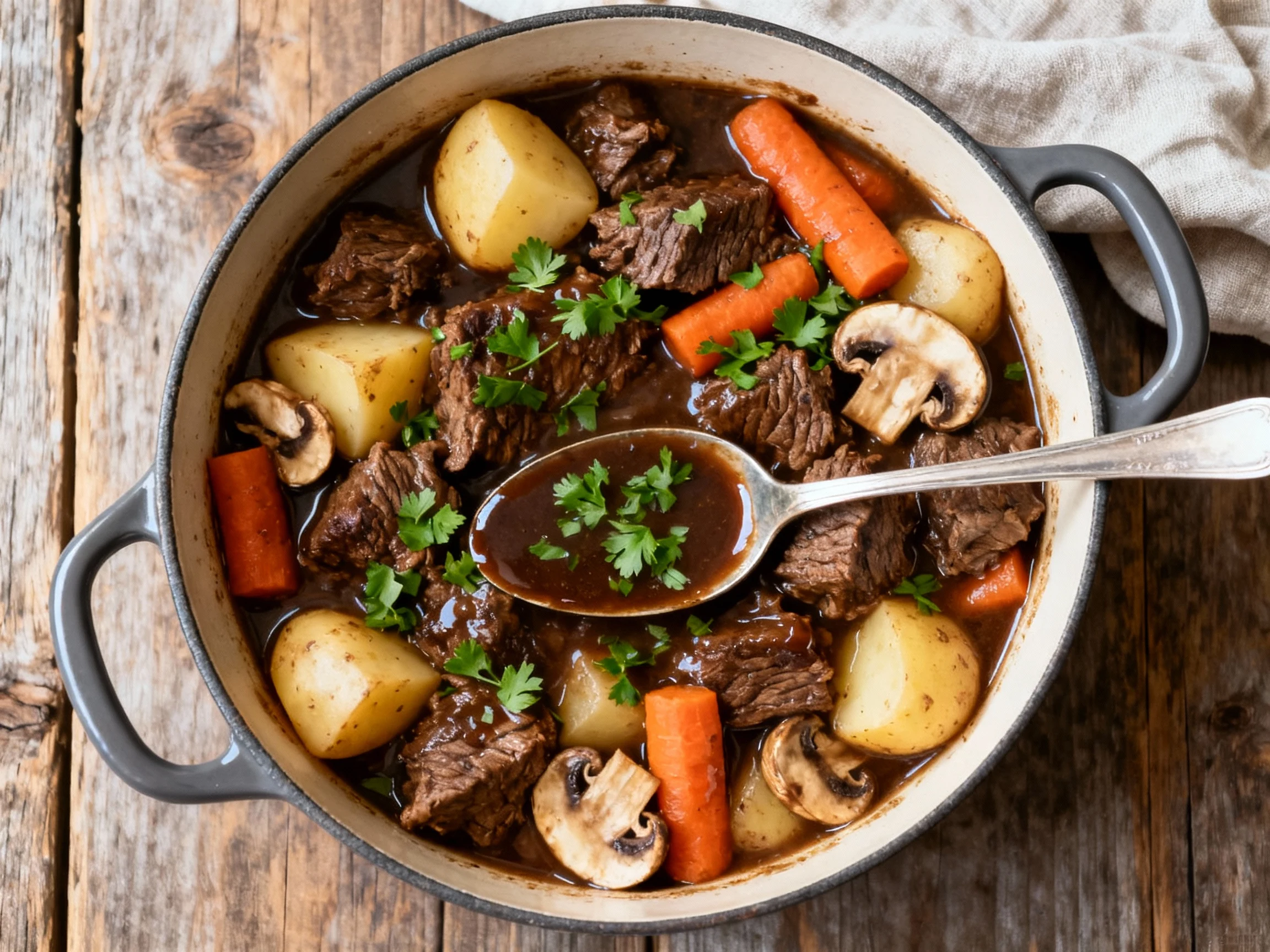
- Season and flour the beef. Pat beef dry. Toss with salt, pepper, and flour until lightly coated. This primes browning and later thickening.
- Heat your pot. Add oil to a heavy Dutch oven over medium-high heat until shimmering.
- Sear in batches. Brown beef on at least two sides, 3–4 minutes per side. Don’t crowd; give space so it sears, not steams. Transfer to a plate.
- Sweat the veg. Reduce heat to medium. If using bacon, crisp it first, then leave the fat. Add onions, carrots, and celery with a pinch of salt; cook 6–8 minutes until browned at edges. Stir in mushrooms if using; cook 3 minutes more. Add garlic; cook 30 seconds.
- Tomato paste toast. Stir in tomato paste and cook 1–2 minutes until it darkens slightly. This cooks out raw acidity and builds umami.
- Deglaze with stout. Pour in Guinness and scrape up the fond with a wooden spoon. Let it bubble 2–3 minutes to mellow.
- Build the braise. Add beef stock, Worcestershire, thyme, bay leaves, and optional brown sugar. Return beef (and any juices) to the pot.
- Bring to a gentle simmer. Once it’s just bubbling, reduce to low. Cover, leaving a small crack for steam.
- Low and slow. Simmer 60 minutes, stirring occasionally so nothing sticks. Keep it gently blipping; vigorous boiling turns beef tough.
- Add potatoes. Stir in potatoes (and a pinch of salt). Continue simmering 45–60 minutes until beef is fork-tender and potatoes are soft.
- Check thickness. The sauce should coat a spoon. If thin, simmer uncovered 10–15 minutes more. If too thick, splash in stock or water.
- Finish and balance. Fish out thyme stems and bay leaves. Stir in mustard or a splash of vinegar. Taste and adjust salt and pepper. For luxury, swirl in butter. Garnish with parsley.
- Serve hot. Ladle over mashed potatoes, buttered noodles, or with crusty bread. Prepare for silence at the table.
Oven Method (hands-off favorite)
- After Step 7, cover and transfer the pot to a 325°F oven.
- Braise 2 to 2.5 hours, adding potatoes for the last 60–75 minutes.
- Finish as in Steps 11–13. FYI, oven heat is steady and reduces scorching risk.
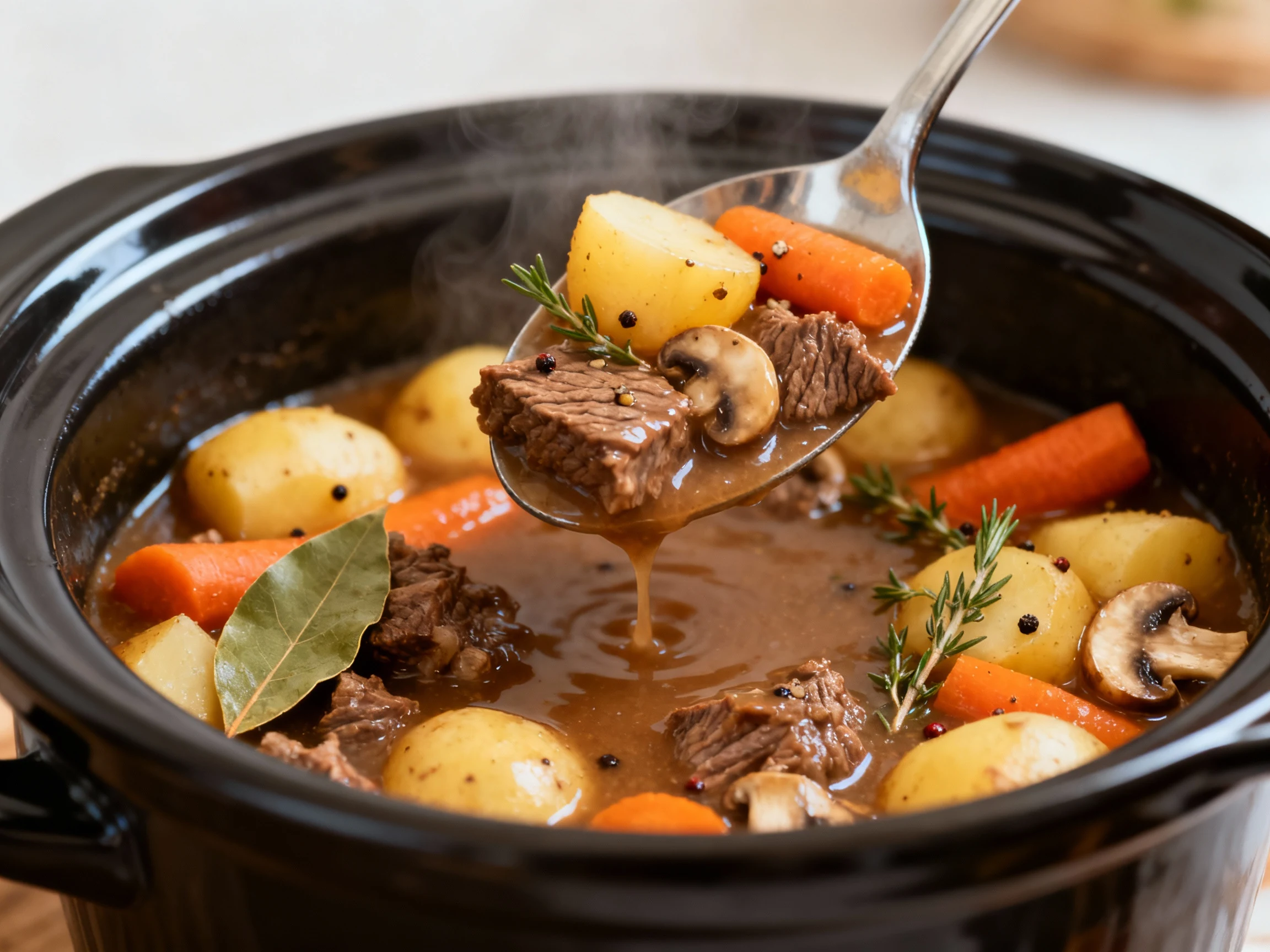
Slow Cooker Method
- Complete Steps 1–6 on the stovetop for best flavor.
- Transfer everything to a slow cooker with stock, herbs, and beef. Add potatoes.
- Cook on Low 8–9 hours or High 4–5 hours, until tender. Finish with mustard/vinegar and parsley.
Instant Pot / Pressure Cooker
- Use Sauté to complete Steps 1–6 in the pot.
- Add stock, herbs, and beef. Pressure cook on High for 35 minutes; quick release 10 minutes later.
- Add potatoes; pressure cook 6 more minutes. Finish with mustard/vinegar and parsley. IMO this is the best weeknight hack.
Storage Instructions
- Fridge: Cool completely, then store in airtight containers up to 4 days. Flavor deepens on Day 2—love that glow-up.
- Freeze: Up to 3 months. Skip the parsley until serving. Thaw overnight in the fridge for best texture.
- Reheat: Stovetop over medium-low with a splash of water or stock, 8–10 minutes, stirring gently. Microwave in 60–90 second bursts, stirring between.
- Make-ahead: Ideal for entertaining—cook a day earlier and reheat. Potatoes hold fine; if you want peak texture, add fresh-cooked potatoes on reheat.
Nutritional Perks
- High-quality protein: Beef provides essential amino acids for muscle repair and satiety.
- Iron and B vitamins: Supports energy metabolism and oxygen transport—no afternoon slump.
- Collagen-rich broth: Slow cooking releases gelatin for a satisfying, velvety body without heavy cream.
- Veg-powered fiber and potassium: Carrots, potatoes, and celery add micronutrients and gut-friendly fiber.
- Alcohol largely cooks off: A long simmer reduces alcohol; flavor stays, harshness doesn’t (more on that below).
- Approx per serving (6 servings): ~480 calories, 38g protein, 22g fat, 28g carbs. Numbers vary by cut and add-ins.
Pitfalls to Watch Out For
- Boiling the stew: Aggressive heat tightens meat fibers. Keep a gentle simmer for tenderness.
- Skipping the sear: Browning equals flavor. A gray stew is a sad stew. Don’t rush this.
- Crowding the pot: Overcrowding traps steam and blocks browning. Work in batches for that crust.
- Under-salting: Stout and stock need salt to pop. Season at key points and taste at the end.
- Adding potatoes too early: They’ll break down. Add in the final hour so they hold shape.
- Not scraping the fond: That’s flavor gold. Deglaze thoroughly after searing.
- Using the wrong cut: Lean stew meat dries out. Choose chuck, not sirloin tips or round roasts.
Mix It Up
- Smoky upgrade: Start with diced bacon or pancetta. Render, then sear beef in the drippings. Yes, please.
- Guinness + coffee: Add 1 tsp instant espresso or 1/4 cup strong coffee with the stout for deeper roast notes.
- Cocoa whisper: 1 tsp unsweetened cocoa adds savory depth without tasting like dessert.
- Root veg swap: Turnips, parsnips, or rutabaga bring earthy sweetness if you’re skipping potatoes.
- Herb twist: Swap thyme for rosemary, or finish with tarragon for a subtle anise note.
- Gluten-free: Use rice flour for dusting and a certified GF stout or extra beef stock. Cornstarch slurry at the end if needed.
- No-alcohol version: Use non-alcoholic stout or a 50/50 mix of beef stock and strong black tea for tannic backbone.
- Lamb route: Substitute lamb shoulder for beef and add a splash of balsamic at the end—phenomenal.
- Low-carb: Skip potatoes and add extra mushrooms and turnips. Serve over cauliflower mash.
FAQ
What’s the best cut of beef for this stew?
Beef chuck is ideal. It has enough fat and connective tissue to turn tender and silky during a long simmer. Precut “stew meat” is a mixed bag—if you use it, pick well-marbled pieces and cook long enough to break down.
Does the alcohol cook off completely?
Not 100%, but the majority evaporates with a 2–3 hour simmer, and what remains is minimal. The important part: the harsh edge cooks off, leaving smooth, malty complexity. If you need zero alcohol, choose a non-alcoholic stout or the stock-plus-tea workaround.
Can I make this without Guinness?
Yes. Use another dry stout or porter. For a no-beer option, combine beef stock with 1–2 tsp malt vinegar or 1 tsp instant coffee to mimic stout’s depth. Keep the Worcestershire to round it out.
How do I thicken the stew without flour?
Toss beef with rice flour for the same effect, or thicken at the end with a cornstarch slurry (1 tbsp cornstarch mixed with 1 tbsp cold water). Simmer a few minutes after adding to remove any starchy taste.
Why is my stew bitter, and how do I fix it?
Over-reducing stout or burning the tomato paste can make bitterness pop. Balance with a pinch of brown sugar, a knob of butter, and a small splash of apple cider vinegar. Also check salt—proper seasoning reduces perceived bitterness.
Can I make it ahead?
Absolutely. Stew improves overnight as flavors marry. Chill, then reheat gently and finish with mustard or vinegar and fresh parsley to wake it up. FYI, it freezes like a champ.
When should I add the potatoes?
Add them in the last 45–60 minutes of simmering. Too early and they turn mushy; too late and they won’t cook through. Waxy varieties hold their shape best.
Is the oven better than the stovetop?
For many cooks, yes. The oven gives even, gentle heat and reduces scorching. Stovetop works great—just maintain a low simmer and stir occasionally to prevent sticking.
What should I serve with it?
Mashed potatoes, buttered noodles, or crusty bread are classics. For something green, try a peppery arugula salad or garlicky sautéed kale. Don’t overthink it—this stew plays nice with almost everything.
How long can I safely keep leftovers?
Up to 4 days refrigerated in airtight containers. Reheat thoroughly until steaming. For longer storage, freeze up to 3 months and thaw in the fridge before reheating.
In Conclusion
This is the kind of stew that turns a regular Tuesday into a mini celebration—no michelin-star swagger required. You’ll build massive flavor with everyday ingredients, a solid sear, and a mellow braise. Ladle it into bowls, add a shower of parsley, and watch it disappear. Comfort, value, and big pub energy in one pot—pretty good deal, right?
Printable Recipe Card
Want just the essential recipe details without scrolling through the article? Get our printable recipe card with just the ingredients and instructions.