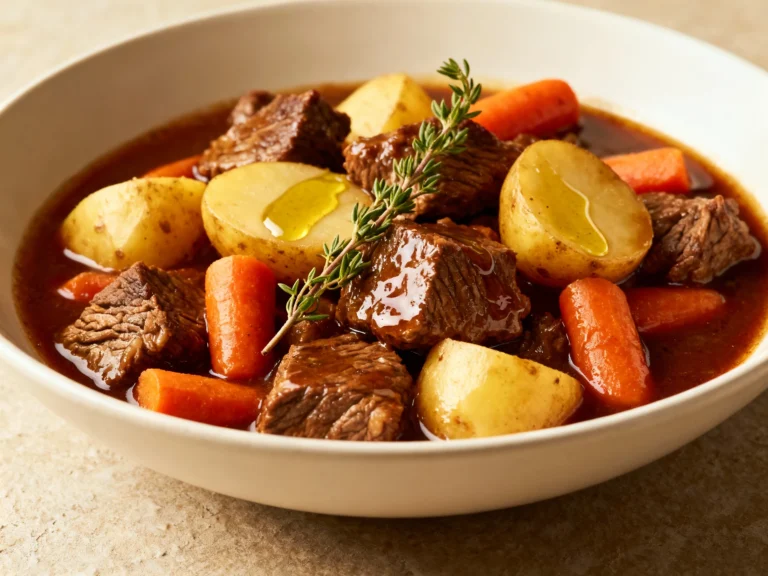
Beef for Stew Recipes — Tender Cuts, Bold Flavor Wins
Choose the right cut, nail the sear, and simmer smart for spoon-tender comfort that’s weeknight-easy and budget-friendly.
Here’s the truth: great stew isn’t a recipe, it’s a system. Pick the right cut, build jaw-dropping fond, and simmer like a pro—suddenly weeknights taste like Sunday. Most folks blame seasoning when the real culprit is choice of beef and heat control. We’ll fix that fast. If you’ve ever ended up with dry meat in a watery broth? Not after this.
Why You’ll Love This Recipe
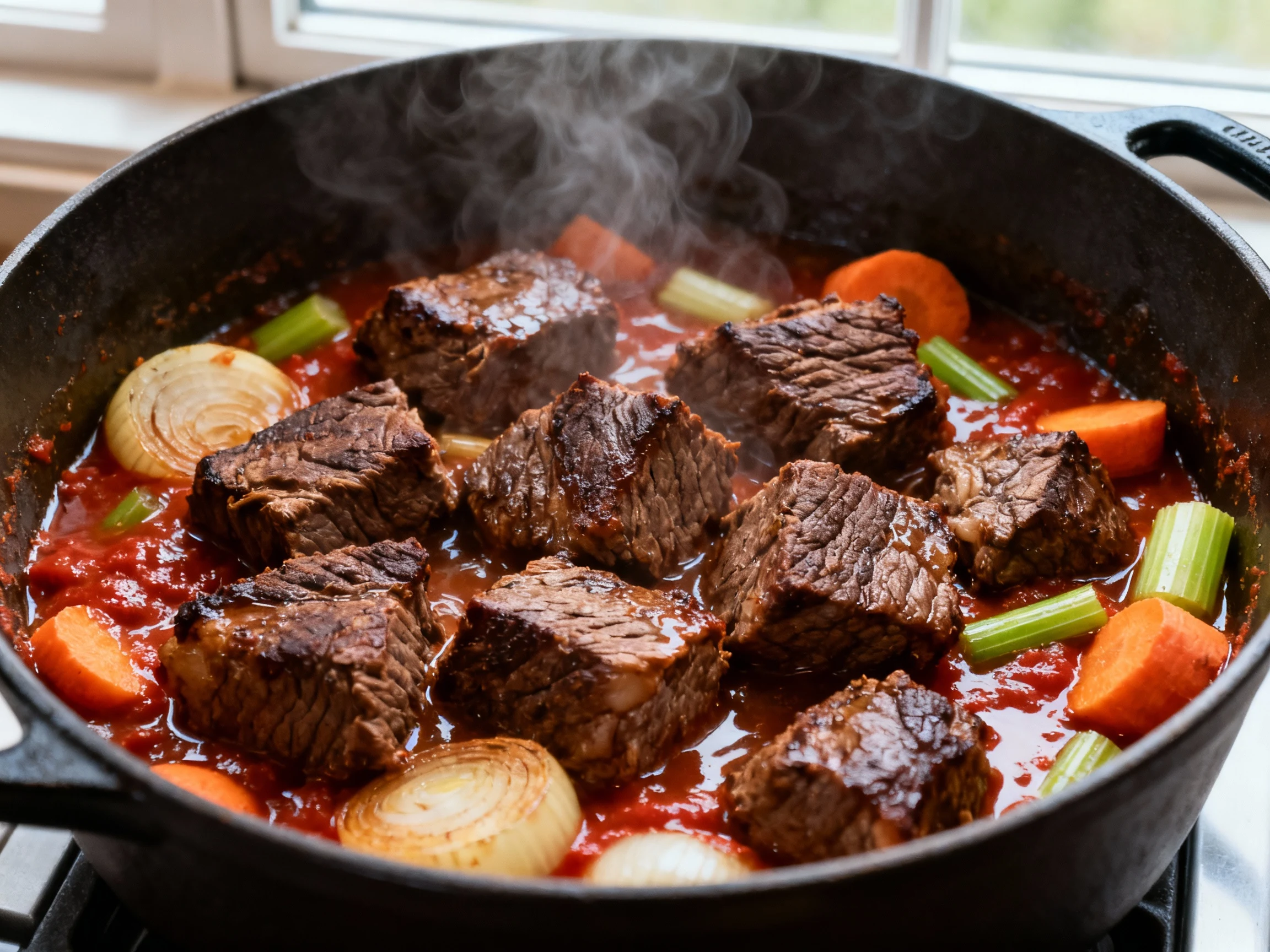
This is the blueprint for rich, velvety beef stew that actually comes out tender every time. The method leans on smart cut selection, aggressive browning, and a low-and-slow finish that does the heavy lifting for you.
- Foolproof tenderness: We use chuck (and similar cuts) that melt into buttery bites.
- Big, layered flavor: Tomato paste, wine (or broth), and umami boosters build depth fast.
- Weeknight-friendly: Most of the time is hands-off simmering; you just stir and smell victory.
- Meal-prep gold: Tastes even better on day two. Stew magic is real.
- Budget-smart: Tougher cuts cost less and taste better when cooked right. Win-win.
- Flexible: Swap veggies, skip wine, go gluten-free—no flavor loss, IMO.
Shopping List – Ingredients
- 2.5 lb beef chuck roast, cut into 1.5-inch cubes (or blade roast, shoulder clod, bottom chuck)
- 2 teaspoons kosher salt (plus more to taste) and 1 teaspoon black pepper
- 2 tablespoons neutral oil (canola, avocado, or grapeseed)
- 1 large yellow onion, diced
- 3 medium carrots, peeled and cut into chunky pieces
- 2 ribs celery, sliced
- 4 cloves garlic, minced
- 2 tablespoons tomato paste
- 2 tablespoons all-purpose flour (or 1 tablespoon cornstarch for GF)
- 1 cup dry red wine (optional; sub 1 cup beef broth if skipping)
- 3 cups low-sodium beef broth
- 1 tablespoon Worcestershire sauce
- 2 teaspoons soy sauce (umami booster; use tamari for GF)
- 2 bay leaves
- 1 teaspoon dried thyme (or 4 sprigs fresh)
- 1 lb baby gold potatoes, halved (or 3 cups peeled russets, cubed)
- 8 ounces mushrooms, quartered (optional but excellent)
- 1 teaspoon brown sugar or 1 teaspoon balsamic (optional, balances acidity)
- 1 cup frozen peas, thawed
- Fresh parsley, chopped, for garnish
Yield: 6 hearty servings
Instructions
- Prep the beef: Pat the cubes very dry with paper towels. Moisture kills browning. Season all sides with 1.5 teaspoons salt and 1 teaspoon pepper.
- Brown in batches: Heat a heavy Dutch oven over medium-high with 2 tablespoons oil until shimmering. Add beef in a single layer (about 1/3 of the meat). Sear 3–4 minutes per side until a deep brown crust forms. Transfer to a bowl; repeat with remaining beef. Don’t overcrowd or you’ll steam, not sear.
- Build flavor: Reduce heat to medium. Add onion, carrots, celery, and a pinch of salt. Cook 5–6 minutes until onions soften and take on brown bits. Stir in mushrooms (if using); cook 2–3 minutes.
- Tomato paste and garlic: Add tomato paste and garlic. Cook 1–2 minutes, stirring, until the paste darkens slightly and smells sweet. That’s flavor caramelization—keep it moving so it doesn’t burn.
- Make a quick roux: Sprinkle in the flour; stir to coat veggies. Cook 1 minute to remove raw flour taste.
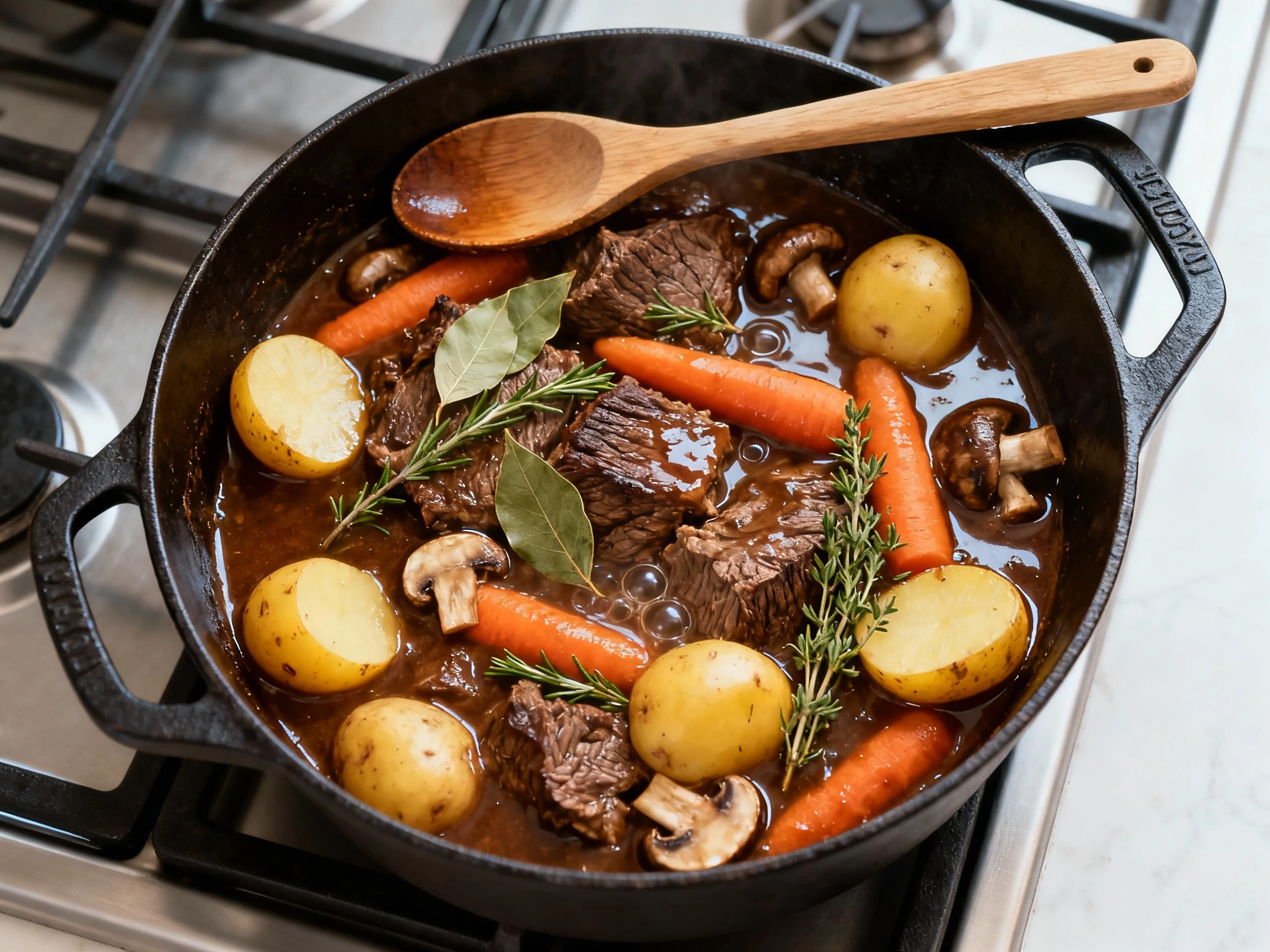
- Deglaze: Pour in the wine (or extra broth), scraping up the browned bits on the bottom with a wooden spoon. Simmer 2 minutes to reduce slightly.
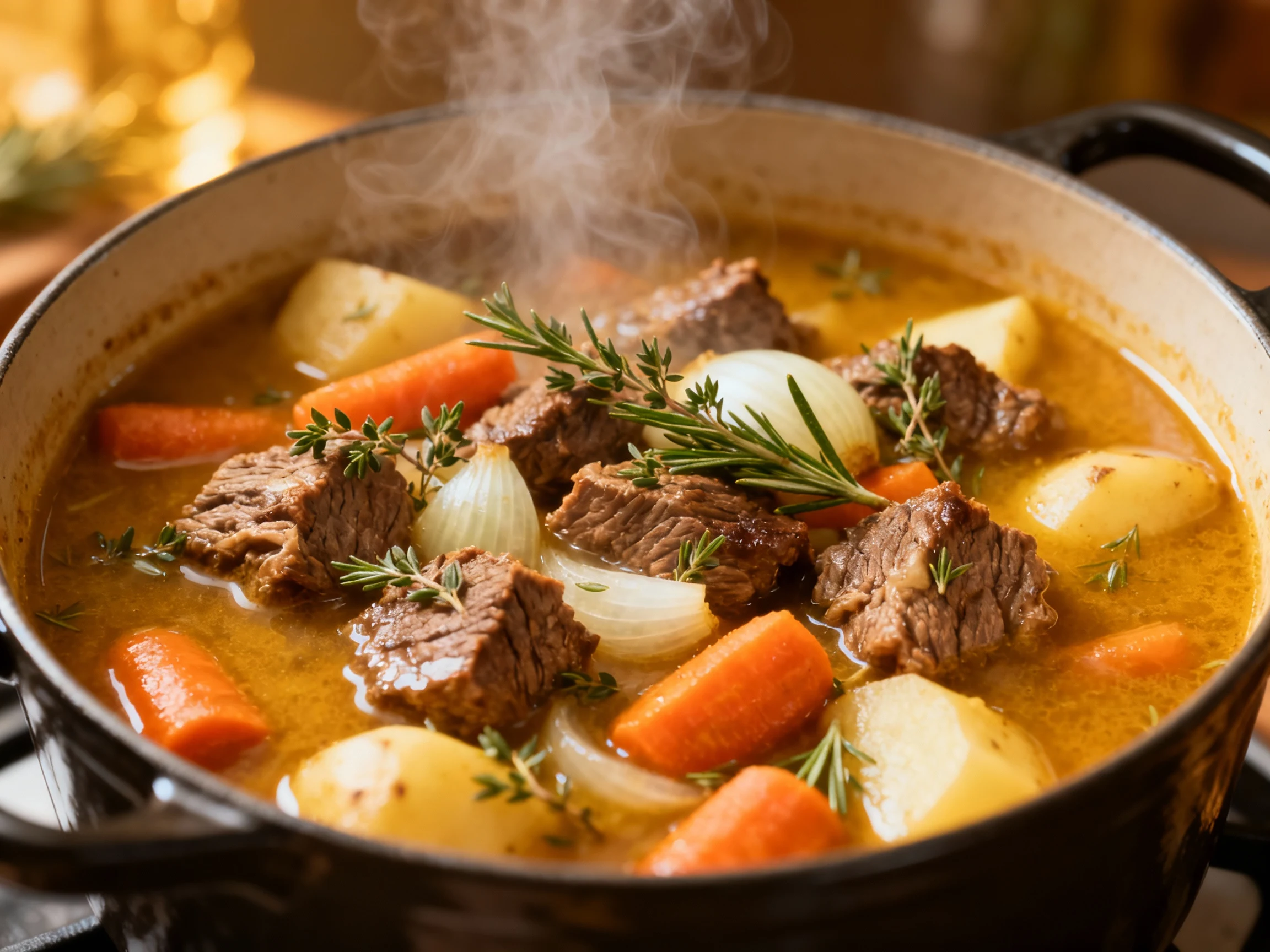
- Liquid and aromatics: Return beef and any juices to the pot. Add beef broth, Worcestershire, soy sauce, bay leaves, thyme, and optional brown sugar/balsamic. Liquid should just cover the meat and veggies; add a splash more broth or water if needed.
- Low and slow: Bring to a gentle simmer, then reduce heat to low, cover partially (lid ajar), and cook 1 hour, maintaining a lazy bubble. Stir occasionally.
- Add potatoes: Stir in potatoes after the first hour. Continue simmering 30–45 minutes, until beef is fork-tender and potatoes are soft but not falling apart.
- Final touches: Remove bay leaves. Stir in peas and heat 2–3 minutes. Adjust seasoning with salt and pepper. If the stew tastes “thin,” add a knob of butter, a splash of soy, or a quick squeeze of lemon to brighten—taste and tweak.
- Thicken if needed: For a thicker texture, mash a few potato chunks against the pot’s side or stir in a slurry (1 tablespoon cornstarch + 1 tablespoon cold water). Simmer 2 minutes until glossy.
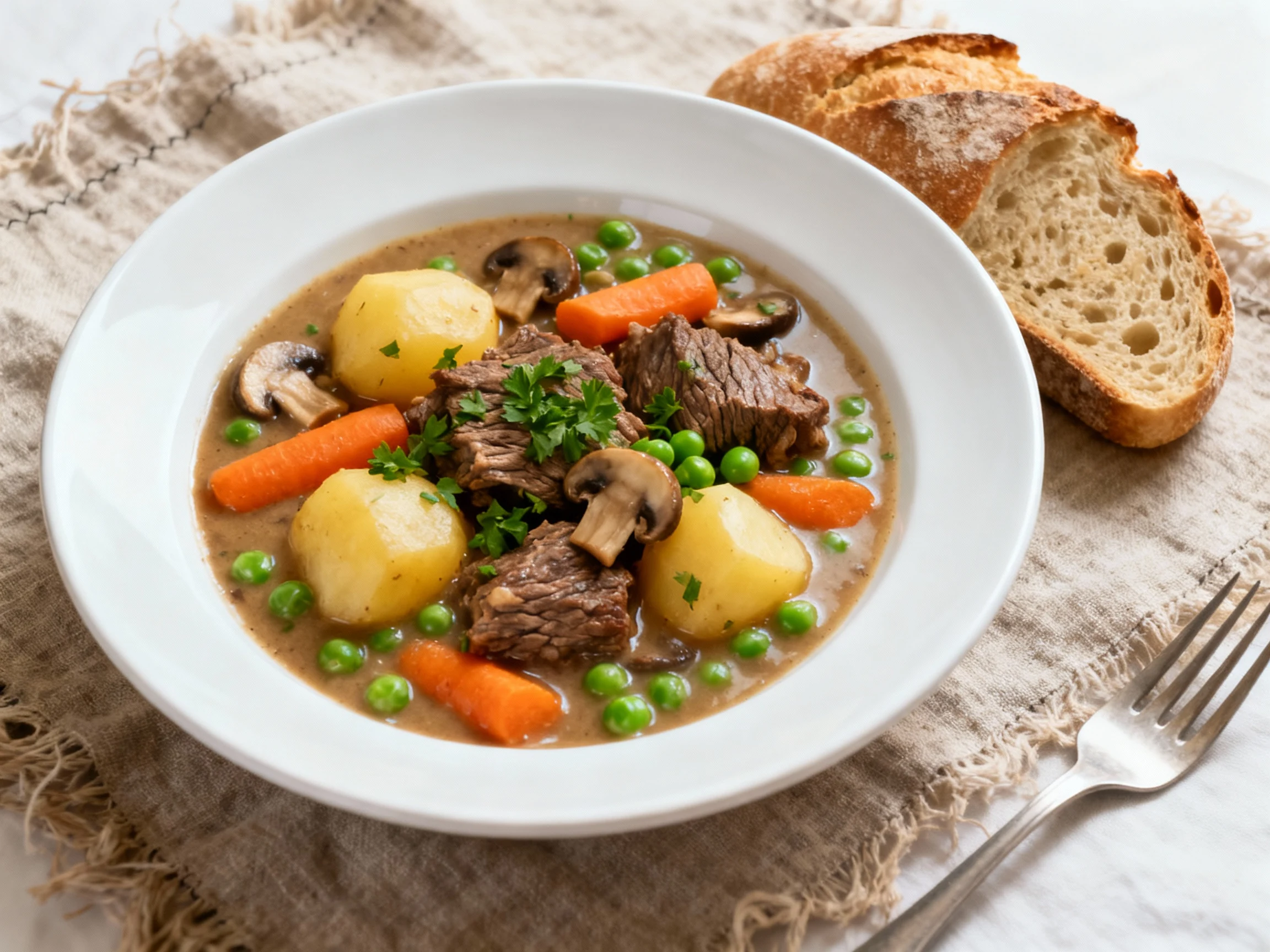
- Rest and serve: Kill the heat and let the stew rest 10 minutes so flavors settle. Garnish with chopped parsley. Serve with crusty bread, buttered noodles, or creamy polenta.
Pressure Cooker (Instant Pot) Method
- Use Sauté to brown beef in batches; remove. Sauté aromatics with tomato paste and flour.
- Deglaze with wine, add broth, sauces, herbs, and beef. Seal. Cook 35 minutes on High; natural release 10 minutes.
- Stir in potatoes, reseal, and cook 4 minutes on High; quick release. Add peas, season, and thicken if desired.
Slow Cooker Method
- Sear beef on the stovetop (key for flavor). Transfer to slow cooker with sautéed veg, tomato paste, flour, and liquids.
- Cook 8–9 hours on Low or 5–6 hours on High. Add potatoes for the last 2–3 hours. Finish with peas and seasoning.
Keeping It Fresh
Stew rewards patience; the next day it’s even richer. Store it smart so you keep that velvety texture and deep flavor.
- Fridge: Up to 4 days in airtight containers. Cool uncovered 20–30 minutes, then cover and chill.
- Freezer: Up to 3 months. Ladle into freezer-safe containers, leaving headspace. Skip the peas before freezing; add them when reheating.
- Reheat: Gently on the stovetop over medium-low with a splash of water or broth. Microwaves are fine, but stir halfway so heat distributes.
- Texture rescue: Too thick after chilling? Add a little broth. Too thin? Simmer uncovered a few minutes or swirl in a small slurry.
What’s Great About This
- Cuts that work for you: Collagen-rich beef turns tender without babysitting.
- One pot, less mess: Browning to braising, all in the same vessel like a pro.
- Flavor magnets: Tomato paste + browned bits + Worcestershire/soy = savory depth fast.
- Flexible schedule: Hands-off simmer lets you set the table, sip, or scroll.
- Make-ahead friendly: Rested stew gets better, so cook once, enjoy twice.
- Customizable: Swap veggies, herbs, and liquids to match your mood or pantry.
What Not to Do
- Don’t choose lean steaks: Sirloin and round turn mealy and dry. Use chuck or similar instead.
- Don’t overcrowd the pot: Crowding kills the crust. Brown in batches for maximum flavor.
- Don’t boil hard: A rolling boil tightens meat fibers. Keep a gentle simmer for tender results.
- Don’t add all veg at once: Potatoes later, peas at the end. Avoid mush-mageddon.
- Don’t skip deglazing: Those browned bits are free flavor—scrape them into the stew.
- Don’t underseason: Taste after simmering and adjust salt, acid, and umami. Season evolves.
- Don’t cut cubes too small: Aim for 1.5-inch chunks; smaller pieces dry out.
- Don’t toss all the fat: Trim excess, yes—but leave some marbling for juicy bites.
Recipe Variations
- Guinness and Bacon: Swap wine for stout; add 4 slices chopped bacon at the start. Finish with a spoon of Dijon and a splash of malt vinegar.
- Herbes de Provence + Olives: Add 1 teaspoon herbes de Provence and 1/2 cup pitted green olives in the last 20 minutes. Bright, briny, cozy.
- Smoky Chipotle: Stir in 1–2 minced chipotle peppers in adobo with the tomato paste. Finish with lime and cilantro for a warming kick.
- Soy-Ginger Star Anise: Add 1-inch ginger slices, 2 star anise, and an extra tablespoon soy. Swap carrots for daikon; finish with scallions.
- Red Wine Classic (Bourguignon-ish): Add pearl onions and more mushrooms. Finish with a dab of butter and parsley.
- Low-Carb: Replace potatoes with rutabaga or cauliflower florets; thicken with a light xanthan pinch or reduce longer.
- Gluten-Free: Use cornstarch instead of flour and tamari instead of soy sauce. Same silk, no gluten.
- No-Alcohol: Double the beef broth, add 1 tablespoon balsamic or 2 teaspoons red wine vinegar to mimic wine’s acidity.
FAQ
What’s the best cut of beef for stew?
Chuck roast is the MVP—well-marbled with enough collagen to become tender and silky. Blade roast, shoulder clod, and bottom chuck are great too. Avoid lean cuts like sirloin or eye of round; they dry out and shred into sadness.
How do I keep the beef from turning tough?
Two keys: low-and-slow heat and time. A gentle simmer lets collagen break down into gelatin, creating juicy bites. If it’s still tough, it’s not done—keep simmering until a fork slips in easily.
Can I make this without wine?
Yes. Use extra beef broth and add a splash of balsamic or red wine vinegar to bring back some acidity. You’ll still get deep, savory flavor thanks to tomato paste, Worcestershire, and soy. FYI, good broth quality matters a lot here.
How do I thicken stew without flour?
Use a cornstarch slurry (1 tablespoon cornstarch + 1 tablespoon cold water) stirred in at the end and simmered 2 minutes. You can also mash a few potato chunks in the pot or reduce uncovered for a thicker consistency.
Can I prep this ahead?
Absolutely. Brown the beef and sauté the aromatics up to 2 days ahead, refrigerate, and finish simmering the day you serve. Or cook the whole stew, cool, and reheat—the flavors meld and actually improve overnight.
What’s the ideal cube size for the meat?
Aim for 1.5-inch cubes. They stay juicy through long cooking and give you that satisfying forkful. Smaller cubes can dry out; larger ones take forever to tenderize.
Why is my stew bland even after simmering?
Likely missing salt, acid, or umami. Add a pinch of salt, a splash of lemon or vinegar, and a touch more soy or Worcestershire. Taste again—small tweaks stack up fast. Also, make sure you browned properly at the start.
Can I use frozen beef?
Thaw it first for best browning. You can start from frozen in a pinch with a pressure cooker, but you’ll sacrifice that deep sear. Browning is where the magic happens, IMO.
How long does it keep and can I freeze it?
In the fridge, 4 days. In the freezer, up to 3 months. Freeze without peas and add them when reheating so they stay bright and snappy.
In Conclusion
Mastering stew is choosing the right beef, letting heat work slowly, and stacking flavor like a pro. With chuck, a proper sear, and a steady simmer, you’ll get spoon-tender bites swimming in a rich, glossy sauce every time. Keep this blueprint handy, tweak it to match your pantry, and let the pot do the heavy lifting. Your future self (and your dinner guests) will thank you.
Printable Recipe Card
Want just the essential recipe details without scrolling through the article? Get our printable recipe card with just the ingredients and instructions.