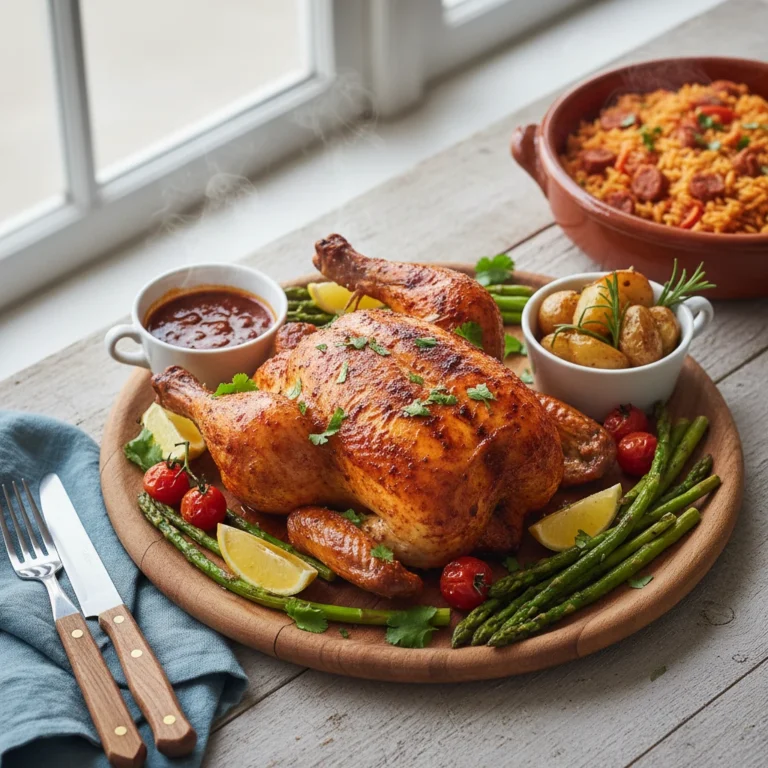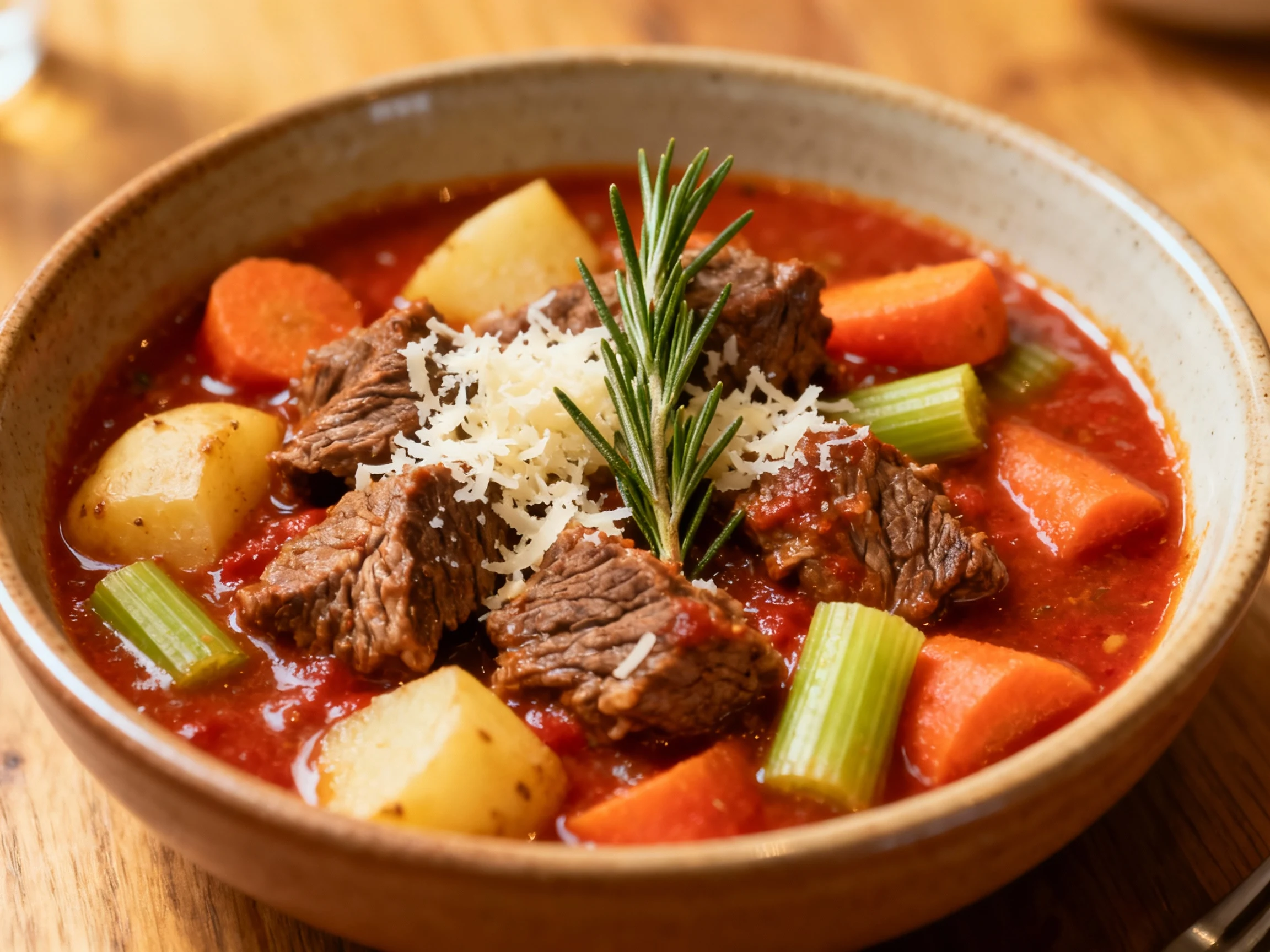
Italian Beef Stew That Tastes Slow Cooked in Half the Time
A one-pot Tuscan-style dinner with meltingly tender chuck, red wine, and herbs in under 2 hours—weeknight easy, special-occasion worthy.
You want big, old-world flavor without babysitting a pot all day? Deal. We’ll build deep savor fast with smart techniques that hit like a 12-hour braise. Think seared beef, concentrated tomato, and a splash of wine doing heavy lifting while you relax. The result: spoon-tender meat, glossy sauce, and a kitchen that smells like a trattoria. No culinary degree, no stress, just maximum payoff for minimal effort.
What Makes This Special
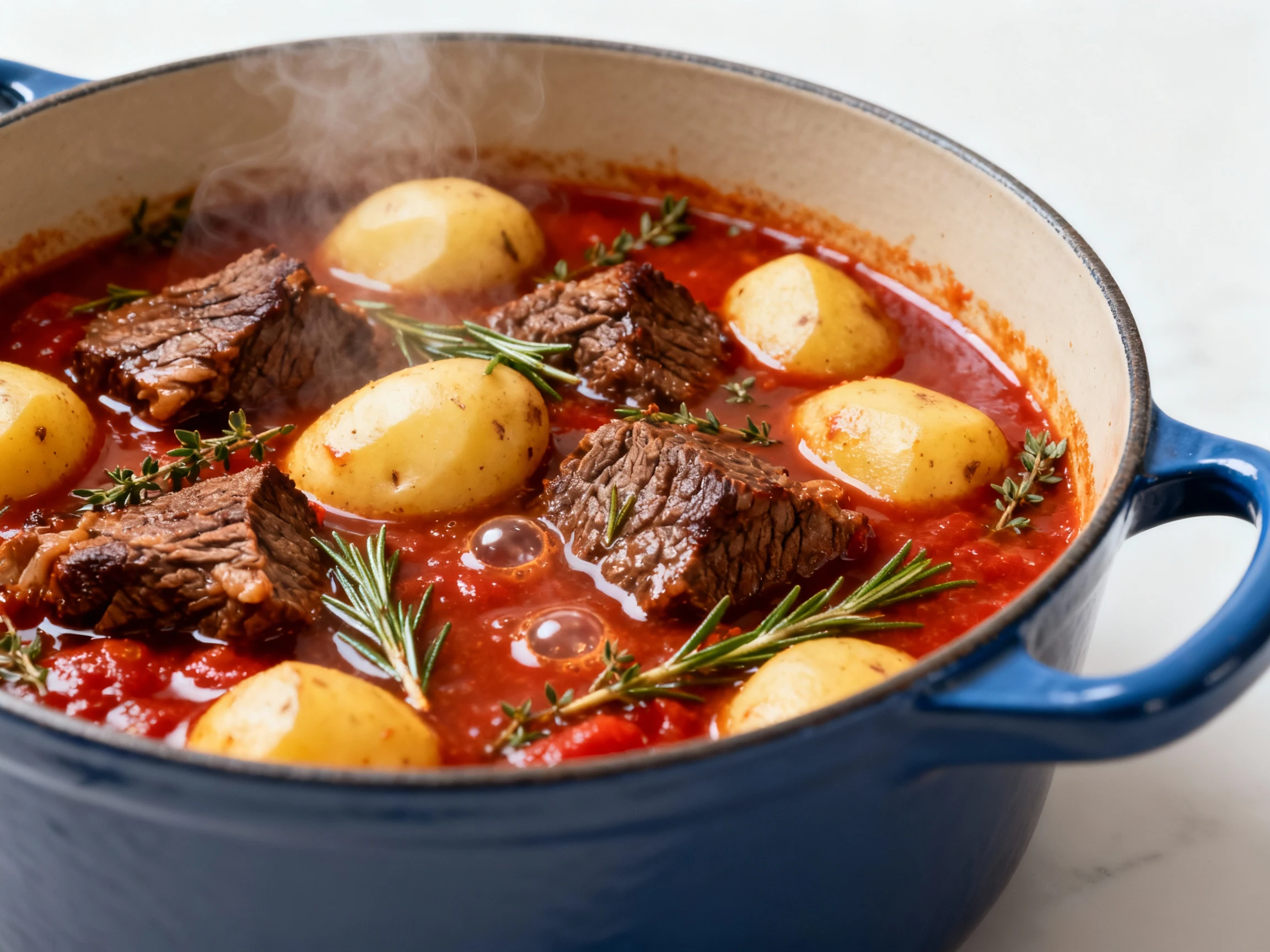
Collagen-rich chuck roast transforms into plush, fork-tender bites thanks to low-and-slow simmering that melts connective tissue into silk. That’s the secret to stew that eats like a luxury, not a compromise.
We build a classic Italian flavor base with a soffritto (onion, carrot, celery), then amplify it by caramelizing tomato paste until brick red. That step adds a sweet-savory backbone most “quick” stews never achieve.
Next comes a generous deglaze with dry red wine and beef stock for richness, plus a sneaky spoon of anchovy paste for umami. FYI: it won’t taste fishy; it just tastes more beefy.
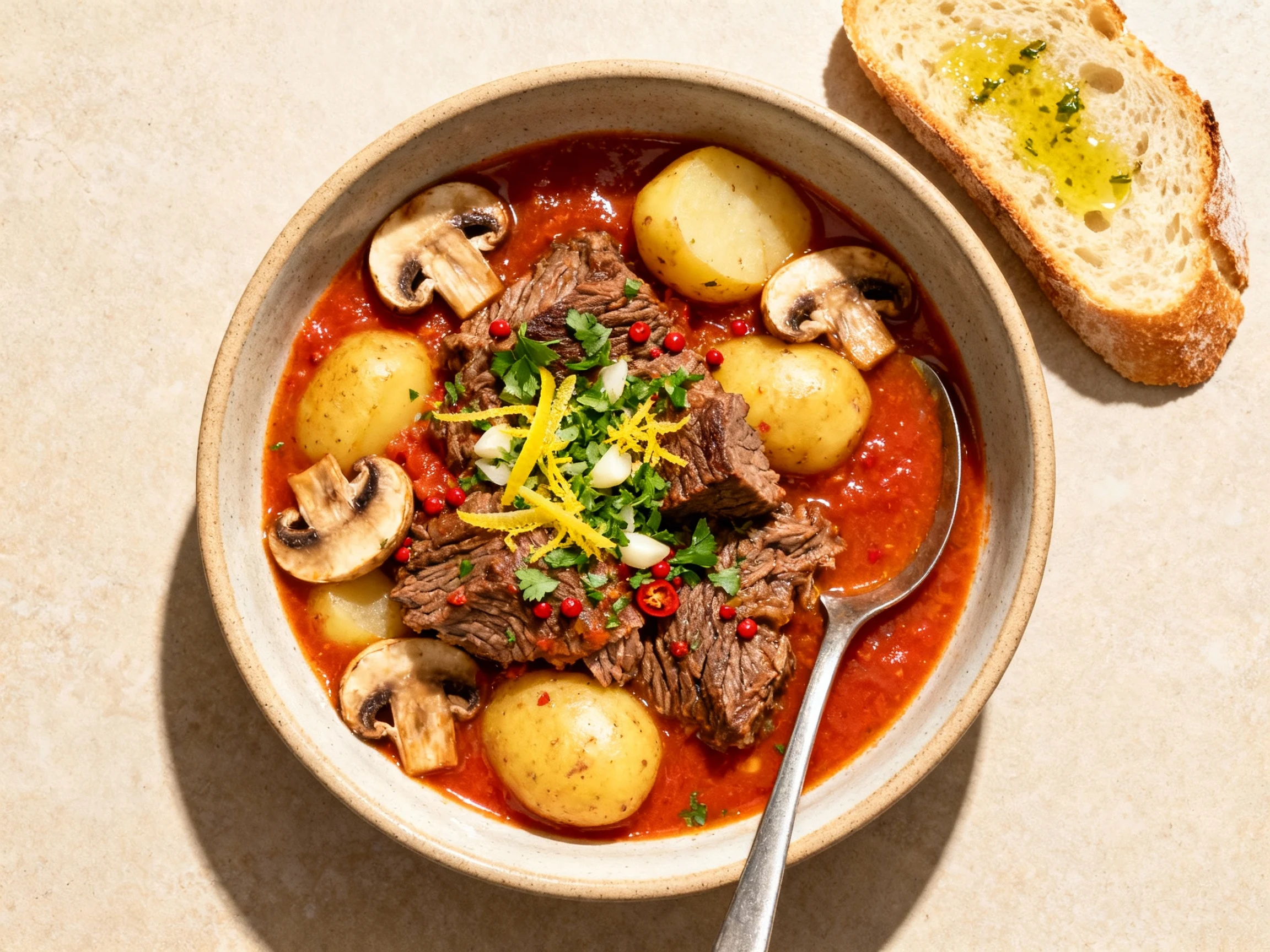
We finish with a pop of balsamic for balance and a quick gremolata (parsley, garlic, lemon zest) to wake up the stew with fresh, fragrant brightness. Heavy, meet light—hello, perfect bite.
What You’ll Need (Ingredients)
- 3 lb boneless beef chuck roast, cut into 1.5-inch cubes
- Kosher salt and freshly ground black pepper, to season generously
- 3 tbsp extra-virgin olive oil
- 1 large yellow onion, finely diced
- 2 medium carrots, finely diced
- 2 ribs celery, finely diced
- 4 cloves garlic, minced
- 2 tbsp tomato paste
- 1 cup dry red wine (Chianti or similar)
- 3 cups beef stock, low sodium
- 1 cup crushed tomatoes (or hand-crushed canned whole tomatoes)
- 1 tsp anchovy paste (optional but recommended)
- 1 bay leaf
- 1 rosemary sprig (or 1 tsp dried)
- 2 thyme sprigs (or 1 tsp dried)
- 1/2 tsp red pepper flakes (optional, for gentle heat)
- 1 lb Yukon Gold potatoes, peeled and cut into 1.5-inch pieces
- 8 oz cremini mushrooms, halved (optional)
- 1 dried porcini packet (about 1 oz), rehydrated in 1 cup hot water, liquid reserved (optional, for depth)
- 1 Parmesan rind (optional, adds savory complexity)
- 1–2 tbsp balsamic vinegar, to finish
- 2 tbsp chopped fresh parsley
- Zest of 1 lemon
- Crusty bread, polenta, or buttered noodles, for serving
The Method – Instructions
- Prep the beef right. Pat the chuck dry with paper towels. Season all sides aggressively with salt and pepper. Dry meat sears; wet meat steams—big difference.
- Sear in batches. Heat 2 tbsp olive oil in a heavy Dutch oven over medium-high. Add a single layer of beef and sear until deeply browned on at least two sides, about 6–8 minutes per batch. Transfer to a plate; repeat with remaining beef, adding a splash more oil if needed. Don’t crowd the pot.
- Build your soffritto. Reduce heat to medium. Add the onion, carrot, and celery with a pinch of salt. Cook, stirring, until very soft and lightly golden, 6–8 minutes. Add garlic; cook 30 seconds until fragrant.
- Caramelize the tomato paste. Stir in tomato paste and cook, stirring, until it darkens to a brick-red color and leaves fond on the bottom, 2–3 minutes. This concentrates umami and sweetness.
- Deglaze like you mean it. Pour in red wine. Scrape up all the browned bits with a wooden spoon. Simmer 2 minutes to cook off the boozy edge.
- Build the braise. Return beef and any juices to the pot. Add beef stock, crushed tomatoes, anchovy paste, bay leaf, rosemary, thyme, red pepper flakes, and Parmesan rind. If using porcini, chop them and add along with their soaking liquid (leave gritty sediment behind).
- Simmer low and steady. Bring to a gentle simmer. Reduce heat to low, cover, and cook 45 minutes. Aim for a lazily bubbling surface—boiling makes meat tough.
- Add the vegetables. Stir in potatoes and mushrooms (if using). Cover and continue to simmer until the beef is fork-tender and potatoes are just cooked, about 35–45 minutes more. Total cook time lands around 1.5–2 hours depending on cube size.
- Thicken by reduction. Remove the lid and simmer 10–15 minutes to reduce to a glossy, spoon-coating consistency. Skim excess fat with a spoon. Taste and season with more salt and pepper as needed.
- Brighten and finish. Stir in 1 tbsp balsamic vinegar. Taste; add up to 1 tbsp more if you want extra tang. Mix parsley and lemon zest together to make a quick gremolata.
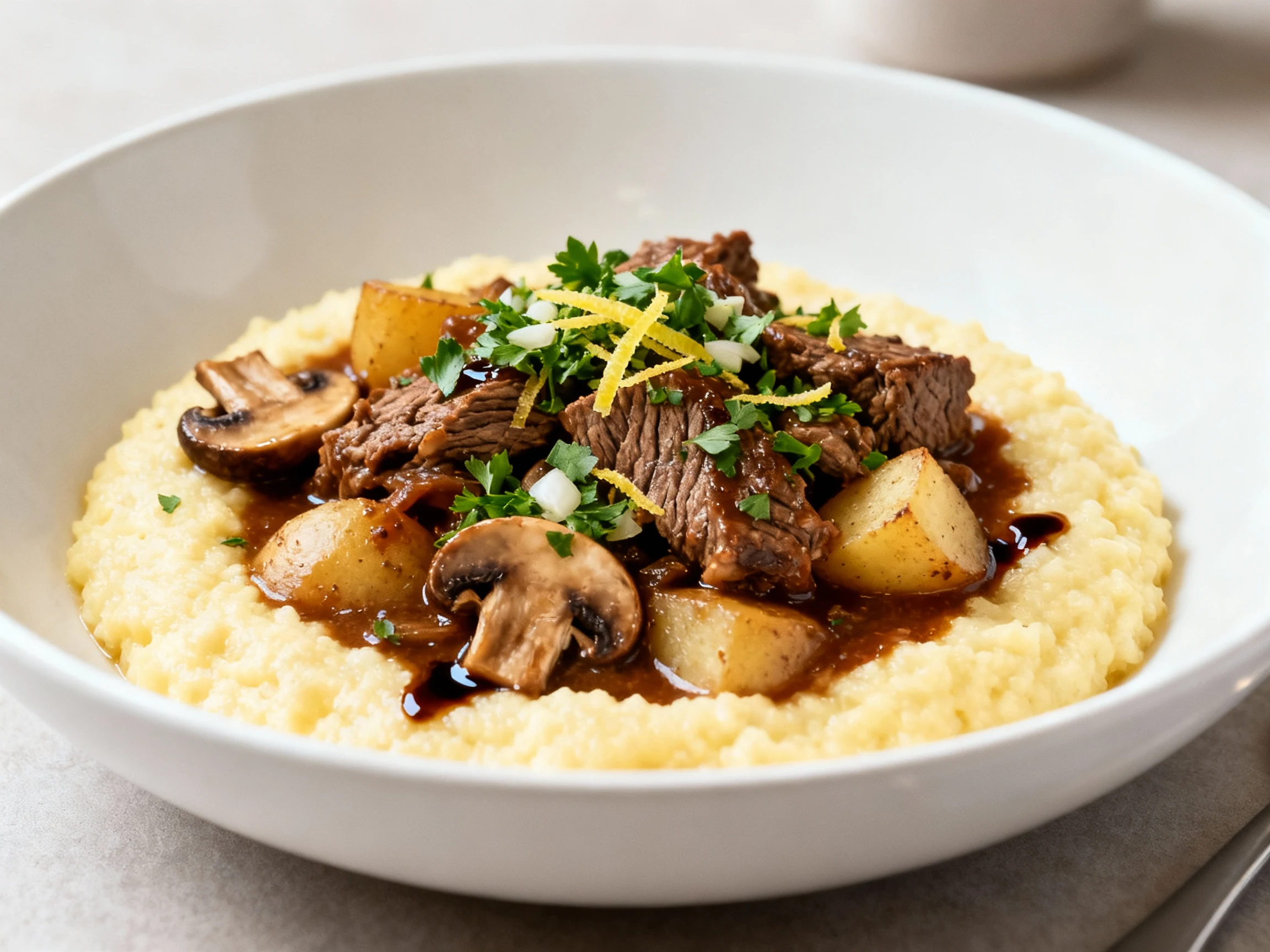
- Serve smart. Ladle stew into warm bowls. Top with a pinch of gremolata. Serve with crusty bread, creamy polenta, or wide noodles to capture every drop.
- Rest and reward. Let the pot sit 5 minutes off heat before serving. Flavors settle, sauce thickens slightly, and your patience pays off.
Storage Instructions
- Fridge: Cool completely, then store in airtight containers up to 4 days. It tastes even better on day two.
- Freezer: Portion into freezer-safe containers and freeze up to 3 months. For best texture, freeze without potatoes and add freshly cooked potatoes when reheating.
- Reheat: Thaw overnight in the fridge. Warm gently on the stovetop over medium-low with a splash of water or stock until steaming. Avoid hard boiling to keep the meat tender.
- Make-ahead: Cook fully a day in advance; chill, then reheat. Fat will solidify on top—lift it off for a cleaner, lighter stew.
What’s Great About This
- Fast-but-slow flavor: Caramelized tomato paste and wine deliver depth in under two hours.
- One-pot wonder: Less cleanup, more couch time.
- Budget-friendly: Chuck roast turns into luxury with time and technique.
- Flexible: Choose potatoes, mushrooms, beans, or pasta—your call.
- Make-ahead magic: Stew improves overnight. Your future self will thank you.
- Gluten-free friendly: Skip flour thickeners; reduction gets you a rich, glossy sauce.
Common Mistakes to Avoid
- Overcrowding the pan: You’ll steam the beef and miss that crucial crust. Sear in batches.
- Skipping the paste step: Browning tomato paste is non-negotiable for big flavor, IMO.
- Boiling the stew: A rolling boil tightens muscle fibers and toughens meat. Gentle simmer only.
- Using lean cuts: Skip sirloin. You want chuck or similar with marbling and connective tissue.
- Adding acid too early: Hold balsamic until the end for balance without fighting tenderness.
- Under-salting: Season the meat, the soffritto, and the sauce. Layers matter.
- Ignoring fond: Those browned bits are flavor gold. Deglaze aggressively.
- Not reducing enough: Thin stew tastes flat. Reduce until it coats a spoon.
Recipe Variations
- Tuscan bean twist: Add a can of drained cannellini beans in the last 15 minutes for extra body.
- Sicilian vibe: Stir in 1/2 cup oil-cured black olives and a pinch of orange zest before serving.
- Spicy Calabrian: Swap red pepper flakes for 1–2 tsp Calabrian chili paste for a fruity heat.
- Barolo splurge: Use a Piedmont red and skip mushrooms for a purist, wine-forward stew.
- Marsala mushroom: Replace half the wine with dry Marsala and double the mushrooms for earthiness.
- Pressure cooker: Sear on sauté; cook at high pressure 35 minutes, natural release 10, then reduce sauce and finish as written.
- Slow cooker: Sear on the stovetop, then cook on low 7–8 hours. Add potatoes for the last 2–3 hours to avoid mush.
- Low-carb: Skip potatoes; add extra mushrooms and a handful of torn kale in the last 10 minutes.
- No tomato route: TBH, it’s great with just stock, wine, and a spoon of miso for umami if you’re avoiding tomatoes.
FAQ
What’s the best cut of beef for this stew?
Beef chuck wins every time. It’s rich in collagen and marbling, which melt during cooking and give you tender meat and a silky sauce. Brisket or beef shin work too, but adjust timing as they can take a bit longer.
Can I make it without wine?
Yes. Replace wine with an equal amount of beef stock plus 1 tbsp balsamic vinegar for brightness. You can also use the soaking liquid from dried porcini to add complexity.
How do I thicken the sauce without flour?
Use reduction. Simmer uncovered at the end until the sauce coats the back of a spoon. If you need more body, mash a few potato chunks into the stew or add a tablespoon of tomato paste during reduction.
Is stovetop or oven better for braising?
Both work. On the stovetop, maintain a gentle simmer and stir occasionally. In the oven, 325°F with the lid on gives even heat; check every 45 minutes to ensure the liquid level stays steady and nothing sticks.
Why is my beef still tough after an hour?
It’s not done yet. Toughness usually means the collagen hasn’t fully broken down. Keep simmering gently; the window from tough to tender can be just 20–30 minutes away. Don’t crank the heat—time, not violence, solves it.
Can I prep it ahead for a party?
Absolutely. Cook it a day ahead, chill overnight, and reheat gently before guests arrive. Skim any solidified fat for a cleaner finish and add the gremolata right before serving for fresh aroma.
What should I serve with this?
It’s fantastic over creamy polenta, wide pappardelle, or with thick slices of crusty bread. A simple arugula salad with lemon and Parmesan balances the richness.
Do potatoes freeze well in stew?
They can turn mealy after freezing. If you plan to freeze, leave potatoes out and add freshly cooked potatoes (or serve over polenta) when reheating for best texture.
How spicy is it?
As written, it’s mild with optional gentle heat from red pepper flakes. Adjust to taste or swap in Calabrian chili paste for more personality without overwhelming the other flavors.
The Bottom Line
This is comfort food with a high ROI: big flavor, simple moves, and a glossy sauce worthy of your best bowl. You sear smart, build layers, and finish bright, and the pot does the rest. Keep it classic or twist it your way—either path leads to clean plates and repeat requests. Save the all-day braise for the weekend; tonight, you’ll get that same energy in a fraction of the time.
Printable Recipe Card
Want just the essential recipe details without scrolling through the article? Get our printable recipe card with just the ingredients and instructions.