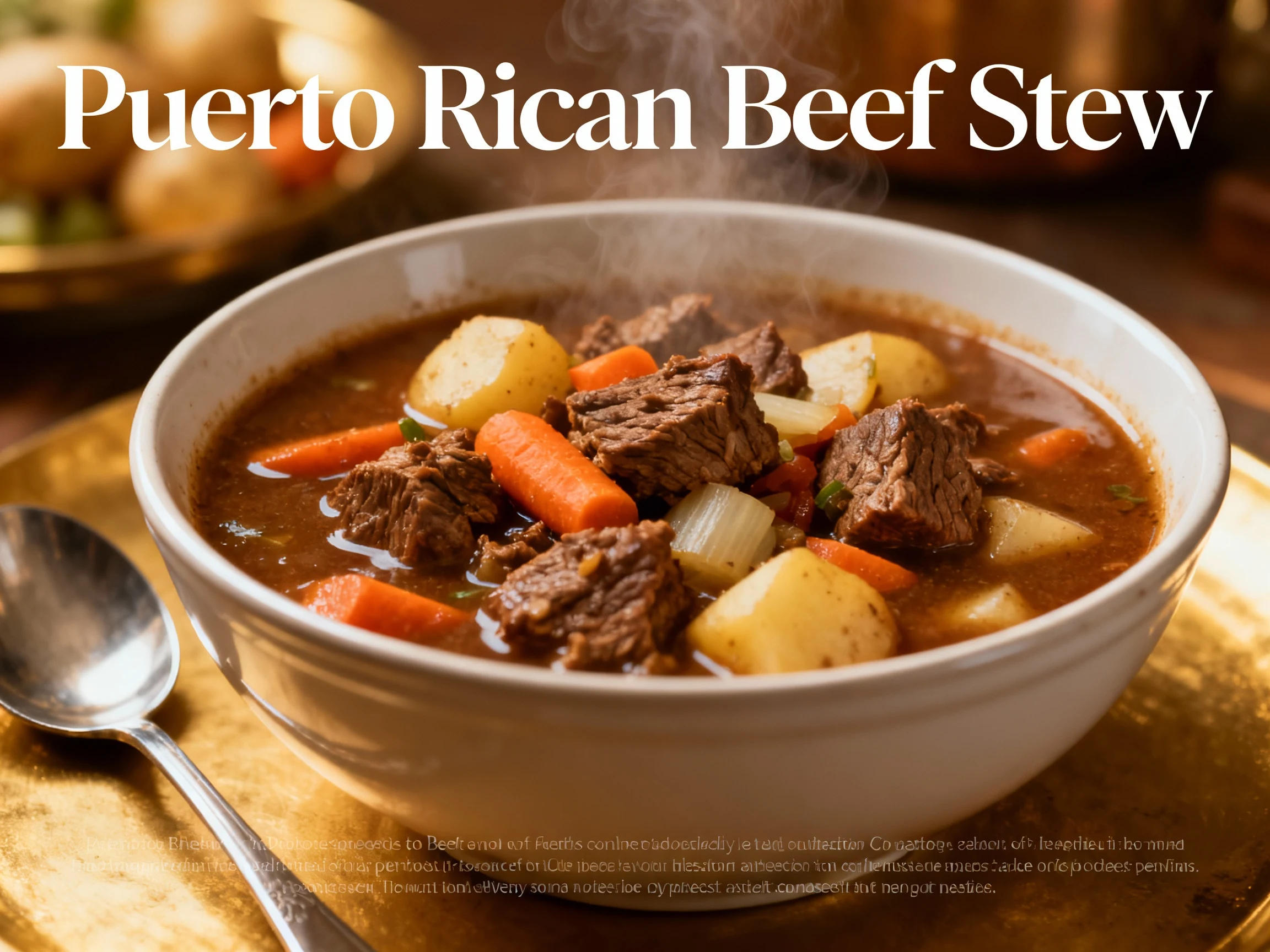
Puerto Rican Beef Stew — Bold Flavor Weeknight Comfort
A one-pot island classic with sofrito, sazón, and tender beef—perfect for Sunday meal prep or an easy weeknight win.
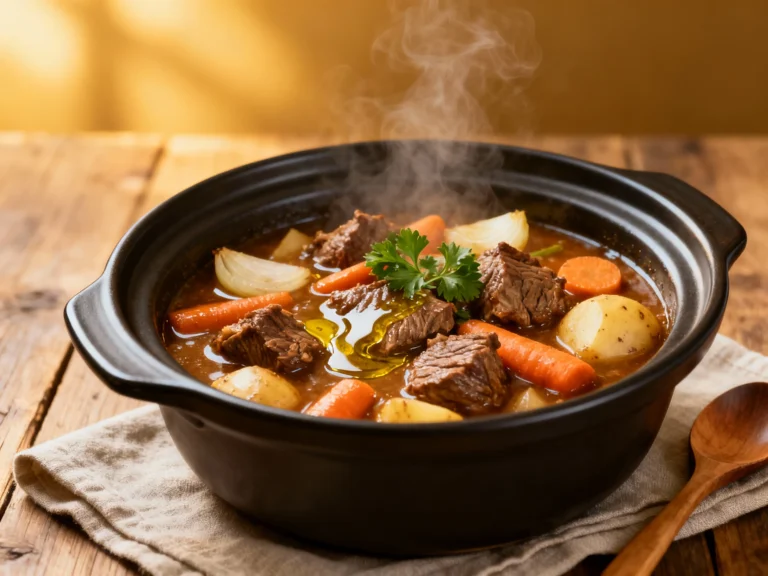
If your “hearty stew” tastes shy, you’re leaving flavor on the table. This Caribbean classic builds outrageous depth with everyday groceries in under two hours. We’re talking golden seared beef, a sofrito base, and that iconic orange glow from sazón con achiote—no mystery chef magic required. It’s comfort food that still flexes: rich, savory, and wildly scoopable over rice. Bonus: tomorrow’s leftovers taste even better (because science and patience).
The Secret Behind This Recipe
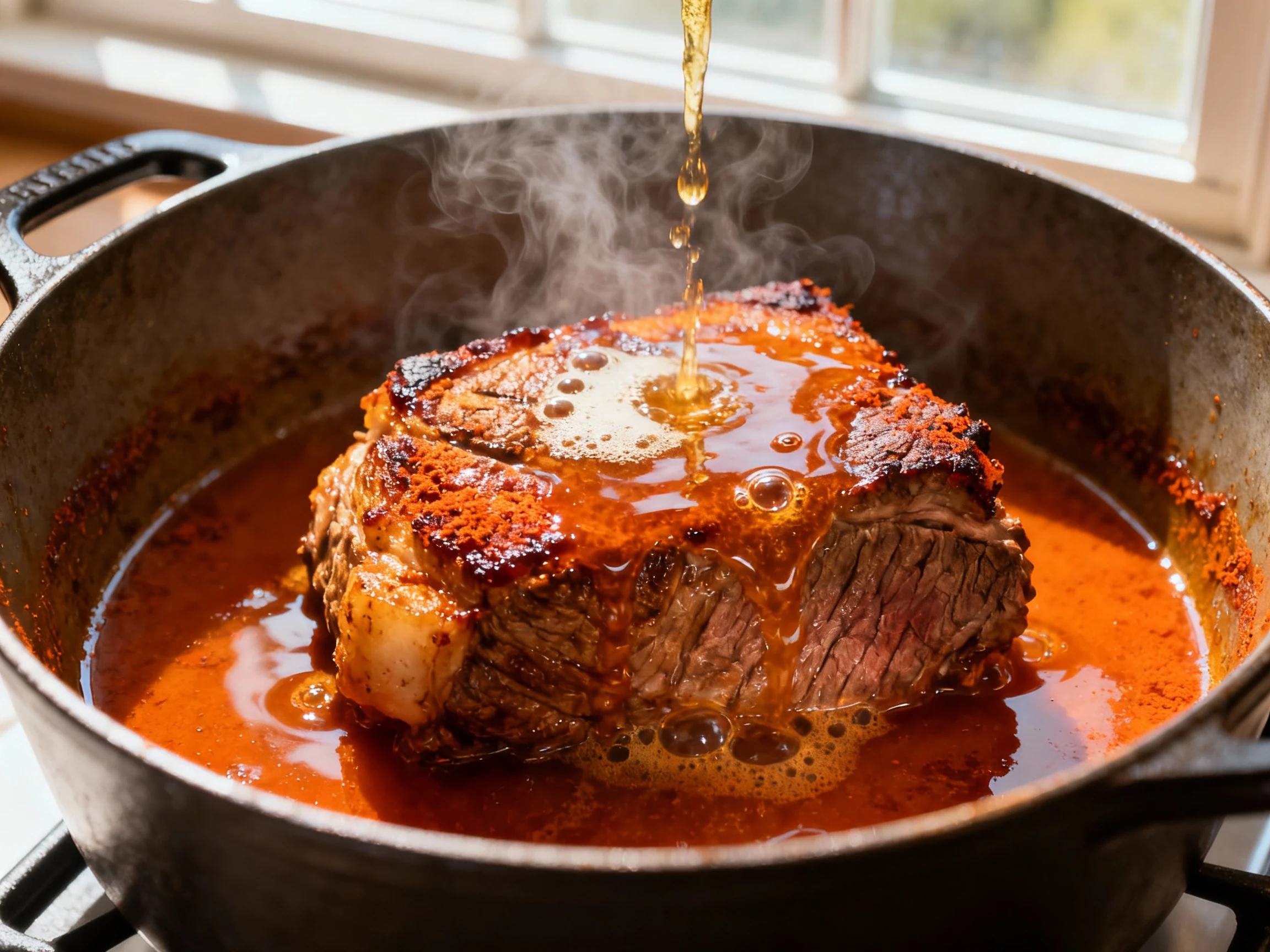
The magic is a three-part system: a hard sear, a fragrant sofrito base, and a gentle braise. Browning the beef creates fond—those caramelized bits that turn into pure gold when you deglaze. Sofrito (a blend of culantro or cilantro, onion, garlic, peppers) lays down the island backbone you can smell from the hallway.
Next comes sazón con achiote for color and savory punch. Bloom it with tomato paste so it wakes up, not just floats. Then keep the simmer low and steady. You’ll finish with briny olives, a splash of vinegar for brightness, and fresh herbs so every spoonful pops. Simple? Yes. Basic? Never.
Ingredients Breakdown
- 2.5 lb beef chuck, cut into 1.5-inch cubes (best balance of flavor and tenderness)
- 1.5–2 tsp kosher salt (adjust if your adobo/sazón is salty)
- 1 tsp freshly ground black pepper
- 2 tsp adobo seasoning (optional but classic)
- 1 tbsp apple cider or red wine vinegar
- 2–3 tbsp neutral oil or achiote oil (for color and aroma)
- 1 medium yellow onion, diced
- 1 small red bell pepper, sliced
- 1/2–3/4 cup sofrito/recaito (store-bought or homemade)
- 1 tbsp tomato paste
- 1 packet sazón con achiote (about 1–1.5 tsp)
- 1 tsp ground cumin
- 1 tsp dried oregano (Dominican or Mexican oregano preferred)
- 1 bay leaf (or 2 small)
- 1 cup tomato sauce (8 oz)
- 1/2 cup beer or 1/2 cup beef broth (for deglazing)
- 2.5–3 cups beef broth (enough to mostly cover the meat)
- 2 medium Yukon Gold potatoes, peeled and cubed (1–1.5 inches)
- 2 carrots, peeled and cut into 1-inch chunks
- 1/2 cup pimiento-stuffed green olives, halved
- 1–2 tbsp capers (optional, for extra brine)
- 1 tsp sugar or a pinch of baking soda (optional, to balance acidity)
- 2 tbsp chopped cilantro and/or culantro, plus more for garnish
- For serving: hot white rice, avocado, lime wedges, and hot sauce (optional)
How to Make It – Instructions
- Season the beef. Toss cubes with salt, pepper, adobo, and vinegar. Let sit 20–30 minutes while you prep veggies. IMO, this short “marinade” moves the needle.
- Sear in batches. Heat 2 tbsp oil in a heavy Dutch oven over medium-high. Sear beef on two sides until deeply browned, 3–4 minutes per side. Don’t overcrowd; you want crust, not steam. Transfer to a bowl.
- Build the base. Lower heat to medium. Add a touch more oil if needed, then sauté onion and bell pepper with a pinch of salt until softened and lightly golden, about 5 minutes.
- Sweat the sofrito. Stir in sofrito; cook 2–3 minutes until fragrant and slightly darker. If it starts sticking, you’re doing great—flavor is happening.
- Bloom and caramelize. Add tomato paste and cook 1 minute, stirring. Sprinkle in sazón, cumin, and oregano; cook another minute to wake the spices.
- Deglaze. Pour in beer (or broth) and scrape up the fond with a wooden spoon. Reduce for 1–2 minutes until slightly syrupy.
- Braise. Return beef and juices to the pot. Add tomato sauce, bay leaf, and enough beef broth to mostly cover. Bring to a simmer, then reduce to low, cover, and cook gently for 60–75 minutes, stirring occasionally, until the beef is almost tender.
- Add veg. Stir in potatoes and carrots. Keep simmering, covered, for 20–30 minutes until both the meat and veg are tender. If liquid drops too low, add a splash of broth.
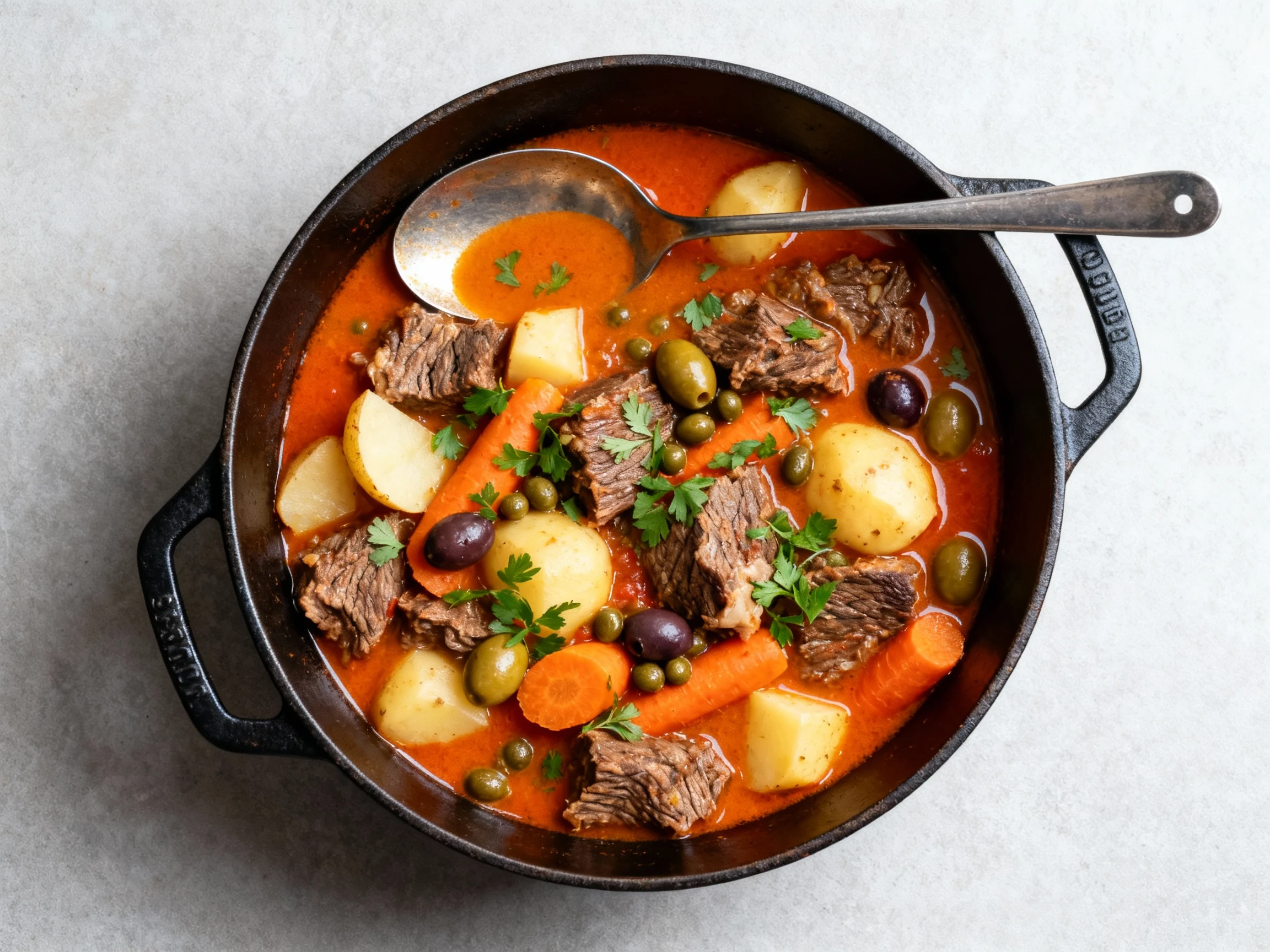
- Finish. Stir in olives and capers; simmer 5 minutes. Taste and adjust: more salt, a pinch of sugar if sharp, or a splash of vinegar for brightness. Remove bay leaf.
- Herbs + rest. Stir in cilantro/culantro. Kill the heat and let the pot rest 10 minutes. This settles flavors (and saves your tongue).
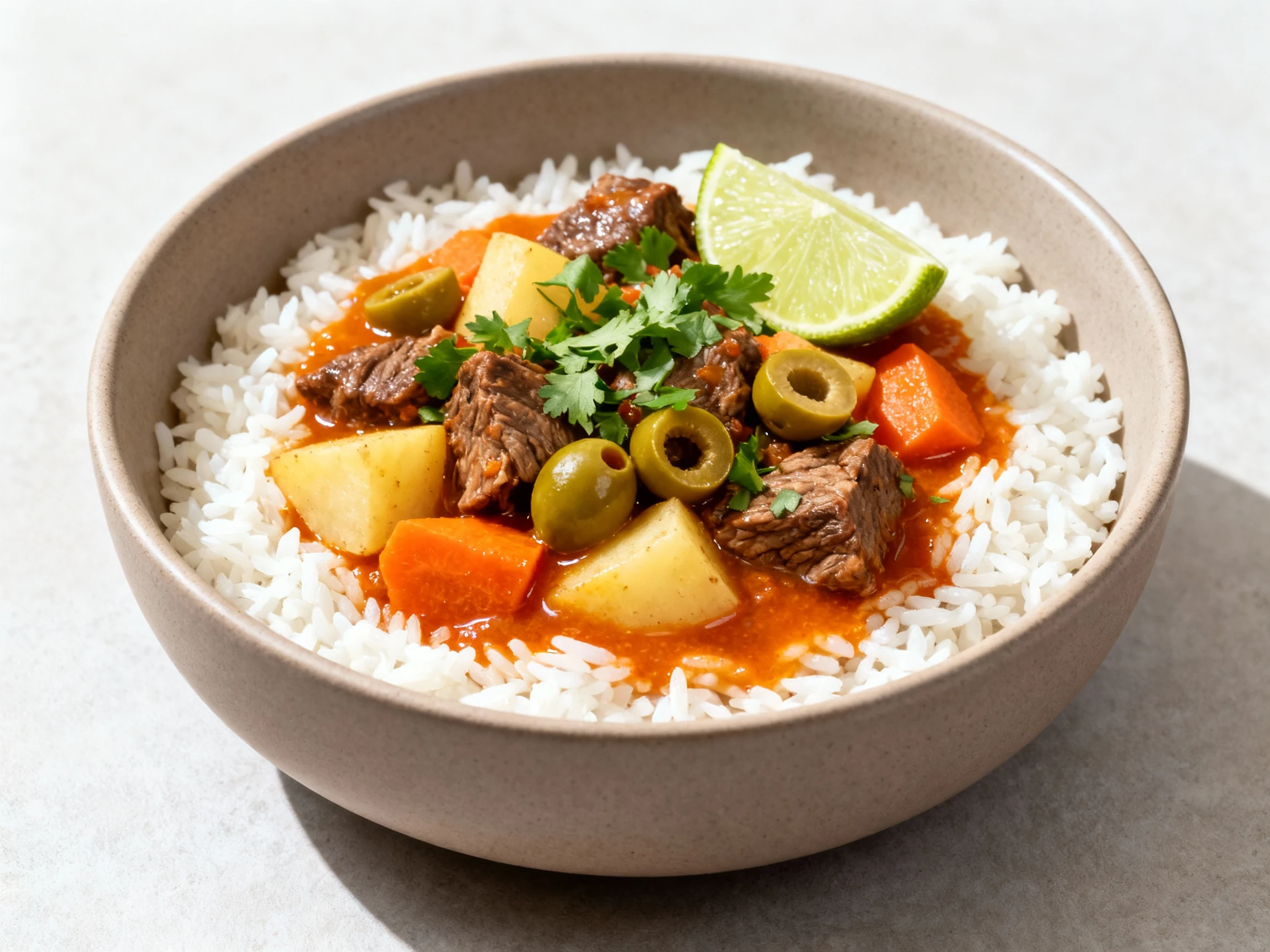
- Serve. Spoon over rice, garnish with herbs, and hit with lime if you like. Leftovers? Elite.
Storage Instructions
- Fridge: Cool completely, then store in airtight containers for up to 4 days. It thickens and improves overnight—FYI, that’s normal and glorious.
- Freezer: Portion into freezer-safe containers and freeze up to 3 months. Leave a little headroom for expansion.
- Reheat: Warm gently on the stovetop over medium-low with a splash of water or broth. Microwave in 60–90 second bursts, stirring between.
- Make-ahead tip: Cook the stew through step 9, cool, and refrigerate. Finish with fresh herbs right before serving.
Benefits of This Recipe
- One pot, huge payoff: Minimal dishes, restaurant-level flavor.
- Meal prep gold: Holds and reheats like a champ; flavors deepen with time.
- Budget-friendly: Uses chuck and pantry spices for big results without big spend.
- Flexible: Swap in pumpkin (calabaza), yuca, or extra peppers based on what you’ve got.
- Balanced comfort: Protein-rich, veggie-loaded, and deeply satisfying over rice or cauliflower rice.
- Beginner-proof: Clear steps, forgiving simmer, and lots of checkpoints for success.
Pitfalls to Watch Out For
- Skipping the sear: No browning = no depth. Take the time; thank yourself later.
- Overcrowding the pan: Batch your beef. Steam is the enemy of crust.
- Boiling instead of simmering: High heat turns beef tough. Keep it gently burbling.
- Adding potatoes too early: They’ll disintegrate and cloud the broth. Add when meat is nearly tender.
- Salty overkill: Adobo and sazón carry salt. Taste before adding more.
- Flat flavor: Finish with acid (vinegar or lime) and fresh herbs to make everything pop.
- Wrong cut of beef: Lean stew meat dries out. Chuck is your MVP.
Variations You Can Try
- Island roots edition: Swap potatoes for chunks of yuca, yautía, or calabaza for a classic twist.
- Garbanzos add-in: Stir in 1 can of drained chickpeas in the last 10 minutes for extra body and fiber.
- Low-carb swap: Use turnips or daikon in place of potatoes; add them later so they don’t overcook.
- No-beer deglaze: Use a dry splash of white wine or extra beef broth. Keep the deglaze step—non-negotiable.
- Spice level: Puerto Rican food isn’t typically fiery, but you can add chili flakes or a dash of hot sauce at the end.
- Pressure cooker: 35 minutes on High with natural release, then add potatoes/carrots and simmer on Sauté until tender.
- Slow cooker: Sear beef and bloom aromatics on the stove, then transfer. Cook on Low 7–8 hours; add veg for the last 2 hours.
FAQ
What cut of beef works best?
Beef chuck is ideal because it has enough collagen to turn meltingly tender during a long simmer. Bottom round can work, but it’s leaner and can finish a bit drier. Stew “grab bags” are inconsistent—pick visibly marbled cubes when possible.
Do I need sazón con achiote for authenticity?
It’s highly recommended for color and a signature savory note. If you can’t find it, use 1/2 tsp ground annatto (achiote) plus a pinch of garlic powder, coriander, and extra salt to approximate. It won’t be identical, but it’ll still slap.
What’s the difference between sofrito and recaito?
In many Puerto Rican kitchens, “recaito” is the green base (culantro/cilantro, onion, peppers, garlic) and “sofrito” includes tomato. Store-bought labels vary. Either works here—use what you have and adjust tomato sauce to taste.
How can I thicken the stew without flour?
Let it simmer uncovered in the final 10 minutes to reduce. Potatoes will naturally release starch and body it up. If you want thicker, mash a few potato chunks against the side of the pot and stir back in. No roux needed.
Can I make this without olives or capers?
Yes—just add a touch more vinegar or a squeeze of lime at the end to replace the briny lift. The stew will still be rich and balanced.
How long should I simmer for best results?
Plan for 90 minutes total on the stovetop: about 60–75 minutes for the beef to get tender, then 20–30 minutes after adding potatoes and carrots. Low and slow wins. Rushing it? That’s how you get shoe leather.
Can I prep this ahead for a crowd?
Absolutely. Make it the day before, refrigerate, and reheat gently. The flavors marry overnight and the texture gets even silkier. BTW, it doubles beautifully in a 7–8 qt pot.
What should I serve with it?
Steaming white rice is traditional. Add sliced avocado, a simple salad, and tostones if you’re feeling fancy. Hot sauce on the side is always welcome.
Is this gluten-free?
Yes, as long as your adobo, sazón, and broth are certified gluten-free. Most are, but always check labels to be safe.
Can I use pre-cut “stew beef” from the store?
You can, but results vary. Those mixes often include lean cuts that won’t turn tender. If that’s what you have, extend the initial braise by 15–20 minutes and keep the heat low.
In Conclusion
This is the kind of stew that turns a random Tuesday into a mini celebration—rich, aromatic, and ridiculously satisfying with a pile of rice. You’ll build massive flavor with simple moves: sear hard, bloom your spices, and finish with acid and herbs. Do that, and every bowl hits like a warm hug with swagger. Now grab a spoon and make your kitchen smell like victory.
Printable Recipe Card
Want just the essential recipe details without scrolling through the article? Get our printable recipe card with just the ingredients and instructions.