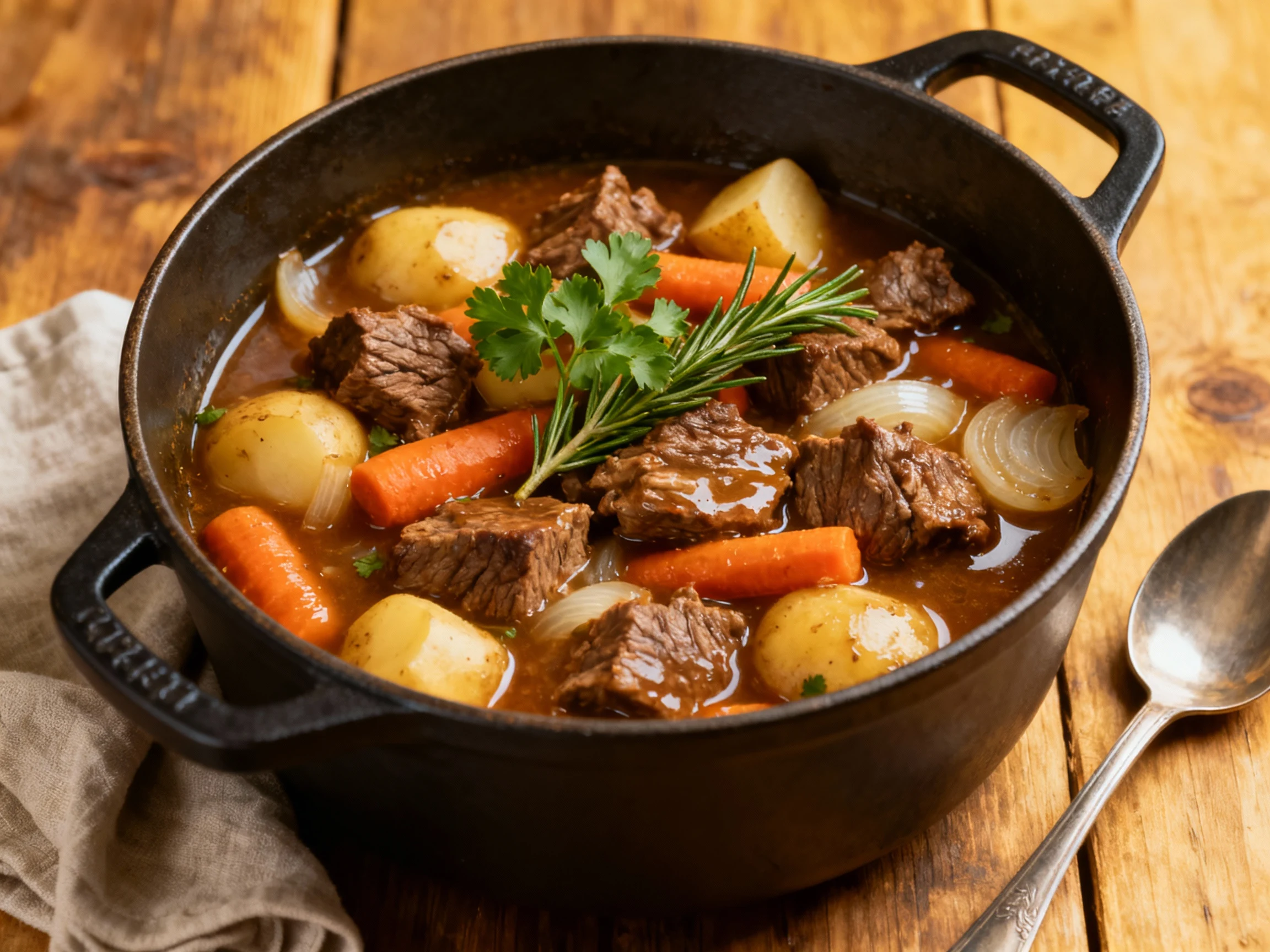
Beef Stew Dutch Oven Recipes That Win Cozy Weeknights
Cold-night comfort with minimal prep: tender braised beef, budget-friendly ingredients, and foolproof steps for busy weeknights.
You want a dinner that checks every box: big flavor, small effort, and zero drama. This stew does exactly that, turning humble ingredients into a rich, beefy payoff you’ll want on repeat. It leverages the Dutch oven’s superpower—steady, even heat—to build layers of caramelized goodness without fancy techniques. You’ll get restaurant-level results with a grocery-store list and one pot. And yes, there’s bread-dunking involved—because we’re not monsters.
What Makes This Recipe Awesome
This is the stew you brag about, the one that smells like comfort and tastes like a Sunday spent right. It’s built for busy people who still want food that feels slow-cooked and special.
- One-pot efficiency: Browning, simmering, and finishing all happen in the Dutch oven. Fewer dishes, more flavor.
- Deep, layered flavor: Browning beef, tomato paste, and a proper deglaze deliver a rich, glossy stew—none of that watery stuff.
- Flexible ingredients: Use budget chuck, swap wine for stock, toss in mushrooms or parsnips. It’s forgiving and customizable.
- Set-it-and-forget-it oven time: The oven maintains a steady simmer, so you don’t babysit a pot on the stove.
- Make-ahead friendly: Like most stews, it tastes even better the next day. Flavor compounds mellow and deepen overnight, FYI.
- Cozy factor: It’s exactly what you want when temperatures drop—hearty, velvety, and soul-warming.
Ingredients Breakdown
- 2½ lb beef chuck, cut into 1½-inch cubes (marbled for tenderness)
- 2 tsp kosher salt, divided (season beef and adjust at the end)
- 1 tsp freshly ground black pepper (for the beef)
- 2 tbsp olive oil (browning the beef)
- 2 tbsp unsalted butter (optional, for richer browning)
- 1 large yellow onion, diced
- 3 ribs celery, chopped
- 3 cloves garlic, minced
- 2 tbsp tomato paste (umami and color)
- 1 tsp smoked paprika (subtle warmth and depth)
- 2 tbsp all-purpose flour (light thickening)
- 1 cup dry red wine (optional; sub with beef stock if you prefer)
- 3 cups low-sodium beef broth
- 1 tbsp Worcestershire sauce (savory boost)
- 1 bay leaf
- 1 tsp dried thyme (or 4 fresh sprigs)
- 2 large carrots, peeled and cut into 1-inch chunks
- 1 lb baby potatoes, halved (Yukon Golds are ideal)
- 1 cup mushrooms, halved (optional but recommended)
- 1 parsnip, peeled and chunked (optional, adds sweetness)
- 1 tbsp balsamic vinegar (bright finish)
- 1 cup frozen peas (stir in at the end)
- 2 tbsp fresh parsley, chopped (garnish)
Let’s Get Cooking – Instructions
- Preheat the oven to 325°F (160°C). Position a rack in the center, and set your Dutch oven (5.5–7 quart) on the stovetop.
- Season and prep the beef. Pat the cubes dry, then toss with 1½ tsp salt and the pepper. Dry surfaces brown better—moisture is the enemy.
- Brown in batches. Heat oil (and butter if using) over medium-high. Sear beef in 2–3 batches until deeply browned, 3–4 minutes per side. Transfer to a bowl; don’t crowd the pot.
- Sweat the aromatics. Drop heat to medium. Add onion and celery; cook 5 minutes until softened. Stir in garlic for 30 seconds.
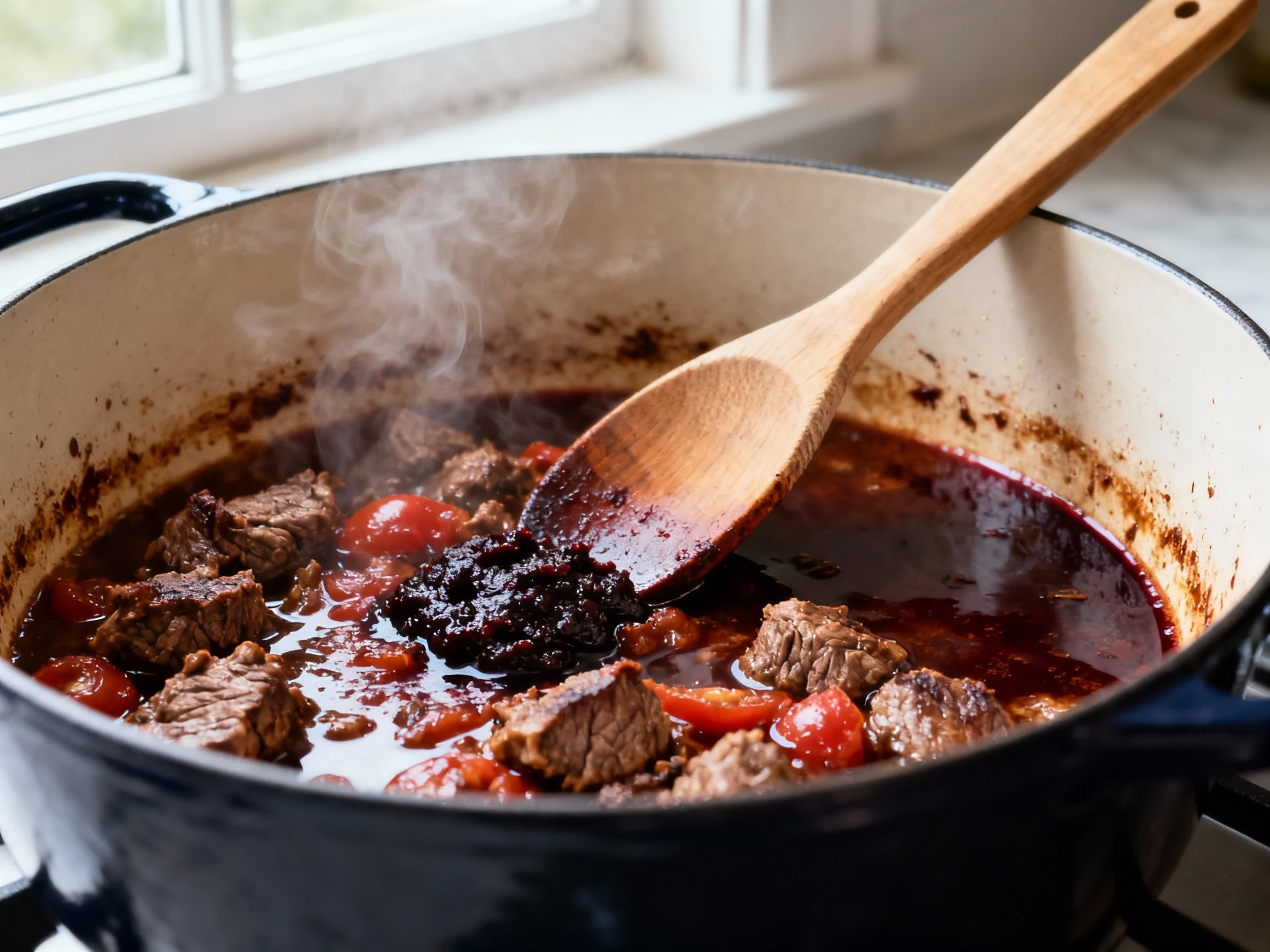
- Build flavor with paste and spice. Add tomato paste and smoked paprika; cook 2 minutes until the paste darkens. Sprinkle in flour; stir 1 minute to eliminate raw taste.
- Deglaze like a pro. Pour in wine (or stock). Scrape up browned bits with a wooden spoon; let it reduce by about half, 2–3 minutes.
- Add liquids and herbs. Stir in beef broth, Worcestershire, bay leaf, and thyme. Return beef and any juices. Bring to a steady simmer.
- Oven braise, round one. Cover and transfer to the oven for 60 minutes. The gentle heat breaks down collagen into silky goodness.
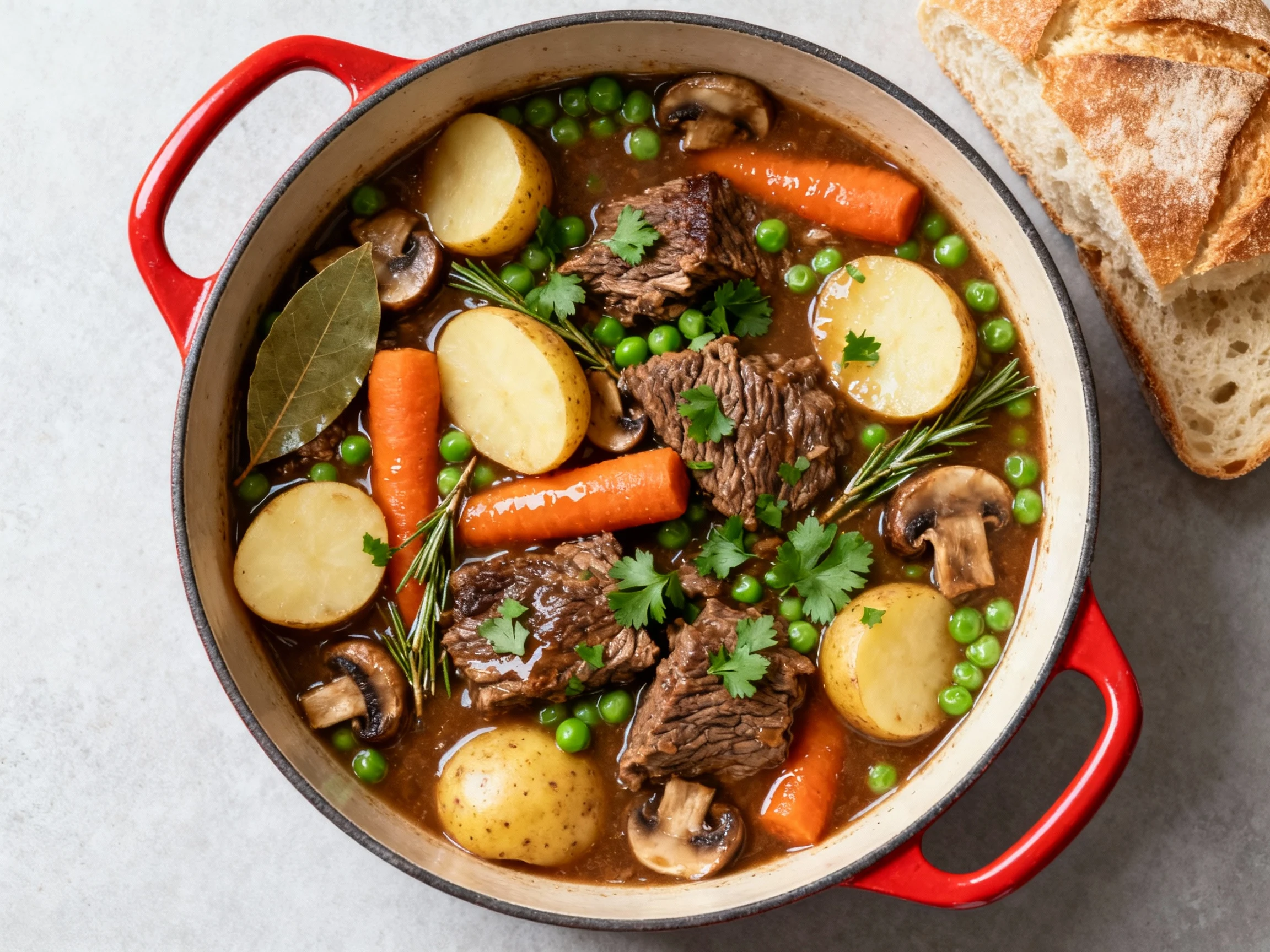
- Vegetable time. Add carrots, potatoes, mushrooms, and parsnip. Cover and cook another 60–75 minutes, until beef is fork-tender and vegetables are plush.
- Finish and balance. Uncover for the last 15 minutes to reduce slightly. Stir in peas and balsamic; simmer 2 minutes. Taste and add the remaining ½ tsp salt if needed.
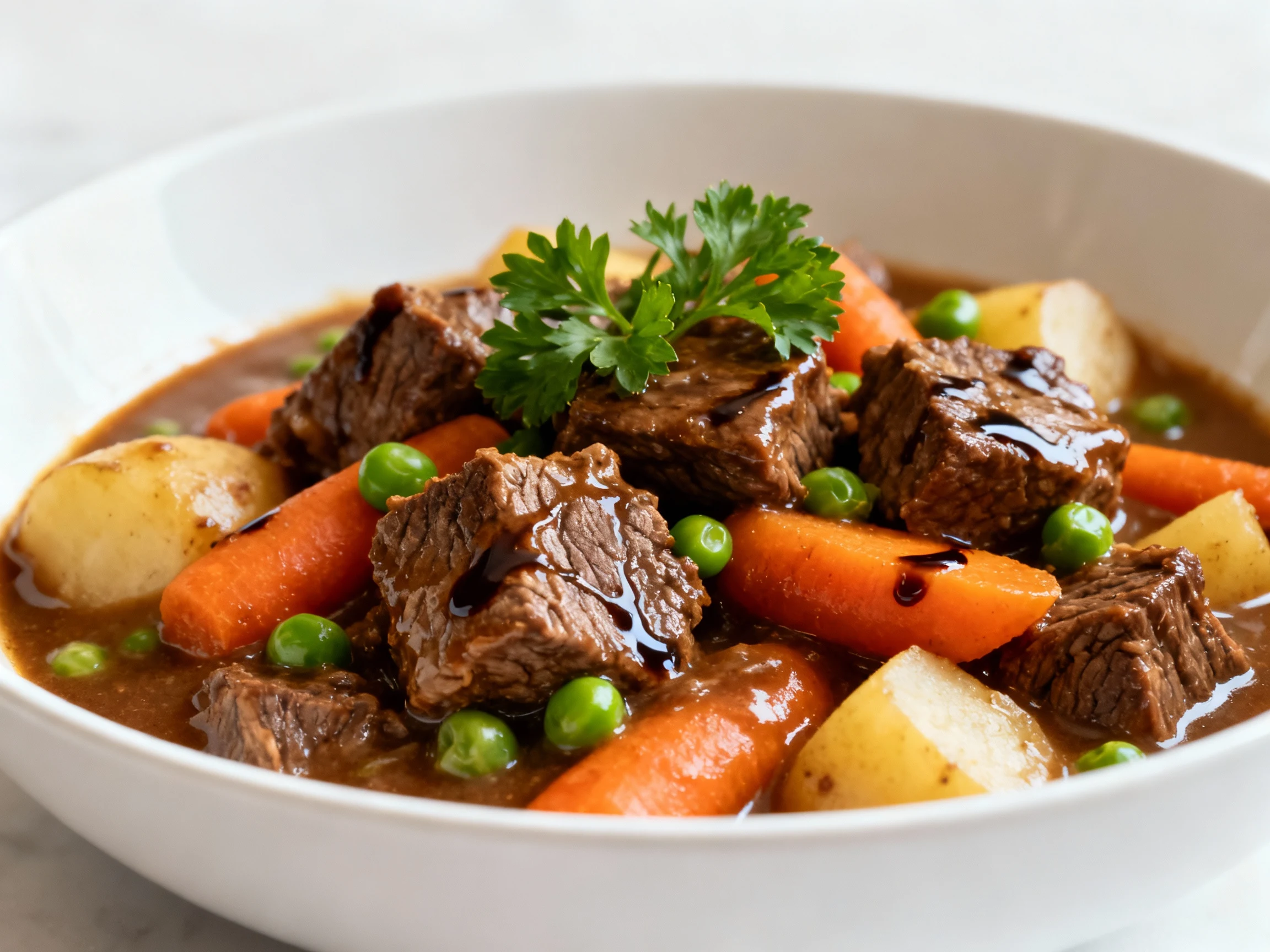
- Rest and serve. Remove bay leaf and thyme stems. Let the stew sit 10 minutes so it thickens; skim excess fat. Garnish with parsley and serve with crusty bread.
Keeping It Fresh
Stew is meal prep gold. It reheats like a champ, and the flavors mature in the fridge—like your palate, IMO.
- Cool fast: Spread the stew in shallow containers so it drops below 70°F quickly, then refrigerate within 2 hours.
- Fridge life: Keeps well for 4 days. Reheat gently on the stovetop over medium-low with a splash of water or stock.
- Freeze smart: Portion into freezer-safe containers and freeze up to 3 months. Thaw overnight in the fridge for best texture.
- Reheat tips: Simmer; don’t boil. Add a dash of balsamic or lemon to reawaken the flavors. Fresh parsley brings back the brightness.
Benefits of This Recipe
- Budget-friendly cut: Chuck roast shines when braised—deep flavor without premium pricing.
- Hands-off cooking: The oven does the heavy lifting while you do literally anything else.
- Consistent results: Dutch ovens hold and distribute heat like champs, so the stew stays silky, not scorched.
- Scalable: Double it in a larger pot for guests; reduce for date night. Same method, same win.
- Nutrient-dense: Protein, fiber, and a colorful mix of veggies. Your body says thank you.
- Make-ahead magic: Flavor improves overnight, which is code for “cook once, feast twice.”
- Flexible flavors: Go wine-free, stout-rich, or herb-forward. Choose your adventure.
- Comfort factor: It’s the culinary equivalent of a warm blanket and a good playlist.
Don’t Make These Errors
- Crowding the pot while browning: You’ll steam the beef, not sear it. Work in batches for that crust.
- Skipping the deglaze: Those browned bits are pure flavor. Don’t leave them stuck to the pan out of laziness.
- Using high heat in the oven: A roaring boil toughens beef. Keep it low and slow at 325°F.
- Adding potatoes too early: They’ll turn mushy. Wait until the last hour or so to keep shape and texture.
- Over-thickening: Two tablespoons of flour plus reduction is plenty. If it’s a paste, you went too far.
- Under-seasoning: Salt gradually and taste at the end. Acid (balsamic or lemon) brightens everything—don’t forget it.
- Ignoring resting time: Five to ten minutes lets the stew settle and thicken. Patience pays off.
- Using lean beef: Without enough marbling, the stew dries out. Pick chuck, FYI.
Recipe Variations
- Guinness Stout Stew: Swap the wine for stout; add 1 tsp brown sugar and 1 tsp mustard. Deep, malty, pub vibes.
- Wine-Free Classic: Use all beef stock; add 1 tsp soy sauce for umami and an extra splash of Worcestershire.
- Mushroom Umami Boost: Add ½ oz dried porcini with the broth and mushrooms. Earthy and luxe.
- Smoky Chipotle: Stir in 1–2 chopped chipotle peppers in adobo with the tomato paste. A little heat, a lot of personality.
- Mediterranean Herb: Swap thyme for rosemary and oregano; finish with lemon zest and olive oil.
- Root Veg Forward: Double carrots and parsnips; add turnips. Rustic sweetness, great texture.
- Gluten-Free: Replace the flour with 1 tbsp cornstarch slurry near the end. Thicken without wheat.
- Bacon Boost: Crisp 4 slices chopped bacon first; use the fat to brown the beef. Smoky depth, irresistible.
FAQ
What cut of beef works best for this stew?
Beef chuck roast is the top choice. It’s marbled and breaks down into tender, juicy chunks during a slow braise. Avoid super-lean cuts; they turn dry and stringy.
Can I make it without wine?
Absolutely. Use extra beef stock and add a touch of soy sauce or a splash of balsamic for complexity. You’ll still get a rich, balanced stew.
What size Dutch oven should I use?
A 5.5–7 quart Dutch oven is perfect for this quantity. It gives you room to brown properly and prevents overcrowding when you add vegetables.
How long does the beef need to cook?
Plan on 2 to 2½ hours total at 325°F. The first hour softens the beef; the final 60–75 minutes finishes the braise with the veg. It’s done when the beef yields easily to a fork.
How do I thicken the stew without flour?
Use a cornstarch slurry: mix 1 tbsp cornstarch with 1 tbsp cold water, stir into the simmering stew in the last 5 minutes, and cook until glossy.
Can I make this ahead for a party?
Yes—stew is party-friendly. Cook it the day before, chill, and reheat gently before guests arrive. The flavor actually improves overnight.
How do I keep potatoes from getting mushy?
Add them in the last hour of cooking and use waxy varieties like Yukon Golds. Avoid aggressive boiling; a gentle simmer preserves texture.
Wrapping Up
This Dutch oven stew brings maximum comfort with minimum stress. You’ll get deep, caramelized flavor, tender beef, and vegetables that actually taste like something. It’s versatile, make-ahead friendly, and built for weeknights or weekends. Grab the pot, trust the process, and enjoy the kind of meal that turns a cold evening into a cozy win.
Printable Recipe Card
Want just the essential recipe details without scrolling through the article? Get our printable recipe card with just the ingredients and instructions.