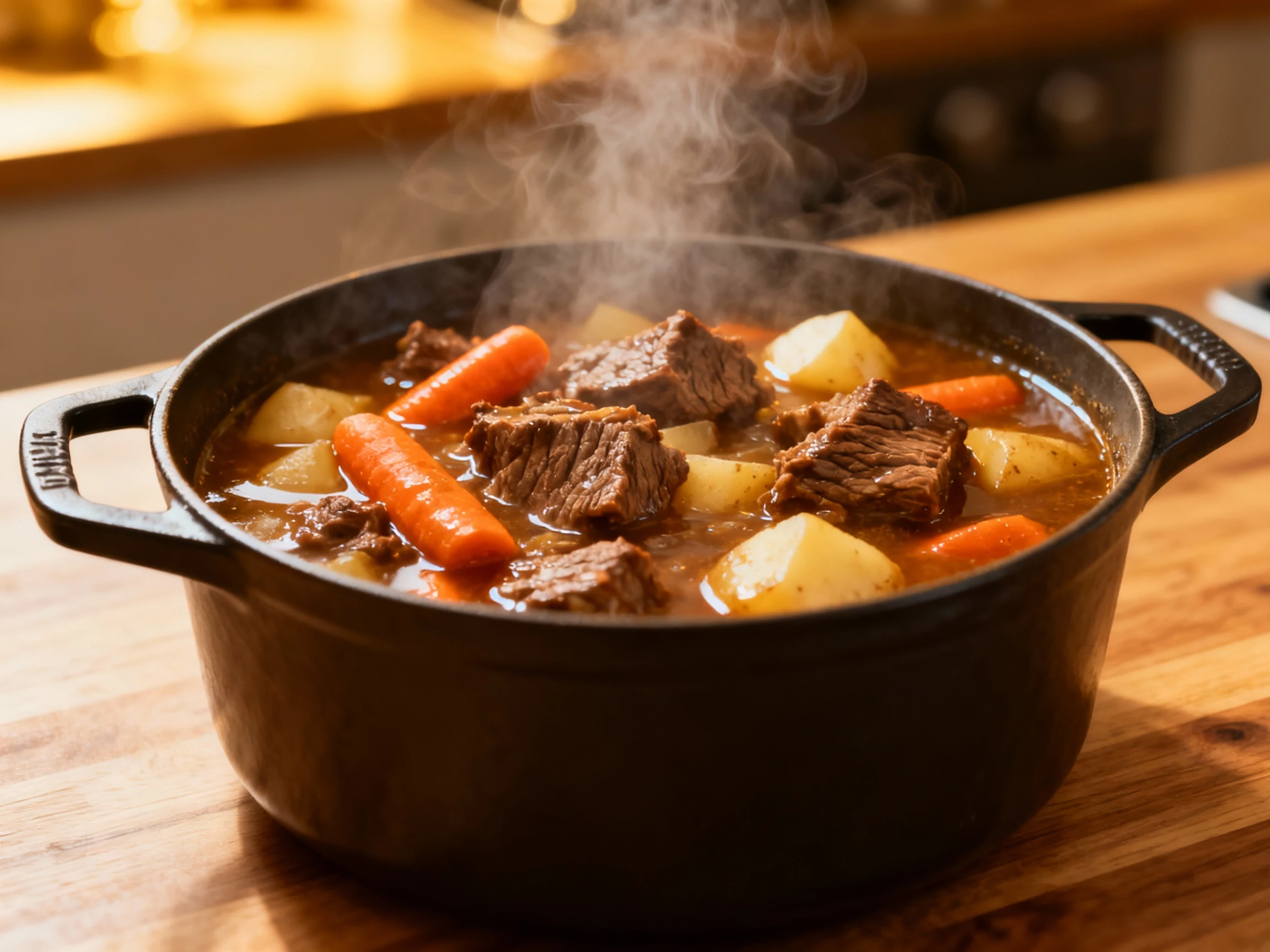
Stovetop Beef Stew Made Fast for Peak Weeknight Comfort
One-pot, weeknight-friendly comfort: rich gravy, tender chunks, and pantry swaps. Ready in about 90 minutes with zero fancy gear.
Big flavor doesn’t need a 6-hour braise or a culinary degree. If you can brown beef and stir a pot, you can build a bowl of rich, spoon-coating goodness that tastes like Sunday but fits into Tuesday. This is a high-ROI dinner: minimal effort, maximum payoff, and the kind of leftovers that make tomorrow feel like a win. Grab a heavy pot, crank the heat, and let’s turn simple ingredients into something people actually want to eat. Your future self will thank you when the house smells like victory.
Why You’ll Love This Recipe
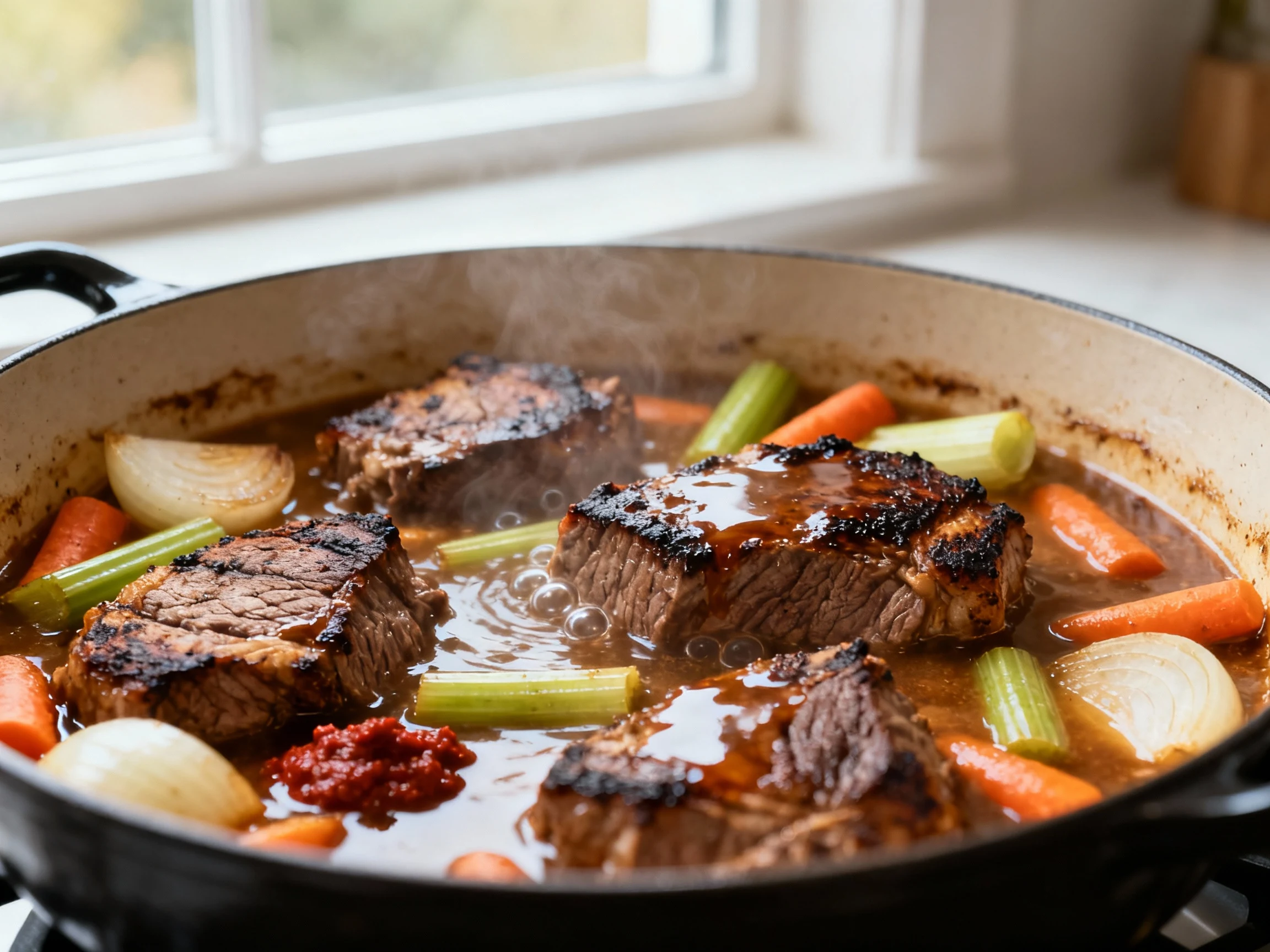
- Fast comfort: Deep, slow-cooked flavor in about 90 minutes, not half a day.
- One pot, less mess: Brown, simmer, serve—fewer dishes, fewer excuses.
- Budget-friendly: Chuck roast transforms into tender bites without fancy cuts.
- Thick, glossy gravy: Tomato paste, flour, and a quick reduction deliver that spoon-coating finish.
- Flexible veggies: Carrots, potatoes, celery, peas—swap in what you’ve got without drama.
- Hearty and nutritious: Protein-rich with fiber and micronutrients from a rainbow of veg.
- Leftovers get better: Flavors deepen overnight; tomorrow’s lunch basically cooks itself.
- Kid-approved, adult-respected: Familiar flavors with enough depth to impress the food snobs (you know who).
- Scalable: Double it for a crowd; it still behaves in a big Dutch oven.
What You’ll Need (Ingredients)
Serves: 6 generous bowls
Prep Time: 20 minutes | Cook Time: 70–80 minutes | Total: ~90–100 minutes
- 2 pounds beef chuck, cut into 1.5-inch cubes (trim big pockets of fat)
- 2 teaspoons kosher salt, divided (start with 1.5 tsp on beef, adjust later)
- 1 teaspoon black pepper, freshly ground
- 2–3 tablespoons neutral oil (canola, avocado, or grapeseed)
- 1 large yellow onion, diced
- 3 carrots, peeled and cut into chunky pieces
- 2 celery ribs, chopped
- 4 garlic cloves, minced
- 2 tablespoons tomato paste
- 3 tablespoons all-purpose flour (use cornstarch for GF; see notes)
- 1 cup dry red wine (optional; sub with broth if needed)
- 4 cups beef broth (low sodium preferred)
- 2 tablespoons Worcestershire sauce
- 2 bay leaves
- 1 teaspoon dried thyme (or 3 tsp fresh)
- 1 pound waxy potatoes (Yukon gold), cut into 1.5-inch pieces
- 1 cup frozen peas (no need to thaw)
- 1 tablespoon red wine vinegar or lemon juice (to brighten at the end)
- Fresh parsley, chopped, for garnish
- Optional umami boosters: 1 tablespoon soy sauce or 1 teaspoon fish sauce
Let’s Get Cooking – Instructions
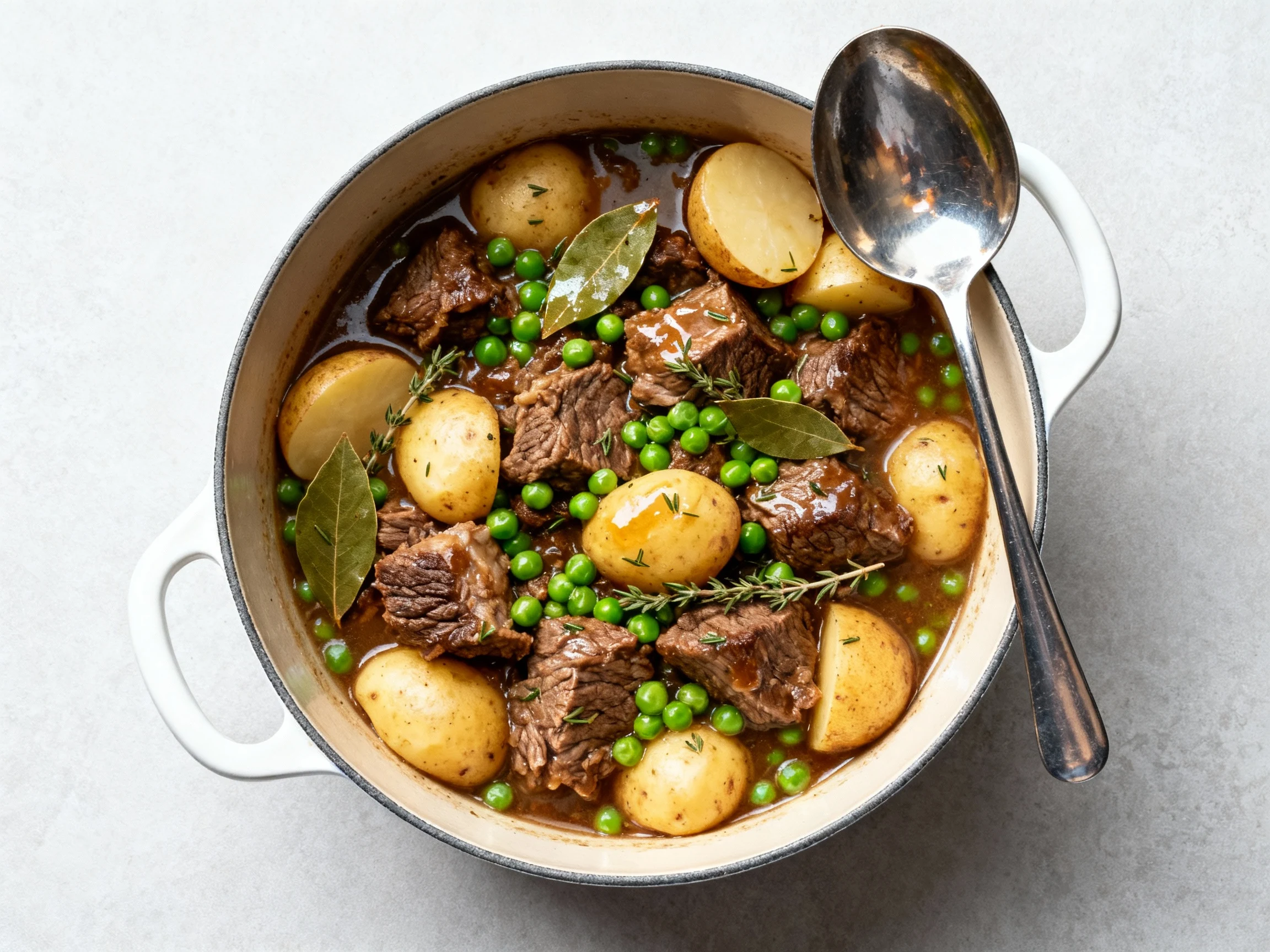
- Pat the beef dry and season. Blot cubes with paper towels. Toss with 1.5 teaspoons salt and the black pepper. Dry beef browns; wet beef steams—there’s a difference.
- Heat the pot. Set a heavy Dutch oven over medium-high heat. Add 1 tablespoon oil and let it shimmer. If it doesn’t sizzle on contact, it’s not hot enough.
- Sear in batches. Add a single layer of beef without crowding. Sear 3–4 minutes per side until well-browned. Transfer to a plate. Repeat with remaining beef, adding oil as needed. Brown = flavor, and no, you can’t fake it.
- Soften the aromatics. Reduce heat to medium. Add onion, carrot, and celery with a pinch of salt. Cook 5–7 minutes, stirring, until onions turn translucent and veggies get a little color.
- Bloom garlic and tomato paste. Stir in garlic and tomato paste. Cook 1–2 minutes until the paste darkens slightly. That’s your caramelization insurance.
- Add the flour. Sprinkle flour over the veggies and stir for 60 seconds. This builds the roux that thickens your gravy later.
- Deglaze like you mean it. Pour in the wine (or 1 cup broth). Scrape up every browned bit from the bottom; that’s pure flavor gold. Simmer 2–3 minutes to reduce slightly.
- Add liquids and seasonings. Return beef (and juices) to the pot. Pour in remaining broth, Worcestershire, bay leaves, thyme, and optional soy/fish sauce. Stir, bring to a simmer.
- Simmer steady, not furious. Lower heat to maintain a gentle simmer. Cover and cook 45 minutes, stirring occasionally. You want bubbles that bloop, not a rolling boil.
- Add the potatoes. Stir in potatoes, re-cover, and cook another 20–25 minutes until the beef is fork-tender and potatoes are soft at the edges.
- Finish and thicken. Remove lid and let it simmer 5–10 minutes to reduce until the broth looks glossy and lightly thick. If it’s too thin, simmer a bit longer; too thick, splash in broth or water.
- Stir in peas and brighten. Add frozen peas and cook 2 minutes. Kill the heat, then stir in vinegar or lemon juice. That tiny acid pop makes flavors sing (science, not magic).
- Taste and adjust. Add more salt and pepper if needed. Rich foods love salt; keep seasoning until the stew tastes vivid, not muddled.
- Serve. Ladle into warm bowls and finish with chopped parsley. Pair with crusty bread or buttered noodles if you’re feeling extra.
Keeping It Fresh
Cool it fast. Spread leftovers in shallow containers so they move through the danger zone quickly. Thick stews stay hot longer than you think.
Store smart. Refrigerate up to 4 days in an airtight container. For longer storage, freeze up to 3 months. Label dates—future you appreciates past you being organized, IMO.
- Reheat on the stovetop: Add a splash of water or broth and warm over medium, stirring until hot.
- Microwave: 60–90 seconds per bowl, stirring halfway. Loosen with a bit of liquid if needed.
- From frozen: Thaw overnight in the fridge or gently reheat straight from frozen on low with extra broth.
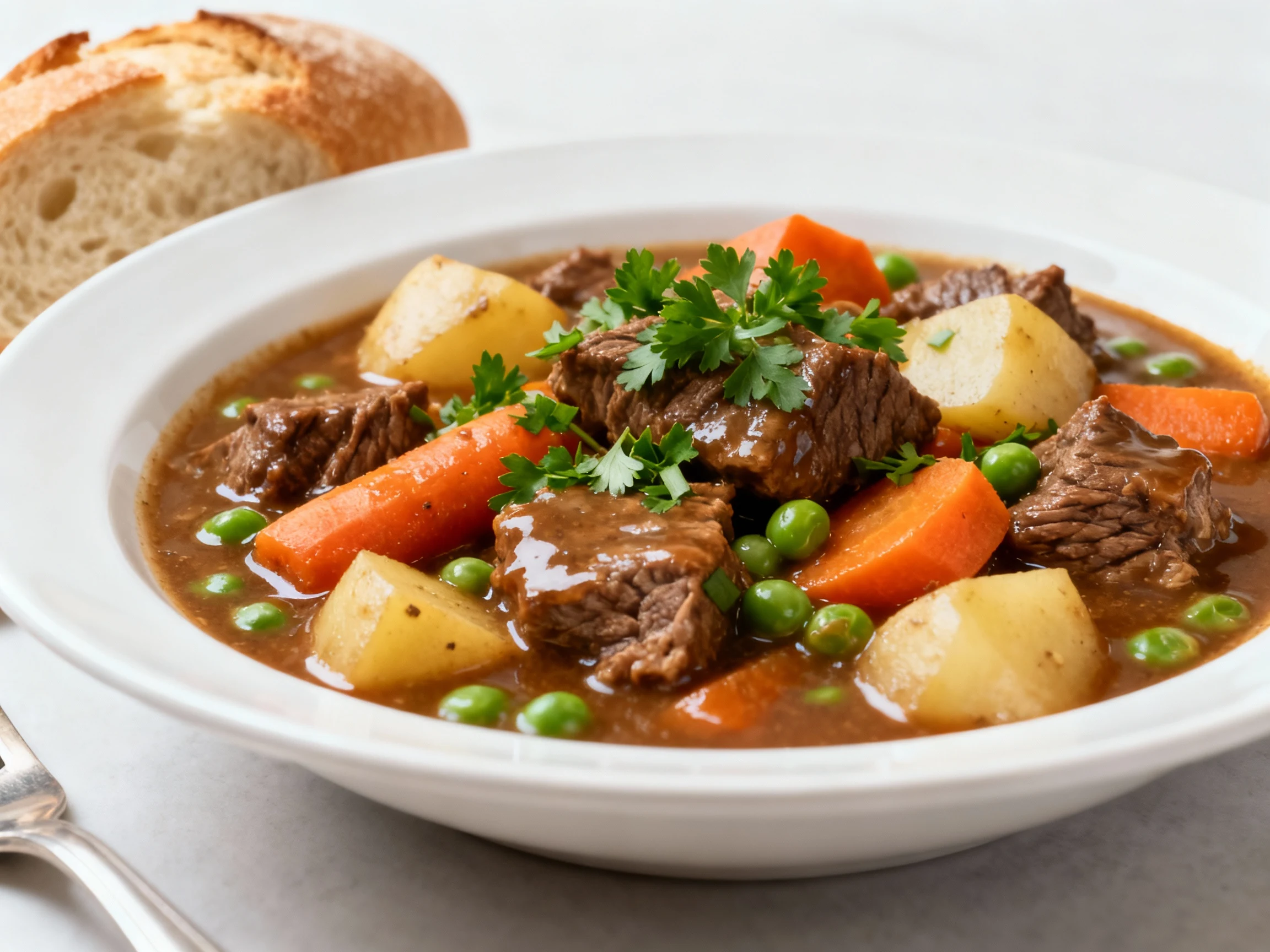
Benefits of This Recipe
- Time-saver: Sub-2-hour strategy for slow-cooked flavor.
- High protein, high satisfaction: Keeps you full and focused.
- One-pot cleanup: Fewer dishes means more couch time.
- Pantry-powered: Tomato paste, broth, and Worcestershire do heavy lifting.
- Beginner-friendly: Clear steps. Visual cues. No chef jargon.
- Make-ahead friendly: Flavor gets better after a night in the fridge.
- Scalable for crowds: Double in a 7–8 qt Dutch oven and you’re the hero.
What Not to Do
- Don’t crowd the pot when searing. Crowding steams the beef and kills browning. Work in batches.
- Don’t skip drying the beef. Moisture fights against sear; paper towels are your friend.
- Don’t boil aggressively. Hard boiling tightens meat fibers. Gentle simmer keeps beef tender.
- Don’t add potatoes too early. They’ll turn mushy and ghost your texture.
- Don’t forget acidity at the end. Without it, flavors taste flat and heavy. A splash of vinegar fixes that.
- Don’t over-salt early. Liquids reduce as they simmer; finish seasoning at the end for control.
- Don’t use lean cuts. Skip sirloin or round; chuck has connective tissue that turns silky.
- Don’t panic about wine. No wine? Use broth. No one’s calling the stew police.
Different Ways to Make This
- Mushroom boost: Add 8 oz cremini with the onions for umami and meaty texture (great if you stretch the beef).
- Herb-forward: Swap thyme for rosemary and finish with fresh dill or tarragon for a brighter herb profile.
- Smoky twist: Add 1 teaspoon smoked paprika and a diced strip of bacon at the start for depth.
- Tomato-rich: Add a 14.5 oz can of fire-roasted tomatoes and reduce broth by 1 cup.
- Gluten-free: Use 2 tablespoons cornstarch slurry (2 tbsp cornstarch + 2 tbsp water) in Step 11 instead of flour.
- Low-sodium: Use unsalted broth, skip soy/fish sauce, and season carefully at the end.
- Low-carb swap: Replace potatoes with turnips or rutabaga; reduce simmer at the end to keep texture.
- Heat lovers: Add 1/2 teaspoon crushed red pepper or a minced jalapeño with the aromatics.
FAQ
What cut of beef works best and why?
Use chuck roast because it has fat and connective tissue that break down into tender, juicy bites. Lean cuts like round dry out and turn chewy. You want a cut that loves a simmer and rewards your patience with rich flavor.
Do I need to use red wine?
No. Wine adds acidity and complexity, but broth does the job just fine. If you skip wine, consider a teaspoon of soy sauce or a splash of balsamic to bring back some depth.
How do I make the stew thicker?
Let it simmer uncovered at the end to naturally reduce and concentrate. For a quicker fix, mash a few potato chunks into the pot or stir in a cornstarch slurry (1 tablespoon cornstarch + 1 tablespoon water) and simmer 2 minutes.
Can I make this gluten-free?
Yes. Skip the flour in Step 6 and thicken with a cornstarch slurry near the end. Everything else is naturally gluten-free if you use GF-certified broth and Worcestershire (FYI, check labels).
How long do leftovers last?
Refrigerate for up to 4 days or freeze for up to 3 months. Reheat gently with a splash of water or broth to keep the texture lush. TBH, day-two bowls often taste even better.
Can I use frozen vegetables?
Yes. Frozen peas are perfect; add in the last minutes so they stay bright. If using frozen carrots or mixed veg, add them during the final 10–15 minutes so they don’t go mushy.
Why sear the meat in batches?
Searing creates a Maillard crust that drives flavor. Overcrowding drops the pot’s temperature and steams the beef instead. Batch searing keeps the heat high and the flavor big—worth the extra few minutes, IMO.
Can I make it ahead for a party?
Absolutely. Cook the day before, chill, and reheat gently on the day. Add a small splash of broth, adjust salt, and finish with fresh parsley and a touch of acid to wake it up.
My Take
This stew punches way above its weight. The browning step and the little moves—tomato paste, Worcestershire, and that final splash of acid—turn humble ingredients into something you’ll brag about. It’s practical, forgiving, and built for real life, not a photo shoot. When you want maximum comfort with minimum hassle, this pot delivers every single time.
Printable Recipe Card
Want just the essential recipe details without scrolling through the article? Get our printable recipe card with just the ingredients and instructions.