Brown Sugar Salmon Recipes for Weeknights That Actually Wow
Quick, caramelized salmon with pantry staples—ready in 20 minutes and beginner-proof for weeknights or casual dinner.
Here’s the dinner move that delivers ridiculous flavor with barely any effort: salmon, a little sugar, a hot oven, and boom—restaurant vibes at home. You’ll get a glossy, sweet-savory crust that tastes like you spent all afternoon reducing a fancy glaze (you didn’t). Minimal ingredients, straightforward steps, and a five-star finish that convinces even picky eaters. Want proof? Set a timer for 20 minutes and watch plates come back clean. If you crave big wins with small inputs, this one’s your new default.
Why This Recipe Works

Brown sugar doesn’t just sweeten; it balances salmon’s richness and helps create a lacquered surface. The molasses in brown sugar adds depth, so the glaze tastes complex without a dozen ingredients. Paired with salty soy and bright lemon, the result hits sweet, salty, tangy, and smoky all at once.
High heat equals fast cook times and tender fish. We go hot to set the crust and keep the interior juicy. A quick broil at the end caramelizes the topping and gives you that sticky, golden finish. Translation: maximum flavor in minimal minutes.
We lean on pantry staples. Soy sauce, Dijon, garlic, and smoked paprika play flavor amplifiers. You won’t need to hunt down anything exotic; the combo you already own will do the heavy lifting. FYI, this also means consistent results no matter where you shop.
Finally, the method forgives a little timing error. Salmon stays moist thanks to its natural fats and a brief rest after cooking. Even if you overshoot by a minute (it happens), the glaze keeps things tender—not chalky.
What Goes Into This Recipe – Ingredients
- 4 salmon fillets (6 oz each), skin-on, preferably center-cut
- 1/3 cup light brown sugar, packed
- 3 tbsp soy sauce (use low-sodium if sensitive to salt)
- 1 tbsp Dijon mustard (adds tang and emulsifies)
- 2–3 garlic cloves, finely minced
- 1 tsp lemon zest + 1 tbsp lemon juice
- 1 tsp smoked paprika (or sweet paprika if you prefer)
- 1/2 tsp black pepper, freshly ground
- 3/4 to 1 tsp kosher salt (adjust based on soy)
- 1 tbsp olive oil (plus more for the pan)
- 1 tbsp unsalted butter (optional, for gloss)
- 1/4 tsp red pepper flakes (optional heat)
- Lemon wedges, for serving
- Chopped scallions or parsley, for garnish
The Method – Instructions

- Preheat hot: Set oven to 425°F. Line a sheet pan with foil and lightly oil it. For extra insurance, lay a piece of parchment over the foil.
- Prep the fish: Pat salmon dry on all sides. Season lightly with salt and pepper. Dry surfaces help the glaze stick and caramelize.
- Make the glaze: In a bowl, whisk brown sugar, soy sauce, Dijon, garlic, lemon zest/juice, smoked paprika, red pepper flakes, and olive oil until syrupy. If it looks too thick, add 1–2 tsp water.
- Optional quick marinate (10–15 min): Brush some glaze over the salmon and let it sit at room temp. This boosts flavor without turning the fish mushy.
- Roast: Place salmon skin-side down on the pan. Spoon or brush on most of the remaining glaze. Roast for 8–10 minutes depending on thickness (aim for 120–125°F internal temp for medium).
- Broil for caramelization: Switch to broil for 1–2 minutes to blister and lacquer the top. Watch closely; sugar can go from golden to “uh-oh” fast.
- Finish with butter (optional): Melt 1 tbsp butter in a small pan with any leftover glaze, then spoon over salmon for a glossy, steakhouse-style finish.
- Rest: Let salmon sit for 3 minutes. Resting redistributes juices so each bite stays moist.
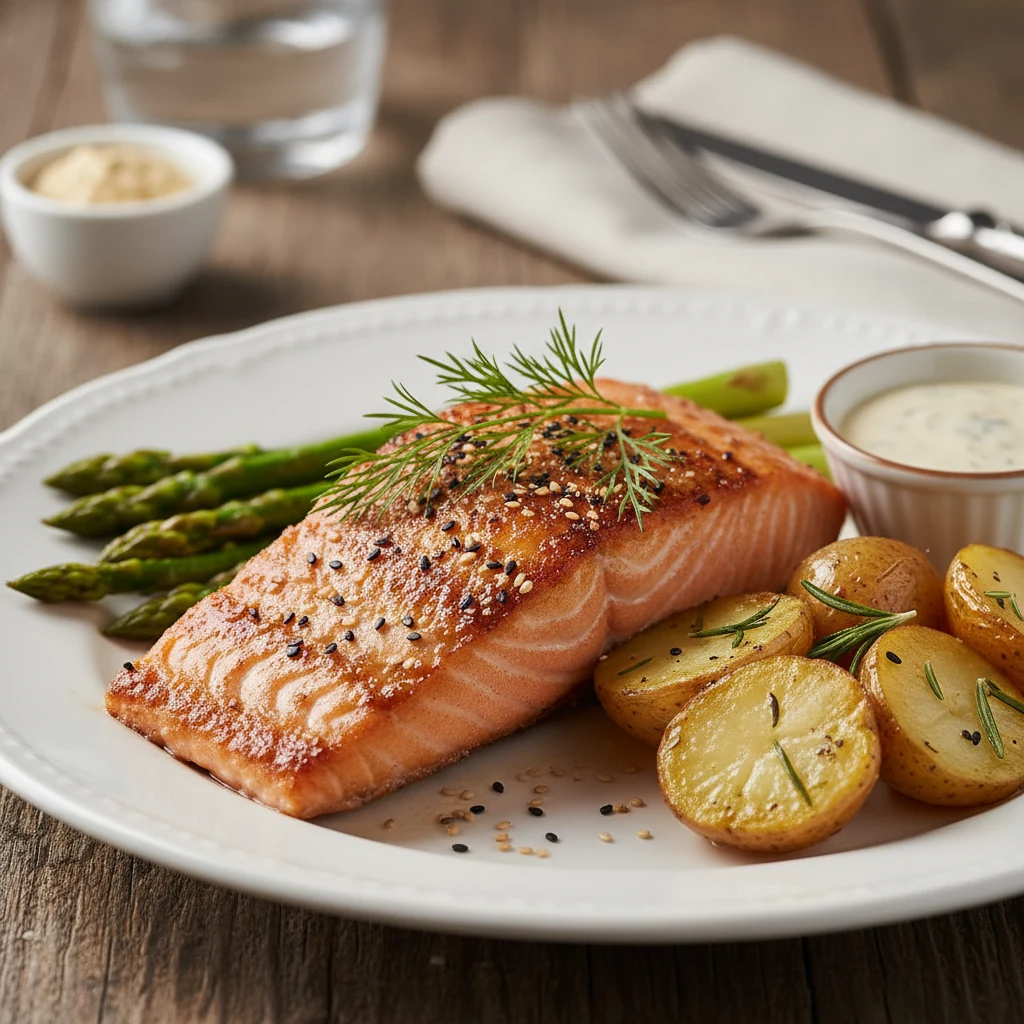
- Garnish and serve: Shower with chopped scallions/parsley and squeeze fresh lemon. Serve with rice, roasted veggies, or a crisp salad.
- Air fryer option: 400°F for 7–9 minutes, then 1 minute more if needed. Line basket with parchment to simplify cleanup.
- Pan-seared option: Sear skin-side down in a hot, oiled skillet for 5–6 minutes. Flip, brush glaze, and cook 1–2 minutes more. Remove, then reduce leftover glaze in the pan for 30–60 seconds and spoon over the fish.
- Grill option: Use a well-oiled grill and a fish basket or foil. Medium-high, covered, 6–8 minutes, brushing glaze frequently. Don’t fight the fish; when it releases, it’s ready to flip.
Preservation Guide
Fridge: Store cooled salmon in an airtight container for 3–4 days. Keep any extra glaze separate. Reheat gently to avoid drying.
Freezer (cooked): Wrap individual portions tightly and freeze up to 2 months. Thaw overnight in the fridge. Reheat covered at 275°F for 10–12 minutes or microwave at 50% power in short bursts.
Freezer (prep ahead): Combine glaze in a jar and refrigerate for 1 week, or freeze for 3 months. You can also freeze raw salmon portions; thaw, pat dry, then glaze and cook fresh.
Reheating tips: Add a splash of water or lemon, cover loosely, and warm low and slow. High heat punishes leftover salmon. Don’t be that person.
Health Benefits
- Omega-3 powerhouse: Salmon delivers EPA and DHA, which support heart health, brain function, and reduce inflammation.
- High-quality protein: Each portion packs substantial protein to keep you full and support muscle repair.
- Balanced sweetness: The sugar forms a glaze but stays reasonable per serving. Pair with fibrous sides to keep things steady.
- Micronutrients: Salmon brings B vitamins, selenium, and potassium; lemon and herbs add antioxidants without extra calories.
- Smart cooking method: Quick roasting preserves moisture and nutrients, and we use minimal oil for a lighter plate.
Avoid These Mistakes
- Overcooking the fish: Pull at 120–125°F for juicy, flaky salmon. It continues to rise a few degrees off heat.
- Skipping the pat-dry step: Water blocks caramelization. Dry fish equals a better crust. Simple as that.
- Too much sugar on direct heat: A mountain of sugar under the broiler becomes smoke drama. Use the amount listed and watch closely.
- Using thin tail pieces: They overcook faster than the thick center-cut. If that’s all you have, adjust time down or fold the thin end under.
- Crowding the pan: Steam kills crust. Give fillets space so hot air can circulate.
- Cold salmon straight from the fridge: Let it sit out 10–15 minutes. Ice-cold fish cooks unevenly.
- Not tasting the glaze: Soy brands vary. Taste, then tweak salt, lemon, or heat. Your palate is the boss.
- Forgetting the rest: A short rest keeps juices where they belong—inside the fish, not on your cutting board.
Alternatives
- Maple or honey swap: Use 1/3 cup maple syrup or 1/4 cup honey. Honey browns faster; lower the broil time.
- Gluten-free: Use tamari or coconut aminos. Reduce sugar slightly if using coconut aminos (they’re sweeter).
- Miso twist: Whisk in 1 tbsp white miso for umami and cut the salt by a pinch. It’s a game-changer.
- Spice route: Swap paprika/red flakes for Cajun seasoning, chipotle powder, or chili-lime blends for a different kick.
- Citrus variations: Orange zest/juice makes a rounder, slightly sweeter glaze. Lime drives a tangier profile—great with cilantro.
- Different fish: Try arctic char or steelhead trout. They cook similarly and love a sweet-savory glaze.
- Air fryer one-pan meal: Add trimmed green beans or asparagus beneath a rack; the veggies catch drips and turn delicious. Cook 8–10 minutes total.
- Low-sugar approach: Cut brown sugar to 2 tbsp and add 1 tsp balsamic for tangy balance, IMO a nice weeknight tweak.
FAQ
How long should I bake salmon at 425°F?
Most 6-oz fillets take 8–10 minutes at 425°F, depending on thickness and starting temperature. Start checking at minute 7 if your fish is thin. Aim for 120–125°F in the center for medium. The broiler step adds 1–2 minutes for caramelization.
Should I keep the skin on?
Yes—skin acts like a built-in shield and helps the fillet hold together. It also crisps nicely on a hot pan. If you prefer skinless, reduce cook time by 1 minute and be extra gentle when moving the fish. Remove the skin after cooking if you don’t want to eat it.
Can I use frozen salmon?
Absolutely. Thaw overnight in the fridge or quickly under cold running water while the fish stays sealed. Pat very dry before glazing. Frozen fillets can release more moisture, so the dry step matters even more.
Light vs. dark brown sugar—does it matter?
Both work. Light brown sugar gives a cleaner caramel note, while dark brown sugar adds deeper molasses flavor and browns faster. If using dark, watch the broiler closely to prevent burning. Taste your glaze and adjust lemon for balance.
How do I know it’s done without a thermometer?
Press the thickest part gently; it should feel springy and separate in moist flakes. The center turns from translucent to slightly opaque with a glossy sheen. If it looks dry or chalky, you went too far—pull a minute earlier next time. FYI, a cheap instant-read thermometer is worth it.
Can I make it spicy?
Yes. Add 1/2–1 tsp sriracha or gochujang to the glaze, or bump the red pepper flakes. Chipotle powder introduces heat plus smoky depth. Remember, sugar amplifies heat, so start conservative and scale up.
What sides go best with this salmon?
Think contrast: garlicky green beans, roasted broccoli, coconut rice, lemony couscous, or a cabbage slaw with lime. A bitter green salad (arugula, radicchio) cuts through richness. Roasted sweet potatoes make it cozy and satisfying. Quick pickled cucumbers add crunch and brightness.
Can I grill it without sticking?
Yes, but prep matters. Oil the grill grates well and heat to medium-high. Use a fish basket or foil for security, and wait until the fish releases naturally before flipping. Brush on glaze near the end to avoid flare-ups.
Is this kid-friendly?
Usually a hit. The sweet-savory glaze tastes familiar and not fishy. If heat-sensitive, skip the red pepper flakes and keep the lemon on the side. You can also reduce soy slightly and add a touch more Dijon for tang over salt.
Can I meal-prep this?
Yes. Cook slightly under, cool, and store in portions with extra glaze on the side. Reheat gently at low temp or enjoy cold over salads or grain bowls. Cold, glazed salmon with crunchy veggies and rice is elite lunch energy, TBH.
What if I only have a whole side of salmon?
No problem. Roast the whole side at 425°F for 12–16 minutes depending on thickness, then broil briefly. Score shallow diamonds into the flesh for better glaze coverage. Slice into portions after resting.
Wrapping Up
This is the weeknight blueprint: simple ingredients, fast cook, high return. The glaze brings sweet-savory crunch, the oven locks in moisture, and you get dinner that feels special without breaking a sweat.
Once you’ve nailed the base, riff freely—maple, miso, Cajun spice, air fryer. Build your rotation, keep the wins coming, and let your oven do the heavy lifting. Dinner hero status unlocked.
Printable Recipe Card
Want just the essential recipe details without scrolling through the article? Get our printable recipe card with just the ingredients and instructions.