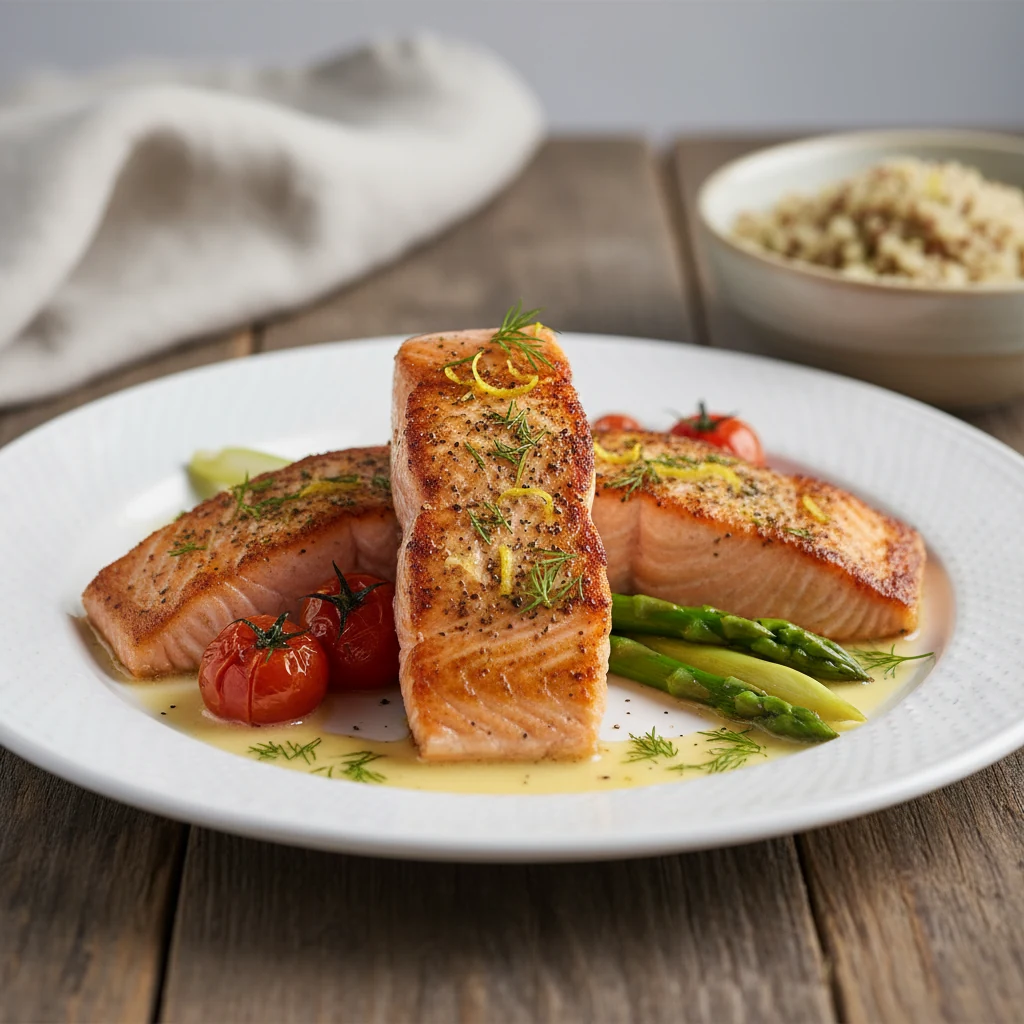
Salmon Recipes Pan Seared That Deliver Crispy-skin Magic
Crispy skin, juicy center, weeknight timing—master heat, seasoning, and butter basting for restaurant results with minimal cleanup.
You’re 12 minutes away from a plate that looks like a $30 entrée and eats like a cheat code. The secret isn’t a secret; it’s heat management, dry surfaces, and a little butter swagger. Most people overcook salmon and drown it in sauce to hide the crime—today, you’ll do the opposite. Crisp, glass-like skin. Moist, tender center. And yes, the smoke alarm can stay silent if you follow the plan.
What Makes This Recipe Awesome
- Crispy skin every time: We start dry, press the fillet, and use the right heat so the skin shatters, not sogs.
- Juicy, not chalky: Cook mostly on the skin side and finish quick, so the center stays buttery and moist.
- Weeknight-fast: From pan to plate in 12–15 minutes, including a quick rest and a squeeze of lemon.
- Minimal tools: One skillet, one spatula, and a paper towel. FYI: you don’t need a chef’s arsenal to cook like one.
- Restaurant flavors: Butter basting with garlic and herbs gives that steakhouse finish—no white tablecloth required.
Shopping List – Ingredients
- Salmon fillets, skin-on: 4 pieces, 5–6 oz (140–170 g) each; center-cut for even thickness
- Kosher salt: 1 to 1 1/4 tsp (for seasoning; adjust to taste)
- Freshly ground black pepper: 1/2 tsp
- Neutral high-smoke oil: 2 tbsp (avocado, canola, grapeseed)
- Unsalted butter: 2 tbsp
- Garlic: 2 cloves, lightly smashed
- Fresh thyme or dill: 2–3 sprigs
- Lemon: 1, for zest and juicy finishing squeeze
- Optional boosters: Pinch of smoked paprika, chili flakes, or a drizzle of honey
- To serve (optional): Flaky salt, quick side salad, roasted potatoes, or steamed rice
Instructions
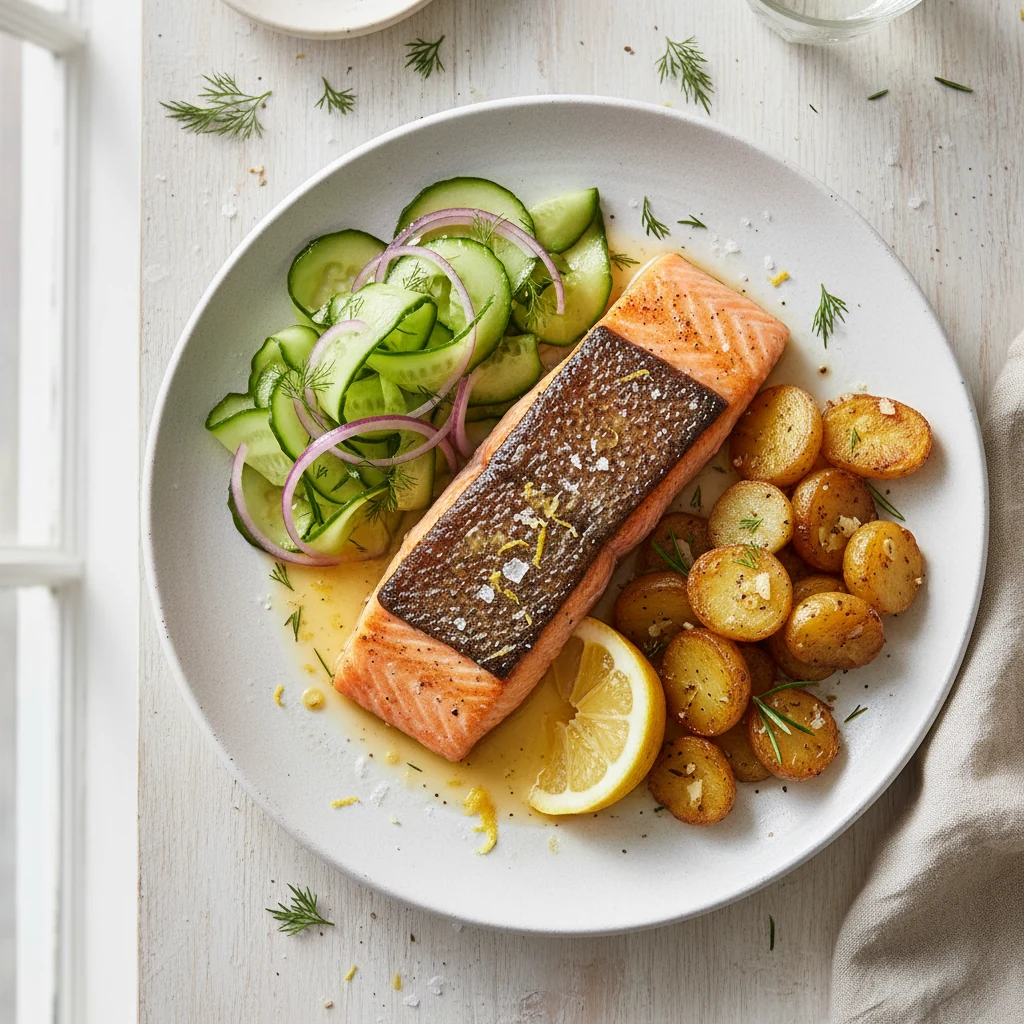
- Dry and season. Pat salmon very dry on all sides with paper towels. Season both sides with kosher salt and black pepper. For extra-crispy skin, lightly score the skin in 3–4 shallow slashes (don’t cut into the flesh).
- Optional quick chill. Place the seasoned salmon uncovered in the fridge for 10–20 minutes. This air-dries the skin further for better crisping.
- Preheat the pan. Set a heavy skillet (stainless steel or cast iron) over medium-high heat for 2–3 minutes. Add oil and heat until it shimmers and flows like water.
- Lay the salmon skin-side down. Place fillets in the pan away from you to avoid splatter. Immediately press gently with a spatula for 20–30 seconds so the skin stays flat and makes full contact.
- Control the sizzle. You want steady sizzling, not smoke-show chaos. If the oil smokes, reduce to medium. If it’s silent, increase a notch.
- Cook mostly skin-side down. Let the salmon cook undisturbed until it’s 70–80% done, about 5–7 minutes depending on thickness. Watch the sides: the color will turn opaque from bottom to top.
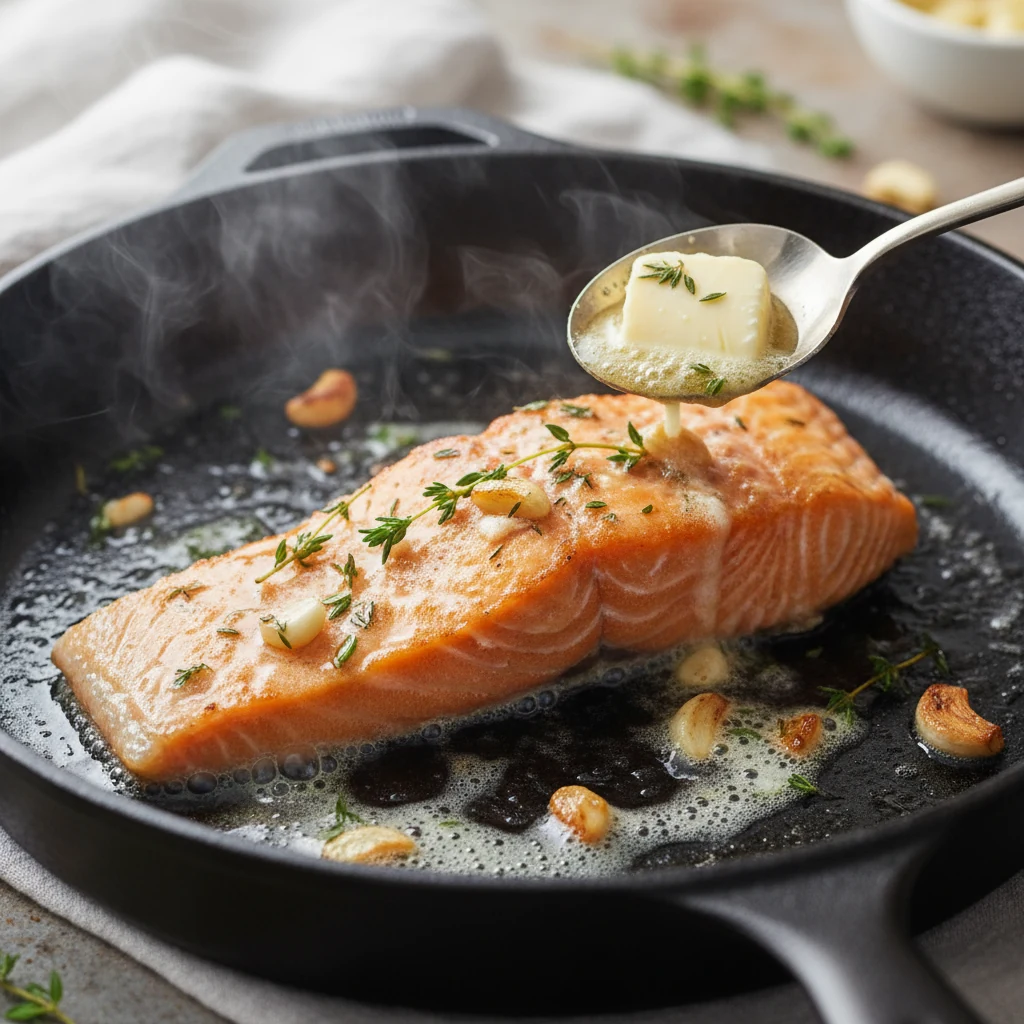
- Butter baste. Drop in butter, garlic, and herbs. Tilt the pan and spoon the foaming butter over the top for 30–45 seconds. This adds flavor and finishes the top gently.
- Flip briefly. Flip the fillets and cook flesh-side down for 30–60 seconds to kiss the pan and pick up color. Do not overstay—your goal is gloss, not overcooked.
- Check doneness. Target internal temp of 120–125°F (49–52°C) for medium-rare, 130°F (54°C) for medium. No thermometer? Gently press: it should yield slightly and flake at the edges.
- Rest and finish. Transfer to a warm plate. Rest 2–3 minutes. Zest a little lemon over the top, squeeze fresh juice, and sprinkle flaky salt if you’ve got it.
- Serve. Pair with a simple salad, sautéed greens, or roasted potatoes. Spoon any pan butter over the fish because you earned it.
Preservation Guide
Fridge: Store cooked salmon in an airtight container for up to 3–4 days. Keep any buttery pan juices separate and spoon on after reheating.
Reheat (gentle wins): Warm in a nonstick or stainless skillet over low heat with a splash of water or stock, covered, 3–5 minutes. Or use a 275°F (135°C) oven for 10–12 minutes. Microwaves are convenient but can dry the fish; if you must, cover and use 50% power in short bursts.
Enjoy cold: Flake leftover salmon into salads, grain bowls, or wraps. Cold salmon with lemony yogurt? A+ lunch.
Freeze: Wrap tightly and freeze for up to 2 months. Thaw overnight in the fridge. Re-crisp the skin in a lightly oiled pan over medium heat for 1–2 minutes, but understand it won’t be quite day-one crisp (still delicious).
Benefits of This Recipe
- High protein, healthy fats: Salmon brings omega-3s, B vitamins, and a satisfying macro profile. IMO, it’s the weeknight MVP.
- Fast and flexible: A core technique you can dress up with any spice blend, sauce, or herb you love.
- Low cleanup: One pan, minimal mess, big payoff. Your sink will thank you.
- Reliable results: Master the heat cues once and you’ll stop guessing and start winning dinner, consistently.
Common Mistakes to Avoid
- Starting with wet fish: Moisture kills crisp. Pat very dry, and give the skin some air-time in the fridge if possible.
- Cold pan syndrome: If the oil isn’t shimmering, the skin glues to the pan. Preheat properly and be patient.
- Overcrowding: Too many fillets tank the temperature and steam the fish. Cook in batches if needed.
- Fidgeting: Don’t poke and prod. Let the skin build a crust so it naturally releases.
- All fire, no control: Inferno heat scorches the outside and leaves the inside raw. Adjust to maintain a confident sizzle, not a smoke bomb. FYI: turn on your vent first.
- Skipping the rest: Those 2–3 minutes after cooking lock in juices and calm the carryover heat. Don’t rush.
Recipe Variations
- Lemon-Pepper Classic: Add 1 tsp lemon zest and 1 tsp cracked pepper before cooking; finish with extra zest and a lemon squeeze.
- Maple-Soy Glaze: Whisk 2 tbsp maple syrup + 1 tbsp soy + 1 tsp rice vinegar. Brush on after the butter baste and cook 20–30 seconds to gloss.
- Cajun Heat: Rub 2 tsp Cajun seasoning onto the flesh. Sear as directed; finish with a butter baste and a lime wedge.
- Miso-Ginger: Mix 1 tbsp white miso + 1 tsp grated ginger + 1 tsp mirin + 1 tsp sesame oil. Spread thinly on flesh side post-sear; warm briefly.
- Creamy Garlic Pan Sauce: Remove salmon; add 1/3 cup cream, 1 tsp Dijon, and a splash of stock. Simmer 1–2 minutes, season, and spoon over.
- Pesto-Crusted: After searing skin-side down, smear 1 tbsp pesto on top and broil 1–2 minutes till fragrant (oven-safe pan only).
- Harissa Yogurt: Combine 1/3 cup Greek yogurt + 1–2 tsp harissa + lemon juice. Serve dolloped over or alongside for tangy heat.
FAQ
Should I cook salmon with the skin on or off?
Skin on. It acts like a built-in heat shield, keeps the flesh moist, and gets crispy when you do it right. You can peel it off after cooking if you’re not into it, but most people end up eating it once they taste that crunch.
What’s the best pan for searing salmon?
A well-heated stainless steel or cast-iron skillet is ideal. Nonstick can work, but you’ll sacrifice a bit of browning. The key is proper preheat and enough oil to create a thin, even film.
How do I know when the salmon is done without a thermometer?
Watch the side of the fillet: the opaque color rises as it cooks. Press gently—if it yields with a little bounce and starts to flake at the edges, you’re around medium. Pull it earlier rather than later; carryover heat will finish the job.
Why do my fillets curl and the skin buckle?
Cold fillets hitting hot oil will contract. Press gently with a spatula for the first 20–30 seconds to keep full skin contact. Scoring the skin with shallow slashes also helps prevent curling.
What oil should I use for high-heat searing?
Use a neutral, high-smoke-point oil like avocado, canola, or grapeseed. Save extra-virgin olive oil for finishing; it smokes sooner and can taste bitter if overheated.
Farmed or wild salmon—do I need to change anything?
Wild salmon tends to be leaner and cooks faster. Keep a closer eye and aim for the lower end of the time range. Farmed fish is usually thicker and a bit fattier, so it’s more forgiving.
Can I use frozen salmon?
Yes—thaw it overnight in the fridge, then pat very dry. If you’re cooking from frozen, use a lower heat and a lid for a few minutes to thaw, then finish uncovered to crisp the skin.
What’s that white stuff that leaks out of salmon?
That’s albumin, a harmless protein. It shows up more with high heat or overcooking. Minimize it by not over-searing, pulling at 120–125°F for medium-rare, and resting the fish.
How do I keep the smoke alarm from screaming?
Preheat properly, use high-smoke-point oil, and control the flame. Turn on the vent, crack a window, and don’t crowd the pan. If it’s smoking aggressively, drop the heat a notch—flavor beats drama.
What should I serve with pan-seared salmon?
Bright and simple sides win: lemony greens, cucumber-dill salad, blistered asparagus, herb rice, or crispy potatoes. If you want sauce, go light—herb yogurt, salsa verde, or a squeeze of lemon keeps the fish the star.
Wrapping Up
This method puts you in the driver’s seat: high-impact flavor, minimal fuss, repeatable success. You’ll master heat control, respect the skin, and time the flip like a pro. The result? Crunch on the outside, buttery flakes inside, and zero “I overcooked it” remorse. Keep this technique in your back pocket and watch your weeknights level up, one perfect sear at a time.
Printable Recipe Card
Want just the essential recipe details without scrolling through the article? Get our printable recipe card with just the ingredients and instructions.