Balsamic Chicken Recipes That Turn Weeknights Into Wow
Fast, flavor-packed dinners in 30 minutes or less, with juicy chicken, glossy glaze, and pantry staples you already own.
You know those meals that look restaurant-level but take less time than scrolling a menu? This is one of them. Sweet-tangy balsamic, garlicky herb vibes, and a sticky glaze that hugs every bite—your skillet becomes a profit center for flavor. The best part: you probably have everything you need right now. If weeknights feel chaotic, this dish creates calm, confidence, and serious applause. Bring an appetite and a napkin—you will need both.
What Makes This Recipe So Good
- 30-minute payoff: From prep to plate fast, so you crush dinner without sacrificing your evening.
- Sticky-sweet-savory balance: Balsamic, honey, garlic, and Dijon team up for a glossy glaze that tastes expensive.
- Zero-fuss technique: Sear, simmer, finish. You don’t need culinary school—just a hot pan and a little attention.
- Flexible protein: Works with thighs or breasts, bone-in or boneless, even drumsticks if that’s what you’ve got.
- Pantry-powered: Uses kitchen staples—balsamic, soy, garlic, mustard—so you skip the store run. FYI, fresh herbs are a bonus, not a requirement.
- Meal-prep friendly: The flavor deepens after a night in the fridge, and the glaze rewarms like a champ.
What Goes Into This Recipe – Ingredients
- Chicken: 1.75–2 lbs boneless, skinless chicken thighs (or 4 large breasts, pounded to even thickness)
- Kosher salt + black pepper: For seasoning
- Olive oil: 1 tablespoon, for searing
- Balsamic vinegar: 1/3 cup (choose a mid-range bottle, not the super-aged syrup)
- Honey or maple syrup: 2 tablespoons (honey gives more shine)
- Dijon mustard: 1 tablespoon
- Soy sauce or tamari (GF): 1 tablespoon, for umami and color
- Garlic: 4 cloves, minced (or 1 teaspoon garlic powder in a pinch)
- Fresh rosemary or thyme: 1 tablespoon finely chopped (or 1 teaspoon dried)
- Red pepper flakes: 1/4 teaspoon, optional for a gentle kick
- Low-sodium chicken broth: 1/3 cup (for the pan sauce)
- Unsalted butter: 1 tablespoon (for silkiness, optional but recommended)
- Grape tomatoes (optional): 1 cup, halved, for a bursty finish
- Fresh basil (optional): A handful, shredded for serving
Let’s Get Cooking – Instructions
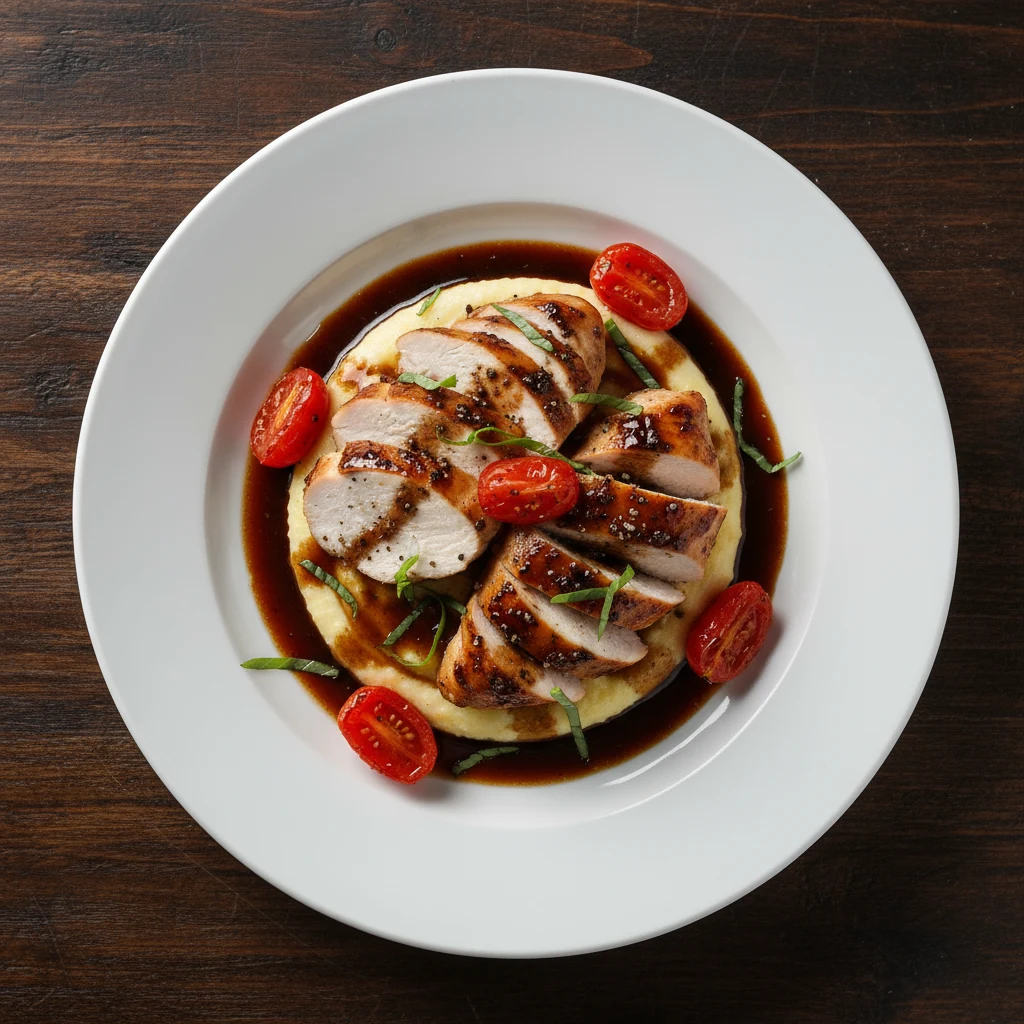
- Prep the chicken: Pat chicken dry. Season both sides with 1.5 teaspoons kosher salt and 1/2 teaspoon black pepper. If using breasts, lightly pound the thick end so everything cooks evenly.
- Whisk the marinade/glaze: In a bowl, combine balsamic, honey, Dijon, soy/tamari, garlic, rosemary/thyme, and red pepper flakes. Reserve 3 tablespoons of this mixture in a separate small bowl for later basting.
- Quick marinate (optional but clutch): Toss chicken with the remaining marinade and let it sit 15–30 minutes at room temp. If you’re rushing, skip to the next step—still great.
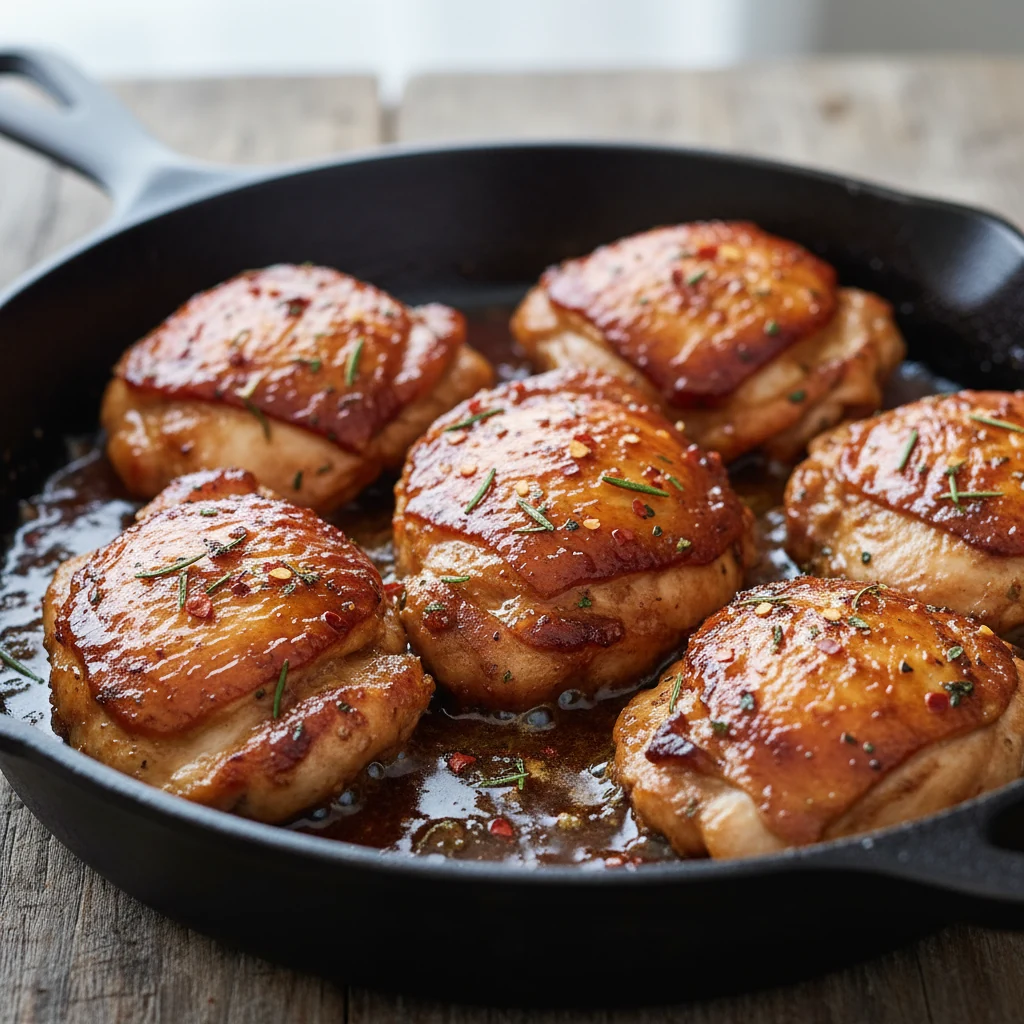
- Sear for crust: Heat a large skillet (stainless or cast iron) over medium-high. Add olive oil. When it shimmers, add chicken in a single layer. Sear 3–4 minutes per side until deeply browned. Don’t crowd the pan; work in batches if needed.
- Build the sauce: Reduce heat to medium. Pour in the chicken broth and scrape up the browned bits. Add the reserved marinade and any drippings. Simmer 3–5 minutes until the sauce thickens and glosses. Stir in butter for velvety finish.
- Optional oven finish: Want extra insurance? After searing, transfer chicken to a 400°F oven for 5–8 minutes (especially for thick breasts). Then return it to the pan sauce to coat.
- Tomato pop (optional): Stir in grape tomatoes during the last 2 minutes of simmering for juicy bursts and color.
- Coat and rest: Turn chicken in the sauce until lacquered and sticky. Rest off heat 5 minutes so juices redistribute. Taste the sauce and adjust salt/pepper as needed.
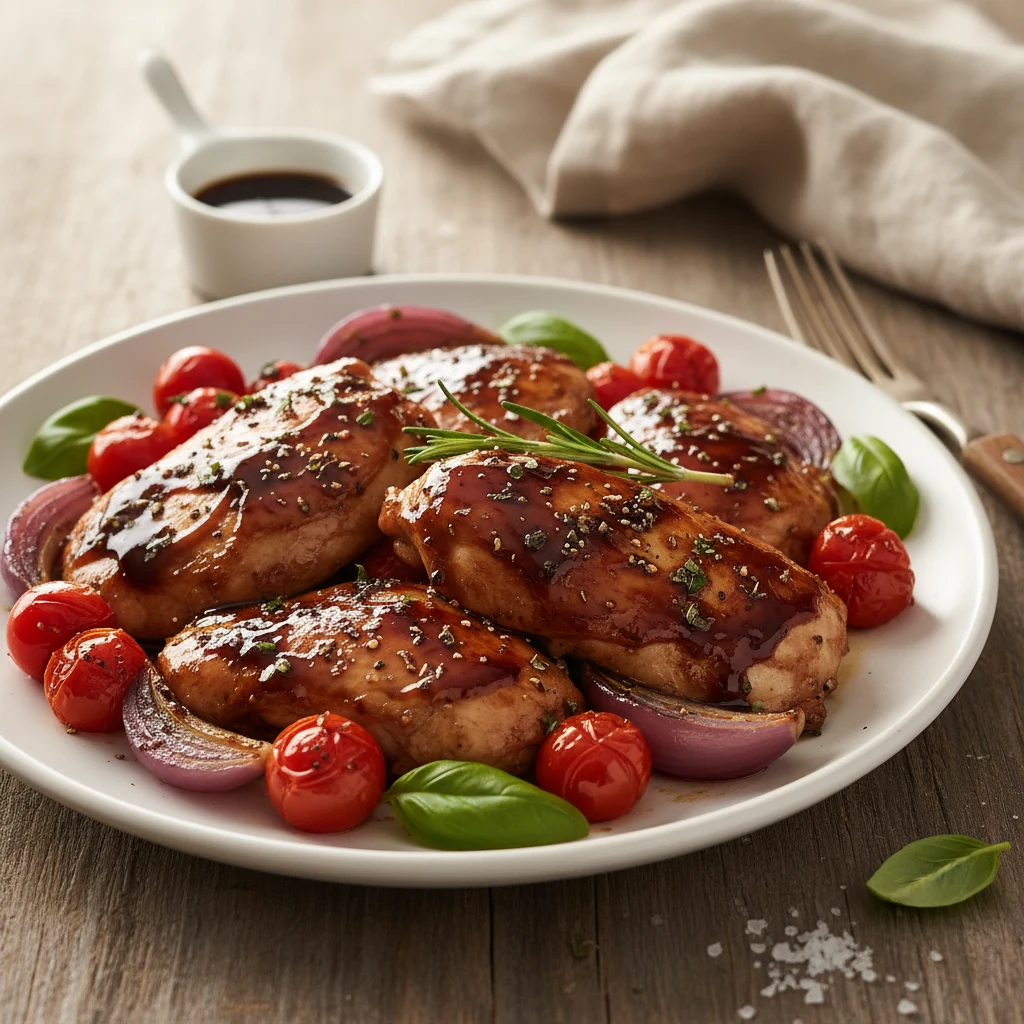
- Serve smart: Spoon extra glaze over the top. Shower with fresh basil. Pair with garlic mashed potatoes, polenta, or simple greens to catch every drop.
How to Store
- Fridge: Store cooled chicken with sauce in an airtight container for 3–4 days.
- Freezer: Freeze in portioned containers for up to 3 months. Thaw overnight in the fridge for best texture.
- Reheat: Gently warm on the stove over low heat with a splash of broth or water, covered, until hot. Microwave in 45-second bursts, stirring sauce so it doesn’t separate.
- Meal prep tip: Keep grains and veggies in separate containers so you can reheat the chicken with its glaze without overcooking sides.
Nutritional Perks
High-protein, moderate-calorie: One serving (about 6 oz cooked chicken with glaze) lands around 320–380 calories and 35–40g protein, depending on thigh vs. breast. Using breasts lowers fat; using thighs boosts juiciness and iron.
Smarter sweetness: A couple tablespoons of honey balance the vinegar without turning this into dessert. The glaze clings, so you use less than you think.
Micronutrient edge: Herbs add antioxidants; tomatoes (if used) add vitamin C and lycopene. Balsamic brings polyphenols that support gut and heart health—no, it’s not a miracle, but it helps.
Sodium control: Choose low-sodium broth and taste before salting. You can slash the soy/tamari to 2 teaspoons and still keep depth.
Common Mistakes to Avoid
- Skipping the dry-off: Wet chicken won’t brown; it will steam. Pat it dry like you mean it.
- Piling the pan: Overcrowding kills sear. Work in batches and give your chicken room to breathe.
- Cranking the heat too high: Balsamic and honey can burn. After searing, drop to medium and let the sauce thicken, not scorch.
- Overcooking breasts: Pull at 160°F and rest to 165°F. For thighs, aim for 175–185°F for tender, not chewy.
- Over-reducing the glaze: If it looks like tar, it will taste bitter. Stop when it coats the back of a spoon and shines.
- Using ultra-aged balsamic: Save the $50 bottle. You want regular, good-quality vinegar, not syrup that overwhelms the sauce.
Recipe Variations
- Caprese-Style: Add fresh mozzarella slices and basil at the end; top with cherry tomatoes blistered in the pan. Serve over arugula.
- Sheet Pan Supper: Toss chicken, halved Brussels sprouts, and red onion with the marinade. Roast at 425°F for 20–25 minutes until caramelized, then glaze.
- Grill It: Marinate 30 minutes. Grill over medium-high, 5–6 minutes per side, basting with reserved marinade. Simmer extra marinade to a safe boil for 2 minutes before brushing.
- Creamy Twist: Whisk 1/4 cup light cream into the reduced glaze for a velvety sauce. Great with pasta or cauliflower mash.
- Mediterranean Bowl: Serve over lemony farro with cucumbers, olives, and feta. Finish with a squeeze of lemon and extra black pepper.
- Sweet-Free: Skip honey; reduce balsamic a bit longer and finish with 1 teaspoon butter for balance. Not as sticky, still stellar.
- Spicy Honey Heat: Add 1 teaspoon Calabrian chili paste or hot honey for a punchy kick. IMO, fantastic with thighs.
FAQ
Can I use chicken breasts instead of thighs?
Absolutely. Pound them to even thickness, sear hard, and finish to 160°F before resting. Reduce sauce heat to medium so the glaze doesn’t burn while the centers cook through.
Is balsamic glaze the same as balsamic vinegar?
Not quite. Glaze is vinegar reduced with sweeteners until syrupy. This recipe effectively makes its own glaze, so start with regular balsamic vinegar and let the pan do the magic.
How long should I marinate the chicken?
Fifteen to thirty minutes is plenty because the vinegar is assertive. Marinating longer than 2 hours can start to change the chicken’s texture. If timing’s tight, skip the marinate and rely on the pan sauce—still delicious.
Can I grill this recipe?
Yes. Grill over medium-high, 5–6 minutes per side, basting with boiled marinade. Finish by tossing the grilled chicken in a small saucepan of reduced glaze for that signature sheen.
How do I make it gluten-free?
Use tamari or coconut aminos instead of soy sauce, and confirm your mustard and broth are certified GF. Everything else here is naturally gluten-free.
What sides go best with this?
Creamy polenta, garlic mashed potatoes, lemony rice, or a peppery arugula salad. You want something that soaks up the sauce without fighting it.
Can I make this ahead?
Yes. Cook fully, cool, and store in the sauce. Reheat gently with a splash of broth. The flavor actually deepens on day two—big meal-prep win, TBH.
What if my sauce got too thick?
Whisk in a tablespoon or two of warm broth or water over low heat until it loosens and shines again. Taste and adjust salt afterward.
The Bottom Line
When you want big flavor without big effort, this balsamic chicken delivers. The method is simple, the ingredients are everyday, and the payoff is “whoa, did you make this?” energy. Keep the pan hot, the sauce glossy, and the sides simple. Dinner rush solved, applause optional—but likely.
Printable Recipe Card
Want just the essential recipe details without scrolling through the article? Get our printable recipe card with just the ingredients and instructions.