Mustard Chicken Recipes That Win Weeknights and Weekends
Weeknight-easy, crowd-pleasing mustard chicken with sear, grill, and bake options—plus smart swaps for dairy-free and gluten-free cooks.
If your chicken tastes like cardboard, you paid too much for it. This flavor move flips the script: minimal prep, one skillet, restaurant-level sauce that makes rice and veggies suddenly exciting. We stack two mustards, a quick sear, and a silky finish so every bite hits sweet, tangy, and savory notes. You’ll get a reliable 30-minute route or a low-lift oven path—both crush busy nights. Want proof? Plate it once and watch the table go quiet.
What Makes This Special
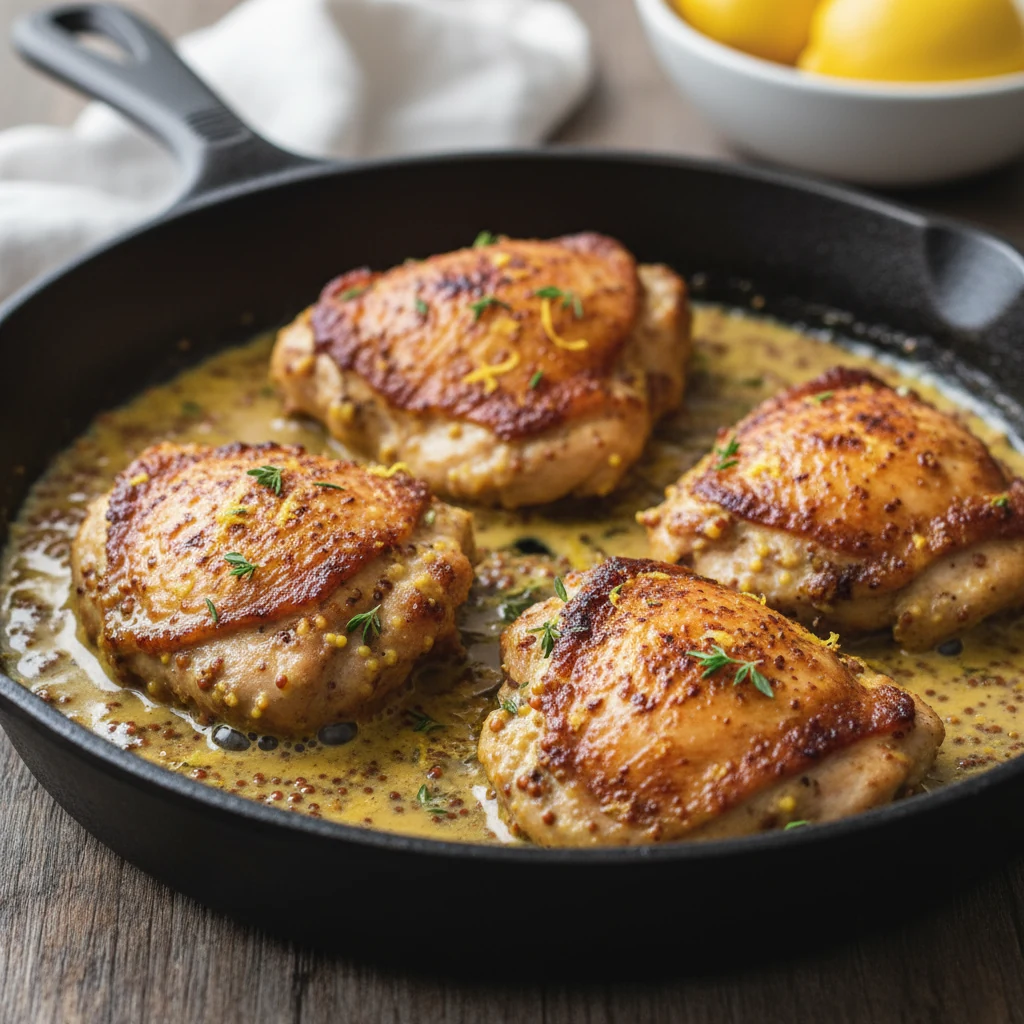
This isn’t just “chicken with mustard slapped on.” It’s a calibrated combo of Dijon for creaminess, whole-grain mustard for texture, and a touch of sweetness to balance the acidity. The sauce clings to the chicken without turning gluey, and the pan fond turns into liquid gold.
You get multiple lanes: pan-seared for speed, baked for hands-off cooking, and a grill-friendly version when you want charcoal vibes. It’s flexible enough for thighs or breasts, dairy or dairy-free, wine or broth, honey or maple. No one gets left behind.
It also scales effortlessly. Double the sauce, cook two pans, and you’ll feed a crowd without breaking a sweat (or your budget). FYI, the leftovers taste even better tomorrow.
What Goes Into This Recipe – Ingredients
Serves: 4 • Total time: 30–40 minutes (pan) or 35–45 minutes (oven)
- 2 pounds boneless, skinless chicken thighs or breasts
- 2 teaspoons kosher salt, divided (adjust to taste)
- 1 teaspoon freshly ground black pepper, divided
- 1 teaspoon smoked paprika (optional, for color and depth)
- 3 tablespoons Dijon mustard
- 1 tablespoon whole-grain mustard
- 1–2 tablespoons honey (or maple syrup), to taste
- 3 garlic cloves, minced
- 2 teaspoons fresh thyme leaves (or 1 teaspoon dried)
- 1 tablespoon lemon zest + 2 tablespoons lemon juice
- 1/2 cup low-sodium chicken broth (or dry white wine for deglazing)
- 1/3 cup heavy cream (or 1/3 cup full-fat Greek yogurt for lighter)
- 2 tablespoons olive oil
- 1 tablespoon unsalted butter (optional, for searing)
- 1 teaspoon cornstarch mixed with 1 tablespoon cold water (optional, for thickening)
- 2 tablespoons chopped fresh parsley (for garnish)
Key tools: Large skillet (10–12 inch), tongs, instant-read thermometer.
How to Make It – Instructions
- Pat the chicken dry. Season both sides with 1.5 teaspoons salt, 3/4 teaspoon pepper, and the smoked paprika. Dry chicken equals better browning—science and deliciousness agree.
- Make the flavor base: In a bowl, whisk Dijon, whole-grain mustard, honey, garlic, thyme, lemon zest, and 1 tablespoon lemon juice. Stir in 1/4 cup broth. Reserve 2 tablespoons of this mixture for later.
- Coat and rest: Toss the chicken with the remaining mustard mixture. Let it sit 15–30 minutes while you chop parsley and set the table. You’re marinating for flavor, not forever.
- Heat the skillet: Add olive oil (and butter, if using) to a large skillet over medium-high heat. When it shimmers, it’s showtime.
- Sear the chicken: Place the chicken in a single layer. Sear until deeply golden, about 3–4 minutes per side. Don’t crowd the pan—give it room so it browns instead of steams.
- Deglaze: Reduce heat to medium. Add the remaining 1/4 cup broth (or a splash of wine). Scrape up the browned bits. That fond? Pure flavor money.
- Build the sauce: Stir in the reserved 2 tablespoons mustard mixture and the remaining 1 tablespoon lemon juice. Simmer 1–2 minutes to meld.
- Finish creamy: For cream, pour in the heavy cream and simmer gently until slightly thickened, 2–3 minutes. For yogurt, take the pan off heat and whisk in the yogurt to avoid curdling. If you want it thicker, add the cornstarch slurry and simmer 30–60 seconds. Do not boil the dairy hard—keep it gentle.
- Return the chicken: Nestle it into the sauce and simmer on low until the thickest piece hits 165°F on an instant-read thermometer. Expect 2–5 minutes depending on thickness.
- Taste and adjust: Add a pinch of salt, a crank of pepper, or a squeeze more lemon if needed. Balance is the move here.
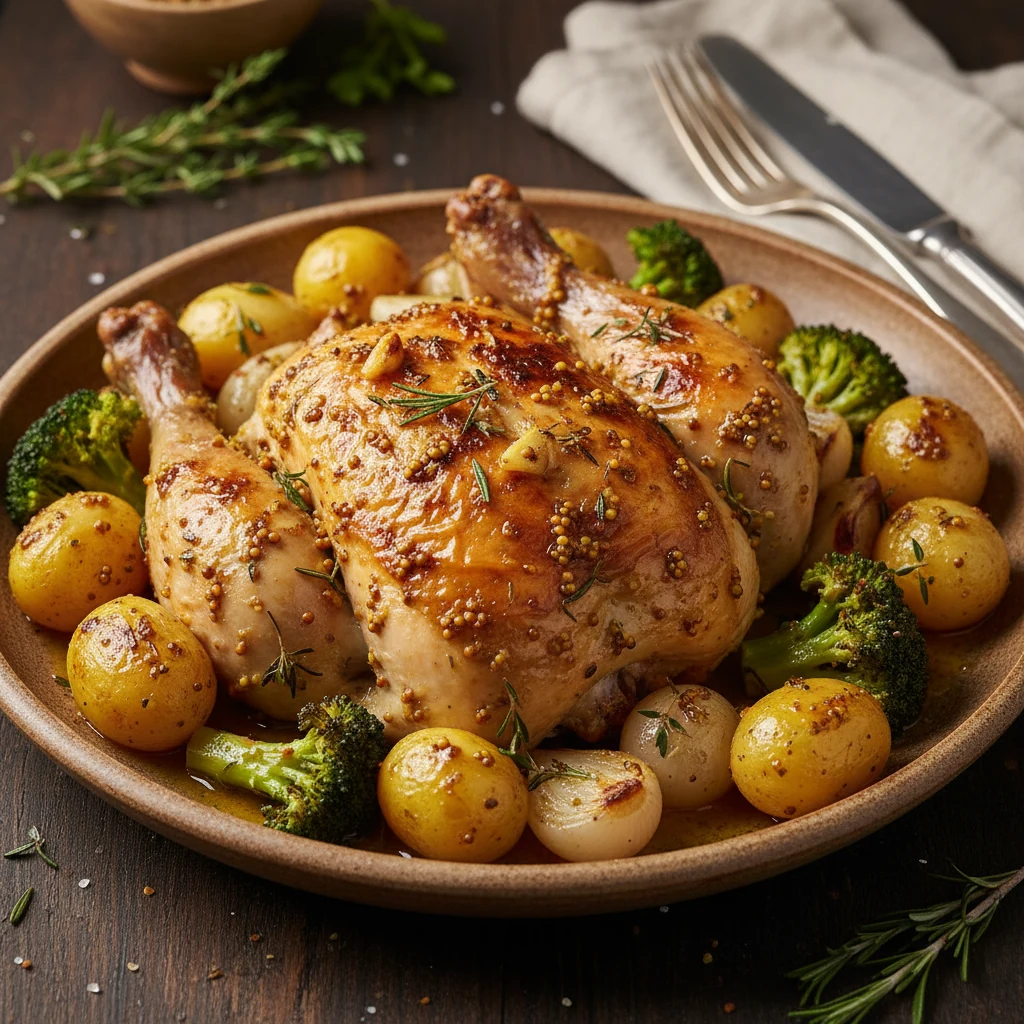
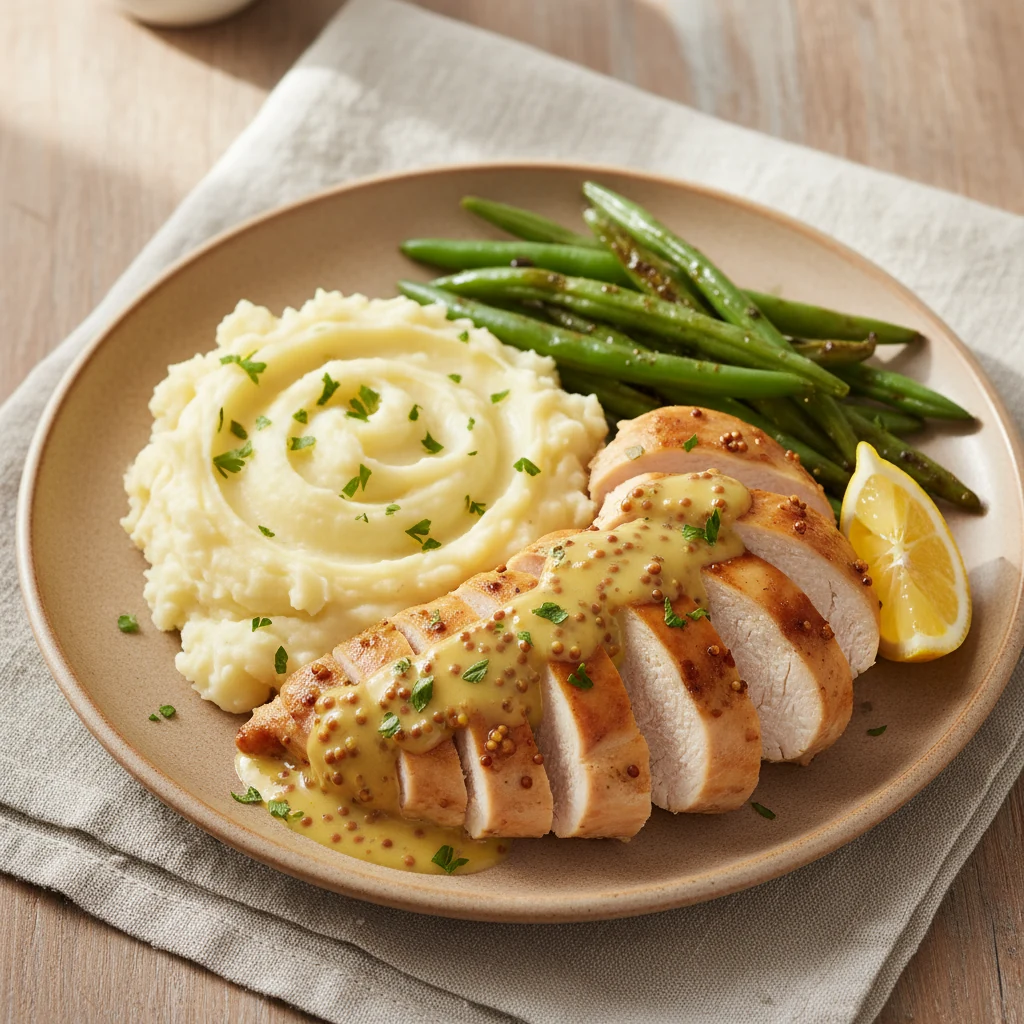
- Rest and garnish: Turn off heat, rest 3 minutes, then shower with parsley. Serve with mashed potatoes, rice, or roasted veg. Sauce every bite like you mean it.
- Oven option: After step 3, arrange chicken on a sheet pan, roast at 425°F for 15–20 minutes (to 165°F). Meanwhile, make the sauce in a skillet (steps 6–8). Spoon sauce over roasted chicken.
Pro tip: Breasts vary in thickness; pound them to an even 3/4-inch thickness for reliable cooking.
Storage Instructions
Cool leftovers, then store in an airtight container in the fridge for 3–4 days. The sauce thickens as it chills—lucky you. Reheat gently on the stove over low heat, adding a splash of broth or water to loosen.
To freeze, chill completely and store up to 2–3 months. Thaw overnight in the fridge. Rewarm slowly; whisk in a spoon of cream or a knob of butter to restore the sauce’s sheen. If it separates a bit, a brief whisk usually brings it back.
Why This is Good for You
Chicken brings lean protein that keeps you full without a calorie bomb. Mustard adds huge flavor with minimal fat and sugar, so you rely less on heavy sauces. Lemon and thyme deliver antioxidants and brightness without sodium overload.
Use Greek yogurt instead of cream for a lighter sauce with extra protein and probiotics. Swap breasts for thighs if you want more iron and juiciness—variety wins. Pair with fiber-rich sides like roasted broccoli or farro to round out the plate. IMO, this is the kind of “healthy” that still tastes reckless.
Avoid These Mistakes
- Skipping the pat-dry step: Wet chicken refuses to brown. Paper towels earn their keep.
- Overcrowding the pan: Steam kills crust. Sear in batches if needed.
- Boiling dairy hard: Aggressive heat can split cream or yogurt. Gentle simmer, not a hot tub party.
- Adding yogurt too early: Stir it in off heat to avoid curdling. Trust the process.
- Under-seasoning: Mustard is bold, but salt unlocks everything. Taste, adjust, repeat.
- Ignoring internal temp: Use a thermometer. 165°F keeps it safe and juicy, not guess-and-stress.
- Throwing away the fond: Those browned bits are your sauce’s secret stash of flavor.
- Marinating for hours in acid: Lemon can make chicken mealy if you go long. Cap it at 30–60 minutes.
- Using only one mustard: The Dijon + whole-grain combo creates body and texture. One-note sauces get boring fast.
- Cold pan sear: Start with a properly hot pan or you’ll never get that golden crust.
Alternatives
- Dairy-free: Skip cream and yogurt. Add 1 tablespoon olive oil and an extra 2 tablespoons broth, then reduce to thicken. Or finish with a splash of coconut milk for richness.
- Herb swap: Try tarragon for a French vibe, rosemary for woodsy warmth, or chives for a fresh bite.
- Sweetness swap: Maple syrup, agave, or a pinch of brown sugar. Or go fully savory and omit sweetener; just add a touch more lemon.
- Protein swap: Pork chops (sear 3–4 minutes per side; cook to 145°F), salmon (sear skin-on 3 minutes skin-side, finish in sauce; cook to 125–130°F), or firm tofu (press, sear, and sauce).
- Veg-forward: Roast cauliflower steaks or chickpeas, then smother with the sauce. You’ll be shocked how satisfying it is, IRL.
- Sheet pan path: Toss chicken with the mustard mixture and roast with halved baby potatoes and green beans at 425°F for 20–25 minutes. Warm the cream into a quick pan sauce on the side for drizzling.
- Heat level: Add 1/2 teaspoon red pepper flakes or a dash of hot sauce to the mustard mixture for a spicy kick.
- Mustard mix-up: Half Dijon, half whole grain is the base. Want sharper? Add 1 teaspoon spicy brown. Want milder? Add 1 teaspoon classic yellow.
FAQ
Should I use chicken thighs or breasts?
Both work. Thighs give you more forgiveness and richer flavor. Breasts cook faster but need an even thickness and a watchful eye. Either way, aim for 165°F and rest a few minutes for maximum juiciness.
Can I make this dairy-free?
Yes. Skip the cream or yogurt and increase broth by 2–3 tablespoons, then reduce the sauce until it lightly coats a spoon. Finish with a drizzle of olive oil for body. The mustard still does heavy flavor lifting.
Is yellow mustard okay here?
It’ll work, but it’s sharper and thinner. Blend it with Dijon (2:1 ratio) to keep body and balance. If you go all-yellow, you may want a splash more honey and cream to round it out.
How do I avoid curdling when using yogurt?
Temper and timing. Take the pan off heat, whisk in the yogurt, and keep the sauce below a simmer. If it looks shaky, whisk in a tablespoon of cream or butter to stabilize.
Can I meal-prep this?
Absolutely. Cook as written, cool, and store in individual containers with sauce for 3–4 days. Reheat gently with a splash of water or broth. It’s excellent over quinoa or couscous for grab-and-go lunches.
What sides pair best?
Mashed potatoes, buttered noodles, or rice to catch the sauce. For greens, try roasted broccoli, green beans, or a lemony arugula salad to mirror the citrus notes. Crusty bread is never wrong.
Can I grill the chicken?
Yes. Marinate as directed (no dairy on the grill), then grill over medium-high, 4–6 minutes per side to 165°F. Warm the sauce in a skillet and spoon over the grilled chicken. The smoky-char + tangy sauce combo slaps.
My sauce is too thin. How do I fix it?
Simmer 2–3 more minutes to reduce, or whisk in the cornstarch slurry and cook 30–60 seconds. Salt lightly at the end; reduction concentrates flavor and seasoning.
Do I have to add honey?
No. The honey balances acidity but isn’t mandatory. If you skip it, add 1–2 extra teaspoons of cream or a knob of butter to soften the edges, or go for an extra splash of broth and reduce a bit longer.
Wrapping Up
You’re looking at a fast path to bold flavor with simple steps and smart flexibility. Sear when you need speed; bake when you want hands-off. Keep the two-mustard move, respect the 165°F target, and treat the sauce like the treasure it is. The result? A repeat-worthy dinner that makes Tuesday feel like a win.
Printable Recipe Card
Want just the essential recipe details without scrolling through the article? Get our printable recipe card with just the ingredients and instructions.