Healthy Sourdough Recipes That Hit Flavor and Fuel
Gut-friendly, high-fiber bakes you can master at home: whole-grain loaves, crispy snacks, and protein pancakes—no fancy gear, just time.
You want bread that tastes bakery-level, fuels hard, and doesn’t do your stomach dirty. Good news: sourdough delivers on all three, and you can run this play from your kitchen today. Long ferment = better flavor and better digestion. Whole grains add fiber, protein, and actual nutrients instead of empty fluff. And the kicker? These recipes work whether you’re a weekend baker or a “make it at 6 a.m.” hustler.
What Makes This Recipe So Good
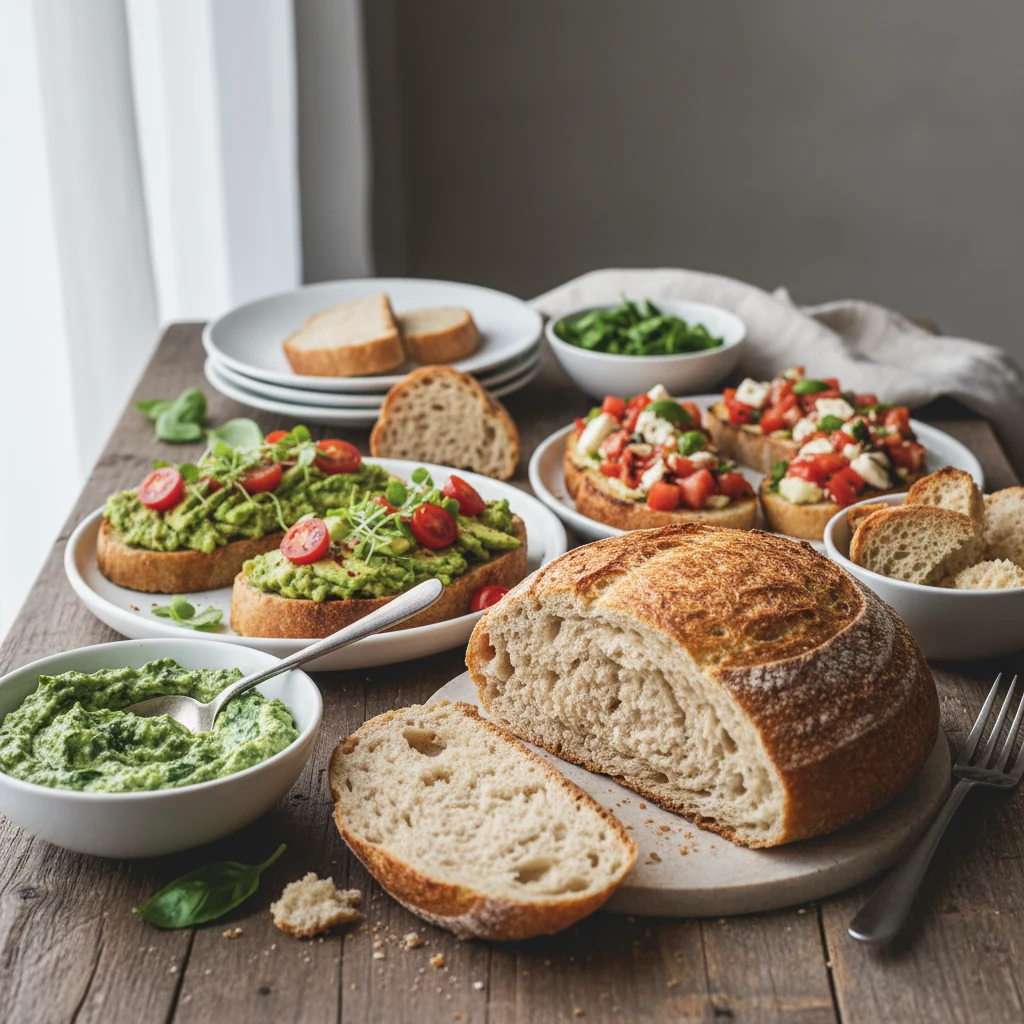
- Real nutrition, real flavor: Whole grains and long fermentation bring fiber, protein, and tangy complexity. No bland loaves allowed.
- Gut-friendly fermentation: Natural sourdough breaks down complex carbs and improves mineral absorption. Your gut will notice.
- Flexible lineup: One strong base dough, plus fast “discard” plays—pancakes, crackers, and pizza—so you never waste starter.
- Weeknight-friendly options: Use cold-proofing to control the schedule. Start in the evening, bake tomorrow. Easy.
- Better macros, less junk: Lower sugar, smarter carbs, more fiber. You’ll feel full without the food-coma tax.
What You’ll Need (Ingredients)
Everyday Whole-Grain Loaf (1 large boule)
- Active starter (100% hydration): 100 g (about 1/2 cup)
- Whole wheat flour: 300 g (2 1/2 cups)
- Bread flour: 200 g (1 2/3 cups)
- Water (warm, 80–85°F / 27–29°C): 360 g (1 1/2 cups)
- Fine sea salt: 10 g (1 3/4 tsp)
Seeded Power Loaf (adds crunch and omega-3s)
- Base dough: Use Everyday Whole-Grain Loaf quantities
- Mixed seeds (pumpkin, sunflower, sesame): 120 g (1 cup)
- Flaxseed, ground: 20 g (2 tbsp)
- Optional honey: 15 g (3/4 tbsp) for balance
Protein Pancakes (Discard)
- Sourdough discard: 240 g (1 cup)
- Eggs: 2 large
- Greek yogurt: 120 g (1/2 cup)
- Milk (or alt milk): 60–120 ml (1/4–1/2 cup), as needed
- Whole wheat flour: 60 g (1/2 cup)
- Baking soda: 1/2 tsp
- Salt: Pinch
- Optional add-ins: blueberries, cinnamon, vanilla
Crispy Discard Crackers
- Sourdough discard:
- Olive oil: 30 g (2 tbsp)
- Whole wheat flour: 60–90 g (1/2–3/4 cup), to form a dough
- Salt: 1/2 tsp
- Everything seasoning or herbs: 2–3 tsp
Veggie Sheet-Pan Pizza (Long Ferment)
- Active starter: 80 g (1/3 cup)
- Bread flour: 300 g (2 1/2 cups)
- Whole wheat flour: 100 g (3/4 cup)
- Water: 280 g (1 1/4 cups)
- Salt: 9 g (1 1/2 tsp)
- Olive oil: 2 tbsp (plus more for pan)
- Toppings: tomato sauce, mozzarella, roasted veggies, arugula
Instructions
Everyday Whole-Grain Loaf
- Mix (10 minutes): In a bowl, whisk water and starter. Add flours, mix until shaggy. Rest 30 minutes for autolyse.
- Salt & fold: Sprinkle salt, squeeze it into the dough. Do 3–4 sets of stretch-and-folds every 30 minutes.
- Bulk ferment: Let the dough rise at 75°F/24°C for 4–6 hours until 50–75% bigger, domed, and jiggly.
- Shape: Lightly flour the bench. Pre-shape into a round, rest 15 minutes. Final shape into a tight boule; place in a floured banneton.
- Cold proof: Cover and refrigerate 8–18 hours. This builds flavor and gives you control over timing.
- Preheat: Heat a Dutch oven at 475°F/245°C for 30 minutes. Score the loaf.
- Bake: Bake covered 20 minutes, then uncovered 20–25 minutes until deep brown and 208–210°F internal.
- Rest: Cool at least 1 hour before slicing. Yes, waiting is hard. Do it anyway.
Seeded Power Loaf
- Soak seeds: Cover seeds with hot water for 30 minutes. Drain well.
- Make base dough: Follow the Everyday Loaf through bulk ferment.
- Laminate seeds: At the last fold, spread dough into a rectangle and fold in seeds and flax. Keep them evenly distributed.
- Proof & bake: Cold proof and bake as above. Expect slightly denser crumb with satisfying crunch.
Protein Pancakes (Discard)
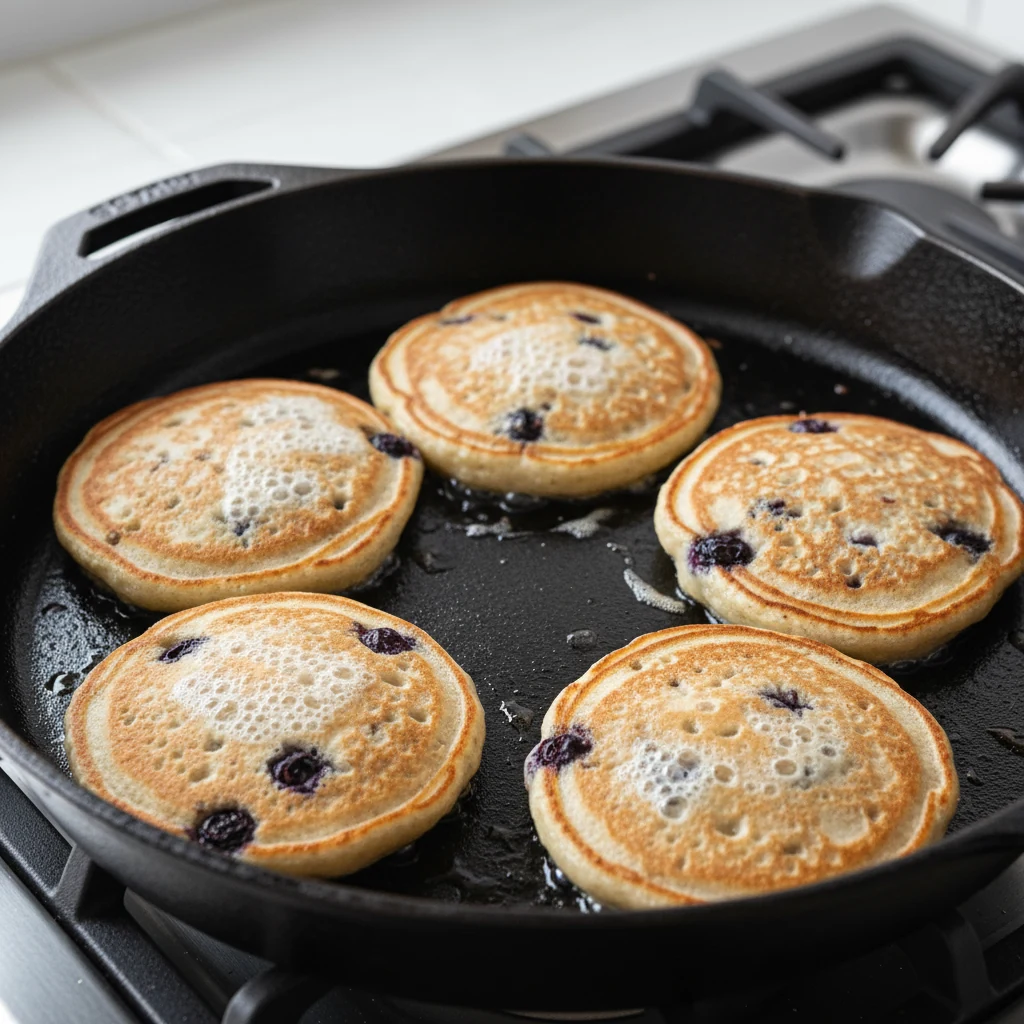
- Whisk: Mix discard, eggs, yogurt, milk, flour, baking soda, and salt. Adjust milk to a pourable batter.
- Rest: Let sit 10 minutes to let bubbles form. Add optional blueberries or cinnamon.
- Cook: Heat a lightly oiled skillet over medium. Scoop 1/4 cup batter, cook 2–3 minutes per side.
- Serve: Top with nut butter, berries, and a drizzle of maple. Good fuel, great taste.
Crispy Discard Crackers
- Mix: Combine discard, olive oil, salt, seasoning, and enough flour to form a soft dough.
- Roll: Roll thin between parchment sheets. Thinner = crispier. Aim for 1–2 mm.
- Cut & bake: Score into squares. Bake at 350°F/175°C 18–22 minutes until golden and crisp.
- Cool: Let them crisp fully on the tray. Fight the urge to eat them all at once.
Veggie Sheet-Pan Pizza
- Mix: Combine water, starter, flours, and salt. Rest 20 minutes. Add olive oil and knead 2 minutes.
- Bulk ferment: Rise at room temp 4–6 hours with 2–3 stretch-and-folds early on.
- Cold proof: Refrigerate 12–24 hours for deeper flavor.
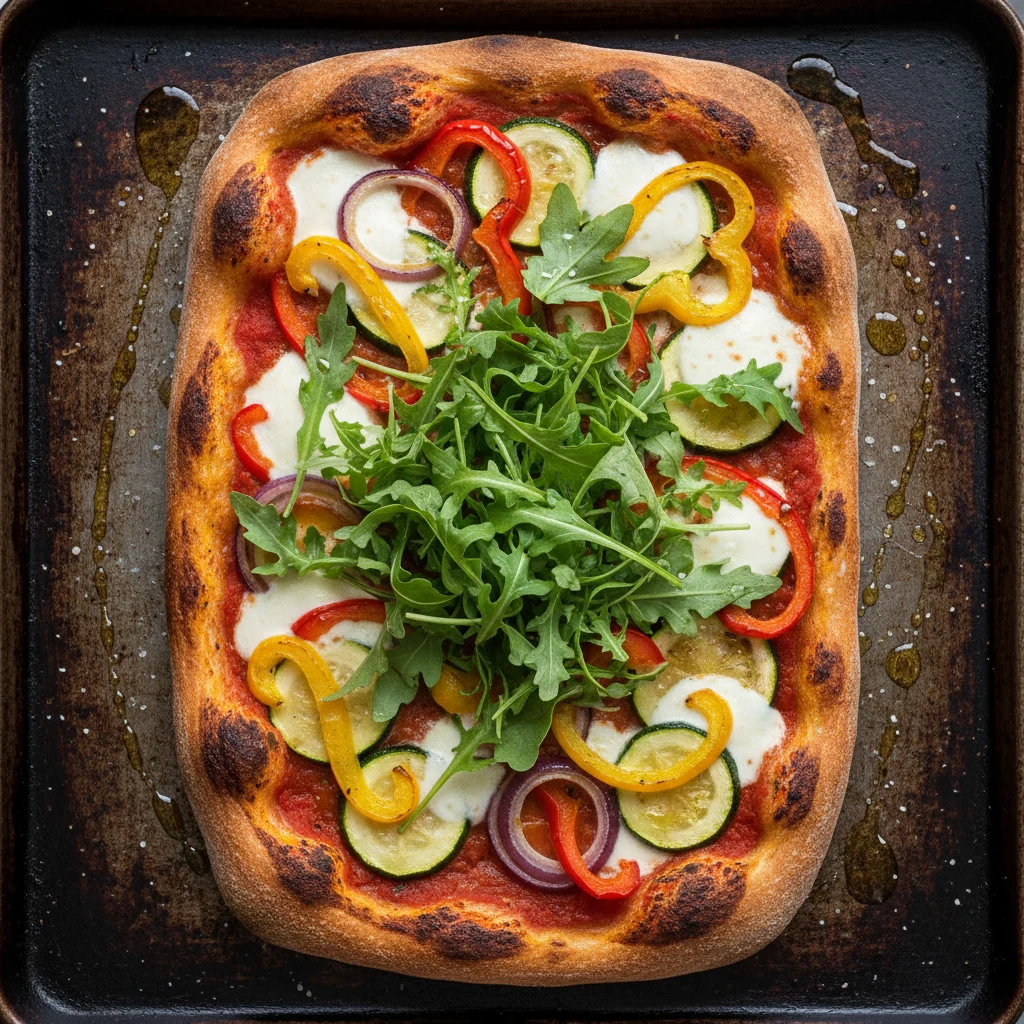
- Pan & top: Oil a sheet pan. Press dough to edges. Add sauce, light cheese, and lots of veggies.
- Bake: Bake at 500°F/260°C for 12–15 minutes until browned. Finish with arugula.
How to Store
- Loaves: Keep at room temp in a paper bag or bread box for 2–3 days. For longer, slice and freeze. Reheat in a 350°F/175°C oven for 8–10 minutes.
- Pancakes: Refrigerate up to 4 days or freeze. Reheat in a toaster or skillet; they bounce back fast.
- Crackers: Store in an airtight jar up to 1 week. If they soften, re-crisp at 300°F/150°C for 5 minutes.
- Pizza: Refrigerate slices in a sealed container up to 3 days. Reheat on a hot pan to revive the crust.
- Starter: Feed daily at room temp, or park in the fridge and feed weekly. FYI, it’s hardy—but not immortal.
Why This is Good for You
- Lower glycemic impact: Fermentation and fiber slow glucose spikes compared to many quick-rise breads.
- Better mineral uptake: The long ferment reduces phytates, so iron, zinc, and magnesium absorb more efficiently.
- Prebiotics for gut health: Sourdough’s fermentation nurtures beneficial bacteria in your gut ecosystem.
- Higher satiety: Whole grains and protein-rich add-ins keep you full and focused, not foggy.
- Cleaner ingredient list: Flour, water, salt, starter. That’s it. No weird preservatives masquerading as “bread enhancers.”
Don’t Make These Errors
- Skipping the scale: Measure in grams. Consistency beats guesswork every time.
- Under-salting: Salt isn’t the villain. It strengthens gluten and boosts flavor. Hit 2% of flour weight.
- Over-flouring the bench: Too much flour blocks proper shaping. Use just enough to prevent sticking.
- Ignoring dough temp: Warm dough ferments faster. Keep it around 75°F/24°C for predictable timing.
- Cutting while hot: Trapped steam makes gummy slices. Let the loaf rest. Patience, champion.
- Starter neglect: A hungry starter gives weak lift. Feed it and give it time to peak before mixing.
- Overloading seeds: Seeds are great, but too many can weigh down the loaf. Cap at 20–25% of flour weight.
Variations You Can Try
- Rye boost: Swap 20–30% of flour for rye to add tang and nutrients. Expect a tighter crumb and deeper flavor.
- Einkorn or spelt: Sub 30–50% for a gentler gluten profile and nutty taste. Hydration may need a slight bump.
- Turmeric + black pepper: Add 1 tsp turmeric and a pinch of pepper for anti-inflammatory flair and sunshine color.
- Cinnamon raisin (no sugar bomb): Fold in 120 g raisins and 2 tsp cinnamon. Skip added sugar; raisins bring sweetness.
- Jalapeño cheddar: For the brave. Add sliced jalapeño and 120 g sharp cheddar. Keep salt steady.
- Olive and herb fougasse: Use pizza dough, shape into a leaf, add olives and rosemary, bake hotter and faster.
- Waffle the pancakes: Same batter, different texture. Crisp edges, soft center. IMO, elite brunch move.
FAQ
Is sourdough actually healthier than regular yeast bread?
Often, yes. The long ferment improves digestibility, lowers effective glycemic impact, and enhances mineral absorption. Combine it with whole grains and you move from “bread as filler” to “bread as fuel.”
Can I bake with 100% whole wheat?
You can, but expect a denser loaf and shorter rise. Start with 60–70% whole wheat and increase as you learn the dough. Add a touch more water and give extra time for the gluten to develop.
What’s the fastest way to build a starter?
Mix equal parts flour and water by weight, feed daily, and keep around 75°F/24°C. In 5–7 days, it should double in 4–6 hours after a feed. When it floats in water and smells pleasantly tangy, you’re ready.
My dough is sticky. Did I mess up?
Sticky dough usually means higher hydration or underdeveloped gluten. Use wet hands, do more stretch-and-folds, and give it time. Resist the urge to dump flour—the dough needs moisture to stay open and airy.
Can I cut the salt to make it “healthier”?
You can reduce slightly, but don’t go below 1.6% of flour weight. Salt strengthens gluten and balances flavor. If sodium is a concern, watch toppings and spreads instead; that’s where the stealth salt hides.
Is sourdough okay for people watching blood sugar?
For many, sourdough and whole grains are a better choice than white, quick-rise breads. Pairing slices with protein and fat (eggs, avocado) helps even more. Always check with your healthcare pro if you need personalized guidance.
Can I freeze the loaf and still get a good crust?
Absolutely. Slice before freezing, then reheat in a 350°F/175°C oven for 8–10 minutes or toast directly from frozen. You’ll recover a crisp crust and soft crumb—no sad bread vibes.
How do I know the loaf is proofed enough?
Use the poke test: press a floured finger into the dough. If it slowly springs back and leaves a slight indent, it’s ready. If it snaps back fast, proof longer; if it collapses, you went too far.
My Take
Healthy bread shouldn’t taste like homework. Sourdough proves you can have both: performance and pleasure. Build one confident base loaf, keep a jar of discard for quick wins, and let fermentation do the heavy lifting. Your kitchen becomes a micro-bakery that fuels your day—and, bonus, your friends will suddenly visit more often. TBH, that’s the best KPI a home baker can ask for.
Printable Recipe Card
Want just the essential recipe details without scrolling through the article? Get our printable recipe card with just the ingredients and instructions.