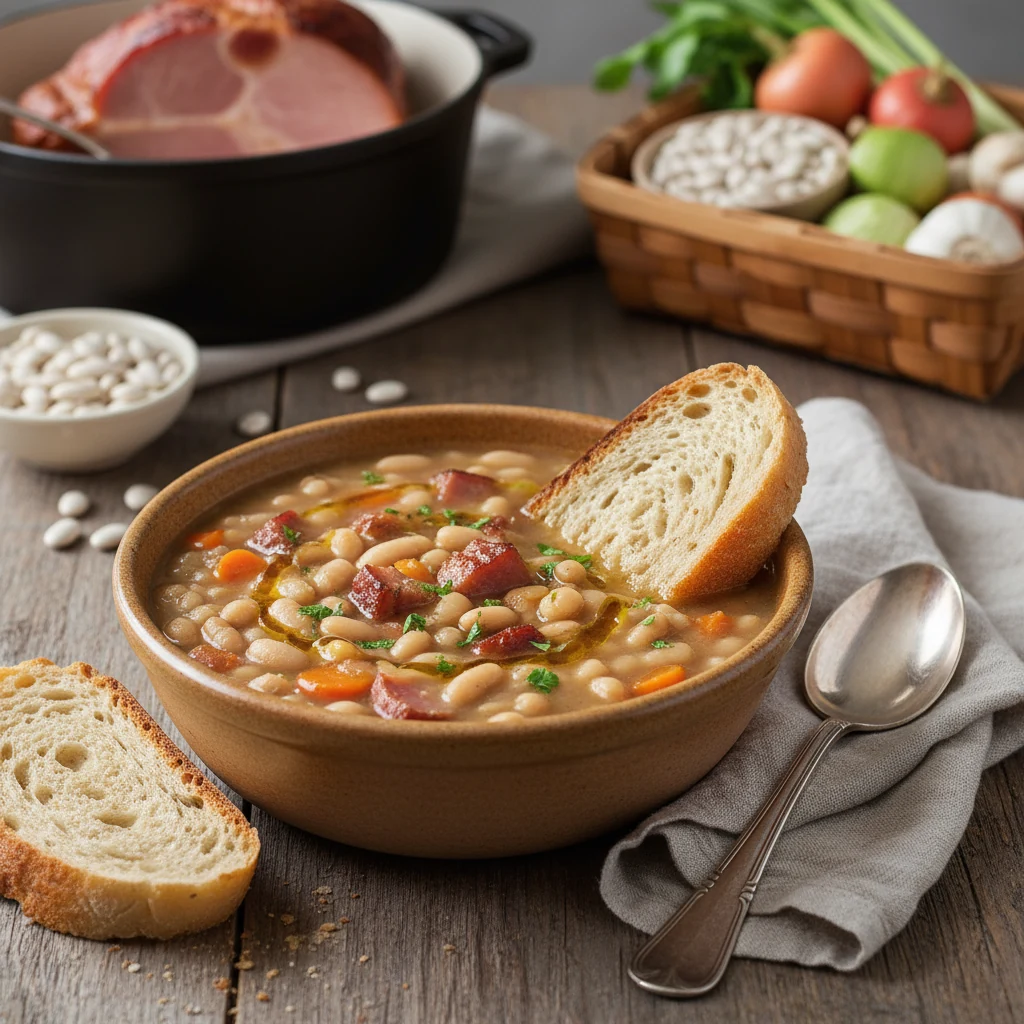
Ham and Bean Soup Recipes Old Fashioned — Cozy Classic
Warm up with a thrifty, slow-simmered pot that turns leftover ham and dried beans into rich comfort—pantry-friendly, freezer-ready.
If dinner doesn’t earn a second bowl, it failed. This humble pot delivers seconds, thirds, and “please save me tomorrow’s lunch.” We’re talking smoky ham, creamy beans, and that old-school flavor your grandma nailed without a spreadsheet or a sous vide bath. It’s simple, it’s cheap, and it hits like a warm blanket on a cold night. Ready to turn leftovers into the kind of comfort that makes people text you for the recipe?
Why This Recipe Works

Old-fashioned isn’t code for boring—it’s code for proven. The combo of a ham bone or ham hock with dried beans builds a broth that tastes like it simmered in a farmhouse kitchen for hours. The aromatics pull their weight, and a tiny splash of vinegar at the end makes everything pop (your taste buds will notice).
- Smoky backbone: A ham bone or hock infuses the pot with deep, savory flavor you can’t fake.
- Creamy texture: Slow-simmered dried beans turn silky; a quick mash thickens the broth naturally.
- Balanced seasoning: Herbs, pepper, and a touch of acid keep saltiness in check and flavors focused.
- One-pot ease: Minimal effort, maximal comfort. TBH, it’s almost unfair how good this tastes.
Ingredients Breakdown
- 1 lb dried beans (navy or great northern; pick over and rinse)
- 1 ham bone or ham hock (smoked; adds body and flavor)
- 2 cups diced cooked ham (leftovers are perfect; trim excess fat)
- 8 cups low-sodium chicken broth (or water; adjust salt accordingly)
- 1 large yellow onion, diced
- 2 carrots, diced
- 2 celery stalks, diced
- 4 garlic cloves, minced
- 2 bay leaves
- 1 teaspoon dried thyme (or 1 tablespoon fresh)
- 1 teaspoon black pepper (freshly ground)
- 1–2 teaspoons apple cider vinegar (finish to taste)
- Salt (add sparingly; ham and broth may already be salty)
- 2 tablespoons olive oil or butter (for sautéing aromatics)
- Fresh parsley, chopped (for garnish; optional but lovely)
FYI: If your ham bone is heavily seasoned, go easy on added salt until the very end.
How to Make It – Instructions
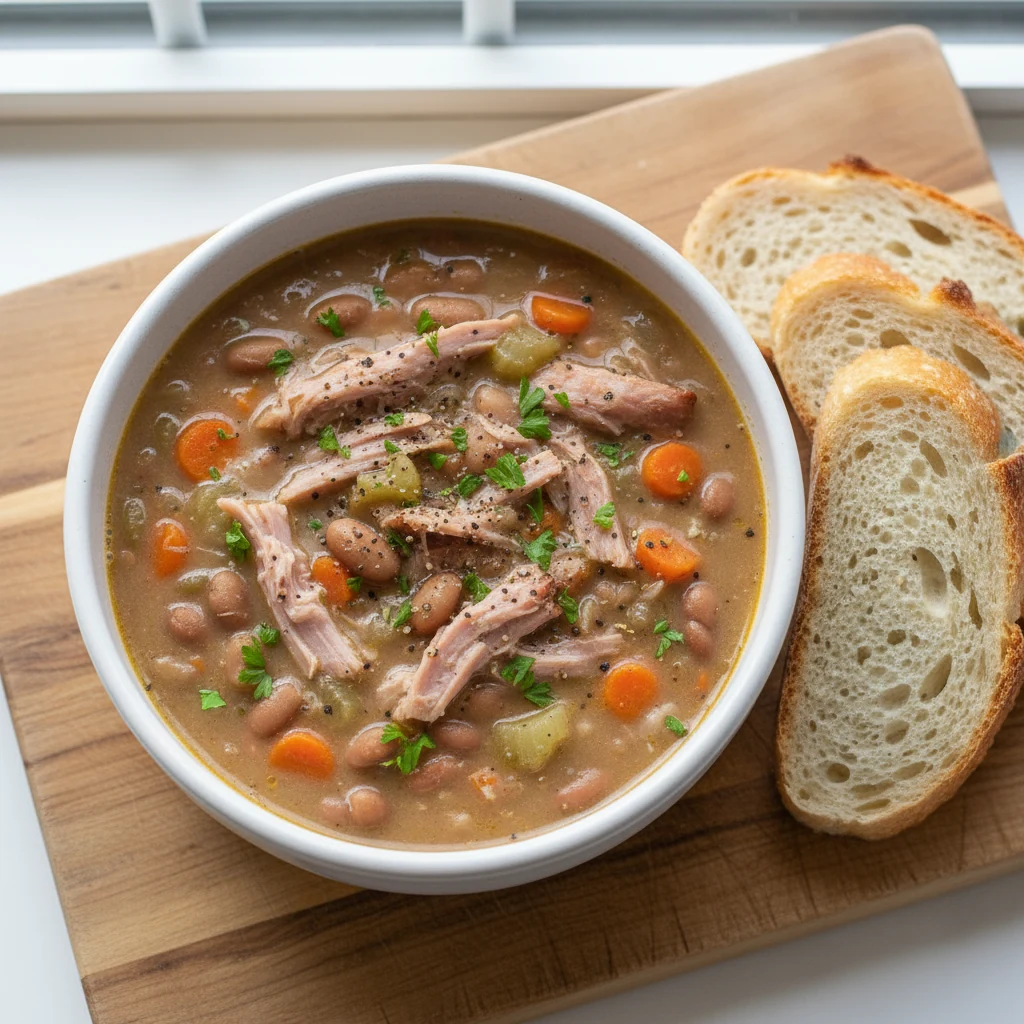
- Soak the beans: Rinse, then soak in cold water to cover by 2 inches for 8–12 hours. Drain and rinse. (Quick-soak option: bring beans and water to a boil for 2 minutes, cover, rest 1 hour, drain.)
- Sauté aromatics: In a large heavy pot, heat oil over medium. Add onion, carrot, and celery; cook 6–8 minutes until softened. Add garlic; cook 30 seconds until fragrant.
- Build the base: Add soaked beans, ham bone/hock, bay leaves, thyme, pepper, and broth. The liquid should cover beans by 1–2 inches; add water if needed.
- Simmer low and slow: Bring to a gentle boil, then reduce to low. Simmer partially covered for 75–90 minutes, stirring occasionally. Keep it gentle—boiling can split beans and cloud the broth.
- Check tenderness: Start tasting at the 75-minute mark. Beans should be creamy but not mush. If firm, keep simmering in 15-minute increments.
- Add diced ham: Stir in the chopped ham and continue simmering for 15 minutes to warm through and marry flavors.
- Thicken naturally: Remove the bone/hock. Shred any meat and return it to the pot. For a thicker soup, mash 1–2 cups of beans against the side of the pot or blend a ladleful, then stir back in.
- Brighten: Stir in 1 teaspoon vinegar. Taste and add up to another teaspoon if the soup needs a lift.
- Season last: Taste before salting. Add salt only if needed, and adjust pepper to preference.
- Finish: Remove bay leaves. Garnish with parsley. Let the pot rest 5 minutes—it tastes better once it settles.
- Serve: Ladle into warm bowls. Bonus points for crusty bread, cornbread, or a simple side salad.
Preservation Guide
This soup loves the fridge and the freezer—talk about ROI. Cool it quickly and store it smart, and you’ll have a meal ready for busy nights.
- Cool fast: Spread in shallow containers and refrigerate within 2 hours of cooking.
- Refrigerate: Keeps up to 4 days. Reheat gently over medium-low with a splash of water or broth.
- Freeze: Portion in airtight containers or bags and freeze flat for 2–3 months.
- Reheat from frozen: Thaw overnight in the fridge or warm on low with added liquid. Do not boil hard; beans like kindness.
- Safety tip: If reheating large batches, bring to 165°F and stir to heat evenly.
Beans can thicken as they sit. Just top off with water or broth when reheating and adjust seasoning again.
Benefits of This Recipe
- Budget-friendly: Dried beans and leftover ham stretch into multiple meals.
- High-protein, high-fiber: Satisfying without feeling heavy.
- One-pot simplicity: Minimal dishes, maximum comfort.
- Freezer-friendly: Batch cook and stash for later.
- Nostalgic appeal: Classic flavor that never goes out of style.
- Gluten-free friendly: Use GF broth and you’re set.
Avoid These Mistakes
- Oversalting early: Ham is salty; wait to season until the end.
- Boiling hard: Aggressive heat breaks beans and muddies texture.
- Skipping the soak: Unsoaked beans take longer and cook unevenly.
- Ignoring aromatics: Onion, celery, and carrot make the broth sing—don’t skip them.
- No acid finish: A splash of vinegar transforms “good” into “wow.”
- Wrong liquid level: Too little = scorched beans; too much = bland soup. Cover by 1–2 inches.
- Not tasting: Taste at multiple points, especially at the end. Your spoon is your compass.
- Leaving bone bits: Remove the bone and any cartilage so nobody finds a surprise in their bowl.
Alternatives
- Instant Pot: Sauté aromatics on Sauté, add ingredients, cook 35 minutes at High Pressure; natural release 20 minutes.
- Slow cooker: Sauté aromatics, then cook on Low 7–8 hours or High 4–5 hours.
- Canned beans: Use 3–4 cans (drained, rinsed); simmer 30–40 minutes total.
- Smoked turkey: Swap ham with smoked turkey wings/drumsticks for a lighter spin.
- Vegetarian: Use vegetable broth, add smoked paprika and a dash of soy sauce or miso for umami.
- Bean swap: Try pinto, cannellini, or mixed beans for different textures.
- Spice it up: Add a pinch of cumin, crushed red pepper, or a bay leaf more if you like it bold.
FAQ
Do I really need to soak the beans?
Soaking shortens cook time and helps beans cook evenly. You can skip it, but expect longer simmering and slightly less uniform texture.
Ham bone or ham hock—what’s better?
Use what you have. A ham bone brings meaty depth and often extra bits to shred; a hock delivers smoky richness and gelatin for body.
Can I use canned beans instead of dried?
Yes. Rinse them to remove extra starch and salt, then simmer 30–40 minutes to blend flavors. The texture will be softer but still great.
How do I reduce the “bean effect” (gas)?
Soak and rinse beans, cook them thoroughly, and avoid undercooking. Some folks swear by adding a bay leaf or kombu; it’s optional but harmless.
What’s the best broth to use?
Low-sodium chicken broth is ideal, but water works thanks to the ham bone/hock. Adjust salt at the end to avoid over-seasoning.
How can I thicken the soup without flour?
Mash a scoop of beans against the pot or blitz a ladleful and stir it back in. It’s classic, gluten-free, and tastes like you simmered all day.
Is a splash of vinegar necessary?
Not mandatory, but highly recommended. A small hit of acid brightens the broth and balances salt and smoke.
What sides pair well with this soup?
Crusty bread, cornbread, a simple salad, or buttered biscuits. If you’re feeling extra, serve with pickled onions for contrast.
Can I make this spicier?
Absolutely. Add crushed red pepper, a diced jalapeño, or a dash of hot sauce at the end. Spice should complement, not dominate.
My beans are still firm—what now?
Keep simmering with enough liquid and gentle heat. Some beans are stubborn; extend cook time in 15-minute increments until creamy.
My Take
IMO, this is the ultimate “leftovers become legend” soup. I love it thick enough to cradle a spoon, with a crisp hunk of bread and that final splash of vinegar to wake everything up. If you’ve got a bone, use it; if not, a hock plus diced ham will still sing. Make a big pot, freeze half, and thank yourself later—you just hacked comfort food the old-fashioned way.
Printable Recipe Card
Want just the essential recipe details without scrolling through the article? Get our printable recipe card with just the ingredients and instructions.